
Really Fun Games for Kids: Beyond Just Play
 By Speech Blubs Team•Jan 13, 2026•16 min.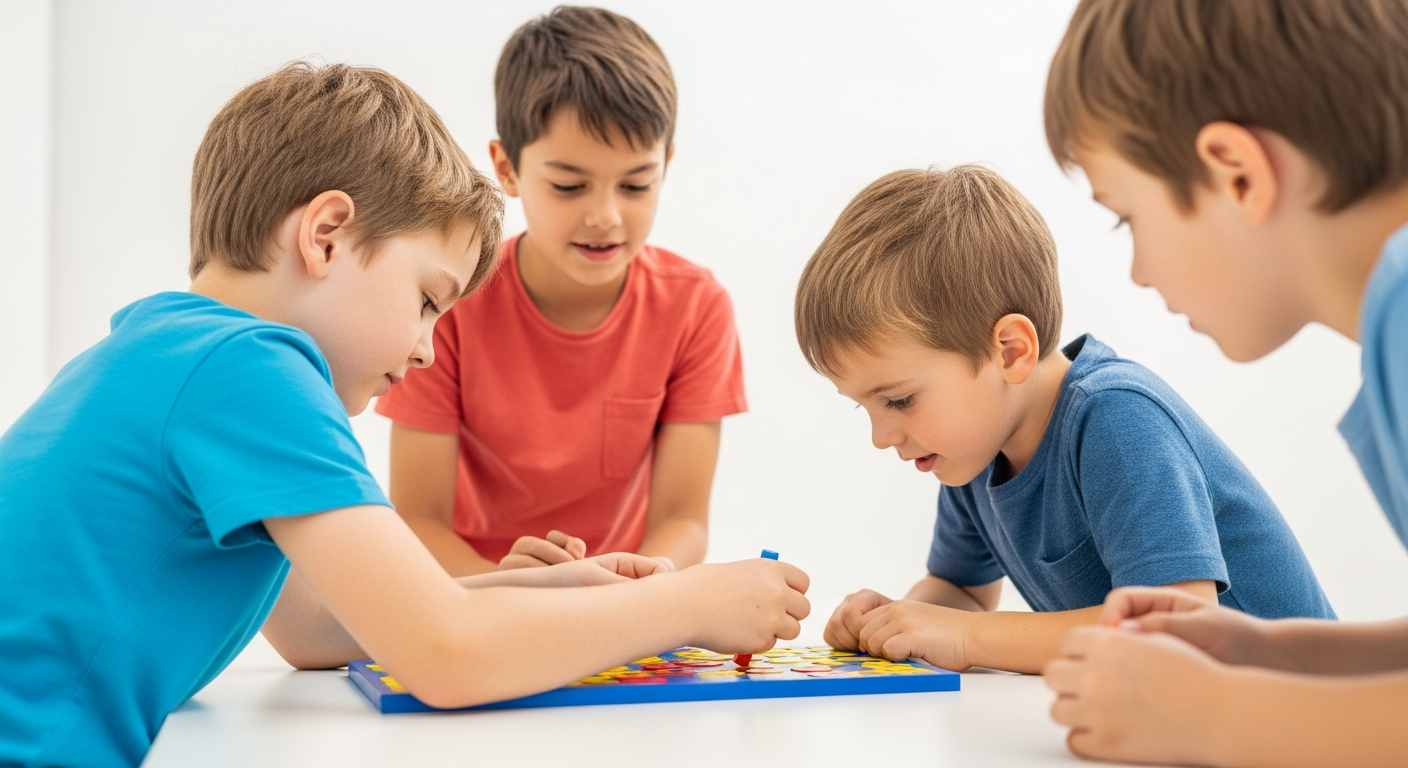
Table of Contents
- Introduction
- The Power of Play-Based Learning: Why Games Matter So Much
- Different Types of Really Fun Games for Kids
- Speech Blubs: Smart Screen Time That Speaks Volumes
- Choosing the Right Games for Your Child
- Integrating Speech Blubs into Your Play Routine
- Conclusion
- Frequently Asked Questions (FAQ)
What if the most joyful moments of play were also silently building the foundations for your child's future? We often see play as simply a way for kids to burn energy or pass the time, but for children, play is truly the work of learning. It’s through games that they explore the world, understand social cues, develop problem-solving skills, and, crucially, practice their communication. As parents and caregivers, finding really fun games for kids that naturally encourage this growth can sometimes feel like searching for a hidden treasure. This post isn't just about listing popular games; it's about delving into why certain games captivate children, how they foster essential developmental skills, and how we, at Speech Blubs, have harnessed this power of play to create engaging experiences that empower children to speak their minds and hearts. We’ll explore the magic of play-based learning and introduce you to innovative approaches that combine fun with significant developmental benefits.

Introduction
Have you ever watched a child completely lost in a game, their eyes sparkling with concentration and joy? That uninhibited, imaginative engagement is more than just entertainment; it's a profound learning experience. While we might instinctively reach for the latest gadget or a classic board game, the true power lies in understanding how play cultivates critical skills—especially language and communication. This article aims to illuminate the incredible link between genuinely fun games and robust child development, showing you how to choose and facilitate play that enriches your child's growth in countless ways. We'll move beyond simple lists to explore different categories of engaging games, discuss the developmental benefits each offers, and introduce a groundbreaking approach to "smart screen time" that turns digital play into a powerful tool for speech and language acquisition. By the end, you'll have a deeper appreciation for the role of play and practical insights into how to integrate really fun games for kids into your family's routine, including our unique app that's designed to make learning to communicate a joyful adventure.
The Power of Play-Based Learning: Why Games Matter So Much
Before we dive into specific games, let’s briefly consider why play is indispensable. For children, play is the primary vehicle for learning about themselves and the world around them. It's not a luxury; it's a fundamental necessity for healthy development. Through play, children naturally experiment, solve problems, test boundaries, and internalize new concepts. This is especially true for language and communication.
Building Foundational Skills Through Fun
When children engage in play, they are constantly practicing and refining a wide array of skills:
- Cognitive Skills: Games often require strategic thinking, memory retention, problem-solving, and understanding cause and effect. A child playing a simple matching game is not just having fun; they're boosting their cognitive processing.
- Social-Emotional Skills: Many games are inherently social, teaching children about turn-taking, sharing, negotiation, empathy, and managing wins and losses. These interactions are crucial for developing emotional intelligence and building healthy relationships.
- Fine and Gross Motor Skills: From manipulating game pieces to running around during active play, games help children refine their physical coordination and motor control.
- Language and Communication Skills: Perhaps most importantly for us, games provide countless opportunities for language development. Children narrate their actions, ask questions, follow instructions, express ideas, and negotiate with others. This rich linguistic environment is where vocabulary explodes, sentence structures become more complex, and conversational skills are honed.
Imagine a parent and child playing a simple game like "I Spy." The child isn't just trying to guess an object; they're learning descriptive adjectives, practicing question formation ("Is it red?"), and engaging in a back-and-forth dialogue. This interactive exchange is far more impactful than passive observation.

Different Types of Really Fun Games for Kids
When we think about really fun games for kids, a wide world opens up beyond just board games. Let's explore several categories and how they contribute to a child's holistic development, especially in communication.
1. Classic Board and Card Games
These are often the first games we introduce to our children, and for good reason! They are fantastic for structured learning and social interaction.
- Benefits: Turn-taking, following rules, counting, color recognition, simple strategy, patience, and handling emotions (winning/losing).
- Communication Focus: Encourages clear instructions, asking clarifying questions, describing actions, and expressing feelings.
- Examples:
- "Sleeping Queens" (Ages 4+): This delightful card game, designed by a child, involves strategy and simple math. It encourages children to articulate their choices and count their queens, fostering both cognitive and verbal skills.
- "Spot It!" (Ages 3+): A fast-paced game of visual perception, "Spot It!" is brilliant for rapid vocabulary recall and quick verbalization as children shout out matching images. It's also incredibly portable, making it a great option for on-the-go fun.
- "Sushi Go!" (Ages 5+): This engaging card game involves collecting sets of sushi for points. It teaches basic strategy and encourages children to verbalize their choices and the cards they are passing, improving descriptive language.
- "Hoot Owl Hoot!" (Ages 4+): A cooperative game where players work together to get owls back to their nest before sunrise. This fosters teamwork and encourages children to verbalize their plans and strategize together, promoting collaborative communication.
- "HeadBandz" (Ages 3+): Players wear a card on their head and ask "yes" or "no" questions to guess what they are. This game is phenomenal for developing question-asking skills, deductive reasoning, and active listening. It naturally promotes back-and-forth dialogue.
2. Imaginative and Pretend Play
Often overlooked as a "game," imaginative play is perhaps the most powerful tool for language development.
- Benefits: Creativity, storytelling, role-playing, emotional exploration, problem-solving, and abstract thinking.
- Communication Focus: Builds narrative skills, expands vocabulary (especially action verbs and descriptive adjectives), practices different tones of voice, and facilitates complex conversational exchanges.
- Examples:
- "Building a Fort": Simple sheets, pillows, and furniture transform into a magical castle, a spaceship, or a secret hideout. Children naturally create elaborate stories, assign roles, and engage in rich dialogue, negotiating the rules of their imaginative world.
- "Restaurant Play": Setting up a pretend restaurant with toy food and menus gives children a chance to take orders, describe dishes, and engage in structured social scripts. This is excellent for practicing politeness, clear requests, and imaginative vocabulary.
- "Veterinarian or Doctor's Office": Role-playing these scenarios allows children to use specialized vocabulary, practice empathy, give instructions, and ask questions. It also helps them process real-life experiences in a safe, playful environment.
3. Active and Outdoor Games
Movement-based games are not only great for physical health but also for integrating language with action.
- Benefits: Gross motor skills, coordination, following multi-step directions, spatial awareness, and energy release.
- Communication Focus: Requires understanding and giving instructions, calling out actions, negotiating rules, and using directional language.
- Examples:
- "Red Light, Green Light": This classic game teaches children to follow directions, associate words with actions, and practice impulse control.
- "Scavenger Hunt": Creating a simple scavenger hunt with clues (e.g., "Find something red," "Find something that starts with 'B'") is fantastic for vocabulary building, descriptive language, and following sequential instructions.
- "Nature Walk Bingo": Provide children with a "bingo" card featuring items to find in nature (a smooth stone, a feather, a specific leaf). As they find each item, they describe it, practice new words, and share their discoveries, fostering observation and descriptive language.
Speech Blubs: Smart Screen Time That Speaks Volumes
While traditional games are invaluable, in our modern world, screen time is a reality. The key is to make it smart screen time – interactive, engaging, and purposeful. This is precisely where Speech Blubs shines, offering a unique approach to really fun games for kids that specifically target speech and language development.
At Speech Blubs, we believe that every child deserves to speak their minds and hearts. Our company was born from the personal experiences of our founders, who all grew up with speech problems and created the tool they wished they had. We are committed to providing an immediate, effective, and joyful solution for the 1 in 4 children who need speech support, blending scientific principles with play into one-of-a-kind "smart screen time" experiences. We provide a screen-free alternative to passive viewing (like cartoons) and a powerful tool for family connection.
The Science Behind the Fun: Video Modeling
Our unique approach teaches complex communication skills through our "video modeling" methodology. Children learn by watching and imitating their peers, a technique that leverages the power of mirror neurons in the brain. When a child observes another child performing a speech sound, word, or action, their brain lights up as if they are performing it themselves. This makes imitation more natural, less intimidating, and incredibly effective.
For a parent whose 3-year-old "late talker" loves animals, the "Animal Kingdom" section of Speech Blubs offers a fun, motivating way to practice "moo" and "baa" sounds. They watch other kids make these sounds and imitate them, often giggling along the way. Or, if a child struggles with producing specific sounds like 'L' or 'R', they can engage with interactive activities that break down these sounds using video examples from their peers. This peer-to-peer learning approach transforms screen time from a solitary activity into an interactive, confidence-building experience.
Our app is not just about isolated sounds; it covers a vast range of language development areas, including:
- First Words and Phrases: Helping emergent communicators build their initial vocabulary.
- Articulation Exercises: Targeting specific sounds that children might find challenging.
- Reading Readiness: Introducing letter recognition and phonics in a playful way through our companion Reading Blubs app.
- Social Skills: Activities that encourage turn-taking, asking questions, and understanding emotions.
- Storytelling and Imagination: Promoting narrative skills through interactive scenes and prompts.
We're proud of our rigorous scientific backing, which places us in the top tier of speech apps worldwide. You can explore the research that underpins our methodology and effectiveness on our dedicated research page.
Creating Joyful Family Learning Moments
While Speech Blubs is incredibly effective as a standalone tool, it truly shines when integrated into family play. We encourage parents to sit with their children, imitate alongside them, and celebrate every sound and word. This shared experience fosters a stronger family connection and reinforces the idea that communication is a joyful and rewarding activity.
Consider a family with a child who is shy about speaking up. The "Guess the Word" activity within Speech Blubs allows them to practice new vocabulary in a low-pressure environment, building confidence before they try these words in real-world conversations. The app becomes a bridge, empowering them with the tools and assurance to express themselves.
At Speech Blubs, our mission extends beyond just helping children speak; we want them to feel empowered to express their thoughts and feelings. Our app isn't about creating guaranteed outcomes like "your child will be giving public speeches in a month," but rather about fostering a love for communication, building confidence, reducing frustration, developing key foundational skills, and creating joyful family learning moments that last a lifetime. Many parents have shared their success stories and how Speech Blubs has made a real difference. You can read some of these heartfelt testimonials on our website.
Choosing the Right Games for Your Child
With so many options, how do you pick really fun games for kids that are also developmentally appropriate and beneficial?
Consider Age and Developmental Stage
Always keep your child's age and developmental stage in mind. A game that's too simple will bore them; one that's too complex will frustrate them. Look for games that offer a gentle challenge and opportunities for growth. For example, a toddler might enjoy simple picture matching, while a kindergartner might be ready for basic strategy games.
Observe Your Child's Interests
What sparks your child's curiosity? Do they love dinosaurs, space, animals, or superheroes? Tapping into their passions makes any game more engaging and memorable. If your child is fascinated by animals, a game like "Animal Charades" or the Speech Blubs "Animal Kingdom" section will naturally capture their attention and motivate them to participate and communicate.
Look for Opportunities for Interaction
The best games are those that encourage interaction – not just with the game itself, but with you and other players. Prioritize games that foster dialogue, cooperation, and shared laughter.
Balance Structured and Unstructured Play
While structured games with rules are valuable, also leave ample room for unstructured, free play. This is where children can truly lead, explore their imagination, and create their own really fun games for kids without adult intervention.
Integrating Speech Blubs into Your Play Routine
Bringing Speech Blubs into your home is simple and designed to integrate seamlessly with your existing play routine. To truly unlock its full potential, we strongly recommend our Yearly plan.
Unbeatable Value with the Yearly Plan
We offer transparent pricing to build trust with our families. While a Monthly plan is available at $14.99 per month, our Yearly plan is the clear best choice, offering superior value and exclusive features for just $59.99 per year. This breaks down to an incredible value of just $4.99 per month – allowing you to save 66% compared to the monthly option!
Choosing the Yearly plan isn't just about saving money; it's about gaining access to a complete, enhanced experience:
- 7-Day Free Trial: The Yearly plan includes a comprehensive 7-day free trial, allowing you to experience the full benefits of Speech Blubs and see the difference it can make for your child before committing.
- Bonus Reading Blubs App: Exclusively with the Yearly plan, you'll receive full access to our companion Reading Blubs app, further supporting your child's literacy development alongside their speech skills.
- Early Access & Priority Support: Yearly subscribers get early access to exciting new updates and features, plus a priority 24-hour response time for customer support, ensuring you always have the help you need.
The Monthly plan, by contrast, does not include these invaluable benefits. We designed the Yearly plan to provide the most comprehensive support for your child's communication journey.
Ready to Get Started?
If you're unsure whether your child could benefit from speech support, take our quick, 3-minute preliminary screener. It involves 9 simple questions and provides an assessment and next-steps plan, along with a free 7-day trial to experience Speech Blubs firsthand. Take the preliminary screener here.
Or, if you're ready to dive in and empower your child's communication journey, creating your account and starting your free trial is just a click away! We invite you to explore all the engaging activities and watch your child's confidence grow. Create your account and begin your 7-day free trial today! Remember to select the Yearly plan to unlock all the premium features and best value for your family.
You can also download Speech Blubs directly to your device and start the trial instantly:
- Download Speech Blubs on the Apple App Store.
- Get Speech Blubs on the Google Play Store.
We believe in the power of play, and we’re here to support you and your child every step of the way. Welcome to the Speech Blubs family! You can also visit our homepage for a general overview of our mission and offerings.
Conclusion
The search for really fun games for kids is more than just about filling time; it's about intentionally enriching their world with experiences that build foundational skills for life. From classic board games that teach patience and turn-taking to imaginative play that sparks creativity and narrative skills, every game is an opportunity for growth. In the digital age, Speech Blubs takes this concept further, offering "smart screen time" that leverages video modeling and peer-to-peer interaction to make speech and language development a joyful, engaging, and scientifically-backed adventure.
By understanding the developmental benefits of different types of play and integrating purposeful tools like Speech Blubs, you can significantly empower your child to communicate effectively and confidently. Remember, fostering a love for communication, building confidence, and creating joyful family learning moments are the true treasures of play.
Ready to transform screen time into smart learning time? Unlock your child's potential for clear and confident communication. We encourage you to start your 7-day free trial today by downloading Speech Blubs on the App Store or Google Play, or by creating your account on our website. Don't forget to choose the Yearly plan to get your free trial, access to Reading Blubs, early updates, and dedicated support – it’s the best way to give your child the full advantage.
Frequently Asked Questions (FAQ)
Q1: How does Speech Blubs make learning fun for kids?
Speech Blubs makes learning fun by using a unique "video modeling" approach where children learn by watching and imitating their peers. This peer-to-peer interaction is highly engaging and motivating, turning practice into an exciting game. The app is filled with colorful animations, interactive activities, and a wide variety of themed sections (like animals, vehicles, and daily routines) that keep children entertained while they develop their speech and language skills. We also offer fun features like face filters and rewards to make every session feel like playtime, not therapy.
Q2: What age range is Speech Blubs suitable for?
Speech Blubs is designed for children aged 1 to 8 years old, targeting various developmental stages from first words and emergent communication to more complex articulation and language skills. The app offers a wide range of activities tailored to different age groups and skill levels, ensuring that it can support children at various points in their speech and language development journey.
Q3: Can Speech Blubs replace traditional speech therapy?
Speech Blubs is a powerful supplement to a child's overall development plan and, when applicable, professional therapy. It is designed to provide consistent practice and engaging learning opportunities in a home environment. While it utilizes scientifically-backed methods and can significantly help with speech and language development, it is not intended to replace the personalized assessment and guidance of a certified speech-language pathologist for children with more complex needs. We always recommend consulting with a professional to determine the best course of action for your child.
Q4: What's the best way to get started with Speech Blubs?
The best way to get started with Speech Blubs is to choose our Yearly plan. This plan includes a 7-day free trial, full access to the Reading Blubs app, early access to new updates, and 24-hour support response time. You can begin your free trial and unlock all these premium features by creating an account on our website or by downloading the app directly from the Apple App Store or Google Play Store and selecting the Yearly subscription option.
About the author