
Shark Toddler Craft: Fun DIY Projects to Help Kids Speak
 By Speech Blubs Team•Feb 20, 2026•14 min.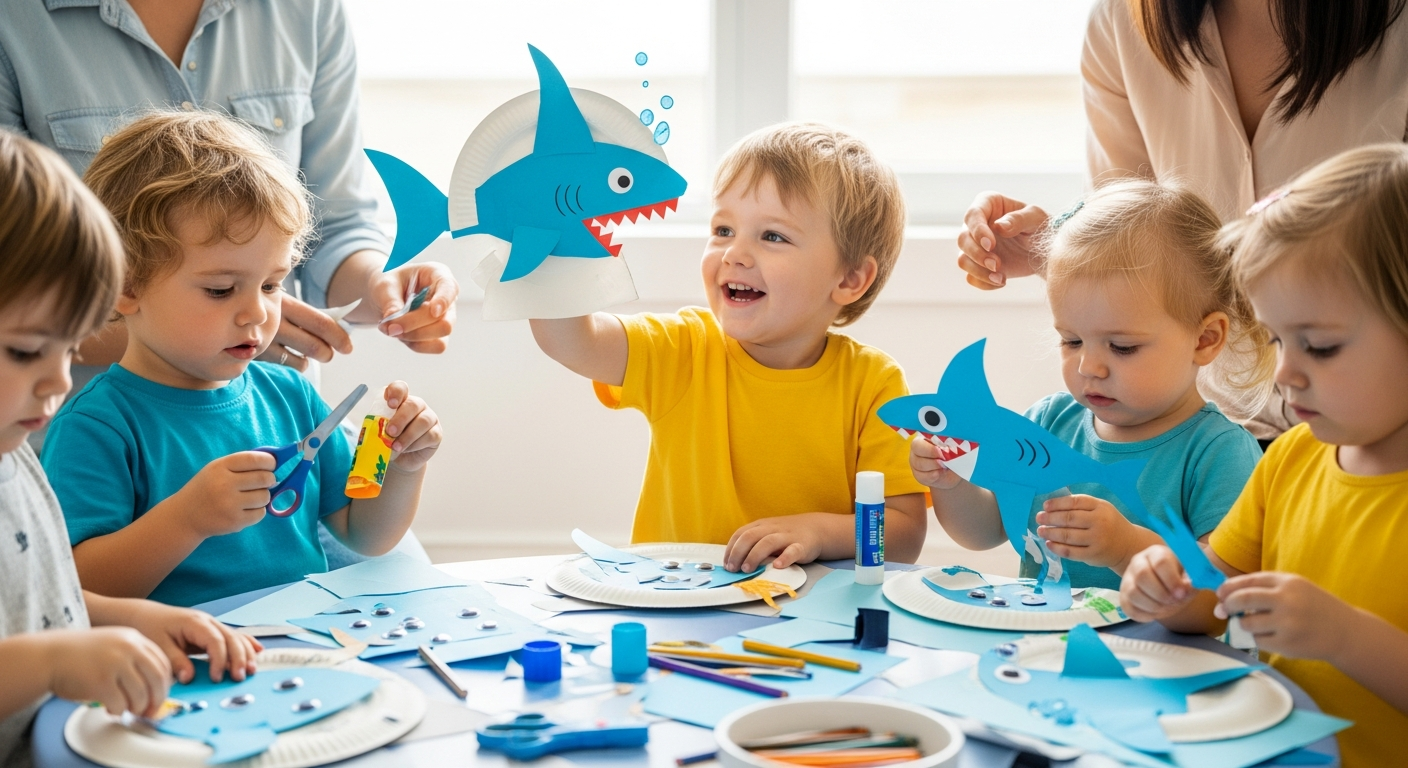
Table of Contents
- Introduction
- The Developmental Power of the Shark Toddler Craft
- The Speech Blubs Approach: From Play to Progress
- 10 Fun and Educational Shark Toddler Craft Ideas
- Connecting Crafts to Real-World Challenges
- Why Speech Blubs is the "Smart" Choice for Your Family
- Understanding the Value of Your Subscription
- Fostering a Love for Communication
- FAQ
- Start Your Adventure Today
Introduction
Have you ever noticed how a toddler’s eyes light up at the mere mention of a shark? Whether it is the catchy rhythm of a popular children's song or the sheer awe of these toothy ocean dwellers, sharks have a unique way of capturing a child’s imagination. But did you know that this "shark obsession" can actually be a powerful bridge to language development? At Speech Blubs, we believe that the best learning happens when children are having so much fun they don’t even realize they are practicing essential skills.
The purpose of this blog post is to provide you with a treasure trove of shark toddler craft ideas that are not only easy to make at home but are also designed to foster communication, fine motor skills, and confidence. We will explore various DIY projects—from paper plate predators to recycled puppets—and show you how to pair these activities with our scientific methodology to help your little one thrive.

At Speech Blubs, our mission is to empower children to "speak their minds and hearts." This mission is deeply personal for us. Our company was founded by individuals who all grew up with speech challenges themselves. They created the tool they wished they had as children, blending play with proven speech therapy principles. By the end of this article, you will see how a simple shark toddler craft can become a "smart screen time" companion, turning a rainy afternoon into a joyful leap forward in your child's developmental journey.
The Developmental Power of the Shark Toddler Craft
Before we dive into the glue and glitter, let’s talk about the "why" behind these activities. For a toddler, a craft project is so much more than a piece of art to hang on the fridge. It is a sensory-rich experience that engages multiple parts of the brain simultaneously. When your child picks up a pair of safety scissors or squeezes a glue bottle, they are doing the hard work of building neural pathways.
Building Fine Motor Skills
Every shark toddler craft requires some level of manipulation. Whether it’s tearing blue tissue paper to represent the ocean or placing "sharp" white teeth on a paper plate, these actions strengthen the small muscles in the hands and fingers. These are the same muscles your child will eventually use for writing, buttoning their clothes, and even the complex movements required for clear speech.
Expanding Vocabulary and Concept Awareness
Crafting provides a natural context for learning new words. As you work together, you can introduce "ocean words" like fin, gills, teeth, ocean, swim, and blue. You can also work on prepositions and action words: "The shark is under the water," or "Let’s make the shark chomp!" This organic vocabulary building is far more effective than flashcards because the words are tied to a physical, memorable action.
Encouraging Social Interaction and Following Directions
Working on a shark toddler craft is a collaborative effort. It requires the child to listen to simple instructions, wait their turn for the glue, and share materials. These are foundational social-emotional skills. For children who may feel frustrated by their current communication limitations, crafting offers a non-verbal way to express creativity and achieve a sense of pride.

The Speech Blubs Approach: From Play to Progress
We understand that about 1 in 4 children will need some form of speech support during their early years. This can be an overwhelming statistic for parents. Our goal is to provide an immediate, effective, and joyful solution. We’ve moved away from passive viewing—the kind of screen time where a child just stares at a cartoon—and toward "smart screen time."
Our unique approach is centered on "video modeling." This is a scientifically-backed method where children learn by watching and imitating their peers. On the app, your child won’t see an adult therapist in a clinical setting; they will see another child successfully making sounds and words. This triggers "mirror neurons" in the brain, encouraging your toddler to try the sounds themselves.
Pairing a physical shark toddler craft with the digital peer modeling in Speech Blubs creates a powerful learning loop. If your child is struggling to initiate certain sounds, you can use our quick 3-minute preliminary screener to get a simple assessment and a free 7-day trial. This will give you a personalized next-steps plan to help your child find their voice.
10 Fun and Educational Shark Toddler Craft Ideas
Now, let's get into the crafts! These are designed to be simple, using everyday household items, so you can start creating right away.
1. The Classic Paper Plate Shark
This is a staple for a reason. It’s easy, high-impact, and perfect for toddlers.
- What you need: A paper plate, blue or gray paint, white paper for teeth, and googly eyes.
- The How-To: Have your child paint the plate. Once dry, cut a large "V" shape out of the plate—this becomes the shark's open mouth. Help your child cut small triangles (the teeth) and glue them along the edge of the "V".
- Speech Connection: Practice the "Sh" sound. "Sh-sh-shark!" Every time you glue a tooth, say "Chomp!" This encourages the imitation of consonant-vowel combinations.
2. Shark Paper Bag Puppet
Puppets are one of the best tools for speech therapy because they allow the child to "speak through" a character.
- What you need: A standard brown or white paper lunch bag, blue construction paper, and markers.
- The How-To: Glue blue paper to the front and the bottom flap of the bag. The flap acts as the shark's upper jaw. Add teeth inside the fold of the flap so they "appear" when the shark talks.
- Speech Connection: Use the puppet to sing along to shark songs. Encourage your child to make the puppet say "Hello" or "I'm hungry!" If your child is a "late talker," having a puppet can reduce the pressure they feel to perform.
3. Recycled Toilet Paper Roll Shark
Don't throw away those cardboard tubes! They make excellent 3D sharks.
- What you need: A toilet paper roll, blue paint, and scissors.
- The How-To: Paint the roll blue. Once dry, cut a small slit on one end to create a mouth. You can also staple one end shut to create a tail shape.
- Speech Connection: This is a great craft for practicing "in" and "out." Have the shark "eat" small toys. "The fish goes in the mouth!"
4. Shark Fin Headbands
Imaginative play is a core component of language development.
- What you need: A strip of blue cardstock (long enough to go around a head) and a triangle of blue cardstock for the fin.
- The How-To: Help your child glue the fin to the center of the headband. Secure the headband around their head with tape or a stapler.
- Speech Connection: Once the headband is on, your child is the shark. Encourage them to "swim" around the room. Use action verbs: "Swim fast! Swim slow! Hide!"
5. Pool Noodle Sharks
This is a fantastic sensory craft, especially for the summer months.
- What you need: A blue pool noodle, craft foam, and waterproof glue.
- The How-To: An adult should cut the pool noodle into 6-inch segments. Use craft foam to cut out fins and teeth. Glue them onto the noodle. These can even go in the bathtub!
- Speech Connection: Bath time is a wonderful time for speech practice because the child is relaxed. Practice "Splash!" and "Bubbles!"
6. Cupcake Liner Shark Art
Textures are important for sensory seekers.
- What you need: Blue cupcake liners, a piece of cardstock, and markers.
- The How-To: Flatten a cupcake liner and fold it in half to create a semi-circle shark body. Glue it to the cardstock and draw on the ocean surroundings.
- Speech Connection: Talk about the textures. "Is it smooth? Is it ruffly?" Describing textures helps build a diverse vocabulary.
7. Shark "Binoculars"
Great for a "shark hunt" around the living room.
- What you need: Two toilet paper rolls, blue yarn or paint, and tape.
- The How-To: Tape the two rolls together. Decorate them with blue colors and perhaps a small fin on the side.
- Speech Connection: Use the binoculars to find things. "I see a... [red ball]!" This encourages the use of full sentences.
8. Feed the Shark Sensory Bin
This is less of a craft and more of an activity, but it involves DIY elements.
- What you need: A plastic bin, dyed blue rice or water, and a "shark" (like the paper plate one from earlier).
- The How-To: Fill the bin with "ocean" material. Hide small items in the rice.
- Speech Connection: Ask your child to find specific items. "Can you find the blue fish for the shark?" This works on receptive language skills (understanding instructions).
9. Shark Name Craft
Perfect for toddlers starting to recognize letters.
- What you need: A large paper shark and small "bubbles" with letters of the child's name.
- The How-To: Have the child glue the letters in order behind the shark.
- Speech Connection: Say each letter sound as you glue it. This builds phonological awareness, which is the foundation of reading.
10. Footprint Shark Art
A precious keepsake that also involves a fun sensory experience.
- What you need: Blue washable paint and white paper.
- The How-To: Paint the bottom of your child's foot blue and press it onto the paper. The heel is the nose, and the toes are the tail! Once dry, add teeth and eyes.
- Speech Connection: Talk through the sensations. "That paint is cold! It feels tickly!"
Connecting Crafts to Real-World Challenges
Let’s look at a practical scenario. Consider a parent whose 3-year-old "late talker" is absolutely obsessed with sea creatures. The child might point at a picture of a shark but doesn't yet have the words to describe it. By sitting down to create a shark toddler craft, you are creating a "communication temptation."
For example, you might hold the googly eyes and wait for the child to make eye contact or a sound before giving them the eye to glue on. This "pause" is a classic speech therapy technique. When you combine this physical activity with the "Animal Kingdom" or "Great Outdoors" sections in our app, the child sees other kids making the "S" and "Sh" sounds. They see the joy on the faces of their peers in the app, and that confidence transfers to their own play. You can read more about how this has helped thousands of families in our parent testimonials.
Why Speech Blubs is the "Smart" Choice for Your Family
We know parents are often told to limit screen time, and we agree that passive consumption isn't ideal for developing minds. However, Speech Blubs is built on research that places us in the top tier of educational apps worldwide. We provide a screen-free alternative to cartoons by making the screen a mirror for the child’s own potential.
Our methodology is based on peer modeling, which is one of the most effective ways to trigger speech in toddlers. When your child sees a "friend" on the screen wearing a digital shark hat and saying "Blue," they are much more likely to try it themselves than if an adult asks them to "Say blue." It turns a lesson into a game.
Understanding the Value of Your Subscription
We want to be transparent about how you can access our full suite of tools. While we offer a variety of ways to engage, the most comprehensive experience comes through our structured plans. We provide an immediate solution that is much more affordable than traditional private therapy, though it works beautifully as a supplement to it.
- Monthly Plan: For $14.99 per month, you get full access to the Speech Blubs app and its vast library of activities.
- Yearly Plan: This is our clear best-value option at $59.99 per year. When you break it down, that is only $4.99 per month—a savings of 66% compared to the monthly rate!
The Yearly Plan is designed for families who are committed to long-term growth. It includes:
- A 7-day free trial to ensure it's a perfect fit for your child.
- Access to Reading Blubs, our companion app that focuses on early literacy and phonics.
- Early access to all new updates and content releases.
- Priority 24-hour support response time from our dedicated team.
The Monthly plan does not include the free trial, the Reading Blubs app, or the priority support. We highly recommend choosing the Yearly plan to ensure your child has all the tools they need to "speak their minds and hearts" at the best possible price. You can sign up and create your account here to start your journey.
Fostering a Love for Communication
The ultimate goal of every shark toddler craft and every minute spent on Speech Blubs isn't just about perfect pronunciation. It's about building confidence. When a child who has struggled to communicate finally says "Shark!" and is understood, their whole world changes. The frustration melts away, and a love for learning takes its place.
We encourage you to use these crafts as a time for "co-play." Sit on the floor with your child, put your phone away (unless you are using the app together!), and get messy. These joyful family learning moments are where the real magic happens. By choosing the Yearly plan, you're not just buying an app; you're investing in a year of these "lightbulb moments."
FAQ
1. Is a shark toddler craft safe for a 2-year-old? Yes, but supervision is key! Always use child-safe, non-toxic glue and paint. For younger toddlers, you can do the cutting yourself and let them focus on the painting and sticking. Always use safety scissors and be mindful of small parts like googly eyes, which can be a choking hazard if not glued down securely.
2. My child isn't talking yet; will these crafts really help? Crafting is a "pre-linguistic" activity. It builds the foundational skills needed for speech, such as imitation, joint attention (looking at the same thing together), and fine motor control. When combined with peer modeling from Speech Blubs, it creates a supportive environment that encourages the child to make their first sounds.
3. How much time should we spend on the app versus crafting? We recommend a balanced approach. Use Speech Blubs for 10-15 minutes a day of "smart screen time" to practice specific sounds and words. Then, transition to a physical activity like a shark toddler craft to reinforce what they learned. This "bridge" between the digital and physical worlds is where the most retention happens.
4. What if my child gets frustrated during the craft? It’s okay! If a project is too difficult, simplify it. The goal is the process, not a perfect end product. If the shark's teeth are crooked or the paint is a mess, celebrate the effort. Reducing frustration is key to encouraging a child to keep trying new things, including new words.
Start Your Adventure Today
There is a whole ocean of language waiting for your child to explore. From the first time they see a peer on Speech Blubs to the moment they hold up their completed shark toddler craft, every step is progress. We are here to support you with scientific tools, a community of parents who understand your journey, and a mission born from personal experience.
Don't wait to start fostering those "jaw-some" communication skills. Whether your child is a "late talker," has a diagnosed speech delay, or just loves sharks, our app provides the playful, effective boost they need.
Ready to get started?
Download Speech Blubs on the App Store or get it on Google Play to begin your child's journey today. Remember to select the Yearly Plan to unlock your 7-day free trial, the Reading Blubs app, and the very best value for your family. Let’s help your little one speak their mind and heart, one shark at a time!
About the author