
Simple Bead Crafts for Kids: Fun, Learning & Skill Building
 By Speech Blubs Team•Jan 13, 2026•26 min.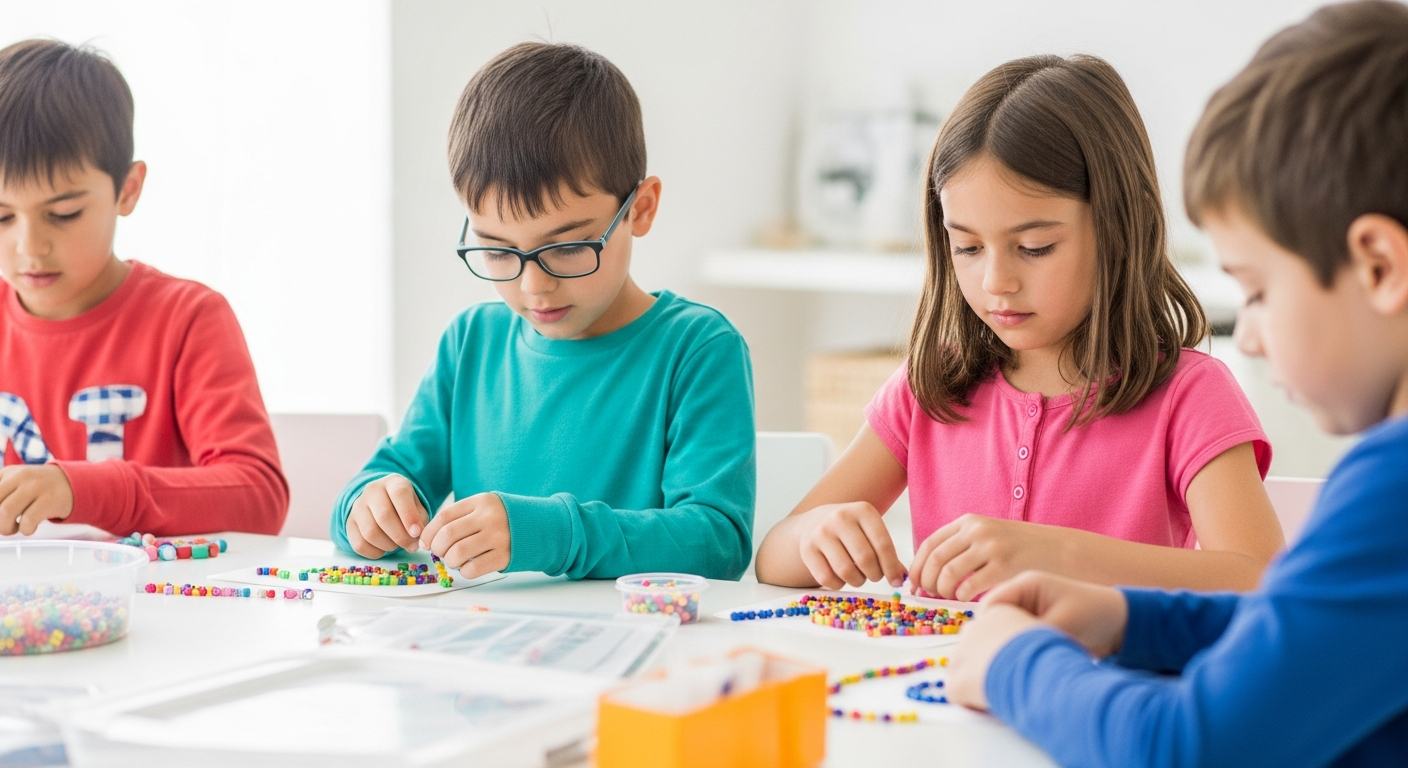
Table of Contents
- Introduction
- The Hidden Power of Tiny Treasures: Why Bead Crafts Matter for Development
- Building Your Bead Crafting Kit: Essential Supplies & Safety First
- Age-by-Age Guide to Bead Craft Adventures
- Beyond Bracelets: Creative Bead Craft Ideas
- Maximizing the Learning & Joy: Tips for Parents
- Invest in Their Future: The Speech Blubs Difference
- Conclusion
- FAQ Section
Introduction
Have you ever witnessed the profound focus of a child meticulously selecting a tiny, colorful bead, their small fingers expertly manipulating it onto a string? In that quiet moment of creation, something truly magical is happening. It's more than just a craft; it's a symphony of skill development, a canvas for self-expression, and a powerful pathway to unlocking a child’s full potential. In an age dominated by glowing screens and rapid-fire digital stimuli, finding hands-on, engaging activities that captivate a child's imagination while subtly building crucial developmental skills can feel like discovering a hidden treasure. Bead crafts are exactly that treasure.
This article is your comprehensive guide to the wonderful world of bead crafts for kids, exploring not just the array of beautiful creations they can make, but the profound developmental advantages these activities offer. From boosting fine motor dexterity and fostering pattern recognition to encouraging imaginative design and nurturing patience, bead crafts are a powerhouse of hidden educational benefits. We'll delve into everything from selecting the right beads and essential tools to ensuring safety and adapting projects for various age groups. Our goal at Speech Blubs is to empower children to "speak their minds and hearts," and we understand that holistic development, including strong fine motor and cognitive skills, forms the bedrock of confident communication. Just as we provide playful, scientifically-backed tools to help children master speech, we believe in encouraging every activity that builds foundational skills. Get ready to dive into a vibrant world where imagination is the only limit, and every threaded bead builds not just a craft, but a crucial skill.

The Hidden Power of Tiny Treasures: Why Bead Crafts Matter for Development
At Speech Blubs, we believe that the most impactful learning often blossoms through joyful, hands-on play. Bead crafts perfectly embody this philosophy, offering a wealth of benefits that extend far beyond simply creating a pretty ornament. They provide a fantastic, screen-free alternative to passive viewing, inviting children into a world of active engagement that aligns beautifully with our mission to foster holistic child development.
Precision in Every Piece: Fine Motor Skills & Dexterity
Perhaps the most immediately recognized benefit of bead crafts is their incredible impact on fine motor skills. The delicate acts of picking up small beads, manipulating them, and carefully threading them onto a string, pipe cleaner, or wire demand remarkable dexterity. This repeated practice strengthens the small muscles in a child’s fingers and hands, enhancing their pincer grasp, improving hand-eye coordination, and boosting overall control. These aren't just isolated skills; they are foundational for everyday tasks like learning to write, buttoning clothes, tying shoelaces, and even using utensils. The precision required in bead crafting subtly prepares children for the intricate oral motor movements necessary for clear articulation and speech development, creating a holistic link between hand and mouth coordination.
Cognitive Growth: Patterns, Problem-Solving, and Spatial Reasoning
Bead crafts are a hidden gem for cognitive development, stimulating young minds in multiple ways. Children naturally gravitate towards creating patterns, whether they are simple sequences of colors (like red-blue-red-blue) or more complex designs. This seemingly simple act introduces foundational mathematical concepts such as sequencing, repetition, and symmetry. As they progress to more intricate designs, kids engage in critical problem-solving: "How can I make this design symmetrical?" or "Which bead will fit perfectly here?" They also develop crucial spatial reasoning skills, visualizing how individual beads will fit together to form a larger, cohesive piece. This mental planning is a precursor to organizing thoughts for effective communication.

A Canvas of Colors: Creativity and Artistic Expression
With an endless array of bead shapes, sizes, colors, and textures, children are presented with a boundless canvas for creative expression. Bead crafts encourage them to experiment with color combinations, design layouts, and texture variations. This process helps them develop an aesthetic sense, understand basic art principles, and translate their inner visions into tangible creations. It's a wonderful, safe outlet for self-expression, allowing children to make something uniquely their own, which in turn boosts their confidence and fosters a profound sense of accomplishment. This creative freedom is essential for developing a unique voice, much like we encourage children to find their own ways to "speak their minds and hearts" through our app.
A Mindful Moment: Focus and Concentration
In today's fast-paced world, finding activities that encourage sustained focus and concentration is more important than ever. Bead crafts offer a much-needed opportunity for children to practice paying attention to a task for an extended period. The detailed nature of threading beads, following a pattern, or meticulously arranging components helps children develop patience and persistence. This quiet, mindful activity can be incredibly calming and therapeutic, teaching children to break down a larger project into smaller, manageable steps – a vital skill that translates to academic tasks and navigating life's challenges.
Sensory Exploration: Texture, Shape, and Sound
Beads provide a rich and engaging sensory experience. Children can explore different textures (the smooth coolness of glass, the rough grain of wood, the slick feel of plastic), diverse shapes (round, square, star-shaped), and even sounds (the gentle rattle of beads in a jar or as they are moved). This multi-sensory engagement deepens their understanding of the physical world and can be particularly beneficial for sensory learners, stimulating neural pathways crucial for processing language and environmental cues.
Fostering Independence and Self-Esteem: "I Made This!"
Completing any bead craft project, regardless of its simplicity, instills an immense sense of pride and accomplishment in a child. They can proudly wear their creations, give them as heartfelt gifts, or display them prominently, reinforcing their capabilities and significantly boosting their self-esteem. This powerful feeling of "I made this!" is invaluable for building confidence and encouraging future creative and learning endeavors. When children feel capable in one area, that confidence often spills over into others, including their willingness to communicate.
Social and Emotional Learning: Sharing and Collaborating
Bead crafts can also be a wonderful social activity. Children can work on projects together, sharing ideas, collaborating on larger pieces, and fostering essential teamwork and communication skills. When they choose to gift their creations, they learn about generosity, empathy, and the profound joy of making someone else happy. These social interactions and acts of giving contribute significantly to their emotional intelligence, laying the groundwork for positive relationships and effective interpersonal communication.
By engaging in bead crafts, children aren't just passing time; they're actively building a robust foundation of critical skills that support their development in countless ways. These foundational skills, from fine motor control to cognitive patterning, are often intertwined with a child's readiness and ability to communicate effectively. Just as children learn to refine their movements with beads, they can learn to refine their speech sounds and build vocabulary with playful, structured support. We're proud to offer Speech Blubs as a tool that complements these hands-on activities, providing a joyful solution for children who need speech support, empowering them to find their voice. Want to see how Speech Blubs can support your child's communication journey? Download Speech Blubs on the App Store or Google Play to explore our unique, science-backed approach.
Building Your Bead Crafting Kit: Essential Supplies & Safety First
Embarking on bead craft adventures with your kids doesn't demand a massive investment or a specialized workshop. With a few basic supplies and a steadfast focus on safety, you can effortlessly create a world of vibrant possibilities right at your kitchen table.
Essential Types of Beads: Picking the Perfect Palette
The world of beads is incredibly vast and varied, offering ideal options for every age, skill level, and crafting goal. Here are some of our favorite choices:
- Pony Beads: These are the quintessential kid-friendly beads. They are medium-sized, typically made of durable plastic, and come in a dazzling array of colors. Their larger holes make them exceptionally easy for small fingers to grasp and thread, making them perfect for toddlers and preschoolers. They are incredibly versatile for making bracelets, necklaces, keychains, and even decorating hair braids.
- Perler Beads (Fuse Beads): These small, cylindrical plastic beads are designed to be arranged on a pegboard to create pixelated designs and then "fused" together with an iron (always requiring close adult supervision!). They are fantastic for teaching precision, pattern recognition, and patience, resulting in cool coasters, ornaments, and imaginative figures.
- Wooden Beads: Available in various sizes, shapes, and natural or painted finishes, wooden beads offer a wonderful tactile experience. Their larger size and sturdy nature make them excellent for younger children, while older kids can appreciate their natural aesthetic for more sophisticated jewelry or decorative items.
- Alphabet Beads: Incorporating letter beads into crafts is a fantastic way to blend literacy with creativity. Children can spell out names, simple words, personalized messages, or create unique gifts, reinforcing letter recognition and early spelling skills.
- Seed Beads: These are tiny glass beads, best suited for older children or projects requiring fine detail and advanced dexterity. They are ideal for intricate jewelry designs, weaving, and embellishing fabrics.
Essential Threading Materials: The Right String for Every Project
The type of string or cord you choose will depend on the beads you're using and the project's complexity:
- Pipe Cleaners: Flexible, fuzzy, and easy to manipulate, pipe cleaners are perfect for toddlers and preschoolers. The stiffness helps hold beads in place, making threading simpler, and they can be bent into shapes afterward.
- Elastic Cord/Stretch String: Ideal for making easy-to-wear bracelets and necklaces without needing clasps. It's forgiving and stretches, making it popular for all ages.
- Yarn or Thick String: Great for larger beads with bigger holes. The texture can be easier for small hands to grasp than slicker cords.
- Fishing Line or Clear Monofilament: Best for projects that need a transparent or nearly invisible threading material, like suncatchers or delicate jewelry for older kids.
- Memory Wire: A coiled wire that retains its shape, perfect for sturdy bracelets and necklaces. It can be a little sharp, so it’s best for older children with adult supervision.
Other Handy Tools: Organizing & Finishing Touches
- Bead Containers/Organizer Boxes: Keep beads sorted by color, size, or type to prevent spills and make selection easier.
- Bead Trays or Mats: These often have flocked surfaces or raised edges to prevent beads from rolling away during crafting.
- Kid-Friendly Scissors: For cutting string and other materials safely.
- Craft Glue: For securing knots or attaching beads to other surfaces (e.g., decorating frames).
- Pliers (for older kids/adults): Needed for cutting and bending memory wire or attaching clasps to jewelry.
Safety Considerations: Our Top Priority
When engaging in bead crafts, safety must always be the top priority, especially with young children.
- Choking Hazard: Many beads are small and pose a significant choking hazard for children under three. Always supervise young children closely and choose larger, chunky beads that cannot be swallowed. Store small beads out of reach.
- Adult Supervision: For all ages, adult supervision is recommended. This is especially true for projects involving sharp tools (like scissors or memory wire) or heat (like fusing Perler beads).
- Non-Toxic Materials: Ensure all beads and crafting supplies are labeled as non-toxic, especially if crafting with very young children who might put things in their mouths.
- Allergies: Be mindful of any potential allergies to materials like certain plastics or metals.
By gathering these essential supplies and keeping safety at the forefront, you’re well on your way to countless hours of creative, developmental fun with easy bead crafts for kids!
Age-by-Age Guide to Bead Craft Adventures
Bead crafts are wonderfully adaptable, offering rich developmental opportunities for children across a wide range of ages. The key is to select projects and materials that match their current developmental stage and growing skill sets.
Tiny Hands, Big Discoveries: Toddlers (1-3 years)
For our youngest crafters, the focus is on sensory exploration, gross motor development, and cause-and-effect. Large, chunky beads are paramount here, as they are safer and easier for developing hands to grasp.
- Focus: Learning to grasp, hand-eye coordination, pushing/pulling, early color recognition, basic vocabulary.
- Recommended Beads: Large wooden beads, oversized plastic beads, pasta (like penne or rigatoni), or even O-shaped cereal.
- Threading Material: Thick pipe cleaners or sturdy laces with a stiff end (like shoelaces).
- Activity Idea: Cereal Ring Threading: Offer large cereal rings and pipe cleaners. Show them how to push the cereal onto the pipe cleaner. The satisfaction of seeing the cereal stack up is immense! This simple act helps refine their pincer grasp and bilateral coordination (using both hands together).
- Speech Blubs Connection: For a toddler just beginning to experiment with sounds and words, similar to how they focus on grasping a large bead, Speech Blubs offers engaging imitation activities. Our unique "video modeling" method helps them learn basic sounds by watching and imitating their peers, providing a visual and auditory cue that supports early speech development. Just as they learn to put beads together, they learn to put sounds together. If you're wondering about your child's early communication, take our quick 3-minute preliminary screener to get a simple assessment and a free 7-day trial.
Exploring Patterns & Personalities: Preschoolers (3-5 years)
At this age, children are ready for smaller beads, simple patterns, and expressing their burgeoning personalities. Their fine motor skills are developing rapidly, making more intricate tasks achievable with some guidance.
- Focus: Fine motor refinement, pattern recognition, color sorting, counting, early design concepts, naming objects.
- Recommended Beads: Pony beads, wooden beads, alphabet beads.
- Threading Material: Elastic cord, yarn, pipe cleaners.
- Activity Idea: Beaded Animal Creations: Provide pipe cleaners and green, red, or yellow pony beads. Guide them in making a "Hungry Caterpillar" by threading beads onto a pipe cleaner and bending it into a caterpillar shape. Or create beaded snakes or lizards. This activity encourages creativity and following simple instructions.
- Activity Idea: Name Bracelets: Using alphabet beads, help them spell out their name or the names of loved ones. This connects literacy with craft.
- Speech Blubs Connection: A preschooler learning to identify colors and create patterns with beads is also at a prime age for expanding their vocabulary and learning new words. Our app features engaging categories like "Animal Kingdom" or "Yummy Time," where children can practice naming objects, imitating sounds, and building descriptive language through fun, interactive video models. These activities are designed to reduce frustration and build confidence in a playful environment. See what other parents are saying about their child's success with Speech Blubs to learn more.
Crafting & Communicating: Early Elementary (5-8 years)
Children in early elementary school are ready for more complex projects, refined details, and a greater degree of independence. Their dexterity and cognitive skills allow for more intricate designs and problem-solving.
- Focus: Advanced fine motor control, complex pattern design, spatial reasoning, following multi-step instructions, creative storytelling through crafts.
- Recommended Beads: Pony beads, seed beads (with supervision), Perler beads, specialty shaped beads.
- Threading Material: Elastic cord, fishing line, memory wire (with adult help).
- Activity Idea: DIY Dream Catchers: Using small embroidery hoops, yarn, and a variety of beads, children can weave simple patterns and string beads into decorative dream catchers. This combines weaving with beading for a multi-skill craft.
- Activity Idea: Perler Bead Coasters/Keychains: Introduce Perler beads and pegboards. Guide them to create pixelated designs, then fuse them with an iron (adult-only task!). This teaches precision, planning, and patience.
- Speech Blubs Connection: As children refine their craft skills, they also refine their ability to articulate and construct more complex sentences. Speech Blubs supports this by engaging them with activities that encourage longer utterances, descriptive language, and storytelling, which are crucial for success in school and social interactions. Our "video modeling" method is backed by scientific research, placing us in the top tier of speech apps worldwide for delivering effective and engaging learning experiences.
Mastering the Art: Older Kids (8+ years)
Older children can handle sophisticated projects that involve more intricate techniques, smaller beads, and more abstract design concepts. They often enjoy creating items that look "grown-up" or have practical uses.
- Focus: Advanced crafting techniques, project planning, fine detail work, self-directed creativity, problem-solving complex designs.
- Recommended Beads: Seed beads, glass beads, gemstone chips, various specialty beads.
- Threading Material: Jewelry wire, memory wire, fine elastic cord, beading thread.
- Activity Idea: "Grown-Up" Stretch Bracelets: Using a mix of seed beads, glass beads, and accent charms on strong elastic cord, older kids can design and create stylish bracelets that look store-bought.
- Activity Idea: Spiral Suncatchers: With memory wire and faceted glass beads, children can create beautiful spiral suncatchers that catch and reflect light, requiring careful manipulation of wire and beads.
- Speech Blubs Connection: For older children, communication extends beyond basic vocabulary to expressing nuanced thoughts, complex emotions, and engaging in sophisticated conversations. Speech Blubs, born from our founders' personal experiences with speech challenges, is dedicated to providing tools that empower children of all ages to "speak their minds and hearts" with clarity and confidence. The focused effort in a complex bead project mirrors the dedication to mastering advanced communication skills.
Beyond Bracelets: Creative Bead Craft Ideas
While bracelets and necklaces are classic bead crafts, the possibilities are truly endless! Let's explore some unique and engaging ideas that go beyond traditional jewelry, perfect for easy bead crafts for kids of all ages.
1. DIY Kaleidoscopes
Imagine the delight of creating a personalized kaleidoscope that swirls with vibrant colors! This project uses a cardboard tube, clear plastic, colorful beads, and decorative paper. Children can carefully place beads between layers of plastic at one end, then decorate the outside of the tube. When held up to the light, the beads create ever-changing, mesmerizing patterns. It's a wonderful blend of art and science, encouraging an appreciation for light and reflection.
2. Beaded Bag Charms or Keychains
Kids love to personalize their belongings. With a simple keychain ring or lobster clasp, they can thread beads onto a short piece of elastic, sturdy string, or even a pipe cleaner, adding alphabet beads to spell out their initial or a fun word. These charms can then be attached to backpacks, lunchboxes, or used as keychains, providing a practical and personal touch. This activity is fantastic for developing fine motor skills and encouraging a sense of ownership over their creations.
3. Nature-Inspired Fairy Wands
Transform ordinary sticks from the garden into magical fairy wands! Collect interesting sticks, then provide garden twine, yarn, and a selection of colorful beads. Children can wrap the twine around the stick, securing it with glue, and then thread beads onto the ends of the twine, letting them dangle like enchanting ornaments. Adding leaves, feathers, or small bells can enhance the magic. This craft beautifully blends nature play with artistic expression.
4. Beaded Art on Canvas
For a truly unique artistic endeavor, have children create "paintings" using beads. Provide a canvas or sturdy cardboard, craft glue, and a variety of flat-backed or regular beads. Kids can draw an outline on the canvas and then carefully fill it in with glue, pressing beads into the adhesive. This can create textured mosaic-like art, abstract designs, or even recognizable pictures. It's an excellent way to explore texture, color, and design on a different medium.
5. Beaded Suncatchers
Beyond spirals, suncatchers can take many forms. Children can thread translucent pony beads onto fishing line or thin wire and attach them to a stick or a metal ring. When hung in a sunny window, the beads will sparkle and cast colorful reflections, creating a beautiful display. For older kids, Perler beads arranged on a pegboard can be melted together (by an adult) into flat shapes, then hung. These suncatchers encourage an understanding of light, color, and how materials interact.
6. Decorative Beaded Votives or Jars
Transform plain glass jars or votive holders into dazzling decorative pieces. Children can glue beads onto the outer surface of glass jars in patterns, stripes, or random designs. When a tealight or small LED candle is placed inside, the light will shimmer through the beads, creating a warm and inviting glow. This project is great for decorating a room or making a thoughtful handmade gift, while also developing precision and patience.
These creative ideas demonstrate the incredible versatility of beads. They offer opportunities for children to explore different techniques, unleash their imaginations, and create unique items that bring joy and a sense of accomplishment.
Maximizing the Learning & Joy: Tips for Parents
As parents, caregivers, or educators, your role in facilitating bead crafts goes beyond just providing the supplies. Your engagement, encouragement, and mindful interaction can significantly amplify the learning and joy your child experiences. Here are some practical tips to make the most of your bead craft adventures:
1. Set Up for Success: The Environment Matters
- Organized Space: Dedicate a clear, well-lit workspace. Use bead trays or mats with raised edges to prevent beads from rolling off.
- Accessible Supplies: Keep beads sorted by color, size, or type in clear containers. This helps children easily find what they need and practice categorization.
- Clear Instructions: Before starting, briefly explain the project and demonstrate any new techniques. Break down complex steps into smaller, manageable parts.
2. Encourage Independence (with Supervision)
- Let Them Choose: Offer a selection of beads and let your child choose their colors and designs. This fosters creativity and ownership over their project.
- Problem-Solve Together: When they encounter a challenge (e.g., a knot, a bead that won't fit), guide them to think through solutions rather than immediately fixing it for them. "What do you think we could try next?"
- Focus on the Process, Not Perfection: Emphasize the effort and enjoyment of the activity, rather than demanding a perfect end product. Praise their concentration and creativity.
3. Connect to Communication & Learning
- Descriptive Language: Engage in conversation about the beads. "What color bead are you using now?" "Can you find a round, bumpy bead?" "Tell me about your design – why did you choose those colors?" This builds vocabulary and descriptive skills.
- Counting & Patterns: Naturally weave in mathematical concepts. "How many red beads do you have?" "Can you make a pattern with two blue, then one yellow?"
- Storytelling: Encourage them to tell a story about their creation. "Who is this bracelet for?" "What adventures will your fairy wand go on?" This boosts narrative skills and imagination.
4. Patience & Positive Reinforcement
- Be Patient: Beading takes time and concentration, especially for little ones. Allow them to work at their own pace without rushing.
- Celebrate Efforts: Acknowledge their hard work, persistence, and unique ideas. A simple, "Wow, you worked so hard on that!" or "I love the way you put those colors together!" goes a long way.
- Display Their Work: Proudly display their finished creations. This validates their efforts and boosts their self-esteem.
5. Integrating with Speech Blubs: A Holistic Approach
Remember that activities like bead crafts, which strengthen fine motor skills and cognitive processing, create an excellent foundation for communication development. Just as you provide a supportive and engaging environment for crafting, Speech Blubs provides a nurturing, playful space for speech development.
- Relatable Scenario: For a parent whose 4-year-old struggles with articulation and is hesitant to speak in new situations, engaging in a bead craft project where they describe each bead they pick ('red circle,' 'blue star') can build descriptive language and confidence. This tactile experience pairs perfectly with Speech Blubs' 'Guess What' category, where children learn to describe objects, practice new sounds, and expand their vocabulary through engaging video modeling. Our "smart screen time" approach focuses on active imitation, reducing frustration and building confidence in a joyful way that complements hands-on play.
- Extend Learning: If your child is struggling with specific sounds or words, you can use the bead craft activity to reinforce them. For example, if they are working on the 'B' sound, ask them to pick 'blue' beads or talk about 'big' beads. Then, transition to Speech Blubs activities that target that same sound. Create your free trial account today and see how easy it is to integrate learning into play.
By actively participating and leveraging the inherent learning opportunities in bead crafts, you're not just helping your child make something beautiful; you're helping them build essential skills that contribute to their overall development, including their ability to communicate effectively and confidently.
Invest in Their Future: The Speech Blubs Difference
At Speech Blubs, our deepest desire is to empower children to "speak their minds and hearts." This mission is incredibly personal to us, as our company was born from the personal experiences of our founders, who all grew up facing speech challenges themselves. We vividly remember wishing for a tool that was immediate, effective, and joyful – so we created it.
We are committed to providing a groundbreaking solution for the 1 in 4 children who need speech support, seamlessly blending scientific principles with engaging play. The result is a one-of-a-kind "smart screen time" experience. Unlike passive viewing of cartoons, our app offers a screen-free alternative that fosters active engagement and interaction. We leverage a unique "video modeling" methodology, where children learn by watching and imitating their peers, stimulating mirror neurons and making learning intuitive and fun. This approach transforms screen time into a powerful tool for family connection and developmental growth.
Transparent Pricing for Lasting Value
We believe in making high-quality speech and language support accessible to every family. That’s why we offer transparent pricing options designed to provide maximum value:
- Monthly Plan: For a flexible commitment, our Monthly plan is available at $14.99 per month.
- Yearly Plan: For superior value and comprehensive features, our Yearly plan is available at $59.99 per year. This breaks down to an incredible just $4.99 per month!
Unlock Premium Benefits with the Yearly Plan
Choosing our Yearly plan is not just about saving money – you save 66% compared to the monthly subscription – it’s about unlocking the full Speech Blubs experience and ensuring your child has access to every tool for success. The Yearly plan includes exclusive, high-value features that are not available with the Monthly plan:
- A 7-day free trial: Experience the full power of Speech Blubs before committing.
- The extra Reading Blubs app: Enhance your child's literacy journey alongside their speech development.
- Early access to new updates: Be the first to enjoy new features and content.
- 24-hour support response time: Get prompt assistance whenever you need it.
The Monthly plan, while flexible, does not include these invaluable benefits. We strongly encourage you to choose the Yearly plan to get the free trial and the complete suite of features, providing the best support for your child's communication journey. Visit the Speech Blubs homepage to explore more about our mission and methods.
Conclusion
Bead crafts offer far more than just a creative pastime; they are a vibrant avenue for profound developmental growth. From the delicate refinement of fine motor skills and the critical engagement of cognitive problem-solving to the boundless expression of creativity and the quiet cultivation of patience, every threaded bead contributes to a child's holistic development. These hands-on activities provide a much-needed screen-free escape, fostering concentration, boosting self-esteem, and creating beautiful moments of connection between children and their caregivers.
Just as bead crafts lay a strong foundation for physical and cognitive dexterity, supporting overall readiness for learning, Speech Blubs is dedicated to building the foundational skills for confident and joyful communication. We offer a unique, science-backed approach that turns speech practice into engaging, "smart screen time" experiences, empowering children to find their voice and express themselves clearly. By combining the tangible joy of bead crafts with the targeted support of Speech Blubs, you are providing your child with a powerful, comprehensive toolkit for thriving.
Ready to take the next step in empowering your child's communication journey? Start your 7-day free trial today! Download Speech Blubs on the App Store or Google Play and make sure to select the Yearly plan to unlock your free trial, the bonus Reading Blubs app, and all our exclusive features for the best value and most comprehensive support. Give your child the gift of a confident voice and a lifetime of clear communication.
FAQ Section
Q1: What age can kids start doing bead crafts?
A1: Children can start engaging with bead crafts as early as 1-2 years old, provided you choose very large, chunky beads (like oversized wooden beads, pasta, or O-shaped cereal) and ensure constant, close adult supervision due to choking hazards. For toddlers, the focus is on gross motor practice, grasping, and simple threading onto pipe cleaners. As children get older, the bead sizes can decrease, and project complexity can increase, with smaller beads and more intricate designs typically suitable for ages 3 and up.
Q2: How can bead crafts specifically help with speech development?
A2: While not direct speech therapy, bead crafts significantly support foundational skills crucial for speech development. They enhance fine motor skills, which are often correlated with oral motor skills (the dexterity of the tongue, lips, and jaw needed for clear articulation). Bead crafts also improve hand-eye coordination, focus, and the ability to follow sequences – all cognitive skills that underpin language learning and processing. Engaging in conversations about colors, shapes, patterns, and the story behind their craft also naturally builds vocabulary and descriptive language, fostering expressive communication.
Q3: What are the best types of beads for beginners or younger children?
A3: For beginners and younger children (ages 1-4), the best beads are large and easy to handle. Pony beads (medium-sized plastic beads with large holes) are a popular choice due to their vibrant colors and ease of threading. Large wooden beads or oversized plastic "pop" beads are also excellent. For threading, pipe cleaners are ideal as they are sturdy and easy for small hands to manipulate. Always prioritize safety by choosing beads too large to be a choking hazard for the child's age group.
Q4: How does Speech Blubs support my child's communication journey alongside activities like bead crafts?
A4: Speech Blubs complements hands-on activities like bead crafts by providing targeted, engaging support for speech and language development. While bead crafts build foundational fine motor and cognitive skills, Speech Blubs uses a unique "video modeling" approach where children learn by imitating their peers. This active "smart screen time" helps with articulation, vocabulary expansion, and expressive language. For instance, after a bead craft session where you discussed colors, your child can practice naming colors and describing objects within the Speech Blubs app, reinforcing new words and sounds in a fun, interactive environment. We offer a joyful, effective solution to empower children to speak their minds and hearts.
About the author