
Simple Christmas Craft for Toddler: Easy Holiday Fun
 By Speech Blubs Team•Feb 23, 2026•15 min.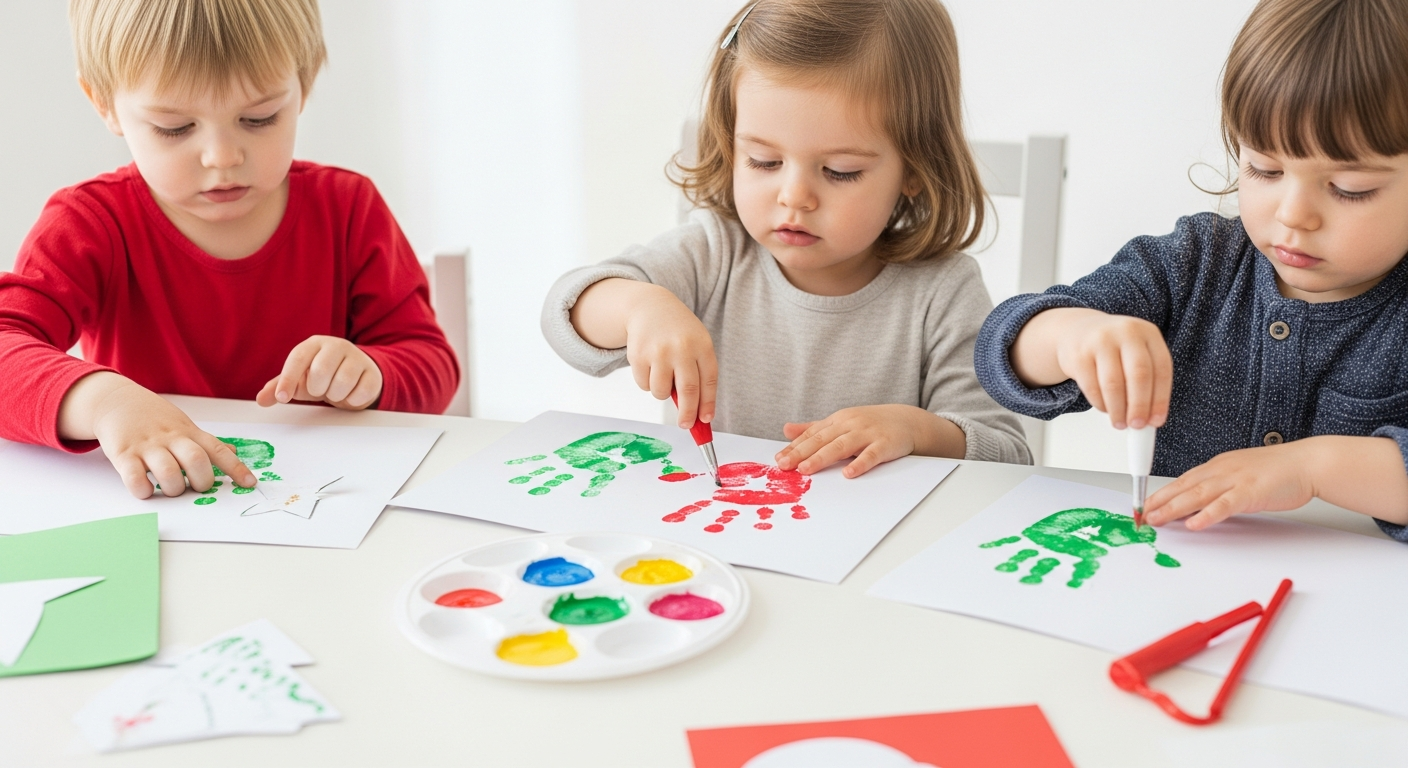
Table of Contents
- Introduction
- Why Crafting Matters for Toddler Development
- The Speech Blubs Approach: Play-Based Learning
- Top Christmas Crafts for Toddlers: Simple and Engaging
- Making the Most of Crafting Time: A Parent's Guide
- Transitioning from Physical Play to "Smart Screen Time"
- More Easy Craft Ideas for Busy Hands
- Real Stories: The Impact of Joyful Learning
- Choosing the Right Path for Your Child
- Transparency in Our Pricing
- Conclusion
- Frequently Asked Questions
Introduction
Have you ever watched a toddler witness the first glow of Christmas lights? There is a specific kind of magic in those wide eyes—a mixture of awe, curiosity, and pure, unadulterated joy. At Speech Blubs, we live for those moments. We know that for a child, the holiday season isn't just about the gifts under the tree; it’s about the sensory explosion of smells, colors, and the extra time spent with the people they love most.
However, we also know that for parents, the "most wonderful time of the year" can sometimes feel like the "most overstimulating time of the year." Between the holiday shopping and the endless events, finding a quiet moment to connect can be tough. That is why we believe a simple Christmas craft for toddler ages is more than just a way to decorate your home—it is a vital opportunity for language development, fine motor practice, and emotional bonding.

In this post, we are going to share a wealth of easy-to-implement, low-mess, and high-engagement Christmas crafts designed specifically for little hands. We will explore how these activities support your child’s communication skills and how you can use "smart screen time" to supplement their learning. Our goal is to help you create joyful family memories while helping your little one find the words to express their holiday excitement. By the end of this article, you will have a full toolkit of activities that turn "holiday chaos" into "holiday connection," fostering a love for communication that lasts far beyond December.
Why Crafting Matters for Toddler Development
When you sit down to make a paper chain or a thumbprint reindeer, you aren’t just making "fridge art." You are building a foundation for complex skills. For toddlers, crafting is a multi-sensory experience. They feel the sticky glue, see the bright red paper, and hear the crinkle of the foil.
Fine Motor Skills and Hand-Eye Coordination
Gripping a crayon, squeezing a glue bottle, or picking up a tiny pom-pom are all tasks that strengthen the small muscles in the hands. These are the same muscles your child will eventually use to write their name or tie their shoes. At Speech Blubs, we often discuss the "hand-brain connection." Engaging the hands in play actually stimulates the brain's neural pathways, making it more receptive to learning new concepts, including speech.
Vocabulary Expansion and Language Modeling
Crafting provides a natural environment for "narration." As your child works, you can model language: "Look, the glue is sticky." "You are using the green paint." "Put the star on top." This helps toddlers associate words with physical actions and objects in real-time. If you have a "late talker" who is currently obsessed with animals, you might choose a craft like "Cotton Ball Sheep" or "Reindeer Handprints." You can use the "Animal Kingdom" section of our app to practice "moo" and "baa" sounds together before you start crafting, creating a cohesive learning experience.

Building Confidence and Reducing Frustration
The holidays can be overwhelming for children who struggle to communicate their needs. Crafting is a "low-stakes" environment where there is no right or wrong. When a child creates something and sees it displayed on the tree, it builds their self-esteem. Our mission at Speech Blubs is to empower children to "speak their minds and hearts," and that empowerment often starts with the confidence gained through play.
The Speech Blubs Approach: Play-Based Learning
Our company was born from the personal experiences of our founders, who all grew up with speech problems. They created the tool they wished they had—a way to turn screen time into an active, joyful learning experience. We understand that 1 in 4 children will need speech support at some point. That’s why we’ve developed a unique "video modeling" methodology.
In our app, children learn by watching and imitating their peers. When a toddler sees another child making a specific sound or saying a word, their "mirror neurons" fire, making them much more likely to try the sound themselves. This peer-to-peer connection is at the heart of everything we do. We offer a "smart screen time" alternative to passive viewing. Instead of just watching a cartoon, your child is interacting, imitating, and communicating.
If you are unsure where your child stands in their development, you can take our quick 3-minute preliminary screener. It involves 9 simple questions and provides an assessment and next-steps plan to help you support your child’s unique journey.
Top Christmas Crafts for Toddlers: Simple and Engaging
Here are some of our favorite holiday crafts, categorized by the type of sensory experience they provide. Remember, the goal is the process, not a perfect final product!
1. Keepsake Ornaments: The "Mistle-Toes"
This is a classic for a reason. It is a wonderful way to document how much those little feet have grown.
- What you need: Green washable paint, white cardstock or a plain white ornament, and a red marker.
- The Process: Paint the bottom of your toddler’s foot green and press it onto the paper or ornament. Once it dries, use the red marker to draw small berries at the "heel" (the top of the mistletoe).
- Language Tip: Use this time to talk about body parts. "Tickle, tickle! Painting your toes! Now let's press your foot down. One, two, three... push!"
2. Potato Print Snowmen
Potatoes are the perfect size for toddler hands to grip, making them excellent DIY stamps.
- What you need: A potato (cut in half), white paint, and blue or black construction paper.
- The Process: Dip the flat side of the potato into the white paint and stamp it onto the paper to create the snowman’s body segments. Once dry, let your toddler use their fingers to add "snow" around the snowman.
- Language Tip: Focus on size words. "This circle is big. This one is small. The snowman is white."
3. Tape Resist Christmas Trees
This is a fantastic "no-fail" craft that looks professional every time.
- What you need: Painter's tape (or masking tape), green paint, and white paper.
- The Process: Use the tape to create the outline of a triangle (a tree) on the paper. Let your child paint all over the paper—even over the tape! Once the paint is dry, peel off the tape to reveal a crisp, white tree shape amidst the green paint.
- Language Tip: Focus on the action of "off." "Let's pull the tape off. What is hiding under the tape? It's a tree!"
4. Shaving Cream Marbled Trees
This is a high-sensory activity that toddlers absolutely love. It’s messy, but the results are stunning.
- What you need: A tray, shaving cream, green and yellow liquid food coloring or paint, and cardstock cut into tree shapes.
- The Process: Fill the tray with shaving cream and drop bits of color on top. Use a stick to swirl the colors together. Press the paper tree into the cream, lift it up, and scrape off the excess cream with a piece of cardboard. The marbled pattern stays behind on the paper!
- Language Tip: Talk about textures. "The cream is fluffy and soft. It feels cold!"
5. Pasta Wreaths
Using different shapes of pasta is a great way to introduce variety and sorting.
- What you need: Rigatoni or bowtie pasta, green paint, glue, and a paper plate with the center cut out.
- The Process: Have your child paint the pasta green (this can be done in a zip-top bag to keep hands cleaner!). Once dry, glue the pasta around the paper plate ring. Add a red ribbon at the top.
- Language Tip: Practice "more." "Do you want more pasta? Put it on the circle."
Making the Most of Crafting Time: A Parent's Guide
To ensure that your crafting session is a "joyful family learning moment" rather than a stressful chore, keep these tips in mind:
- Prepare the Space: Lay down an old tablecloth or newspapers. Have wet wipes ready before you start. Toddlers are unpredictable, and being prepared reduces your stress, which in turn reduces theirs.
- Focus on the Senses: Describe everything. The smell of the cinnamon dough, the crinkle of the tissue paper, the brightness of the glitter.
- Follow Their Lead: If your toddler wants to put 50 pom-poms in one corner of the paper instead of spreading them out, let them! This is their creation. Encouraging their autonomy builds confidence.
- Use it as a Bridge to Conversation: If they are struggling with a word, provide it gently. If they point to the glue, say, "Oh, you want the glue. Here is the sticky glue."
At Speech Blubs, we see activities like this as a powerful supplement to a child's overall development plan. While these crafts are excellent for foundational skills, some children may benefit from more structured support. If you're looking for a way to continue the learning after the crafts are put away, consider trying our app. You can download Speech Blubs on the App Store or get it on Google Play to begin your journey.
Transitioning from Physical Play to "Smart Screen Time"
We often hear from parents who are concerned about screen time. We share those concerns! Passive screen time—where a child sits silently watching a fast-paced cartoon—can often lead to overstimulation and less verbal interaction.
However, "smart screen time" is different. It is designed to be an active, co-playing experience. When you use Speech Blubs, we encourage you to sit with your child. Mimic the children on the screen together. If the "peer model" in the app says "Ho ho ho," you and your toddler can say it together while looking at the Santa mask you just made.
This creates a "learning loop" where the physical world (the craft) and the digital tool (the app) reinforce each other. Our methodology is backed by science, focusing on the power of imitation to trigger speech. You can read more about our research and the science behind our method on our website. We are proud to be rated highly on the MARS scale, reflecting our commitment to quality and educational value.
More Easy Craft Ideas for Busy Hands
6. Paper Plate Reindeer
A simple paper plate is one of the most versatile crafting tools you can have.
- The Process: Have your child color a paper plate brown. Trace their hands on brown construction paper and cut them out to serve as antlers. Glue the "hands" to the top of the plate and add a large red pom-pom for the nose.
- Why it works: It combines coloring, tracing, and gluing. Plus, using their own handprints makes it personal.
7. Cotton Wool Pad Snowman Cards
If you need a last-minute card for a grandparent, this is your best friend.
- The Process: Glue two or three white cotton wool pads (the kind used for makeup removal) in a vertical line on a piece of colored cardstock. Use markers to add a hat, scarf, and face.
- Why it works: The cotton pads are easy to handle and have a great soft texture.
8. Fork Painted Trees
Who knew a plastic fork could be a paintbrush?
- The Process: Dip the back of a plastic fork into green paint and press it onto paper in a series of rows, starting wide at the bottom and getting narrower at the top. The tines of the fork create the "needles" of the tree.
- Language Tip: Focus on the "up" and "down" motion. "Down goes the fork! Up goes the fork!"
9. Ribbon Snowman
- The Process: Cut three circles of different sizes from white paper. Let your child glue them together. Give them short scraps of colorful ribbon to use as "scarves" or "decorations" for the snowman.
- Why it works: Handling small scraps of ribbon is excellent for "pincer grasp" development.
10. The DIY Felt Christmas Tree
This isn't just a craft; it's a long-term activity.
- The Process: Cut a large triangle out of green felt and command-strip it to a wall at your toddler’s height. Cut various shapes (circles, stars, candy canes) out of other colors of felt.
- Why it works: Felt naturally sticks to felt. Your toddler can "decorate" and "undecorate" their own tree hundreds of times throughout December. This keeps them away from the breakable ornaments on the "big" tree and gives them a sense of ownership.
Real Stories: The Impact of Joyful Learning
We love hearing from our community. One parent recently shared:
"My 3-year-old was struggling with his 'S' sounds and was getting very frustrated when we couldn't understand him. We started using the 'Early Sounds' section of Speech Blubs every morning, and then we'd do a quick craft that used those sounds—like making 'Sss-sticky' stars. The combination of seeing other kids do it in the app and then doing it himself with the glue made a huge difference. He’s much more confident now!"
You can read more success stories and testimonials from parents who have seen the benefits of blending play with our scientific approach.
Choosing the Right Path for Your Child
Every child's developmental journey is unique. Some children are naturally "crafty," while others prefer movement or music. Some pick up words quickly, while others take a little more time and encouragement. Our goal at Speech Blubs is to meet your child where they are.
We don't offer "quick fixes" or guaranteed outcomes like "your child will be giving public speeches in a month." Instead, we focus on the beauty of the process:
- Fostering a genuine love for communication.
- Building the confidence to try new sounds.
- Reducing the frustration that comes with being misunderstood.
- Creating joyful family learning moments that you will treasure.
Transparency in Our Pricing
We want to be a long-term partner in your child’s development, which is why we offer clear and transparent pricing. We offer two main plans to fit your family’s needs:
- Monthly Plan: $14.99 per month. This is a great way to test the waters and see how your child responds to the app.
- Yearly Plan: $59.99 per year. This is our best value option, breaking down to just $4.99 per month.
When you choose the Yearly Plan, you don't just save 66%; you also unlock a suite of premium features that are not available on the monthly plan:
- A 7-day free trial: Experience everything we have to offer before you commit.
- The Reading Blubs app: An extra app designed to help your child transition from speech to reading.
- Early access to new updates: Be the first to try our latest activities and features.
- Priority Support: A 24-hour response time from our dedicated support team.
We believe every child deserves the chance to speak their mind and heart. Choosing the yearly plan is an investment in their long-term communication skills, providing them with a consistent, joyful tool for growth.
Conclusion
The holidays are a season of connection, and there is no better way to connect with your toddler than through the simple, messy, and wonderful world of crafting. Whether you are making a "Mistle-Toe" keepsake or letting them go wild with shaving cream and paint, you are doing the important work of building their brain, their hands, and their heart.
At Speech Blubs, we are honored to be a part of that journey. We believe that by combining traditional play—like a simple Christmas craft for toddler ages—with our innovative "smart screen time," we can help every child find their voice.
Ready to make this holiday season even more meaningful? Create your account and begin your 7-day free trial today. We recommend choosing the Yearly Plan to get the full suite of features, including Reading Blubs and our 7-day trial. Let’s start this journey together and help your little one speak their mind and heart this Christmas.
Frequently Asked Questions
What is the best age to start Christmas crafts with a toddler?
Most toddlers can begin very simple "process art" as soon as they can sit up and grasp objects, usually around 12–18 months. At this age, focus on sensory experiences like finger painting or playing with felt. As they reach 2 and 3, you can introduce more structured crafts like potato stamping or using glue sticks.
My toddler is a "late talker." Will crafting actually help them speak?
Yes! Crafting provides a "naturalistic" environment for language. Because the child is engaged in a fun, low-pressure activity, they are more likely to attempt vocalizations. By narrating what they are doing ("You have the red glitter!") and using tools like Speech Blubs to model peer sounds, you are creating a rich environment for language acquisition.
How do I manage the mess of holiday crafting?
Preparation is key! Use "low-mess" alternatives like paint sticks instead of liquid paint, or perform "messy" tasks (like glitter or shaving cream) inside a high-rimmed baking tray to contain the chaos. Remember, the "mess" is often where the best sensory learning happens!
Is the Speech Blubs app safe for my 2-year-old?
Absolutely. Speech Blubs is designed to be "smart screen time." It is an ad-free, kid-safe environment focused on educational content. We advocate for "co-playing," where parents sit with their child to engage with the app together, ensuring it remains an active and social experience rather than a passive one.
About the author