
Simple Christmas Craft Toddler Activities for Joy
 By Speech Blubs Team•Feb 23, 2026•15 min.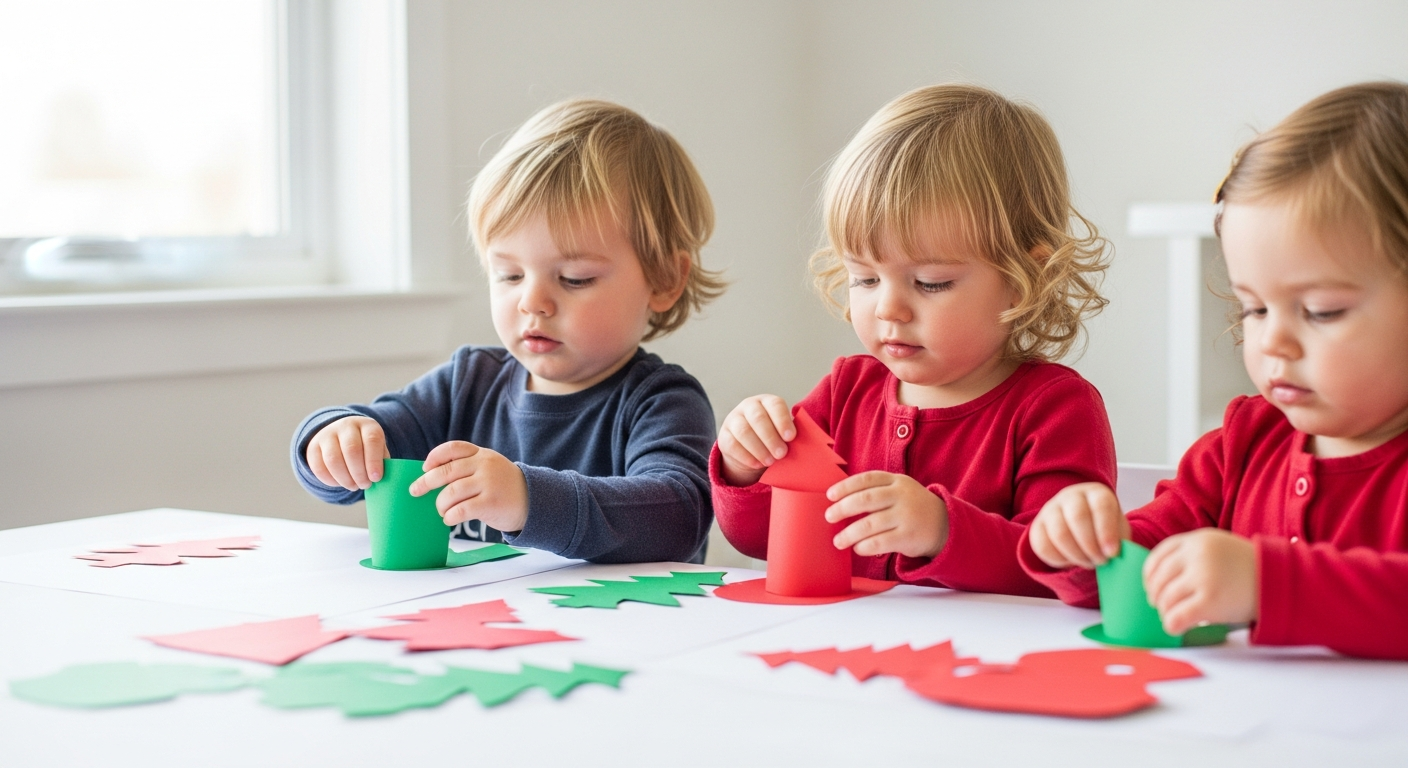
Table of Contents
- Introduction
- Why Crafting Matters for Toddler Development
- 1. The Classic Handprint Reindeer Keepsake
- 2. Sticky Scented Rice Christmas Tree
- 3. Paper Plate Christmas Wreaths
- 4. Fork-Painted Pine Trees
- 5. Dot Marker Holiday Lights
- 6. Cardboard Tube Santa and Elves
- 7. Cotton Ball Snowmen
- 8. Contact Paper "Stained Glass" Ornaments
- 9. Salt Dough Ornaments
- 10. Tinfoil Process Art
- Connecting Crafting to Language with Speech Blubs
- Choosing the Best Plan for Your Family
- Managing the Holiday Stress and Mess
- Conclusion
- FAQ
Introduction
Does the sound of the first holiday jingle make you feel a mix of excitement and a tiny bit of "homebound" dread? We’ve all been there. It’s a chilly Tuesday in December, the toddler is climbing the bookshelves, and you’ve already read the same book about a red-nosed reindeer fourteen times. The holiday season is a magical time, but for parents of little ones, it also brings the challenge of finding meaningful ways to channel that high-octane toddler energy when it’s too cold to play outside.
At Speech Blubs, we believe that the best way to support a child’s development is through the power of play. Our mission is to empower children to "speak their minds and hearts," a goal born from the personal experiences of our founders who faced their own speech challenges as children. We want to provide you with more than just a list of activities; we want to give you a toolkit for connection.

In this post, we will explore ten delightful Christmas craft toddler ideas that are designed to do more than just decorate your fridge. We’ll look at how these activities build fine motor skills, expand vocabulary, and foster the confidence your child needs to communicate. Whether your little one is already a chatterbox or is just starting to find their voice, these crafts offer a joyful way to learn together. By the end of this article, you’ll have a plan for "smart screen time" and hands-on fun that turns the holiday rush into a series of precious learning moments.
Why Crafting Matters for Toddler Development
Before we dive into the glitter and glue, it’s important to understand why we advocate for these specific activities. For a toddler, a craft isn't just about the final product; it’s about the process. When a child grasps a paintbrush or positions a sticker, they are developing the fine motor control necessary for future writing and self-care tasks.
Furthermore, crafting is a "language-rich" environment. It provides a natural stage for practicing prepositions (put it on the tree), adjectives (the cotton is soft), and verbs (we are painting). This aligns perfectly with our science-backed methodology at Speech Blubs. We utilize video modeling, where children watch their peers perform actions and make sounds, which triggers "mirror neurons" in the brain. You can replicate this at home by crafting alongside your child, letting them watch your hands and hear your voice as you describe the holiday magic you are creating together.
1. The Classic Handprint Reindeer Keepsake
There is a reason the handprint reindeer is a staple in preschools everywhere. It is simple, sentimental, and offers a wonderful opportunity for sensory exploration.
What you need:
- Brown non-toxic washable paint
- Heavy cardstock or a paper plate
- Red pom-poms (for the nose)
- Googly eyes
- Glue
How to do it: Paint your child’s palm and fingers with brown paint. This sensory experience can be surprising for some toddlers! Encourage them to describe the feeling. Is it cold? Is it wet? Press their hand firmly onto the paper. Once it’s dry, the fingers become the antlers and the palm becomes the reindeer’s face.

Language Tip: For a parent whose 3-year-old "late talker" loves animals, the "Animal Kingdom" section of the Speech Blubs app offers a fun, motivating way to practice the "r" sound for reindeer or the "n" sound for nose. As you glue on the red pom-pom, you can practice saying "red" or "nose" together. If you’re curious about how your child’s speech is progressing compared to developmental milestones, you can take our 3-minute preliminary screener to get a quick assessment and a customized plan.
2. Sticky Scented Rice Christmas Tree
Sensory bins are fantastic, but they can be messy. This craft takes the sensory benefits of rice and sticks them down!
What you need:
- Dry rice dyed green (use food coloring and a dash of vinegar)
- Peppermint or cinnamon extract (optional for scent)
- Contact paper (clear adhesive paper)
- A wall or table to tape it to
How to do it: Cut a large triangle out of contact paper and tape it to the wall or a low table, sticky side out. Let your toddler press the green rice onto the sticky surface.
The Learning Benefit: This activity is excellent for "joint attention," where you and your child are focused on the same task. Mention the scents—does it smell like a cookie or a candy cane? This builds "descriptive vocabulary." If you want to see how other families have used sensory-rich activities to boost communication, check out what other parents are saying about their experiences.
3. Paper Plate Christmas Wreaths
This craft is perfect for developing "bilateral coordination"—using both hands at the same time. One hand holds the plate, while the other applies the decoration.
What you need:
- A paper plate with the center cut out (adults should do the cutting)
- Green tissue paper or green paint
- Stickers, buttons, or ribbon for "ornaments"
How to do it: Let your toddler paint the ring green or glue down scrunched-up pieces of tissue paper. Scrunching paper is an incredible workout for tiny hand muscles! Once the base is green, they can "decorate" the wreath with stickers.
Speech Blubs Connection: While they work, you can use the Speech Blubs app to show them videos of other children playing with colors. You can Download on the App Store to find the "Color Me Happy" section, which reinforces the names of the colors they are using on their wreath.
4. Fork-Painted Pine Trees
Who knew a piece of cutlery could be an art tool? Fork painting creates a wonderful "pine needle" texture that fascinates toddlers.
What you need:
- Plastic forks
- Green and white acrylic or tempera paint
- Construction paper
How to do it: Dip the back of the fork into green paint and press it onto the paper in a downward motion to create a triangle shape. The tines of the fork make it look just like a prickly Christmas tree. You can add "snow" by doing the same thing with white paint.
Language Tip: Use directional words. "Go down, down, down!" and "Now up!" This helps toddlers understand spatial concepts that are foundational for following directions later in life.
5. Dot Marker Holiday Lights
Dot markers (also known as bingo daubers) are a toddler’s best friend because they provide immediate, vibrant color with very little pressure.
What you need:
- Multi-colored dot markers
- A sheet of paper with a black "string" drawn in a loopy line
How to do it: Ask your child to "light up" the string by placing dots of different colors along the line.
The Learning Benefit: This is a great exercise in "visual tracking" and hand-eye coordination. You can name the colors as they go: "Blue light, red light, yellow light!" For more interactive ways to learn through play, get it on Google Play and explore our library of over 1,500 activities.
6. Cardboard Tube Santa and Elves
Don't throw away those toilet paper or paper towel rolls! They are the perfect base for little holiday characters.
What you need:
- Cardboard tubes
- Red and white paper or paint
- Cotton balls
- Markers
How to do it: Wrap the tube in red paper for Santa’s suit. Glue cotton balls at the top for his beard and a little at the very top for the trim of his hat.
Interactive Play: Once Santa is made, he can "talk." This is a great way to encourage "expressive language." Have Santa ask your child what they want for Christmas or what their favorite snack is. Using a puppet or a character often makes children feel more comfortable practicing new sounds.
7. Cotton Ball Snowmen
If you live in a place where it doesn't snow (or if it's just too cold to go out), you can make a "warm" snowman inside.
What you need:
- Blue construction paper
- Three circles cut out of white paper (small, medium, large)
- A bag of cotton balls
- Glue
How to do it: Glue the three circles onto the blue paper to form the snowman’s body. Then, have your child fill in the circles by gluing down cotton balls.
Language Tip: This is the perfect time to talk about "sizes." Ask them, "Where is the big circle? Where is the small head?" Comparing sizes is a vital early math and language skill. We focus on these foundational skills across all our "smart screen time" experiences on the Speech Blubs homepage.
8. Contact Paper "Stained Glass" Ornaments
These look beautiful hanging in a window where the winter sun can shine through them.
What you need:
- Contact paper
- Scraps of colorful tissue paper
- Construction paper frames (circles or stars)
How to do it: Place a piece of contact paper sticky side up. Lay the construction paper frame on top. Let your toddler fill the middle with colorful tissue paper scraps. Seal it with another piece of contact paper and trim the edges.
The Learning Benefit: This is a "low-frustration" craft because the tissue paper can go anywhere and still look great. Building confidence is key to communication; a child who feels successful is a child who is more willing to try new words.
9. Salt Dough Ornaments
This is a multi-sensory experience that involves "kitchen science" and tactile play.
What you need:
- 2 cups of flour
- 1 cup of salt
- 1 cup of water
How to do it: Mix the ingredients into a dough. Let your toddler help stir and knead. Use cookie cutters to make stars, trees, or hearts. Poke a hole in the top for a ribbon, bake at 250°F (120°C) for about two hours, and then paint them once they are cool.
Language Tip: Describe the dough. Is it "squishy"? Is it "heavy"? Following a recipe is a sequence of events (first, second, third), which helps children understand the structure of stories and conversations.
10. Tinfoil Process Art
Tinfoil is shiny, crinkly, and fun to paint on! It offers a completely different texture than paper.
What you need:
- A sheet of cardboard wrapped in tinfoil
- Acrylic or tempera paint
- Dish soap (mix a drop into the paint to help it stick to the foil)
How to do it: Simply let your child paint on the shiny surface. The reflection of the Christmas lights in the foil makes this feel extra festive.
Why Process Art? Process art is about the doing, not the result. It reduces the pressure on the child and allows them to explore their creativity freely. This mirrors our philosophy at Speech Blubs—we focus on the joy of the process to foster a lifelong love for communication.
Connecting Crafting to Language with Speech Blubs
While hands-on crafting is essential, we know that parents also need a moment to breathe. That’s where Speech Blubs comes in as a powerful supplement to your child’s development. We provide a screen-free alternative to passive viewing (like cartoons). Instead of your child just watching a show, they are actively participating, imitating, and learning from other children.
Our app is designed to be a tool for family connection. You can use the "smart screen time" sessions to find inspiration for your next craft. For example, if you are doing the Handprint Reindeer, you can watch the "Animal Kingdom" section together first to see how other kids make reindeer sounds. This "video modeling" method is incredibly effective because toddlers naturally want to copy what other kids are doing.
Ready to see the difference for yourself? Sign up via our web page to begin your journey.
Choosing the Best Plan for Your Family
We want to be transparent about our pricing because we value the trust you place in us. We offer two main ways to join the Speech Blubs family:
- Monthly Plan: For $14.99 per month, you get full access to the Speech Blubs app and all its core features.
- Yearly Plan: This is our best value at $59.99 per year. This breaks down to just $4.99 per month, saving you 66% compared to the monthly rate.
The Yearly Plan is designed to provide a comprehensive, long-term support system for your child. It includes several exclusive, high-value features that the Monthly plan does not:
- 7-Day Free Trial: You can explore everything we offer risk-free for a full week.
- Reading Blubs App: As a bonus, you get our Reading Blubs app, which focuses on early literacy and phonics.
- Early Access: You’ll be the first to receive our new updates and features.
- Priority Support: Enjoy a 24-hour response time from our dedicated support team.
We encourage you to choose the Yearly plan to get the full suite of features and ensure your child has a consistent, joyful learning experience throughout the year.
Managing the Holiday Stress and Mess
Let’s be honest: crafting with a toddler can be messy. There will be glitter in places you didn't know glitter could go. However, the benefits far outweigh the cleanup. Here are a few tips to keep the stress low:
- Limit the Choices: Don't give a toddler twenty colors of paint. Give them two or three that look good together (like green, gold, and red).
- Define the Space: Use a large tray or a plastic tablecloth to keep the mess contained.
- Keep it Short: A toddler’s attention span is usually about one minute per year of age. If they want to stop after five minutes, that’s okay!
- Focus on the Connection: The goal isn't a perfect ornament; it’s the laugh you share when the cotton ball sticks to your nose instead of the snowman.
By integrating these small moments of creativity with "smart screen time" from Speech Blubs, you are creating a holistic environment where your child can thrive. We are here to support you every step of the way, helping your child to speak their mind and heart with confidence.
Conclusion
Christmas is a season of wonder, and through the eyes of a toddler, even a simple piece of construction paper can become a magical memory. These ten christmas craft toddler activities are designed to spark joy, build essential skills, and create opportunities for you to connect with your little one on a deeper level.
From the tactile fun of salt dough to the visual excitement of dot markers, each activity serves as a building block for your child's communication and confidence. Remember, you don't have to do it all alone. At Speech Blubs, we are committed to providing an immediate, effective, and joyful solution for the 1 in 4 children who need speech support. Our app is a tool created by people who understand the journey, designed to make learning feel like play.
We invite you to make this holiday season even more impactful. Start your journey today by downloading our app and choosing the plan that fits your family best. Don't forget that the Yearly plan offers the best value, including a free trial and the Reading Blubs app.
Download Speech Blubs on the App Store or Google Play to begin. Let's make this December a month of growth, laughter, and beautiful new words.
FAQ
1. My toddler still puts everything in their mouth. Are these crafts safe? Safety is our top priority. For "mouthers," we recommend using edible-safe paints (like yogurt mixed with food coloring) and avoiding small parts like buttons or tiny sequins. Always supervise your child closely during craft time. The "Sticky Scented Rice" and "Contact Paper" crafts are generally safer as the items are adhered to a surface.
2. How can I use these crafts to help my child with a speech delay? Crafting is perfect for "narrating." As your child works, describe what they are doing: "You are squeezing the glue. It's sticky!" This models language without pressure. You can also use the "Smart Screen Time" in Speech Blubs to show them peer-led videos of the words you are using during your craft session.
3. What if my child isn't interested in the craft and just wants to play with the supplies? That is actually a great thing! Exploring the supplies is a form of sensory play. If they just want to feel the cotton balls or crinkle the tinfoil, let them. You can still use that time to talk about textures and sounds, which is just as valuable for language development as finishing the project.
4. Does the Speech Blubs Yearly plan really include a free trial? Yes! When you select the Yearly plan, you receive a 7-day free trial to explore all the features, including the bonus Reading Blubs app. This is the best way to see if our methodology—including video modeling and our high-rated MARS scale exercises—is the right fit for your family before committing.
About the author