
Simple Christmas Crafts for Kids: Festive Fun & Language Growth
 By Speech Blubs Team•Dec 22, 2025•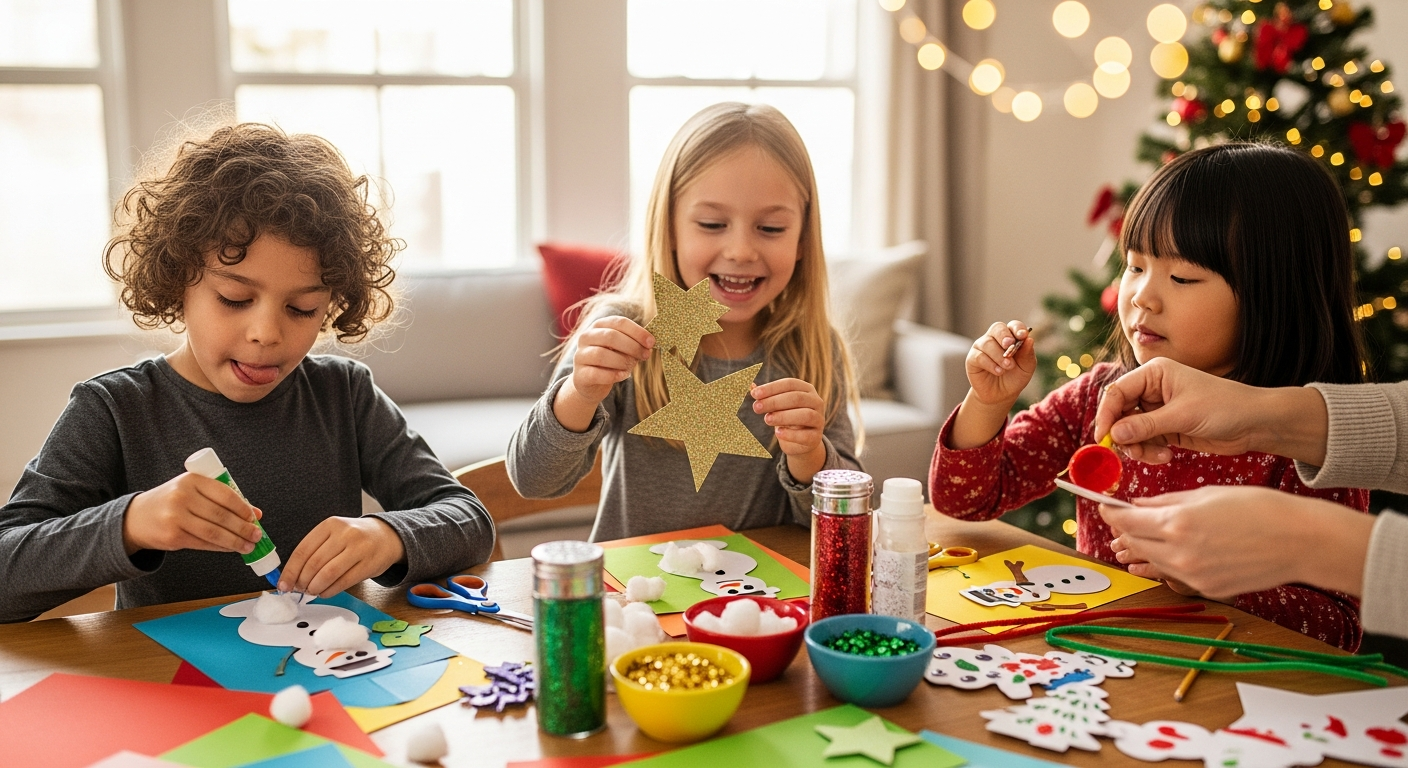
Table of Contents
- Introduction
- Why Christmas Crafts Are More Than Just Festive Fun
- Our Favorite Easy Christmas Crafts for Kids (with Language Tips!)
- Maximizing Language Development During Craft Time
- When to Seek Extra Support for Your Child's Speech
- How Speech Blubs Helps Nurture Communication Skills
- Choosing the Right Speech Blubs Plan for Your Family
- Conclusion
- FAQ
Introduction
Do you remember the quiet joy of making a wonky, glitter-covered ornament as a child, perhaps a handprint reindeer or a paper chain that stretched across the living room? These aren't just fond memories; they're powerful experiences that shape a child's development in countless ways. As parents, we often seek out activities that are not only fun but also genuinely beneficial for our children's growth. And what better time than the festive Christmas season, filled with anticipation and wonder, to engage in easy, heartwarming crafts that naturally foster communication and developmental skills?
This holiday season, let's look beyond the twinkling lights and gift wrap to discover how simple Christmas crafts can become incredible opportunities for language development, fine motor skill enhancement, and imaginative play. From the gentle art of gluing cotton balls to creating sparkling ornaments, we'll explore practical, joyful activities that bring families closer while stealthily building crucial communication foundations. Get ready to transform everyday materials into magical learning tools, helping your child to speak their minds and hearts, not just about their crafts, but about the world around them.
Why Christmas Crafts Are More Than Just Festive Fun
Christmas crafts are often seen as delightful ways to decorate our homes or create thoughtful gifts, but their true value for child development is immense and often underestimated. When little hands engage with various textures, shapes, and colors, they're not just making a pretty decoration; they're embarking on a multi-sensory learning journey that touches every aspect of their growth.
Developing Fine Motor Skills
The intricate movements required for crafting—pinching a sequin, cutting a line, squeezing glue, drawing with crayons—are foundational for developing fine motor skills. These are the small, precise movements of the hands and fingers that are essential for tasks like writing, buttoning clothes, and even eating independently. Each craft provides a unique challenge, gradually strengthening those tiny muscles and improving hand-eye coordination. Imagine a child carefully placing glitter on a paper plate Santa's beard; that focused, delicate action is building skills they'll use for a lifetime.
Sparking Creativity and Imagination
Crafts provide an open canvas for imagination. There’s no single "right" way to make a craft, allowing children the freedom to express themselves and bring their unique visions to life. A pinecone can become a grumpy elf or a sleepy reindeer. A simple paper plate can transform into a jolly Santa or a mischievous grinch. This imaginative play is crucial for cognitive development, helping children to think abstractly, create scenarios, and problem-solve within their own invented worlds.
Boosting Problem-Solving Abilities
"How do I make the star stick to the tree?" "Which color will look best here?" Crafting naturally presents small challenges that encourage children to think critically and find solutions. They learn to adapt, experiment, and sometimes even embrace "mistakes" as part of the creative process. This iterative approach to problem-solving builds resilience and a willingness to try new things, even when the outcome isn't immediately clear.
Fostering Patience and Persistence
Some crafts take time and a steady hand. Waiting for glue to dry, carefully painting within lines (or deciding not to!), or assembling multiple pieces teaches children patience. The process itself becomes as important as the final product. Learning to persist through a task, even when it's challenging, instills a sense of accomplishment and teaches them the value of effort.
Emotional Expression and Self-Esteem
When a child proudly presents their handmade ornament or card, they are sharing a piece of themselves. Crafting allows for non-verbal expression of feelings and ideas. Successfully completing a craft, especially one they've put effort into, significantly boosts their self-esteem and confidence. They learn that their efforts are valued and that they are capable creators.
The Hidden Gift: Language Development Through Crafts
Perhaps one of the most remarkable benefits of engaging in easy Christmas crafts for kids is the incredible boost they provide for language development. Craft time is ripe with opportunities for conversation, descriptive language, following directions, and expressing ideas—all in a fun, pressure-free environment.
- Vocabulary Expansion: As you work together, you'll naturally introduce new words. Think about colors ("bright red," "sparkly silver"), shapes ("round ornament," "triangle tree"), textures ("soft cotton," "rough pinecone," "sticky glue"), actions ("cut," "glue," "paint," "sprinkle"), and objects ("ribbon," "bead," "tinsel"). The sensory experience of crafting helps cement these words in a child's mind.
- Following Directions: Craft recipes are perfect for practicing sequential language. "First, get the paper. Then, cut a circle. Next, glue on the eyes." This helps children understand multi-step instructions, a vital skill for both academic and daily life.
- Descriptive Language: "Tell me about your snowman!" "What color is the star?" Children learn to use adjectives to describe their creations, explaining their choices and processes. This deepens their understanding and use of language.
- Turn-Taking and Conversation: Crafting is inherently a shared activity. "My turn to pour the glitter!" "Your turn to choose the pom-poms!" This encourages natural conversation flow, listening skills, and understanding social cues.
- Storytelling: Once a craft is complete, it can become a character in a story. "This reindeer is going to fly all around the world!" Encouraging children to create narratives around their crafts strengthens their narrative skills, imagination, and ability to sequence events.
- Expressing Needs and Wants: "I need more glue!" "I want the blue glitter!" Craft time provides low-pressure opportunities for children to clearly articulate their desires, which is crucial for functional communication.
- Sound Practice: For children working on specific speech sounds, crafts can be a playful context. If making a snowman, practice the "sn" sound. If gluing, "glu-glu-glu!" If wrapping a present, "wrap-wrap-wrap!" These informal moments are highly effective.
At Speech Blubs, we believe in empowering children to "speak their minds and hearts." Our company was born from the personal experiences of our founders, who all grew up with speech problems and created the tool they wished they had. We know firsthand the difference that early, joyful, and effective speech support can make. While hands-on crafts provide invaluable real-world practice, we've blended scientific principles with play into one-of-a-kind "smart screen time" experiences designed to complement these activities. Our mission is to provide an immediate, effective, and joyful solution for the 1 in 4 children who need speech support, providing a screen-free alternative to passive viewing and a powerful tool for family connection. We achieve this through our unique "video modeling" methodology, where children learn complex communication skills by watching and imitating their peers, reinforcing the very skills you're nurturing with crafts. For more on the science behind our method, explore our research page.
Our Favorite Easy Christmas Crafts for Kids (with Language Tips!)
Let's dive into some wonderful, easy Christmas crafts that are perfect for kids of all ages, complete with ideas on how to weave in rich language learning. Remember, the goal is connection and communication, not perfection!
Simple Ornaments
Ornaments are fantastic because they're small, manageable, and create lasting memories.
Salt Dough Ornaments
Salt dough is incredibly versatile and safe for little ones. Materials: 1 cup flour, 1/2 cup salt, 1/2 cup water (approx.), cookie cutters, straw, paint, glitter, ribbon. How to Make:
- Mix flour and salt in a bowl.
- Gradually add water, kneading until a smooth dough forms.
- Roll out the dough (about 1/4 inch thick).
- Use cookie cutters to make festive shapes (stars, trees, bells).
- Use a straw to poke a hole at the top for hanging.
- Bake at 250°F (120°C) for 2-3 hours until hard, or air dry for 24-48 hours.
- Once cooled and hardened, paint and decorate! Language Tips:
- Vocabulary: "Flour," "salt," "dough," "roll," "knead," "cut," "smooth," "sticky," "bake," "paint," "sparkle," "hard."
- Action Verbs: "Mix," "add," "roll," "cut," "poke," "bake," "paint."
- Descriptive: "Is the dough smooth or sticky?" "What shape is your ornament?" "Which color paint should we use, bright red or sparkly blue?"
- Sequencing: "First, we mix. Next, we roll."
- Sensory: "How does the dough feel?" "Does it smell like baking?"
Popsicle Stick Christmas Trees
A classic craft that’s simple and fun! Materials: Green popsicle sticks, glue, pom-poms, glitter, small buttons, star stickers. How to Make:
- Glue three green popsicle sticks into a triangle shape for the tree.
- Glue a small brown popsicle stick to the bottom for the trunk.
- Let dry completely.
- Decorate with pom-poms, glitter, buttons, and a star at the top. Language Tips:
- Colors & Shapes: "We need green sticks for the triangle tree." "Which color pom-pom should we put on the tree?" "Look, a yellow star!"
- Counting: "How many sticks do we have?" "Let's count the pom-poms: one, two, three!"
- Prepositions: "Put the star on top." "Glue the trunk at the bottom."
- Actions: "Glue," "decorate," "stick."
- Requesting: "I need more glue." "Can I have a red pom-pom?"
Pinecone Critters/Ornaments
Connect with nature and create charming little creatures. Materials: Pinecones (collected from outside!), googly eyes, felt scraps, small pom-poms, glue, pipe cleaners, ribbon. How to Make:
- Go on a nature walk to find pinecones.
- Let them dry thoroughly if damp.
- Glue googly eyes onto the pinecone to make a face.
- Add felt ears, pom-pom noses, or pipe cleaner antlers to create a reindeer, owl, or squirrel.
- Attach a ribbon if turning into an ornament. Language Tips:
- Vocabulary: "Pinecone," "rough," "spiky," "smooth," "acorn," "leaves" (from nature walk). "Googly eyes," "antlers," "nose," "ears."
- Descriptive: "What does the pinecone feel like? Is it rough or smooth?" "What color felt should we use for the ears?"
- Animal Sounds: If making a reindeer, "What sound does a reindeer make?" (Imagination!).
- Storytelling: "This little pinecone reindeer lives in the forest." "Where will he go?"
- Prepositions: "Glue the eyes on the pinecone."
Festive Decorations
These crafts are perfect for adorning your home and bringing holiday cheer.
Paper Plate Santa/Reindeer
Transform a simple paper plate into a jolly character. Materials: Paper plates, cotton balls, red and brown construction paper, googly eyes, red pom-pom (for Santa's nose), glue, markers. How to Make:
- For Santa: Paint the top half of the plate red (for the hat). Glue cotton balls around the bottom rim for the beard and along the hat line. Add googly eyes and a red pom-pom for the nose. Draw a smile.
- For Reindeer: Paint the plate brown. Add googly eyes. Cut out brown paper antlers and glue them to the top. Add a red pom-pom for Rudolph's nose, or draw a black nose. Language Tips:
- Body Parts/Facial Features: "Santa has a big, white beard." "The reindeer has two antlers." "Where are Santa's eyes?"
- Colors & Shapes: "We need a red hat for Santa." "The reindeer's nose is red and round."
- Action Verbs: "Paint," "glue," "cut," "draw."
- Storytelling: "Santa is flying in his sleigh!" "Rudolph's nose glows bright!"
- Asking Questions: "Who is this?" "What does Santa say?"
Cotton Ball Snowman
A sensory experience that's easy and mess-free! Materials: Blue construction paper, cotton balls, glue, small twigs (for arms), orange paper (for nose), black markers. How to Make:
- Draw three circles on the blue paper for the snowman's body.
- Fill the circles with glue and stick cotton balls all over to make a fluffy snowman.
- Add small twig arms, an orange carrot nose, and draw on eyes and a smile. Language Tips:
- Vocabulary: "Snowman," "fluffy," "cold," "warm," "melt," "twig," "carrot."
- Sensory: "How do the cotton balls feel? Soft? Fluffy?"
- Concepts: "Big," "medium," "small" for the three circles. "Up," "down," "on."
- Weather: "When do we see snowmen? In winter! Is it cold outside?"
- Storytelling: "This snowman is so happy! What do you think he likes to do?"
Handprint/Footprint Art
A treasured keepsake and a wonderful way to talk about growth. Materials: Washable paint (various colors), large paper or cardstock, markers, glitter (optional). How to Make:
- Paint your child's hand or foot with a festive color (e.g., green for a tree, white for a ghost, red for Santa's body).
- Press firmly onto paper.
- Once dry, use markers to add details: turn a green handprint into a Christmas tree with a star on top, or a white footprint into a snowman. Language Tips:
- Body Parts: "This is your hand." "These are your fingers." "This is your foot."
- Actions: "Paint," "press," "print," "dry."
- Descriptive: "Look at your green handprint tree!" "It's so big!"
- Comparing: "Your hand is bigger than mine!" "My foot is small."
- Memory Making: "Remember when your hand was this small?" "This will remind us of Christmas!"
Gift-Giving Crafts
Handmade gifts are the most cherished, and these crafts encourage thoughtfulness.
Decorated Picture Frames
A personal touch for a loved one. Materials: Plain wooden or cardboard picture frame, paint, glue, glitter, small jewels, buttons, ribbon. How to Make:
- Decorate the frame with paint, glitter, and small embellishments.
- Let it dry completely.
- Insert a favorite photo of your child or family. Language Tips:
- Vocabulary: "Frame," "decorate," "photo," "picture," "gift."
- Descriptive: "Which color should we paint the frame? Sparkly gold?" "Who is in this picture?"
- Emotions: "This picture makes me happy." "Grandma will love this!"
- Sharing Memories: "Remember when we took this photo?" "What were we doing?"
- Identifying People: "Who is this person?" "What's their name?"
Homemade Greeting Cards
Encourages early writing and expression. Materials: Foldable cardstock, crayons, markers, stickers, glitter, construction paper scraps, glue. How to Make:
- Fold cardstock in half.
- Decorate the front with drawings, stickers, and cut-out shapes.
- Inside, help your child write or dictate a message to a loved one. Even scribbles are a form of communication! Language Tips:
- Vocabulary: "Card," "letter," "message," "draw," "write," "envelope."
- Social Language: "Who are we making this card for?" "What should we say to Grandma?" "Happy Holidays!" "Merry Christmas!"
- Feelings: "We love Grandma!" "This makes me feel happy."
- Pre-writing Skills: Holding a crayon, scribbling, drawing shapes, forming letters (if age-appropriate).
- Sequencing: "First, we draw. Then we write a message."
Reindeer Food
A magical craft that prepares for Santa's arrival. Materials: Oats, glitter (biodegradable is best!), small clear bags, stapler, construction paper for labels. How to Make:
- Mix oats and glitter in a bowl.
- Spoon the mixture into small clear bags.
- Staple a folded piece of construction paper to the top of the bag to create a label.
- Decorate the label with "Reindeer Food" written on it and drawings of reindeer. Language Tips:
- Vocabulary: "Oats," "glitter," "mix," "spoon," "bag," "label," "magic."
- Counting & Measuring: "Let's put three spoons of oats." "A little glitter!"
- Sensory: "How do the oats feel?" "What does glitter look like?"
- Imagination: "The reindeer will love this special food!" "Will Rudolph come?"
- Sequencing: "First we mix, then we bag it, then we make a label."
Playful Creations
These crafts often have an element of wonder or interactive fun.
DIY Snow Globes
A mini winter wonderland. Materials: Small clean jar with a lid, distilled water, glitter, waterproof glue, small plastic Christmas figurines (e.g., tiny snowman, tree). How to Make:
- Glue a figurine to the inside of the jar lid. Let dry completely.
- Fill the jar almost to the top with distilled water.
- Add a teaspoon of glitter. (A tiny drop of dish soap can help glitter fall slower, but avoid too much!)
- Carefully screw the lid on tightly.
- Shake and watch the snow fall! Language Tips:
- Vocabulary: "Jar," "lid," "figurine," "glitter," "water," "shake," "swirl," "fall."
- Action Verbs: "Glue," "fill," "add," "shake," "watch."
- Descriptive: "Look at the glitter swirl down, down, down!" "It's a tiny winter wonderland."
- Cause & Effect: "What happens when you shake it?" "The snow falls!"
- Prepositions: "The snowman is in the jar." "The glitter is in the water."
Paper Chains
Simple, repetitive, and great for patterns. Materials: Strips of colored construction paper (red, green, white), glue stick or tape. How to Make:
- Take one strip of paper and form a loop, gluing/taping the ends together.
- Thread another strip through the first loop, then glue/tape its ends together to form a second loop, linking the first.
- Continue this process to create a long chain. Language Tips:
- Colors & Patterns: "Red, green, red, green... what color comes next?" "What a long chain!"
- Counting: "Let's count how many loops we have made!"
- Action Verbs: "Loop," "glue," "tape," "link," "pull."
- Concepts: "Long," "short," "together," "apart."
- Requesting: "I need more red paper." "Can you help me glue this?"
Cookie Decorating (Edible Crafts)
A delicious and sensory experience! Materials: Baked sugar cookies (homemade or store-bought), icing (various colors), sprinkles, small candies. How to Make:
- Provide a variety of icing colors, sprinkles, and small candies.
- Let children decorate the cookies however they wish.
- Enjoy the delicious results! Language Tips:
- Sensory: "How does the icing smell? Sweet!" "These sprinkles are crunchy." "What does it taste like?"
- Colors & Shapes: "What color icing are you using?" "Is that a star cookie or a tree cookie?"
- Action Verbs: "Spread," "sprinkle," "decorate," "eat."
- Requesting & Sharing: "Can I have some blue icing?" "Do you want to share a sprinkle?"
- Comparing: "My cookie has more sprinkles than yours!" "This cookie is delicious!"
Maximizing Language Development During Craft Time
To truly harness the linguistic potential of these easy Christmas crafts for kids, consider these strategies:
- Narrate Everything: Be your child's personal commentator! "I'm cutting the red paper. Now you're gluing the star." This models language and connects words to actions.
- Ask Open-Ended Questions: Instead of "Is that blue?", try "What color did you choose for that?" or "Tell me about your snowman." This encourages more than a yes/no answer.
- Follow Their Lead: Let them choose the next step or the color. When they make a choice, describe it ("You picked the sparkly green!").
- Expand on Their Words: If your child says "tree," you can expand: "Yes, a tall, green Christmas tree!" This introduces new vocabulary and concepts.
- Model New Vocabulary: Introduce descriptive words like "sparkle," "jingle," "festive," "cozy," "dazzling," "ornate."
- Encourage Sound Play: If making an animal, practice its sound. If squeezing glue, "s-s-s-squeeze!" This makes sound production fun.
- Sing Christmas Songs: Connect songs to the crafts. If making a reindeer, sing "Rudolph the Red-Nosed Reindeer."
- Read Christmas Books: Link craft themes to stories. After making a snowman, read "The Snowman" by Raymond Briggs.
When to Seek Extra Support for Your Child's Speech
While engaging in these easy Christmas crafts for kids is a fantastic way to support speech and language development, it's also important for parents to be aware of typical communication milestones. Every child develops at their own pace, but if you have concerns about your child's speech, trust your instincts. Sometimes a little extra support can make a world of difference.
For parents who are uncertain or seeking validation, we offer a quick 3-minute preliminary screener. This involves just 9 simple questions and provides an assessment and a next-steps plan. It's a great, low-pressure way to get immediate insights and, if applicable, leads to a free 7-day trial of our app. Our methodology is rooted in science, and we're proud that Speech Blubs ranks in the top tier of speech apps worldwide on the MARS scale, an independent rating system for mobile health apps. You can learn more about our commitment to efficacy on our research page.
How Speech Blubs Helps Nurture Communication Skills
At Speech Blubs, we are dedicated to providing immediate, effective, and joyful solutions for children's speech development. We know that real-world interaction and play are vital, and our app is designed to be a powerful supplement to these experiences and, when applicable, professional therapy. We call it "smart screen time"—an active, engaging alternative to passive viewing.
Our core approach is built on "video modeling," where children learn by watching and imitating their peers, rather than animated characters. This unique method is incredibly effective because children are naturally motivated to imitate other children. It fosters:
- Articulation: Practicing sounds and words in a fun, repetitive way.
- Vocabulary: Expanding their word bank with engaging themes and categories like "Animal Kingdom" or "Yummy Time."
- Sentence Structure: Learning to form longer phrases and sentences.
- Social Communication: Through video modeling, children grasp the nuances of interacting and expressing themselves.
- Early Literacy: Our exclusive Reading Blubs app, available with our best value plan, helps children develop foundational reading skills.
Speech Blubs helps children build confidence, reduce frustration, and develop key foundational communication skills. Our aim is to foster a lifelong love for communication, creating joyful family learning moments. We’ve seen incredible transformations, as countless parents have shared their success stories. See what other parents are saying about their child's success with Speech Blubs on our testimonials page.
Ready to begin your journey of empowering your child's voice? Download Speech Blubs on the App Store or Google Play to explore our engaging activities and see how we can support your child's communication journey. If you prefer to sign up from your computer, you can also create your account and begin your free trial on our website.
Choosing the Right Speech Blubs Plan for Your Family
We offer flexible plans to suit your family’s needs, but for the very best value and features, we highly recommend our Yearly plan.
Our Monthly plan is available for $14.99 per month.
However, our Yearly plan is the clear best choice at $59.99 per year, which breaks down to just $4.99 per month! That’s a massive 66% savings compared to the monthly option.
Beyond the significant cost savings, the Yearly plan also unlocks exclusive, high-value features designed to give your child the most comprehensive support:
- A 7-day free trial: Try out the full app before committing.
- The extra Reading Blubs app: Enhance early literacy skills alongside speech development.
- Early access to new updates: Be among the first to experience our latest features.
- 24-hour support response time: Get quick assistance whenever you need it.
The Monthly plan does not include these fantastic benefits. We want you to experience the full potential of Speech Blubs, which is why we encourage you to choose the Yearly plan to get your free trial and the complete suite of features.
Conclusion
This Christmas, let's embrace the magic of simple crafts not just for their festive charm, but for the profound impact they have on our children's development. From developing crucial fine motor skills and sparking imagination to, most importantly, nurturing their language abilities, easy Christmas crafts for kids are a gift that keeps on giving. By engaging in these joyful activities, narrating our actions, asking open-ended questions, and expanding on our children's words, we create an environment rich in communication.
Remember, every glitter-dusted ornament and handprint masterpiece is an opportunity to connect, to learn, and to grow. And as you embark on these festive learning adventures, know that Speech Blubs is here to support you. We believe in providing powerful tools that empower children to speak their minds and hearts, complementing your efforts with engaging "smart screen time" rooted in scientific methodology.
Ready to add another layer of joyful learning to your child's communication journey? Don't wait to give your child the gift of a stronger voice. Download Speech Blubs on the App Store or Google Play today and begin your 7-day free trial. For the best value and access to all our incredible features, make sure to choose the Yearly plan. Let's make this holiday season a time of joyful creation and confident communication!
FAQ
Q1: What age group are these crafts suitable for?
Many of these crafts are adaptable for a wide range of ages, from toddlers (with adult supervision, especially with small parts or cutting) to older elementary children. Toddlers will benefit from sensory exploration, gluing, and simple painting. Preschoolers can engage more with cutting, identifying colors and shapes, and following multi-step directions. Older children can tackle more intricate designs, fine-tune their motor skills, and express complex ideas. Always adapt the complexity and supervision level to your child's developmental stage.
Q2: How can I make craft time less messy?
Embrace the mess a little, but certainly, you can minimize it! Lay down old newspapers, a plastic tablecloth, or a cut-open garbage bag to protect surfaces. Use smocks or old shirts for children. Keep wet wipes or a damp cloth handy for quick clean-ups. Portion out materials in small bowls to prevent spills, and teach children to put lids back on glue and paint when finished. Outdoor crafting is also a great option for particularly messy projects!
Q3: How often should we do crafts to help with language?
Consistency is key, but don't feel pressured to craft daily. Even 15-30 minutes a few times a week can make a significant impact. The most important thing is to make it a regular, enjoyable activity that your child looks forward to. The quality of interaction and communication during craft time is more valuable than the quantity. Incorporating language-rich practices, as discussed above, will amplify the benefits regardless of frequency.
Q4: Is Speech Blubs a substitute for traditional speech therapy?
No, Speech Blubs is designed to be a powerful and effective supplement to a child's overall development plan. While it is rooted in scientific principles and can significantly help children develop foundational communication skills through engaging "smart screen time," it is not intended to replace professional, in-person speech therapy for children with more significant or complex speech and language disorders. For those undergoing therapy, Speech Blubs can be a wonderful tool to reinforce skills learned in sessions. If you have concerns about your child's speech development, we encourage you to consult with a speech-language pathologist for a personalized assessment.