
Simple Holiday Crafts for Little Ones: Creative Play & Skill Building
 By Speech Blubs Team•Dec 22, 2025•19 min.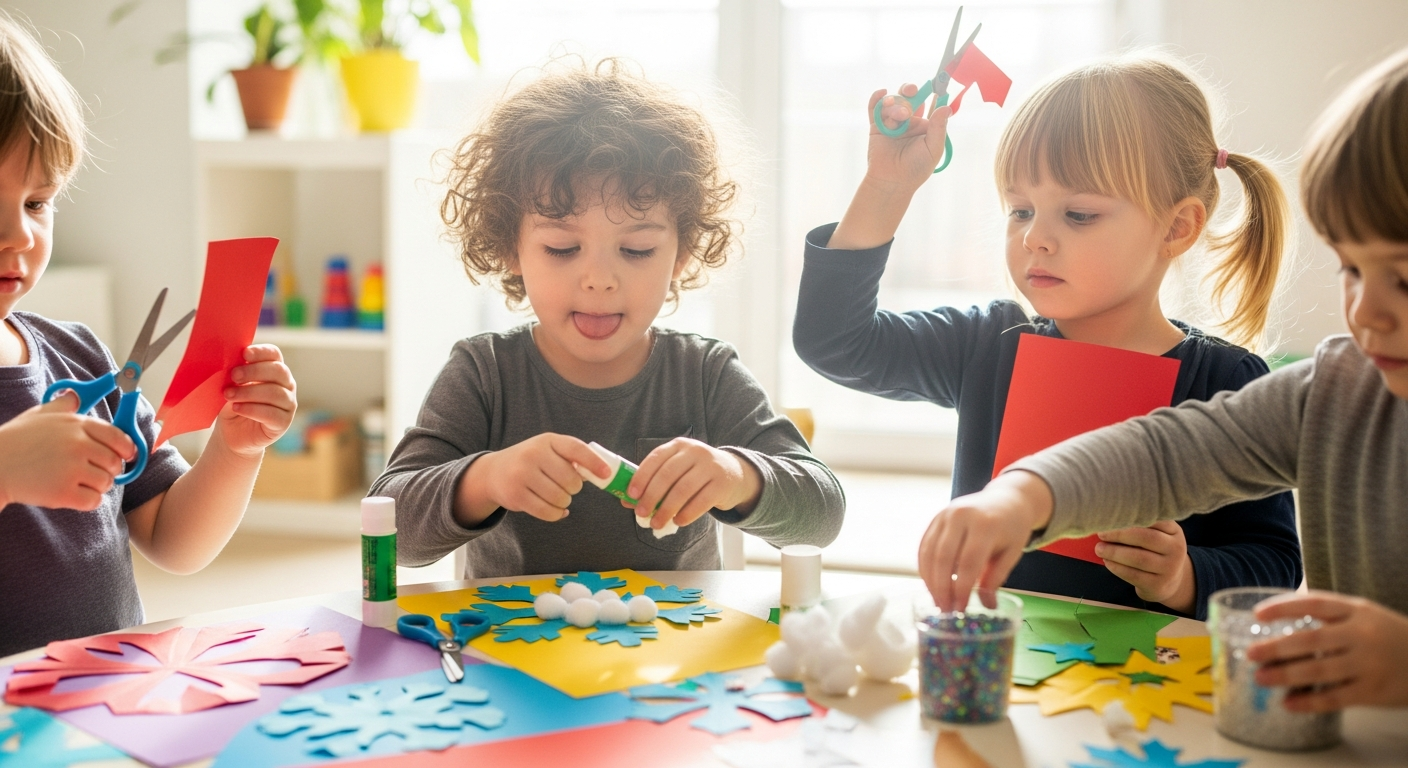
Table of Contents
- Why Christmas Crafts Are More Than Just Fun
- Crafting Connections: How Speech Blubs Enhances Holiday Learning
- Simple & Sweet: Easy Christmas Crafts for Toddlers & Preschoolers (Ages 1-3)
- Creative & Engaging: Easy Christmas Crafts for Early Elementary (Ages 4-7)
- Tips for a Stress-Free Crafting Session
- Beyond the Craft: Extending Learning and Communication
- Making the Most of Your Speech Blubs Journey
- Conclusion
- FAQs
The holiday season bursts forth with a unique magic, a time when homes glow with twinkling lights, the air fills with the scent of pine and gingerbread, and children’s eyes sparkle with anticipation. Yet, for parents, this enchanting time can also bring a flurry of activity, leaving us searching for engaging, easy ways to connect with our little ones without adding to the holiday hustle. Enter the wonderful world of Christmas crafts! These aren't just delightful decorations; they are powerful tools for fostering creativity, building fine motor skills, and, most importantly, sparking joyful communication within your family. This guide will take you through a collection of simple, festive crafts perfect for various age groups, demonstrating how each project can become a cherished memory and a valuable learning opportunity, ultimately helping your child to speak their minds and hearts.

Why Christmas Crafts Are More Than Just Fun
At first glance, Christmas crafts might seem like purely recreational activities, a way to keep little hands busy during the colder months. However, upon closer inspection, they reveal themselves as rich, multi-faceted platforms for a child's holistic development. Engaging in these festive projects offers a treasure trove of benefits that extend far beyond simply creating a pretty ornament.
Developing Essential Skills Through Play
Crafting is an immersive, hands-on experience that inherently supports the growth of several crucial developmental areas:
- Boosting Fine Motor Skills: From the careful snip of scissors (age-appropriate, of course!) to the precise placement of a googly eye or the delicate spread of glitter glue, crafts are an excellent workout for tiny hands and fingers. These actions enhance dexterity, hand-eye coordination, and the pincer grasp – all foundational for writing, self-feeding, and many daily tasks.
- Sparking Creativity and Imagination: Unlike structured play, crafts often invite open-ended exploration. There's no single "right" way to decorate a paper plate Christmas tree. Children are encouraged to choose colors, shapes, and textures, allowing their unique personalities and imaginative visions to shine through. This freedom fosters self-expression and builds confidence in their own ideas.
- Enhancing Cognitive Development: Crafting involves following instructions, whether visual or verbal, which strengthens a child's ability to sequence tasks and process information. Identifying colors, counting materials, understanding shapes, and even simple problem-solving (like "how do I get this ribbon to stick?") all contribute to cognitive growth. They learn cause and effect, spatial reasoning, and material properties.
- Building Emotional Connection and Confidence: Shared crafting moments create invaluable opportunities for family bonding. Working alongside a parent or caregiver fosters a sense of teamwork and shared accomplishment. The pride a child feels when they complete a craft, seeing their creation displayed prominently, significantly boosts their self-esteem and sense of capability. These positive experiences lay the groundwork for a more open and willing approach to learning new things, including communication.
- Igniting Communication Skills: Perhaps one of the most significant, yet often overlooked, benefits of crafting is its power to stimulate language development. Describing materials ("This glue is sticky!"), narrating actions ("I'm cutting the red paper"), asking questions ("Can I have more glitter?"), and discussing the finished product ("Look at my shiny star!") all provide natural contexts for rich verbal exchange. These organic conversations are goldmines for vocabulary expansion, sentence structure practice, and understanding conversational turn-taking. This is where the magic truly aligns with our mission at Speech Blubs: empowering children to speak their minds and hearts by giving them the tools and confidence to communicate effectively.
Crafting Connections: How Speech Blubs Enhances Holiday Learning
At Speech Blubs, our mission is deeply personal. Our company was born from the direct experiences of our founders, who themselves grew up with speech challenges. They created the very tool they wished they had – an immediate, effective, and joyful solution for the 1 in 4 children who need speech support. We believe that every child deserves the chance to express themselves fully, and we're committed to providing a pathway to that confidence, blending scientific principles with play into one-of-a-kind "smart screen time" experiences. We offer a screen-free alternative to passive viewing, like cartoons, and a powerful tool for family connection, ensuring that technology serves as a bridge, not a barrier, to communication.

Our unique approach centers around a "video modeling" methodology, where children learn by watching and imitating their peers. This technique leverages mirror neurons, allowing children to naturally mimic sounds, words, and expressions in a fun, pressure-free environment. Think of it as inviting a friend over for a playdate where the play revolves around learning to talk!
Let's consider a relatable scenario: A parent is crafting a cheerful snowman with their 3-year-old, who is a "late talker" and struggles with descriptive words. As they work, the parent points out, "This cotton is so soft and white! We need a round head and a bigger body." The child might echo "white" or "round" or just point. After the craft, the parent can open Speech Blubs, perhaps to the "Talking to Animals" section, and continue practicing descriptive words. The app’s engaging content and video modeling methodology offer a fun, motivating way for the child to see and hear peers making those sounds and words, reinforcing the vocabulary learned during crafting.
With Speech Blubs, the fun doesn't stop when the craft is done. Our app becomes an extension of the learning, providing targeted activities that reinforce the vocabulary and sounds practiced during your holiday crafting sessions. To start transforming everyday moments into powerful communication opportunities, download Speech Blubs on the App Store or get Speech Blubs on Google Play today!
Simple & Sweet: Easy Christmas Crafts for Toddlers & Preschoolers (Ages 1-3)
For our littlest crafters, the key is simplicity, sensory engagement, and safety. These crafts focus on basic shapes, textures, and lots of repetition to encourage early vocabulary and motor skill development. Remember, adult supervision is always essential.
Cotton Ball Snowman
This craft is wonderfully tactile and encourages exploration of textures and simple concepts.
- Materials: Blue construction paper, cotton balls, glue stick or liquid glue, orange paper triangle (for nose), googly eyes, black marker.
- Steps:
- Help your child draw two circles on the blue paper for the snowman's body. Don't worry about perfection!
- Show them how to gently pull apart cotton balls and glue them onto the circles, filling them completely. Talk about how the cotton feels "soft" and looks "white" like snow.
- Glue on the orange paper triangle for the "carrot nose."
- Add googly eyes.
- Use a black marker to draw a smile and "buttons."
- Communication Focus: "Soft," "white," "round," "glue," "eyes," "nose," "smile," "snow." Practice "cold" and "snowman."
Paper Plate Christmas Tree
A classic craft that's great for color recognition and shape identification.
- Materials: Green paper plate (or white plate painted green), child-safe scissors, various small decorations (pom-poms, glitter glue, stickers, small pieces of colored paper), glue stick.
- Steps:
- Pre-cut the paper plate into a triangle shape to resemble a Christmas tree. For older preschoolers, they can help snip along pre-drawn lines.
- Provide a tray of small, colorful decorations. Encourage your child to choose and glue them onto their "tree."
- Talk about the "green" tree, the "sparkly" glitter, or the "round" pom-poms.
- Add a small star sticker at the top.
- Communication Focus: "Green," "triangle," "pointy," "decorate," "star," "sparkle," names of colors. Practice counting decorations.
Handprint Reindeer
A personal keepsake and a fun sensory experience with paint.
- Materials: Brown construction paper, brown paint (child-safe), red pom-pom, googly eyes, glue stick, markers.
- Steps:
- Help your child paint their palm and fingers brown.
- Press their hand firmly onto the brown paper to create a "handprint." The fingers will become the antlers.
- Once dry, glue a red pom-pom in the center of the palm print for the "red nose."
- Add two googly eyes above the nose.
- Use markers to draw a mouth or additional details.
- Communication Focus: "Brown," "paint," "hand," "squish," "antlers," "nose," "eyes," "Rudolph."
- Relatable Scenario: A parent notices their toddler is hesitant to make new sounds or try new words. Creating a handprint reindeer involves many sensory inputs – the feel of the paint, the act of pressing their hand – which can often loosen up a child's vocalizations. Simple verbalizations like "squish," "paint," "hand" can be encouraged. To further build this confidence in a low-pressure environment, Speech Blubs offers engaging activities where children can imitate sounds and words through video modeling, seeing peers model the exact sounds. This helps build foundational confidence in speaking.
Jingle Bell Shakers
A craft that involves sound and rhythm!
- Materials: Empty toilet paper roll, construction paper, jingle bells, tape, glue, small stickers or markers for decoration.
- Steps:
- Cover one end of the toilet paper roll with construction paper, securing it tightly with tape or glue.
- Have your child drop several jingle bells into the open end of the roll. Count them together!
- Securely cover the other end of the roll with construction paper.
- Decorate the outside with stickers, drawings, or glitter.
- Encourage your child to "shake, shake, shake!" and make music.
- Communication Focus: "Shake," "jingle," "bells," "loud," "quiet," "listen," "music," "inside." Practice counting bells.
Creative & Engaging: Easy Christmas Crafts for Early Elementary (Ages 4-7)
Children in this age group are ready for slightly more intricate projects, involving more steps and encouraging fine-tuning of motor skills and creative expression.
Pinecone Ornaments
A nature-inspired craft that brings the outdoors in.
- Materials: Pinecones, white glue, glitter, small pom-poms, sequins, pipe cleaners, string or ribbon.
- Steps:
- Gather pinecones from outdoors (or purchase them from a craft store).
- Help your child apply glue to the pinecone scales.
- Sprinkle glitter or attach small pom-poms and sequins into the crevices. Talk about the "prickly" texture of the pinecone and the "sparkly" glitter.
- Twist a pipe cleaner around the top of the pinecone, forming a loop, or tie a piece of string/ribbon to create a hanger.
- Communication Focus: "Prickly," "glittery," "sparkle," "shiny," "decorate," "hang," colors. Practice descriptive adjectives.
Popsicle Stick Stars or Sleighs
These versatile sticks can become anything!
- Materials: Popsicle sticks, white glue, paint or markers, glitter, small gems or beads.
- Steps (for Stars):
- Arrange 5 popsicle sticks to form a star shape. Help your child glue the overlapping ends together. This might require some patience!
- Once dry, paint or color the star.
- Decorate with glitter, gems, or beads.
- Attach a loop of string to hang.
- Steps (for Sleighs):
- Glue 4-5 popsicle sticks side-by-side to form the base of the sleigh.
- Glue two more sticks at an angle underneath as runners.
- Allow to dry, then decorate.
- Communication Focus: "Stick," "glue," "star," "sleigh," "straight," "pointy," "design," "decorate," "build." Practice following multi-step directions.
Paper Chain Garlands
A classic, simple craft that's great for counting and pattern recognition.
- Materials: Construction paper in various Christmas colors (red, green, white, gold), ruler, pencil, child-safe scissors, glue stick or tape.
- Steps:
- Help your child measure and cut strips of paper (e.g., 1 inch wide by 8 inches long).
- Show them how to form a loop with one strip and glue or tape the ends together.
- Thread the next strip through the first loop, then glue its ends together to form a second loop, creating a chain.
- Continue adding links, choosing colors to create a pattern if desired.
- Communication Focus: "Link," "chain," "long," "short," "loop," "pattern," "red," "green." Practice counting links, describing the sequence.
- Relatable Scenario: A child is struggling with sequencing and following multi-step instructions, which can be a common challenge for developing communicators. Making a paper chain garland provides a clear visual and tactile sequence: cut, loop, glue, link. Speech Blubs offers structured activities that are perfect for reinforcing these skills, helping children practice following directions in a fun, interactive way. To explore these benefits and more, we invite you to create your account and begin your 7-day free trial today.
DIY Snow Globes
A captivating craft that creates a miniature winter wonderland.
- Materials: Small jar with a tight-sealing lid (e.g., baby food jar), waterproof figurine (small plastic toy), distilled water, glycerin (optional, helps glitter fall slowly), glitter, waterproof glue (e.g., E6000).
- Steps:
- Glue the waterproof figurine to the inside of the jar lid. Allow it to dry completely.
- Fill the jar with distilled water.
- Add a pinch of glitter and a few drops of glycerin (if using).
- Carefully screw the lid onto the jar, making sure it's very tight. You might want to add a thin bead of waterproof glue around the rim of the lid for extra security.
- Turn the jar upside down and "shake, shake, shake!" to watch the snow fall.
- Communication Focus: "Water," "shake," "sparkle," "glitter," "figure," "inside," "outside," "up," "down." Practice descriptive words and prepositions.
Tips for a Stress-Free Crafting Session
While the goal is fun and learning, crafting with kids can sometimes feel overwhelming. Here are some tips to ensure your easy Christmas crafts remain joyful and manageable:
- Preparation is Key: Gather all materials before you start. Lay out newspapers or an old tablecloth to protect your surfaces. Have wet wipes or a damp cloth ready for quick cleanups.
- Embrace the Mess: Crafts often involve glue, paint, and glitter. A little mess is part of the creative process! Dress your child in old clothes or an art smock, and remember that washable materials are your best friend.
- Focus on Process, Not Perfection: The beauty of kid crafts lies in their unique, often whimsical, charm. Resist the urge to "fix" their creations or impose your own aesthetic. Celebrate their effort and individuality.
- Talk, Talk, Talk: This is your prime opportunity for language development! Narrate your actions ("I'm putting the glue here"), ask open-ended questions ("What color should we use next?"), and describe what you see ("That pom-pom is so fuzzy!").
- Keep It Short & Sweet: Young children have limited attention spans. If they lose interest, it's okay to put the craft aside and finish it later, or simply move on to another activity. The goal is positive engagement, not completing every project.
- Celebrate Success: Display your child's finished crafts prominently. This boosts their confidence and shows them you value their hard work and creativity. Let them tell family members about their creations.
- Know When to Seek Extra Help: While these crafts are wonderful for general development, if you have ongoing concerns about your child's speech development, remember that resources are available. Take our quick 3-minute preliminary screener to get a simple assessment and a free 7-day trial of Speech Blubs. It can provide valuable insights and next steps.
Beyond the Craft: Extending Learning and Communication
The learning and communication opportunities don't end when the glue dries. The finished crafts can become props for continued engagement and language practice.
- Storytelling with Crafts: Use the finished ornaments or decorations as characters in a spontaneous story. "Once upon a time, the Handprint Reindeer met the Pinecone Ornament..." This encourages narrative skills, imagination, and expands vocabulary.
- Gift-Giving Practice: If crafts are intended as gifts, talk about who the gift is for and why. "Grandma will love this shiny star because it reminds her of you." This helps with social pragmatics and understanding emotions.
- Display & Describe: When hanging the crafts, ask your child to describe their favorite part or tell you about the process. "What was your favorite color to use?" "How did you make the snowman's smile?" This reinforces descriptive language and memory.
- Connect with Speech Blubs: Reinforce new vocabulary, practice sounds, or work on sentence structure related to the craft words. For instance, after making a "green tree," you can explore the "Early Sounds" section in Speech Blubs to practice the 'g' sound in "green" or the 't' sound in "tree."
- Relatable Scenario: A child struggles with social reciprocity or engaging in imaginative play, which are crucial for developing complex communication. Using the crafts as props for storytelling, where characters interact and events unfold, naturally encourages narrative skills, turn-taking, and problem-solving within a play context. Speech Blubs' interactive lessons provide a foundation for these social-communication skills, helping children feel confident enough to engage in more complex and reciprocal communication. Don't just take our word for it; see what other parents are saying about their children's amazing progress with the app.
Making the Most of Your Speech Blubs Journey
At Speech Blubs, we are dedicated to providing a powerful tool for family connection, offering a "smart screen time" alternative to passive viewing. Our commitment goes beyond just an app; it's about empowering children to find their voice and connect with the world around them. Our method, which has earned us a top-tier rating on the MARS scale, is backed by scientific research, confirming the efficacy of our video modeling approach. We want to ensure that every child gets the most out of their journey with us.
Unlocking Full Potential: Our Pricing Plans
We believe in transparency and providing exceptional value to every family. That's why we offer two straightforward subscription plans, designed to fit your needs, with one standing out as the clear best choice for comprehensive support.
- Monthly Plan: For $14.99 per month, you get access to our core features, offering flexibility for short-term use.
- Yearly Plan: For just $59.99 per year, you unlock the full Speech Blubs experience. This plan breaks down to an incredible value of only $4.99 per month, meaning you save a massive 66% compared to the monthly option!
Why the Yearly Plan is the Best Choice:
The Yearly plan isn't just about significant savings; it's about providing your child with the most complete and supported speech development journey possible. Choosing the Yearly plan grants you exclusive access to high-value features that aren't available with the Monthly plan:
- 7-Day Free Trial: Only the Yearly plan includes a generous 7-day free trial, allowing you to explore the app's full capabilities and see the impact for yourself before committing.
- The Extra Reading Blubs App: This bonus app helps lay crucial pre-reading foundations, further enhancing your child's literacy and communication skills.
- Early Access to New Updates: Be among the first to experience our latest features and improvements, ensuring your child always has access to the most innovative tools.
- 24-Hour Support Response Time: Get your questions answered quickly and efficiently with priority customer support, ensuring a smooth and stress-free experience.
We've structured our plans this way to offer you the best possible resources for your child's communication growth. The Yearly plan provides unparalleled value, comprehensive features, and the peace of mind that comes with dedicated support, all for a fraction of the cost of monthly subscriptions.
Conclusion
The magic of Christmas isn't just found in sparkling lights or gifts under the tree; it's woven into the quiet moments of connection, creativity, and communication we share with our children. Easy Christmas crafts offer a delightful pathway to these moments, fostering essential developmental skills, sparking imagination, and most importantly, creating a natural, joyful environment for language development. From sticky fingers covered in glue to proud smiles showcasing a homemade ornament, these activities are about building memories and empowering your child's voice.
At Speech Blubs, we are proud to stand as your partner in this journey, offering a scientifically-backed, playful tool that complements these hands-on experiences. Our mission is to help children speak their minds and hearts, and with our app, you're not just getting "smart screen time"; you're getting a powerful catalyst for growth and connection.
Ready to make this holiday season a time of joyful creation and communication growth? Take the first step towards empowering your child's voice today. Download Speech Blubs on the App Store or get Speech Blubs on Google Play to begin your 7-day free trial. Remember to select the Yearly plan to unlock exclusive features, including the extra Reading Blubs app and priority support, all while saving a significant 66%! Start your 7-day free trial and create your account today and discover the Speech Blubs difference!
FAQs
Q1: What age group are these easy Christmas crafts best suited for?
A1: This post includes crafts specifically tailored for two main age groups: toddlers and preschoolers (ages 1-3) who benefit from simple, sensory-rich activities, and early elementary children (ages 4-7) who are ready for slightly more intricate projects that refine their motor skills and creativity. Always adapt crafts to your child's individual abilities and ensure adult supervision.
Q2: How can I make these crafts even more beneficial for my child's language development?
A2: To maximize language development, actively engage your child in conversation throughout the crafting process. Narrate your actions, describe materials, ask open-ended questions (e.g., "What do you think will happen if we add more glitter?"), and encourage your child to talk about their choices and feelings. Post-crafting, use the finished items as props for storytelling or describing. Apps like Speech Blubs can also reinforce new vocabulary and sounds learned during crafting through engaging, targeted activities using video modeling.
Q3: What makes Speech Blubs different from other educational apps for kids?
A3: Speech Blubs stands out due to its unique "video modeling" methodology, where children learn by watching and imitating their peers, fostering natural communication in a fun, pressure-free environment. Our app was founded on personal experience with speech challenges and is designed as a "smart screen time" alternative that promotes active learning and family connection over passive viewing. We are backed by scientific research and committed to empowering children to speak their minds and hearts.
Q4: How does the Speech Blubs Yearly plan offer better value than the Monthly plan?
A4: The Yearly plan for Speech Blubs is significantly more cost-effective, saving you 66% compared to the Monthly plan, at just $4.99 per month (total $59.99/year). Beyond the savings, it includes exclusive benefits such as a 7-day free trial, access to our extra Reading Blubs app, early access to new updates, and 24-hour support response time. These added features provide a comprehensive and supported journey for your child's speech and language development, making it the best value for your family.
About the author