
Simple Toddler Snowman Craft Ideas for Winter Fun
 By Speech Blubs Team•Feb 20, 2026•15 min.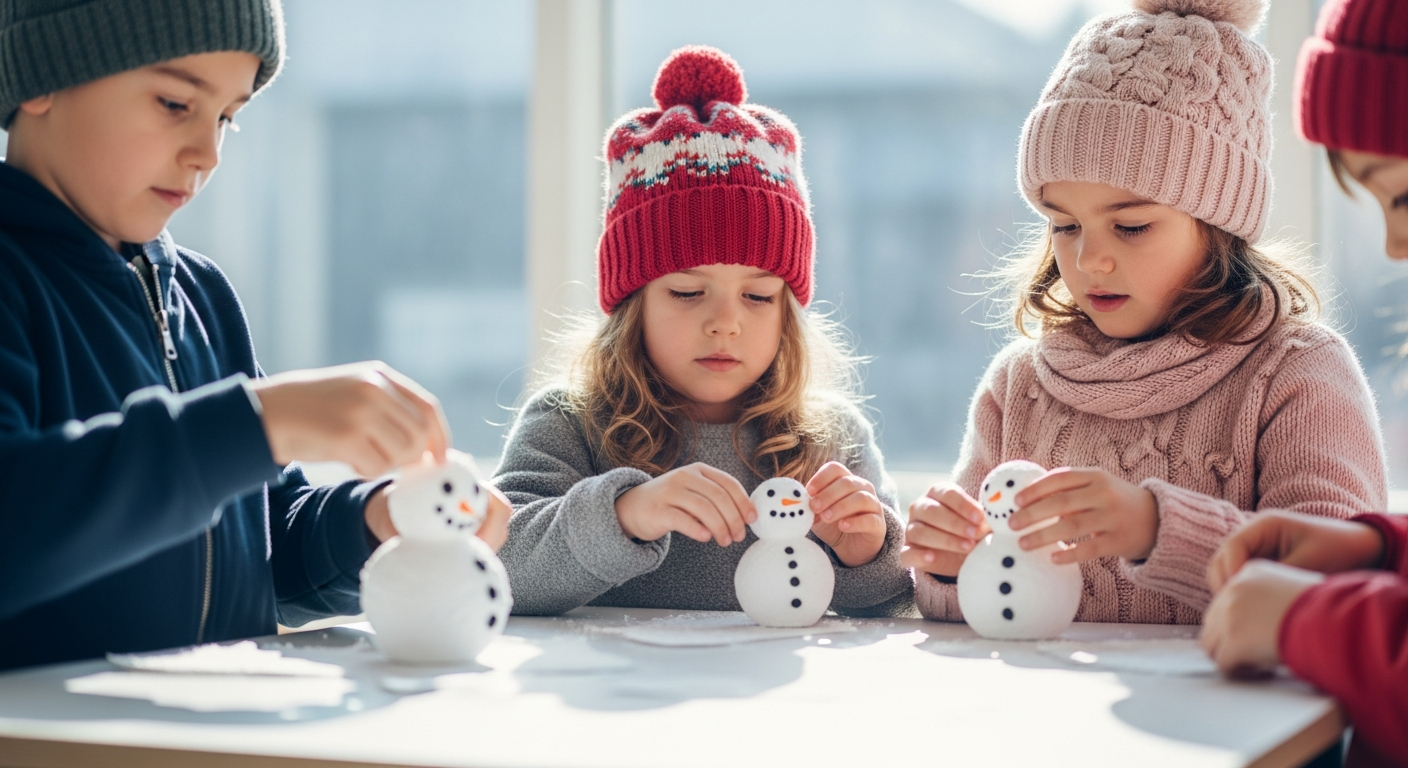
Table of Contents
- Introduction
- Why Crafting is a Secret Weapon for Child Development
- The Classic Cotton Ball Snowman
- Creative Variations for More Fun
- Connecting Crafting to Communication
- Building Confidence and Reducing Frustration
- Practical Tips for a Stress-Free Craft Session
- Making the Most of Screen Time
- Expanding the Snowman Theme
- The Speech Blubs Difference
- A Word on Setting Realistic Expectations
- Choosing the Right Path for Your Child
- Summary of Toddler Snowman Craft Ideas
- FAQs
- Conclusion
Introduction
Have you ever looked out the window on a cold, gray afternoon and wondered how you’re going to keep your toddler engaged until dinner time? We’ve all been there. The winter months can feel long when outdoor play is limited, but these moments actually provide a beautiful opportunity for connection and development. Crafting with a toddler isn’t just about the end product—the lopsided eyes or the glue-covered fingers—it’s about the rich sensory experience and the language-building conversations that happen along the way.
In this post, we are going to explore several variations of the classic toddler snowman craft. We will provide step-by-step instructions for activities that use common household items, from cotton balls to potato mashers. Beyond the glitter and glue, we’ll explain how these activities support fine motor skills, following directions, and vocabulary growth. Our goal at Speech Blubs is to help you turn ordinary "inside days" into joyful learning moments. We believe that by blending scientific principles with the spirit of play, we can empower children to speak their minds and hearts.

Whether your child is a "late talker" or just starting to experiment with new sounds, these crafts serve as a perfect foundation for communication. By the end of this article, you’ll have a toolkit of winter activities and a deeper understanding of how to use play to foster your child's confidence.
Why Crafting is a Secret Weapon for Child Development
Before we dive into the "how-to," let’s talk about the "why." When we sit down to create a toddler snowman craft, we aren't just making a decoration for the refrigerator. We are building a child's brain.
Fine Motor Skill Mastery
Toddlers are still learning how to make their small hand muscles work in harmony. Picking up a single, fluffy cotton ball and placing it onto a specific spot of glue requires significant coordination. This "pincer grasp" is the same skill they will eventually need to hold a pencil or button their own coat.
Cognitive and Executive Function
Following a sequence—first we glue the circles, then we add the hat—helps children develop executive functioning skills. It teaches them about cause and effect and the importance of steps in a process. For many children who struggle with transitions or multi-step directions, these low-pressure crafts are the perfect practice ground.
Language and Vocabulary Growth
Think about all the words you use during a craft: sticky, soft, round, white, cold, top, bottom, eyes, nose. For a parent whose 3-year-old is just beginning to expand their vocabulary, these descriptive words are gold. At Speech Blubs, we focus on providing a joyful solution for the 1 in 4 children who need speech support, and we know that real-world application of language is key to progress. If you are ever unsure about where your child stands in their development, you can take our quick 3-minute preliminary screener to get an assessment and a next-steps plan.
The Classic Cotton Ball Snowman
This is the quintessential winter craft. Most of us have a bag of cotton balls tucked away in a bathroom cabinet, making this an easy, low-prep option for a snowy day.

Supplies Needed:
- Cotton balls (a jumbo bag is best!)
- Construction paper (blue or black works well to make the white "snow" pop)
- Glue or a glue stick
- Orange paper (for the carrot nose)
- Black paper (for the hat and buttons)
- Googly eyes (optional)
- Pipe cleaners or sticks for arms
Step-by-Step Instructions:
- Prep the Pieces: Before bringing your toddler to the table, cut out a small orange triangle for the nose and a black hat. If your child is practicing their scissor skills, you can draw the lines and let them try to cut the larger pieces.
- Draw the Outline: Draw three circles on your base paper—one small for the head, one medium for the middle, and one large for the bottom. This is a great time to talk about "big," "bigger," and "biggest."
- The Gluing Phase: Let your child apply the glue inside the circles. If they are using a glue stick, they might need a little help pressing down. If using liquid glue, it’s a great sensory experience (and yes, it will get messy!).
- Add the "Snow": Encourage your child to stick the cotton balls onto the glue. If they start putting cotton balls outside the lines, don't worry! The goal is engagement, not perfection.
- Decorate: Once the circles are full and fluffy, help them add the eyes, the carrot nose, the hat, and the buttons.
Expert Tip: While your child is sticking the cotton balls, use "parallel talk." This means you describe what they are doing as they do it. "You are picking up a soft ball. Now you are sticking it on the glue! Press, press, press." This narrating helps them connect actions to words.
Creative Variations for More Fun
If you’ve already mastered the cotton ball snowman, or if you want to try something a little different, here are a few other ways to build a snowy friend indoors.
The Potato Masher Snowman
Do you have a potato masher in your kitchen? This common utensil makes an incredible stamp!
- The Method: Dip the round end of the potato masher into white washable paint. Stamp it three times vertically on a piece of paper.
- The Benefit: The texture created by the masher looks like "crunchy" snow and provides a different tactile experience than cotton.
Q-Tip Painted Snowmen
For older toddlers who are working on precision, Q-tips are an excellent "paintbrush" alternative.
- The Method: Instead of filling in a circle with a large brush, have your child "dot" the paint using a Q-tip.
- The Benefit: This is highly effective for strengthening the finger muscles needed for writing.
Paper Plate Snowman
If you want something that can stand up or be hung as a mobile, paper plates are the way to go.
- The Method: Staple two or three paper plates together. Let your child decorate them with markers, fabric scraps, or even real buttons.
- The Benefit: Working on a larger scale can be less frustrating for toddlers who find small paper crafts difficult.
Connecting Crafting to Communication
At Speech Blubs, we believe in "smart screen time." Our app was born from the personal experiences of our founders, who all grew up with speech problems and created the tool they wished they had. We use a unique "video modeling" methodology, where children learn by watching and imitating their peers. You can see the effectiveness of this approach by reading our research and scientific methodology.
You can mirror this peer-to-peer learning during your craft time. If you have multiple children, let the younger one watch the older one. If it’s just you and your toddler, you be the model. Show them how to say "Ooooh" when they see the "snow" or "Pop!" when they stick a button on.
For a parent whose toddler loves winter themes, using the Speech Blubs app alongside these crafts can be incredibly powerful. For example, after making a cotton ball snowman, you can open the app and find sections related to winter or "Living Shapes." Watching a peer on the screen make a "round" face or say "cold" reinforces what they just learned during the craft. You can download Speech Blubs on the App Store to explore these interactive activities.
Building Confidence and Reducing Frustration
One of the main reasons we advocate for these types of toddler snowman crafts is that they are "low stakes." There is no wrong way to make a snowman. If the nose is on the stomach and the hat is on the feet, it’s still a snowman!
For children who experience speech delays, frustration is often a daily companion. When they can't communicate their needs, they may act out or shut down. Crafting provides a space where they can be successful. When a child finishes their craft and you celebrate it, you are building the confidence they need to keep trying those difficult speech sounds.
Our mission is to help kids speak their minds and hearts, and that starts with a foundation of feeling understood and capable. We’ve seen thousands of families find success by incorporating our app into their daily routines. You can read some of their stories on our testimonials page.
Practical Tips for a Stress-Free Craft Session
Let’s be honest: crafting with a two-year-old can sometimes feel like trying to organize a circus. Here are a few tips to keep the peace:
- Embrace the Mess: Use a tray or a disposable tablecloth. If you are worried about the carpet, the stress will transfer to your child.
- Limit Choices: Don't give them 20 colors of construction paper. Give them two. "Do you want the blue paper or the black paper?" This empowers them without overwhelming them.
- Keep it Short: A toddler’s attention span is roughly 2-3 minutes per year of age. If they want to stop after five minutes, let them! You can always come back to it later.
- Model the Language: Use simple sentences. Instead of saying, "Would you like to place the orange triangular nose onto the upper portion of the snowman's face?" say, "Put nose on!"
Making the Most of Screen Time
We know that modern parents are busy. Sometimes, you need fifteen minutes to start dinner or take a phone call. Instead of letting your child passively watch cartoons, which doesn't encourage interaction, we suggest "smart screen time."
Our app is designed to be a screen-free alternative in spirit—meaning it encourages the child to look away from the screen, mimic sounds, and engage with the world around them. It’s a tool for family connection, not a replacement for it. To get the full suite of features, including the extra Reading Blubs app and early access to updates, we recommend our Yearly plan. It is our best value at $59.99 per year (which breaks down to just $4.99/month), compared to the Monthly plan at $14.99 per month.
When you create your account and begin your 7-day free trial, you’ll see how our peer-led videos can motivate your child in ways that traditional cartoons simply can't.
Expanding the Snowman Theme
The fun doesn't have to stop when the glue dries. You can extend the learning with these simple follow-up activities:
Snowman "Feed the Friend"
Take an empty tissue box, wrap it in white paper, and draw a snowman face on it. Cut a hole for the mouth. Have your child "feed" the snowman cotton balls or "snowflakes" made of paper. This is a great way to practice verbs like eat, open, in, and out.
Sensory Snow Bin
If you have a plastic bin, fill it with cotton balls or even white rice. Hide "snowman parts" (a carrot, some buttons, a hat) inside the bin and have your child go on a treasure hunt to find them. This sensory play is incredibly calming for many children and provides even more opportunities for descriptive language.
Singing and Movement
Sing "Frosty the Snowman" or make up your own song. "I'm a little snowman, short and fat..." (to the tune of I'm a Little Teapot). Movement and rhythm are closely tied to language development. When kids move their bodies to a beat, they are practicing the same rhythmic patterns found in speech.
The Speech Blubs Difference
Why do so many parents turn to us? Because we understand the struggle. Whether you're using our app on the Google Play Store or an Apple device, you’re accessing a tool designed by experts and inspired by real life.
Our app doesn't promise "instant" results because every child is different. Instead, we focus on:
- Fostering a love for communication: Making talk fun!
- Building confidence: Helping kids feel like they can do it.
- Reducing frustration: Giving them the tools to express themselves.
- Creating joyful family moments: Providing activities you can do together.
We frame the app as a powerful supplement to a child’s overall development plan. It works beautifully alongside professional therapy or as a standalone boost for kids who just need a little extra encouragement.
A Word on Setting Realistic Expectations
As a parent, it’s easy to look at social media and feel like your child should be doing more. Maybe you see a "toddler snowman craft" online that looks like a professional work of art. Please remember: the goal of these activities is the process, not the result.
Your child might not want to stick the cotton balls on the paper. They might want to throw them in the air and pretend it’s snowing. That’s okay! That’s actually great. They are playing, imagining, and interacting with you. Follow their lead. If they are interested in the cotton balls, talk about cotton balls. If they are interested in the glue, talk about the glue. By following their interest, you are showing them that their choices and their voice matter.
Choosing the Right Path for Your Child
Every child’s journey is unique. Some children are naturally more verbal, while others are observers who take everything in before they speak. By providing a variety of activities—like the ones we've discussed today—you are giving your child multiple "ways in" to learning.
If you want to take the next step in supporting your child’s communication, we invite you to join our community. Our Speech Blubs homepage is full of resources, from blog posts like this one to detailed information about our methodology. We are committed to being a partner in your child's growth.
Summary of Toddler Snowman Craft Ideas
To wrap up, let’s revisit our favorite ways to build a snowman indoors:
- Cotton Ball Snowman: Perfect for tactile sensory play and fine motor practice.
- Potato Masher Painting: A great way to use kitchen tools for creative "stamping."
- Q-Tip Dots: Excellent for precision and grip strength.
- Paper Plate Friends: Best for a larger-than-life crafting experience.
Each of these activities is a chance to sit down, put away the distractions, and focus on your little one. In those moments of play, you are building a bridge of communication that will last a lifetime.
FAQs
1. What age is a toddler snowman craft appropriate for?
Most snowman crafts, especially the cotton ball version, are perfect for children aged 18 months to 4 years. For younger toddlers, you will do most of the "construction," and they will do the "sticking." As they get older, they can take on more responsibility, such as applying the glue or choosing where the decorations go.
2. My child hates getting their hands sticky. What should I do?
Sensory sensitivities are very common! If your child dislikes the feeling of glue, try using a glue stick instead of liquid glue, or place the glue for them so they only have to touch the "dry" cotton balls. You can also try the "Snowman in a Bag" version: put white shaving cream and snowman decorations inside a sealed Ziploc bag and let them move the pieces around from the outside!
3. How can I use a snowman craft to help my child’s speech?
Focus on "modeling" and "waiting." Model a word (e.g., "Nose!") and then wait 5-10 seconds to see if your child attempts to repeat it or points to the nose. Don't pressure them to speak; just make the sounds fun and part of the game. Using the Speech Blubs app before or after the craft can also give them peer models to imitate.
4. What is the best glue for a cotton ball snowman?
School glue (liquid white glue) usually works best for cotton balls because it "soaks" into the fibers and creates a strong bond. However, for a less messy experience, a high-quality purple glue stick can also work, provided you press the cotton balls down firmly.
Conclusion
Winter doesn't have to be a season of cabin fever. With a few simple supplies and a little bit of imagination, you can turn a cold afternoon into a meaningful developmental milestone. Whether you’re making a cotton ball snowman or experimenting with potato stamps, remember that the most important ingredient is your presence.
At Speech Blubs, we are here to support you every step of the way. Our founders created this tool because they knew firsthand how important it is to give every child a voice. We invite you to join the thousands of families who have found joy and progress through our unique approach.
Ready to get started? Download Speech Blubs on the App Store or Google Play to begin your journey. For the best experience, choose our Yearly plan—it includes a 7-day free trial, the Reading Blubs app, and early access to all our latest updates. Let's work together to help your child speak their mind and heart!
About the author