
Slam Dunk Fun: Engaging Basketball Party Games for Kids
 By Speech Blubs Team•Jan 28, 2026•25 min.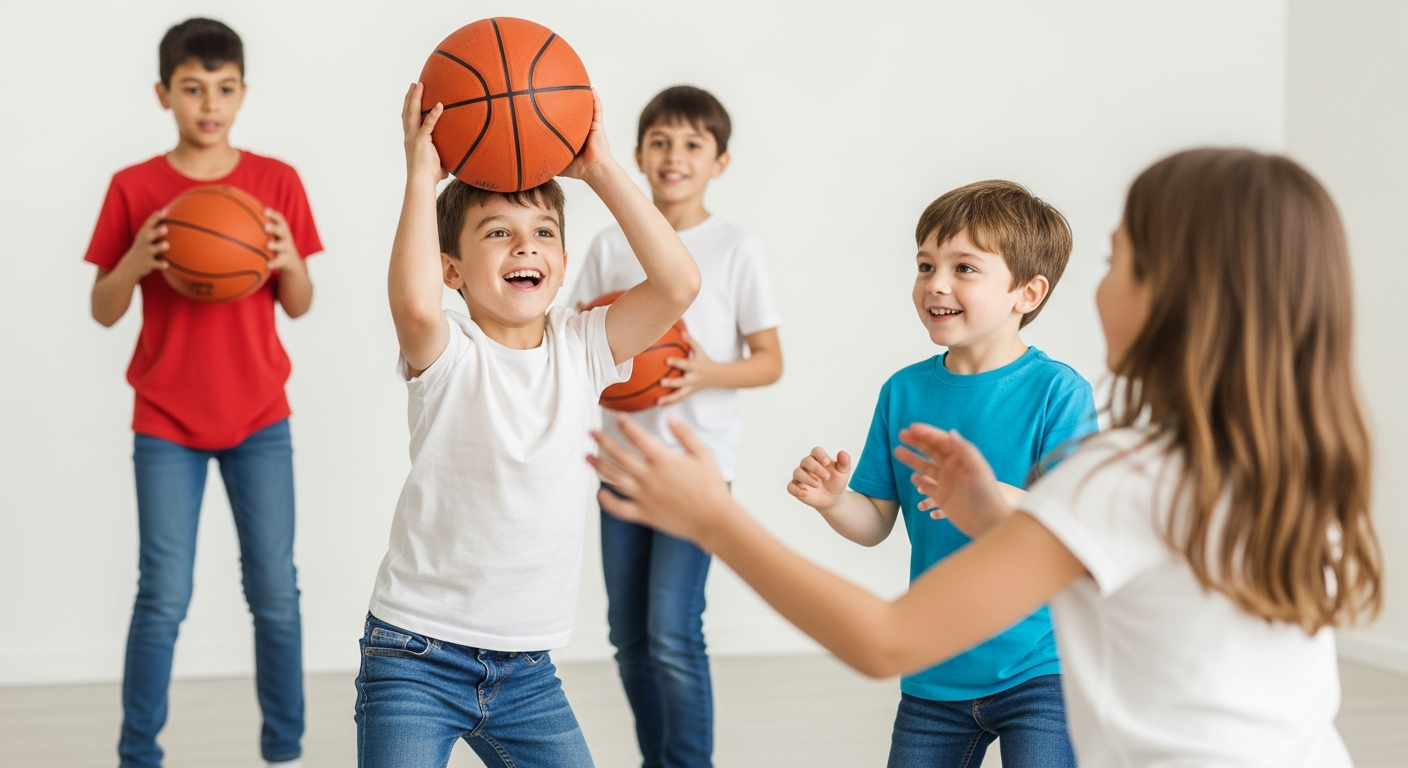
Table of Contents
- Introduction
- Why Choose Basketball Games for Kids' Parties?
- Planning Your Basketball Party: Essentials & Setup
- Top Basketball Party Games for Kids
- Enhancing the Party Experience: Beyond the Games
- Fostering Communication and Confidence Through Play
- Understanding Speech Blubs Value & Pricing
- Conclusion
- Frequently Asked Questions
Picture a group of children, eyes wide with excitement, sneakers squeaking, and the rhythmic thump-thump of basketballs filling the air. What could be more exhilarating than a party where every bounce, every shot, and every cheer builds confidence and creates unforgettable memories? Childhood parties are precious opportunities to celebrate, connect, and encourage development in fun, dynamic ways. While sugary treats and elaborate decorations have their place, imagine a party theme that naturally promotes physical activity, teamwork, and, crucially, communication. That’s where basketball party games for kids truly shine.
This post will guide you through a fantastic lineup of basketball games perfect for any kids' party, offering detailed instructions, creative variations, and insights into the developmental benefits each game provides. We’ll explore how these active games not only get kids moving but also foster essential social, emotional, and communication skills. More than just a list of games, this is a blueprint for creating an engaging, empowering, and truly unforgettable celebration that lays the groundwork for confident, expressive children.

Introduction
Have you ever noticed how naturally children gravitate towards games that involve movement, interaction, and a touch of friendly competition? There’s an innate joy in running, jumping, and working together towards a common goal. For parents seeking to host a birthday party or a special gathering that goes beyond passive entertainment, a basketball-themed party offers a slam-dunk solution. It’s an incredibly versatile sport that can be adapted for children of all ages and skill levels, transforming a simple court or even a backyard hoop into an arena of fun and learning.
Beyond the obvious physical benefits of running, dribbling, and shooting, basketball games are rich with opportunities for cognitive and social development. Kids learn about strategy, sportsmanship, and the importance of listening and following instructions. They practice expressing themselves, negotiating with peers, and celebrating successes—or gracefully handling misses. This blend of physical and mental engagement is precisely why incorporating basketball games into a party isn't just about having fun; it's about fostering holistic growth. We believe that empowering children to "speak their minds and hearts" isn't limited to structured speech practice; it happens in every joyful, interactive moment of their lives, including on the basketball court. This guide aims to equip you with a fantastic array of games to ensure your next kids' basketball party is a resounding success, filled with laughter, learning, and plenty of memorable shots.
Why Choose Basketball Games for Kids' Parties?
When planning a party, the goal is often to create an atmosphere of pure joy and excitement. Basketball games effortlessly achieve this while delivering a wealth of developmental advantages. It’s more than just a party theme; it’s a commitment to active engagement and skill-building disguised as pure fun.
Holistic Development Through Play
Basketball is a dynamic sport that inherently supports a child’s development across multiple domains:

- Physical Prowess: Dribbling enhances hand-eye coordination and motor skills. Shooting improves aiming and spatial awareness. Running and jumping boost cardiovascular health and endurance. These activities are vital for a child's physical growth and overall well-being.
- Social Skills: Team-based games necessitate cooperation, sharing, and understanding different roles. Children learn to encourage teammates, resolve minor conflicts, and celebrate collective achievements. These interactions are critical for building healthy relationships and navigating social situations.
- Cognitive Agility: Following game rules, strategizing, and making quick decisions on the court sharpen problem-solving skills and enhance focus. Games like "Simon Says Basketball" directly challenge a child's listening and processing abilities.
- Emotional Resilience: Learning to win humbly and lose gracefully is a powerful life lesson. Basketball games provide a safe environment for children to experience both triumph and disappointment, building resilience and sportsmanship.
- Communication Confidence: Perhaps less obvious, but equally important, is the role basketball plays in fostering communication. Children vocalize encouragement, call for the ball, express frustrations appropriately, and discuss strategies. These real-time conversational exchanges are invaluable for practicing expressive language and building confidence in using their voice. It's these types of interactive, dynamic situations that mirror the principles we embrace at Speech Blubs, where we create engaging environments for children to develop strong communication skills.
A Natural Fit for Energy and Engagement
Children have boundless energy, and structured games channel this energy constructively. Instead of chaotic free play, basketball party games offer a framework that keeps kids engaged, challenged, and entertained from start to finish. They provide a "smart screen time" alternative, replacing passive viewing with active, interactive play that fosters real connections and tangible skill development.
For a parent whose child thrives on movement and social interaction, these games offer an ideal setting to shine. They empower children to participate actively, feel a sense of accomplishment, and grow more confident in their abilities—whether physical or communicative. At Speech Blubs, our mission to empower children to "speak their minds and hearts" is deeply rooted in understanding how play and interaction build confidence. Just as a child learns to dribble by doing, they learn to communicate by engaging and expressing themselves.
Planning Your Basketball Party: Essentials & Setup
A successful basketball party starts with thoughtful planning. With a few key considerations, you can ensure a smooth, safe, and exhilarating experience for all your young guests.
The Court and Equipment
You don't need a professional gymnasium to host a fantastic basketball party.
- Location: A driveway with a portable hoop, a local park court, a school gym, or even a large backyard with a makeshift hoop will suffice. Ensure the playing area is clear of hazards and has enough space for movement.
- Hoops: One or two adjustable-height hoops are ideal. Lowering the hoop for younger children (often to 6-8 feet) makes shooting more accessible and boosts confidence.
- Basketballs: Have plenty! Aim for at least one ball for every two children, preferably more. Different sizes (size 5 for younger kids, size 6 for older elementary) can accommodate various age groups.
- Cones or Markers: These are indispensable for setting boundaries, designating shooting spots, or creating obstacle courses. Colorful cones add to the festive atmosphere.
- Water Station: Active play leads to thirst! Set up a readily accessible water station with cups.
- First-Aid Kit: Always have a basic first-aid kit on hand for minor scrapes or bumps.
Age-Appropriate Adaptations
Tailoring games to the age and skill level of the children is crucial for maximizing fun and minimizing frustration.
- Younger Children (3-6 years old): Focus on simpler rules, less competitive games, and emphasize participation over winning. Lower the hoops significantly. Use larger, softer balls. Games like "Musical Basketballs" or "Simon Says Basketball" are excellent for this age group, as they prioritize listening and basic motor skills.
- Elementary School Age (7-10 years old): Introduce more complex rules, basic strategy, and gentle competition. Encourage teamwork and sportsmanship. Games like "Knockout" or "Around the World" are perfect for honing shooting and strategic thinking.
- Pre-Teens (11+ years old): They can handle more advanced rules, faster-paced games, and enjoy a higher level of competition. Incorporate games that require advanced dribbling, passing, and teamwork, like "Steal the Bacon."
Safety First!
Remind children about safe play practices:
- No pushing or shoving.
- Respect personal space.
- Stay within designated playing areas.
- Take turns and share equipment.
- Encourage regular water breaks, especially on warm days.
By preparing adequately, you set the stage for a party that's not only fun and active but also safe and inclusive for every child.
Top Basketball Party Games for Kids
Here's a curated list of engaging basketball party games, complete with instructions, variations, and the hidden developmental superpowers they unlock.
1. Knockout: The Fast-Paced Shooting Challenge
How to Play: This classic game is a crowd-pleaser that combines shooting accuracy with a dash of pressure. Players line up behind a designated shooting spot (e.g., the free-throw line). The first two players in line each have a basketball. The first player shoots. As soon as they release their shot, the second player shoots. If the first player makes their basket before the second player, they pass their ball to the next person in line and go to the back. If the second player makes their basket before the first player, the first player is "knocked out" and sits out. If a player misses, they must rebound their own ball and shoot again from where they recovered it, trying to score before the player behind them makes a basket. The game continues until only one player remains.
Skills Developed:
- Shooting Accuracy: Players practice aiming and consistency.
- Quick Thinking & Reactivity: The pressure of being "knocked out" encourages fast decision-making and quick reflexes.
- Rebounding Skills: Players learn to anticipate where the ball will bounce.
- Sportsmanship: Encouraging others, even after being knocked out, is key.
Party Twist & Communication Link: For a party, you can add a "cheer on your friends" rule for those who are out, promoting positive encouragement. Imagine a child, typically shy, getting knocked out but then enthusiastically shouting "Go, Sarah!" from the sidelines. This simple act of verbal encouragement is a fantastic way to practice expressive language in a low-stakes, high-energy environment. It reinforces the idea that their voice matters, a core principle at Speech Blubs.
2. Around the World: Precision Shooting Adventure
How to Play: Mark several "stations" around the basket (e.g., under the hoop, left baseline, free-throw line, right wing, top of the key, left wing, right baseline). Players take turns shooting from each station. If a player makes a shot, they advance to the next station. If they miss, they have two choices: either they can "risk it" and shoot again from the same spot, or "stay" and wait for their next turn to try from the same spot. If they risk it and miss again, they go back to the beginning! The first player to successfully make a shot from all stations wins.
Skills Developed:
- Shooting Versatility: Players practice shooting from various angles and distances.
- Decision-Making: The "risk it" or "stay" choice introduces a strategic element.
- Focus & Concentration: Each shot requires careful aim and execution.
Party Twist & Communication Link: Make it a team relay! Divide kids into small teams. Each team member takes a turn trying to clear a station. When they make it, the next teammate steps up to the next station. This encourages team communication ("Go, Alex, you got this!" or "Where are we on the court?"). For a parent whose child sometimes struggles with following multi-step directions, "Around the World" provides a clear, visual sequence of tasks. Each successful shot from a designated "spot" reinforces their understanding of spatial concepts and sequential instructions, much like how our Speech Blubs app guides children through a series of engaging activities to master new sounds and words.
3. Dribble Tag (Sharks and Minnows): Dribbling & Evasion Fun
How to Play: Designate one or two players as "sharks" (without a ball). All other players are "minnows," each with a basketball. Minnows start at one end of the court. Their goal is to dribble their ball from one baseline to the other without the sharks tagging them or knocking their ball away. If a minnow is tagged or loses control of their ball (it goes out of bounds or is stolen), they become a shark in the next round. The last minnow remaining wins.
Skills Developed:
- Dribbling Control: Emphasizes keeping the ball close and under control.
- Agility & Evasion: Players learn to change direction quickly while dribbling.
- Spatial Awareness: Understanding where sharks are and how to avoid them.
- Listening to Rules: Quickly grasping and applying game parameters.
Party Twist & Communication Link: Add specific verbal commands. For example, "Sharks are coming!" before they can tag. This helps younger children respond to cues. Imagine a child who struggles with expressive language, often feeling frustrated when others don't understand them. Participating in "Sharks and Minnows" requires them to listen to rules, communicate when they're 'out' (even with a simple gesture or sound), and understand basic commands like "dribble" or "freeze." This low-pressure, high-energy environment can be a fantastic way to build confidence in using their voice and responding to verbal instructions. It’s exactly the kind of joyful, interactive learning we champion at Speech Blubs. If you're wondering if your child could benefit from more communication support, take our quick 3-minute preliminary screener to get a simple assessment and a free 7-day trial.
4. Simon Says Basketball: Listening & Movement
How to Play: A basketball-themed twist on the classic "Simon Says." One player is "Simon" and gives commands related to basketball actions, such as "Simon says dribble in place," "Simon says shoot a layup," or "Simon says pass the ball." Players must only follow commands preceded by "Simon says." Those who perform actions without the command, or fail to follow a "Simon says" command, are eliminated. The last player remaining becomes the new Simon.
Skills Developed:
- Auditory Processing & Listening Skills: Crucial for distinguishing commands.
- Following Multi-Step Instructions: Executing specific basketball actions.
- Motor Skills & Coordination: Performing various dribbling, shooting, and passing movements.
- Self-Regulation: Inhibiting the impulse to follow non-"Simon says" commands.
Party Twist & Communication Link: Encourage the "Simon" to use clear, descriptive language. This game is a goldmine for language development! It directly targets a child’s ability to listen attentively and follow verbal instructions, which are foundational for speech and language comprehension. For a child who might need extra practice with auditory processing or following directions, "Simon Says Basketball" turns a potential challenge into a delightful game. It highlights how engaged, interactive play can be a powerful tool for learning, much like the dynamic "video modeling" approach we use in our Speech Blubs app, where children learn by watching and imitating their peers.
5. 21 Points: A Rapid-Fire Scoring Challenge
How to Play: This fast-paced shooting game can be played individually or in teams. Players line up behind a designated shooting spot (e.g., a cone near the free-throw line). The first player shoots. If they make it, they get one point and can immediately take a second shot for an additional point. If they miss, they rebound their own ball and can take a second shot from where they collected the rebound for two points (a "put-back"). If they miss both, no points, and the ball goes to the next player. The goal is to be the first player or team to reach exactly 21 points. If a player goes over 21, their score resets to 13.
Skills Developed:
- Shooting Consistency: Emphasizes making consecutive shots.
- Quick Rebounding: Fast retrieval of misses.
- Mental Math & Strategy: Keeping score and deciding when to aim for 1 or 2 points, especially near 21.
- Pressure Handling: Shooting under the clock or competitive pressure.
Party Twist & Communication Link: Play in small teams, where points contribute to a team total. This encourages verbal communication as team members call out scores, strategize who should shoot next, or cheer on a player trying to hit the crucial 21-point mark. This constant verbal exchange, even simple counting, is vital for language development. It fosters a sense of shared purpose and encourages children to use language functionally within a group, making communication a natural and exciting part of the game.
6. Steal the Bacon (Basketball Edition): Agility & Teamwork
How to Play: Players are divided into two teams, lined up facing each other across the court. A basketball (the "bacon") is placed in the center. Each player on a team is assigned a number (e.g., Team A has players 1, 2, 3; Team B has players 1, 2, 3). A leader calls out a number. The player from each team with that number races to the center to grab the basketball. Their goal is to grab the ball and dribble it back to their team's side without being tagged by the opposing player. If they are tagged before crossing their team's line, the other team gets the point. If they make it back safely, their team gets the point.
Skills Developed:
- Speed & Agility: Quick starts and directional changes.
- Dribbling Under Pressure: Maintaining control while being chased.
- Strategic Thinking: Deciding when to grab the ball and which way to run.
- Listening for Cues: Responding quickly to the called number.
Party Twist & Communication Link: Assign different "bacon" objects (e.g., a blue ball, a red ball) and call out both the number and color, adding another layer of listening comprehension. This game is fantastic for turn-taking, responsive action, and peer interaction. It creates a dynamic environment where children need to interpret spoken words and react swiftly, improving their auditory processing skills. The excitement of the game makes practicing these skills feel less like work and more like play, aligning perfectly with how we approach learning at Speech Blubs.
7. Musical Basketballs: A Lively Game of Focus
How to Play: Similar to musical chairs, but with basketballs! Place one less basketball than the number of players in a central area. Children dribble around the balls while music plays. When the music stops, everyone rushes to grab a ball. The player who doesn't get a ball is out. The game continues, removing one ball each round, until only one player remains. For a twist, instead of just grabbing, players must successfully make a basket after grabbing a ball to stay in.
Skills Developed:
- Listening to Cues: Responding immediately to the music stopping.
- Quick Reactions: Grabbing a ball or making a shot quickly.
- Dribbling (optional variation): Maintaining control while moving.
- Focus: Staying attentive to the game's flow.
Party Twist & Communication Link: Before the music starts, have the leader call out a specific dribbling technique (e.g., "Dribble low!" or "Dribble with your left hand!") that kids must use. This adds variety and encourages them to follow verbal instructions while also focusing on their physical task. The anticipation and quick response needed in "Musical Basketballs" sharpen a child's ability to process auditory information and react accordingly, fundamental elements of effective communication. It’s another great example of how simple, engaging games can build vital skills in a joyful setting.
8. Dunk Contest: Unleash Their Inner Star
How to Play: This game is all about creativity and showing off! Lower a hoop to a very accessible height (even 5-6 feet) or use smaller, lighter balls if needed. Each participant gets a turn to perform their "best dunk." Encourage them to be creative—they can take a running start, spin, jump over a small obstacle (like a foam pad), or incorporate a prop. Spectators (or adult judges) can clap, cheer, or even hold up scorecards for style, height, and creativity. There’s no pressure to be a professional, just to have fun and express themselves.
Skills Developed:
- Creativity & Imagination: Designing unique dunks.
- Physical Expression: Using their body to perform a dynamic action.
- Confidence & Self-Esteem: Performing in front of others and receiving positive feedback.
- Gross Motor Skills: Running, jumping, and coordinating movements.
Party Twist & Communication Link: After each dunk, have the "performer" describe their dunk or what they were trying to achieve. This provides a natural opportunity for expressive language and storytelling. Similarly, encourage the "judges" to provide positive feedback verbally ("That was so high!" or "I loved your spin!"). This game powerfully builds confidence, not just in physical ability but also in verbal expression and performance. When children feel safe and celebrated, they are more likely to "speak their minds and hearts"—a philosophy that drives everything we do at Speech Blubs. See what other parents are saying about their child's success with Speech Blubs and how we help build this confidence.
Enhancing the Party Experience: Beyond the Games
Beyond the core basketball games, a few additional touches can elevate your party from good to legendary.
The Power of Positive Reinforcement
Children thrive on encouragement. Celebrate every effort, not just every success. High-fives, enthusiastic cheers, and verbal praise go a long way. Phrases like "Great hustle!" or "I love how you tried that shot!" instill a growth mindset and build self-esteem.
Teamwork and Sportsmanship
Emphasize teamwork over individual glory. Create silly team names and encourage team chants. Talk about good sportsmanship—shaking hands after a game, complimenting an opponent, and helping someone who falls. These are crucial life lessons wrapped in fun.
Simple Rewards
Small, non-monetary rewards can add an extra layer of excitement. Stickers, certificates for "Best Dribbler" or "Most Creative Shot," or even just the honor of picking the next game can be highly motivating.
Storytelling and Reflection
After the games, gather the children for a cool-down session. Encourage them to share their favorite moments from the party, what they enjoyed most, or a funny thing that happened. This storytelling practice further develops their narrative skills and allows them to reflect on their experiences, integrating lessons learned. This kind of reflective conversation is invaluable for communication development, helping children organize their thoughts and express them coherently.
By integrating these elements, you're not just hosting a party; you're creating a dynamic learning environment where every child feels valued, capable, and connected.
Fostering Communication and Confidence Through Play
At Speech Blubs, we believe every child deserves the chance to "speak their minds and hearts." This mission was born from the personal experiences of our founders, who all grew up with speech problems and set out to create the tool they wished they had. We know firsthand the frustration that can come with communication challenges, and the incredible joy of overcoming them. That's why we're committed to providing an immediate, effective, and joyful solution for the 1 in 4 children who need speech support.
Active play, like participating in basketball party games, is a natural extension of our philosophy. When children engage in exciting, interactive activities, they are constantly practicing and refining their communication skills without even realizing it.
The Bridge Between Play and Language Development
Consider how basketball games inherently build communication skills:
- Following Verbal Cues: Games like "Simon Says Basketball" and "Steal the Bacon" directly train children to listen carefully to instructions and respond appropriately. This strengthens auditory processing, a foundational skill for language comprehension.
- Expressing Needs and Wants: Calling for the ball ("Pass it here!"), asking for clarification ("Is it my turn?"), or expressing frustration ("Oh no, I missed!") all provide opportunities for children to use expressive language in a functional context.
- Turn-Taking and Social Reciprocity: All group games involve turn-taking, which is a fundamental concept in conversation. Children learn to wait, listen, and respond, much like they would in a dialogue.
- Narrative Skills: Describing their "dunk" or recounting a game's highlight encourages children to organize their thoughts, use descriptive vocabulary, and tell a coherent story.
Speech Blubs: Your Partner in Building Confident Communicators
While basketball games offer fantastic real-world practice, some children need more targeted support to develop their speech and language skills. That's where Speech Blubs comes in. We seamlessly blend scientific principles with play into one-of-a-kind "smart screen time" experiences. We recognize that not all screen time is equal. Our app offers a screen-free alternative to passive viewing (like cartoons), turning digital interaction into a powerful tool for active learning and family connection.
Our unique approach, called "video modeling," allows children to learn complex communication skills by watching and imitating their peers. This technique leverages mirror neurons in the brain, making learning intuitive and highly effective. Imagine a child practicing a new sound by watching another child make it, then trying it themselves. This engaging, imitative learning reduces pressure and maximizes fun, leading to greater confidence.
We are proud that our method is backed by science, placing us in the top tier of speech apps worldwide. You can explore the research supporting Speech Blubs here. We don't promise overnight transformations, but we do commit to fostering a love for communication, building confidence, reducing frustration, developing key foundational skills, and creating joyful family learning moments. Our app is designed to be a powerful supplement to a child's overall development plan and, when applicable, professional therapy, always encouraging adult co-play and support.
Ready to see how Speech Blubs can empower your child to speak their mind and heart? Download Speech Blubs on the App Store or Google Play to get started.
Understanding Speech Blubs Value & Pricing
We believe in making effective speech and language support accessible to every family. To build trust and ensure you find the best fit, we offer transparent pricing plans for the Speech Blubs app:
- Monthly Plan: For those who prefer month-to-month flexibility, our plan is $14.99 per month.
- Yearly Plan: For families committed to their child's long-term communication journey, the Yearly plan offers superior value at $59.99 per year. This breaks down to just $4.99 per month, representing a significant 66% saving compared to the monthly option.
The Yearly plan is not just cheaper; it also includes a suite of exclusive, high-value features designed to maximize your child's progress and your family's experience:
- 7-Day Free Trial: Only the Yearly plan offers a 7-day free trial, giving you ample time to explore all the app's features and see the magic of video modeling firsthand.
- The Extra Reading Blubs App: Unlock access to our companion Reading Blubs app, providing even more educational content to support your child's literacy development.
- Early Access to New Updates: Be among the first to experience our latest features and content.
- 24-Hour Support Response Time: Get priority support from our dedicated team whenever you need assistance.
The Monthly plan, while flexible, does not include these valuable benefits. We strongly encourage you to choose the Yearly plan to gain full access to all our features, including the free trial, and ensure your child receives the most comprehensive support on their communication journey.
Conclusion
Hosting a basketball party for kids is about so much more than just a game; it's about fostering an environment where children can thrive physically, socially, and emotionally. The laughter, the teamwork, the challenge of a new skill—these are the building blocks of confidence and resilience. Through games like Knockout, Simon Says Basketball, and our imaginative Dunk Contest, children not only get active but also hone vital communication skills, learning to listen, express themselves, and connect with their peers. This blend of joyous interaction and purposeful development is at the heart of what we do.
Just as these games create a dynamic space for children to practice communicating, Speech Blubs provides a supportive, engaging platform for targeted speech and language development. We are dedicated to transforming learning into play, helping children build the foundational skills they need to "speak their minds and hearts" and navigate the world with confidence.
Don't let communication challenges stand in the way of your child's potential. Join the thousands of families who are already experiencing the joy of confident communication with Speech Blubs. Ready to empower your child's voice and unlock a world of learning and connection? Start your free 7-day trial by signing up for the Yearly plan today! Opt for the Yearly plan to save 66% and gain immediate access to exclusive features like the Reading Blubs app and priority support. Let's make every word a slam dunk!
Frequently Asked Questions
Q1: What age group are these basketball party games suitable for?
A1: These games are highly adaptable and can be enjoyed by children ranging from 3-4 years old up to pre-teens (12+). The key is to adjust the rules, hoop height, ball size, and competitive level to match the age and skill of your specific group. For instance, younger kids might focus on simple dribbling and listening games, while older kids can handle more complex strategies and shooting challenges.
Q2: Do I need a full basketball court to play these games?
A2: Not at all! While a full court is great, most of these games can be played with just one hoop in a driveway, a park with a half-court, or even a large backyard. The essential items are a hoop (adjustable height is a bonus), a few basketballs, and some open space. Cones or markers can help define smaller playing areas if needed.
Q3: How can I keep the party fair if there are different skill levels among the kids?
A3: To ensure everyone has fun, focus on participation and effort rather than just winning.
- Handicaps: Give less experienced players a head start or allow them to shoot from closer distances.
- Team Play: Create balanced teams by mixing skill levels.
- Positive Reinforcement: Emphasize cheering for everyone and celebrating small successes, not just baskets made.
- Non-Competitive Games: Incorporate games like "Musical Basketballs" or "Simon Says Basketball" that rely more on listening and quick reactions than advanced basketball skills.
Q4: How does Speech Blubs connect with active play like basketball?
A4: Speech Blubs champions active, engaged learning, which perfectly aligns with the benefits of basketball games. Just as these games encourage listening, following instructions, expressing needs, and turn-taking in a physical setting, Speech Blubs provides a "smart screen time" experience that fosters these same communication skills. Our video modeling approach helps children imitate peers and practice speech in a fun, interactive way, building confidence and empowering them to "speak their minds and hearts." It's about making every learning experience, whether on the court or with an app, joyful and effective. You can learn more about our values and mission on our homepage.
About the author