
Snowman Toddler Craft: Fun Winter Activities for Kids
 By Speech Blubs Team•Feb 20, 2026•14 min.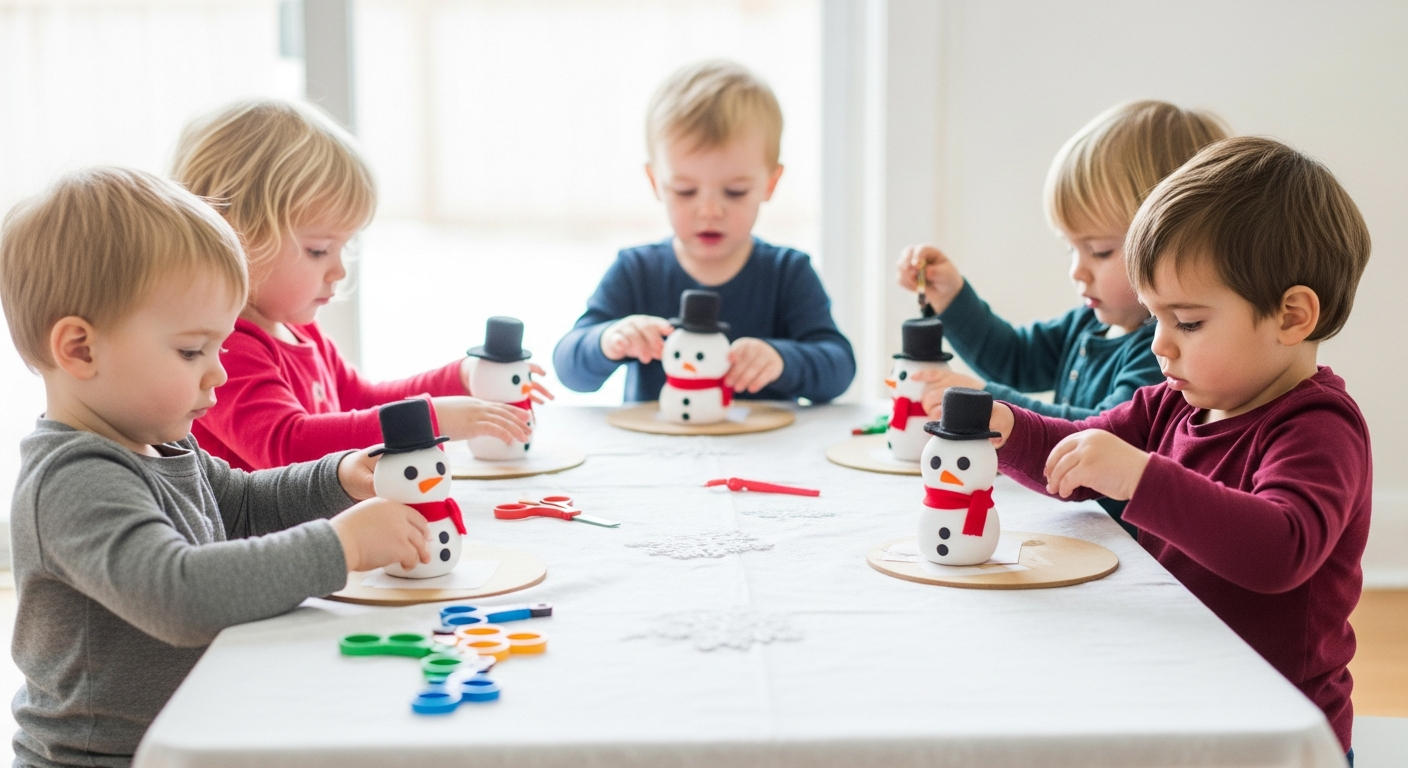
Table of Contents
- Introduction
- Why Crafting is Essential for Your Toddler’s Speech
- 1. The Classic Cotton Ball Snowman Toddler Craft
- 2. Sweet and Sensory: The Marshmallow Snowman
- 3. Breath Control and Art: Melted Snowman Blow Painting
- 4. The Spiral Snowman: A Lesson in Fine Motor Control
- 5. Recycled Fun: Toilet Paper Tube Snowmen
- Smart Screen Time: The Perfect Companion to Crafting
- Choosing the Right Plan for Your Family
- Language Opportunities During Your Snowman Toddler Craft
- Creating Joyful Family Learning Moments
- Conclusion
- Frequently Asked Questions (FAQ)
Introduction
Did you know that according to child development research, the same fine motor skills your child uses to pick up a cotton ball or squeeze a glue bottle are deeply connected to the neural pathways used for speech? It’s a fascinating link that many parents don’t realize. When we sit down at the kitchen table to create a snowman toddler craft, we aren't just making a cute decoration for the refrigerator; we are building a foundation for communication, confidence, and cognitive growth.
At Speech Blubs, we believe that every moment is an opportunity for a child to learn how to "speak their minds and hearts." This philosophy is at the core of everything we do. Our founders all grew up with speech challenges themselves, and they created the very tool they wished they had as children—a way to turn screen time into "smart screen time" that fosters real-world connection. We know that the 1 in 4 children who need speech support thrive when learning is joyful, playful, and inclusive of the whole family.

In this guide, we’re going to dive deep into several creative, engaging, and speech-rich snowman crafts you can do with your toddler today. We’ll explore why these activities are so beneficial for language development and how you can use our unique video modeling methodology to boost your child's progress. Whether you have a "late talker" or just want to encourage your child's natural curiosity, these activities provide the perfect blend of sensory play and linguistic practice.
Why Crafting is Essential for Your Toddler’s Speech
As a parent, you might wonder how a simple paper snowman translates into better communication. The answer lies in the rich environment of language that crafting creates. When we craft, we aren't just working in silence; we are labeling colors, describing textures, following multi-step directions, and expressing preferences.
Our mission at Speech Blubs is to provide an immediate, effective, and joyful solution for families. We see our app as a powerful supplement to these real-world activities. While your child watches their peers in the app to learn how to form sounds, they can then take that confidence to the crafting table.
The Connection Between Motor Skills and Language
There is a significant overlap in the brain regions responsible for motor planning and speech production. When your toddler practices the "pincer grasp" to pick up a tiny button for a snowman’s eye, they are refining the same motor control needed for precise articulation.
Vocabulary Expansion and Descriptive Language
Think about the words associated with a snowman toddler craft:
- Adjectives: Fluffy, cold, white, round, sticky, soft, bumpy.
- Verbs: Glue, stick, cut, blow, draw, press.
- Prepositions: On top, under, next to, middle.
By narrated these actions, you are giving your child a "word bank" they can use in everyday life. If you aren't sure where your child stands in their development, you can take our quick 3-minute preliminary screener to get a simple assessment and a personalized next-steps plan. It’s a great way to see how activities like these can help bridge any gaps.

1. The Classic Cotton Ball Snowman Toddler Craft
This is a staple in many households for a reason—it’s low-prep, highly tactile, and yields an adorable result. For a toddler, the sensation of pulling apart a cotton ball is a wonderful sensory experience that encourages them to talk about how things "feel."
Materials Needed:
- Cotton balls (a jumbo bag is best!)
- Construction paper (Blue or green works well for the background)
- Black and orange paper for the hat, buttons, and nose
- Glue sticks (Easier for small hands)
- Googly eyes
- Pipe cleaners or ribbon for the scarf
Step-by-Step Instructions:
- Preparation: Cut out a small orange triangle for the carrot nose and a black hat from construction paper. Draw three large circles in the shape of a snowman on your base paper.
- The Fluff Factor: Show your child how to pull the cotton balls slightly to make them "extra fluffy." This is a great time to practice the /f/ sound. "Look, it’s fluffy!"
- Gluing: Encourage your child to stay within the circles, but don't worry about perfection. The goal is the process, not a museum-quality masterpiece.
- Detailing: Once the circles are filled with white fluff, help your child glue on the googly eyes, the carrot nose, and the buttons.
- Storytelling: As your child works, create a story. "Is this a baby snowman or a daddy snowman?" This encourages creative thinking and longer sentences.
For a parent whose 3-year-old "late talker" loves winter themes, the "Winter Wonderland" section of our app offers a fun, motivating way to practice sounds like "brrr" and "snow" before or after this craft. You can download Speech Blubs on the App Store to see these sections in action.
2. Sweet and Sensory: The Marshmallow Snowman
If your toddler is motivated by snacks (and let’s be honest, who isn’t?), the marshmallow snowman is a winner. This craft adds a layer of olfactory and gustatory (taste) sensory input, which can be very stimulating for children who are hesitant to engage in other activities.
Why This Works for Speech
Using food in play allows you to use words like "yum," "sticky," and "sweet." It also provides a natural opportunity to practice "m" sounds. As your child places the marshmallows, you can model the "m-m-m" sound for "marshmallow."
How to Build It:
- Use blue construction paper as your "cold" background.
- Draw the snowman outline with white school glue.
- Have your child place mini marshmallows one by one onto the glue.
- Use markers to draw on the arms and a hat.
- Pro Tip: Always have a separate bowl of marshmallows for eating so the "gluey" ones don't end up in the mouth!
This activity is a great screen-free alternative to passive viewing. Instead of just watching a cartoon about a snowman, your child is actively participating in the creation of one. This is what we call "active engagement," a principle we’ve built into our app to ensure that even when your child is using a screen, they are prompted to speak, imitate, and interact.
3. Breath Control and Art: Melted Snowman Blow Painting
This is perhaps the most "scientific" of the crafts. Blow painting requires your child to use a straw to move paint across the paper. Why does this matter for speech? Speech is essentially controlled breath. Children who struggle with certain sounds often need to strengthen their oral motor muscles and learn to control their airflow.
The Process:
- The Paint: Mix white acrylic paint with a little bit of water or a thinning agent until it’s runny.
- The "Melt": Place a large "blob" of paint on a sheet of blue cardstock.
- The Blow: Give your child a straw and show them how to blow through it to move the paint. "Look, the snowman is melting!"
- The Accessories: While the paint is still wet, drop in googly eyes, a paper nose, and some buttons. Because the paint is "melted," the pieces can go anywhere!
This activity is messy, fun, and highly effective for building the foundational physical skills needed for speech. It’s a perfect "family connection" moment that reduces the frustration often associated with speech practice. To see how other families have used play-based methods to see progress, check out our testimonials.
4. The Spiral Snowman: A Lesson in Fine Motor Control
Inspired by art educators, the spiral snowman focuses on creating colorful backgrounds using patterns. This is excellent for toddlers who are starting to move beyond simple scribbles.
How to Make It:
- The Background: Use oil pastels or crayons to draw colorful spirals all over a piece of white paper.
- The Snowman: On a separate sheet, draw a simple snowman.
- Shading: Use a bit of blue chalk to shade one side of the snowman, giving it a 3D look. This is a great "science" moment to talk about light and shadows.
- Assembly: Cut out the snowman (parents may need to help here) and glue it onto the spiral background.
This craft emphasizes "imitation"—you draw a spiral, and your child tries to copy it. This "watch and do" approach is exactly how our video modeling methodology works. In our app, your child watches a peer make a sound or say a word, which triggers their "mirror neurons" and encourages them to try it themselves. It’s a natural, pressure-free way to learn.
5. Recycled Fun: Toilet Paper Tube Snowmen
Don't throw away those cardboard tubes! They make perfect "3D" snowmen that your child can actually play with like dolls once they are finished.
Instructions:
- Wrap a toilet paper tube in white paper and secure it with tape.
- Use a pipe cleaner and two small pom-poms to make "earmuffs" for the snowman.
- Tie a small piece of ribbon around the middle for a scarf.
- Draw a face with markers.
By creating a "character," you’re inviting your child into the world of pretend play. "What is the snowman saying?" "Is he cold?" Pretend play is a massive milestone in language development, usually appearing around age two. If your child isn't quite there yet, don't worry. Activities like this help build those imaginative muscles.
Smart Screen Time: The Perfect Companion to Crafting
We know that modern parenting is a balancing act. We can't always be crafting, and sometimes we need a few minutes to get dinner ready or answer an email. This is where Speech Blubs fits in. Unlike passive cartoons that can lead to "zoning out," Speech Blubs is designed as a "smart screen time" experience.
Our app encourages your child to be an active participant. They aren't just watching; they are imitating, playing mini-games, and earning rewards for their efforts. It’s a powerful tool that supplements the work you’re doing at the craft table or with a professional therapist.
Why Our Methodology Works
Our app uses video modeling, where children learn from other children. This is significantly more effective than learning from an adult or an animated character because children are naturally wired to imitate their peers. It builds confidence and reduces the "performance anxiety" that some kids feel when they are asked to "say the word."
Ready to give it a try? Start your 7-day free trial on our website and see the difference that joyful, science-based play can make.
Choosing the Right Plan for Your Family
We want to be completely transparent about our pricing because we believe every child deserves access to high-quality speech support. We offer two main ways to join the Speech Blubs family:
The Monthly Plan
- Price: $14.99 per month.
- What it includes: Full access to the Speech Blubs app and all current updates.
The Yearly Plan (Best Value!)
- Price: $59.99 per year.
- Why it’s the superior choice: When you break it down, the Yearly plan costs just $4.99 per month. That is a 66% savings compared to the monthly rate.
- Exclusive Yearly Features:
- 7-Day Free Trial: You can explore everything we offer risk-free.
- Reading Blubs App: You get full access to our secondary app designed to boost early reading and literacy skills.
- Early Access: Be the first to try our new updates and features.
- Priority Support: Enjoy a 24-hour response time from our dedicated support team.
The Monthly plan does not include the free trial, the Reading Blubs app, or priority support. We highly recommend the Yearly plan to ensure your child has the most comprehensive support system available at the best possible price. Create your account and start your 7-day free trial today.
Language Opportunities During Your Snowman Toddler Craft
To get the most out of your crafting time, try these specific strategies to encourage speech:
1. Choice Making
Instead of just giving your child the blue paper, ask: "Do you want the blue paper or the green paper?" This forces them to use their words (or at least point and attempt a sound) to express a preference.
2. Sabotage (The "Fun" Kind)
"Forget" to give them the glue. When they realize they can't stick the cotton balls down, they will have to communicate their need to you. This is a classic speech therapy technique that encourages initiation.
3. Parallel Talk
As your child crafts, narrate what they are doing. "You are sticking the orange nose on the face. Now you are picking up a black button." This provides a continuous stream of language that is directly relevant to what they are experiencing.
4. Self-Talk
Narrate what you are doing. "I am cutting the hat. Snipping, snipping, snipping." This models the language without putting direct pressure on the child to respond.
For more ideas and to see our community of parents, visit our homepage. We are constantly updating our resources to provide you with the latest in child development and speech therapy strategies.
Creating Joyful Family Learning Moments
At the end of the day, a snowman toddler craft is about more than just the finished product. It’s about the giggles when a cotton ball gets stuck to a finger, the pride in your child’s eyes when they show off their work, and the quiet moments of connection between you and your little one.
We don't promise that your child will be giving public speeches in a month. Development is a journey, not a race. Our goal is to foster a love for communication, build your child's confidence, and reduce the frustration that often comes with speech delays. By blending scientific principles like video modeling with the pure joy of play, we create "smart screen time" that actually gets kids talking.
Whether you're using our app or building a snowman on the living room floor, remember that you are your child's best teacher. Your encouragement and presence are the most important parts of the equation.
Conclusion
Crafting a snowman with your toddler is a magical winter tradition that offers endless opportunities for growth. From the fine motor control needed for a snowman toddler craft to the rich vocabulary of sensory play, these moments are building blocks for your child's future.
At Speech Blubs, we are honored to be a part of your journey. We’ve seen firsthand how the right tools can empower children to "speak their minds and hearts." By combining these hands-on activities with our scientifically-backed app, you are giving your child a powerful head start.
Ready to take the next step? Choose the Yearly plan to get the best value, including a 7-day free trial, the Reading Blubs app, and priority support. It’s the full suite of features designed to help your child thrive.
Download Speech Blubs on the Google Play Store or the App Store and start your journey today. Let’s make this winter a season of breakthroughs and joyful learning!
Frequently Asked Questions (FAQ)
1. How does a snowman toddler craft specifically help with speech?
Crafting creates a natural environment for "language mapping." As your child touches a "soft" cotton ball or uses "sticky" glue, you are providing the words for their physical sensations. It also involves following directions and practicing the motor skills that are neurologically linked to the speech centers of the brain.
2. Can I use Speech Blubs alongside these physical crafts?
Absolutely! In fact, we recommend it. You can use the "Winter Wonderland" section of Speech Blubs to introduce winter-themed vocabulary and sounds. After your child sees other children saying words like "hat," "snow," and "cold," they will be much more likely to use those words while they are actually making their snowman.
3. My child is a "late talker." Are these activities enough?
While crafts and "smart screen time" are incredibly beneficial, they are part of a larger developmental plan. We recommend taking our quick 3-minute preliminary screener to get a better understanding of your child's needs. Our app is a powerful supplement to professional therapy and a great way to maintain progress at home.
4. Which Speech Blubs plan is the best for a new user?
The Yearly plan is our most popular and highest-value option. For $59.99 a year (which is only $4.99/month), you get a 7-day free trial, the Reading Blubs app, and early access to all updates. It offers a 66% savings over the monthly plan and provides the most comprehensive tools for your child's language development.
About the author