
Spark Holiday Joy: Easy Kid Ornament Crafts for Speech & Fun
 By Speech Blubs Team•Jan 13, 2026•22 min.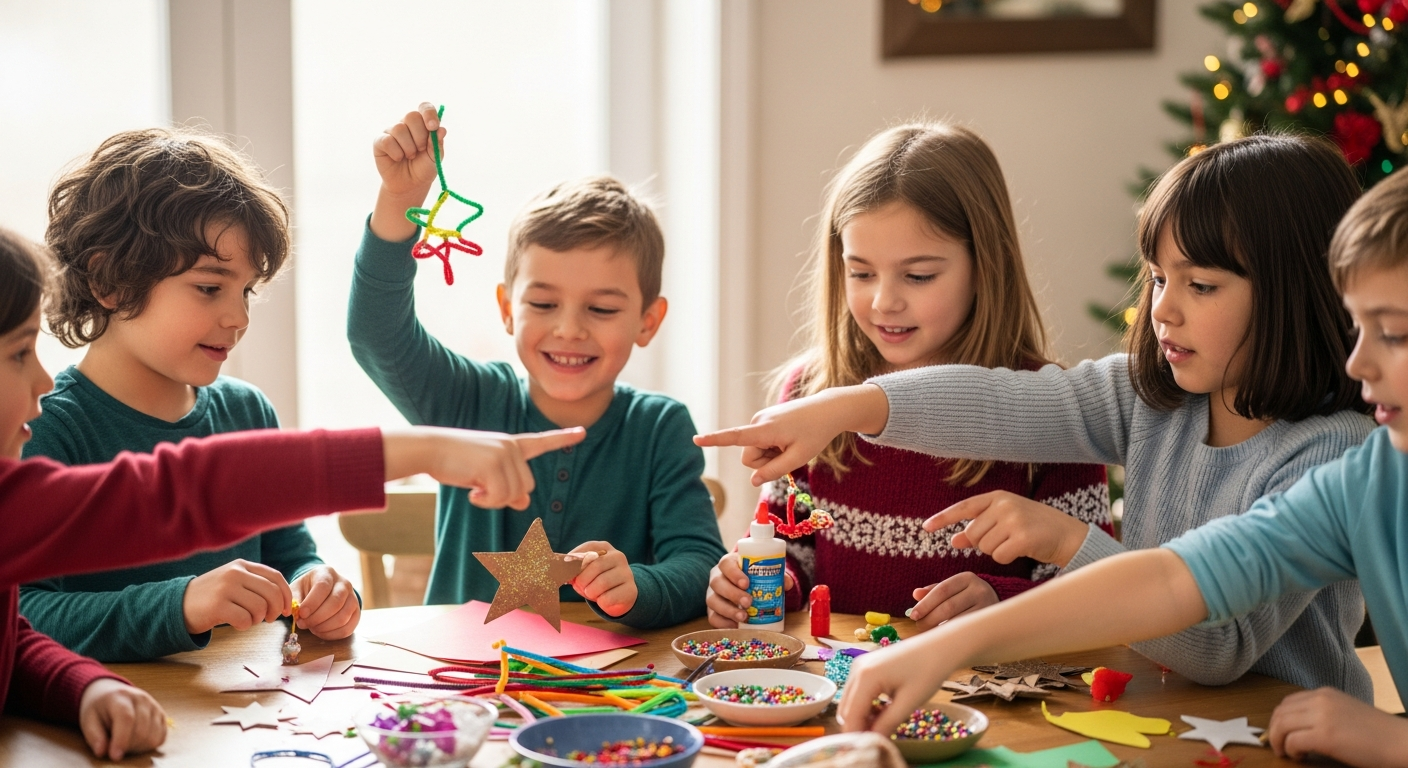
Table of Contents
- Introduction
- Beyond Decoration: The Developmental Magic of Crafting
- Crafting Connections: Speech and Language Through Ornaments
- Our Favorite Easy Kid Ornament Crafts (with Communication Tips!)
- From Craft Table to Communication Confidence: How Speech Blubs Helps
- Transforming Your Child's Communication Journey with Speech Blubs
- Choose Your Plan: Unlocking the Full Potential of Speech Blubs
- Conclusion
- FAQ
The scent of pine, the twinkle of lights, and the joyful anticipation in a child’s eyes – these are the hallmarks of the holiday season. But amidst the festive flurry, there’s a quiet magic that happens when little hands create something special: the handmade ornament. More than just a decoration, each unique creation tells a story, captures a moment, and holds a cherished memory. Imagine your child proudly hanging their very own creation on the tree, beaming with accomplishment. It’s a moment of pure joy and connection, and what many parents might not realize is that these simple craft activities are also powerful opportunities for fostering crucial developmental skills, especially communication.
At Speech Blubs, we believe in empowering children to speak their minds and hearts, and we know that every interaction, every shared activity, can be a building block for confident communication. That's why we’re diving into the wonderful world of easy kid ornament crafts. This post isn't just a list of ideas; it's a guide to transforming holiday crafting into rich learning experiences, enhancing fine motor skills, boosting cognitive development, and most importantly, creating countless chances for language growth and joyful family bonding. We'll show you how these adorable DIY projects perfectly complement the engaging, play-based learning principles we champion, making every snip, glue, and glitter sprinkle a step towards stronger communication.

Introduction
Have you ever gazed at a handmade ornament on your Christmas tree, recalling the tiny hands that crafted it, perhaps years ago? That scrunched-up paper star or glitter-covered pinecone holds more than just tinsel; it encapsulates a memory, a giggle, and a shared moment of creation. In our increasingly digital world, these tangible tokens of effort and imagination are more precious than ever. The holiday season offers a unique invitation to slow down, connect, and engage in activities that are not only fun but profoundly developmental for our children.
This article aims to illuminate the incredible potential of easy kid ornament crafts. We'll explore how these seemingly simple activities provide a fertile ground for developing essential skills, from fine motor coordination and problem-solving to emotional regulation and creative expression. Crucially, we'll delve into how crafting serves as a dynamic springboard for speech and language development, offering natural opportunities for vocabulary building, following directions, descriptive language, and even early storytelling. We'll share a bounty of delightful, easy-to-make ornament ideas, each paired with practical tips on how to maximize its communication-boosting power. Our goal is to inspire you to transform your holiday preparations into meaningful, interactive learning experiences, perfectly aligning with our mission at Speech Blubs to provide immediate, effective, and joyful solutions for children's speech support.
Beyond Decoration: The Developmental Magic of Crafting
Engaging in simple craft projects with children offers a treasure trove of developmental benefits that extend far beyond simply making something pretty. These hands-on activities are foundational for a child's holistic growth.
Fine Motor Skills and Coordination
Crafting is a workout for little hands and fingers. Activities like cutting with child-safe scissors, peeling stickers, squeezing glue, threading beads, or manipulating small pieces of felt all help to strengthen the small muscles in the hands and improve dexterity. This "pincer grasp" – using the thumb and forefinger – is crucial for tasks like holding a pencil, buttoning clothes, and self-feeding. Hand-eye coordination also gets a significant boost as children learn to guide their hands to achieve a desired outcome, like placing a bead precisely or drawing a specific line.

Cognitive Development and Problem-Solving
Every craft project presents mini-challenges that encourage cognitive growth. Children learn to follow a sequence of steps, plan their next move, and troubleshoot when things don’t go exactly as expected. "What happens if I use too much glue?" "Which color should I choose next?" "How do I make these two pieces stick together?" These questions, whether asked aloud or pondered internally, stimulate critical thinking, spatial reasoning, and decision-making skills. Children learn about cause and effect and develop a sense of initiative.
Creativity and Self-Expression
Crafts are a wonderful outlet for a child's boundless imagination. There's no single "right" way to decorate an ornament, allowing children the freedom to express their unique vision. This fosters a sense of individuality and boosts self-confidence. When a child sees their distinct creation displayed, it validates their ideas and efforts, encouraging them to explore their creative potential further. This uninhibited self-expression is a cornerstone of developing a strong sense of self and the confidence to communicate it effectively.
Emotional Regulation and Patience
Some crafts require a bit of patience, waiting for glue to dry or carefully applying small embellishments. These moments teach children perseverance and the satisfaction of seeing a project through to completion. The anticipation of the final result, coupled with the pride in their handmade item, builds resilience and a positive association with sustained effort. It's a gentle way to introduce the concept that good things come to those who wait, fostering emotional regulation in a fun, low-pressure environment.
Crafting Connections: Speech and Language Through Ornaments
While the developmental benefits are clear, easy kid ornament crafts are uniquely positioned to enhance speech and language skills. The very nature of creating something together naturally sparks conversation, encourages interaction, and provides concrete objects and actions to talk about. This hands-on, multi-sensory experience is highly effective for language acquisition and practice.
Vocabulary Building in Action
As you craft, you'll naturally introduce a rich array of vocabulary. Think about all the words you can use:
- Colors: "What color glitter should we use? Red, green, or blue?"
- Shapes: "We need a circle for the snowman's head and a triangle for the tree."
- Materials: "Felt," "pipe cleaner," "pom-pom," "bead," "glue," "paint," "ribbon."
- Actions: "Cut," "glue," "paint," "snip," "thread," "wrap," "squeeze," "press," "twist."
- Adjectives: "Sticky," "sparkly," "soft," "rough," "smooth," "tiny," "big," "long," "short."
- Prepositions: "Put the star on the top," "The bead is under the table," "Hold it over the tray."
For a parent whose 3-year-old "late talker" loves animals, decorating a "llama ornament" offers a fun, motivating way to practice 'l' sounds, animal names, and descriptive words like "fluffy" or "colorful."
Following Directions and Sequencing
Most craft projects involve a series of steps. This provides an excellent opportunity to practice following single or multi-step directions. Start simple: "First, put on the glue. Then, add the glitter." As your child's skills grow, you can increase the complexity: "Get the blue paint, paint the top part of the pinecone, and then put it on the drying rack." This also naturally introduces sequencing concepts – "first," "next," "then," "last" – which are vital for narrative development and logical thinking.
Descriptive Language and Storytelling
Encourage your child to describe their creation. "Tell me about your shiny, blue star!" Ask open-ended questions: "What does your snowman feel like?" "What's happening in your mini landscape?" This prompts them to use descriptive words and to articulate their thoughts. You can even create little stories around the ornaments. "This is the story of our special sparkly snowflake, how it floated down to our tree!" These narrative skills are critical for expressing thoughts, sharing experiences, and understanding stories, which are skills we nurture within the Speech Blubs app through engaging, interactive activities.
Practicing Sounds and Articulation
Craft time can be a low-pressure environment for practicing specific speech sounds. For example, while working on a "snowman pom-pom" craft, you can emphasize the "s" sound in "snowman," "sparkle," and "soft." When making a "painted pinecone," focus on the "p" in "paint" and "pinecone." The repetition of these sounds in a meaningful, playful context can be far more effective than rote drills.
Our Favorite Easy Kid Ornament Crafts (with Communication Tips!)
Now, let's dive into some fantastic, easy kid ornament crafts that promise to spark joy and conversation. Remember, the goal isn't perfection, but participation and the rich interaction that comes with it.
Nature's Bounty Ornaments
Bringing elements from outside in connects children to the natural world.
Painted Pinecones
- Inspired by: Item 12 from competitive analysis.
- Materials: Pinecones (collected from outdoors!), tempera paint or glitter glue, string/ribbon.
- How-To: Let your child choose their favorite colors and paint the pinecones. Once dry, attach a loop of string for hanging.
- Speech Blubs Connection: Talk about the pinecone's texture ("spiky," "rough," "pointy"), its color, and size ("big," "small"). Count the pinecones. Use action words like "paint," "dab," "shake." This sensory engagement is a fantastic precursor to the varied visual and auditory stimuli in our app, which is carefully designed to capture attention and promote active learning through imitation.
Leaf Rubbing Ornaments
- Materials: Fresh leaves, paper, crayons, cardboard, glue.
- How-To: Place leaves under paper and rub crayons over them to reveal their patterns. Cut out interesting shapes from the rubbed paper, glue them onto small cardboard cutouts, and add a string.
- Speech Blubs Connection: Discuss the "lines" and "veins" of the leaves. Talk about the "colors" of autumn leaves. Practice naming the season. "Look at the big, green leaf!"
Repurposed & Simple Materials
Transforming everyday items fosters creativity and shows kids how to reuse.
Popsicle Stick Snowflakes
- Inspired by: Item 10 from competitive analysis.
- Materials: Popsicle sticks, glue, paint, glitter, small buttons/gems, string.
- How-To: Arrange popsicle sticks into snowflake patterns (adult may need to help with hot glue). Let kids paint them white, blue, or silver, and decorate with glitter or small embellishments.
- Speech Blubs Connection: Count the sticks, talk about "crossing" and "connecting" them. Practice "s" sounds in "snowflake," "stick," "sparkle." Describe the patterns created.
Clothespin Snowflakes
- Inspired by: Item 3 from competitive analysis.
- Materials: Wooden spring clothespins (take them apart), glue, paint, glitter, string.
- How-To: Help children glue the flat sides of the clothespin halves together in a star or snowflake pattern. Paint and decorate.
- Speech Blubs Connection: Discuss "open" and "closed" when taking apart the pins. Practice "glue," "paint," and "stick together." This activity strengthens fine motor control, which is often linked to speech articulation, as both require precise muscle movements.
Beaded Candy Canes
- Inspired by: Item 7 from competitive analysis.
- Materials: Pipe cleaners, pony beads (red and white for classic, or any colors!).
- How-To: Bend a pipe cleaner into a candy cane shape. Have children thread beads onto the pipe cleaner, alternating colors for a pattern, then twist the ends to secure.
- Speech Blubs Connection: Practice color words, counting beads, and patterning ("red, white, red, white"). Use words like "thread," "slide," "bend," "twist."
Mini Wreath Ornaments (Pipe Cleaners & Cookie Cutters)
- Inspired by: Item 4 from competitive analysis.
- Materials: Metal cookie cutters (various shapes), green pipe cleaners, small pom-poms, miniature bows, glue, string.
- How-To: Children wrap green pipe cleaners tightly around the cookie cutters until covered. Decorate with small pom-poms or bows.
- Speech Blubs Connection: Name the cookie cutter shapes ("star," "heart," "bell"). Discuss "wrapping," "twisting," "securing." Talk about "round" and "pointy."
Filled Clear Ornaments
- Inspired by: Item 26 from competitive analysis.
- Materials: Clear plastic fillable ornaments, small craft items (faux snow, mini pom-poms, jingle bells, glitter, tiny pinecones), ribbon.
- How-To: Kids select items to put inside the ornament halves. Snap them together, seal with a touch of glue (adult help), and add ribbon.
- Speech Blubs Connection: Practice "in," "out," "fill," "shake." Describe the sounds ("jingle"), textures ("soft snow"), and colors of the contents. This sensory exploration can prompt rich descriptive language.
Paper Fan Ornaments
- Inspired by: Item 14 from competitive analysis.
- Materials: Construction paper or scrapbook paper, twist ties, string.
- How-To: Cut paper into circles or squares. Fold them accordion-style. Pinch the middle and secure with a twist tie. Fan out the sides to create a full circle or semi-circle.
- Speech Blubs Connection: Practice "fold," "pinch," "fan out," "smooth," "crease." Talk about patterns on the paper.
Wrapped Cookie Cutter Ornaments
- Inspired by: Item 23 from competitive analysis.
- Materials: Inexpensive cookie cutters, colorful yarn or ribbon, glue, scissors, string.
- How-To: Children wrap yarn or ribbon around the cookie cutters until the metal is covered, securing the ends with glue. Add a loop for hanging.
- Speech Blubs Connection: Name the cookie cutter shapes. Discuss "wrapping," "tight," "loose," "smooth" yarn. Practice color words.
Sensory & Textured Crafts
Engaging multiple senses reinforces learning and creates richer memories.
Stamped Clay Ornaments (Air Dry Clay)
- Inspired by: Item 8 from competitive analysis.
- Materials: Air-dry clay, rolling pin, cookie cutters (for shaping), textured objects (leaves, lace, stamps, twigs), straw (for hole), ribbon.
- How-To: Kids roll out the clay, cut shapes with cookie cutters, then press textured objects into the clay. Use a straw to make a hanging hole. Let dry completely.
- Speech Blubs Connection: Talk about the texture of the clay ("squishy," "soft," "smooth"). Practice action words like "roll," "press," "cut," "stamp." Describe the patterns created. For children working on early articulation, this activity provides a natural context for sounds like 's' (stamp, smooth) and 'c' (cut, clay).
Felt Ornaments (Mountains, Cookies, Faces, Candies)
- Inspired by: Items 5, 11, 13, 21 from competitive analysis.
- Materials: Felt sheets (various colors), child-safe scissors, fabric glue, small beads, buttons, cotton balls.
- How-To: Children cut out shapes (mountains, circles for cookies, basic face shapes). Glue on smaller felt pieces for details (snowcaps, sprinkles, eyes/noses) or other embellishments.
- Speech Blubs Connection: Practice "cut," "glue," "soft," "smooth." Name shapes and colors. Create faces and talk about emotions ("happy," "silly"). Tell a story about the felt mountain adventure or the sweet cookie.
Snowman Pom-Poms
- Inspired by: Item 2 from competitive analysis.
- Materials: White yarn (or pre-made white pom-poms), orange felt (for nose), small black buttons or googly eyes, glue, string.
- How-To: If making pom-poms, guide children through the wrapping process. Glue together two pom-poms (one larger, one smaller) for the body. Add felt nose and button eyes.
- Speech Blubs Connection: Describe "round," "fluffy," "soft." Practice "s" sounds for "snowman," "soft," "sparkly." Use action words: "wrap," "glue," "stick."
Gnome Ornaments
- Inspired by: Item 9 from competitive analysis.
- Materials: Small wooden eggs (with flat bottom), felt for hats, cotton balls or faux fur for beards, small wooden beads for noses, glue, string.
- How-To: Glue a felt hat, cotton beard, and wooden bead nose onto the wooden egg.
- Speech Blubs Connection: Name body parts ("hat," "beard," "nose"). Describe textures ("soft cotton," "smooth wood"). Practice "g" sound for "gnome" and "glue."
Personalized Keepsakes
These ornaments capture a child's unique artistry and make wonderful gifts.
Drawing/Painted Wood Slice Ornaments
- Inspired by: Items 17, 18 from competitive analysis.
- Materials: Pre-cut wood slices (craft store), paint pens, acrylic paints, brushes, clear sealer, eye hooks, twine.
- How-To: Children draw or paint directly onto the wood slices. Once dry, seal them. An adult can add an eye hook and twine.
- Speech Blubs Connection: Encourage children to describe their drawings. "What colors did you use?" "What did you draw?" Practice "w" for "wood" and "wonderful." These personalized creations are fantastic for building confidence in self-expression, a core value at Speech Blubs, where we want children to feel empowered to share their unique voice.
Chalkboard Ornaments
- Inspired by: Item 16 from competitive analysis.
- Materials: Papier-mâché ornaments (round), chalkboard paint, white chalk marker (or regular chalk), ribbon.
- How-To: Paint the ornaments with chalkboard paint. Once dry, children can draw or write their names, then erase and create new designs.
- Speech Blubs Connection: Practice letter sounds as they write names. Talk about "drawing," "writing," "erasing." Ask "What are you going to draw next?" This repetitive practice of creating and erasing helps reinforce concepts in a fun way.
Marbled Ornaments (Shaving Cream or Paint)
- Inspired by: Item 6 from competitive analysis.
- Materials: Small wooden cutouts or thick paper shapes, shaving cream, food coloring or liquid watercolors, toothpicks, shallow tray, scraper (cardboard), ribbon.
- How-To: Fill a tray with shaving cream. Drop dots of food coloring onto it. Swirl with a toothpick. Press the ornament onto the colored foam, lift, and scrape off excess cream to reveal a marbled pattern.
- Speech Blubs Connection: Use sensory words: "foamy," "swirly," "slippery," "messy." Talk about the colors "mixing" and "blending." This highly engaging sensory activity provides ample opportunities for spontaneous language.
Imaginative Play Ornaments
Encourage storytelling and creative world-building.
Mini Landscape Ornaments (Mason Jar Lids)
- Inspired by: Item 1 from competitive analysis.
- Materials: Mason jar lids, small pom-poms, miniature trees/animals/figures, cotton balls (for snow), glitter, glue, pipe cleaners, ribbon.
- How-To: Children glue small elements inside the lid to create a tiny winter scene. Wrap a pipe cleaner around the lid and attach a ribbon loop.
- Speech Blubs Connection: Create a story about the scene. Name the animals and objects. Use prepositions: "The tree is behind the snowman," "The reindeer is in the snow." This builds narrative skills and expands descriptive vocabulary.
Llama Ornaments
- Inspired by: Item 24 from competitive analysis.
- Materials: Llama-shaped wood cutouts or sturdy cardboard, paint, markers, small pom-poms, ribbon, glue.
- How-To: Children paint and decorate the llama cutouts. Add a small pom-pom tail or colorful ribbons for extra flair.
- Speech Blubs Connection: Practice the "l" sound in "llama." Talk about colors, patterns, and where llamas live. Make "llama" sounds (humming or spitting playfully!).
Geometric Diorama Ornaments
- Inspired by: Item 25 from competitive analysis.
- Materials: Small paper boxes (like matchboxes), cutouts of winter scenes (trees, snowmen), glitter, glue, string.
- How-To: Children glue small cutouts inside the box to create a 3D scene. Decorate the outside with glitter.
- Speech Blubs Connection: Discuss shapes ("box," "square"). Use spatial words ("inside," "outside," "front," "back"). Encourage storytelling about the scene inside the diorama.
Baked Applesauce Ornaments
A classic, wonderfully aromatic, and sensory craft!
Baked Applesauce Ornaments
- Inspired by: Item 27 from competitive analysis.
- Materials: Applesauce, ground cinnamon, cookie cutters, straw (for hole), ribbon.
- How-To: Mix equal parts applesauce and cinnamon to form a dough. Roll it out, cut shapes with cookie cutters, and use a straw to make a hole. Bake at a low temperature until hard (do not eat!).
- Speech Blubs Connection: This is a fantastic multi-sensory experience. Talk about the "smell" of cinnamon, the "feel" of the dough ("sticky," "smooth"). Practice following the "recipe" steps. Name the shapes of the cookie cutters.
From Craft Table to Communication Confidence: How Speech Blubs Helps
As you can see, these easy kid ornament crafts are much more than just holiday decorations; they are dynamic platforms for fostering speech and language development. The interactive nature of crafting, where children are actively engaged and communicating their choices and processes, perfectly mirrors the philosophy behind Speech Blubs.
At Speech Blubs, our mission is to empower children to speak their minds and hearts. Our company was born from the personal experiences of our founders, who all grew up with speech problems and created the tool they wished they had. We are committed to providing an immediate, effective, and joyful solution for the 1 in 4 children who need speech support, blending scientific principles with play into one-of-a-kind "smart screen time" experiences.
The Power of Video Modeling
One of the unique ways we achieve this is through our "video modeling" methodology. Children learn best by watching and imitating their peers. Just as a child might watch you craft and then try to replicate your actions, in Speech Blubs, children learn complex communication skills by observing real children their age producing sounds and words. This engages "mirror neurons" in the brain, making the learning process incredibly intuitive and effective. Our method is backed by science, placing us in the top tier of speech apps worldwide. You can explore more about our research and methodology here.
Engaging Activities for "Smart Screen Time"
Unlike passive screen time like watching cartoons, Speech Blubs provides an active, interactive experience. Our app turns screen time into a powerful tool for family connection, offering a screen-free alternative to passive viewing. We provide guided activities that encourage children to speak, laugh, and learn. Just like crafting requires active participation and interaction with a caregiver, Speech Blubs is designed for co-play and support, turning digital learning into a shared, joyful experience.
Reducing Frustration and Building Confidence
Many children who struggle with speech can experience frustration. Engaging in activities like crafting or using Speech Blubs provides positive reinforcement and celebrates small victories. Whether it's successfully cutting a shape or correctly imitating a word in the app, these moments build confidence and reduce anxiety around communication. We focus on fostering a love for communication and developing key foundational skills, creating joyful learning moments for the whole family. See what other parents are saying about their child's success with Speech Blubs.
Transforming Your Child's Communication Journey with Speech Blubs
Whether you're crafting a beautiful ornament or exploring new words in our app, you're investing in your child's communication future. We understand that every child's journey is unique, and Speech Blubs is designed to be a powerful supplement to a child's overall development plan and, when applicable, professional therapy. We're here to support you every step of the way, helping your child build confidence and articulate their thoughts and feelings clearly.
Unsure if your child could benefit from speech support? Take our quick 3-minute preliminary screener to get a simple assessment and a personalized next-steps plan. It's a great way to gain insight and see how Speech Blubs can make a difference.
Choose Your Plan: Unlocking the Full Potential of Speech Blubs
We believe in making effective speech therapy accessible and affordable for every family. We offer two transparent pricing plans:
- Monthly Plan: For just $14.99 per month, you can access a wealth of engaging speech activities and support.
- Yearly Plan: This is our most popular and value-packed option! For only $59.99 per year, you save a remarkable 66% compared to the monthly plan, breaking down to just $4.99 per month.
The Yearly Plan isn't just cheaper; it also includes exclusive, high-value features designed to give your child the best possible start:
- A 7-day free trial so you can experience the full benefits before committing.
- Access to our extra Reading Blubs app, further supporting literacy development.
- Early access to new updates and features, keeping your child's learning fresh and exciting.
- 24-hour support response time, ensuring you always have help when you need it.
The Monthly plan does not include these incredible benefits, making the Yearly Plan the clear best choice for comprehensive support and value.
Ready to give your child the gift of confident communication? Start your 7-day free trial today by choosing our Yearly Plan on our website! You can also download Speech Blubs on the App Store or Google Play to begin your family's journey toward joyful communication.
Conclusion
The holiday season, with its twinkling lights and festive cheer, offers a unique opportunity to create lasting memories and foster essential developmental skills through easy kid ornament crafts. From strengthening fine motor coordination to expanding vocabulary and encouraging storytelling, these simple activities are powerful tools for growth. By engaging in these hands-on projects, you're not just decorating your home; you're actively nurturing your child's ability to communicate, express themselves, and connect with the world around them.
At Speech Blubs, we are dedicated to supporting your child's communication journey with engaging, scientifically-backed tools that make learning fun. Just like the shared laughter around a craft table, our app is designed to create joyful, interactive experiences that empower children to speak their minds and hearts. We believe that every child deserves the chance to communicate confidently, and together, we can make that a reality.
Don't let another day pass without giving your child the gift of clear communication. Start your 7-day free trial today by signing up for our Yearly Plan to unlock the full suite of Speech Blubs features and begin your journey towards confident speech and a brighter future. You can also find us and download the app on the Apple App Store or Google Play Store.
FAQ
Q1: What age group are these easy kid ornament crafts best suited for? A1: Most of these crafts are adaptable for a wide range of ages, generally from toddlers (with more adult supervision and pre-prepped materials) through elementary school. The key is to choose projects that match your child's developmental stage and allow them to participate actively, even if it's just choosing colors or sticking on a pom-pom. The communication tips provided can be tailored to their language level, from single words to complex sentences.
Q2: How can I encourage my child to talk more during crafting if they are usually quiet? A2: Create a low-pressure environment where the focus is on fun, not perfect speech. Use open-ended questions like, "What do you think we should do next?" instead of "What color is this?" Describe your own actions and observations ("I am cutting the red paper now, snip, snip!"). Offer choices ("Do you want the blue glitter or the gold?"). These techniques can gently draw out responses and encourage spontaneous language, much like the supportive and interactive environment we foster within the Speech Blubs app, where children learn through positive reinforcement.
Q3: What if my child gets frustrated during a craft project? A3: Frustration is a natural part of learning! Acknowledge their feelings ("It looks like that's tricky"). Offer help, break down the task into smaller steps, or suggest a simpler alternative. Remind them that it's okay for things not to be perfect and that the effort and fun are what truly matter. This resilience-building is an important part of emotional development, and learning to manage frustration extends to all areas, including communication.
Q4: How does Speech Blubs compare to traditional speech therapy for young children? A4: Speech Blubs is designed as a powerful supplement to traditional speech therapy, not a replacement. It offers a fun, engaging, and accessible way for children to practice speech skills daily in a home environment. Our "video modeling" method allows children to learn by imitating peers, reinforcing what they might learn in therapy. For parents concerned about their child's speech development, Speech Blubs provides a convenient, effective tool that can be used immediately to support their child's communication journey and build foundational skills. We encourage you to try our 7-day free trial with the Yearly Plan to see how it fits into your family's routine.
About the author