
Spark Holiday Joy: Fun DIY Kid Christmas Crafts That Boost Language
 By Speech Blubs Team•Dec 22, 2025•18 min.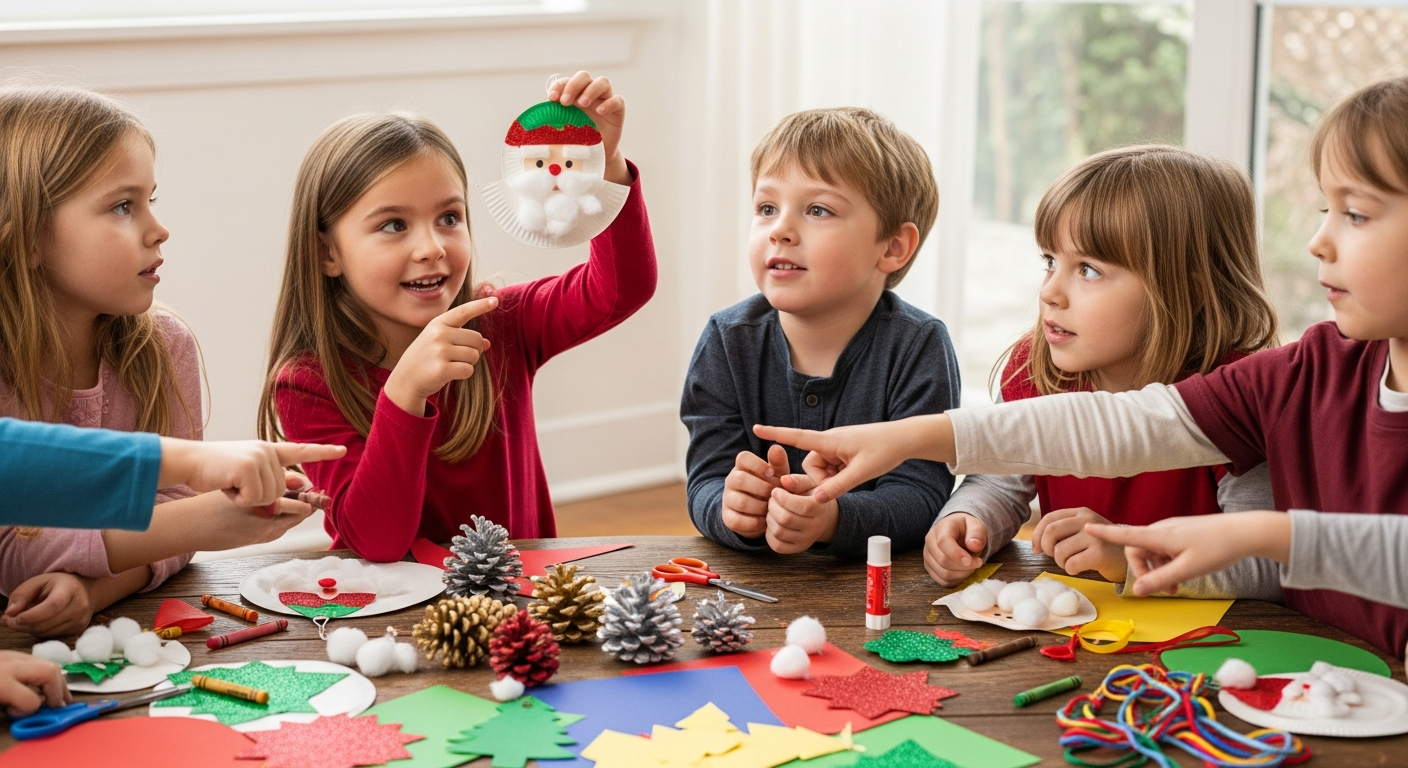
Table of Contents
- Introduction
- The Developmental Magic Behind DIY Christmas Crafts
- Crafting with Purpose: Integrating Speech & Language Goals
- Speech Blubs: Your Partner in Communication, Complementing Creative Play
- Delightful DIY Kid Christmas Crafts for Language Development
- Tips for Parents: Maximizing Language Opportunities During Craft Time
- Speech Blubs: Making Language Learning Accessible and Enjoyable
- Conclusion
- FAQ
Introduction
Ever wonder if those glitter-covered, slightly lopsided handmade ornaments your child brings home are doing more than just decorating the tree? The truth is, engaging in simple, joyful activities like DIY Christmas crafts offers a hidden treasure trove of opportunities for your child's communication development. Beyond the festive fun and the creation of cherished keepsakes, crafting provides a natural, play-based environment where language skills can flourish, fine motor abilities can strengthen, and confidence can soar.
At Speech Blubs, we believe that every child deserves to speak their minds and hearts, and we know firsthand the transformative power of purposeful play. Our mission was born from our founders' personal journeys with speech challenges, driving us to create the supportive tool we wished we had. This holiday season, let's explore how pairing the magic of hands-on DIY Christmas crafts with intentional language strategies can create unforgettable memories and lay a strong foundation for your child's communication journey. We’ll dive into a sleigh-full of easy, engaging craft ideas, discuss how each activity can be tailored to foster specific speech and language skills, and share how our unique approach at Speech Blubs complements these real-world learning moments, ensuring a holistic and joyful developmental experience for your little one.

The Developmental Magic Behind DIY Christmas Crafts
When you hand your child a pipe cleaner or a blob of glue during craft time, you’re not just providing a distraction; you’re opening a doorway to a rich world of developmental benefits. DIY Christmas crafts are far more than just pretty decorations; they are powerful tools for growth, especially in the realm of communication.
Building Foundational Skills Through Festive Fun
Before words can flow freely, children need to develop a range of foundational skills. Crafting naturally nurtures many of these:
- Fine Motor Skills and Bilateral Coordination: Holding a paintbrush, cutting paper with kid-safe scissors, or threading beads requires precise movements of small muscles in the hands and fingers. These activities also demand bilateral coordination – using both sides of the body together – like holding a paper steady with one hand while cutting with the other. Strong fine motor skills are crucial for tasks like writing and even for the intricate movements of the tongue and mouth involved in articulation.
- Following Directions and Executive Function: Every craft project comes with a set of instructions, whether visual or verbal. "First, glue the eyes, then add the nose." This helps children practice listening, sequencing, and remembering multi-step directions. These executive function skills – like planning, organizing, and task initiation – are vital not only for academic success but also for structuring thoughts and expressing them coherently.
- Vocabulary Expansion: Crafting introduces a vast array of new words. Think about the descriptive language you can use: "sticky glue," "sparkly glitter," "bumpy pinecone," "smooth paper," "sharp scissors," "red ribbon," "green tree." You can talk about actions ("cut," "glue," "paint," "sprinkle," "fold"), shapes ("star," "circle," "triangle"), colors, textures, and even emotions ("happy," "proud," "excited"). The more words a child hears and uses in context, the richer their vocabulary becomes.
- Storytelling and Narrative Development: Once a craft is complete, it often sparks imagination. "Who is your snowman friend?" "What adventure will your reindeer ornament go on?" Children can tell stories about the process of making the craft, who it's for, and what it represents. This helps them develop narrative skills, sequencing events, and expressing ideas in a logical flow.
- Social Interaction and Turn-Taking: Crafting together is a wonderful way to practice social skills. Sharing materials, waiting for a turn, asking for help, and giving compliments all contribute to developing crucial social communication abilities. This reciprocal interaction is the backbone of conversation.
- Emotional Expression and Confidence Building: There's immense pride in creating something with your own hands. Completing a craft, especially one that will be displayed or given as a gift, builds self-esteem and confidence. This positive reinforcement encourages children to try new things and express themselves, which can directly translate into a greater willingness to communicate.
For a child who might be a "late talker," or one who struggles with articulation, crafting can feel less intimidating than direct drill practice. It provides a low-pressure, highly motivating context to practice new sounds and words, building confidence one glitter-covered reindeer at a time. If you're wondering whether your child could benefit from a little extra speech support, our quick 3-minute preliminary screener can provide a simple assessment and a personalized next-steps plan, often including a free 7-day trial of Speech Blubs.

Crafting with Purpose: Integrating Speech & Language Goals
The beauty of DIY Christmas crafts is that they naturally lend themselves to specific speech and language goals. With a little intentionality from parents and caregivers, these festive activities become powerful learning experiences.
Tailoring Craft Time for Communication Growth
- Articulation Practice: Many craft words contain sounds that children often struggle with.
- "S" sound: "Scissors," "snip," "star," "snowman," "sparkle," "stickers."
- "R" sound: "Red," "ribbon," "reindeer," "roll," "round."
- "G" sound: "Glue," "green," "glitter," "gift."
- "K" sound: "Cut," "craft," "candy cane," "Christmas."
- As you craft, emphasize these words, prompting your child to imitate the sounds. For example, "Can you snip, snip, snip the paper?" or "Let's put the green glitter on the tree."
- Receptive Language: This involves understanding language. Craft projects are perfect for practicing multi-step directions and understanding concepts.
- "First, take the red paper, then cut it into a circle."
- "Put the star on top of the tree, and the presents underneath."
- "We need more glue, but not too much."
- Use contrasting concepts like "big/small," "long/short," "inside/outside."
- Expressive Language: This is about using language to communicate.
- Requesting: Encourage your child to ask for materials: "More glue, please," "Can I have the blue crayon?"
- Describing: "Tell me about your reindeer. What color is his nose?" "What does the glitter feel like?"
- Explaining: "How did you make that star?" "What are the steps?"
- Commenting: "Wow, that looks great!" "I like your sparkly tree."
- Concept Development: Colors, shapes, sizes, spatial relationships, and temporal concepts (first, next, last) are all inherently woven into crafting.
- "Let's find all the square pieces of paper."
- "The biggest snowflake goes on the window."
- "We'll do the painting first, then the gluing next."
- Social Skills: Crafting provides a natural backdrop for conversation and turn-taking.
- "My turn to glue, then your turn."
- "What do you think we should add next?"
- "You did such a good job sharing the glitter!"
These interactions are powerful, creating a positive association with communication. For children who thrive on visual learning and imitation, these hands-on activities set the stage beautifully for tools like Speech Blubs. Our app leverages the power of "video modeling," where children learn by watching and imitating their peers, a method that aligns perfectly with the imitative nature of learning during craft time. To learn more about the science behind our effective approach, you can explore our research page.
Speech Blubs: Your Partner in Communication, Complementing Creative Play
At Speech Blubs, we understand that language development is a holistic journey. While hands-on activities like DIY Christmas crafts provide invaluable real-world practice, our app offers a scientifically-backed, engaging, and joyful solution for structured speech and language support. We are committed to providing an immediate, effective, and joyful solution for the 1 in 4 children who need speech support, blending scientific principles with play into one-of-a-kind "smart screen time" experiences. Our company was born from the personal experiences of our founders, who all grew up with speech problems and created the tool they wished they had.
How Speech Blubs Enhances Your Child's Journey
- Video Modeling for Clear Speech: Our unique "video modeling" methodology is at the heart of Speech Blubs. Children learn by watching and imitating the mouth movements of their peer role models. This visual learning approach is incredibly effective for developing clearer articulation and expanding vocabulary, directly reinforcing the sounds and words practiced during craft time. Imagine practicing "star" or "tree" with a peer in the app, and then immediately using those words while making a craft!
- Smart Screen Time: We believe screen time can be a powerful tool for learning. Speech Blubs transforms passive viewing (like cartoons) into active, engaging, and interactive learning. It's a screen-free alternative in the sense that it encourages interaction, not just observation, and provides a powerful tool for family connection, often fostering co-play and support.
- Vocabulary Reinforcement: Our app features thousands of exercises targeting various sounds, words, and concepts. If your child is learning new descriptive words for colors and textures during craft time, they can reinforce those concepts with interactive activities in Speech Blubs, making the learning stick.
- Confidence Building: Success in the app, just like completing a craft, builds confidence. As children master new sounds and words, they feel empowered to communicate more, reducing frustration and fostering a love for language.
When paired with interactive activities like DIY Christmas crafts, Speech Blubs helps create a well-rounded developmental environment. We don't promise your child will be giving public speeches in a month, but we do promise to foster a love for communication, build confidence, reduce frustration, develop key foundational skills, and create joyful family learning moments. Ready to see the difference for yourself? You can download Speech Blubs on the App Store or get it on Google Play today!
Delightful DIY Kid Christmas Crafts for Language Development
Now, let's get to the fun part! Here are some simple, engaging DIY Christmas crafts that you can easily do with your children, highlighting the language-boosting opportunities in each.
1. Ornament Crafts
Ornaments are fantastic because they're small, manageable, and highly motivating for kids to make for the tree or as gifts.
Salt Dough Ornaments
Materials: Flour, salt, water, cookie cutters, paint, glitter, ribbon. Language Focus:
- Vocabulary: "Dough," "mix," "roll," "cut," "smooth," "sticky," "bake," "paint," "sparkly," "star," "heart," "tree."
- Action Verbs: "Mix," "knead," "roll," "cut," "poke," "paint," "sprinkle."
- Sequencing: "First, we mix the ingredients, then we roll the dough, then we cut out shapes."
- Descriptive Language: "How does the dough feel? Is it soft or hard? Sticky or smooth?"
- Concepts: "Round," "pointy," "big," "small," "thick," "thin."
Popsicle Stick Ornaments (Stars, Snowflakes, Trees)
Materials: Popsicle sticks, glue, paint, glitter, buttons, small pom-poms, pipe cleaners. Language Focus:
- Counting: "How many sticks do we need for a star?" "Let's count the buttons."
- Shapes: "We're making a star," "Can you make a triangle?"
- Spatial Concepts: "Glue the stick on top," "Put the pom-pom in the middle," "Lay the sticks across each other."
- Colors: "What color should we paint the sticks?"
- Requesting: "I need more glue," "Can I have a blue button?"
Handprint/Footprint Ornaments or Cards
Materials: Non-toxic paint, paper or salt dough, glitter. Language Focus:
- Body Parts: "Hand," "finger," "foot," "toe."
- Naming: "Whose handprint is this?" "This is Mommy's hand, this is your hand."
- Descriptive: "Your hand is so tiny!" "My hand is big."
- Family Vocabulary: "Grandma," "Grandpa," "Aunt," "Uncle" (as you talk about who the gift is for).
- Affectionate Language: "I love you," "Happy Christmas."
Pinecone Critters or Ornaments
Materials: Pinecones, googly eyes, felt scraps, small pom-poms, glue, pipe cleaners. Language Focus:
- Nature Vocabulary: "Pinecone," "branch," "tree," "forest."
- Textures: "Prickly," "rough," "soft," "fuzzy."
- Animal Names: "Reindeer," "owl," "squirrel" (as you create the critters).
- Body Parts (of the animal): "Eyes," "nose," "antlers," "wings."
- Prepositions: "Put the eyes on the pinecone," "Glue the nose in the middle."
2. Gift Crafts
Making gifts for loved ones is a wonderful way to foster generosity and connect with others.
Handmade Christmas Cards
Materials: Construction paper, crayons, markers, stickers, glitter, glue. Language Focus:
- Greetings: "Merry Christmas," "Happy Holidays."
- Recipient Names: "This card is for Grandma."
- Describing Pictures: "What picture did you draw?" "Tell me about your Santa."
- Affectionate Messages: "I love you," "Thinking of you."
- Pre-writing Skills: Practicing drawing lines, circles, and shapes that are precursors to letters.
Painted Rocks (Christmas Themes)
Materials: Smooth rocks, acrylic paint, paintbrushes, clear sealant. Language Focus:
- Colors: "What color should Santa's beard be?"
- Designs: "Stripes," "dots," "swirls," "star," "tree."
- Storytelling: "What is your rock telling us?" "Is that a happy snowman?"
- Verbs: "Paint," "draw," "mix," "dry."
3. Decoration Crafts
These crafts can transform your home into a festive wonderland and provide ongoing language opportunities as you decorate.
Paper Chains
Materials: Construction paper strips, glue or stapler. Language Focus:
- Counting: "Let's count how many links we have."
- Patterns: "Red, green, red, green – what comes next?"
- Colors: Identifying and naming colors.
- Verbs: "Fold," "glue," "staple," "link."
- Concepts: "Long," "short," "together," "apart."
Cotton Ball Snowman
Materials: Construction paper, glue, cotton balls, googly eyes, felt scraps for nose/scarf. Language Focus:
- Textures: "Soft," "fluffy," "sticky."
- Body Parts: "Head," "body," "arms," "eyes," "nose," "mouth."
- Descriptive: "My snowman is big and fluffy."
- Requesting: "I need more cotton balls."
For a child who is just starting to put two words together, try focusing on "more + noun" ("more glue," "more glitter") or "adjective + noun" ("red star," "big tree"). For children working on sentence structure, encourage them to describe what they are doing in simple sentences: "I am cutting paper," or "I glue the pom-pom."
Tips for Parents: Maximizing Language Opportunities During Craft Time
Crafting is inherently fun, but with a few simple strategies, you can supercharge its language-boosting power.
- Get Down to Their Level: Physically lower yourself to be at eye level with your child. This shows you're engaged and helps them focus on your facial expressions and mouth movements, which is crucial for imitation – a cornerstone of learning, and a key principle of Speech Blubs' video modeling.
- Narrate Everything: Be a language tour guide! Describe what you're doing, what your child is doing, and what you see. "I'm putting the sticky glue on the red star." "You're cutting the paper so carefully." "Look at the sparkly glitter!" This constant input provides rich vocabulary and models sentence structure.
- Ask Open-Ended Questions: Instead of questions that require a "yes" or "no" answer, ask questions that encourage description and thought. "What do you want to make next?" "How does that feel?" "Tell me about your reindeer."
- Offer Choices: "Do you want blue or green paper?" "Should we use big buttons or small buttons?" This targets receptive language (understanding options) and expressive language (stating preference), and empowers your child.
- Encourage Storytelling: Once a craft is finished, invite your child to tell a story about it. "Where does your snowman live?" "What adventure will your ornament have on the tree?" This promotes narrative skills and imaginative play.
- Be Patient and Celebrate Efforts: Focus on the process, not just the perfect product. Praise effort and participation, even if the result isn't gallery-worthy. "You worked so hard on that!" "I love how creative you were!" A positive, supportive environment makes children more willing to experiment with language.
- Model Correct Language: If your child says, "Me cut paper," you can gently model back, "Yes, I am cutting paper," or "You are cutting the paper." Avoid correcting directly, which can be discouraging; instead, offer the correct version as a natural part of the conversation.
Remember, every interaction is a chance to connect and communicate. These joyful moments, filled with creativity and language, are what truly empower children to "speak their minds and hearts."
To bring even more language practice into your home, consider incorporating Speech Blubs into your child's routine. Our app is packed with thousands of engaging activities that complement these hands-on learning experiences. You can create your account and begin your 7-day free trial today to explore how we make learning speech and language fun and effective.
Speech Blubs: Making Language Learning Accessible and Enjoyable
We know that every family's journey is unique, and we're committed to making high-quality speech and language support accessible. We've designed our app to be a valuable resource for all children, whether they need a little boost or more targeted support.
Our mission at Speech Blubs is to make a tangible difference, turning challenging speech development into an enjoyable and rewarding journey. We offer flexible subscription plans to suit your family’s needs, but we highly recommend our Yearly plan for the best value and access to all our incredible features.
Our Monthly plan is available for $14.99 per month. However, for those truly dedicated to fostering their child's communication skills, our Yearly plan is an exceptional value at just $59.99 per year. That breaks down to an amazing $4.99 per month, which means you save a significant 66%!
Opting for the Yearly plan doesn’t just save you money; it unlocks a complete suite of benefits designed to accelerate your child's progress and enhance your family's experience:
- A 7-day free trial: Experience the full power of Speech Blubs before committing.
- The extra Reading Blubs app: An entire additional app focused on early literacy, phonics, and reading skills, perfectly complementing speech development.
- Early access to new updates: Be the first to enjoy new features and content.
- 24-hour support response time: Get prompt assistance whenever you need it.
The Monthly plan, while flexible, does not include these exclusive, high-value features. To truly embrace the full potential of Speech Blubs and access all the tools designed to empower your child's voice, we strongly encourage you to choose the Yearly plan. It's the best way to get the most comprehensive support, including the free trial, and ensure your child has everything they need to speak their minds and hearts. Don't just take our word for it; see what other parents are saying about their child's success with Speech Blubs by visiting our testimonials page.
Conclusion
The holiday season is a time for magic, connection, and creating cherished memories. By engaging in simple, joyful DIY kid Christmas crafts, you're not just making decorations; you're actively nurturing your child's speech and language development in a fun, natural, and highly effective way. From expanding vocabulary and practicing articulation to honing fine motor skills and building confidence, every snip, glue, and sparkle contributes to their growth.
Remember to get involved, narrate the process, ask open-ended questions, and celebrate every effort. These festive crafting moments, full of interaction and creativity, lay a strong foundation for communication. To further support your child's journey and provide targeted speech and language practice, Speech Blubs offers a unique "smart screen time" solution that complements these hands-on activities beautifully, blending scientific principles with play.
Ready to fill your home with laughter, learning, and festive communication this Christmas? Take the next step to empower your child's voice. Download Speech Blubs on the App Store or find us on Google Play today! To unlock the full suite of benefits, including a 7-day free trial, the Reading Blubs app, and priority support, make sure to select the Yearly plan when you create your account. Give the gift of confident communication this holiday season.
FAQ
Q1: What are the best DIY Christmas crafts for toddlers to improve speech? A1: For toddlers, focus on simple crafts with sensory engagement and repetitive actions. Salt dough ornaments, cotton ball snowmen, and paper chains are excellent. Emphasize basic vocabulary like colors, shapes, action verbs (e.g., "mix," "cut," "glue"), and textures (e.g., "soft," "sticky"). Narrate every step, encourage imitation, and ask simple "what" and "where" questions.
Q2: How can I make Christmas crafting more engaging for my child with a speech delay? A2: Make it interactive and low-pressure. Use visual aids like pictures of the finished craft, offer choices (e.g., "red or green paper?"), and narrate what you are doing using simple, clear language. Focus on just one or two target words or sounds per session and celebrate all attempts at communication. Our Speech Blubs app uses video modeling, which can also be a fantastic way to visually engage children and encourage imitation, much like how they might imitate your actions during crafting.
Q3: Are there any specific crafts that help with fine motor skills essential for speech? A3: Absolutely! Crafts that involve cutting with kid-safe scissors, threading beads onto pipe cleaners for garlands, peeling stickers, squeezing glue bottles, or manipulating small objects like pom-poms all help strengthen fine motor skills. These precise hand movements are related to the dexterity needed for tongue and mouth movements in clear articulation.
Q4: How does Speech Blubs integrate with hands-on activities like DIY Christmas crafts? A4: Speech Blubs acts as a powerful complement to hands-on activities. While crafts provide real-world context for language, Speech Blubs offers structured practice using our unique video modeling methodology. For example, if your child learns words like "star" or "red" during crafting, they can reinforce those sounds and words with interactive exercises featuring peer models in the app, boosting their confidence and making the learning stick. It's a "smart screen time" experience that enhances and extends the learning from physical play. You can learn more about how Speech Blubs supports overall language development on our homepage.
About the author