
Spark Joy: Best Kids' Christmas Craft Kits
 By Speech Blubs Team•Dec 22, 2025•21 min.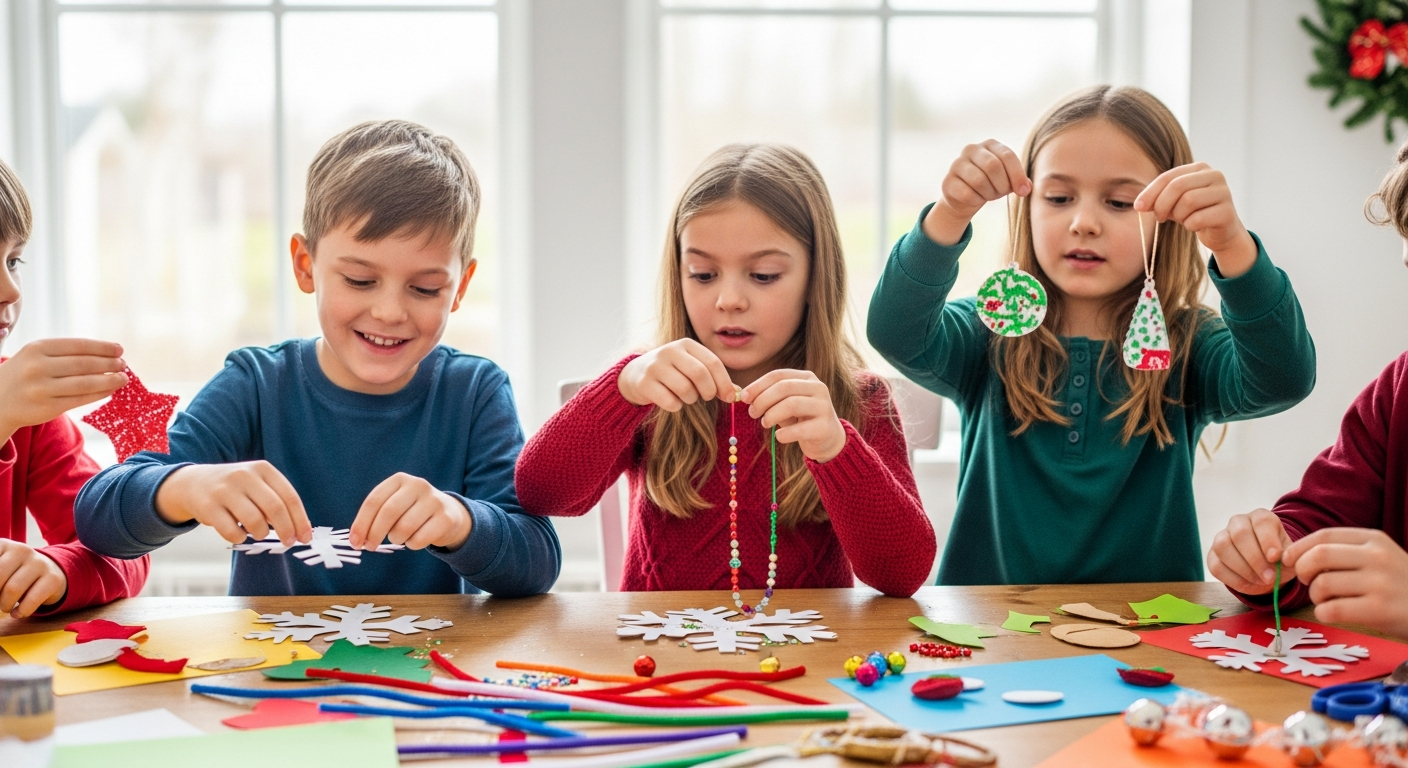
Table of Contents
- Beyond the Box: Why Craft Kits are More Than Just Fun
- Choosing the Perfect Christmas Craft Kit: A Parent's Guide
- Top Categories of Christmas Craft Kits to Consider
- Maximizing the Developmental Benefits: Crafting with a Communication Focus
- Speech Blubs: Empowering Little Voices Through Play
- Ready to Spark More Joy and Communication?
- Conclusion
- FAQ
The holiday season twinkles with magic, creating cherished memories that last a lifetime. Beyond the glittering lights and festive songs, there's a unique joy in children's hands creating something special. Imagine the delighted gasp as a child unveils their handmade ornament, or the focused quiet as they carefully decorate a gingerbread house. These moments aren't just about fun; they are powerful catalysts for growth, learning, and connection. This guide will explore the best Christmas craft kits for kids, highlighting not only their entertainment value but also the profound developmental benefits they offer. We'll show you how these hands-on activities can spark creativity, build crucial skills, and even enhance your child’s communication, setting the stage for a festive season filled with discovery and meaningful interactions.
Beyond the Box: Why Craft Kits are More Than Just Fun
Craft kits are often seen as simple distractions, but for children, they are miniature workshops of development. Each snip, glue, and dab of paint contributes to a complex web of skills that are essential for growth. By engaging with these kits, children don't just produce a pretty keepsake; they build foundational abilities that serve them far beyond the holiday season.

Fine Motor Skill Development
Think about the intricate movements required to string beads onto a pipe cleaner, carefully cut out a paper snowflake, or precisely squeeze glitter glue. These actions are fundamental to developing fine motor skills – the coordination of small muscles, especially in the hands and fingers. These skills are vital for everyday tasks like dressing, eating with utensils, and eventually, writing. Craft kits provide a playful, low-pressure environment for children to practice and refine these delicate movements. The repetitive nature of many crafting tasks, such as peeling stickers or winding yarn, strengthens hand muscles and improves dexterity, laying a strong foundation for future academic and life skills.
Cognitive Growth and Problem-Solving
Every craft kit comes with a set of instructions, whether visual or written, requiring children to follow sequences, understand cause and effect, and anticipate outcomes. This process is a workout for their developing brains, enhancing cognitive functions like attention span, memory, and logical reasoning. When a piece doesn't fit quite right, or a color combination doesn't yield the desired result, children are faced with miniature problem-solving challenges. They learn to adapt, experiment, and think critically, fostering resilience and an innovative spirit. Crafting also introduces concepts of spatial reasoning, as children learn to orient shapes and pieces in a three-dimensional space, an invaluable skill for geometry and engineering later in life.
Creativity and Self-Expression
One of the most immediate benefits of craft kits is the explosion of creativity they ignite. While kits often provide a framework, there's always room for personal touches, unique color choices, and imaginative interpretations. This freedom of expression allows children to explore their inner worlds, translate their thoughts and feelings into tangible creations, and develop a sense of aesthetic. Crafting is a safe space for children to make mistakes, experiment without judgment, and discover their own unique artistic voice. The pride a child feels when showing off their one-of-a-kind creation is immense, bolstering their self-esteem and encouraging further creative pursuits.

Emotional Regulation and Patience
In our fast-paced world, cultivating patience and emotional regulation is more important than ever. Craft projects, by their very nature, require time and sustained effort. Waiting for glue to dry, meticulously painting a small detail, or slowly building a complex structure teaches children the value of perseverance. They learn to manage frustration when things don't go as planned and to delay gratification for a rewarding finished product. The focused activity of crafting can also be incredibly calming, providing a meditative outlet that helps children de-stress and develop self-soothing strategies. The sense of accomplishment upon completing a project, especially one that required dedication, is a powerful lesson in delayed gratification and builds a child's internal motivation.
Language and Communication Enhancement
Perhaps one of the most exciting, yet often overlooked, benefits of craft kits is their potential to supercharge language and communication skills. As children engage with crafts, they encounter new vocabulary—colors, shapes, textures, tools, actions (cut, glue, paint, fold). Describing their process ("I'm cutting the red paper for Santa's hat"), explaining their choices ("I chose green because it's like an elf's costume"), and narrating their stories about the finished product ("This reindeer is flying to the North Pole!") all build expressive language.
For example, when decorating a gingerbread house, a child might learn words like "icing," "gumdrops," "sprinkles," and "chimney." A parent can engage them by asking open-ended questions like, "What color icing should we use for the roof?" or "Tell me about the little gingerbread family living in your house." This natural conversational exchange expands vocabulary, improves sentence structure, and encourages descriptive language.
At Speech Blubs, we understand that fostering a love for communication is foundational. Our mission is to empower children to speak their minds and hearts, building confidence and reducing the frustration that often comes with communication challenges. Crafting provides a fantastic real-world context for communication, and our app can then reinforce these emerging skills through playful, targeted practice. We believe in providing an immediate, effective, and joyful solution for the 1 in 4 children who need speech support, blending scientific principles with play into one-of-a-kind "smart screen time" experiences that complement hands-on activities. Discover more about our approach and its scientific backing on our Research page.
Choosing the Perfect Christmas Craft Kit: A Parent's Guide
Navigating the vast world of craft kits can be overwhelming. To ensure you pick a kit that truly sparks joy and provides developmental benefits, consider these key factors:
Age Appropriateness
This is paramount for safety and engagement. A kit too simple will bore an older child, while one too complex can lead to frustration for a younger one.
- Toddlers (1-3 years): Look for kits with large, chunky pieces that are easy to grip and manipulate. Safety is key, so ensure all materials are non-toxic and there are no small parts that could be a choking hazard. Sensory-focused crafts like large stamp sets with washable ink, finger painting kits, or chunky bead stringing activities are perfect. These focus on texture, color, and basic motor control.
- Preschoolers (3-5 years): At this stage, children can handle basic gluing, coloring, and simple assembly. Kits involving pre-cut shapes, sticker art, simple collages, or large-piece construction crafts (like building a foam Christmas tree) are ideal. They encourage following simple instructions and developing hand-eye coordination.
- Young School-Aged (5-8 years): Children in this age group are ready for more detailed work, including basic painting, sewing with large needles, model building, or more intricate paper crafts. Kits that involve creating ornaments, decorating gingerbread houses with smaller candies, or constructing 3D figures are often a hit. These kits challenge them to refine fine motor skills and follow multi-step instructions.
- Older Kids (8+ years): This age group can tackle more advanced techniques. Consider kits that involve intricate embroidery, jewelry making, advanced model building, complex paper engineering, or even introductory calligraphy. These crafts encourage patience, precision, and a deeper engagement with the creative process. They might also enjoy kits that result in functional items, fostering a sense of purpose.
Interests of Your Child
The best way to ensure sustained engagement is to choose a kit that aligns with your child's passions. Do they adore animals? A kit to create felt reindeer or fluffy polar bears would be perfect. Are they fascinated by outer space? Maybe a kit to design a rocket-powered sleigh for Santa! If your child loves particular characters or themes, look for kits that incorporate them. For example, if your child is obsessed with cars and trucks, a kit to decorate a Christmas-themed vehicle could be a fantastic choice.
This is also where Speech Blubs can seamlessly integrate. For a parent whose 3-year-old "late talker" loves animals, a craft activity like decorating a cardboard reindeer can become a rich language opportunity. You can talk about the reindeer's "red nose," "long antlers," and "four legs." Then, later, the "Animal Kingdom" section of Speech Blubs offers a fun, motivating way to practice animal sounds and names, with children learning by watching and imitating their peers, reinforcing those words in a playful, interactive way. This blend of hands-on and "smart screen time" ensures comprehensive development.
Mess Factor & Cleanup
Let's be honest, some parents embrace the mess, while others prefer tidier activities. Consider your own tolerance and available space. Kits with glitter, paint, or modeling clay can be wonderfully expressive but require more cleanup. Kits with stickers, pre-cut shapes, or dry assembly (like building blocks) are generally less messy. There's no right or wrong answer here, just personal preference. If you're going for messy fun, prepare your space with newspaper or an old sheet, and have wipes handy!
Educational Value
While all crafts offer developmental benefits, some are more explicitly educational. Kits that focus on specific skills like pattern recognition, basic engineering, color mixing, or even simple circuits (for older kids) can add an extra layer of learning. Look for kits that encourage critical thinking and problem-solving.
Material Quality & Safety
Always prioritize safety. Ensure all materials are non-toxic, especially for younger children who might put things in their mouths. Check for certifications where applicable. Good quality materials also enhance the crafting experience, preventing frustration from flimsy paper or dull tools. Durable materials mean the finished product can be cherished for longer, adding to the child's sense of accomplishment.
Top Categories of Christmas Craft Kits to Consider
With so many options, here's a breakdown of popular Christmas craft kit categories, each offering unique benefits:
Ornament Making Kits
- Description: These kits provide everything needed to create personalized ornaments for the Christmas tree. They might include clear plastic globes to fill, wooden shapes to paint, felt cutouts to glue, or even ceramic pieces to decorate.
- Developmental Benefits: Excellent for fine motor skills (painting small details, gluing tiny embellishments, threading string), creativity (choosing colors and designs), and emotional connection (creating a keepsake). They also spark conversation about family traditions and memories.
- Communication Opportunities: Talk about colors, shapes, textures ("This glitter is sparkly!"), describe the actions ("I'm carefully painting the star"), and tell stories about the ornament ("This will remind us of our fun day crafting!").
Gingerbread House Decorating Kits
- Description: A holiday classic! These kits usually come with pre-baked gingerbread pieces, icing, and a variety of candies for decoration.
- Developmental Benefits: Sensory play (smelling the gingerbread, touching sticky icing), fine motor skills (piping icing, placing small candies), sequencing (following steps to build and decorate), and imaginative play (creating a home for gingerbread people).
- Communication Opportunities: Rich vocabulary building around food items, descriptive language ("This candy cane is striped"), negotiating choices ("Should we put the gumdrops here or there?"), and storytelling about the gingerbread house's inhabitants. This is a perfect activity for practicing words like "sweet," "sticky," and "delicious."
Winter Wonderland Scene Kits
- Description: These kits often include materials to build a miniature winter scene, such as foam shapes, cotton for snow, glitter, miniature figures, and trees.
- Developmental Benefits: Encourages imaginative play and storytelling, spatial reasoning (arranging objects in a scene), and fine motor skills (gluing small pieces, positioning figures).
- Communication Opportunities: Excellent for descriptive language ("The snow is soft," "The trees are tall"), prepositions ("The snowman is next to the igloo"), and creating narratives ("The polar bear is looking for his friend").
DIY Greeting Card Kits
- Description: These kits typically include blank cards, envelopes, stickers, stamps, glitter, and other embellishments to create custom holiday greetings.
- Developmental Benefits: Fosters creativity, fine motor skills (cutting, gluing, stamping), and promotes social communication (thinking about the recipient). It's also an early introduction to written communication through drawing and perhaps even simple letter formation.
- Communication Opportunities: Discussing who the card is for, what message to convey, describing the images, and practicing saying "Merry Christmas" or "Happy Holidays" while signing the card.
Painting & Drawing Kits (Christmas-themed)
- Description: From paint-by-number canvases of festive scenes to watercolor sets for creating holiday masterpieces, these kits are art-focused.
- Developmental Benefits: Develops color recognition, fine motor control, hand-eye coordination, and allows for immense creative expression. It also teaches observation skills and patience.
- Communication Opportunities: Talking about colors, shades, shapes, and what the child is depicting. "I'm painting Santa's beard white and fluffy!" "This reindeer needs big brown eyes."
Sewing & Knitting Kits (Beginner-friendly)
- Description: Designed for beginners, these kits might include pre-punched felt shapes for simple stitching, large plastic needles, and chunky yarn to create small knitted items like scarves or coasters.
- Developmental Benefits: Exceptionally good for fine motor skills, hand-eye coordination, patience, and following patterns. Introduces basic textile arts.
- Communication Opportunities: Learning new vocabulary (needle, thread, yarn, stitch, knit, loop), following verbal directions, and describing the steps taken.
Edible Craft Kits (e.g., Cookie Decorating)
- Description: These kits come with pre-baked cookies, icing, and various candies for decorating.
- Developmental Benefits: Engages all senses (taste, smell, touch, sight), fine motor skills (decorating), following instructions (if there's a specific design), and sharing.
- Communication Opportunities: Talking about flavors, textures, colors, and discussing who gets which cookie. It's a fantastic way to introduce concepts like "sweet," "crunchy," "soft," and practice making choices and expressing preferences.
Maximizing the Developmental Benefits: Crafting with a Communication Focus
A craft kit alone is a great start, but adult involvement truly unlocks its full potential, especially for language development. Here's how you can transform crafting time into a rich communication experience:
Engage in "Talk-Aloud" Crafting
Narrate your actions and observations as you craft alongside your child. "Look, I'm cutting the red paper for the sleigh. Snip, snip, snip! Now I'm gluing the reindeer's antlers. Sticky, sticky glue!" This models descriptive language, introduces new verbs, and provides a running commentary that helps your child connect words to actions.
Ask Open-Ended Questions
Instead of questions with yes/no answers, prompt your child to think and elaborate. Instead of "Is that red?", ask "What color are you using for Santa's boots? Why did you pick that color?" or "What do you think will happen if we add more glitter here?" Questions like "Tell me about..." or "How did you make..." encourage complex sentence structures and deeper thought.
Encourage Storytelling
Once the craft is complete, don't let the conversation end. Ask your child to tell a story about their creation. "Where does your snowman live? What adventures will he have?" This promotes imaginative thinking, narrative skills, and helps them connect their creation to broader ideas and scenarios. For a child who has crafted a festive animal, you can ask them to describe the animal's favorite Christmas activity or what sound it makes.
Practice Following Directions
Many craft kits involve multiple steps. Use this as an opportunity to practice receptive language skills by giving clear, sequential instructions. "First, get the blue paint. Next, paint the sky. Then, put a star on top." For children who struggle with following multi-step directions, break them down into smaller, manageable steps. This builds crucial listening skills that translate into all areas of learning.
Celebrate Efforts, Not Just Perfection
Focus on the process and your child's engagement, not just the flawless execution of the craft. Praise their effort, creativity, and perseverance. "Wow, you worked so hard on that! I love how you chose those colors," rather than "That's perfect!" This builds confidence and fosters a positive association with trying new things and expressing themselves, which is vital for encouraging vocal participation.
At Speech Blubs, we understand that nurturing confidence is key to communication success. Our founders, who grew up with speech problems themselves, created the tool they wished they had – a joyful, effective way to build speech skills. Our app uses a unique "video modeling" methodology where children learn by watching and imitating their peers. This provides a dynamic, engaging experience that is a true "smart screen time" alternative to passive viewing like cartoons. It's a powerful tool for family connection, turning practice into play. For instance, if your child is practicing saying sounds or words like "tree," "star," or "present" while doing a Christmas craft, our app can reinforce those very words through engaging videos of other children demonstrating them. This multi-sensory approach helps solidify learning and makes communication fun.
Ready to see how Speech Blubs can support your child's communication journey? We are committed to providing an immediate, effective, and joyful solution for children, and you can learn more about how we empower children to "speak their minds and hearts" by visiting our homepage.
Speech Blubs: Empowering Little Voices Through Play
At Speech Blubs, we are more than just an app; we are a community dedicated to nurturing every child's potential to communicate. Our company was born from a very personal place: our founders all grew up with speech problems. They understood firsthand the challenges, the frustrations, and the longing to express oneself fully. This personal experience fuels our mission to empower children to "speak their minds and hearts," providing the tool they wished they had during their own childhoods.
We believe that every child deserves a voice, and we are committed to offering an immediate, effective, and joyful solution for the 1 in 4 children who need speech support. We achieve this by blending scientific principles with the power of play, creating one-of-a-kind "smart screen time" experiences. Unlike passive viewing of cartoons, Speech Blubs provides a screen-free alternative that actively engages children, turning screen time into an interactive learning opportunity.
Our unique approach is centered around "video modeling" methodology. Children learn best by watching and imitating. In Speech Blubs, children observe real children, not animated characters, demonstrating sounds, words, and phrases. This peer-to-peer interaction leverages mirror neurons in the brain, making the learning process intuitive, engaging, and highly effective. It fosters social learning and makes children feel connected, like they're part of a playgroup.
For instance, consider a child who is captivated by a Christmas craft involving snowmen. While building their frosty friend, they might learn words like "hat," "scarf," "cold," and "button." If this child is a "late talker" or just needs a little extra practice, our app can become a fantastic reinforcement. Within Speech Blubs, they can find categories that resonate with these themes, watching other children playfully making sounds and words related to winter, clothing, or even actions like "rolling." This provides a joyful, interactive way to solidify the vocabulary and build confidence in using those new words. Our testimonials often reflect parents' delight in seeing their children enthusiastically engage and make progress. Read more success stories from parents just like you on our Testimonials page.
We emphasize realistic expectations. Speech Blubs is a powerful supplement to a child's overall development plan and, when applicable, professional therapy. We don't promise miraculous overnight transformations. Instead, we focus on the profound benefits of the process: fostering a love for communication, building confidence in self-expression, reducing frustration, developing key foundational speech and language skills, and creating joyful family learning moments. We always encourage adult co-play and support, recognizing that the most meaningful learning happens in partnership with caring adults.
Ready to Spark More Joy and Communication?
This holiday season, give the gift of creativity and communication. Christmas craft kits offer a wonderful avenue for developmental growth, and when paired with the engaging, scientifically-backed approach of Speech Blubs, the potential for your child's progress is truly amplified.
If you're unsure whether your child could benefit from a little extra support with their speech and language development, we've made it easy to find out. Take our quick 3-minute preliminary screener. It involves just 9 simple questions and provides you with an instant assessment and a personalized next-steps plan. It's a great way to gain clarity and start your child's journey with a free 7-day trial of Speech Blubs!
Ready to dive in and empower your child to speak their minds and hearts? We offer flexible plans designed to fit your family's needs, but one offers significantly more value.
Our Monthly plan is available for $14.99 per month. However, we highly recommend our Yearly plan, which provides the best value at just $59.99 per year. That breaks down to an incredible $4.99 per month, allowing you to save 66% compared to the monthly subscription!
The Yearly plan isn't just cheaper; it also includes exclusive, high-value features:
- A 7-day free trial to experience the full app before committing.
- Access to the extra Reading Blubs app, further enhancing your child's literacy journey.
- Early access to new updates and a dedicated 24-hour support response time, ensuring you always have the latest features and prompt assistance.
Please note that the Monthly plan does not include these valuable benefits.
To unlock the full suite of features, enjoy the free trial, and get the most value for your investment, choose the Yearly plan today!
Download Speech Blubs on the App Store or Get it on Google Play. Prefer to sign up via our website? Create your account and begin your 7-day free trial today!
Conclusion
This Christmas, let's look beyond just toys and consider gifts that truly contribute to a child's growth. The best Christmas craft kits are more than just items; they are opportunities—opportunities to develop fine motor skills, boost cognitive abilities, unleash creativity, foster patience, and, crucially, enhance communication. When combined with engaged adult interaction, these crafts become powerful catalysts for learning.
At Speech Blubs, we are passionate about supporting children's communication journeys, transforming screen time into "smart screen time" that nurtures their voices. Our app complements these hands-on activities, providing a joyful, effective, and scientifically-backed method for speech and language development. Together, crafting and Speech Blubs create a holistic environment where children can thrive, building confidence and finding their voice.
Don't let this festive season pass without exploring the incredible benefits. Empower your child with the gift of creation and communication. Download Speech Blubs on the App Store or Google Play today! Remember to select the Yearly plan to enjoy a 7-day free trial, access to the Reading Blubs app, and superior value, ensuring your child gets the most comprehensive support for their communication journey. Start your free trial and discover the difference!
FAQ
Q1: What age are Christmas craft kits appropriate for?
A1: Christmas craft kits are available for all ages, from toddlers to teenagers. It's crucial to select a kit that matches your child's developmental stage and skill level. For toddlers (1-3), look for large, non-toxic pieces. Preschoolers (3-5) can enjoy simple gluing and coloring. Young school-aged children (5-8) can tackle more detailed projects, while older kids (8+) can explore advanced techniques. Always check the manufacturer's recommended age range and ensure no small parts pose a choking hazard for very young children.
Q2: How do craft kits specifically help with speech and language development?
A2: Craft kits boost speech and language in several ways. They introduce new vocabulary (colors, shapes, textures, tools), encourage descriptive language as children talk about their creations and processes ("I'm making a sparkly red hat"), and facilitate storytelling about their finished art. Following instructions in a craft kit also improves receptive language skills. When adults engage in "talk-aloud" crafting and ask open-ended questions, these benefits are significantly amplified, creating natural opportunities for conversation and expression.
Q3: Is Speech Blubs a replacement for professional speech therapy?
A3: Speech Blubs is a powerful supplement to a child's overall development plan and, when applicable, professional speech therapy. We provide a joyful, engaging, and scientifically-backed tool for practicing speech and language skills at home, transforming screen time into "smart screen time." However, it is not a substitute for personalized guidance and diagnosis from a certified speech-language pathologist, especially for children with significant speech delays or disorders. We recommend consulting with a professional if you have concerns about your child's communication development.
Q4: What's the best way to get started with Speech Blubs?
A4: The best way to get started with Speech Blubs is to choose our Yearly plan. This option includes a 7-day free trial, giving you full access to explore the app's engaging activities and see the benefits firsthand. The Yearly plan also provides access to the extra Reading Blubs app, early access to new updates, and 24-hour support response time, all at a significant saving compared to the monthly plan. You can download Speech Blubs from the App Store or Google Play, or sign up for your free trial directly on our website.
About the author