
Spark Joy: Epic Backyard Games for Kids' Parties
 By Speech Blubs Team•Jan 28, 2026•19 min.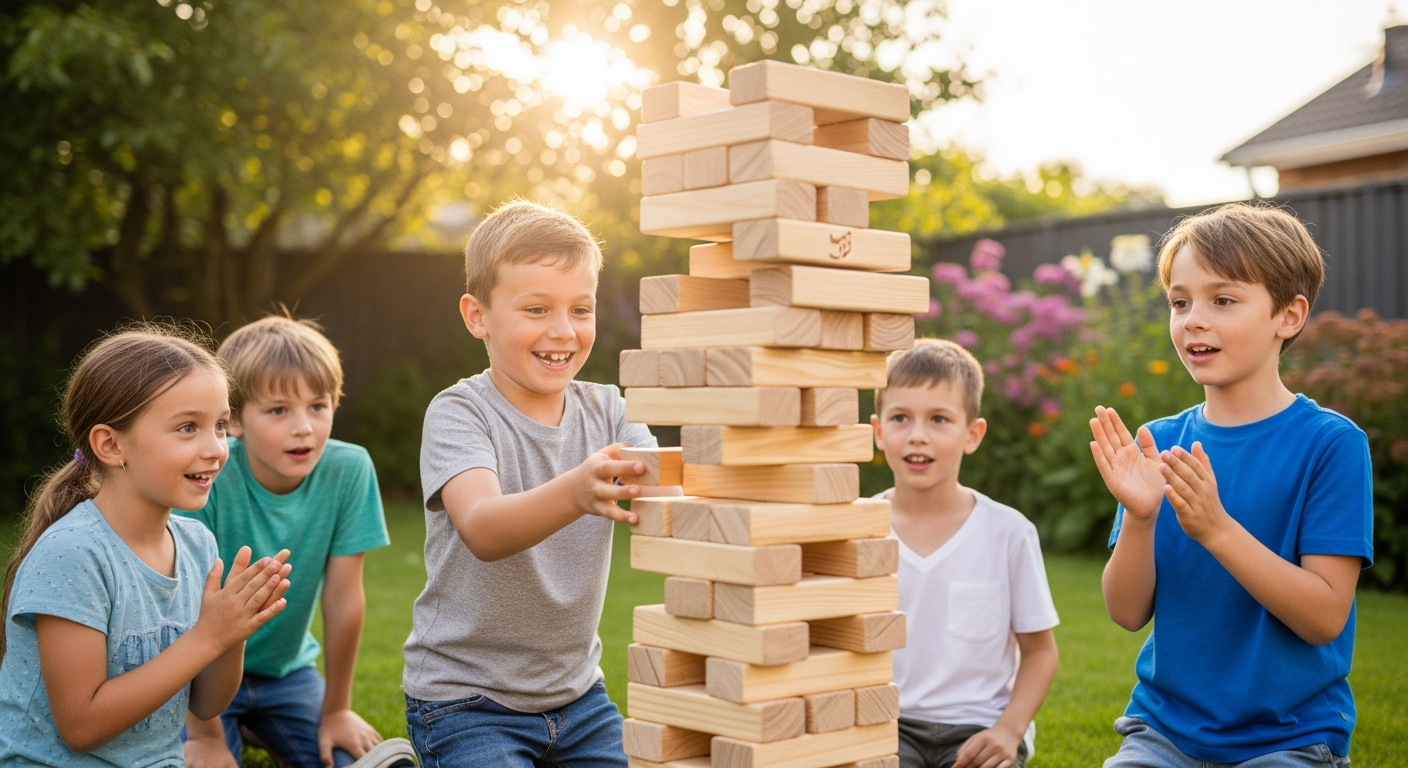
Table of Contents
- Introduction
- The Magic of Outdoor Play: More Than Just Fun
- Planning Your Epic Backyard Party Game Lineup
- Classic Backyard Games with a Twist
- Creative & Imaginative Adventures
- Games for Teamwork & Communication
- Integrating Speech Blubs into Your Child's Communication Journey
- Making the Most of Speech Blubs: Our Value and Plans
- Conclusion
- FAQ
Introduction
Picture this: the sun is shining, the backyard is prepped, and a crowd of excited children bursts through the door, ready to celebrate. For many parents, the thought of hosting a kids' party conjures images of endless energy, boisterous laughter, and perhaps, a touch of chaos. Keeping a group of enthusiastic young ones engaged and entertained can feel like a daunting task, often leaving parents scrambling for activities to fill the time. Yet, the backyard holds endless potential for adventure and fun, offering the perfect canvas for unforgettable memories.
We understand this challenge firsthand, and we believe that with a little creativity and some fantastic ideas, you can transform any gathering into a vibrant, memorable celebration. This comprehensive guide will equip you with a treasure trove of exciting backyard games, tailored for various ages and group sizes, designed to foster not just laughter and physical activity, but also crucial social and communication skills. Get ready to unleash the full potential of your outdoor space and make your child's next party the talk of the neighborhood!

The Magic of Outdoor Play: More Than Just Fun
Backyard games at a kids' party offer far more than just a way to burn off sugar-fueled energy. They are powerful vehicles for holistic child development, nurturing skills that extend far beyond the finish line of a sack race. When children play outdoors, they engage in a rich sensory experience, connecting with nature and developing a deeper understanding of their physical capabilities and the world around them.
Physical Benefits: Building Strong Bodies
Active outdoor games are fundamental for developing gross motor skills, coordination, balance, and agility. Running, jumping, throwing, and chasing improve cardiovascular health and strengthen muscles. Consider a classic game like a "Silly Sack Race," where children must coordinate their leg movements while hopping, or "Water Balloon Toss," which refines hand-eye coordination and throwing accuracy. These activities are essential for healthy physical development, helping children to explore their bodies' limits and build physical confidence.
Social-Emotional Benefits: Growing Confident Hearts
Party games naturally foster social interaction, teaching children invaluable lessons in teamwork, sharing, and good sportsmanship. When children collaborate on an "Obstacle Course" or work together to "Untangle" themselves from a human knot, they learn to communicate, negotiate, and empathize with others. These shared experiences build bonds, reduce feelings of isolation, and help children understand the dynamics of group play. Even the simple act of cheering for a friend or gracefully accepting a loss in "Giant Yahtzee" contributes to emotional regulation and resilience. These interactions are crucial for developing social intelligence and building the confidence to navigate group settings.
Cognitive Benefits: Sharpening Young Minds
Many backyard games subtly challenge children's cognitive abilities. Games like "Nature Scavenger Hunt" require observation and problem-solving skills, as kids search for specific items or clues. "Simon Says" hones listening skills and impulse control, while games involving dice or scores, such as "DIY Giant Dominoes," introduce basic math concepts and strategy. Children learn to follow rules, plan their moves, and adapt to changing circumstances. This playful learning environment helps to sharpen critical thinking and creativity, making learning an enjoyable, embedded part of their fun.

Connecting Play to Communication Development
Perhaps one of the most significant, yet often overlooked, benefits of backyard games is their impact on communication skills. Every shout of "Ready, set, go!", every negotiation during "Fort Building," and every descriptive clue given during a "Sweet Scavenger Hunt" is an opportunity for language development. Children learn to articulate their thoughts, ask for help, express excitement, and understand verbal instructions. For a child who might be a "late talker" or needs support with speech clarity, these natural, low-pressure social contexts are invaluable. They provide authentic reasons to communicate, reinforcing the words and sounds they are learning.
At Speech Blubs, we passionately believe in empowering children to "speak their minds and hearts." We know firsthand the challenges some children face, as our company was born from the personal experiences of our founders, who all grew up with speech problems and created the tool they wished they had. We are committed to providing an immediate, effective, and joyful solution for the 1 in 4 children who need speech support, blending scientific principles with play into one-of-a-kind "smart screen time" experiences. While these backyard games provide a fantastic arena for real-world communication, our app offers a powerful supplement, helping children build the foundational skills they need to participate fully and confidently in these social scenarios. To learn more about our innovative approach and how we're making a difference, visit our homepage today.
Planning Your Epic Backyard Party Game Lineup
Successful party planning starts with a strategy. Before you dive into specific games, consider these key factors to ensure your backyard bash is a hit for everyone.
Tailoring to Age Groups
- Toddlers (1-3 years): Focus on simple, sensory activities. "Pool Painting" in a kiddie pool with paint-dipped balls, oversized bubble wands, or a gentle "Water Balloon Toss" (with adult help) are perfect. These games encourage exploration and basic motor skills without complex rules.
- Preschoolers (3-5 years): Introduce games with clearer rules but still plenty of freedom. "Bubble Wrap Hopscotch," a "Sweet Scavenger Hunt," or a simple "Obstacle Course" made from household items are ideal. They love imaginative play and are starting to understand turn-taking.
- School-Aged Kids (6-10 years): These children thrive on competition and teamwork. "Kick the Can," "Four Square," "Clothespin Tag," or "DIY Cornhole" will be big hits. They can follow multi-step instructions and enjoy strategizing.
- Pre-Teens/Mixed Ages: More complex or strategic games work well. "Toppling Tug-of-War" (with safety mats), "Outdoor Word Game," or "Giant Jenga" can engage older kids while allowing younger ones to participate with guidance. Conversation starters like "Table Topics" are great for winding down.
Group Size and Space
Consider how many children will be attending and the size of your backyard. For smaller groups and limited space, games like "Pickup Bottle Game" or "Disk Tic-Tac-Toe" are excellent. Larger groups and ample space open up possibilities for grander games like "Kick the Can," a full-scale "Obstacle Course," or multiple stations of activities.
Materials: DIY vs. Store-Bought
Many of the most memorable backyard games can be crafted from items you already have or can easily acquire. DIY games add a personal touch and can be a fun pre-party activity for you and your child. However, don't shy away from store-bought classics like croquet or bocce ball sets if they fit your budget and preference for convenience.
Weather Watch
Always have a backup plan for unexpected rain or extreme heat. Water games like "Pool Prize Search" or a simple "Water Balloon Toss" are perfect for hot days, but ensure shade and plenty of hydration with water bottles. For cooler weather, focus on active games that keep everyone moving.
Classic Backyard Games with a Twist
There's a reason some games never go out of style. Here are some beloved classics, often enhanced with a fun twist, perfect for your next kids' party.
Bubble Wrap Hopscotch
Transform classic hopscotch into a delightful sensory experience. Cut bubble wrap into numbered rectangles (one through nine) and lay them out on a flat surface. Kids will love the satisfying pop with every hop! This game is excellent for number recognition, balance, and following sequences, making it a lively addition for preschoolers and early elementary children.
Giant Jenga / Wooden Block Stacking
Take the thrill of Jenga to a grand scale! You can purchase oversized wooden block sets or create your own by cutting 2x4-foot boards into 10 ½-inch long pieces. Stacking these enormous blocks in alternating directions adds a dramatic element to the game. It encourages careful movements, strategic thinking, and patience, providing a calmer yet equally engaging activity for all ages. Remember to ensure safety by playing on a soft surface like grass.
Silly Sack Race
An absolute staple for burning energy and generating laughs! Decorate plain burlap potato sacks with colorful felt cutouts to match your party theme. Line the kids up and watch them hop down a marked path to the finish line. This game is fantastic for developing gross motor skills, coordination, and a sense of friendly competition. It’s simple, effective, and always a hit.
Water Balloon Toss
On a hot day, nothing beats a refreshing "Water Balloon Toss." Divide children into pairs, give each pair a bucket of filled water balloons, and set out hula hoops on the ground, assigning different point values to each. Players take turns tossing balloons, aiming for the hoops. This game is fantastic for hand-eye coordination, aiming skills, and teamwork, offering a cool and competitive challenge.
Frisbee Toss / Disk Tic-Tac-Toe
For a simple aiming game, cut a rectangular hole in a large cardboard box, decorate it, and have kids toss frisbees into it. To elevate the fun, try "Disk Tic-Tac-Toe." Use duct tape to create a large tic-tac-toe grid on a shower curtain liner laid on the grass. Kids then throw flying disks (marked 'X' or 'O') from a throw line, aiming to get three in a row. This combines aiming accuracy with classic strategic thinking, appealing to a wide age range.
DIY Chalkboard Corn Hole
Cornhole is a crowd-pleaser for all ages. You can build your own sturdy cornhole boards and paint them with chalkboard paint. This allows for a built-in scoreboard and endless customization for different party themes. The objective is simple: toss beanbags into a hole in the board for points. This game is wonderful for developing throwing accuracy, friendly competition, and can easily be played in teams.
DIY Wooden Ladder Ball
Similar to cornhole, "Ladder Ball" is another classic that’s even better when made from durable wood. Kids throw bolas (two golf balls connected by a rope) at a three-rung ladder, scoring points based on which rung the bolas wrap around. Building your own wooden set (perhaps painting the frame with chalkboard paint for an integrated scoreboard) adds a personal touch. This game tests throwing skill and provides a fun challenge for school-aged children and beyond.
Creative & Imaginative Adventures
Sometimes, the best games are those that tap into a child's incredible imagination. These activities encourage creativity, problem-solving, and storytelling.
Obstacle Course
A kid-created obstacle course is a fantastic way to engage both mind and body. Gather items like jump ropes, hula hoops, old tires, blankets, pool noodles, or even patio furniture. Instruct children to work together to design a challenging course. For a parent whose child is a bit hesitant or struggles with expressive language, describing the "imaginary lava pits" or "treacherous rocks" during an obstacle course can be a huge step. They might start by simply saying "jump" or "over," then gradually build up to phrases like "I need to jump over the big box." This physical play provides a low-pressure environment to practice verbalizing actions and observations.
Treasure Hunt / Scavenger Hunts
Few things captivate children like the promise of hidden treasure!
- Sweet Scavenger Hunt: Hide small toys, candies, or party favors around the backyard. Give each child a pail and a time limit, then let them loose!
- Nature Scavenger Hunt: Arm children with a list of natural items to find (e.g., a smooth pebble, a dandelions, a pinecone, a crinkly leaf). This encourages observation and connection with nature.
- Treasure Map Hunt: For older kids, create a simple map leading to a "treasure chest" filled with snacks or prizes.
These hunts are excellent for problem-solving, following directions, and observation. They also provide natural opportunities for communication. If a child needs help with expressive language to describe their findings in a "Nature Scavenger Hunt," Speech Blubs offers categories like "Outdoor Adventures" or "Animal Kingdom" to expand vocabulary and practice descriptive words like "rough," "smooth," "big," or "small." This helps them articulate their discoveries to friends and family.
If you're unsure if your child could benefit from targeted speech and language practice, take our quick 3-minute preliminary screener to get a simple assessment and a free 7-day trial.
Fort Building
Give children tarps, old sheets, ropes, large boxes, and garden stakes, then watch their architectural dreams come to life. Fort building is a fantastic collaborative activity that encourages teamwork, spatial reasoning, and imaginative play. Children learn to negotiate, plan, and work together towards a common goal, all while creating their own secret hideaway.
Backyard Artist
Lay out a large tarp and provide recycled materials (cardboard boxes, plastic bottles, paper towel rolls), tape, and washable paints or chalk. Challenge children to "draw our backyard as a zoo" or "build a robot out of recycled treasures." This activity fosters creativity, fine motor skills, and provides a great opportunity for them to describe their creations, enhancing descriptive language.
Games for Teamwork & Communication
These games are specifically designed to get kids talking, collaborating, and solving problems together, making them perfect for boosting social and verbal skills.
Untangle
This game is a fantastic icebreaker and teamwork builder. Have kids stand in a tight circle, reach across, and grab the hands of two different people. The goal is to untangle themselves into a single circle without letting go of anyone's hands. This activity demands communication, problem-solving, and physical cooperation, often leading to hilarious moments and a strong sense of accomplishment.
Simon Says
A classic for a reason! "Simon Says" is brilliant for developing listening skills, following directions, and impulse control. The designated "Simon" gives commands, but players only follow if "Simon Says" precedes the instruction. For children learning to process and execute verbal commands, this game is an entertaining way to practice. You can expand movements when outdoors, allowing for creative physical expression.
Kick the Can
A dynamic blend of tag and hide-and-seek, "Kick the Can" is best with five or more players. One person is "It" and counts while others hide. "It" then searches for hiders, tagging them to send them to "jail." A hider can free teammates by kicking an empty can placed in the open without getting tagged. This game promotes strategy, running, and crucial communication between hiders to plan rescues, making it ideal for encouraging whispered strategies and triumphant shouts.
Four Square
All you need is a hard, flat surface (like a patio or driveway), sidewalk chalk to draw four squares, and a playground ball. Players bounce the ball between squares, aiming to eliminate opponents and advance to the highest square. "Four Square" teaches rules-following, quick reflexes, and strategic thinking. Once players master the rules, it can occupy them for extended periods, providing continuous opportunities for quick verbal exchanges and calls.
Clothespin Tag
Combine the thrill of tag with a fun, tangible goal. Each child decorates a clothespin and clips it to the back of their shirt. On "go," players try to snatch others' clothespins while protecting their own. The child with the most pins at the end wins the round. This active game encourages agility, strategic movement, and brief, excited verbal interactions.
Integrating Speech Blubs into Your Child's Communication Journey
While the laughter and camaraderie of backyard games are invaluable, some children benefit from targeted support to fully participate and express themselves. This is where Speech Blubs shines as a powerful ally. Our app is not a passive viewing experience like cartoons; instead, it's a dynamic, interactive tool that transforms screen time into "smart screen time."
At Speech Blubs, our unique approach uses "video modeling," where children learn by watching and imitating their peers. This natural form of learning leverages mirror neurons in the brain, making it incredibly effective for speech and language development. Imagine a child who struggles to pronounce "run" or "jump" but loves the "Silly Sack Race." With Speech Blubs, they can practice these action verbs, seeing other children say them, and then gain the confidence to shout "Go!" or "I won!" during the party.
For children who might find it challenging to verbally describe what they found during a "Nature Scavenger Hunt," our app offers specific categories to build vocabulary and practice descriptive words. They can learn "rough," "smooth," "big," "small," "green," and "brown" by imitating their peer models, then apply these words to articulate their discoveries to their friends. This bridges the gap between structured practice and real-world application, making communication more accessible and enjoyable.
We provide a screen-free alternative to passive viewing and a powerful tool for family connection, as parents often engage with their child during the app's activities. Our mission is to empower every child to "speak their minds and hearts," ensuring they have the confidence and skills to connect with others, whether it's discussing the rules of "Four Square" or sharing a story about building a "Fort." Our commitment to effective, joyful solutions is backed by rigorous research, placing us in the top tier of speech apps worldwide.
Ready to transform your child's communication journey? Download Speech Blubs today on the App Store or Google Play to begin unlocking their full potential.
Making the Most of Speech Blubs: Our Value and Plans
We believe in transparency and providing exceptional value to every family. To help you get started on your child's communication journey, we offer flexible plans designed to suit your needs.
When considering Speech Blubs, you have two primary options:
- Monthly Plan: Priced at $14.99 per month. This plan offers access to our core features, allowing for month-to-month flexibility.
- Yearly Plan: An incredible value at just $59.99 per year. This breaks down to only $4.99 per month, which means you save a significant 66% compared to the monthly plan!
We strongly encourage you to choose the Yearly plan, not just for the substantial savings, but also for the exclusive, high-value features that come with it:
- 7-Day Free Trial: The Yearly plan includes a comprehensive 7-day free trial, giving you ample time to explore all the features and see the amazing impact Speech Blubs can have on your child's development before committing.
- Extra Reading Blubs App: You'll gain access to our additional Reading Blubs app, providing even more educational content to support your child's literacy journey.
- Early Access to New Updates: Be among the first to experience our latest features and improvements.
- 24-Hour Support Response Time: Get your questions answered quickly with priority customer support.
It's important to note that the Monthly plan does not include these valuable benefits. For the best experience, the most savings, and the full suite of features to support your child's development, the Yearly plan is the clear best choice.
Experience the difference today with a 7-day free trial by creating your account on our website or downloading the app. See what other parents are saying about their child's success with Speech Blubs by reading our inspiring testimonials.
Conclusion
Creating a memorable kids' party in your backyard doesn't require elaborate planning or expensive entertainment. With a thoughtful selection of engaging games, you can foster an environment of joy, laughter, and development. From the physical exhilaration of a "Silly Sack Race" to the imaginative collaboration of "Fort Building," these activities provide invaluable opportunities for children to learn, grow, and connect. Beyond the fun, they are powerful catalysts for developing crucial social and communication skills, building confidence, and reducing frustration.
Remember, every shout, every shared instruction, and every celebratory cheer contributes to your child's expressive language and social prowess. These backyard adventures create the perfect real-world stage for practicing the communication skills your child is developing.
At Speech Blubs, we are dedicated to supplementing this joyful learning with our unique "smart screen time" experiences, empowering children to "speak their minds and hearts." We help bridge the gap between playful imitation and confident articulation, ensuring your child has all the tools they need to participate fully in every party, every playdate, and every conversation.
Why wait? Embark on this exciting adventure by downloading Speech Blubs on your preferred device or starting your free trial now by creating an account on our website. Don't forget to choose the Yearly plan to unlock your 7-day free trial, the bonus Reading Blubs app, and exclusive features, ensuring your child gets the absolute best value and support on their communication journey. Let the backyard games begin, and let their voices shine!
FAQ
Q1: How do I choose the best backyard games for a party with mixed age groups?
A1: When planning for mixed age groups, it’s best to offer a variety of activities. Include some simpler, sensory-based games for younger children (like bubbles or "Pool Painting") and more competitive or strategic games for older kids (such as "Cornhole" or "Giant Jenga"). You can also adapt certain games; for example, make "Obstacle Courses" with easier and harder paths. Games that encourage teamwork, like "Untangle," can bring all ages together effectively.
Q2: What are some low-cost or DIY backyard game ideas?
A2: Many fantastic backyard games can be made with items you already have! "Bubble Wrap Hopscotch" uses leftover packing material, "Obstacle Courses" can be built with household items like blankets, buckets, and hula hoops. "DIY Giant Yahtzee" uses simple wooden blocks, and "Sweet Scavenger Hunts" only require small hidden treasures. These options are not only budget-friendly but also add a personal, creative touch to your party.
Q3: How can backyard games help my child's communication development?
A3: Backyard games naturally create opportunities for communication. Children use language to express excitement, understand rules, negotiate during teamwork, and describe actions or objects. Games like "Simon Says" improve listening and following directions, while "Scavenger Hunts" encourage descriptive language. These real-world interactions reinforce the speech and language skills your child is developing, helping them apply what they learn in a fun, social context.
Q4: How does Speech Blubs fit into my child's overall development, especially with active play?
A4: Speech Blubs acts as a powerful supplement to active play by building foundational communication skills. While backyard games offer social practice, our app provides targeted exercises using video modeling, helping children learn new words, practice sounds, and build confidence in a structured, engaging environment. By improving their speech and language skills through Speech Blubs, children are better equipped to participate fully, express themselves clearly, and enjoy the social interactions that backyard games foster. It's "smart screen time" that supports their ability to "speak their minds and hearts" in every part of their day.
About the author