
Spark Joy: Fun Activities for Kids & Growing Voices
 By Speech Blubs Team•Jan 13, 2026•17 min.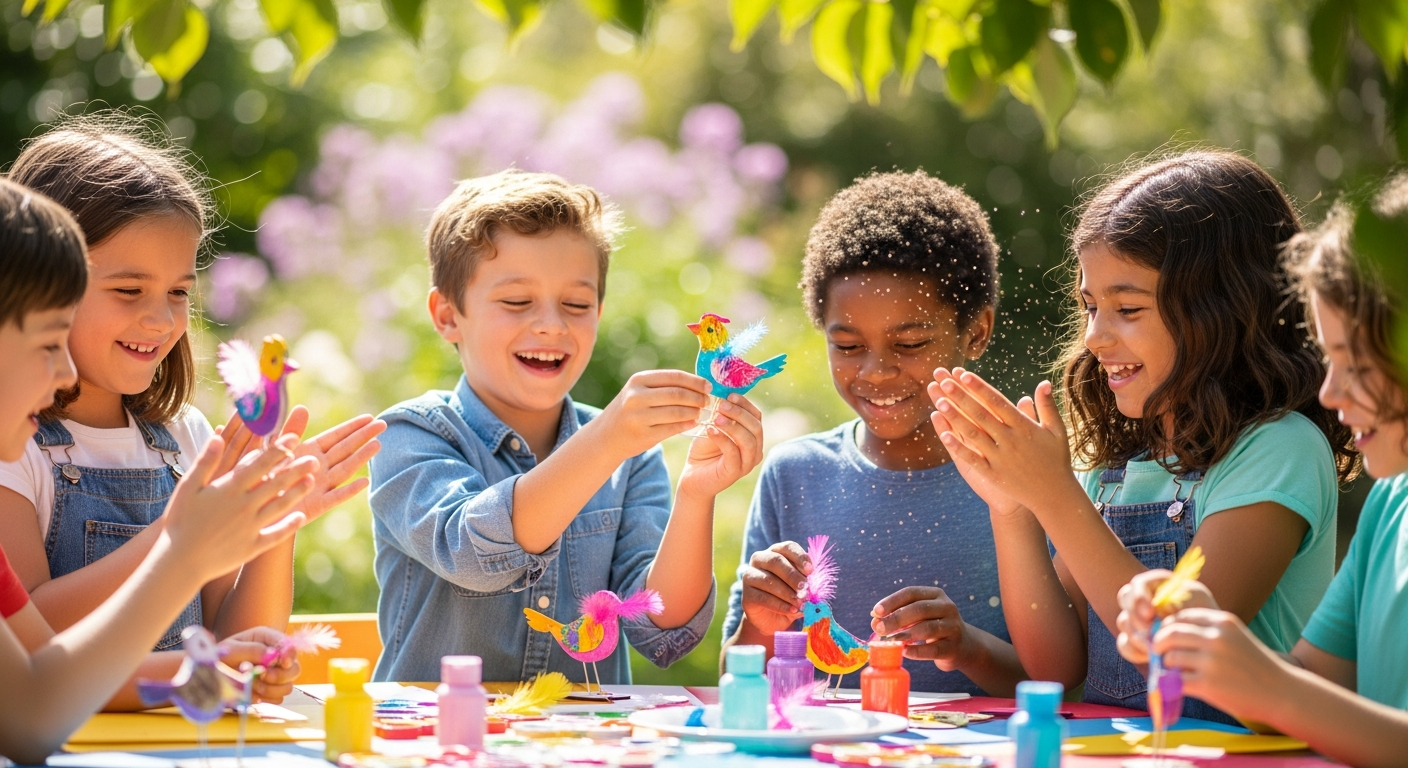
Table of Contents
- The Power of Play: Why Fun Activities Matter for Development
- Cultivating Communication Through Play: Activity Ideas for Every Age
- The Speech Blubs Difference: Smart Screen Time That Connects
- Maximizing the Value: Speech Blubs Plans
- Bringing It All Together: A Holistic Approach to Your Child's Growth
- Conclusion
- Frequently Asked Questions (FAQ)
Have you ever found yourself in the quiet moments after a long day, wondering if your child's screen time is truly enriching, or just... time? Perhaps you’ve scrolled through endless feeds, searching for that spark of inspiration to pull them away from devices and into engaging, hands-on play. It's a common dilemma for parents everywhere: how do we make screen time work for us, not against us, and how do we fill those precious hours with activities that truly benefit our children's development, especially their burgeoning communication skills?
This post is your comprehensive guide to a treasure trove of fun activities for kids that go beyond mere entertainment. We'll explore how simple, engaging play can become powerful opportunities for learning, fostering creativity, boosting confidence, and, crucially, laying robust foundations for speech and language development. We believe that every giggle, every discovery, and every shared moment of play is a step towards empowering your child to speak their minds and hearts. Let’s dive into how we can infuse everyday life with joy and meaningful connection, creating a rich environment where communication flourishes.

The Power of Play: Why Fun Activities Matter for Development
Play isn't just a way to pass the time; it's a child's primary mode of learning and growth. Far from being frivolous, purposeful play is a cornerstone of holistic development, impacting every facet of a child's being. When children engage in fun activities, they're not just having a good time – they're building essential skills that will serve them throughout their lives.
Beyond Entertainment: Holistic Growth
- Cognitive Benefits: Through play, children learn to problem-solve, think creatively, plan, and make decisions. Building a fort requires spatial reasoning, deciding what to paint involves abstract thought, and organizing toys teaches categorization skills. These cognitive muscles are constantly being flexed and strengthened.
- Physical Benefits: From the gross motor skills of running and jumping in an obstacle course to the fine motor precision needed for threading beads or using scissors, fun activities provide crucial physical development opportunities. These physical skills are often intertwined with cognitive and communication development, as a child's ability to interact with their environment impacts their learning.
- Emotional Benefits: Play offers a safe space for children to express emotions, manage frustration, build resilience, and develop self-regulation. Successfully completing a craft project or resolving a conflict during a board game boosts self-esteem and fosters a positive self-image.
- Social Benefits: Many activities naturally lend themselves to social interaction. Taking turns, sharing materials, negotiating roles in pretend play, and understanding different perspectives are all fundamental social skills honed through collaborative fun. These interactions are the bedrock of effective communication.
Fostering Communication, One Activity at a Time
Every activity, no matter how simple, is a chance for language to emerge and grow. When we engage with our children during play, we create natural contexts for communication.

- Connecting Actions to Words: As a child stacks blocks, we can say, "Up, up, up!" or "Big tower!" When they stir ingredients for a pretend meal, we can label the action "stir" and the items "soup," "carrot." This direct link between action and language helps children build their vocabulary and understanding.
- Building Vocabulary and Narrative Skills: New experiences bring new words. A walk in the park introduces words like "leaf," "branch," "squirrel," "crunchy." Pretend play allows children to weave simple narratives, practicing sentence structure and sequencing events. "First, the bear went to sleep, then he woke up and ate berries!"
- Encouraging Expression: Whether it's describing their drawing, explaining the rules of their homemade game, or acting out a story, fun activities provide endless opportunities for children to express themselves verbally. This practice is vital for developing confidence in their ability to communicate effectively.
At Speech Blubs, we understand that supporting speech and language development is about more than just drills; it's about nurturing a child's entire world. We're committed to providing a joyful, effective, and immediate solution for the 1 in 4 children who need speech support, empowering them to "speak their minds and hearts." Our founders, who grew up with speech problems themselves, created the tool they wished they had – a blend of scientific principles with play, designed to complement the rich learning experiences you create through everyday fun activities.
Cultivating Communication Through Play: Activity Ideas for Every Age
Engaging your child doesn't require elaborate plans or expensive supplies. Often, the most impactful activities are those that are simple, accessible, and allow for genuine interaction. Here are some categories of fun activities for kids, specifically highlighting their developmental benefits and how they foster communication. Remember, the key is adult co-play and support – your presence and engagement are the most valuable tools!
Sensory Play: Engaging All the Senses (and Speech!)
Sensory play is fundamental for early development, allowing children to explore textures, smells, sounds, and sights. This exploration is crucial for sensory integration, which can indirectly support oral motor development and attention, both vital for speech readiness.
- Homemade Playdough or Kinetic Sand: Creating playdough together is an activity in itself, involving measuring and mixing (great for following instructions!). Once made, children can squish, roll, and cut the dough.
- Communication Boost: Describe the process ("mix," "knead," "smooth"). Talk about the colors ("red," "blue") and textures ("soft," "sticky," "squishy"). Ask questions like, "What are you making?" or "Can you roll a long snake?" For a child whose 3-year-old 'late talker' loves animals, making playdough animals and imitating their sounds can be a fun, motivating way to practice 'moo' and 'baa' sounds.
- Water Beads or Shaving Cream Play: Fill a bin with water beads or spread shaving cream on a tray. Add scoops, small toys, or cookie cutters.
- Communication Boost: Focus on descriptive words: "slippery," "gel-like" (for beads); "foamy," "bubbly," "cool" (for shaving cream). Practice action verbs: "scoop," "pour," "squish," "spread." This tactile input can be very calming and also stimulate sensory awareness, which is linked to better body awareness, including oral motor structures.
- Sensory Bins with Dried Beans/Rice: Fill a container with dried beans or rice, adding small toys, measuring cups, and spoons.
- Communication Boost: Talk about "full," "empty," "heavy," "light." Practice counting as you scoop. Encourage imaginative play by creating small worlds within the bin, fostering storytelling.
Creative Arts: Imagining, Making, and Expressing
Creative arts allow children to express themselves without words, develop fine motor skills, and translate their inner world into tangible creations.
- Painting and Drawing: Provide various materials like crayons, markers, washable paints, and different types of paper (large rolls of butcher paper are fantastic!). Don't forget non-paper items like cardboard boxes, tubes, or even rocks.
- Communication Boost: Encourage children to describe their artwork: "What colors did you use?" "Tell me about your drawing." Practice naming colors, shapes, and objects. Following simple instructions like "Draw a red circle" helps receptive language.
- Crafting Collages: Gather old magazines, fabric scraps, pipe cleaners, pom-poms, and glue sticks.
- Communication Boost: Identify objects in magazines, categorize them ("all the animals," "all the food"). Practice requesting materials ("Can I have more glue?"). Talk about where to place items ("put the flower next to the bird").
- Puppet Shows: Make simple puppets from old socks, paper bags, or even stuffed animals. Create a stage from a cardboard box.
- Communication Boost: This is a powerhouse for narrative skills, dialogue, and imaginative language. Children can practice different voices, tell stories with a beginning, middle, and end, and explore social scenarios. For a child working on social communication, puppet shows offer a low-pressure way to practice conversational turn-taking and expressing emotions.
- Rock Painting: Find smooth rocks outside and use acrylic paints or paint pens to decorate them. You can hide them around your neighborhood for others to find!
- Communication Boost: Describe the rocks' shapes and sizes. Talk about the colors and designs you're painting. Discuss where you might hide them and what message you want them to convey.
Building & Constructing: Foundations for Language and Logic
Building activities promote problem-solving, spatial reasoning, and fine motor skills. They also provide natural opportunities for cooperative play and descriptive language.
- Blocks and LEGOs: Classic building toys are invaluable. Provide a variety of shapes and sizes.
- Communication Boost: Use comparative language ("taller," "shorter," "biggest," "smallest"). Practice positional words ("on top," "underneath," "next to"). Engage in collaborative building, practicing negotiation and turn-taking ("My turn to add a block!"). If your child is fascinated by vehicles, the 'Transportation' section in Speech Blubs offers a way to practice words like "car," "truck," and their sounds, reinforcing what they build.
- Fort Building: Use blankets, pillows, chairs, and couch cushions to create an indoor hideaway.
- Communication Boost: This is a fantastic activity for imaginative play. Talk about who lives in the fort, what they do, and what adventures they have. Practice directives ("Hold that side!", "Bring me a pillow!").
- Cardboard Box Creations: A large cardboard box can become anything – a car, a rocket ship, a house, a cave.
- Communication Boost: Encourage imaginative play and storytelling around the created object. Label new vocabulary related to the creation (e.g., "steering wheel," "rocket boosters"). Ask open-ended questions: "Where are we going in our rocket?"
- Indoor Obstacle Course: Use pillows, chairs, tunnels, and tape on the floor to create a simple course.
- Communication Boost: Practice action verbs ("jump," "crawl," "step," "balance"). Use directional words ("over," "under," "through," "around"). Time each other and describe the process.
Outdoor Adventures: Exploring and Expanding Horizons
The great outdoors offers an unparalleled learning environment, stimulating curiosity and providing endless opportunities for new vocabulary and sensory experiences.
- Nature Walks and Scavenger Hunts: Explore your backyard, a local park, or a nature trail. Create a list of things to find (a smooth rock, a green leaf, something rough).
- Communication Boost: Identify and name objects ("tree," "flower," "bird"). Describe sensory details ("soft grass," "crunchy leaves," "singing bird"). Practice questioning ("What's that?"). Encourage sharing observations.
- Planting a Garden (or a Pot): Plant seeds, flowers, or herbs. Children can help with digging, planting, and watering.
- Communication Boost: Learn new vocabulary ("seed," "soil," "root," "grow"). Sequence the steps of planting. Talk about the care needed for plants.
- Bubble Blowing: Simple, classic, and always a hit.
- Communication Boost: Practice words like "blow," "pop," "big," "small," "up," "down." Encourage blowing different sizes of bubbles and counting them.
- Sidewalk Chalk Murals: Use chalk to create large drawings on driveways or sidewalks.
- Communication Boost: Practice naming colors and shapes. Describe what you're drawing. Engage passersby with questions about your art.
Pretend Play & Storytelling: The Language Laboratory
Pretend play is vital for developing imagination, social skills, and complex language. It’s where children experiment with roles, emotions, and narratives.
- Dress-Up and Role-Playing: Keep a bin of old clothes, costumes, and props. Encourage children to dress up as different characters.
- Communication Boost: Practice dialogue, social scripts, and emotional vocabulary. Children can role-play scenarios like going to the doctor, running a restaurant, or being a superhero. This is a rich environment for developing conversational turn-taking and understanding different perspectives.
- Creating Stories Together: Start a story with one sentence, then take turns adding sentences to build a narrative.
- Communication Boost: Develops narrative skills (beginning, middle, end), sequencing, and vocabulary. Encourages creativity and active listening.
- Charades or "What's in the Box?": Act out words or phrases, or have children guess objects by feel or description.
- Communication Boost: Develops descriptive language, inferencing, and expressive communication through non-verbal cues.
Practical Life Skills: Learning Through Doing
Involving children in everyday chores and activities teaches responsibility and provides concrete contexts for learning and language.
- Cooking and Baking Together: Simple recipes like making cookies, personal pizzas, or fruit salad are great.
- Communication Boost: Practice following multi-step instructions, sequencing, and naming ingredients and kitchen tools ("flour," "spoon," "stir"). Use action verbs ("pour," "mix," "chop"). Discuss flavors and textures. For a child learning to combine words, asking them to "Pour juice" or "Stir batter" reinforces two-word phrases.
- Helping with Chores: Washing dishes (plastic ones!), tidying up, or folding laundry.
- Communication Boost: Learn new vocabulary related to household items and actions ("clean," "wipe," "fold," "sock"). Practice requesting help or offering assistance.
The Speech Blubs Difference: Smart Screen Time That Connects
We understand that while screen-free play is invaluable, screens are an undeniable part of modern life. At Speech Blubs, we believe in transforming passive screen time into "smart screen time" – a powerful tool that actively supports your child's communication journey and strengthens family connections.
Our mission is deeply personal. Our founders, having faced speech challenges themselves, created the immediate, effective, and joyful solution they wished they had growing up. We are committed to empowering children to "speak their minds and hearts" by blending scientific principles with engaging play.
Our unique approach is rooted in video modeling, where children learn by watching and imitating their peers. This method harnesses the power of mirror neurons, which fire both when we perform an action and when we observe someone else performing it. When your child sees other children making sounds, words, or actions in the Speech Blubs app, their brain is activated in a way that encourages imitation and learning. This isn't passive viewing like cartoons; it's an active, interactive experience designed to foster real-world communication skills. Our methodology is backed by robust scientific research, placing us in the top tier of speech apps worldwide, as highlighted on our research page.
Speech Blubs acts as a powerful supplement to the hands-on activities discussed above. It reinforces sounds, words, and concepts learned in real-world play, providing a consistent and motivating environment for practice. Imagine your child building a block tower, learning words like "tall" and "up," then reinforcing those same words through engaging activities in Speech Blubs. It creates a seamless learning experience, turning screen time into an opportunity for growth and connection.
Maximizing the Value: Speech Blubs Plans
We believe in transparency and providing exceptional value to families. When you choose Speech Blubs, you’re investing in a tool designed to make a real difference in your child's communication development. We offer two straightforward subscription plans:
- Monthly Plan: This plan is available for $14.99 per month. It offers flexibility for those who prefer a short-term commitment.
- Yearly Plan: Our most popular and highly recommended option, priced at just $59.99 per year. This breaks down to an incredible value of only $4.99 per month!
The Yearly plan is clearly the best choice, allowing you to save 66% compared to the monthly subscription. But the value extends far beyond savings:
- 7-Day Free Trial: The Yearly plan includes a generous 7-day free trial, giving you ample time to explore all the features and see the incredible impact Speech Blubs can have. The Monthly plan does not include a free trial.
- Extra Reading Blubs App: Exclusively with the Yearly plan, you get access to our companion app, Reading Blubs, designed to support early literacy skills.
- Early Access to New Updates: Be among the first to experience our latest features and content.
- 24-Hour Support Response Time: Get priority support from our dedicated team whenever you need it.
To unlock the full suite of features, enjoy significant savings, and begin your journey with a risk-free 7-day trial, we highly encourage you to choose the Yearly plan.
Bringing It All Together: A Holistic Approach to Your Child's Growth
Creating a rich, language-supportive environment for your child means embracing a holistic approach that balances hands-on play, meaningful interactions, and "smart screen time." By integrating the fun activities discussed with the targeted support of Speech Blubs, you're building a comprehensive framework for their communication growth.
Remember, the goal isn't just to produce a perfectly articulate speaker overnight. It's about fostering a love for communication, building confidence, reducing frustration, developing key foundational skills, and creating joyful family learning moments. Speech Blubs is a powerful supplement to your child's overall development plan and, when applicable, professional therapy, providing consistent practice in a captivating format. Your active participation, whether during hands-on play or co-engaging with the app, is the most crucial ingredient.
Unsure if your child could benefit from a structured approach to speech development? Take our quick 3-minute preliminary screener to get a simple assessment and a personalized next-steps plan. Many parents just like you have seen remarkable progress; you can see what other parents are saying about their child's success with Speech Blubs.
Conclusion
Engaging in fun activities with your children is more than just making memories; it's a vital investment in their development, particularly their ability to communicate effectively. From sensory exploration to imaginative play, every shared moment creates a foundation for language, social skills, and confidence. By combining the power of hands-on play with the scientifically backed, engaging approach of Speech Blubs, you’re providing your child with a comprehensive and joyful pathway to finding their voice.
We are here to support you in every step of this journey. Ready to empower your child to speak their minds and hearts? Start your 7-day free trial today by selecting the Yearly plan to get the best value and access to all our exclusive features! You can download Speech Blubs directly from the App Store or Google Play Store, or create your account on our website to begin your adventure in communication!
Frequently Asked Questions (FAQ)
Q1: How do I know which activities are best for my child's age?
A: The best activities are those that align with your child's current developmental stage and interests. For younger children (toddlers, preschoolers), focus on sensory play, simple building, and pretend play. As they grow, you can introduce more complex crafts, rule-based games, and collaborative projects. Observe what captures their attention and build on that. Remember that all children develop at their own pace, so flexibility is key!
Q2: How can I encourage my child to try new activities?
A: Introduce new activities with enthusiasm and model engagement yourself. Keep it low-pressure, allowing them to explore at their own pace. Offer choices between a few activities rather than dictating one. Sometimes, simply having the materials available and letting them discover it on their own is more effective. Connect new activities to their existing interests (e.g., if they love dinosaurs, suggest building a "dinosaur land" with blocks).
Q3: Is screen time ever good for my child's development?
A: Yes, "smart screen time" can be highly beneficial when approached mindfully. Passive viewing (like endless cartoons) offers less developmental value. However, interactive apps like Speech Blubs, which employ scientific methods like video modeling and encourage active participation, can significantly support speech and language development, cognitive skills, and even social-emotional learning through peer imitation. The key is quality content, limited duration, and often, parental co-engagement.
Q4: How does Speech Blubs fit into our daily routine of fun activities?
A: Speech Blubs is designed to complement, not replace, hands-on activities. Think of it as a powerful, engaging tool to reinforce the sounds, words, and concepts your child encounters during play. After a nature walk, you might use Speech Blubs to identify animals or objects found. After building with blocks, practice descriptive words like "tall" or "big" within the app. It's a fantastic way to extend learning and provide targeted speech practice in a motivating, playful way, enriching your child's overall communication journey.
About the author