
Spark Joy & Learning: Fun Easy Activities for Kids
 By Speech Blubs Team•Jan 13, 2026•18 min.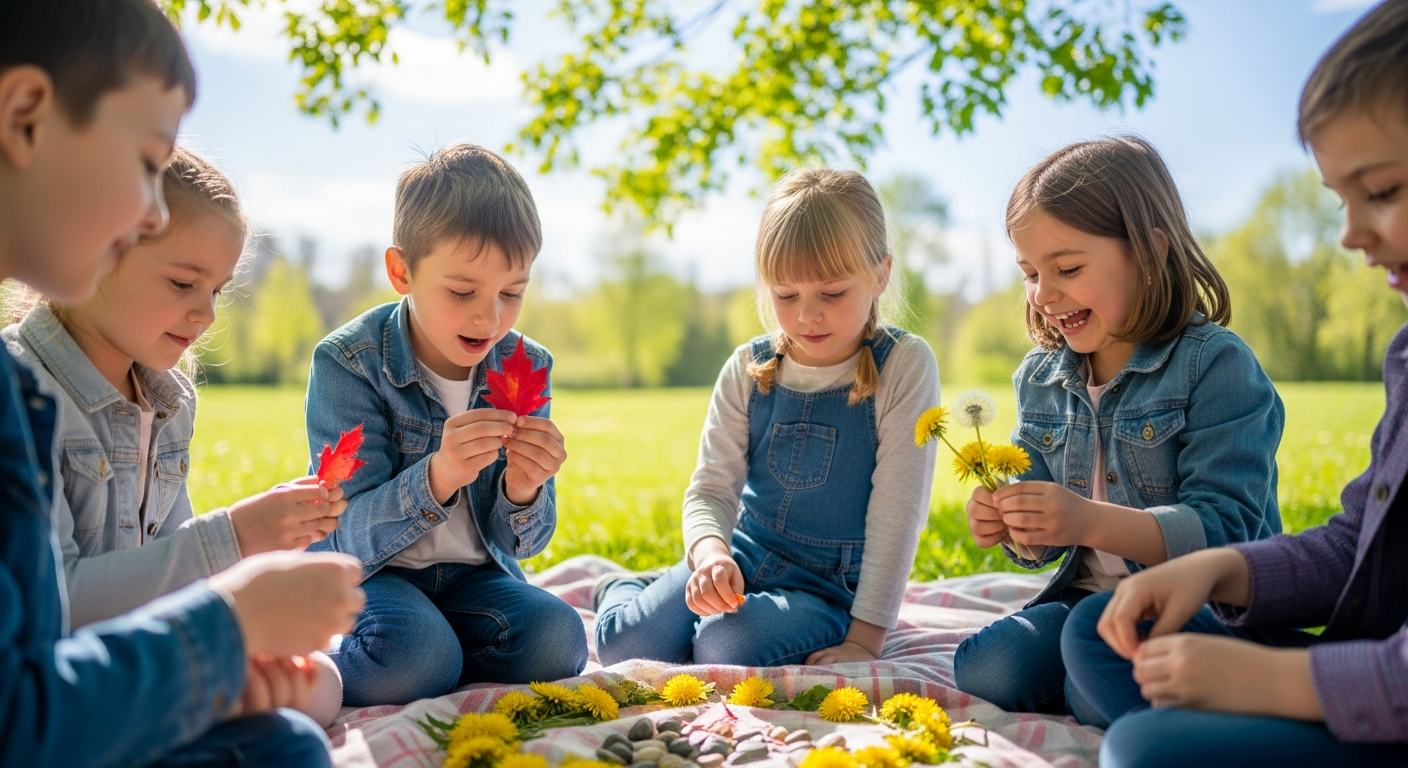
Table of Contents
- The Power of Play: Why Fun Activities Matter for Development
- Screen Time Reimagined: Smart Play with Speech Blubs
- Fun Easy Activities for Kids: Indoor Adventures
- Fun Easy Activities for Kids: Outdoor Explorations
- Integrating Speech Blubs into Your Play Routine
- Making Activities a Success: Tips for Parents
- Your Journey to Confident Communication Starts Here
- Conclusion
- Frequently Asked Questions
Have you ever looked at your energetic child, eager for adventure, and felt your mind draw a blank? In our busy lives, finding fresh, engaging ways to keep little ones entertained, especially when the weather isn't cooperating or creativity runs low, can feel like a daunting task. Yet, these moments of play aren't just about filling time; they are the vibrant workshops where children build the foundations of communication, critical thinking, and social-emotional growth.
This post is your ultimate guide to a treasure trove of fun, easy activities for kids that will ignite their imaginations, strengthen developmental skills, and, most importantly, create cherished memories. We’ll dive into a world where everyday objects transform into tools for discovery and learning. Our mission at Speech Blubs is to empower children to "speak their minds and hearts," and we believe that intentional, joyful play, whether screen-based or hands-on, is the most powerful way to build confidence and essential communication skills. Get ready to transform ordinary days into extraordinary adventures, fostering a love for communication that will last a lifetime.

The Power of Play: Why Fun Activities Matter for Development
Play is more than just a pastime; it's a child's natural way of learning, exploring, and making sense of the world around them. When children engage in fun, easy activities, they are not only entertained but are also actively developing crucial skills across various domains.
Beyond Entertainment: Play as a Learning Tool
Every giggle, every splash, every carefully placed block contributes to a child's holistic development. Understanding these benefits can help parents choose activities that are not only fun but also strategically enriching.
- Speech and Language Development: This is where play truly shines as a catalyst. When children engage in activities, they naturally narrate their actions, ask questions, respond to prompts, and use descriptive language. Building a tower might involve "big," "small," "up," and "fall." A pretend tea party is a rich opportunity for role-playing, practicing social scripts, and using varied vocabulary. These interactions, whether with a parent or a peer, are the bedrock of language acquisition. Activities that encourage turn-taking, asking for items, or describing what they see and do are incredibly beneficial.
- Cognitive Skills: From problem-solving to creativity and imagination, play is a powerful cognitive gym. Building a fort requires spatial reasoning and planning. A scavenger hunt hones observation and classification skills. Pretend play allows children to test out scenarios, understand cause and effect, and develop abstract thinking. These activities foster curiosity and a love for discovery, encouraging children to think outside the box.
- Social-Emotional Growth: Play teaches invaluable lessons in sharing, cooperation, empathy, and emotional regulation. Learning to take turns during a board game, negotiating roles in imaginative play, or expressing frustration when a craft doesn't go as planned, all contribute to a child's emotional intelligence. These interactions help children understand social cues, build relationships, and manage their feelings in healthy ways.
- Fine and Gross Motor Skills: Many activities naturally integrate physical development. Cutting with kid-safe scissors, stringing beads, or molding clay develops fine motor skills crucial for writing and self-care. Running, jumping, climbing, and dancing enhance gross motor skills, improving balance, coordination, and overall physical strength. These physical engagements are vital for healthy body development and provide a necessary outlet for children's boundless energy.
Screen Time Reimagined: Smart Play with Speech Blubs
In today's world, screens are an undeniable part of children's lives. But not all screen time is created equal. While passive viewing like cartoons can be less engaging, interactive apps like Speech Blubs offer a unique opportunity for "smart screen time" that actively supports a child's development. Our company was born from the personal experiences of our founders, who all grew up with speech problems and created the tool they wished they had: an immediate, effective, and joyful solution for the 1 in 4 children who need speech support.

At Speech Blubs, we blend scientific principles with play, transforming screen time from a passive activity into a powerful tool for family connection and communication practice. Our unique approach centers on "video modeling," where children learn by watching and imitating their peers. This method harnesses the power of mirror neurons, making learning speech sounds, words, and sentences a natural and engaging process. It's a screen-free alternative to passive viewing and a powerful way to foster communication skills. To learn more about our innovative approach and how it's backed by research, we invite you to explore our research page.
We understand that you're looking for fun easy activities for kids that can be done both on and off-screen. That's why we've curated a list that complements the interactive learning experience provided by Speech Blubs, ensuring a well-rounded approach to your child's developmental journey.
Fun Easy Activities for Kids: Indoor Adventures
When rain clouds gather, or the chill in the air keeps you indoors, the home becomes a wonderland of possibilities. These indoor activities are designed to be fun, easy, and brimming with opportunities for learning and communication.
Creative Corner: Sparking Imagination
Unleash your child’s inner artist and storyteller with activities that encourage self-expression and imaginative play.
- Art & Craft Basics: Gather paper (construction, rolls, coloring posters), kid scissors, glue sticks, washable paint, markers, crayons, pipe cleaners, pompoms, and felt. Let them go wild!
- Speech & Language Connection: Encourage children to describe their creations ("This is a red and blue monster!"), name the colors they're using, and talk about the process ("First I glue, then I cut."). For a parent whose child struggles with descriptive words, asking "What color is that?" or "What does it feel like?" can prompt language development.
- Practical Scenario: If your child is learning color names or action verbs like "cut" or "draw" through Speech Blubs’ fun activities, you can extend that learning by having them identify and use those words during an art session.
- Box Creations: That giant cardboard box from your last delivery is a goldmine! Transform it into a car, a robot, a puppet theater, or a cozy reading nook. Add paint, stickers, or fabric scraps.
- Speech & Language Connection: Imaginative play with box creations is a perfect stage for role-playing. "Beep, beep! Where are we driving today?" "The robot says, 'I need help!'" This encourages narrative skills, character voices, and social interactions.
- DIY Instruments: Create shakers with empty bottles filled with rice or beans, or make a guitar from a tissue box with rubber bands.
- Speech & Language Connection: Sing songs together, talk about the different sounds ("Loud! Quiet!"), and describe the instruments ("This shaker is long.").
Sensory Play: Engaging the Senses
Sensory activities are fantastic for toddlers and preschoolers, engaging multiple senses and promoting exploration and discovery.
- Sensory Bins: Fill a plastic tub with dry noodles, rice, dried beans, or even water. Add scoops, small toys, measuring cups, and funnels.
- Speech & Language Connection: Encourage descriptive words: "This rice feels so gritty!" "The water is cold." Use action verbs: "scoop, pour, mix." For a child working on early consonant sounds, an animal-themed bin (with plastic animals) allows for practicing "moo," "baa," "roar."
- Homemade Slime/Dough: Make a batch of playdough or slime using simple ingredients. The tactile experience is incredibly calming and engaging.
- Speech & Language Connection: Talk about textures ("Squishy, stretchy, sticky") and actions ("Roll it! Squish it!"). Ask open-ended questions: "What are you making?"
Active Indoors: Burning Energy
Even indoors, children need to move! These activities help them burn off steam and develop gross motor skills.
- Obstacle Courses: Use pillows to jump over, tape on the floor as a "balance beam," crawl under chairs, or throw a soft ball into a laundry basket.
- Speech & Language Connection: Give clear, sequential instructions ("First, crawl under the table, then jump over the pillow."). This helps with following directions and understanding prepositions. Ask them to describe their actions as they go.
- Dance Parties: Put on some upbeat music and just dance! It's a fantastic way to express emotions and get active.
- Speech & Language Connection: Sing along, talk about body parts ("Shake your arms!"), and describe the music ("Fast, slow").
- Fort Building: Couch cushions, blankets, pillows, and chairs can create the coziest hideaways.
- Speech & Language Connection: Engage in imaginative play within the fort. "Who lives here?" "What should we do in our fort?" This is great for narrative skills and social interaction.
- Balloon Volleyball/Keepy Uppy: Blow up a balloon and try to keep it from touching the ground.
- Speech & Language Connection: Count how many times you hit it, use words like "up, down, hit."
Quiet Time & Connection: Building Bonds
Sometimes, quiet, focused activities are exactly what’s needed for bonding and concentrated learning.
- Reading Aloud & Audiobooks: Cuddle up with a good book or listen to an engaging audiobook.
- Speech & Language Connection: Ask questions about the story ("What do you think happens next?"), point out new vocabulary, and discuss characters' feelings. Reading together is perhaps the single most unifying thing for many families, enriching vocabulary and comprehension.
- Story Creation: Start a story and let your child add a sentence, then you add one, and so on. Or use puppets/stuffed animals to act out a story.
- Speech & Language Connection: This activity is a powerful driver for narrative skills, sequencing events, and developing imaginative language. For a child working on sentence structure, this provides a low-pressure way to practice.
- Board Games & Puzzles: Simple board games (like "First Orchard" or "Don't Break the Ice" for younger kids) and age-appropriate puzzles are fantastic for cognitive development.
- Speech & Language Connection: These activities inherently teach turn-taking, following rules, and problem-solving vocabulary ("My turn," "You go," "It fits here!").
- Cooking & Baking Together: Involve your child in simple meal prep like washing fruits, stirring ingredients, or setting the table.
- Speech & Language Connection: Naming ingredients, following sequential instructions ("First, we need the flour, then the sugar"), and describing tastes ("This is sweet!") are all fantastic language opportunities.
Fun Easy Activities for Kids: Outdoor Explorations
Stepping outside, even just into the backyard, opens up a world of sensory experiences and opportunities for active play and discovery.
Nature Adventures: Connecting with the World
Nature provides endless inspiration for [fun easy activities for kids] that encourage observation and appreciation for the environment.
- Nature Scavenger Hunts: Create a list (pictures for younger kids) of things to find: a smooth stone, a crinkly leaf, something red, a feather.
- Speech & Language Connection: Naming objects, describing textures and colors, and using spatial prepositions ("It's under the bush!"). This is excellent for vocabulary expansion and following directions.
- Rock Painting: Collect smooth rocks and bring them home to paint with colorful designs.
- Speech & Language Connection: Talk about the colors, shapes, and what they're painting on the rocks. ("I'm painting a smiley face on this round rock.").
- Gardening: Plant seeds, water plants, or help weed.
- Speech & Language Connection: Learn names of plants, tools, and actions ("Dig, water, grow"). Discuss the cycle of nature.
- Water Painting: Give your child a paintbrush and a bucket of water. Let them "paint" fences, walls, or pavements. The sun will make their artwork disappear, ready for another masterpiece!
- Speech & Language Connection: Talk about the "painting" ("It's wet! Now it's gone!"), the actions, and what they're drawing.
Active Outdoor Play: Gross Motor Fun
Fresh air and open spaces are perfect for children to stretch their limbs and engage in vigorous play.
- Walks & Bike Rides: Explore your neighborhood or a local park. Make it a game by pointing out different objects, colors, or sounds.
- Speech & Language Connection: Describe what you see ("Look at that big dog!"), practice counting ("How many trees do you see?"), and discuss directions ("Let's turn left!").
- Park Play: Head to a local playground, open field, or even an empty parking lot for scooters and bikes.
- Speech & Language Connection: Use action verbs like "swing, slide, climb, run." Describe the equipment and encourage social interaction with other children.
- Bubble Play: Blowing and chasing bubbles is universally loved.
- Speech & Language Connection: Use words like "pop, up, down, big, small." For children learning to make certain sounds, blowing bubbles can be a fun way to practice breath control.
- Chalk Art: Decorate the driveway, patio, or a large outdoor surface with colorful chalk.
- Speech & Language Connection: Draw shapes, letters, numbers, and talk about the colors. Create a story through chalk drawings.
Integrating Speech Blubs into Your Play Routine
While hands-on activities are invaluable, Speech Blubs serves as a powerful supplement, offering targeted, engaging practice for communication skills. We are committed to providing an immediate, effective, and joyful solution for children, blending scientific principles with play.
Consider a scenario where your child loves animals. You might start with a sensory bin filled with toy animals. As they play, they can practice animal sounds and names. Then, transition to Speech Blubs' "Animal Kingdom" section, where they can watch real children make those same animal sounds and imitate them, reinforcing their learning in a new, interactive way. This "video modeling" method is incredibly effective because children are naturally drawn to observing and copying their peers, a process backed by neuroscience and research on mirror neurons. You can find more details about our highly rated methodology on our research page.
For parents who are unsure if their child could benefit from speech support, we offer a quick 3-minute preliminary screener. It involves 9 simple questions and provides an assessment along with a next-steps plan. This can be a valuable starting point to understand your child's needs and how Speech Blubs can integrate into their overall developmental plan, alongside these fun activities.
Our app is designed not to replace real-world interaction but to enhance it, providing a unique "smart screen time" that sparks communication. See what other parents are saying about their child's success with Speech Blubs and how it has transformed their family's communication journey by reading our testimonials.
Making Activities a Success: Tips for Parents
To truly maximize the benefits of these [fun easy activities for kids], remember these simple guidelines:
- Follow Your Child's Lead: Observe what interests them and build on that. If they're fascinated by water, lean into water play. Their engagement is your best indicator of success.
- Keep It Simple and Low-Pressure: You don't need elaborate setups or expensive supplies. Often, the simplest activities spark the most creativity. Avoid making it feel like a chore or a test. The goal is joy, not perfection.
- Emphasize the Process, Not the Product: Focus on the experience of creating or exploring, rather than the final outcome. A "mud pie" might not be pretty, but the digging, mixing, and imaginative play involved are incredibly valuable.
- Be Present and Engage: Put away your phone, get down to their level, and participate. Talk, laugh, and explore together. These shared moments are priceless for bonding and language development. Even 10-15 minutes of fully engaged play can make a huge difference.
- Flexibility is Key: Some days, an activity might flop, or your child might lose interest quickly. That's perfectly fine! Have a few ideas ready, but be prepared to pivot or simply let them lead their own unstructured play.
Your Journey to Confident Communication Starts Here
The journey of fostering communication and development through [fun easy activities for kids] is a rewarding one, filled with laughter, discovery, and growth. By blending imaginative play with targeted learning tools like Speech Blubs, you're giving your child the best foundation to express themselves confidently.
At Speech Blubs, we are dedicated to supporting families like yours. We offer flexible subscription plans designed to fit your needs, each providing access to our vast library of engaging speech activities.
Our Monthly plan is $14.99 per month. It's a great way to start exploring the app's benefits.
For the best value, our Yearly plan is $59.99 per year, which breaks down to just $4.99/month. This is a significant saving of 66% compared to the monthly option. Beyond the cost savings, the Yearly plan offers exclusive, high-value features that enhance your child's learning journey:
- A 7-day free trial: Experience the full power of Speech Blubs before committing.
- The extra Reading Blubs app: Double the fun and learning with our companion app focused on early literacy skills.
- Early access to new updates: Be the first to enjoy our latest features and content.
- 24-hour support response time: Get prompt assistance whenever you need it.
The Monthly plan does not include these additional benefits, making the Yearly plan the clear best choice for comprehensive support and value.
Ready to embark on this exciting journey of communication and connection? Choose the Yearly plan to unlock the full suite of features and start your 7-day free trial today! You can download Speech Blubs on the App Store for your Apple devices or get Speech Blubs on Google Play for Android. Alternatively, you can start your free trial by creating an account directly on our website. We're excited to be a part of your family's growth!
Conclusion
Engaging in fun, easy activities with your kids is a cornerstone of their development, fostering not just entertainment but critical speech, cognitive, social-emotional, and motor skills. From creating imaginative worlds with cardboard boxes indoors to exploring the wonders of nature outside, every activity offers a unique opportunity for learning and connection. When paired with the "smart screen time" experience of Speech Blubs, which empowers children through video modeling and interactive play, you're providing a comprehensive approach to communication development. We encourage you to embrace these moments of shared joy and intentional play.
Don't let another day pass by without sparking joy and learning in your home. Take the leap and transform your child's communication journey. Download Speech Blubs on the App Store or get Speech Blubs on Google Play today! Remember to choose the Yearly plan to start your 7-day free trial and gain access to the full range of premium features, including the Reading Blubs app and priority support. Your child's confident voice is waiting to be heard.
Frequently Asked Questions
Q1: How can I make these activities more beneficial for my child's speech?
A1: The key is to engage in conversation during play. Narrate your actions, ask open-ended questions ("What are you making?"), label objects and actions ("You're pouring the red water!"), and encourage your child to ask for things or describe what they see. Even simple comments like "Wow!" or "Uh-oh!" can prompt interaction. Remember to follow their lead and make it fun, not a drill.
Q2: What age are these activities suitable for?
A2: Many of these activities are adaptable for a wide range of ages, from toddlers to early elementary children. For toddlers, focus on sensory play, simple labeling, and cause-and-effect. For preschoolers, encourage imaginative play, storytelling, and more complex instructions. Older children can enjoy more intricate crafts, board games with strategy, and independent exploration. The beauty is in adapting the activity to your child's developmental stage and interests.
Q3: How does Speech Blubs fit with traditional therapy or other activities?
A3: Speech Blubs is designed to be a powerful supplement to a child's overall developmental plan. It offers consistent, engaging practice of speech sounds and language skills in a fun, interactive format, using our unique video modeling methodology. It complements hands-on activities by reinforcing vocabulary and speech sounds learned in different contexts. If your child is in traditional speech therapy, Speech Blubs can be used to practice skills learned in sessions, extending their learning beyond the clinic in a joyful way. It's a tool to empower children, blending scientific principles with play into one-of-a-kind "smart screen time" experiences.
Q4: What's the best way to get started with Speech Blubs?
A4: The best way to get started is by choosing our Yearly plan. This plan provides the most value, offering a 7-day free trial so you can explore all the app's features with no commitment. It also includes exclusive benefits like the extra Reading Blubs app, early access to new updates, and 24-hour support. Simply download Speech Blubs from the App Store or Google Play, or create an account on our website, and select the Yearly option to begin your free trial and unlock the full experience.
About the author