
Spark Joy & Speech: Christmas Activities for Kids
 By Speech Blubs Team•Dec 19, 2025•18 min.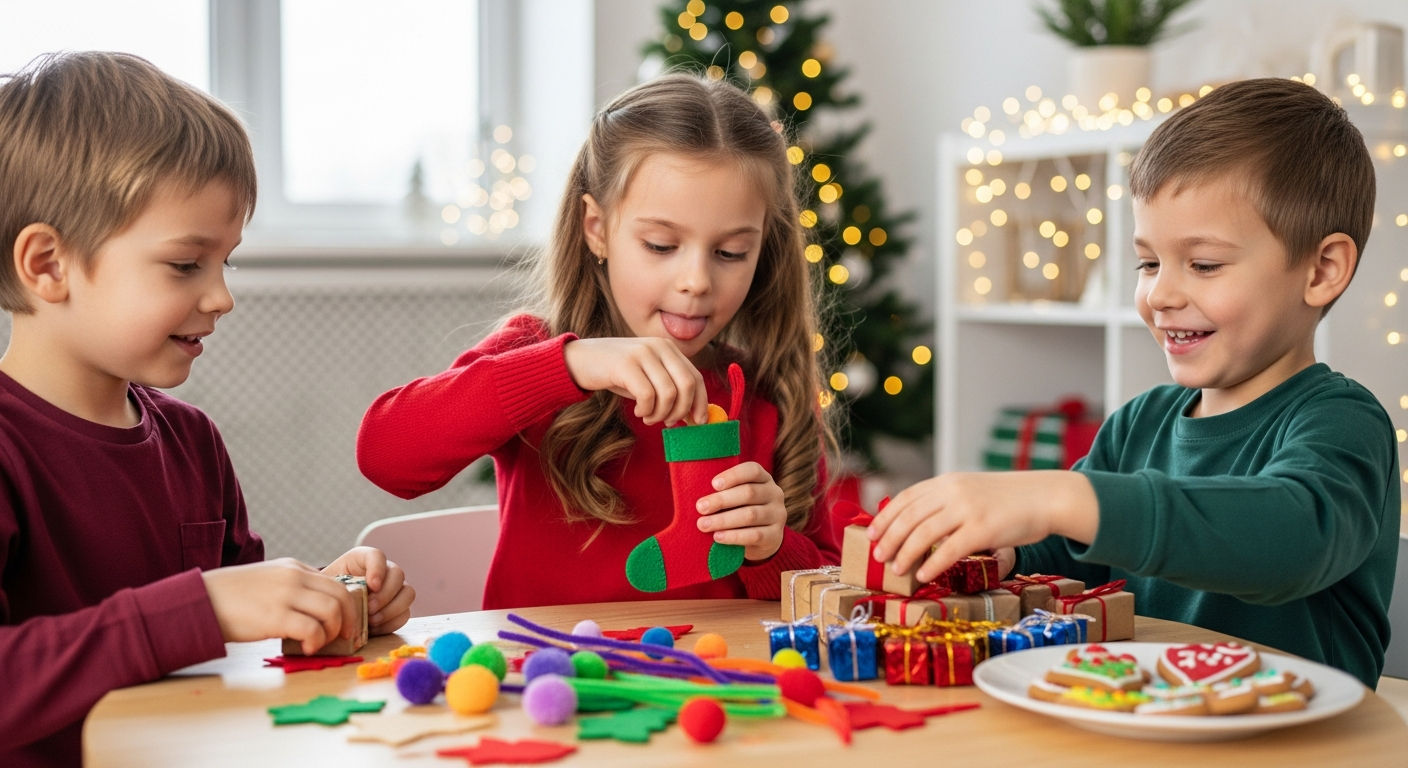
Table of Contents
- The Magic of Christmas for Kids' Language Development
- Setting the Stage for Speech: Holiday Preparation Activities
- Engaging Christmas Activities for Kids (with a Speech-Boosting Twist!)
- Integrating Speech Blubs into Your Holiday Routine
- Navigating Holiday Challenges for Speech Development
- The Speech Blubs Advantage: More Than Just an App
- Making Communication a Gift This Christmas
- Frequently Asked Questions
Introduction
The air is crisp, lights twinkle, and the scent of pine fills our homes – Christmas is a magical time for children, brimming with wonder and excitement. But beyond the glitter and gifts, this festive season offers a truly unique opportunity for growth, especially in the realm of language and communication. Have you ever considered how decorating a tree, baking cookies, or simply singing carols can transform into powerful moments for speech development? Far from being just fun distractions, these cherished holiday traditions are rich with sensory experiences, new vocabulary, and social interactions that naturally encourage little ones to express themselves. At Speech Blubs, we understand that every interaction is a chance to learn, and the holidays multiply these chances exponentially. In this comprehensive guide, we'll explore a sleigh-full of engaging Christmas activities that not only bring joy to your family but also strategically nurture your child’s speech and language skills. We believe in empowering children to speak their minds and hearts, and the festive season provides the perfect backdrop for making communication a truly magical gift.

The Magic of Christmas for Kids' Language Development
Christmas is a feast for the senses, and this sensory richness is a powerful catalyst for language acquisition. Think about it: the smell of gingerbread, the sparkle of ornaments, the jingle of bells, the taste of festive treats, and the feeling of cozy blankets. Each sensation offers a natural prompt for descriptive words, emotional expression, and storytelling. Children are immersed in a world of new sights, sounds, and experiences, making it an ideal time to expand their vocabulary and improve their communication skills.
Beyond Entertainment: Developmental Opportunities
The holiday season provides countless organic opportunities for speech and language growth that go far beyond what a typical day might offer.
- Expanded Vocabulary: From "sleigh" and "reindeer" to "mistletoe" and "carol," the holidays introduce a wealth of new words.
- Descriptive Language: Children learn to describe the "bright" lights, the "spicy" cookies, or the "soft" snow.
- Following Directions: Activities like baking or crafting involve multi-step instructions, enhancing comprehension.
- Sequencing and Storytelling: Recounting holiday events, explaining traditions, or predicting what might happen next builds narrative skills.
- Social Communication: Interacting with family and friends encourages turn-taking, asking questions, and expressing needs and wants.
- Emotional Expression: The joy, anticipation, and sometimes even the overwhelming nature of the holidays provide opportunities to label and discuss feelings.
These natural learning moments are precisely what we champion at Speech Blubs. Our mission, born from our founders' personal experiences with speech challenges, is to provide effective, joyful solutions. We know that blending scientific principles with play creates one-of-a-kind "smart screen time" experiences, which can beautifully complement these real-world holiday interactions.
Setting the Stage for Speech: Holiday Preparation Activities
Preparation for Christmas is often as exciting as the day itself, and these pre-holiday activities are prime for fostering language development.

Creating a Language-Rich Environment
Even before the big day, you can consciously infuse your home with language.
- Talk About Upcoming Events: "Soon we will decorate the tree!" or "Grandma is coming to visit!" helps build anticipation and introduces new vocabulary.
- Label Decorations: As you unbox ornaments, name them and describe them. "This is a shiny red ball," or "Look, it's a sparkly star!"
- Sing Christmas Songs Early: Start playing carols and encourage singing along. Repetition is key for early sound and word recognition.
Crafting a Communication Calendar
Consider creating a simple Advent calendar focused on activities rather than just treats. Each day reveals a new communication-focused activity. This builds anticipation and provides a predictable structure that can be very helpful for children who thrive on routine, while also offering varied language challenges.
- Day 1: "Describe a Decoration": Pull out one decoration and have your child describe its color, shape, and what it reminds them of.
- Day 5: "Christmas Story Time": Read a different Christmas book each night, focusing on asking questions about the plot and characters.
- Day 10: "Sing a Carol": Choose a favorite carol and sing it together, emphasizing new words or challenging sounds.
By setting this intentional stage, you're not just preparing for Christmas; you're preparing for a season of robust language growth. If you're wondering if your child could benefit from more targeted support, why not take our quick 3-minute preliminary screener? It involves 9 simple questions and provides an assessment and next-steps plan, along with a free 7-day trial of Speech Blubs.
Engaging Christmas Activities for Kids (with a Speech-Boosting Twist!)
Now, let's dive into some specific activities, detailing how you can turn each into a powerful speech and language learning opportunity. Remember, adult co-play and support are crucial for maximizing these moments.
Crafts & Creativity: Hands-On Language Fun
Crafting allows children to create, imagine, and express themselves while developing fine motor skills crucial for speech articulation.
DIY Ornaments: Crafting Vocabulary
- Activity: Making salt dough ornaments, paper chains, or painting pinecones.
- Speech Boost: Focus on action verbs ("mix," "roll," "cut," "paint," "glue"), descriptive adjectives ("sticky," "smooth," "rough," "sparkly," "colorful"), and following multi-step directions.
- Example: For a child learning to combine words, while making salt dough ornaments, you might say, "Roll the dough," then "Cut the star." Encourage them to mimic your actions and words. "What color paint do you want?" "Red paint!"
- Speech Blubs Connection: If your child loves the creative aspect of these activities, they might enjoy the "Art" section within Speech Blubs, where video modeling helps them learn to describe colors and shapes, reinforcing vocabulary learned during crafting.
Christmas Card Making: Storytelling and Emotional Connection
- Activity: Creating handmade cards for family and friends.
- Speech Boost: Encourages storytelling ("What should we draw for Grandma?"), dictating messages ("I love you, Grandpa!"), and discussing recipients ("This card is for Aunt Sarah because she loves dogs!").
- Example: Help your child think about who the card is for. "What does Uncle Mike like?" "Cars!" "Okay, let's draw a car on his card!" This encourages associative thinking and descriptive language.
Gingerbread House Decorating: Spatial Concepts and Requesting
- Activity: Assembling and decorating a gingerbread house.
- Speech Boost: Ideal for spatial concepts ("put the candy on the roof," "put sprinkles next to the door"), requesting items ("more frosting," "blue candy"), and naming colors and shapes.
- Example: "Where should we put the gummy bear?" "On top!" "Great! Now, can you put the M&M under the window?" This makes learning prepositions engaging and tangible.
Baking & Cooking Together: Following Recipes and Sensory Language
Cooking offers a sensory-rich environment perfect for language development, from following instructions to describing tastes and smells.
Christmas Cookies: Sequencing and Sensory Exploration
- Activity: Baking and decorating Christmas cookies.
- Speech Boost: Excellent for practicing sequencing ("first we mix, then we roll, then we cut"), action verbs ("stir," "pour," "bake"), and sensory vocabulary ("sweet," "warm," "crunchy," "soft").
- Example: "What do we do first?" "Mix!" "Good! What do we do next?" "Roll!" This sequential questioning helps children build narrative structure.
- Speech Blubs Connection: Our app promotes "smart screen time" that complements real-world learning. After baking, you could reinforce related vocabulary in Speech Blubs, like different food items or action words, observing peers on screen, then imitating them.
Hot Cocoa Bar: Requesting and Descriptive Words
- Activity: Setting up a hot cocoa bar with various toppings.
- Speech Boost: Encourages requesting ("I want marshmallows," "more whipped cream"), making choices, and using descriptive adjectives ("hot," "sweet," "creamy").
- Example: "How do you want your hot cocoa?" "Big marshmallow!" "Okay, one big marshmallow coming up!"
Storytelling & Imagination: Building Narrative Skills
The holidays are ripe for stories, fostering imagination and critical thinking.
Reading Christmas Books: Predicting and Retelling
- Activity: Reading classic or new Christmas stories.
- Speech Boost: Encourages predicting ("What do you think will happen next?"), retelling events, identifying characters and settings, and asking "wh-" questions ("Who is that?," "Where are they going?").
- Example: After reading a page, pause and ask, "Why do you think the Grinch wants to steal Christmas?" This encourages higher-level thinking and expression.
Creating Christmas Stories: Sequencing and Vocabulary
- Activity: Making up your own Christmas stories together.
- Speech Boost: Develops sequencing (beginning, middle, end), expands vocabulary, and encourages turn-taking in conversation. Use props or puppets to make it more engaging.
- Example: Start a story: "Once upon a time, there was a little elf who lost his bell..." Then prompt your child, "What happened next?"
Puppet Shows or Dress-Up: Role-Playing and Emotional Expression
- Activity: Using puppets or dressing up as Santa, elves, or reindeer.
- Speech Boost: Promotes role-playing, practicing different voices, expressing emotions, and using imaginative language.
- Example: "What does Santa say?" "Ho ho ho!" "How does the reindeer feel when it's flying?" "Happy!"
Music & Movement: Rhythm, Rhyme, and Social Engagement
Music is a powerful tool for speech development, enhancing rhythm, memory, and social connection.
Singing Carols: Rhythm and Rhyming
- Activity: Singing favorite Christmas carols together.
- Speech Boost: Improves rhythm and intonation, helps with memory recall, introduces rhyming words, and encourages social engagement.
- Example: Point out rhyming words as you sing: "Oh, jingle bells, jingle bells, jingle all the way..." "Bells and way don't rhyme, but listen! Jingle bells, jingle bells, jingle all the way... Oh what fun it is to ride in a one-horse open sleigh!" This helps children recognize sound patterns.
Christmas Dance Party: Action Words and Following Directions
- Activity: Playing upbeat Christmas music and dancing.
- Speech Boost: Encourages action words ("spin," "jump," "wiggle"), following directions ("touch your toes"), and expressive body language.
- Example: "Can you jump like a reindeer?" "Now spin like a snowflake!"
Sensory Play: Exploration and Descriptive Language
Sensory bins and activities are excellent for open-ended play and rich language development.
Christmas Sensory Bins: Descriptive Language and Open-Ended Questions
- Activity: Create a bin with fake snow, jingle bells, cinnamon sticks, small ornaments, pinecones, and scoops.
- Speech Boost: Promotes descriptive language ("cold," "jingling," "smelly," "prickly"), fine motor skills, and open-ended questions ("What do you hear?", "What does this feel like?").
- Example: "What is that sound?" "Jingle!" "Yes, the bells jingle!" "What else can you do with the bells?"
Snow Globe Making: Observation and Prediction
- Activity: Making simple DIY snow globes with glitter, water, and small plastic figures.
- Speech Boost: Encourages observation ("Look at the glitter!"), prediction ("What happens when I shake it?"), and vocabulary related to liquids and movement.
Outdoor & Community Fun: Social Interaction and New Vocabulary
Exploring the world outside your home offers rich language opportunities.
Christmas Light Scavenger Hunt: Naming and Counting
- Activity: Driving or walking around to look at Christmas lights.
- Speech Boost: Naming objects ("star," "Santa," "tree"), counting, using descriptive adjectives ("bright," "colorful," "twinkling"), and asking "where" questions.
- Example: "How many blue lights do you see?" "Can you find a Santa?"
Visiting a Christmas Market/Tree Farm: Social Interactions and New Vocabulary
- Activity: Exploring a local Christmas market, tree farm, or festive event.
- Speech Boost: Encourages social greetings, asking questions, naming new items (wreaths, garlands, specific types of trees), and describing the atmosphere.
- Example: "Hello!" to the vendor. "What is that?" (pointing to a new item). "It smells like pine!"
Helping Others: Empathy and Explaining Actions
- Activity: Donating toys, making gifts for family, or helping wrap presents.
- Speech Boost: Discussing empathy ("This toy will make another child happy"), explaining actions ("I'm wrapping the present for Daddy"), and understanding giving vs. receiving.
- Example: "Why do we give gifts?" "Because we love them!" "Yes, giving gifts shows love and kindness."
Integrating Speech Blubs into Your Holiday Routine
While the holidays are a whirlwind of activity, it's also important to maintain a sense of routine and provide targeted practice for speech development. This is where Speech Blubs becomes an invaluable companion.
We understand that you want the best for your child, and sometimes, even during the most joyful times, speech challenges can feel overwhelming. That’s why at Speech Blubs, we are committed to providing an immediate, effective, and joyful solution for the 1 in 4 children who need speech support. Our company was born from the personal experiences of our founders, who all grew up with speech problems and created the tool they wished they had.
"Smart Screen Time" for Focused Practice
Amidst the festive chaos, a dedicated 15-minute session with Speech Blubs can provide focused, calm, and engaging speech practice. It's a screen-free alternative to passive viewing, encouraging active participation.
- Video Modeling: Our unique approach teaches complex communication skills through "video modeling," where children learn by watching and imitating their peers. This is incredibly powerful because mirror neurons in the brain activate as if the child is performing the action themselves, making learning highly effective. You can learn more about our research-backed methodology here.
- Reinforcing Holiday Vocabulary: After decorating the tree, explore the "Colors" or "Objects" sections in the app to reinforce descriptive words. After baking, delve into "Food" to practice related sounds and words.
- Calm Before the Storm (or After): The holidays can be overstimulating. A short, interactive session with Speech Blubs can offer a quiet, guided activity that still boosts language, helping to regulate and refocus your child.
Parental Involvement: The Key to Success
Speech Blubs is designed as a powerful tool for family connection. We always emphasize adult co-play. Sit with your child, repeat words, make silly faces, and celebrate every sound they make. This shared experience makes learning enjoyable and strengthens your bond.
Ready to see the difference for yourself? You can download Speech Blubs on the App Store or get it on Google Play to start your 7-day free trial.
Navigating Holiday Challenges for Speech Development
The holidays, while wonderful, can also present unique challenges for children, especially those working on speech and language.
Overstimulation and Sensory Overload
- Challenge: Bright lights, loud music, crowded gatherings, and new foods can be overwhelming, leading to meltdowns or withdrawal, which impacts communication.
- Speech-Boosting Strategy: Create a quiet "calm down" corner. Use simple, direct language to explain what's happening. A quick, focused session with Speech Blubs can provide a familiar, structured activity that helps reset. Before a big event, review social greetings and expectations with your child.
Maintaining Routine Amidst Festivities
- Challenge: Disrupted sleep schedules, meal times, and daily rhythms can affect a child's overall well-being and ability to focus on communication.
- Speech-Boosting Strategy: Try to keep key routines (like bedtime stories or meal times) as consistent as possible. Integrate language practice into these moments. For instance, always narrate what you're doing during meal prep. Even a brief, consistent use of Speech Blubs daily can help maintain a sense of routine and ongoing practice.
Managing Expectations
- Challenge: Children, and parents, can have high expectations for holiday perfection, leading to frustration when things don't go as planned.
- Speech-Boosting Strategy: Focus on the process, not just the outcome. Celebrate small victories in communication. If a child struggles with a word, rephrase and model it gently. Remember that fostering a love for communication and building confidence is the ultimate goal, not achieving public speaking in a month. We aim to reduce frustration by providing accessible, fun tools.
The Speech Blubs Advantage: More Than Just an App
We believe that every child deserves the chance to express themselves fully, to "speak their minds and hearts." At Speech Blubs, we are more than just an app; we are a community-driven by a profound mission. Our founders, who experienced speech challenges firsthand, poured their passion and expertise into creating the very tool they wished they had as children. This personal connection underpins our commitment to providing an immediate, effective, and joyful solution.
Our Unique Approach: Blending Science with Play
We meticulously blend scientific principles with engaging play to create one-of-a-kind "smart screen time" experiences. Our methodology is rooted in the power of video modeling, where children learn by watching and imitating their peers. This approach leverages the brain's natural ability to learn through observation and imitation, making it incredibly effective for speech and language development. It’s also why we've earned a top-tier rating on the MARS (Mobile App Rating Scale) for scientific methodology.
Building Confidence, Reducing Frustration
Our focus is on the journey, not just the destination. We strive to foster a love for communication, build confidence, and significantly reduce the frustration that can often accompany speech challenges. We provide a powerful supplement to a child's overall development plan and, when applicable, professional therapy. Seeing what other parents are saying about their child's success with Speech Blubs can be incredibly encouraging; you can read their testimonials here.
Making Speech Blubs Accessible: Our Pricing Plans
We are transparent about our pricing to build trust and ensure families can access our valuable resources. We offer two main plans:
- Monthly Plan: For $14.99 per month, you get access to our core Speech Blubs app.
- Yearly Plan: This is our most recommended option at just $59.99 per year. This breaks down to an incredible value of only $4.99 per month – a saving of 66% compared to the monthly plan!
The Yearly Plan: Superior Value and Exclusive Features
The Yearly plan isn't just cheaper; it comes packed with exclusive, high-value features designed to give your child the most comprehensive support:
- 7-Day Free Trial: Only with the Yearly plan can you unlock a full 7-day free trial to explore everything Speech Blubs has to offer before committing.
- The Extra Reading Blubs App: This bonus app is included with your Yearly subscription, providing even more educational content to support literacy and early reading skills.
- Early Access to New Updates: Be among the first to experience new features and content.
- 24-Hour Support Response Time: Get priority assistance when you need it most.
The Monthly plan does not include these fantastic benefits, making the Yearly plan the clear best choice for families seeking the full suite of features and the best value. To truly experience the power of Speech Blubs and get started with your free trial, we highly recommend choosing the Yearly plan.
Making Communication a Gift This Christmas
This Christmas, let every sparkling light, every carol sung, and every cookie baked be an opportunity to connect, communicate, and grow. By embracing these joyful Christmas activities for kids, you're not just creating magical memories; you're actively nurturing their speech and language development. And with the strategic support of tools like Speech Blubs, you can ensure that these foundational communication skills blossom throughout the festive season and beyond.
We hope this guide empowers you to transform ordinary holiday moments into extraordinary language-learning adventures. The most precious gift you can give your child is the power to express themselves, to share their thoughts and feelings, and to fully engage with the world around them.
Ready to embark on this joyful journey of communication? Give your child the gift of a stronger voice this Christmas. Create your account and begin your 7-day free trial today! Remember to select the Yearly plan to get the free trial and unlock the full suite of features, including the Reading Blubs app and priority support. You can also download Speech Blubs on the App Store or Google Play Store to get started!
Frequently Asked Questions
Q1: How can I encourage my shy child to participate in Christmas activities that involve a lot of talking?
A1: Start with quieter, one-on-one activities where there's less pressure, like reading a Christmas book or making a simple craft together. Focus on modeling language and giving them plenty of time to respond, even if it's just a single word or a gesture. Gradual exposure to more social situations, with your supportive presence, can help. Speech Blubs can also be a wonderful tool for shy children, as they learn by imitating peers in a safe, controlled environment, building confidence before venturing into larger social settings.
Q2: My child has a speech delay. Are these activities enough, or should I seek professional help?
A2: These activities are fantastic for reinforcing and building general language skills in a natural, engaging way. However, if you have concerns about a speech delay, these activities should supplement, not replace, professional guidance. Speech Blubs is designed to be a powerful tool for family support and can work in conjunction with professional therapy. We encourage you to take our quick 3-minute preliminary screener to get an assessment and next-steps plan.
Q3: How often should we use Speech Blubs during the busy holiday season?
A3: Consistency is key, even if it's for short periods. Aim for 10-15 minutes a day, perhaps during a quiet moment in the morning or as a calming activity before bed. Our "smart screen time" is designed to be engaging and efficient, providing targeted practice that complements all the language-rich experiences of the holidays. The app offers a wonderful way to maintain progress and routine amidst the festivities.
Q4: What makes the Yearly plan for Speech Blubs such a better value than the Monthly plan?
A4: The Yearly plan offers significantly better value by breaking down to just $4.99 per month, a 66% saving compared to the monthly cost. Beyond the financial benefit, it includes exclusive features like a 7-day free trial, the bonus Reading Blubs app, early access to new updates, and 24-hour support response time. These added benefits ensure a more comprehensive and supported learning journey for your child, making it the clear best choice for families. Learn more about our offerings and mission on our main homepage.
About the author