
Spark Joy & Speech: Christmas Ornaments Crafts for Kids
 By Speech Blubs Team•Dec 22, 2025•19 min.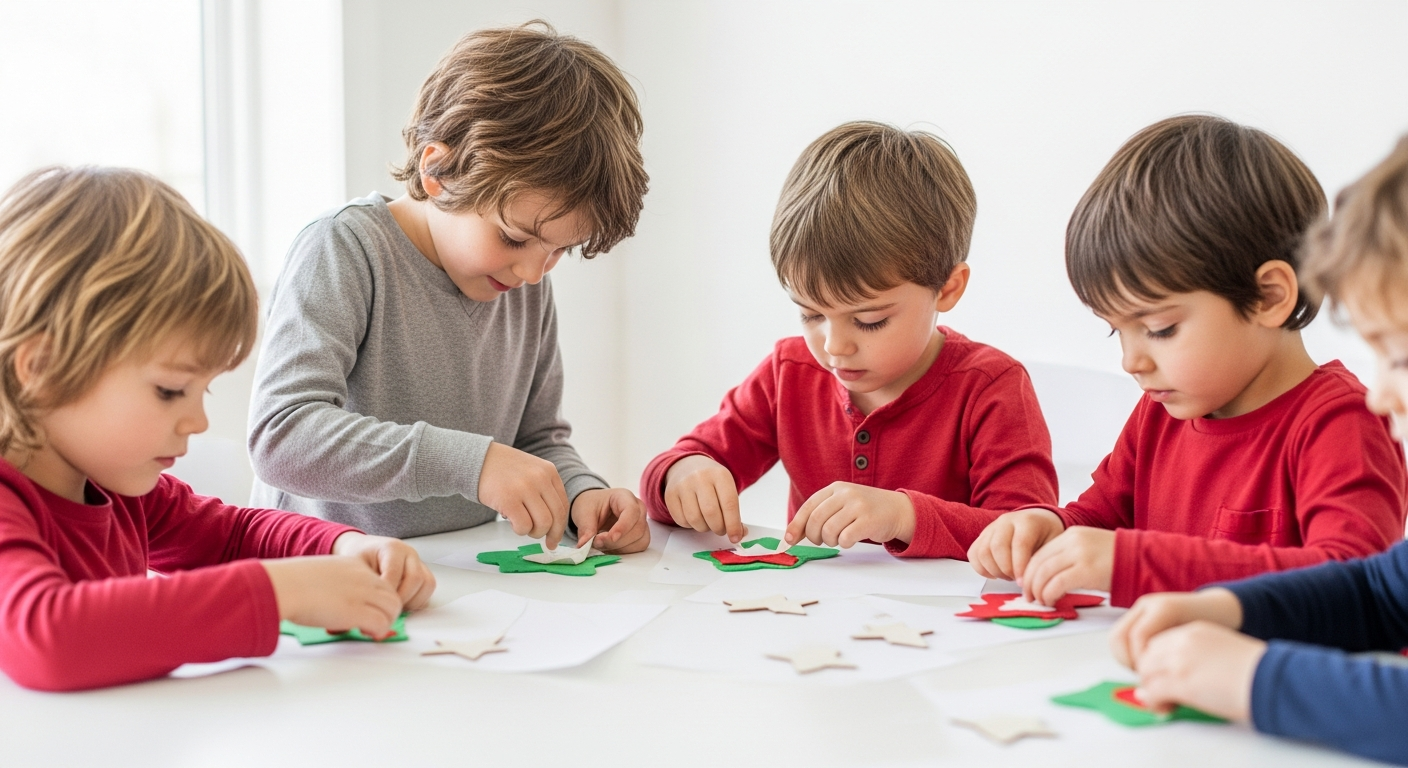
Table of Contents
- The Magic of Christmas Crafts and Early Communication
- Speech and Language Skills Sparked by Ornament Crafts
- DIY Christmas Ornament Crafts for Speech Development
- Making the Most of Craft Time for Communication
- When to Seek Additional Support: Recognizing Communication Challenges
- How Speech Blubs Elevates Your Child's Communication Journey
- Join Our Community: Hear From Parents Like You
- Unlock the Full Potential: Speech Blubs Pricing & Value
- Conclusion
- FAQ
The holiday season often wraps us in a warm blanket of nostalgia, sparkling lights, and cherished traditions. For many families, creating homemade Christmas ornaments is a beloved ritual, transforming simple materials into glittering keepsakes. But what if these festive crafting sessions could do more than just deck the halls? What if they could also become powerful, joyful opportunities to nurture your child's speech and language development?
As parents, we constantly seek meaningful ways to connect with our children and support their growth. While the magic of the holidays certainly provides ample opportunities for connection, adding a layer of intentional speech and language focus to your ornament crafting can elevate these moments into something truly transformative. This post will delve into how the seemingly simple act of creating Christmas ornaments can unlock a world of communication skills, from expanding vocabulary and following directions to fostering social interaction and descriptive language. We’ll explore various DIY ornament ideas that are perfect for little hands and big imaginations, highlighting the specific speech opportunities each craft presents. Furthermore, we’ll show you how innovative tools like Speech Blubs can seamlessly integrate with and amplify these hands-on learning experiences, empowering your child to find their voice and "speak their minds and hearts" not just during the holidays, but all year round.

The Magic of Christmas Crafts and Early Communication
There's something uniquely captivating about watching a child's eyes light up as they create something with their own hands. Crafts, in general, are incredible engines for development, engaging fine motor skills as tiny fingers learn to pinch, grasp, cut, and glue. They stimulate cognitive development by encouraging problem-solving and decision-making, and they ignite creativity, allowing children to express themselves in unique ways. But holiday crafts, particularly Christmas ornaments, possess an added layer of magic. They come with a built-in emotional connection, tied to family traditions, festive anticipation, and the joy of giving. This emotional engagement significantly boosts a child's receptiveness to learning and makes any associated language practice feel less like work and more like play.
When children are actively engaged in a craft, their brains are buzzing with activity, making it a prime time for language acquisition. They are naturally curious, motivated, and immersed in the experience, creating a fertile ground for introducing new words, practicing sounds, and building complex sentence structures. The sensory input from materials – the stickiness of glue, the softness of cotton, the sparkle of glitter – further enriches the experience, helping to solidify new concepts and vocabulary. This hands-on, multi-sensory approach is incredibly effective for young learners, laying robust foundations for communication skills that will serve them far beyond the holiday season.
Speech and Language Skills Sparked by Ornament Crafts
Let’s unpack the specific ways Christmas ornament crafts can be leveraged to boost your child’s speech and language development. Each snip, glue, and sparkle offers a golden opportunity for communication.
Vocabulary Expansion
Crafting exposes children to a rich array of new words. Think about all the things you name during an ornament project: the "pinecone," the "glitter," the "ribbon," the "scissors," the "glue." You talk about "cutting," "gluing," "drawing," "painting," "sprinkling," "hanging," and "decorating." You describe "round" shapes, "sparkly" textures, "red" and "green" colors. This continuous exposure to new vocabulary, coupled with the visual and tactile experience of the object or action, makes learning highly effective.

For a child just beginning to build their lexicon, discussing the different elements of a craft can be incredibly powerful. For example, while working on a salt dough ornament, you might talk about the "dough" (a new word!), how it feels "soft," and the act of "rolling." At Speech Blubs, we understand the importance of building foundational vocabulary. Our app features engaging categories like "Colors," "Shapes," and "Animals," where children learn new words by watching and imitating their peers through our unique "video modeling" method. This method helps children associate words with clear visual examples and encourages immediate imitation, just like they'd imitate you during a craft.
Following Directions
Most craft projects involve a sequence of steps. "First, we get the paper. Then, we cut it. Next, we glue it here." These simple sequences are perfect for practicing following single-step, two-step, and even three-step directions. This skill is crucial for classroom learning, social interactions, and daily routines.
If your child struggles with following multi-step instructions during a craft, like "First, get the blue glitter, then sprinkle it on the star," our app’s interactive activities can provide a safe space to practice auditory processing. Games within Speech Blubs, such as "Guess the Word," often require children to follow prompts and respond, building their ability to comprehend and execute instructions in a fun, pressure-free environment. This skill directly translates to greater independence and participation in activities like holiday crafting.
Descriptive Language
Once an ornament is complete, encourage your child to describe it. "Tell me about your snowflake. What color is it? Is it sparkly? Is it big or little?" This prompts them to use adjectives and expand their expressive language. They learn to articulate details, compare items, and share their observations.
Sequencing and Storytelling
The process of making an ornament has a natural beginning, middle, and end. You can narrate the steps as a simple story: "First, we mixed the dough. Then, we cut out the shapes. Finally, we painted them and hung them on the tree." This helps children understand sequencing and can be a precursor to telling their own stories.
Requesting and Social Communication
Crafting is often a collaborative effort. Children learn to ask for materials ("Can I have the red paint?"), share ("Your turn with the glitter!"), and collaborate on a project. This fosters crucial social communication skills like turn-taking, asking questions, and expressing needs or preferences.
At Speech Blubs, we firmly believe that "smart screen time" is about connection, not isolation. While our app provides rich content, it’s designed to be used with a caregiver, turning screen time into an interactive experience. This approach fosters the same kind of social communication and interaction that naturally occurs during shared crafting activities, making it a powerful tool for family connection.
Sound Production Practice
Many craft-related words offer excellent opportunities to practice specific sounds. Think of "star" (/st/ blend), "tree" (/tr/ blend), "glue" (/gl/ blend), "red" (/r/ sound), "cut" (/k/ sound), "make" (/m/ sound). You can subtly emphasize these sounds as you speak, encouraging your child to imitate.
Our app excels at targeting specific sound production. Through various sections focused on articulation, children can watch real kids pronounce words and sounds, then mimic them. This "video modeling" approach, backed by scientific principles and our research, provides clear, engaging examples for children to imitate, making speech practice both effective and joyful. For example, if your child is working on the /s/ sound, saying "sparkly star" during crafting can be reinforced by an activity in Speech Blubs that focuses on /s/ words.
DIY Christmas Ornament Crafts for Speech Development
Let's dive into some easy, engaging Christmas ornament crafts perfect for children, and how each one can become a unique communication opportunity.
1. Salt Dough Ornaments
Salt dough is a classic for a reason: it’s simple, safe, and incredibly versatile.
- Materials: 1 cup flour, 1/2 cup salt, 1/2 cup water, cookie cutters, straw (for hanging hole), paint, glitter, ribbon.
- Steps:
- Mix flour and salt in a bowl.
- Gradually add water, mixing until a dough forms.
- Knead the dough until smooth. (Great for fine motor!)
- Roll out the dough.
- Use cookie cutters to make shapes (stars, trees, gingerbread men).
- Poke a hole in the top of each ornament with a straw.
- Bake at 250°F (120°C) for 2-3 hours, or air dry for several days.
- Once cool and hard, decorate with paint and glitter.
- Thread ribbon through the hole to hang.
- Speech Opportunities:
- Vocabulary: "flour," "salt," "water," "dough," "mix," "knead," "roll," "cut," "bake," "paint," "glitter," "ribbon," "star," "tree."
- Descriptive Words: "sticky," "smooth," "hard," "soft," "round," "pointy," "sparkly," "colorful."
- Action Words: "pour," "stir," "squish," "press," "lift," "brush," "sprinkle," "thread."
- Following Directions: "First, put the flour in. Then, add the salt." "Roll the dough flat." "Paint the star red."
- Sequencing: Discuss the steps from mixing to baking to decorating.
2. Paper Plate Wreaths/Ornaments
Paper plates are a humble crafting staple that can be transformed into delightful decorations.
- Materials: Paper plates, green paint, construction paper (red, brown, white), cotton balls, glue, scissors.
- Steps (for a simple wreath):
- Cut out the center of a paper plate to create a ring.
- Paint the ring green.
- Cut small shapes from construction paper (red circles for berries, white snowflakes, brown twigs).
- Glue these shapes onto the green ring.
- Add cotton balls for "snow" if desired.
- Punch a hole and add a ribbon.
- Speech Opportunities:
- Vocabulary: "plate," "ring," "green," "red," "cut," "glue," "paint," "circle," "wreath," "scissors," "cotton."
- Descriptive Words: "round," "sticky," "soft," "fluffy," "smooth," "shiny."
- Action Words: "rip," "cut," "spread," "stick," "press," "hold," "dry."
- Counting: Count how many "berries" or "snowflakes" you glue on.
- Positional Concepts: "Put the berry on the wreath," "Put the glue under the paper."
3. Pinecone Critters/Ornaments
Nature provides wonderful crafting materials, and pinecones are perfect for creating whimsical creatures or rustic ornaments.
- Materials: Pinecones, googly eyes, felt, small pom-poms, pipe cleaners, glue, string for hanging.
- Steps (for a reindeer):
- Glue googly eyes onto the wider end of the pinecone.
- Cut small antlers from felt or brown pipe cleaners and glue them on top.
- Add a red pom-pom for a nose.
- Glue a string to the top for hanging.
- Speech Opportunities:
- Vocabulary: "pinecone," "eyes," "antlers," "nose," "felt," "pom-pom," "glue," "string," "reindeer," "pointy," "brown."
- Descriptive Words: "prickly," "bumpy," "smooth" (felt), "soft" (pom-pom), "googly," "tiny," "big."
- Animal Sounds: Practice "oink," "moo," "baa" if making other animals.
- Body Parts: Name the "eyes," "nose," "antlers."
- Questioning: "What color eyes should our reindeer have?" "Where should the nose go?"
4. Yarn-Wrapped Ornaments
This craft is excellent for fine motor skills and offers a lot of repetition for language learning.
- Materials: Cardboard shapes (stars, circles, trees), yarn in various colors, glue.
- Steps:
- Cut shapes out of cardboard.
- Secure one end of a piece of yarn to the cardboard shape with a dab of glue.
- Begin wrapping the yarn tightly around the shape, covering all the cardboard.
- Once covered, secure the end of the yarn with more glue.
- Add a loop of yarn for hanging.
- Speech Opportunities:
- Vocabulary: "yarn," "wrap," "cardboard," "shape," "star," "circle," "tree," "glue," "loop," "tight," "loose."
- Colors: Name the yarn colors as you use them.
- Action Words: "wrap," "pull," "hold," "turn," "cut," "tie."
- Descriptive Words: "soft," "fuzzy," "rough" (cardboard), "long," "short."
- Repetition: "Wrap, wrap, wrap the yarn." "More yarn." "All done wrapping."
5. Photo Ornaments
Personalized photo ornaments are not just beautiful; they are fantastic conversation starters.
- Materials: Clear plastic or glass ornaments (shatterproof for kids), small photos, glitter, fake snow, ribbon.
- Steps:
- Print small photos of family members, pets, or favorite memories.
- Carefully roll the photo and insert it into the ornament opening.
- Add a pinch of glitter or fake snow if desired.
- Close the ornament and tie a festive ribbon.
- Speech Opportunities:
- Vocabulary: "photo," "picture," "family," "friends," "pet," "glitter," "snow," "ribbon," "memory."
- Naming: Name the people or things in the photos.
- Recalling Memories: "Who is this?" "Where were we here?" "What were we doing?"
- Describing Emotions: "Look how happy Grandma looks!"
- Storytelling: Encourage your child to tell a short story about the picture.
Making the Most of Craft Time for Communication
Crafting offers an ideal, low-pressure environment for language development. Here's how you can maximize these moments:
- Be Present and Engaged: Your active participation is key. Sit with your child, make eye contact, and share in their excitement. This co-play environment is exactly what fosters genuine communication.
- Ask Open-Ended Questions: Instead of "Is it finished?", try "What's your favorite part of your ornament?" or "Tell me about what you chose to do next." This encourages more than a "yes" or "no" response.
- Narrate Your Actions: Talk about what you're doing. "I'm cutting the red paper. Now I'm spreading the glue." This models language and exposes your child to various verbs and sentence structures.
- Follow Their Lead: If your child wants to use only blue glitter, embrace it! Letting them guide parts of the activity builds their confidence and encourages them to communicate their choices.
- Praise Effort, Not Just Product: Focus on the process and their attempts to communicate. "You worked so hard cutting that shape!" or "I love how you told me you wanted more glue!" This builds confidence and reduces frustration, making them more likely to try new words.
- Incorporate Repetition: Young children learn through repetition. Don't be afraid to repeat new words or phrases multiple times in different contexts during the craft. "More glue? Okay, more glue." "You made a star. A big star."
When to Seek Additional Support: Recognizing Communication Challenges
While these activities are incredibly beneficial, it's also important to be aware of typical speech and language developmental milestones. If you observe consistent difficulty with things like:
- Limited babbling or lack of consonant sounds by 12 months.
- Not using single words by 16 months.
- Not combining two words by 24 months.
- Difficulty understanding simple instructions for their age.
- Frequent frustration when trying to communicate.
These could be signs that your child might benefit from additional support. Early intervention is key, and it can make a significant difference in a child's development. Unsure if your child could benefit? Take our quick 3-minute preliminary screener to get a simple assessment and a free 7-day trial. It involves just 9 simple questions and provides an assessment along with a personalized next-steps plan.
How Speech Blubs Elevates Your Child's Communication Journey
At Speech Blubs, we believe every child deserves to "speak their minds and hearts." Our company was born from the personal experiences of our founders, who all grew up with speech problems and created the tool they wished they had. We are deeply committed to providing an immediate, effective, and joyful solution for the 1 in 4 children who need speech support, blending scientific principles with play into one-of-a-kind "smart screen time" experiences. We provide a screen-free alternative to passive viewing (like cartoons) and a powerful tool for family connection, acting as a rich supplementary resource alongside your hands-on activities.
The Science of "Video Modeling"
Our unique approach is centered around "video modeling," where children learn by watching and imitating their peers. This methodology leverages the power of mirror neurons in the brain, which fire not only when an individual acts but also when they observe the same action performed by another. Seeing other children, especially peers, successfully make sounds and say words is incredibly motivating and effective for learning. Our research shows that this makes our app highly effective, placing us in the top tier of speech apps worldwide.
"Smart Screen Time" for Active Learning
Unlike passive cartoons or generic apps, Speech Blubs offers "smart screen time" that requires active engagement. Children are prompted to make sounds, repeat words, and interact with the content, turning screen time into a productive learning experience. This active participation fosters cognitive and social-emotional growth, transforming a passive viewing experience into a dynamic, interactive lesson.
A Powerful Supplement to Hands-On Learning and Professional Therapy
Speech Blubs is designed to be a powerful supplement to a child's overall development plan and, when applicable, professional therapy. It provides consistent, engaging practice in a fun format, reinforcing skills learned through hands-on activities like crafting and in therapy sessions. It helps build confidence, reduces frustration, and develops key foundational skills, all while creating joyful family learning moments.
For a parent whose 3-year-old 'late talker' loves animals and struggles with consonant sounds, our 'Animal Kingdom' section offers a fun, motivating way to practice 'moo,' 'baa,' and 'roar' sounds. Children see other kids make these exact sounds, which encourages imitation and helps them articulate sounds correctly, just as they might describe a crafted reindeer or polar bear ornament.
Consider a scenario where your child is working on expanding their descriptive vocabulary beyond basic colors. After creating a "sparkly star" ornament, you could transition to Speech Blubs' "What's Wrong" section, which encourages children to describe unusual situations, prompting them to use more detailed language about attributes and actions. Or perhaps your child is learning to form short sentences. Our "Say It" activities encourage sentence building, making the leap from single words to coherent phrases much more accessible and fun.
Whether your child is building foundational vocabulary, practicing specific sounds, or learning to follow multi-step directions, Speech Blubs offers targeted activities that complement the skills nurtured during your holiday crafting sessions. It provides a consistent, engaging, and scientifically-backed resource that empowers children to communicate with clarity and confidence.
Join Our Community: Hear From Parents Like You
We are incredibly proud of the impact Speech Blubs has on families around the world. Our mission is to empower children to communicate effectively, and the stories we hear from parents reinforce the value and joy our app brings. See what other parents are saying about their child's success with Speech Blubs by visiting our testimonials page. Their experiences highlight how our tool helps children overcome challenges, build confidence, and truly "speak their minds and hearts."
Unlock the Full Potential: Speech Blubs Pricing & Value
We believe in making effective speech support accessible to every family. To get the most out of Speech Blubs and support your child's communication journey comprehensively, we offer flexible plans.
Our Monthly plan is available at $14.99 per month.
However, the best value by far is our Yearly plan at $59.99 per year. This breaks down to just $4.99 per month, allowing you to save 66% compared to the monthly option.
Choosing the Yearly plan isn't just about significant savings; it also unlocks exclusive, high-value features designed to give your child the fullest support:
- A generous 7-day free trial to explore all the app has to offer before committing.
- Access to the extra Reading Blubs app, a powerful tool for early literacy development.
- Early access to new updates and features, ensuring your child always has the latest educational content.
- A 24-hour support response time, so you always have the help you need, when you need it.
The Monthly plan, unfortunately, does not include these valuable benefits. We encourage you to choose the Yearly plan to get the free trial and the full suite of features, ensuring your child has every advantage on their communication journey.
Conclusion
This holiday season, let the joy of creating Christmas ornaments become a catalyst for your child's communication growth. From the sticky fingers of salt dough to the sparkling embrace of glitter, each craft offers a unique opportunity to build vocabulary, practice sounds, follow directions, and foster invaluable social skills. By approaching these activities with intention and engagement, you can transform simple festive fun into powerful learning moments.
And when you're looking for an additional boost or a consistent way to reinforce these skills, remember that Speech Blubs is here to support you. Our app, built on scientific principles and designed by founders who understand the journey, provides a "smart screen time" solution that empowers children to "speak their minds and hearts" through engaging video modeling.
Ready to spark joy, communication, and confidence this holiday season? Create your account and begin your 7-day free trial today! Remember to choose the Yearly plan to unlock all the premium features, including the extra Reading Blubs app, early access to updates, and dedicated support, all while saving 66%. You can also download Speech Blubs on the App Store or Google Play and start your child's journey to clearer, more confident communication.
FAQ
Q1: How old should my child be to benefit from Christmas ornament crafts for speech development?
A1: Children of all ages can benefit! Toddlers can practice naming colors, actions, and simple words. Preschoolers can work on following 2-3 step directions and descriptive language. Even older children can engage in more complex storytelling about their crafts. The key is to adapt the craft and your language expectations to their developmental level.
Q2: What if my child isn't interested in crafting?
A2: Don't force it. Try offering a variety of materials and letting them choose. Sometimes, just having the materials available and seeing you engage can pique their interest. Remember, the goal is joyful interaction. You can also try integrating their favorite characters or themes into the ornaments to make it more appealing.
Q3: How can Speech Blubs help my child practice specific sounds needed for Christmas words like "star" or "tree"?
A3: Speech Blubs has dedicated sections for articulation practice. Children can watch real kids pronounce words with specific sounds (like the 'st' in "star" or 'tr' in "tree") and then imitate them. This visual and auditory modeling, combined with interactive feedback, helps them learn to produce these sounds accurately, reinforcing the words they encounter during crafting.
Q4: Is the Speech Blubs app a replacement for professional speech therapy?
A4: Speech Blubs is a powerful supplemental tool designed to complement and enhance a child's speech and language development journey. It's an excellent resource for daily practice and foundational skill-building. However, it is not a substitute for professional speech therapy, especially for children with diagnosed speech disorders or significant developmental delays. We encourage parents to consult with a speech-language pathologist if they have concerns about their child's communication.
About the author