
Sparking Joy: Fun Activities for Little Kids
 By Speech Blubs Team•Jan 13, 2026•21 min.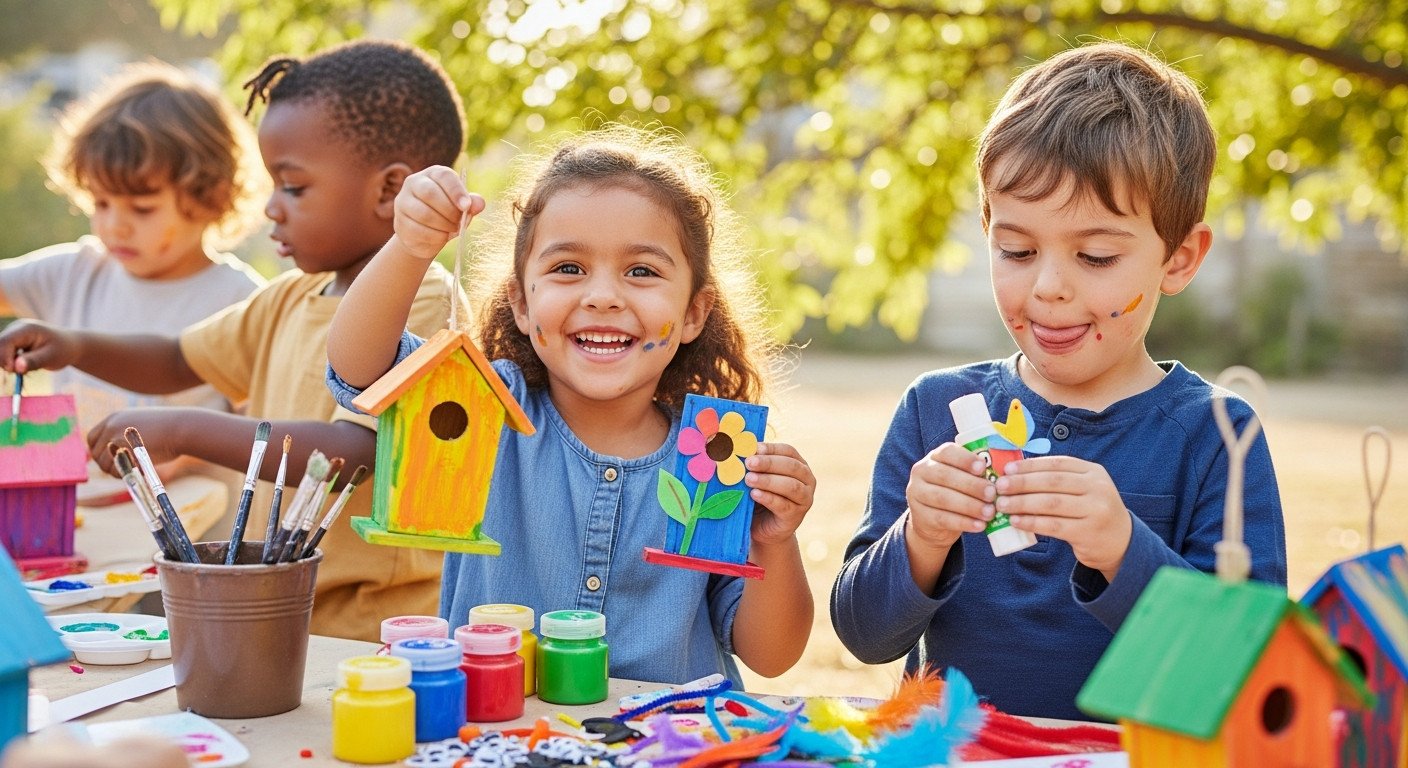
Table of Contents
- Introduction
- The Power of Play: Why Fun Activities Matter for Little Kids
- Bringing the Outdoors In: Active Play for Rainy Days
- Creative Explorations: Nurturing Imagination
- Learning in the Kitchen: Everyday Adventures
- Quiet Moments & Cognitive Growth: Engaging Minds
- The Speech Blubs Difference: Smart Screen Time for Growing Minds
- Making the Most of Speech Blubs: Features and Value
- Realistic Expectations & Your Role as a Co-Pilot
- Conclusion
- Frequently Asked Questions (FAQ)
Introduction
Does the thought of another long afternoon with your little one fill you with a mix of love and a tiny bit of dread, wondering how to keep them engaged, happy, and learning? You're not alone. In a world brimming with distractions, finding truly enriching and joyful activities for little kids can feel like a quest. But what if we told you that the key to unlocking your child’s potential, fostering their communication skills, and strengthening your bond lies in the simplest, most imaginative forms of play? This post is your comprehensive guide to a treasure trove of fun activities designed for young children, focusing on experiences that are not only entertaining but also profoundly beneficial for their development. We'll explore a diverse range of engaging ideas, from active indoor adventures to creative explorations and everyday learning moments. Throughout our journey, we'll also reveal how intelligent tools like Speech Blubs can seamlessly integrate into your child's play, offering "smart screen time" that complements these real-world experiences and helps them speak their minds and hearts. Ready to transform ordinary moments into extraordinary learning opportunities? Let's dive into a world where play is paramount, and every interaction is a chance to grow.

The Power of Play: Why Fun Activities Matter for Little Kids
Play is far more than just a pastime for children; it is the cornerstone of their development. Through play, little kids learn to navigate the world, understand emotions, solve problems, and, most importantly, communicate. Every giggle during a game of peek-a-boo, every focused moment building a block tower, and every imaginative narrative concocted with puppets contributes significantly to their cognitive, social, emotional, and physical growth.
Holistic Development Through Play
Engaging in a variety of activities supports holistic development. Physically, children refine their gross motor skills (running, jumping, balancing) and fine motor skills (grasping, manipulating small objects). Cognitively, they develop problem-solving abilities, learn cause and effect, and expand their understanding of concepts like size, shape, and color. Socially and emotionally, play teaches them about sharing, cooperation, empathy, and self-regulation. These foundational experiences build resilience and self-confidence, preparing them for future learning environments and social interactions.
Building Communication Skills Through Joyful Interaction
Crucially, play is an unparalleled vehicle for language and communication development. When children are immersed in an activity they enjoy, they are more motivated to express themselves, listen, and interact. They learn new vocabulary, practice constructing sentences, and understand the nuances of non-verbal communication. From imitating animal sounds during a make-believe safari to describing the colors they're using in a painting, every playful moment offers a rich context for language acquisition.
At Speech Blubs, we deeply understand this intrinsic link between play and communication. Our mission is to empower children to speak their minds and hearts by blending scientific principles with joyful play. Our founders, each with personal experiences navigating speech challenges, created the tool they wished they had—an immediate, effective, and joyful solution. We know that roughly 1 in 4 children will need some form of speech support, and we are committed to providing resources that truly make a difference. We offer a screen-free alternative to passive viewing, focusing instead on engaging experiences that foster genuine family connection. If you're curious about your child's communication development, you might find our quick, 3-minute preliminary screener helpful. It involves 9 simple questions and provides an assessment and a next-steps plan, along with a free 7-day trial of our app. To learn more about our overall approach and offerings, feel free to visit the Speech Blubs homepage.

Bringing the Outdoors In: Active Play for Rainy Days
When the weather isn't cooperating, bringing active play indoors is essential to help little kids burn off energy, develop coordination, and practice following directions. These activities promote gross motor skills and can be surprisingly rich in language-building opportunities.
Dynamic Movement: Obstacle Courses and Dance Parties
- Indoor Obstacle Courses: Transform your living room into an adventure zone! Use couch cushions to crawl over, pillows to hop across, a blanket draped over chairs as a tunnel to crawl through, or painter's tape on the floor as a "balance beam." This activity is fantastic for developing gross motor skills, spatial awareness, and problem-solving. More importantly, it's a goldmine for language development: "Crawl under the blanket," "Jump over the pillow," "Walk on the line." These prepositions are vital for understanding and following multi-step instructions. You can even encourage your child to narrate their journey, building confidence in storytelling.
- Dance Parties: Put on your child's favorite music and let loose! Dancing improves coordination, rhythm, and self-expression. Try different genres to introduce new movements. You can incorporate action songs that encourage specific movements ("Shake your sillies out") or simply enjoy free-form dancing. This is a wonderful way to practice expressing emotions through movement and verbalizing feelings like "happy," "silly," or "energetic." Encouraging your child to sing along or describe the music ("It's fast!" "It's slow!") adds another layer of language engagement.
Engaging Coordination: Indoor Ball Games and Fort Building
- Soft Ball Toss & Bowling: Grab a soft, lightweight ball and set up some "bowling pins" using empty plastic bottles or toilet paper rolls. Tossing and rolling build hand-eye coordination and spatial reasoning. Count the pins as they fall, practice turn-taking ("My turn, your turn"), and cheer each other on. This simple game encourages vocalizations and social interaction. For a different challenge, try balloon volleyball, encouraging children to keep the balloon in the air, practicing words like "up," "down," and "hit."
- Fort Building: This classic activity sparks imagination and collaborative play. Gather blankets, pillows, sheets, and chairs to construct a cozy hideaway. Building a fort involves planning, problem-solving, and teamwork. Inside the fort, it becomes a perfect setting for imaginative play, storytelling, and quiet conversations. Use descriptive language: "We need a big blanket for the roof," "This fort is so cozy and dark." It’s an ideal space for children to feel safe to experiment with new words and pretend scenarios.
Playful Physicality: Roughhousing and Movement Games
- Controlled Roughhousing: Supervised roughhousing, like wrestling gently, "airplane" rides, or spinning, can be incredibly beneficial for developing body awareness, strength, and emotional regulation. It teaches children about physical boundaries, consent, and how to gauge their own strength. Parents can narrate the movements, "I'm going to lift you up!" or "Are you ready to spin fast?" This physical connection also fosters a strong bond and can be a non-verbal form of communication, building trust and security.
- "Follow the Leader" & Obstacle Challenges: Simple games like "Follow the Leader" or creating small challenges, like walking heel-to-toe on a line of tape, crawling on all fours, or jumping like a frog, develop gross motor skills and the ability to mimic. Imitation is a crucial skill for speech development, as children learn to copy sounds and mouth movements. Our approach at Speech Blubs, utilizing "video modeling," where children learn by watching and imitating their peers, aligns perfectly with the power of learning through observation and replication. It's a method backed by scientific principles, leveraging mirror neurons to make learning complex communication skills intuitive and fun.
Creative Explorations: Nurturing Imagination
Fostering a child's imagination through creative activities is vital for cognitive flexibility, emotional expression, and language development. These activities provide a canvas for self-expression and open-ended play.
Artistic Adventures: Painting, Drawing, and Crafting
- Art & Craft Zone: Set up an accessible art station with paper, crayons, washable markers, tempera paints, and various craft supplies like pipe cleaners, pom-poms, and felt. Encourage free expression without focusing on a perfect outcome. Art promotes fine motor skills, color recognition, and creative thinking. Discuss the colors, shapes, and stories behind their creations: "Tell me about your blue monster," or "What is your swirly painting about?" This encourages descriptive language and narrative skills. You can also explore painting with unconventional tools like sponges, cotton balls, or even bubble wrap for unique textures and sensory input, prompting new vocabulary like "bumpy," "smooth," or "squishy."
- Easy Crafts: Simple crafts like making paper airplanes, decorating postcards to send to family, or creating DIY instruments (e.g., shakers from jars with dried beans) offer focused engagement. These activities develop fine motor skills and following simple instructions. Talk about the steps involved, the materials used, and the purpose of the craft. For older toddlers and preschoolers, introducing paper chains or simple origami can enhance dexterity and patience while providing opportunities for sequential storytelling.
Sensory Worlds: Bins, Dough, and Water Play
- Sensory Bins: A plastic bin filled with dried pasta, rice, beans, or even water is a magical world for little hands. Add scoops, small cups, toy animals, and construction vehicles. Sensory play engages multiple senses, calms children, and builds fine motor skills. It’s also an incredible tool for vocabulary expansion: "Scoop the crunchy rice," "Pour the smooth beans," "Listen to the rattling sound." For parents whose children might be hesitant with new textures, start with dry ingredients and gradually introduce wet or squishy items.
- Playdough & Kinetic Sand: These malleable materials are fantastic for strengthening hand muscles, promoting creativity, and encouraging imaginative play. Children can roll, flatten, cut, and shape them into anything they can imagine. Use playdough tools like rollers, cutters, and stamps. Discuss the textures ("squishy," "soft," "firm"), colors, and the objects they are creating. "You made a long snake!" "Can you make a round cookie?" This fosters descriptive language and creative storytelling. You can even add googly eyes and pipe cleaners to make playdough monsters, encouraging imaginative conversations.
- Water Play: Whether in a dedicated water table, a large tub, or even the kitchen sink, water play is universally loved. Add cups, sponges, plastic toys, and bubbles for endless fun. Water play teaches concepts like floating/sinking, pouring, and volume. It’s a wonderful opportunity for language: "The boat is floating!" "Watch the water drip." "The bubbles are so bubbly!" This can also be a calming activity, especially with the addition of glow sticks for a "glow bath" experience, making it even more novel and engaging.
Imaginative Worlds: Pretend Play and Dress-Up
- Pretend Play & Dress-Up: A box of old clothes, scarves, hats, and props can transform into a world of endless possibilities. Children can become doctors, chefs, superheroes, or animals. Pretend play is paramount for developing social skills, empathy, problem-solving, and narrative abilities. It allows children to practice real-life scenarios and explore different roles. Encourage them to narrate their play, describing what they are doing and saying. "The brave knight is saving the sleeping princess." This builds complex sentence structures and vocabulary. For example, if your child enjoys animal characters, our Speech Blubs app offers engaging sections like "Animal Kingdom" where kids learn to make animal sounds and name creatures by watching their peers.
Learning in the Kitchen: Everyday Adventures
The kitchen, often considered a grown-up domain, is actually a fantastic environment for fun, practical learning and language development for little kids. Involving them in simple tasks fosters independence, teaches valuable life skills, and provides rich opportunities for communication.
Culinary Contributions: Meal Prep and Baking Fun
- "Helping" with Meal Prep: Even toddlers can participate safely in the kitchen. Give them a plastic knife and soft foods like bananas, cucumbers, or cheese to "chop." They can wash vegetables, stir ingredients in a bowl, or tear lettuce for a salad. These activities refine fine motor skills, introduce new vocabulary (ingredients, cooking actions), and teach sequencing. "First, we wash the apples, then we cut them, and finally, we eat them!" Encourage them to describe what they see, smell, and taste. Our app focuses on developing these foundational language skills, making it easier for children to participate in and communicate about daily activities.
- Baking Cookies or a Cake: Baking is a wonderful multi-sensory experience that combines math, science, and delicious rewards. Children can help measure ingredients, pour, stir, and decorate. This teaches concepts like fractions (half a cup), counting, and following a sequence of instructions. The language opportunities are abundant: "We need two cups of flour," "The dough feels sticky," "The cookies smell sweet." This shared experience builds family memories and reinforces communication in a fun, natural setting.
- Setting the Table: A simple chore like setting the table can be turned into a game. Ask your child to bring "two plates," "one fork," or "the red cup." This helps with counting, object recognition, and following instructions. It also instills a sense of responsibility and contribution to the family.
Quiet Moments & Cognitive Growth: Engaging Minds
Not all fun activities need to be high-energy. Quiet play offers crucial opportunities for cognitive development, focus, and intricate language practice, fostering a love for learning and discovery.
Immersive Stories: Reading Aloud and Storytelling
- Reading Aloud Together: This is arguably one of the most impactful activities you can share with your child. Reading together fosters a love for books, expands vocabulary, and develops pre-literacy skills. Point to pictures, ask questions about the story, and encourage your child to predict what happens next. "What do you think the bear will do now?" This builds comprehension, narrative skills, and strengthens your bond. Even young children benefit from hearing complex language and engaging with diverse characters and plots.
- Creating Stories: Beyond reading, encourage your child to create their own stories. You can use puppets, stuffed animals, or even drawings as prompts. Ask open-ended questions: "What happens next?" "How does the character feel?" This cultivates imagination, sequential thinking, and complex language use. Children learn to structure narratives, develop characters, and express emotions through storytelling.
Strategic Play: Puzzles, Board Games, and Building Blocks
- Puzzles & Simple Board Games: Puzzles enhance problem-solving skills, spatial reasoning, and fine motor coordination. Start with chunky knob puzzles and progress to interlocking pieces. Simple board games teach turn-taking, counting, and following rules. Games like "First Orchard" or "Don't Break the Ice" are excellent for early learners. These activities provide a structured environment for language use, such as "My turn," "Your turn," "It's a blue piece," or "I need to roll the dice."
- Building Blocks & Construction Toys: Blocks, LEGO Duplo, and magnetic tiles are timeless tools for developing spatial awareness, creativity, and fine motor skills. Children can build towers, houses, roads, or abstract sculptures. This type of play encourages engineering thinking and fosters imaginative scenarios. Narrate their building process: "You made a tall tower," "This is a strong bridge." Ask them to describe their creations, enhancing their descriptive language and vocabulary related to shapes, sizes, and construction.
Early Science: Simple Experiments
- Baking Soda and Vinegar "Fizzy Drips": A classic and captivating science experiment! Place baking soda in a tray, add drops of colored vinegar using droppers or squeeze bottles, and watch the fizzing reaction. This teaches cause and effect, introduces basic chemistry, and refines fine motor skills. The excitement of the reaction naturally prompts vocalizations and descriptive words: "It's fizzing!" "Look at the bubbles!" "It's bubbly and colorful." This provides a fun, hands-on way to explore scientific concepts and new vocabulary.
The Speech Blubs Difference: Smart Screen Time for Growing Minds
In a world where screens are ubiquitous, we at Speech Blubs are dedicated to redefining screen time for children. We believe technology, when used thoughtfully, can be a powerful catalyst for development, not a passive distraction. Our mission is to empower children to "speak their minds and hearts," providing an immediate, effective, and joyful solution for the 1 in 4 children who need speech support. Our company was born from the personal experiences of our founders, who all grew up with speech problems and created the tool they wished they had.
Our Unique Approach: Video Modeling
What sets Speech Blubs apart is our unique approach to teaching complex communication skills: video modeling. Instead of traditional cartoons or abstract animations, children learn by watching and imitating their peers. This method is rooted in strong scientific principles, leveraging the power of mirror neurons in the brain. When a child observes another child performing an action or making a sound, their brain's mirror neurons activate as if they were performing the action themselves, making imitation more intuitive and effective.
This "smart screen time" provides a vibrant, engaging alternative to passive viewing. Our app is designed to be an interactive experience, encouraging children to actively participate, respond, and connect. For a parent whose 3-year-old "late talker" loves animals, for example, the "Animal Kingdom" section offers a fun, motivating way to practice "moo" and "baa" sounds, watching other children vocalize. We’re proud that our method is backed by science, placing us in the top tier of speech apps worldwide.
Speech Blubs is more than just an app; it's a tool for family connection. We encourage co-play, turning screen time into a shared learning experience. From using fun face filters to practicing mouth movements and sounds, to exploring over 1,500 activities designed to build foundational language skills, Speech Blubs provides a supportive environment for growth. We help build confidence, reduce frustration, and foster a genuine love for communication. Ready to see the difference for yourself? You can download Speech Blubs on the Apple App Store or Google Play Store to get started on your child's communication journey.
Making the Most of Speech Blubs: Features and Value
We’ve designed Speech Blubs to be a valuable addition to your child's developmental toolkit, offering a rich array of features that support speech and language growth through engaging, interactive play. Understanding our subscription options can help you choose the best path to unlock its full potential.
The Speech Blubs Experience
Our app provides a dynamic learning environment with:
- Extensive Content: Over 1,500 engaging activities, including vocabulary building, sound articulation practice, and storytelling.
- Interactive Face Filters: These fun filters encourage children to make specific mouth shapes and sounds, making practice feel like play.
- Educational Games: Designed to target various aspects of language development, keeping children motivated and entertained.
- Personalized Progress Tracking: Allowing parents to monitor their child's journey and celebrate milestones.
Transparent Pricing: Choose Your Plan
We believe in transparency and want you to have all the information to make the best decision for your family. We offer two main subscription plans:
- Monthly Plan: For $14.99 per month, you get access to the core Speech Blubs app content. This plan is great for trying it out for a shorter period.
- Yearly Plan: For an incredible value of $59.99 per year, this plan breaks down to just $4.99 per month. That's a 66% savings compared to the monthly option!
The Yearly Plan: Unmatched Value and Exclusive Benefits
The Yearly plan is undeniably the superior choice, designed to give your child the most comprehensive and enriching experience possible. Beyond the significant cost savings, it includes exclusive, high-value features that aren't available with the Monthly plan:
- 7-Day Free Trial: Only with the Yearly plan can you access a full 7-day free trial to explore all the features and see the magic of Speech Blubs firsthand before committing.
- The Extra Reading Blubs App: Your Yearly subscription also includes full access to our companion Reading Blubs app, providing even more educational content to support early literacy skills.
- Early Access to New Updates: Be the first to experience new features, activities, and content as soon as they're released.
- 24-Hour Support Response Time: Get priority assistance from our dedicated support team, ensuring any questions or technical issues are addressed promptly.
We highly encourage you to choose the Yearly plan to get the most value, unlock the free trial, and gain access to the full suite of features that will truly enhance your child's communication journey. Start your 7-day free trial and create your account today!
Realistic Expectations & Your Role as a Co-Pilot
While Speech Blubs is a powerful tool, it's essential to approach your child's developmental journey with realistic expectations. Our app is designed to be a potent supplement to your child's overall development plan and, when applicable, to professional therapy. We don't promise your child will be giving public speeches in a month, but we do promise a process that fosters a love for communication, builds confidence, reduces frustration, and develops key foundational skills.
Remember, the most effective learning happens with adult co-play and support. Speech Blubs thrives when you engage alongside your child, celebrating their efforts and reinforcing the lessons learned. Your encouragement and presence transform "screen time" into "connection time." We are committed to creating joyful family learning moments, where every small step is a victory. Seeing other parents' success stories can be incredibly motivating; you can read inspiring testimonials here.
Conclusion
The journey of nurturing a little child's growth is filled with countless moments of wonder, learning, and playful discovery. As we’ve explored, engaging in fun activities is not just about passing the time; it’s about laying down the essential building blocks for cognitive, social, emotional, and, most importantly, communication development. From the energetic bursts of indoor obstacle courses and dance parties to the quiet concentration of creative crafts and kitchen adventures, every activity provides a unique pathway for your child to learn, grow, and express themselves.
At Speech Blubs, we are honored to be a part of this journey. We understand the profound impact that confident communication has on a child’s life, and we are dedicated to providing resources that truly make a difference. Our "smart screen time" approach, leveraging video modeling and peer imitation, offers a unique and scientifically backed method to complement your child’s real-world play, transforming passive viewing into active, joyful learning. We are here to help children speak their minds and hearts, building the confidence and skills they need to thrive.
Don't let another day pass by wondering how to best support your child's communication development. Take the proactive step towards a brighter, more vocal future. We invite you to experience the transformative power of Speech Blubs with a 7-day free trial, available when you choose our best-value Yearly plan. Embrace this opportunity to integrate fun, effective, and scientifically-proven speech support into your family's routine.
Ready to spark joy and empower your child's voice? Download Speech Blubs on the Apple App Store or Google Play Store today, or create your account on our website to begin your free trial and unlock the full suite of features with the Yearly plan.
Frequently Asked Questions (FAQ)
Q1: What age group are these activities best suited for?
These activities are generally suitable for toddlers and preschoolers, typically ranging from 1 to 5 years old. Many can be adapted for slightly younger or older children by adjusting the complexity and level of adult involvement. The key is to observe your child's interest and developmental stage.
Q2: How can I make sure these activities are educational and not just entertainment?
Every activity, when approached with intention, can be educational. Focus on engaging your child in conversation during play, asking open-ended questions, introducing new vocabulary, and narrating actions. Encourage problem-solving and creative thinking, and always celebrate their efforts, not just the outcome.
Q3: How does Speech Blubs fit into a day full of these hands-on activities?
Speech Blubs is designed to complement hands-on activities by providing targeted speech and language support through "smart screen time." It offers a fun, interactive break that reinforces communication skills in a different modality. Think of it as a valuable supplement, helping to build foundational skills that children can then apply in their real-world interactions and play.
Q4: What is the best way to try Speech Blubs?
The best way to try Speech Blubs and experience all its benefits is by choosing our Yearly plan. This plan includes a full 7-day free trial, giving you unrestricted access to the app's features, including the extra Reading Blubs app. You'll also save 66% compared to the monthly plan and receive early access to updates and 24-hour support.
About the author