
Sparking Joy & Growing Voices: Fun Acting Games for Kids
 By Speech Blubs Team•Jan 19, 2026•18 min.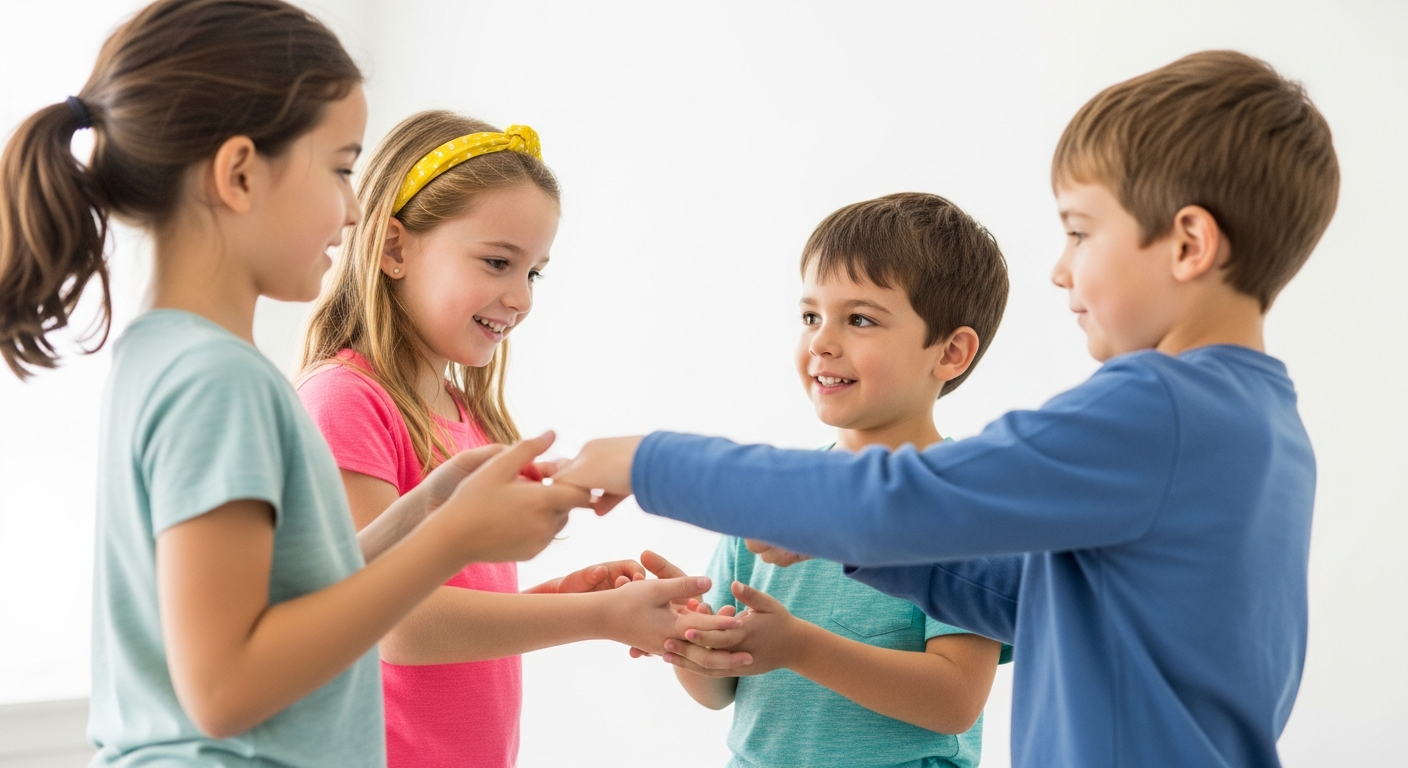
Table of Contents
- Introduction
- The Unseen Power of Play: Why Acting Games Are More Than Just Fun
- Speech Blubs: Our Approach to Empowering Young Communicators
- Top Fun Acting Games for Kids (with a Communication Twist!)
- Bringing It All Together: Speech Blubs and Your Family's Communication Journey
- Make Communication a Priority: The Value of Speech Blubs
- Conclusion
- Frequently Asked Questions About Fun Acting Games for Kids
Introduction
Have you ever watched a child lost in a world of make-believe, effortlessly transforming into a roaring lion, a soaring astronaut, or a wise old wizard? This isn't just innocent play; it's a powerful workshop for the developing mind and an incredible catalyst for communication. For many parents, the journey of helping a child find their voice can sometimes feel overwhelming, but what if the most effective path was also the most joyful? We believe that blending scientific principles with engaging activities is key, and that's precisely why we're diving into the wonderful world of fun acting games for kids. These imaginative activities are far more than mere entertainment; they are dynamic tools that foster creativity, build confidence, and, crucially, lay a robust foundation for strong communication skills. In this post, we’ll explore the myriad ways dramatic play can empower your child to express themselves, articulate their thoughts, and connect with the world around them, often in tandem with the "smart screen time" experiences we offer at Speech Blubs.

The Unseen Power of Play: Why Acting Games Are More Than Just Fun
At Speech Blubs, our mission is to empower children to "speak their minds and hearts," and we know that this journey is multifaceted. While our app provides a scientifically-backed approach, we also wholeheartedly champion the value of imaginative, interactive play. Fun acting games for kids tap into a child's natural inclination to explore and imitate, transforming the learning process into an exciting adventure. These games build essential life skills that extend far beyond the stage, supporting holistic development and communication growth.
Nurturing Creativity and Imagination
When children engage in acting games, they step into new roles, create imaginary worlds, and improvise scenarios. This deep dive into make-believe isn't just about fun; it’s a critical exercise in creative thinking that directly impacts language development. As children invent characters and plots, they expand their vocabulary, experiment with sentence structures, and learn to organize their thoughts into coherent narratives. For a child who might initially struggle to tell a simple story, acting out different parts of a sequence—like pretending to be a chef making a cake, describing each ingredient and action—can help them visualize and verbalize the process. This imaginative play fosters the ability to think abstractly and use language in more flexible, descriptive ways. It’s also where many children discover the sheer joy of expression.
Boosting Confidence and Emotional Expression
One of the most significant gifts of fun acting games for kids is the boost in confidence they provide. Children who are shy or hesitant to speak up can find a safe space within a character to experiment with their voice and emotions. By acting out different feelings—joy, sadness, anger, surprise—they learn to identify and express these emotions in a controlled environment, reducing frustration when trying to communicate their real-life feelings. Consider a child who struggles to express frustration without tears. Playing a game where they act out a "grumpy bear" who stomps his feet and uses a low, growly voice to say he doesn't like his porridge can give them a safe outlet and vocabulary for expressing discomfort in a playful, non-confrontational way. This practice translates into a greater ability to confidently articulate their needs and feelings in everyday interactions.

Enhancing Communication and Social Skills
Acting games are inherently social. They require children to listen actively, take turns, respond to others' cues, and understand different perspectives. These interactions build foundational social skills crucial for effective communication. Children learn the give-and-take of conversation, the importance of eye contact, and how non-verbal cues (like body language and facial expressions) convey meaning. For a child who has difficulty with peer interactions or understanding social nuances, playing a simple role-playing game where they have to be polite to a "store clerk" and ask for an item, or negotiate with a "friend" about sharing a toy, can be incredibly beneficial. It provides a low-stakes environment to practice social scripts and observe how their words and actions impact others. This interactive learning is a powerful tool for developing empathy and improving social communication.
Sharpening Focus and Cognitive Skills
Many acting games demand quick thinking, memory recall, and sustained attention—all vital cognitive skills. Whether remembering a sequence of actions, responding rapidly to a cue, or holding a character's persona, children are constantly challenging their brains. This focus and mental agility are not only beneficial for dramatic performance but also for academic success and everyday problem-solving. These games are a fun way to engage children without them even realizing they're building crucial cognitive muscles.
Speech Blubs: Our Approach to Empowering Young Communicators
At Speech Blubs, we understand the profound impact that early and effective speech support can have. Our company was born from the personal experiences of our founders, who all grew up with speech problems and created the tool they wished they had. We are committed to providing an immediate, effective, and joyful solution for the 1 in 4 children who need speech support, blending scientific principles with play into one-of-a-kind "smart screen time" experiences. We recognize that families are looking for ways to engage their children meaningfully, which is why we offer a powerful screen-free alternative to passive viewing (like cartoons) and a tool for family connection. Our unique approach of teaching complex communication skills through our "video modeling" methodology, where children learn by watching and imitating their peers, aligns perfectly with the interactive and imitative nature of fun acting games for kids.
We’ve seen firsthand the amazing progress children make when they are motivated and engaged. If you're wondering if your child could benefit from a structured, playful approach to communication development, we invite you to take our quick 3-minute preliminary screener. It involves 9 simple questions and provides an assessment along with a next-steps plan, and even a free 7-day trial to experience Speech Blubs for yourself.
Top Fun Acting Games for Kids (with a Communication Twist!)
These fun acting games for kids are designed to be played with minimal props and maximum imagination, often requiring adult co-play and support. They’re perfect for fostering communication skills in an engaging way, and many of the skills they develop complement the learning journey with Speech Blubs.
1. Mirror, Mirror: Reflecting Language and Emotion
This classic game is fantastic for building awareness of facial expressions, body language, and imitation skills—key elements for both non-verbal and verbal communication. How to Play: Pair up with your child. One person is the "leader," the other is the "mirror." The leader makes slow, exaggerated movements and facial expressions, and the mirror tries to copy them exactly. Emphasize matching not just the physical action, but also the emotion conveyed. Then switch roles! Communication Twist: As your child mirrors, describe their actions and expressions: "You're making a surprised face! Your eyebrows are way up!" or "Wow, you're moving your arm so slowly, like a robot!" This verbalization helps connect the visual with descriptive language. Speech Blubs Connection: Our app's video modeling feature thrives on imitation. Children learn by watching and mimicking their peers on screen. This game brings that direct imitation into a playful, interactive setting, strengthening the neural pathways for speech and language acquisition. For a child learning to imitate new sounds or words, this game makes the act of imitation fun and natural.
2. Build-a-Story: Crafting Narratives Together
Storytelling is fundamental to communication, encompassing sequencing, vocabulary, and imaginative thought. How to Play: Start a story with one sentence, for example, "Once upon a time, there was a tiny squirrel named Squeaky who loved collecting acorns." Your child adds the next sentence, and you continue taking turns, building the narrative together. Encourage silly ideas and unexpected turns! Communication Twist: Focus on expanding vocabulary and descriptive language. If a child says, "He went to the forest," you might prompt, "What kind of forest? Was it a dark, spooky forest or a bright, sunny one?" Encourage the use of adjectives and adverbs. You can also act out parts of the story as you go, bringing it to life. Speech Blubs Connection: Many sections within Speech Blubs, like our "Animal Kingdom" or "Yummy Time" themes, introduce vocabulary in engaging contexts. This game helps children weave those words into meaningful narratives, developing their expressive language and understanding of story structure. For a child struggling with sequencing events, taking turns to build a simple plot helps scaffold this complex skill.
3. Character Charades: Non-Verbal Communication Powerhouse
Charades enhance non-verbal communication, visual interpretation, and word recall, all while being incredibly fun. How to Play: Create cards with simple characters (e.g., a grumpy bear, a speedy superhero, a sleepy baby, a giggling clown, a busy chef) or actions (e.g., swimming, eating an apple, riding a bike). Each family member takes turns drawing a card and acting out the character or action without speaking, while others guess. Communication Twist: After guessing, encourage your child to describe how they knew. "What did the superhero do that showed he was fast?" This prompts them to articulate their observations and connect actions to meaning. Speech Blubs Connection: Speech Blubs uses visual cues extensively, and children learn to associate actions and expressions with words. This game reinforces that visual-verbal connection and encourages children to use their bodies to communicate, which can be particularly helpful for children who are early communicators or "late talkers."
4. Freeze Dance Justify: Spontaneity and Expressive Language
This game helps with spontaneous expression, descriptive language, and quick thinking. How to Play: Play some music and have everyone dance freely. When the music stops, everyone "freezes" in their current pose. Point to someone (or have them point to themselves) and ask them to "justify" their pose—to explain what they are doing and why. The sillier the explanation, the better! Communication Twist: Encourage elaborate justifications. If your child is frozen with arms out, they might say, "I'm a tree reaching for the sun!" or "I'm a diver looking for treasure!" This fosters imaginative language and sentence construction. Speech Blubs Connection: The app's interactive nature encourages children to respond and vocalize spontaneously. This game provides a low-pressure environment for practicing spontaneous verbal responses and developing descriptive vocabulary. For a child who tends to use single words, this prompts them to create phrases or sentences to explain their actions.
5. Poor Puppy: Empathy and Expressive Voice
"Poor Puppy" is fantastic for developing emotional expression, vocal intonation, and empathy. How to Play: One person pretends to be a "poor puppy" who desperately wants something (e.g., a treat, a hug) and uses only non-verbal cues (whining, big eyes, puppy dog face) to try and make the other person laugh or smile. The other person gently pats the "puppy" and says, "Poor puppy!" without smiling. Switch roles! Communication Twist: Discuss the puppy's "feelings." "What do you think the puppy wants? How does it feel when it can't get it?" This helps children connect non-verbal cues to emotions and practice using emotional vocabulary. Speech Blubs Connection: Practicing different vocal tones and inflections is crucial for expressive speech. This game allows children to experiment with soft, pleading, or excited tones, mirroring the varied vocalizations they encounter in Speech Blubs activities. For a child with a monotone voice, this can be a fun way to explore vocal variety.
6. Human Knot: Collaborative Communication
This game is excellent for teamwork, problem-solving, and verbal negotiation. How to Play: Have 4-6 players stand in a tight circle. Everyone reaches one hand across the circle to grab a different person's hand, then reaches with their other hand to grab a different person's hand. The goal is to "untangle" the knot without letting go of anyone's hands, ending up in a single circle or multiple smaller circles. Communication Twist: Emphasize verbal communication during the untangling process. "Okay, I think if you step over my arm, we can..." or "Can you lift your hand higher?" This practices giving and following multi-step directions, spatial vocabulary, and negotiation skills. Speech Blubs Connection: Our platform encourages listening and responding, vital skills for this game. It's a fantastic way to develop the ability to articulate complex instructions and collaborate through verbal means. This is particularly helpful for children who struggle with sequencing words to form clear instructions.
7. "So Many Ways To...": Expanding Vocabulary and Perspective
This game sparks creativity and dramatically expands descriptive language. How to Play: Choose a simple action, like "walking." Then, challenge your child to demonstrate "so many ways to walk." They might walk happily, angrily, slowly, quickly, sneakily, majestically, sadly, etc. Then, prompt them to describe how each walk is different. Communication Twist: Introduce new adverbs and adjectives. "Can you walk cautiously? Now, show me a swaggering walk!" This enriches their vocabulary and understanding of nuances in expression. Speech Blubs Connection: Speech Blubs helps children build a robust vocabulary. This game takes those words and applies them to actions, helping children understand context and expand their expressive language beyond basic verbs. It encourages using richer, more descriptive language.
8. Soundscapes: Auditory Awareness and Creative Expression
This game develops listening skills, auditory processing, and imaginative sound production. How to Play: Choose a setting or scenario (e.g., a bustling city, a rainforest, outer space, a quiet library). Everyone closes their eyes and, on your count, begins to make sounds that fit the environment. Without speaking words, use voices, body percussion, or household items to create a collective sound picture. Communication Twist: After creating a soundscape, discuss what sounds were heard and what they represented. "I heard a 'whoosh'—what was that?" or "Did anyone make a bird sound in the rainforest?" This connects auditory input to specific items and actions, boosting phonological awareness. Speech Blubs Connection: Auditory discrimination and sound production are key components of speech development. This game directly targets these skills in a fun, immersive way, helping children practice a range of vocalizations and listen for subtle differences in sounds. It's also great for children developing sound production, prompting them to mimic sounds from their environment.
9. Zip Zap Zop: Focus, Quick Recall, and Turn-Taking
A high-energy game that hones attention, quick thinking, and verbal sequencing. How to Play: Everyone stands in a circle. One person starts by looking at another person, pointing, and saying "Zip!" That person immediately looks at someone else, points, and says "Zap!" The next person does the same with "Zop!" The goal is to keep the "Zip-Zap-Zop" energy flowing as quickly as possible without mistakes. Communication Twist: This game is inherently about rapid verbal response and turn-taking. For an added challenge, introduce categories or themed words. Instead of "Zip, Zap, Zop," you might use "Apple, Banana, Cherry" or "Red, Yellow, Blue." This promotes quick word retrieval within specific categories. Speech Blubs Connection: This game strengthens auditory memory and rapid naming skills, which are fundamental to fluid speech. The demand for quick, accurate responses reinforces the focused attention encouraged in Speech Blubs activities. For a child working on articulation, repeating the "Zip, Zap, Zop" sounds can be good practice for specific consonant-vowel combinations.
10. Party Quirks: Observational Skills and Imaginative Dialogue
This game builds social observation, questioning, and creative dialogue skills. How to Play: One person is the "party host" and leaves the room. The remaining family members each secretly choose a "quirk" for themselves (e.g., "thinks they are a robot," "afraid of the color blue," "talks only in whispers," "obsessed with finding socks"). The host returns and must interact with each guest, asking questions and observing their actions, to guess everyone's quirk. Communication Twist: The host practices asking open-ended questions and listening for clues. The guests practice staying in character and responding creatively to questions based on their quirk. After guessing, discuss the verbal and non-verbal cues that led to the answer. Speech Blubs Connection: Role-playing and understanding social scripts are integral to effective communication. This game provides a rich context for practicing conversational turn-taking, asking and answering questions, and interpreting social cues, all of which are skills supported by Speech Blubs. For a child working on social language, this game helps them practice adapting their speech to different scenarios.
Bringing It All Together: Speech Blubs and Your Family's Communication Journey
Incorporating fun acting games for kids into your family routine is a fantastic way to nurture essential communication skills in a playful, organic manner. These activities complement the structured, research-backed approach that Speech Blubs offers, creating a holistic environment for your child's development. Our "smart screen time" isn't about passive viewing; it's about active engagement, peer imitation, and interactive learning that reinforces many of the same skills you build with these games. Parents consistently tell us about the breakthroughs they see. You can read inspiring testimonials from other parents who have witnessed their children "speak their minds and hearts" with the help of Speech Blubs. Together, interactive games and effective digital tools can truly transform your child's communication journey, fostering confidence, joy, and a lifelong love for expression.
Make Communication a Priority: The Value of Speech Blubs
At Speech Blubs, we are dedicated to providing the best possible support for your child's communication development. We believe in transparency and want to ensure you have all the information to choose the right plan for your family.
We offer two main subscription options:
- Monthly Plan: Priced at $14.99 per month.
- Yearly Plan: Our best value, at $59.99 per year. This breaks down to just $4.99 per month, allowing you to save a remarkable 66% compared to the monthly subscription!
The Yearly Plan is truly the superior choice, not just for the significant cost savings, but also for the exclusive, high-value features it includes:
- A comprehensive 7-day free trial, giving your family ample time to explore all the engaging activities and see the benefits firsthand.
- Access to the extra Reading Blubs app, further enhancing your child's literacy skills.
- Early access to new updates and features, ensuring your child always has the freshest content.
- A dedicated 24-hour support response time, so you can get help whenever you need it.
The Monthly Plan, while flexible, does not include these valuable benefits. To unlock the full suite of features and embark on a complete, supported communication journey with your child, we strongly encourage you to choose the Yearly plan.
Conclusion
Fun acting games for kids offer a vibrant, engaging pathway to developing crucial communication, social, and emotional skills. From fostering creativity and boosting confidence to enhancing vocabulary and sharpening focus, these imaginative activities are invaluable. When combined with the scientifically-backed "smart screen time" experiences of Speech Blubs, your child gains a powerful, holistic support system designed to help them speak their minds and hearts. We’ve seen countless children blossom into more confident, expressive communicators. We invite you to join our community and begin your child's joyful communication journey today.
Ready to see the magic unfold? Download Speech Blubs from the App Store or get it on Google Play to start your 7-day free trial. For desktop users, you can also create your account and sign up for the free trial directly on our website. Remember to choose the Yearly plan to unlock all the premium features and ensure your child gets the most out of Speech Blubs!
Frequently Asked Questions About Fun Acting Games for Kids
Q1: How do acting games specifically help with speech development?
A1: Acting games benefit speech development by encouraging verbal expression, expanding vocabulary, improving articulation through sound imitation, practicing emotional tones, and strengthening social communication skills like turn-taking and listening. They create a fun, low-pressure environment where children can experiment with language.
Q2: What age are these acting games suitable for?
A2: Many acting games are adaptable for a wide range of ages, from toddlers to school-aged children. Simple imitation games like "Mirror, Mirror" are great for preschoolers, while "Build-a-Story" or "Party Quirks" can engage older children with more complex narratives and social understanding. Always tailor the complexity to your child's developmental stage.
Q3: Do acting games replace professional speech therapy?
A3: No, acting games are a wonderful supplement to a child's overall development plan and, when applicable, professional speech therapy. While they foster many communication skills, they do not replace the personalized, expert guidance of a certified speech-language pathologist. Speech Blubs is also designed to complement, not replace, professional therapy. You can learn more about the science behind our method on our research page.
Q4: How can Speech Blubs enhance the benefits of playing acting games?
A4: Speech Blubs enhances the benefits of acting games by providing structured, engaging, and scientifically-backed "smart screen time" that reinforces many of the same skills. Our video modeling feature, where children imitate peers, is a direct digital parallel to the imitation and role-playing in acting games. The app also expands vocabulary, practices articulation, and builds confidence, creating a comprehensive approach to communication development that supports and extends the learning from interactive play.
About the author