
Sparkle & Speak: Christmas Star Crafts for Kids
 By Speech Blubs Team•Dec 22, 2025•21 min.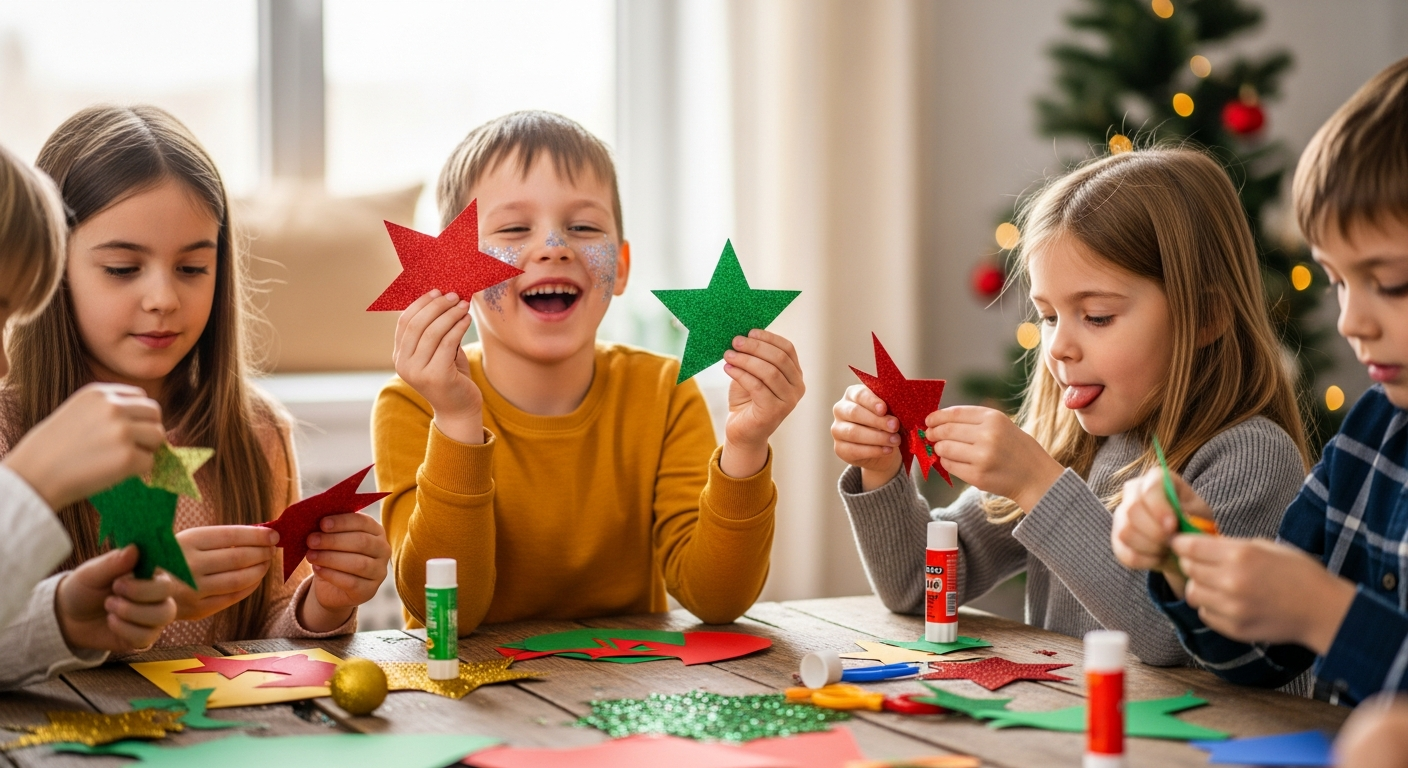
Table of Contents
- Introduction
- The Magic of Christmas Star Crafts: More Than Just Decorations
- Our Favorite Christmas Star Crafts for Kids
- Bringing the Learning Home: How Speech Blubs Brightens Your Child's Communication Path
- Practical Tips for Maximizing Language Development During Craft Time
- Investing in Your Child's Future: Choosing the Right Speech Blubs Plan
- Conclusion
- Frequently Asked Questions About Christmas Star Crafts and Language Development
Introduction
As the festive season twinkles into view, many of us eagerly anticipate creating cherished family memories. Among the most heartwarming traditions is crafting, especially when little hands are involved. Imagine the joy on your child's face as they proudly present a shimmering Christmas star they made themselves – a beacon of their creativity and holiday spirit. But what if this simple act of crafting could also be a powerful catalyst for their language development? Beyond the glitter and glue, making Christmas star crafts with your kids offers a unique, engaging platform to build essential communication skills. This post will illuminate how these festive activities are much more than just decorations; they are golden opportunities for learning, connection, and growth. We'll explore a variety of fun, easy star crafts that foster development, and we'll show you how Speech Blubs can seamlessly extend these joyful learning moments, empowering your child to speak their minds and hearts.

The Magic of Christmas Star Crafts: More Than Just Decorations
The twinkling star atop the Christmas tree is a symbol of hope and wonder, and crafting one with your child can be just as symbolic of their growth and potential. These hands-on activities are incredibly beneficial, touching upon various developmental areas crucial for young children.
Why Crafting Matters for Young Learners
Crafting, at its core, is a multi-sensory experience that engages children on many levels. It's a playful yet potent way to nurture critical skills that lay the foundation for future learning.
- Fine Motor Skills: The intricate actions involved in crafting—cutting shapes, gluing pieces, painting details, or tying knots—are excellent exercises for developing fine motor control. These small muscle movements are vital for everyday tasks like dressing themselves, eating with utensils, and eventually, handwriting. For a child learning to manipulate scissors to cut out a star, they're not just making a decoration; they're strengthening the muscles in their hands and fingers, improving their hand-eye coordination, and refining their dexterity. This direct, purposeful engagement is a cornerstone of early childhood development.
- Creativity and Imagination: Crafts provide an open canvas for children to express themselves. There's no single "right" way to make a Christmas star. Should it be red or gold? Covered in glitter or paint? This freedom encourages children to think imaginatively, explore different possibilities, and make artistic choices, fostering a sense of ownership and pride in their unique creations.
- Following Directions: Most crafts involve a sequence of steps. "First, we fold the paper. Then, we cut. After that, we glue." This simple instruction-following helps children understand concepts like sequencing, temporal order, and cause and effect. It sharpens their listening skills and their ability to process and execute multi-step instructions, which are foundational for academic success and daily routines.
- Problem-Solving: What if the glue doesn't stick? What if the paper tears? Crafting naturally presents small challenges that encourage children to think critically and find solutions. This could be as simple as trying a different type of adhesive or deciding to add a patch to a torn piece of paper. These moments build resilience and teach children that it's okay for things not to go perfectly, and that finding a solution can be part of the fun.
The Hidden Language Lessons in Every Star
Beyond the tangible skills, crafting Christmas stars is a goldmine for language development. Every snip, every dab of glue, and every sparkle can be a prompt for communication.

- Vocabulary Expansion: Craft time is rich with opportunities to introduce and reinforce new words. Children learn the names of materials (cardboard, yarn, glitter, glue stick, pipe cleaner), colors (red, green, gold, silver), shapes (star, triangle, point), and actions (cut, fold, stick, paint, sprinkle, string). Narrating your actions and asking your child to name items helps embed these words into their active vocabulary. Imagine making a star: "Look, we need the yellow paper and the shiny glitter! I'm going to cut out a big star shape."
- Descriptive Language: Stars aren't just stars; they can be "sparkly," "bright," "pointy," "big," "small," "rough," or "smooth." Encouraging your child to describe their creation using adjectives helps them develop richer, more nuanced language. "Tell me about your star! Is it soft or scratchy? What color did you use the most?" This practice builds their ability to articulate observations and feelings, making their communication more vibrant.
- Sequencing and Narrative Skills: Recounting the steps of a craft project is a fantastic way to practice sequencing. "First, we got the materials. Next, we drew the star. Then we cut it out." This type of storytelling strengthens their narrative abilities, which are crucial for later literacy skills and understanding stories. It also helps them organize their thoughts and express ideas in a coherent order.
- Social Communication: Crafting together fosters interaction, turn-taking, and shared attention. Children learn to ask for materials, negotiate choices ("Can I have the blue glitter?"), share tools, and express frustration or delight. These social exchanges are fundamental for developing pragmatic language skills – how we use language in social situations. Working side-by-side with a parent or sibling creates a natural, low-pressure environment for conversation and connection.
- Prepositional Phrases: "Put the glue on the paper. Stick the star to the window. The ribbon goes through the hole." Crafting offers endless real-world examples to practice spatial concepts and prepositions, helping children understand and use words that describe location and relationship.
At Speech Blubs, we believe in nurturing all aspects of a child's communication journey. Our mission is to empower children to speak their minds and hearts, and we understand that every activity, from crafting to playing, contributes to this vital development. Our company was born from the personal experiences of our founders, who all grew up with speech problems and created the tool they wished they had—a joyful, effective, and immediate solution for the 1 in 4 children who need speech support. We combine scientific principles with play, transforming screen time into "smart screen time" that sparks communication rather than stifling it.
Our Favorite Christmas Star Crafts for Kids
Here are some beloved Christmas star craft ideas, each packed with opportunities for language development, fine motor skill practice, and festive fun. Remember to engage with your child at every step, narrating actions, asking questions, and celebrating their efforts.
1. Sparkly Paper Plate Stars
This classic craft is simple, uses readily available materials, and offers a fantastic canvas for creativity and language.
- Materials: Paper plates, scissors, glue, glitter, paint (optional), string or ribbon.
- Steps:
- Prepare the Plate: Have your child help you flatten the paper plate. Talk about its shape: "This is a round plate!"
- Draw and Cut the Star: Draw a star outline on the paper plate. Depending on your child's age and skill level, they can practice cutting along the lines. Narrate: "We're going to cut the pointy parts of the star!" For younger children, you can cut the star and have them decorate.
- Decorate: This is where the magic happens! Offer different colors of paint or glue and various glitter options. "What color should we use first? Do you want blue or gold glitter?" Encourage them to spread the glue and sprinkle the glitter. Talk about the textures: "This glitter feels rough!" or "Wow, it's so sparkly!"
- Finish: Once dry, punch a hole at the top and thread a string or ribbon through it. "The string goes through the hole. Now we can hang our star!"
- Language Link: This craft is perfect for practicing action verbs (cut, paint, glue, sprinkle, hang), color names, descriptive adjectives (round, pointy, sparkly, rough, shiny), and prepositions (on, through). It's also a great way to work on following simple two-step instructions. After making your sparkling stars, why not explore the "Colors" or "Actions" sections within Speech Blubs to reinforce these new words and concepts?
2. Yarn-Wrapped Cardboard Stars
This craft is excellent for developing fine motor skills, hand-eye coordination, and sensory exploration.
- Materials: Cardboard (from a cereal box or delivery package), scissors, yarn in various colors, glue.
- Steps:
- Cut Cardboard Star: Draw and cut out star shapes from cardboard. You might need to do this step for younger children, but older kids can help trace. "This cardboard is strong!"
- Wrap with Yarn: Apply a little glue to one point of the cardboard star to secure the end of the yarn. Then, show your child how to wrap the yarn tightly around the cardboard star, covering all the cardboard. "Wrap it around and around! Look, it's covering the brown cardboard. What color yarn are you using? This yarn feels so soft."
- Change Colors: Encourage them to switch yarn colors for a striped effect. "Let's change to green yarn now. We have red and green!"
- Secure and Display: Once the star is fully wrapped, glue the end of the yarn to secure it. You can loop a piece of yarn at the top for hanging.
- Language Link: This activity reinforces color vocabulary, texture words (soft, rough, smooth), action verbs (wrap, cover, secure), and counting (how many times they wrap, how many different colors). It also introduces spatial awareness with concepts like "around." The repetitive wrapping motion is calming and a fantastic fine motor workout.
3. Popsicle Stick Stars
A super simple and versatile craft that teaches basic geometry and counting.
- Materials: Popsicle sticks (5 per star), glue, paint or markers, glitter, small gems (optional).
- Steps:
- Arrange Sticks: Show your child how to arrange five popsicle sticks to form a star shape. This can be a bit tricky and requires some spatial reasoning. "We need to make a pointy star. Let's make one stick go over another."
- Glue Together: Carefully glue the sticks together at their overlapping points. You might need to assist with this, holding pieces in place until the glue sets. "We're making the sticks stick together with glue."
- Decorate: Once the glue is dry, let your child paint, color, or decorate their star. "What color are you painting the sticks? Is it a big star or a little star?"
- Embellish: Add glitter, gems, or even small pom-poms for extra festive flair.
- Language Link: This craft is excellent for teaching geometric shapes (star, triangle), counting (five sticks, how many points), and spatial concepts (over, under, together). It also uses action verbs (arrange, glue, paint, decorate). Discussions about the process, such as "How many sticks do we need?" or "Where should this stick go?", naturally build conversational skills.
4. Salt Dough Stars
A tactile and engaging craft that appeals to all ages, allowing for sensory exploration and imaginative play.
- Materials: 1 cup flour, 1/2 cup salt, 1/2 cup water, star-shaped cookie cutters, rolling pin, baking sheet, paint, glitter (optional), string.
- Steps:
- Mix the Dough: In a bowl, have your child help you mix the flour, salt, and water until it forms a dough. "Feel the flour! It's so soft! We're going to mix it all together."
- Knead and Roll: Turn the dough onto a floured surface and let your child help you knead it until smooth. Then, use a rolling pin to flatten it. "Now we knead the dough. Roll it flat!"
- Cut Shapes: Use star-shaped cookie cutters to cut out stars. "Push down hard! Look, a star!"
- Bake: Carefully transfer the stars to a baking sheet. Make a small hole at the top of each star with a straw (for hanging). Bake at 250°F (120°C) for 2-3 hours, or until hardened.
- Decorate: Once cooled, paint and decorate the stars with glitter, markers, or even leave them natural. "What color should we paint this smooth star?"
- Language Link: This craft is a sensory delight, offering many opportunities to use descriptive language (soft, hard, smooth, sticky, crumbly). It's also great for sequencing (first mix, then knead, then roll, then cut) and action verbs (mix, roll, cut, bake, paint). Talking about the process and the sensory experience ("It feels sticky!" "The dough is cold!") encourages rich verbal expression.
5. Nature-Inspired Stick Stars
A wonderful way to connect with nature and use found objects to create something beautiful.
- Materials: Small sticks (collected outdoors), twine or string, glue, optional decorations like small pinecones, berries (non-toxic), leaves, paint.
- Steps:
- Gather Sticks: Go on a nature walk with your child to collect small, relatively straight sticks. "Let's find some long sticks and some short sticks!" Discuss what you see, hear, and feel outdoors.
- Arrange and Glue: Arrange five sticks to form a star shape. You can glue the ends together.
- Wrap with Twine: Once the glue is dry, wrap twine or string around the joints of the sticks to secure the star shape. "Wrap it tightly! The string is strong."
- Decorate: Use natural elements collected from your walk or add paint and glitter. "Let's glue this tiny pinecone on the star!"
- Language Link: This activity promotes outdoor vocabulary (tree, branch, leaf, acorn, grass), descriptive words (long, short, rough, smooth, brown, green), and action verbs (find, pick up, arrange, wrap, glue). It’s also an excellent prompt for storytelling about your nature adventure.
Bringing the Learning Home: How Speech Blubs Brightens Your Child's Communication Path
While hands-on activities like crafting are invaluable, we understand that supporting your child's speech and language development requires a multifaceted approach. This is where Speech Blubs comes in, providing a powerful, scientifically-backed tool designed to complement and enhance your efforts.
At Speech Blubs, our mission is to empower children to "speak their minds and hearts." This deep commitment stems from the personal experiences of our founders, who themselves grew up facing speech problems. They created Speech Blubs to be the immediate, effective, and joyful solution they wished they had—a tool for the 1 in 4 children who need speech support. We achieve this by blending scientific principles with engaging play, creating one-of-a-kind "smart screen time" experiences.
Beyond Passive Screens: "Smart Screen Time"
We know parents are cautious about screen time, and rightly so. That's why we’ve consciously moved away from passive viewing, like cartoons, and instead offer a screen-free alternative in the form of interactive and engaging content. With Speech Blubs, children aren't just watching; they're actively participating, imitating, and learning. Our app provides a powerful tool for family connection, encouraging parents and children to play and learn together.
Video Modeling: The Power of Peer Imitation
Our unique approach is rooted in the proven "video modeling" methodology. Children learn best by watching and imitating their peers. This is why Speech Blubs features real kids demonstrating target sounds, words, and phrases. When your child watches these videos, their mirror neurons light up, encouraging them to imitate what they see and hear. It's a natural, joyful process that turns learning into play. Imagine your child making a salt dough star, talking about how smooth the dough feels, and then seamlessly transitioning to Speech Blubs to watch a peer demonstrate the word "smooth" or other descriptive adjectives. This reinforces learning in a dynamic, engaging way.
Seamless Integration with Crafting
Speech Blubs isn't meant to replace your precious craft time; it's designed to extend and enhance the language lessons learned during those activities.
- Reinforce Vocabulary: After discussing colors, shapes, and actions during a Christmas star craft, open Speech Blubs. Explore sections like "Colors," "Shapes," or "Actions" to see and hear those words again in a new, engaging context. This repetition and varied exposure solidify learning.
- Build Confidence: For a child who might be hesitant to speak, the low-pressure, encouraging environment of Speech Blubs, combined with the successful creation of a star craft, builds confidence. They see other children succeeding, and they feel empowered to try themselves.
- Target Specific Skills: If you notice your child struggling with particular sounds or word types during crafting (e.g., verbs, prepositions), Speech Blubs offers targeted activities to practice those exact skills in a fun, interactive way.
- Empowering Parents: Speech Blubs empowers you, the parent, with a tool to actively participate in your child's communication journey. It offers guided activities and fresh ideas, ensuring that you're always equipped to support their development. You'll find yourself saying, "Remember when we talked about 'cutting' the paper? Let's see what sounds the 'Actions' section in Speech Blubs can teach us about cutting!"
Discover our unique approach by trying our 7-day free trial today! See firsthand how our video modeling method can inspire your child to communicate.
Practical Tips for Maximizing Language Development During Craft Time
To make the most of your Christmas star crafting for language development, keep these simple, yet effective, strategies in mind:
- Narrate Your Actions: Talk about everything you're doing. "I'm putting the glue on the paper. Now I'm sprinkling the glitter. It's so sparkly!" This provides a constant stream of language input for your child.
- Ask Open-Ended Questions: Instead of "Is this blue?", ask "What color should we use next?" or "How does that glitter feel?" Open-ended questions encourage more elaborate responses and critical thinking.
- Follow Your Child's Lead: If your child shows interest in a particular color or material, follow that interest. Their engagement is key to meaningful learning.
- Encourage Descriptive Language: Prompt them to use adjectives. "Tell me about your star! What does it look like? What color is it mostly?"
- Celebrate Effort, Not Just the Outcome: Praise their participation, their attempts, and their unique choices, regardless of how "perfect" the final star looks. "You worked so hard cutting that! I love how you chose all those different colors."
- Use Specific Praise: Instead of just "Good job," try "I love how you carefully glued each piece," or "You made such a big star!"
- Connect to Real-World Objects: Once the star is made, talk about where it will go and what it represents. "We made this star to put on our Christmas tree. Stars are bright in the night sky."
Unsure if your child could benefit from a little extra support? Take our quick 3-minute preliminary screener to get a simple assessment and a free 7-day trial. It involves just 9 simple questions and provides an assessment and next-steps plan to guide you.
Investing in Your Child's Future: Choosing the Right Speech Blubs Plan
We understand that parents want the best for their children, and investing in their development is a priority. That's why we've designed our Speech Blubs subscription plans to offer flexibility and incredible value.
We offer two main plans:
- Monthly Plan: $14.99 per month. This plan provides access to our core features and is a great option for those who prefer month-to-month flexibility.
- Yearly Plan: $59.99 per year. This breaks down to just $4.99 per month, representing a significant saving.
We strongly recommend the Yearly plan as it offers the best value and unlocks a suite of exclusive, high-value features designed to maximize your child's learning journey:
- Save 66%: By choosing the Yearly plan, you save significantly compared to the monthly subscription, making top-tier speech support more accessible.
- 7-Day Free Trial: The Yearly plan includes a 7-day free trial, allowing you and your child to explore all the features and experience the magic of Speech Blubs completely risk-free before committing. The Monthly plan does not include this free trial.
- The Extra Reading Blubs App: Gain exclusive access to our Reading Blubs app, a fantastic companion tool that supports early literacy development, building on the communication skills fostered in Speech Blubs. This is not included with the Monthly plan.
- Early Access to New Updates: Yearly subscribers get first access to all new features, activities, and content updates, ensuring your child always has fresh, engaging material.
- 24-Hour Support Response Time: Enjoy priority support with a guaranteed 24-hour response time, so any questions or concerns you have are addressed quickly and efficiently.
The Monthly plan, while flexible, does not include these additional benefits like the free trial, the Reading Blubs app, early updates, or priority support. For comprehensive support, maximum savings, and the full suite of features that will truly empower your child's communication journey, the Yearly plan is the clear best choice. Our methodology is backed by science, placing us in the top tier of speech apps worldwide. You can explore the research behind our effective approach.
Conclusion
Creating Christmas star crafts with your children is a beautiful tradition that offers far more than just festive decorations. These hands-on activities are powerful engines for developing fine motor skills, sparking creativity, fostering problem-solving abilities, and, critically, nurturing essential speech and language skills. From expanding vocabulary and encouraging descriptive language to practicing sequencing and building social communication, every crafted star becomes a shining opportunity for growth.
We believe in supporting every child's potential to "speak their minds and hearts." Just as you guide their hands to cut and glue, Speech Blubs provides a trusted, scientifically-backed tool to guide their voices. By integrating our "smart screen time" experiences—where children learn through the engaging video modeling of their peers—you can seamlessly extend the language lessons from your crafting table into a fun, interactive digital environment. This combined approach ensures a rich, immersive learning journey for your child.
Ready to embark on a journey that brightens your child's communication skills this holiday season and beyond? Experience the magic of learning with Speech Blubs. Start your child's journey by downloading Speech Blubs from the Apple App Store or Google Play Store, or sign up for your free trial online today! Don't forget to select the Yearly plan to unlock your 7-day free trial, access the Reading Blubs app, and enjoy all the exclusive benefits that offer the best value for your family's future. See what other parents are saying about their child's success with Speech Blubs by reading our testimonials.
Frequently Asked Questions About Christmas Star Crafts and Language Development
Q1: What age are these Christmas star crafts suitable for?
A1: Many of these crafts can be adapted for a wide range of ages. Younger children (toddlers and preschoolers) will benefit from simpler tasks like gluing, painting, and sprinkling glitter, with adults handling cutting. Older preschoolers and school-aged children can take on more complex steps like cutting shapes, wrapping yarn, or arranging sticks. The key is to provide adult supervision and assistance as needed, focusing on the process and the language interaction rather than a perfect end product.
Q2: How can I encourage my child to talk more during crafts if they are naturally quiet?
A2: Create a low-pressure, playful environment. Start by narrating your own actions and thoughts ("I'm going to put some glue here. Whoops! A little too much glue!"). Use expectant pauses after asking questions, giving your child time to process and respond. Offer choices ("Do you want the red glitter or the green glitter?"), which can be easier than open-ended questions. Also, sing simple songs related to colors or actions, as music can often encourage verbal participation. Remember, even non-verbal communication like pointing or gesturing is a form of expression that can be built upon.
Q3: Is Speech Blubs a replacement for professional speech therapy?
A3: No, Speech Blubs is a powerful supplemental tool designed to support and enhance a child's speech and language development, not to replace professional speech therapy. While our app is based on scientific principles and uses effective methodologies like video modeling, it is not intended to diagnose or treat speech disorders. We encourage parents who have concerns about their child's speech development to consult with a certified speech-language pathologist for a comprehensive evaluation and personalized therapy plan. Speech Blubs can be an excellent resource to use in conjunction with professional therapy or as a valuable tool for everyday practice and enrichment.
Q4: How do I know if Speech Blubs is right for my child, especially after doing crafts?
A4: If you observe your child engaging well with the language aspects of crafting—like naming colors, describing textures, or following instructions—Speech Blubs can be a fantastic way to build on that momentum. Our app offers interactive activities that reinforce vocabulary, articulation, and expressive language through engaging video modeling. If your child is a "late talker" or you're simply looking for a fun, educational way to boost their communication skills, the app provides structured play that can complement their hands-on learning. The best way to find out if it's a good fit is to try our 7-day free trial (available with the Yearly plan) to explore the content and see how your child responds to the interactive lessons.
About the author