
Sparkling Science: The Best Baking Soda Toddler Activity Ideas
 By Speech Blubs Team•Mar 18, 2026•14 min.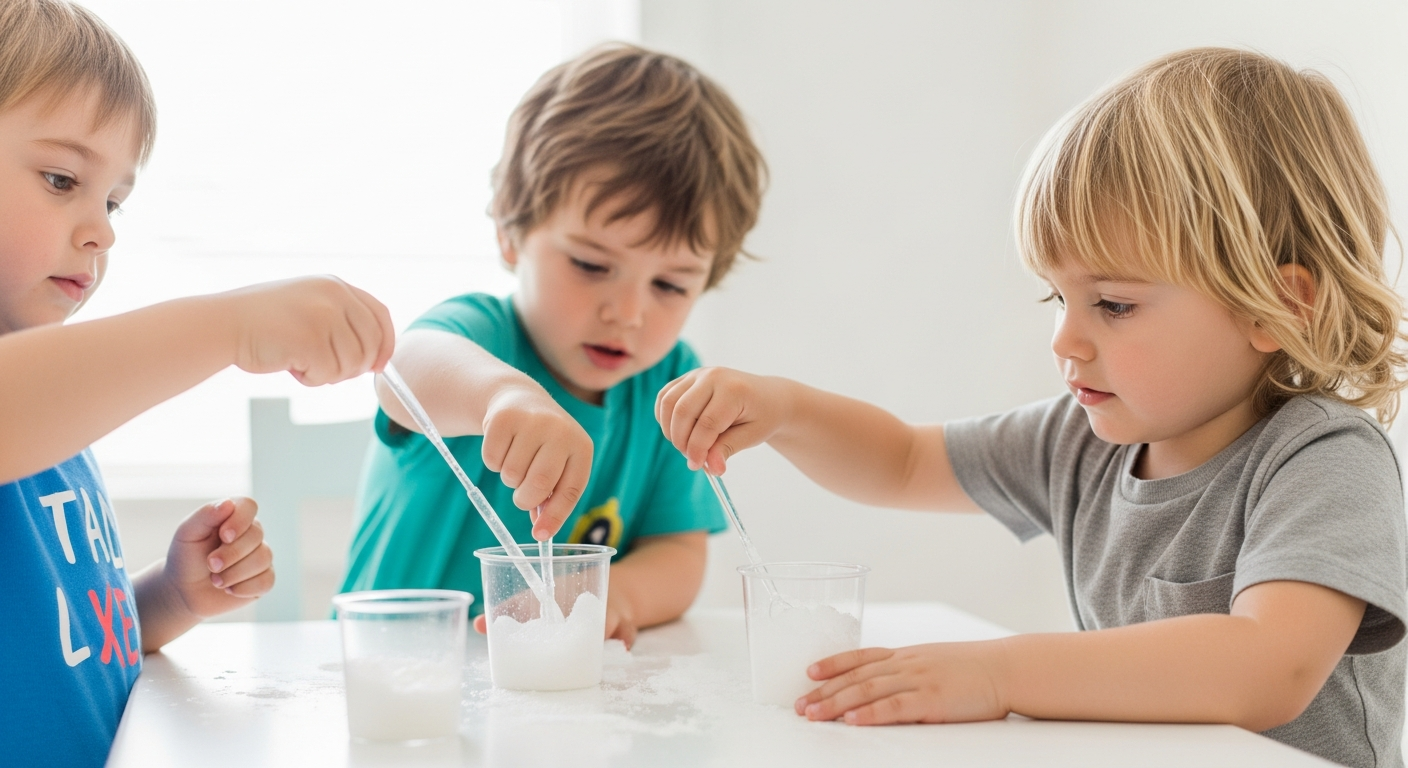
Table of Contents
- Introduction
- The Magic of the Baking Soda Toddler Activity
- Top 7 Baking Soda Toddler Activity Ideas for Home
- Why "Smart Screen Time" Matters
- Integrating Language Strategies into Play
- Safety and Preparation: Making Play Stress-Free
- Investing in Your Child's Future
- Conclusion
- Frequently Asked Questions
Introduction
Have you ever watched a toddler’s face the exact moment a drop of vinegar hits a pile of baking soda? It is a transition from intense concentration to pure, unadulterated awe. That tiny gasp, the wide eyes, and the immediate reach to touch the bubbles—this is the magic of early learning in its most raw form. While it might look like a simple kitchen mess to the untrained eye, a baking soda toddler activity is actually a multi-sensory powerhouse that builds the foundation for scientific thinking, fine motor control, and, most importantly, language development.
At Speech Blubs, we believe that every moment of play is an opportunity for a child to find their voice. Our mission is to empower children to "speak their minds and hearts," and we know that the best way to do that is through joyful, hands-on experiences. Our founders, who all navigated their own speech challenges as children, created Speech Blubs to be the tool they wished they had—a bridge between play and communication.

In this post, we’re going to dive deep into the world of fizzy science. We will explore why these activities are so beneficial for your child's development, provide a variety of creative ways to set them up, and show you how to pair these tactile experiences with our "smart screen time" to boost your child's communication skills. Whether your little one is a "late talker" or simply a curious explorer, these activities are designed to foster a love for learning while creating beautiful family memories.
The Magic of the Baking Soda Toddler Activity
Why is this specific combination of pantry staples such a staple in early childhood classrooms and therapy offices? It’s because it hits the "trifecta" of toddler development: sensory engagement, cognitive curiosity, and motor skill practice.
Sensory Integration and Language
Sensory play is any activity that stimulates a child’s senses: touch, sight, smell, taste, and sound. When a child engages in a baking soda toddler activity, they aren't just seeing a reaction; they are hearing the fizz and pop, feeling the cold temperature of the vinegar, and smelling the sharp tang of the acetic acid.
From a speech perspective, these sensory inputs are "language hooks." It is much easier for a child to learn the word "bubbly" when they are elbow-deep in bubbles. At Speech Blubs, we utilize a similar philosophy through our video modeling methodology. By watching their peers perform actions and make sounds on screen, children feel a natural, social urge to imitate. When you combine this "peer-to-peer" learning with a physical activity like a fizzy bin, you create a powerful environment for language to flourish.
Building Fine Motor Strength
Before a child can master the complex movements of the mouth and tongue required for speech, they need to develop general motor control and coordination. Many baking soda activities require the use of pipettes, eye droppers, or spray bottles. These tools require a "pincer grasp" and hand strength, which are essential precursors to writing and other self-care tasks.

If you are ever unsure about where your child stands in their developmental journey, we recommend taking our quick 3-minute preliminary screener. It involves just nine simple questions and provides an assessment and a next-steps plan to help you support your child's growth.
Top 7 Baking Soda Toddler Activity Ideas for Home
You don't need a PhD or an expensive laboratory to bring science to life. Most of these activities use items you likely already have in your kitchen.
1. The Classic Colorful Fizzy Bin
This is the "go-to" for most parents. Simply pour a thick layer of baking soda into a large plastic bin. In a separate ice cube tray, mix white vinegar with various drops of food coloring.
- The Activity: Give your child a dropper or a small spoon and let them transfer the colored vinegar onto the white powder.
- Speech Connection: This is the perfect time to practice color names. As the pink vinegar hits the powder, narrate the action: "Look! Pink bubbles! Pop, pop, pop!"
- Speech Blubs Integration: Before you start, open the "Colors" section in the Speech Blubs app. Let your child see other kids saying "red" or "blue," then try to find the matching color in your fizzy bin. You can download Speech Blubs on the App Store to get started.
2. Hidden Color Surprise
This activity adds an element of mystery and "prediction," which is a higher-level cognitive skill.
- The Setup: Place a few drops of food coloring in the bottom of a muffin tin. Cover the coloring with a generous spoonful of baking soda so the color is completely hidden.
- The Activity: Have your child pour vinegar into each muffin cup. As the reaction occurs, the hidden color will "erupt" through the white powder.
- The Benefit: This encourages the use of "Wh-" questions. "What color is under here?" or "Where did the green go?"
3. Fizzy Dinosaur (or Toy) Rescue
If your child is obsessed with animals or figures, this is a winner.
- The Setup: Create "baking soda dough" by mixing baking soda with just enough water to make it moldable. Wrap this dough around small plastic dinosaurs or toy cars. Let them dry for a few hours (or overnight) until they are hard "rocks."
- The Activity: Place the "rocks" in a bowl of vinegar and watch as the toys are slowly "rescued" from the fizz.
- Speech Connection: For a child who loves animals, the "Animal Kingdom" section of Speech Blubs is a great motivator. While they rescue a T-Rex from the fizz, they can practice the "Roar!" sound they just saw a peer perform in the app.
4. Fizzy Hands (Balloon Science)
This experiment demonstrates that the reaction between baking soda and vinegar produces a gas (carbon dioxide).
- The Setup: Use a funnel to put two tablespoons of baking soda into a deflated latex-free glove or a balloon. Fill a small plastic bottle halfway with vinegar.
- The Activity: Carefully stretch the opening of the glove over the mouth of the bottle without letting the baking soda fall in yet. When ready, lift the glove so the powder falls into the vinegar.
- The Result: The glove will "magically" stand up and inflate as it fills with gas.
- The Benefit: This is great for body awareness. You can point to the "fingers" of the glove as they inflate, practicing words like "hand," "fingers," and "big."
5. Baking Soda "Magic" Art
Who says science can't be artistic?
- The Setup: Mix baking soda with a little water and food coloring to create a thick "paint." Let your child paint a picture on a piece of heavy cardstock or a paper plate.
- The Activity: Once the painting is done, give them a spray bottle filled with vinegar. When they spray their masterpiece, the paint will bubble and move, creating a unique, textured work of art.
- The Benefit: Spray bottles are incredible for strengthening the tiny muscles in the hand, which helps with future writing skills.
6. The "Lava" Volcano
The classic volcano is a rite of passage for every child.
- The Setup: You can build a permanent volcano out of playdough or salt dough around a small plastic cup, or simply use a pile of dirt in the backyard with a cup in the center.
- The Activity: Add baking soda and a squirt of dish soap (this makes the "lava" extra foamy) to the cup. Pour in red-colored vinegar and watch it overflow.
- Speech Tip: Use "ready... set... GO!" to practice waiting and anticipation. This is a foundational communication skill.
7. Hatching "Snowballs"
This is a wonderful sensory activity for winter or for kids who like different textures.
- The Setup: Freeze small balls of baking soda and water (mixed with glitter for a "frozen" look).
- The Activity: Use warm vinegar to melt the "snowballs." The temperature difference between the ice and the warm vinegar adds another layer of sensory input.
- Speech Connection: Practice opposites like "cold" and "hot" or "hard" and "soft."
Why "Smart Screen Time" Matters
We often hear from parents who are concerned about screen time. At Speech Blubs, we share those concerns. We aren't fans of passive viewing where a child sits staring at a cartoon for hours. That’s why we created a "screen-free alternative" to traditional digital media. Our app is designed to be an interactive, "smart" experience that encourages children to get off the screen and engage with the world.
Our approach is rooted in science. By using video modeling, we tap into "mirror neurons"—the parts of the brain that fire both when we perform an action and when we see someone else perform it. When your child sees a peer on Speech Blubs making a "b" sound for "bubbles," their brain is already practicing that sound.
"Our mission is to provide an immediate, effective, and joyful solution for the 1 in 4 children who need speech support, blending scientific principles with play."
Whether you are using the app to prepare for a baking soda toddler activity or using it as a reward afterward, it serves as a powerful supplement to your child's overall development. Many parents find that using our tools alongside professional therapy helps to reduce frustration and build the confidence their child needs to keep trying. You can read more about parent success stories and testimonials here.
Integrating Language Strategies into Play
As a child development expert, I want to share a few "pro tips" for making the most of your baking soda toddler activity. It’s not just about the fizz; it’s about the conversation.
1. Self-Talk and Parallel Talk
- Self-Talk: Narrate what you are doing. "I am pouring the stinky vinegar. Drip, drip, drip."
- Parallel Talk: Narrate what your child is doing. "You are squeezing the dropper! Look at those green bubbles!" This provides a constant stream of language that is directly tied to what the child is experiencing in the moment.
2. The Power of the Pause
Toddlers need time to process information. After you ask a question or show them a reaction, wait. Give them at least 5-10 seconds to respond. Sometimes, the most profound communication happens in the silence after the "fizz."
3. Model "Exclamatory" Words
For early talkers, words like "Wow!", "Oh no!", "Boom!", and "Pop!" are often the first to emerge. They are fun to say and carry a lot of emotion. Don't be afraid to be a little "extra" with your reactions!
4. Use Speech Blubs as a Digital Guide
If you're stuck on what sounds to practice, let the app lead the way. If you're doing the "Fizzy Dinosaur" activity, spend some time in the "Nature's Wonders" section first. Seeing other children engage with these concepts makes them much more accessible to your toddler. You can create your account and begin your 7-day free trial today to explore all our sections.
Safety and Preparation: Making Play Stress-Free
To ensure your baking soda toddler activity is a success, a little preparation goes a long way.
- Eye Safety: While baking soda and vinegar are non-toxic, they can sting if they splash into the eyes. For older toddlers, "science goggles" can be a fun way to prevent this and add to the "scientist" persona.
- Surface Protection: Use a deep tray or a plastic tablecloth. If the weather is nice, take the activity outside!
- Ingestion: Baking soda is safe in small amounts (it's in our cookies, after all!), but large amounts can be harmful. Always supervise your child to ensure they aren't eating the "dough" or drinking the vinegar.
- Clothing: Food coloring can stain. Use an apron or have your child wear "play clothes" that you don't mind getting messy.
Investing in Your Child's Future
We know that parents are constantly bombarded with "must-have" toys and apps. We want to be transparent about the value we provide. While a box of baking soda is cheap, the expertise and structured support provided by Speech Blubs offer a different kind of long-term value.
Monthly vs. Yearly: Which is right for you?
We offer two main ways to join the Speech Blubs family:
- Monthly Plan: For $14.99 per month, you get full access to our library of over 1,500 activities and the video modeling tools that have helped millions of children.
- Yearly Plan (Best Value): For $59.99 per year, which breaks down to just $4.99 per month, you receive the full suite of Speech Blubs features.
Why choose the Yearly Plan? It isn't just about saving 66% compared to the monthly rate. The Yearly plan includes exclusive, high-value features that help you stay consistent with your child's progress:
- A 7-Day Free Trial: Try everything before you commit.
- The Reading Blubs App: An additional app designed to help toddlers transition from speaking to reading.
- Early Access: Be the first to try new updates and themes.
- 24-Hour Support: Get your questions answered by our team in record time.
The Monthly plan does not include the free trial or the extra Reading Blubs app. We highly recommend the Yearly plan to ensure you have all the tools necessary to support your child's developmental journey through every stage. You can sign up for the yearly plan on our website or through your preferred app store.
Conclusion
A baking soda toddler activity is more than just a way to kill time on a rainy afternoon. It is a vibrant, bubbling classroom where your child is the lead scientist. By encouraging them to explore, predict, and describe what they see, you are building the neurological pathways required for lifelong learning and communication.
At Speech Blubs, we are honored to be a part of that journey. Our app was created by people who understand the frustration of not being able to express yourself, and we are dedicated to making sure your child never has to feel that way. We don't promise overnight miracles, but we do promise a process rooted in joy, science, and family connection.
Ready to turn your kitchen into a center for discovery? Download Speech Blubs on the App Store or Google Play to begin your journey today. We recommend choosing the Yearly plan to take advantage of our 7-day free trial and unlock the full suite of features, including Reading Blubs. Let's get those bubbles—and those voices—popping!
Frequently Asked Questions
1. Is baking soda safe if my toddler accidentally eats some?
Baking soda (sodium bicarbonate) is a common food ingredient and is generally non-toxic in small quantities. However, if a child ingests a large amount, it can lead to an upset stomach or, in extreme cases, sodium poisoning. Always supervise play closely, and if you are concerned your child has swallowed a significant amount, contact your pediatrician or a poison control center immediately.
2. My child is sensitive to loud noises. Will the fizzing bother them?
For some children with sensory processing sensitivities, the "hissing" sound of the chemical reaction can be startling. To help them adjust, start with a very small amount of baking soda and vinegar. You can also model the activity yourself first while wearing a smile to show them it is safe and fun. Gradually increasing the scale of the experiment as they become more comfortable is key.
3. How can I make the fizzing reaction last longer?
The secret to a "slow-motion" eruption is dish soap! By adding a few squirts of liquid dish soap to your baking soda before adding the vinegar, the bubbles become trapped in the soap film, creating a thick, mountain-like foam that lasts much longer than the initial chemical reaction.
4. What are the best tools to help with my child's fine motor skills during these activities?
For younger toddlers (ages 2-3), a turkey baster or a spray bottle is often easier to handle and provides a "bigger" result for their effort. As they develop better control, move to smaller tools like eye droppers or plastic pipettes. These require more refined finger strength and coordination, which is excellent for their development.
About the author