
Sparkling Start: Fun New Year Activities for Kids
 By Speech Blubs Team•Jan 13, 2026•15 min.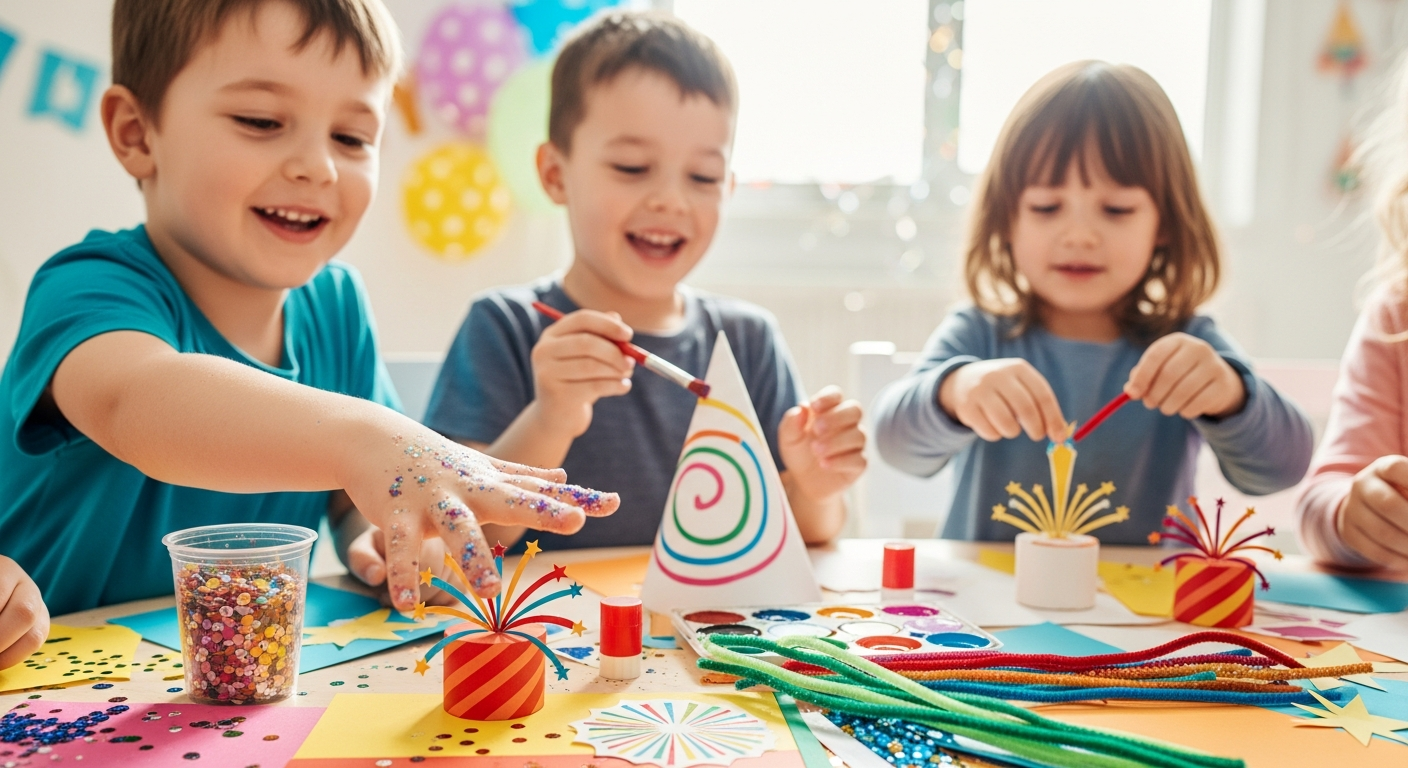
Table of Contents
- Introduction
- Crafting Joy: Hands-On Fun to Spark Imagination and Conversation
- Games Galore: Engaging Play for Language and Social Skills
- Building Traditions: Meaningful Moments for Family Connection
- Speech Blubs: Empowering Communication All Year Round
- Ready for a Year of Growth and Joyful Communication?
- FAQ
Introduction
As the year draws to a close, a unique magic fills the air, promising new beginnings and fresh adventures. For many of us, New Year’s Eve once conjured images of late-night celebrations and dazzling fireworks. But when little ones enter the picture, the focus gracefully shifts. Instead of midnight countdowns, we begin to dream of creating joyful, memorable moments with our children that can spark their imaginations and foster their development. This year, let's transform our New Year's celebrations into enchanting experiences designed just for kids, focusing on fun, connection, and subtle opportunities for growth.
In this comprehensive guide, we'll explore a treasure trove of engaging activities, from creative crafts that encourage expression to lively games that build social skills, and meaningful traditions that deepen family bonds. Our aim is to show you how these festive moments can naturally become powerful platforms for nurturing your child's communication skills, confidence, and overall well-being. Get ready to ring in the new year with laughter, learning, and unforgettable memories for your entire family, demonstrating that the best celebrations are often the ones we craft with love and intention.

Crafting Joy: Hands-On Fun to Spark Imagination and Conversation
New Year's Eve is the perfect canvas for creativity. Engaging in hands-on crafts not only produces charming decorations but also opens doors for rich communication, fine motor skill development, and imaginative play.
DIY Noise Makers & Party Hats
What’s a New Year’s celebration without a little festive noise? Instead of store-bought noisemakers, empower your children to create their own! Gather empty toilet paper rolls, paper plates, dried beans or rice, colorful paper, glitter, glue, and ribbons. Kids can decorate the rolls or plates, fill them with chosen items, and then seal them to create personalized shakers. For party hats, provide plain cone-shaped hats, stickers, feathers, and markers.
This activity is a fantastic opportunity for language development. Encourage your child to describe the colors they’re using, the textures of the materials, and the sounds their noisemakers make ("Loud! Quiet! Shake!"). For a child who might be a "late talker" and struggles with expressing excitement, decorating a noisemaker offers a wonderful non-verbal outlet. You can then gently prompt them to practice saying "yay!" or "happy" while shaking it, associating the words with their joyful actions. If your child is sensitive to loud sounds, offer materials like cotton balls or pom-poms for a "quiet maker," allowing them to participate in the festive spirit without sensory overload. This kind of adaptive play aligns perfectly with our mission at Speech Blubs, where we blend scientific principles with play to create effective and joyful learning experiences.
Resolution Trees & Vision Boards
The New Year is a time for reflection and setting intentions. Help your children visualize their hopes and dreams by creating a "Resolution Tree" or "Vision Board." Cut out a large tree shape or simply provide a poster board. Offer magazines, newspapers, markers, and stickers. For younger children, resolutions can be simple, like "I want to try a new fruit" or "I will be kind to my friends." Older kids might focus on learning a new skill or helping around the house.

This activity encourages children to articulate their goals, practice using future tense ("I will..."), and develop descriptive language as they explain their chosen images or drawings. For a child who tends to point instead of speaking, drawing their resolution (e.g., "I want to build a tall tower") and then practicing the phrase "I want to build," or "Look, a tower!" with adult guidance can be incredibly reinforcing. Our video modeling methodology in the Speech Blubs app, where children learn by watching and imitating their peers, is built on similar principles of visual and auditory reinforcement to help them vocalize new words and concepts. This reflective exercise fosters not just communication, but also self-awareness and goal-setting skills.
Time Capsules & Memory Jars
Commemorate the past year and anticipate the future by creating a family time capsule or a memory jar. Have each child select a small item that represents a favorite memory, accomplishment, or a significant part of the past year. This could be a drawing, a small toy, a photo, or even a handwritten note. Decorate a box or jar together. Decide on a date in the future to open it – perhaps next New Year's Eve!
This activity is a powerful tool for developing narrative skills as children recall and describe past events. They're encouraged to use descriptive language ("my favorite red car," "the soft blanket") and practice sequencing ("first we did this, then that"). For a child with limited vocabulary, picking a favorite toy for the time capsule and practicing saying its name repeatedly, with prompts like "What's this? My [toy name]," helps solidify word recognition and usage. These types of interactions mirror the engaging and repetitive exercises found in Speech Blubs, designed to build foundational communication skills through interactive play and family connection.
"Firework" Art & Glitter Glasses
Bring the dazzle of fireworks indoors with art projects that are safe and sparkling. Provide black paper, various colored paints, and tools like straws (to blow paint), brushes, or even forks to create starburst patterns. A sprinkle of glitter adds that extra festive touch. You can also repurpose old glasses frames or buy cheap plastic ones, pop out the lenses, and let kids decorate them with pipe cleaners, glitter glue, and sequins to create their own "New Year's Eve glasses."
These activities are fantastic for practicing color identification, action words ("blow," "sprinkle"), and descriptive words ("bright," "shiny," "colorful"). Even for "silent" art, discussing the process helps children connect actions with language. It’s a sensory-rich experience that encourages children to express themselves visually while providing ample opportunities for verbal interaction with parents and caregivers.
Games Galore: Engaging Play for Language and Social Skills
Games are an excellent way to keep the energy high and provide structured opportunities for language practice, social interaction, and cognitive development.
Countdown Balloon Pop & Hourly Activity Bags
The excitement of a countdown can be managed for any bedtime. For younger kids, celebrate a "Noon Year's Eve" or pick an earlier time zone. Inflate balloons, perhaps stuffing them with confetti or small slips of paper detailing an activity or a treat. Number them for each hour leading up to your chosen "midnight." Alternatively, prepare hourly countdown bags filled with a small game, craft, or snack.
This activity is rich with opportunities for counting, anticipating, and making requests ("Can I pop it?"). Children can practice descriptive language about the surprises inside the balloons or bags. For a child learning to count, popping balloons in numerical order reinforces number recognition. If an hourly bag contains a new game, you can practice explaining rules and taking turns. These interactive moments, filled with anticipation and discovery, are crucial for building expressive language skills – much like the interactive "smart screen time" experiences we provide at Speech Blubs, which are designed to make learning immediate, effective, and joyful.
New Year's Themed Scavenger Hunt & Bingo
Organize a New Year's Eve scavenger hunt around your home. Create clues that lead children to various party items like hats, noisemakers, or even their own drawn resolutions. For an added language boost, make the clues rhyming or ask children to describe what they're looking for. A New Year's Bingo game can be created with squares featuring images of fireworks, clocks, confetti, party hats, or even resolutions.
These games are perfect for developing listening skills, following directions (especially multi-step ones), and spatial concepts ("under the chair," "behind the curtain"). Naming objects as they're found and asking questions ("Where is the party hat?") are natural ways to boost vocabulary and sentence structure. The competitive yet fun nature encourages children to use their words and short phrases to communicate their discoveries, aligning with our commitment to empowering children to "speak their minds and hearts."
Minute to Win It Challenges & Family Trivia
"Minute to Win It" games are always a hit, offering quick, silly challenges that are fun for all ages. Examples include stacking cups, balancing balloons, or tossing pom-poms into a hat. Adapt the challenges to suit different age groups. For older children and adults, a New Year's trivia game about global traditions or past family events can be engaging.
These games encourage children to explain rules, cheer for others, negotiate turns, and learn new facts. For children working on expressive language, the pressure of a quick game can motivate them to use words and short phrases to communicate. They also provide opportunities for practicing problem-solving skills and sportsmanship, fostering social-emotional development alongside language growth.
Glow-in-the-Dark Dance Party & Karaoke Night
Turn down the lights, put on some kid-friendly tunes, and distribute glow sticks for an impromptu glow-in-the-dark dance party! Music and movement are fantastic for energy release and can be powerful tools for speech development. If you have a karaoke machine or an app, a karaoke night allows children to practice rhythm, pitch, and memory as they sing their favorite songs.
Singing is a fantastic way to develop auditory processing and vocal play, which are foundational for speech. Encouraging children to request songs ("Can we play 'Twinkle, Twinkle'?") or describe their dance moves ("I'm wiggling!") creates organic language practice. These activities are a fantastic "screen-free alternative" to passive viewing, promoting active engagement and joyful family connection.
Building Traditions: Meaningful Moments for Family Connection
New Year's Eve is more than just a date; it's an opportunity to create cherished family traditions that children will look forward to year after year. These traditions foster a sense of belonging, shared history, and offer consistent opportunities for communication.
Noon Year's Eve & Global Celebrations
For families with young children, staying up until midnight can be a struggle. Embrace "Noon Year's Eve" by having your celebration at 12 PM instead of 12 AM. You can still have a countdown, sparkling juice, and confetti! Another fun idea is to pick a different time zone – perhaps watching the Sydney fireworks replay online, knowing they’ve already celebrated the New Year. You could even research New Year's traditions from around the world and try one or two.
Discussing time concepts ("noon," "midnight," "early," "late") and exploring cultural vocabulary ("fireworks," "tradition," "celebration") enriches a child's understanding of the world. Describing different traditions, like eating 12 grapes in Spain or smashing plates in Denmark, can inspire children to share their own experiences and expand their descriptive language. These conversations naturally build vocabulary and narrative skills, which are core focuses of our speech and language development app.
Family Resolutions & Bucket Lists
Turn resolution-making into a collaborative family activity. Instead of individual, daunting goals, brainstorm resolutions together, such as "We will read a new book every week" or "We will try one new family game each month." You can also create a family "bucket list" for the upcoming year – a list of exciting adventures, places to visit, or new skills to learn.
This tradition encourages rich conversations, imaginative thinking, and the practice of expressing desires and planning ("We want to go to the zoo!"). Children use future tense and learn to negotiate and compromise as they contribute their ideas to the family's collective goals. It fosters a sense of unity and shared purpose, building communication skills within the context of meaningful family interactions.
Cozy Movie Corner & Indoor Camping
As the evening winds down, create a cozy "movie corner" with blankets, pillows, and a selection of family-friendly films. Or, set up an indoor camping experience with sleeping bags, a tent (or a fort made from blankets!), and board games.
These activities are wonderful for encouraging imaginative play, descriptive language (describing characters, scenes, emotions), and making requests ("Can I have more popcorn?"). For children who might struggle with social nuances, playing board games or discussing movie plots with a supportive adult can help them navigate storytelling and social inferencing. It's a relaxed setting that nurtures communication and strong family bonds.
Speech Blubs: Empowering Communication All Year Round
At Speech Blubs, we believe every child deserves to speak their minds and hearts. Our company was born from a very personal place; our founders all grew up with speech problems and created the tool they wished they had. We are committed to providing an immediate, effective, and joyful solution for the 1 in 4 children who need speech support, blending scientific principles with play into one-of-a-kind "smart screen time" experiences.
While these fun New Year activities provide invaluable opportunities for communication, Speech Blubs offers a powerful supplement to your child's overall development plan. Our unique video modeling methodology allows children to learn by watching and imitating their peers, making speech practice engaging and natural. This approach provides a dynamic, interactive experience that serves as a screen-free alternative to passive viewing, fostering active learning and deep family connection.
We’re proud that our app consistently ranks in the top tier of speech apps worldwide, a testament to its effectiveness and user satisfaction. See what other parents are saying about their children's progress and the joy Speech Blubs brings to their homes. Our goal isn't to guarantee your child will be giving public speeches in a month, but rather to foster a love for communication, build confidence, reduce frustration, develop key foundational skills, and create countless joyful family learning moments, complementing the wonderful activities you’re doing at home.
Ready for a Year of Growth and Joyful Communication?
The New Year is a perfect time to embrace new habits and tools that can truly make a difference in your child's life. We've shown you how to fill your celebration with fun new year activities for kids that not only entertain but also subtly support their speech and language development. Now, let us help you continue that journey of growth and discovery all year long.
If you’re wondering if your child could benefit from a little extra support, take our quick 3-minute preliminary screener. It involves 9 simple questions and provides you with an assessment and a next-steps plan. It’s a great way to start your 7-day free trial and explore everything Speech Blubs has to offer.
Ready to get started? We invite you to experience the Speech Blubs difference. When you sign up, you have two great options:
- Monthly Plan: For $14.99 per month.
- Yearly Plan: Our most popular and best-value option at just $59.99 per year, which breaks down to an incredible $4.99/month – that's a 66% saving!
The Yearly Plan is the clear best choice, offering superior value and exclusive features designed to maximize your child's progress. With the Yearly plan, you’ll unlock:
- A 7-day free trial to explore all our features.
- Access to the extra Reading Blubs app for even more learning.
- Early access to new updates and a 24-hour support response time for peace of mind.
The Monthly plan does not include these incredible benefits, so we highly recommend choosing the Yearly plan to get the free trial and the full suite of features that will empower your child’s communication journey.
Don't wait to give your child the gift of confident communication. Create your account and begin your 7-day free trial today! Download Speech Blubs on the App Store or Google Play and make this new year a year of speaking their minds and hearts.
FAQ
1. How can I make New Year's Eve special for my child if they can't stay up until midnight?
You can celebrate a "Noon Year's Eve" by having your main countdown and festivities at 12 PM instead of 12 AM. Many families also choose to celebrate at an earlier time zone (like the East Coast's midnight if you're on the West Coast) or simply pick a bedtime-friendly hour for their own family countdown with sparkling juice and fun activities.
2. What are some good New Year's activities for toddlers and preschoolers?
For toddlers and preschoolers, focus on sensory and highly engaging activities. Simple crafts like DIY noisemakers, "firework" art with paint and glitter, or decorating party hats are perfect. Games like a balloon pop countdown, a New Year's-themed scavenger hunt for familiar objects, or a glow-in-the-dark dance party are also big hits, promoting movement and early language skills.
3. How can these activities support my child's speech and language development?
These activities offer numerous opportunities for speech and language development. Crafts encourage descriptive language (colors, shapes, textures) and following directions. Games promote turn-taking, asking and answering questions, and vocabulary expansion. Discussions around resolutions and traditions foster narrative skills, sequencing, and expressive language. Engaging actively with your child, modeling language, and encouraging their responses during these fun moments are key.
4. How can Speech Blubs help my child beyond these New Year's activities?
Speech Blubs provides a structured, play-based approach to speech and language development that complements your at-home activities. Our app uses a unique video modeling methodology, where children learn by imitating peers, making the process highly engaging and effective. It helps build vocabulary, articulation, social skills, and reduces communication frustration. It's a powerful tool for consistent practice and reinforcement, designed by experts to support children's communication growth year-round, making learning joyful and effective.
About the author