
Speech Delay in Babies: Signs, Causes, and Support
 By Speech Blubs Team•Mar 5, 2026•13 min.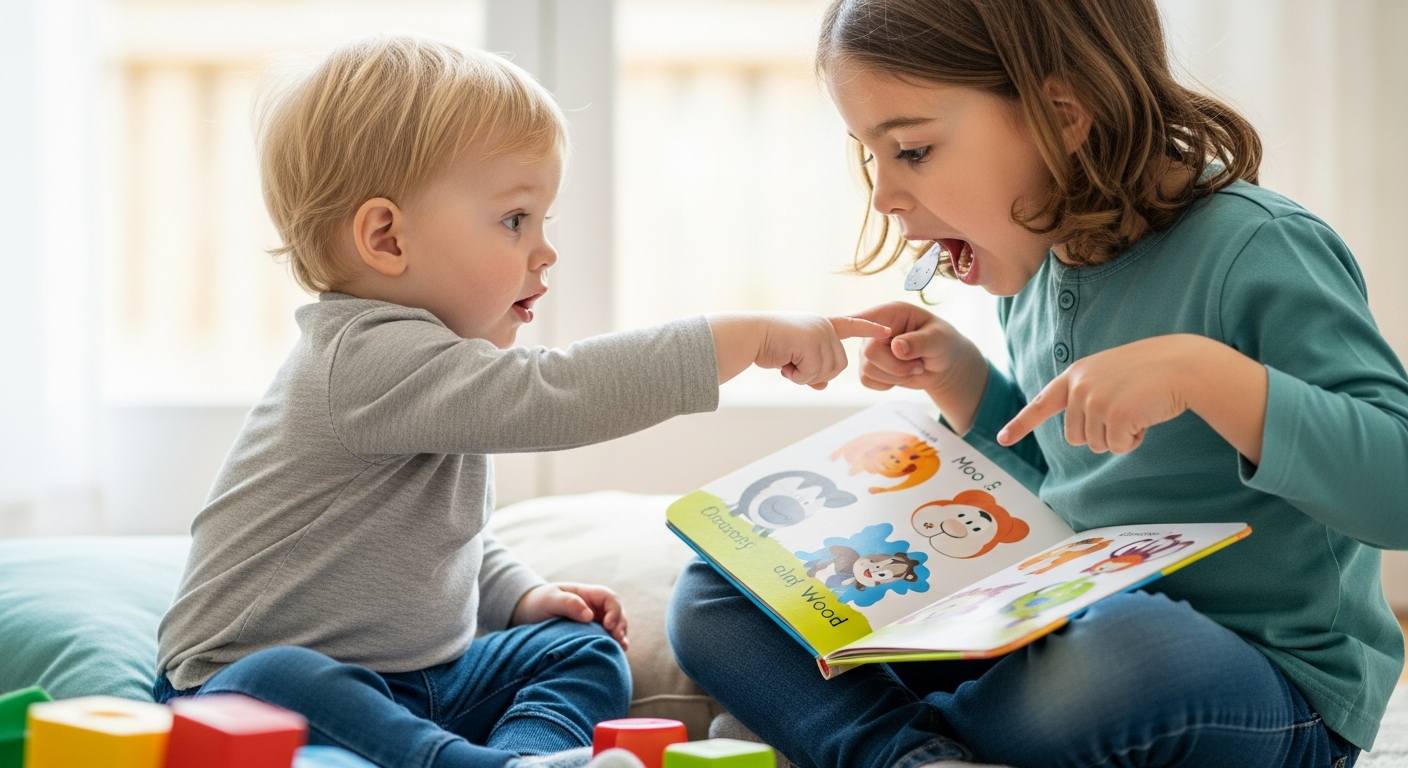
Table of Contents
- Introduction
- Understanding the Difference: Speech vs. Language
- Developmental Milestones: What to Expect
- Red Flags for Speech Delay in Babies
- Common Causes of Speech and Language Delays
- The Speech Blubs Approach: Peer Video Modeling
- Practical Strategies to Help Your Baby at Home
- When to Seek Professional Help
- Choosing the Right Support Plan
- Conclusion
- FAQ
Introduction
Have you ever found yourself watching your little one at a playgroup, noticing that while other babies are babbling away or saying their first "Dada," your child is relatively quiet? That moment of comparison can be heart-wrenching and filled with anxiety. As parents, we wait for that first word with bated breath, often wondering what their little voice will sound like and what they will choose to tell us first. At Speech Blubs, we understand this feeling deeply because our founders grew up with speech problems themselves. They created the tool they wished they had when they were struggling to communicate.
The truth is that 1 in 4 children will need some form of speech support during their early development. While every child follows their own unique timeline, knowing the difference between a "late bloomer" and a child with a speech delay is crucial for providing the right support at the right time. Our mission is to empower every child to "speak their minds and hearts," turning what can be a frustrating journey into a joyful, play-based experience.

In this post, we will explore the developmental milestones you should look for, the common causes of speech delay in babies, and practical strategies you can use at home today. We’ll also discuss how "smart screen time" can be a powerful ally in your child’s communication journey. Our goal is to provide you with an empathetic, expert resource that builds your confidence and fosters a love for communication in your child.
Understanding the Difference: Speech vs. Language
Before diving into the signs of a delay, it is helpful to clarify what we mean by "speech" and "language," as these terms are often used interchangeably but refer to different skills.
What is Speech?
Speech is the physical act of producing sounds and words. It involves the coordination of the lips, tongue, jaw, and breath to create intelligible vocalizations. When we talk about a speech delay, we are often referring to how a child says words—their articulation and the clarity of their sounds. For example, a child might have a speech delay if they can’t coordinate their mouth muscles to make a "B" or "M" sound, even if they understand what those sounds represent.
What is Language?
Language is a broader system of communication. It is about sharing and receiving information in a way that makes sense. It includes:
- Receptive Language: How well a child understands what others are saying (following directions, pointing to a picture when named).
- Expressive Language: How a child uses words, gestures, and sentences to express their thoughts and needs.
A child might have a language delay if they can pronounce words perfectly but only use two words at an age when they should be using full sentences. Conversely, a child with a speech delay might have a rich vocabulary but be difficult to understand because of their articulation. Understanding this distinction helps us target the right support for each child’s specific needs.
Developmental Milestones: What to Expect
While the "normal" range for speech development is quite broad, there are general milestones that pediatricians and speech-language pathologists (SLPs) look for. These are not deadlines, but rather guidelines to help us monitor progress.

Birth to 6 Months
During these early months, communication is all about sounds and reactions.
- Birth to 3 Months: Your baby should startle at loud noises, calm down or smile when spoken to, and make "cooing" sounds (mostly vowels).
- 4 to 6 Months: This is the beginning of babbling. You might hear sounds like "pa," "ba," and "mi." They should also respond to changes in your tone of voice and notice toys that make sounds.
7 to 12 Months
This is a critical window for foundational communication.
- Babbling gets more complex: They start using "canonical babbling," which sounds like "bababa" or "dadada."
- Gestures: By 12 months, most babies are using gestures like waving "bye-bye" or pointing at things they want.
- First words: Many babies say their first intentional word (like "Mama" or "Dada" specifically to the person) right around their first birthday.
12 to 18 Months
Your baby’s vocabulary begins to grow, albeit slowly at first.
- They should be able to follow simple one-step commands (like "Pick up the ball") when accompanied by a gesture.
- By 18 months, they should have a handful of single words and be attempting to imitate sounds they hear you make.
18 to 24 Months
This is often called the "language explosion" period.
- Vocabulary Growth: A 2-year-old typically has between 50 and 100 words.
- Two-Word Phrases: They should start combining words, such as "More juice" or "Mommy go."
- Clarity: At this age, parents and regular caregivers should understand about 50% of what the child says.
Red Flags for Speech Delay in Babies
It can be difficult for parents to know when to move from "watchful waiting" to seeking professional advice. If you are feeling unsure, we recommend taking our 3-minute preliminary screener. It involves 9 simple questions and provides you with a personalized assessment and a next-steps plan.
Here are some specific red flags that warrant a conversation with your pediatrician or an SLP:
- By 12 Months: The child is not using gestures, such as pointing or waving, or does not respond to their name.
- By 15 Months: The child does not look at an object when you point to it and say, "Look at the [object]."
- By 18 Months: The child prefers using gestures over vocalizations to communicate or has significant trouble imitating sounds.
- By 24 Months: The child can only imitate speech or actions but doesn't produce words or phrases spontaneously.
- Regression: If your child was meeting milestones and suddenly stops talking or loses skills they once had, seek a medical evaluation immediately.
Early intervention is powerful. Addressing a delay early can reduce a child's frustration and build the foundational skills they need for social and academic success later in life.
Common Causes of Speech and Language Delays
When a child experiences a delay, it is rarely the result of a single factor. Often, it is a combination of physical, developmental, or environmental elements.
1. Oral-Motor Issues
Many children with speech delays have difficulty with oral-motor coordination. This occurs when the areas of the brain responsible for speech have trouble sending the right signals to the muscles in the lips, tongue, and jaw. This can make it difficult to produce specific sounds or transition between sounds. In some cases, this is also linked to feeding difficulties.
2. Hearing Loss
Communication is a "listen and repeat" process. If a baby cannot hear sounds clearly, they cannot learn to imitate them. Chronic ear infections (otitis media) can cause temporary, fluctuating hearing loss during critical language-learning windows. We always recommend that children with speech concerns have their hearing tested by an audiologist.
3. Developmental Conditions
Speech delay can sometimes be a sign of a broader developmental difference, such as Autism Spectrum Disorder (ASD) or a global developmental delay. In these cases, the child may also have challenges with social interaction, non-verbal communication (like eye contact), and play.
4. Environmental Factors
While most children will learn to talk regardless of their environment, a lack of "language-rich" interaction can slow the process. Children learn best through face-to-face interaction, reading, and play. This is why we emphasize the importance of "smart screen time"—turning digital experiences into active, shared learning moments rather than passive consumption.
The Speech Blubs Approach: Peer Video Modeling
At Speech Blubs, we don't just provide an app; we provide a methodology backed by science. Our unique approach is based on video modeling.
Research shows that children are highly motivated by watching their peers. When a child sees another child on a screen performing a specific action or making a sound, their "mirror neurons" fire. These are the brain cells that respond both when we perform an action and when we observe someone else performing that same action.
Our research page highlights how this methodology helps bridge the gap between observation and imitation. In the app, children watch "Blubbers"—real kids—making sounds and saying words. This peer-to-peer connection reduces the pressure on the child and turns practice into a fun, imitative game.
Many parents have shared their parent success stories about how this simple shift from "expert-led" to "peer-led" learning helped their child find their voice. For example, if a toddler is struggling with the "M" sound, they can watch a peer in the app exaggeratedly say "Mmm" while eating a piece of fruit. This relatable, joyful modeling encourages the toddler to try it themselves.
Practical Strategies to Help Your Baby at Home
While professional therapy is invaluable for children with significant delays, there is so much you can do at home to foster a love for communication.
1. Narrate Your Day
Think of yourself as a sports commentator for your baby’s life. Describe everything you are doing as you do it. "Now Mommy is putting on your blue socks. One sock, two socks! They feel soft, don't they?" This constant stream of simple, clear language helps your baby associate sounds with objects and actions.
2. Read Together Every Day
Reading is one of the most effective ways to build vocabulary. For babies, look for sturdy board books with bright, high-contrast pictures. You don't even have to read the words on the page—you can just point to the pictures and name them. "Look, a yellow duck! Quack quack!"
3. Use "Smart Screen Time"
Not all screen time is created equal. Passive viewing of cartoons often results in "zoning out," which doesn't help speech development. However, interactive tools like Speech Blubs are designed for "co-play." We encourage parents to sit with their child, watch the video models together, and mirror the sounds and faces the children on the screen are making.
Pro Tip: For a child who loves animals, the 'Animal Kingdom' section of our app is a great motivator. If your little one is a "late talker" but lights up when they see a dog, you can use the peer videos to practice "Woof" sounds together. This turns a struggle into a joyful family learning moment.
4. Encourage Imitation Beyond Speech
If your baby isn't ready to imitate words yet, start with physical gestures. Clap your hands and see if they clap back. Make a funny face and see if they copy you. Play "Peek-a-boo." These back-and-forth "serve and return" interactions are the building blocks of conversation.
When to Seek Professional Help
If your gut is telling you that something is "off," trust that instinct. You are the expert on your child. A speech-language pathologist can provide a comprehensive evaluation that looks at your child’s receptive and expressive language, oral-motor skills, and social communication.
If you are ready to take a proactive step in your child's development, you can create your account to explore how our tools can support your child's unique journey. Remember, the goal of intervention isn't just "more words"—it's about reducing frustration, building confidence, and helping your child connect with the world around them.
Choosing the Right Support Plan
We want to make speech support accessible and effective for every family. We offer two main paths for parents looking to integrate Speech Blubs into their daily routine:
- Monthly Plan: At $14.99 per month, this is a great way to test the waters and see how your child responds to our video modeling methodology.
- Yearly Plan (Best Value): At $59.99 per year, this plan breaks down to just $4.99 per month—a 66% savings compared to the monthly rate.
We highly recommend the Yearly plan because it is designed to support long-term development. It includes:
- A 7-day free trial so you can explore all features risk-free.
- Access to Reading Blubs, our companion app designed to help toddlers transition from speech to early literacy skills.
- Early access to new updates and 24-hour support response time.
Investing in a yearly plan ensures you have a consistent, "smart" tool in your parenting toolkit as your child’s needs evolve from simple sounds to complex sentences.
Conclusion
A speech delay in babies can feel like a daunting challenge, but it is one you do not have to face alone. By understanding milestones, staying vigilant for red flags, and creating a language-rich environment at home, you are giving your child the best possible foundation. At Speech Blubs, we are honored to be a part of that journey, providing "smart screen time" that is rooted in science and fueled by play.
Remember, the goal is not to reach a specific destination by a specific date, but to foster a lifelong love for communication. Every "ba," every gesture, and every spark of understanding is a victory worth celebrating.
Ready to start your journey? Download Speech Blubs on the App Store or Google Play Store today to begin. We highly recommend choosing the Yearly plan to take advantage of our 7-day free trial, the bonus Reading Blubs app, and the best overall value for your child’s growth. Together, let's help your little one speak their mind and heart.
FAQ
1. Is it normal for my baby to understand everything but not talk?
Yes, this is quite common and is often referred to as a "gap" between receptive and expressive language. Many babies understand much more than they can physically say because their cognitive development is moving faster than their oral-motor skills. However, if this gap persists or your child isn't using gestures to communicate by 18 months, it is worth consulting a professional.
2. Can learning two languages cause a speech delay?
This is a common myth, but the answer is no. Research shows that bilingual children reach their language milestones at the same time as monolingual children. They might occasionally mix words from both languages or have a brief "silent period" when they are first exposed to a second language, but bilingualism does not cause speech or language disorders.
3. Does screen time make speech delays worse?
Passive screen time, like leaving a child alone to watch hours of cartoons, can limit the opportunities for the social interaction necessary for language learning. However, "smart screen time"—which is interactive, educational, and involves adult co-play—can actually be a powerful supplement to a child's development.
4. What is the most effective way to encourage a "late talker"?
The most effective way is through play-based interaction. Following your child's lead, narrating your daily activities, and using tools that leverage peer imitation (like video modeling) are highly effective strategies. Reducing the "pressure" to speak and making communication fun and rewarding is key to building their confidence.
About the author