
Speech Delay Toddlers: Milestones, Signs, and Support
 By Speech Blubs Team•Mar 5, 2026•14 min.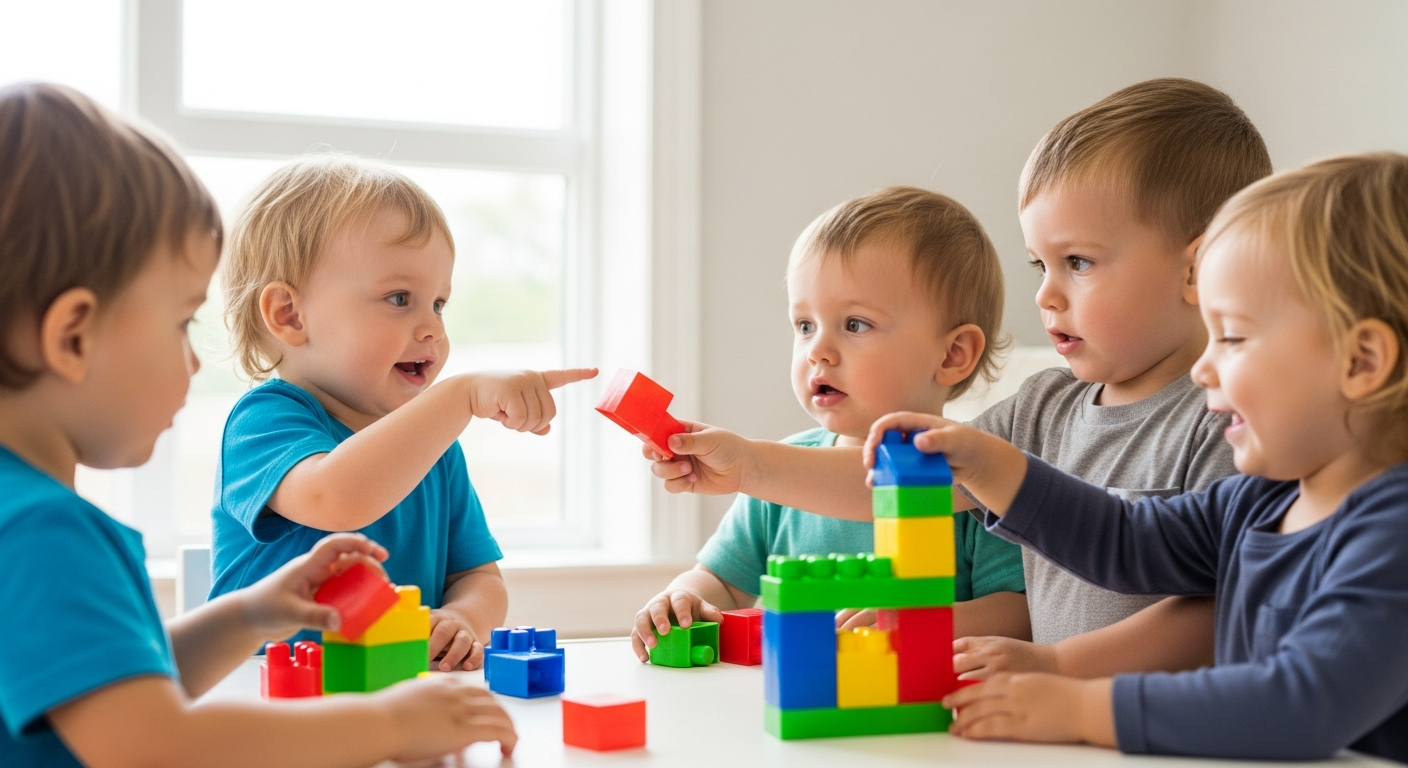
Table of Contents
- Introduction
- Understanding the Difference: Speech vs. Language
- Developmental Milestones: A Roadmap for Parents
- Warning Signs of Speech Delay in Toddlers
- What Causes Speech Delay in Toddlers?
- The Role of the Speech-Language Pathologist (SLP)
- Practical Ways to Help at Home
- How Speech Blubs Supports Speech Delay Toddlers
- Choosing the Right Plan for Your Family
- Setting Realistic Expectations
- Conclusion
- FAQ
Introduction
Imagine you are sitting on the living room floor, building a tower of blocks with your two-year-old. You’re waiting for that magical moment—the one where they look at you and clearly say, “Look, Mama!” or “Blue block!” Instead, they point, grunt, or perhaps simply knock the tower over in silence. You’ve noticed that other children at the park seem to be chatting away, while your little one is still relying on gestures. That nagging feeling in the back of your mind starts to grow: Is this just a "late bloomer" phase, or is it something more?
If you are navigating the world of speech delay toddlers, we want you to know right now: you are not alone, and this is not your fault. Communication is one of the most complex skills a human can learn, and for many children, the path isn't a straight line. Roughly 1 in 4 children will require some form of speech support during their early years. At Speech Blubs, we understand this journey intimately because our founders grew up with speech challenges themselves. They created the very tool they wished they had as children—one that turns a potentially stressful hurdle into a joyful, play-based experience.

In this post, we will dive deep into the differences between speech and language, outline the milestones you should be looking for, and explore the common causes of delays. Most importantly, we will provide you with practical, science-backed strategies to support your child’s development at home. Our mission is to empower children to speak their minds and hearts, and we believe that with the right tools and a lot of love, every child can find their voice.
Understanding the Difference: Speech vs. Language
Before we look at delays, it is helpful to understand exactly what we are measuring. Many parents use the terms “speech” and “language” interchangeably, but in the world of child development, they represent two distinct sets of skills.
What is Speech?
Speech is the physical act of producing sounds. it involves the coordination of the breath, the vocal cords, the tongue, the lips, and the jaw. When we talk about speech, we are talking about:
- Articulation: How we make specific speech sounds (like the "p" in "pop" or the "s" in "sun").
- Voice: Using our vocal folds and breath to produce sound (considering pitch, volume, and quality).
- Fluency: The rhythm and flow of our speaking.
A child with a speech delay might understand everything you say and have a vast internal vocabulary, but they struggle to physically form the words in a way that others can understand.
What is Language?
Language is much broader. It is the system we use to share and receive information. It’s about the "what" and the "how" of communication. Language is broken into two categories:
- Receptive Language: This is what your child understands. Can they follow a direction like "Go get your shoes"? Do they point to the cow when you ask "Where is the cow?"
- Expressive Language: This is how your child communicates their thoughts. It includes the words they choose, how they put them into sentences, and the gestures they use to get their point across.
A child with a language delay might be able to pronounce words perfectly, but they may only be able to use one or two words at a time or struggle to follow simple instructions. If you are concerned about where your child stands, you can take our quick 3-minute preliminary screener to get a better understanding of their current progress and a tailored next-steps plan.

Developmental Milestones: A Roadmap for Parents
While every child develops at their own pace, there are general "mile markers" that help us track progress. If your child is missing several of these, it may be time to consult with a professional.
By 12 Months
At one year old, communication is a mix of sounds and actions. Most babies should be:
- Responding to their own name.
- Waving "bye-bye" or using other simple gestures.
- Babbling with different tones (sounding like they are having a real conversation in their own language).
- Saying at least one specific word like "Mama," "Dada," or "Uh-oh."
- Pointing to objects they want.
By 18 Months
This is often a period of rapid growth. By 18 months, most toddlers are:
- Using about 10 to 20 individual words.
- Following simple, one-step commands (e.g., "Give me the ball").
- Pointing to body parts or common objects in a book when named.
- Beginning to imitate sounds they hear in their environment.
By 24 Months (2 Years)
The two-year mark is a significant milestone. Typically, a toddler should be:
- Using between 50 and 100 words.
- Starting to combine two words together, such as "More juice" or "Doggy bark."
- Able to be understood by primary caregivers about 50% of the time.
- Engaging in simple pretend play, like "feeding" a stuffed animal.
By 36 Months (3 Years)
By the third birthday, communication becomes much more sophisticated. You should expect:
- A vocabulary of 200 to 1,000 words.
- The use of three-word sentences.
- The ability to ask "Who," "What," and "Where" questions.
- To be understood by familiar adults about 75% of the time.
Warning Signs of Speech Delay in Toddlers
As parents, we often want to wait and see if a child will "grow out of it." However, early intervention is the gold standard for a reason. If you notice the following signs, it is a good idea to speak with your pediatrician:
- 12 months: Not using any gestures (pointing, waving).
- 18 months: Prefers gestures over vocalizations or has significant trouble imitating sounds.
- 2 years: Can only imitate speech or actions but doesn't produce words spontaneously.
- 2 years: Has a very unusual tone of voice (raspy or nasal).
- Any age: A sudden loss of previously acquired speech or social skills.
If you are feeling overwhelmed, remember that our method is backed by science, and we have designed our tools specifically to help children bridge these gaps through joyful, peer-based learning.
What Causes Speech Delay in Toddlers?
Understanding the "why" can help demystify the situation and lead to more effective support. There are several reasons why a child might experience a delay.
1. Oral-Motor Issues
In many cases, a speech delay is related to the coordination of the mouth. If the areas of the brain that control the muscles for speech have difficulty communicating with those muscles, it results in an oral-motor problem. This can make it hard for a child to move their tongue, lips, or jaw in the precise way needed to make certain sounds. A common condition in this category is Childhood Apraxia of Speech (CAS).
2. Physical Impairments
Structural issues can sometimes get in the way of clear articulation. For example, a "short frenulum" (the fold of skin under the tongue) can limit tongue movement, a condition often called being "tongue-tied." Other issues might include a cleft palate or even chronic dental problems that affect how the mouth closes.
3. Hearing Loss
This is more common than many parents realize. If a child cannot hear sounds clearly, they cannot learn to imitate them. Chronic ear infections can cause temporary fluid buildup in the middle ear, which acts like earplugs. Everything the child hears sounds muffled, like being underwater. This makes it incredibly difficult to distinguish between different speech sounds.
4. Developmental or Intellectual Challenges
Sometimes, a speech delay is one part of a broader developmental picture. Children with Autism Spectrum Disorder (ASD) often have unique communication patterns, such as echoing phrases from movies (echolalia) or struggling with the "back and forth" nature of social communication. Global developmental delays or intellectual disabilities can also manifest as late-onset speech.
The Role of the Speech-Language Pathologist (SLP)
If you have concerns, the first step is usually a referral to a Speech-Language Pathologist (SLP). An SLP is a trained professional who evaluates a child's ability to communicate. During an evaluation, they will look at:
- Expressive Language: What the child can say.
- Receptive Language: What the child understands.
- Articulation: The clarity of their speech.
- Oral-Motor Status: How the muscles of the mouth work together.
The goal of therapy isn't just to "fix" a delay; it's to provide the child with the tools they need to express themselves, reducing frustration for both the child and the parent. To see how other families have navigated this process, you can read testimonials from parents who have seen wonderful progress in their children's confidence and communication.
Practical Ways to Help at Home
While professional therapy is invaluable, the most important "therapists" in a child's life are their parents. You are with them during the mundane, everyday moments that are actually prime opportunities for learning.
Use Every Day as a Learning Lab
You don't need fancy toys to encourage speech. Talk through your day as if you are a narrator in a movie.
- At the Grocery Store: "Look, I am picking up the red apple. It feels smooth. Let's put it in the cart. Plop!"
- During Bath Time: "Bubbles! Scrub, scrub, scrub your tummy. Where are your toes? There they are!"
- Scenario for the Car Lover: For a parent whose toddler is obsessed with anything that has wheels, use that motivation. Instead of just saying "car," emphasize the sounds. "Beep beep! The blue car goes fast! Vroom vroom!" This turns a passive interest into an active imitation game.
Read and Sing Together
Books are a treasure trove for language. For younger toddlers, choose board books with simple, clear pictures. Point to the picture and name it. Don't worry about reading the actual story on the page—talk about what you see. Singing songs like "The Wheels on the Bus" or "Old MacDonald" is also fantastic because the repetitive rhythm and melody make it easier for children to predict and eventually join in with the sounds.
Practice Smart Screen Time
Not all screen time is created equal. Passive viewing, like watching high-energy cartoons, often doesn't require any interaction from the child. At Speech Blubs, we believe in "smart screen time"—an experience that is interactive, educational, and designed to be shared with a parent. We recommend co-playing, where you sit with your child and engage with the app together, turning a digital experience into a bonding moment.
How Speech Blubs Supports Speech Delay Toddlers
We didn't just build an app; we built a comprehensive ecosystem for communication. Our approach is based on a scientific principle called video modeling.
The Magic of Peer Imitation
Have you ever noticed how your child is much more likely to try a new food if they see another child eating it? That is the power of peer modeling. Our app features over 1,500 activities where children watch videos of other children (our "Blubs") making sounds, saying words, and using facial expressions.
When a child watches another child their age performing a task, it activates "mirror neurons" in their brain. This makes them feel like they are capable of doing it too. It builds confidence and removes the pressure that often comes from adult-led "repeat after me" exercises. We focus on making the process joyful. For example, in our "Animal Kingdom" section, a child who loves animals can practice "Moo" and "Baa" while watching a peer dressed in a fun animal filter. It feels like play, but it's actually foundational speech practice.
A Powerful Supplement to Therapy
Speech Blubs is designed to be a powerful supplement to professional therapy and your overall developmental plan. It helps keep the momentum going between therapist visits and gives you a structured, fun way to practice at home. Our goal is to foster a love for communication and reduce the frustration that often comes with a delay.
Ready to see it in action? You can download Speech Blubs on the App Store or get it on Google Play to start your journey today.
Choosing the Right Plan for Your Family
We believe in being transparent and providing the best possible value for our community. We offer two main ways to access our full suite of tools:
- Monthly Plan: $14.99 per month. This is a great way to test the waters if you're curious about how your child will respond.
- Yearly Plan: $59.99 per year. This is our most popular option and by far the best value, breaking down to just $4.99 per month.
When you choose the Yearly Plan, you don't just save 66%; you also gain access to exclusive features that aren't available on the monthly plan:
- A 7-Day Free Trial: You can explore everything we have to offer risk-free for a full week.
- Reading Blubs App: Access to our companion app designed to help toddlers transition from speech to early literacy and reading skills.
- Early Access: You will be the first to receive new updates and content.
- Priority Support: Our team will respond to any of your questions or needs within 24 hours.
To get started with the full experience and take advantage of the 7-day free trial, we recommend signing up on our web account creation page.
Setting Realistic Expectations
It is important to remember that progress takes time. We don't promise that your child will be giving public speeches in a month. Instead, we focus on the small, beautiful wins: a new sound, a more frequent use of a gesture, a reduction in "frustration tantrums" because they can finally tell you what they want, and the joyful moments of connection you share during play.
Every child's timeline is unique. Some children may have a "language explosion" where their vocabulary doubles in a matter of weeks, while others make steady, incremental gains. Both are successes! By providing a supportive, low-pressure environment, you are giving your child the best possible foundation for lifelong communication.
Conclusion
Navigating the challenges of speech delay toddlers can feel like an emotional rollercoaster. There are days of worry and days of hope. But by educating yourself on milestones, seeking professional guidance when needed, and incorporating joyful, science-based tools into your daily routine, you are doing exactly what your child needs.
At the Speech Blubs homepage, you can learn more about our story and our commitment to helping every child "speak their mind and heart." We are here to support you every step of the way, turning "screen time" into "smart time" and frustration into communication.
Don't wait to start this journey. We strongly encourage you to choose our Yearly Plan to get the best value, including the 7-day free trial and the bonus Reading Blubs app. You can create your account here and begin building those joyful learning moments today. Your child has a unique voice waiting to be heard—let's help them find it together.
FAQ
1. Is it normal for my 2-year-old to still be babbling? While babbling is a healthy part of development, by age two, we typically expect to see a shift toward recognizable words and some two-word phrases. If your child is only babbling and not using any spontaneous words to communicate their needs, it is worth consulting your pediatrician or an SLP.
2. Can screen time actually help with speech delays? Traditional "passive" screen time (like watching cartoons) is generally not recommended as a tool for speech development. However, "smart screen time" that uses video modeling and encourages the child to vocalize and interact—like Speech Blubs—can be a powerful supplement. The key is co-playing with your child to bridge the gap between the screen and real-world interaction.
3. Does a speech delay mean my child has autism? Not necessarily. While speech delay is a common sign of autism, it is also caused by many other things, such as hearing issues, oral-motor delays, or simply being a "late talker." An evaluation by a professional is the only way to determine the underlying cause.
4. How long should we use the app each day? We recommend short, frequent bursts of "smart screen time" rather than long sessions. About 10 to 15 minutes of interactive play once or twice a day is often the "sweet spot" for keeping toddlers engaged without overstimulating them. Consistent, daily practice is more effective than one long session once a week.
About the author