
Splash-tastic Water Games for Any Kids' Party
 By Speech Blubs Team•Jan 28, 2026•19 min.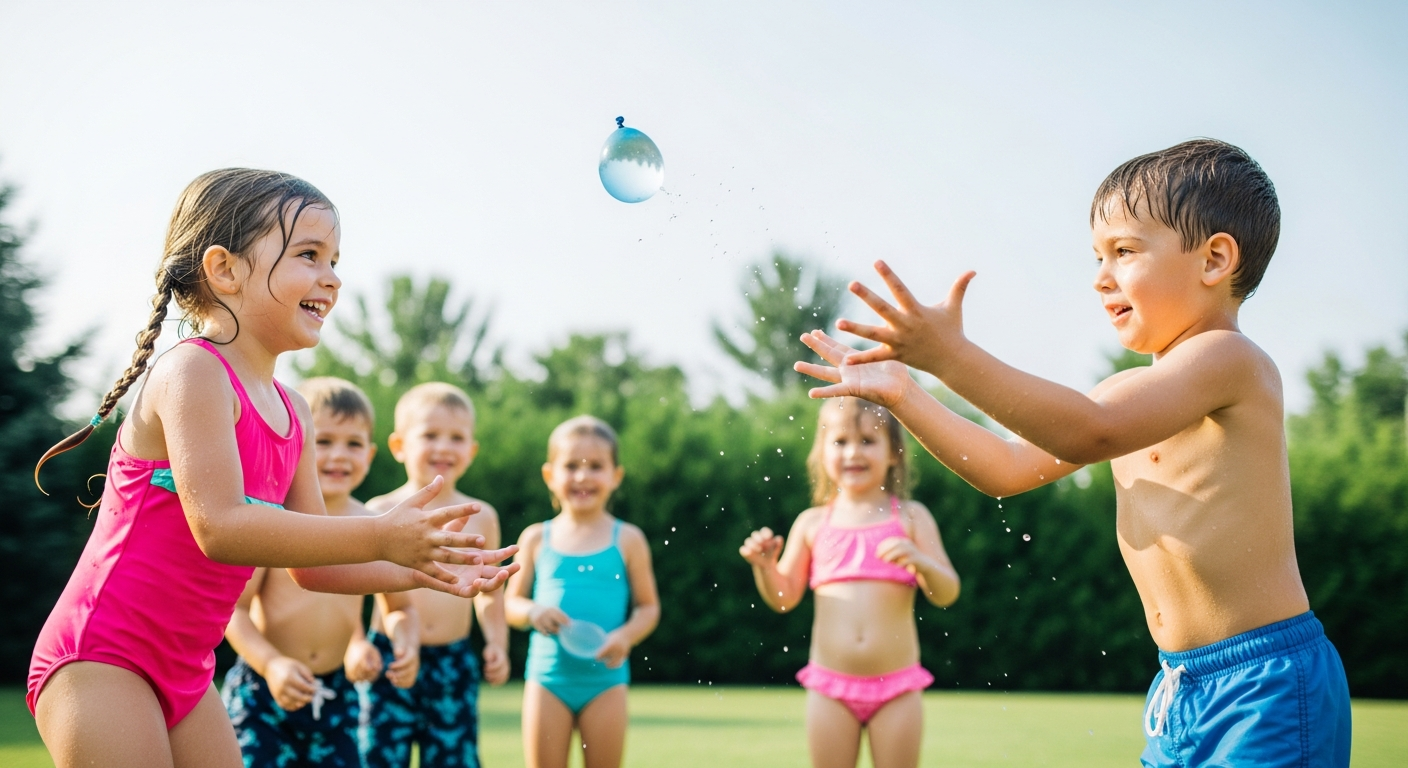
Table of Contents
- Introduction
- Why Water Games Are More Than Just Fun
- Planning the Perfect Water Party: Tips for Parents
- Fantastic Water Racing & Relay Games
- Splashing Fun with Water Balloons
- Creative & Sensory Water Play Ideas
- Boosting Communication Through Play
- The Speech Blubs Difference: How We Support Your Child's Journey
- Unlock Full Potential: Our Yearly Plan Value
- Conclusion
- FAQ
Introduction
Remember those scorching summer days of childhood, where the only thing better than an ice pop was an unexpected blast from the garden hose? There's a primal joy in water play, a universal language of giggles and squeals that transcends age. As parents and caregivers, we’re always seeking ways to make parties memorable, especially when the sun is shining bright. But what if those moments of cooling off could also be powerful catalysts for growth, learning, and connection?
This blog post isn't just a list of fun ways to beat the heat; it's a comprehensive guide to transforming your next kids' party into a splash-tastic celebration brimming with developmental benefits. We'll dive into an array of engaging water games suitable for various ages and group sizes, offering practical tips for setup, safety, and supply gathering. More importantly, we'll explore how these seemingly simple activities foster crucial skills—from fine motor coordination and problem-solving to, critically, language development and social-emotional growth. Our mission at Speech Blubs is to empower children to "speak their minds and hearts," and we believe that joyful, interactive play, much like the "smart screen time" experiences we offer, is fundamental to this journey. Get ready to turn your backyard into a hub of happy, communicative splashes!

Why Water Games Are More Than Just Fun
Beyond the obvious benefit of keeping cool on a hot day, water games offer a rich landscape for children's holistic development. They engage multiple senses, challenge motor skills, and create dynamic social environments. Every splash, every chase, and every shared giggle contributes to a child's growing capabilities.
Developing Motor Skills and Coordination
From squeezing a sponge to aiming a water gun, children refine both their fine and gross motor skills. Running through sprinklers, sliding on a tarp, or tossing a water balloon all demand coordination, balance, and agility. These physical movements are foundational for many other developmental milestones.
Boosting Sensory Exploration and Cognitive Growth
Water play is a sensory wonderland. The feel of cool water, the slippery sensation of mud, the resistance of a full bucket—these experiences stimulate tactile senses. Add ice, bubbles, or different tools, and the possibilities for exploration are endless. Cognitively, children engage in problem-solving as they figure out how to transport water, strategize in team games, or understand cause and effect (e.g., "If I squeeze the sponge harder, more water comes out").
Fostering Communication and Social-Emotional Skills
Perhaps most importantly, water games are incredibly social. They naturally encourage:
- Teamwork and Cooperation: Many games require children to work together, share equipment, and cheer each other on.
- Turn-Taking: Waiting for a turn, understanding when it’s their moment to act, and respecting others’ turns.
- Negotiation and Conflict Resolution: Figuring out rules, dealing with "oops" moments, and compromising.
- Expressing Emotions: The sheer joy, the mild frustration of a dropped balloon, the excitement of winning—all provide opportunities to express and regulate feelings.
- Language Development: This is where the magic truly happens. Playing actively and interactively gives parents countless chances to model language, ask questions, and encourage descriptive words. For parents exploring innovative ways to engage their children in language-rich activities, Speech Blubs offers a complementary approach. Our focus on "smart screen time" and video modeling provides a structured, joyful, and scientifically-backed environment for communication growth, transforming screen time into an active, learning experience rather than passive viewing. We believe in providing an immediate, effective, and joyful solution for the 1 in 4 children who need speech support, blending scientific principles with play into one-of-a-kind experiences.
Planning the Perfect Water Party: Tips for Parents
A successful water party needs a little foresight. Here’s how to set the stage for maximum fun and minimal stress:

Safety First!
- Supervision is Key: Always have ample adult supervision, especially around water.
- Non-Slip Surfaces: Designate play areas away from slippery patios or provide non-slip mats.
- Sun Protection: Encourage sunscreen application, provide shady spots, and recommend hats.
- Hydration Stations: Keep plenty of water available for kids to drink throughout the party.
- Allergy Awareness: Be mindful of any allergies, especially if snacks are involved.
Age-Appropriateness Matters
Tailor your game selection to the age range of your partygoers. Toddlers might prefer simple sensory stations, while older kids will love complex relay races and strategic games. Offer variations of games to accommodate different skill levels.
Essential Supplies Checklist
Most water games require common household items. Here’s a general list:
- Buckets (various sizes)
- Sponges (large, absorbent ones work best)
- Water balloons (consider self-tying ones for ease!)
- Water guns/super soakers
- Kiddie pools or large plastic bins
- Hoses and sprinklers
- Towels (lots of them!)
- Change of clothes/swimsuits
- Cones or markers for boundaries
- Plastic cups, bowls, or scoops
- Tarps or old sheets (for slip 'n slides or balloon games)
- Diving rings or small floating toys
- Dish soap (for extra slipperiness on slides – use with caution!)
- Washable paint or chalk
Smart Setup Strategies
- Designate Play Zones: Create different areas for different types of games to avoid overcrowding.
- Change Station: Have a clear spot for kids to change into swimsuits and then dry off afterwards.
- Towel and Bag Drop: Encourage kids to bring their own towel and a bag for wet clothes.
- Accessibility: Ensure all play areas are easily accessible and clear of hazards.
Fantastic Water Racing & Relay Games
These games get everyone moving and laughing, often involving a bit of competitive spirit!
1. Sponge Water Race
How to Play: Divide children into two teams. Set up two empty buckets a few feet away from two full buckets of water. The goal is for teams to transfer water from the full bucket to the empty one using only a sponge. The first player in line dunks their sponge, runs to the empty bucket, squeezes the water out, and runs back to tag the next player. Developmental Link: This game hones gross motor skills (running), fine motor skills (squeezing), and understanding of capacity and measurement. Communication Boost: Encourage descriptive words like "full," "empty," "heavy," "light," "wet," "dry." "Oh, your sponge is so full! How much water can you squeeze out?"
2. Water Gun Race
How to Play: Create "rivers" out of aluminum foil (folded in half lengthwise with edges curled up) on a slight incline. Place a small, lightweight object like a rubber ducky or a ping pong ball at the start of each river. Kids use water guns to propel their object to the finish line. Developmental Link: Excellent for fine motor control (trigger finger), hand-eye coordination, and understanding force and motion. Communication Boost: Use action words: "squirt," "push," "faster," "go!"
3. Cup to Cup Relay
How to Play: Teams line up. The first person fills a cup with water. They then pass the cup over their head to the person behind them, who receives it and passes it under their legs to the next, and so on. The last person pours any remaining water into a designated bucket. The goal is to fill the bucket. Developmental Link: Promotes teamwork, spatial awareness, and careful movement. It's a fantastic exercise in communication without words. Communication Boost: Discuss "over," "under," "careful," "spill." "How much water did we save?"
4. Sponge Run (on Head)
How to Play: Each player dunks a sponge in a water-filled kiddie pool or bucket, then balances it on their head (without holding it!) while walking or running to an empty bucket to wring it out. Developmental Link: Challenges balance, gross motor control, and body awareness. Communication Boost: Talk about "balance," "steady," "oh no, it fell!"
5. Water Bottle Toss
How to Play: Similar to the sponge toss, but players use open plastic water bottles. A player fills their bottle from a hose or pool, then tosses it to a teammate across a line of other players, who then catches it and tosses it to the next. The final player pours the water into a collection bucket. Developmental Link: Requires throwing accuracy, catching skills, and teamwork. Communication Boost: "Aim for me!" "Good catch!" "Oops, you missed!"
6. Water Jump Rope
How to Play: Give each child a full plastic cup of water. Two adults or older children swing a jump rope. Players jump, holding their cups, trying to spill the least amount of water. Developmental Link: Combines gross motor coordination (jumping) with fine motor control (holding steadily). Communication Boost: Count the jumps, describe how much water is left, "slowly," "carefully."
7. Frozen Tee Race
How to Play: A day before the party, soak T-shirts, wring them out slightly, fold them, and freeze them individually in plastic bags. At the party, hand each team a frozen tee. The first team to thaw their shirt and get it on a team member wins. Developmental Link: Problem-solving, sensory experience (cold), and fine motor skills (unfolding and manipulating stiff fabric). Communication Boost: "It's so cold!" "How can we make it melt?" "Rub it, rub it!"
Splashing Fun with Water Balloons
Water balloons are a quintessential part of any summer water party, promising instant thrills and refreshing splashes!
1. Water Balloon Volleyball
How to Play: String a rope between two trees or poles for a "net." Divide into two teams, with each team holding a bedsheet or large towel tautly. Place a water balloon on one team's sheet, and they work together to "catapult" it over the net to the other team, who must catch it with their sheet and launch it back. Developmental Link: Excellent for teamwork, timing, and gross motor coordination. Communication Boost: "Ready? 1, 2, 3, launch!" "Catch it!" "Work together!"
2. Water Balloon Toss
How to Play: Partners stand a few feet apart and toss a water balloon. After each successful toss, both partners take a step back, increasing the distance. The last team with an intact balloon wins. Developmental Link: Hand-eye coordination, anticipation, and precise throwing/catching. Communication Boost: "Are you ready?" "Here it comes!" "A little higher!"
3. Water Balloon Relay Race (Sitting to Pop)
How to Play: Set up a chair for each team a distance away from the starting line. Place a water balloon on each chair. The first player runs to the chair, sits on the balloon until it pops, then races back to tag the next player. You'll need an adult to quickly replace popped balloons. Developmental Link: Speed, agility, and understanding cause and effect. Communication Boost: "Pop!" "Go, go, go!" "Your turn!"
4. Water Balloon Tag
How to Play: One person is "it" and is armed with several water balloons. They chase other players, trying to tag them with a splash. Whoever gets hit and has the balloon break on them becomes the new "it." Developmental Link: Gross motor skills (running, dodging), strategic thinking, and understanding rules. Communication Boost: "Run!" "Don't get caught!" "I got you!"
5. Pack Your Pants
How to Play: Grab some XXL sweatpants with elastic ankles. Divide into teams. One player puts on the giant pants. Teammates must stuff as many water balloons as possible into the pants. The player then tries to waddle across a designated area without popping the balloons, carefully depositing them into a bucket at the other end. Developmental Link: Fine motor skills (stuffing), balance, and hilarious gross motor coordination. Great for social laughter! Communication Boost: "More balloons!" "Be careful!" "Waddle, waddle!"
6. Water Balloon Dodgeball
How to Play: Just like classic dodgeball, but with water balloons! Divide players into two teams. Fill a large bucket with water balloons in the center of the playing area. When "go" is called, players grab balloons and try to hit opponents. If a balloon breaks on a player, they're out. Developmental Link: Strategy, throwing accuracy, dodging skills, and quick reflexes. Communication Boost: "Look out!" "Throw it!" "Team up!"
7. Water Balloon Piñatas
How to Play: Fill large balloons with water and tie them to a clothesline or tree branches. Blindfold players one at a time, spin them gently, and give them a Wiffle ball bat to try and hit a balloon. Instead of candy, they get a refreshing shower! Developmental Link: Hand-eye coordination, spatial awareness (when blindfolded), and gross motor swing. Communication Boost: "Left a little!" "Swing hard!" "Splash!"
Creative & Sensory Water Play Ideas
These games often involve less intense competition and more imaginative, open-ended exploration.
1. DIY Super Soakers / Sponge Balls
How to Play: Instead of balloons, make "sponge balls" by cutting sponges into strips, tying them in the middle, and fanning them out. Or simply use large sponges. Kids dunk them in water and toss them at each other or at targets. Less mess than balloons, easy to "reload." Developmental Link: Sensory play (squeezing sponges), cause and effect, and throwing skills. Communication Boost: "Soak it!" "Throw it far!" "Target acquired!"
2. Slip 'N Slide
How to Play: Lay out a long tarp on a slight incline. Keep it wet with a hose or sprinkler, and a few drops of dish soap (be cautious with soap to avoid making it too slippery). Kids slide down for a thrilling cool-down. Developmental Link: Gross motor movement, body awareness, and understanding friction. Communication Boost: "Whee!" "So fast!" "Watch me slide!"
3. Frozen Feet
How to Play: Fill a kiddie pool with water and ice cubes. Place a few empty bowls in the water. Kids sit around the edge and use only their feet to pick up ice cubes and place them into the floating bowls. Developmental Link: Fine motor control (with toes!), sensory experience (cold), and dexterity. Communication Boost: "It's freezing!" "Can you feel it?" "How many ice cubes?"
4. Water Limbo
How to Play: One person holds the end of a garden hose, creating a stream of water as the limbo stick. Music plays, and kids try to limbo under the stream without getting wet. Lower the water stream after each successful round. Developmental Link: Flexibility, balance, and body control. Communication Boost: "How low can you go?" "Careful!" "Bend, bend, bend!"
5. Water Notes / "Spraychestra"
How to Play: Gather various items that make different sounds when hit (metal cans, plastic bottles, beach balls, even chimes). Arrange them. Kids use water guns or a hose to "play" the "spraychestra," creating different sounds. Developmental Link: Auditory processing, cause and effect, and creative expression. Communication Boost: "What sound does that make?" "Soft squirt, loud squirt!"
6. Kid Canvases
How to Play: Have kids wear old swimsuits. Give them washable finger paints and let them paint on each other's bodies like a canvas. Once they're colorful masterpieces, hand them sponges, water guns, or a hose to wash the paint off. Developmental Link: Creativity, sensory play (paint and water textures), and self-care (washing). Communication Boost: "Look at your blue arm!" "Can you wash my leg?" "All clean!"
7. Frozen Treasure Hunt
How to Play: Freeze small plastic toys or trinkets in large blocks of ice (use loaf pans or plastic containers). At the party, give each child an ice block and "excavation tools" like spoons, paintbrushes, or spray bottles of warm water. Kids chip away to free their treasure. Developmental Link: Problem-solving, fine motor skills, patience, and sensory exploration (cold, wet). Communication Boost: "Dig, dig, dig!" "What do you see?" "It's stuck!"
8. Watercolor Chalk
How to Play: Kids draw designs on pavement with regular sidewalk chalk. Then, armed with spray bottles of water or wet paintbrushes, they "paint" over their chalk drawings, turning them into watercolor-like art. Developmental Link: Artistic expression, sensory exploration (texture change), and fine motor control. Communication Boost: "Look, it's turning runny!" "What colors are you using?"
9. Water Table Exploration
How to Play: Fill a water table or large bin with water and various items: plastic fruits/vegetables for "washing," oobleck (cornstarch and water), water beads, measuring cups, funnels, small boats, or animal figures. Let kids engage in open-ended play. Developmental Link: Imaginative play, sensory exploration, fine motor skills (pouring, scooping, grasping), and early science concepts (float/sink). Communication Boost: For parents whose children might be "late talkers" and thrive on imaginative play, a water table provides a natural, low-pressure environment to boost communication. Narrate their actions: "You're pouring the blue water!" Ask open-ended questions: "What is the boat doing?" This type of interactive play encourages verbalization, sound imitation, and descriptive language. Much like the interactive and engaging experiences found in our app, Speech Blubs, where children learn by watching and imitating their peers, these real-world scenarios provide invaluable opportunities for language development.
Boosting Communication Through Play
Integrating communication practice into play is seamless and effective. These water games create perfect opportunities:
- Vocabulary Expansion: Introduce new words naturally. "Splash!" "Squirt!" "Slippery!" "Cold!" "Empty." "Full."
- Following Instructions: Simple multi-step directions: "First, fill the sponge, then run to the bucket."
- Expressing Needs and Wants: Children will naturally vocalize "More water!" "My turn!" or "Help!"
- Descriptive Language: Encourage them to describe what they see, hear, and feel: "The water is so cold!" "Look at the big, red balloon!"
- Turn-Taking in Conversation: The natural turn-taking in games mirrors the flow of conversation.
- Problem-Solving Talk: Ask open-ended questions: "How can we get more water into our bucket?" "What should we do if the balloon breaks?"
At Speech Blubs, our mission is to empower children to "speak their minds and hearts." Our company was born from the personal experiences of our founders, who all grew up with speech problems and created the tool they wished they had. We are committed to providing an immediate, effective, and joyful solution for the 1 in 4 children who need speech support, blending scientific principles with play into one-of-a-kind "smart screen time" experiences. We provide a screen-free alternative to passive viewing (like cartoons) and a powerful tool for family connection. Our unique approach of teaching complex communication skills through our video modeling methodology, where children learn by watching and imitating their peers, beautifully complements these real-world interactive play opportunities.
For parents who are uncertain about their child's speech development, we offer a quick 3-minute preliminary screener involving just 9 simple questions. It provides an immediate assessment and a personalized next-steps plan to help you guide your child's communication journey.
The Speech Blubs Difference: How We Support Your Child's Journey
We believe that every child deserves the chance to communicate confidently and joyfully. At Speech Blubs, we stand by that belief, offering a powerful tool designed to supplement their natural development and, when applicable, professional therapy. We don’t promise guaranteed outcomes, but we are dedicated to fostering a love for communication, building confidence, reducing frustration, developing key foundational skills, and creating joyful family learning moments.
Ready to bring more joy and progress into your child's communication journey? Download Speech Blubs on the App Store or Google Play to explore activities that complement these fun water games and empower your child's communication.
Unlock Full Potential: Our Yearly Plan Value
We believe in transparency and providing exceptional value for families. Here's a look at our subscription plans:
- Monthly Plan: For $14.99 per month.
- Yearly Plan: Our most popular and highly recommended option at $59.99 per year, which breaks down to just $4.99 per month!
Choosing the Yearly Plan offers significantly more value and features:
- Save 66% compared to the monthly subscription!
- Includes a 7-day free trial so you can experience the full app before committing.
- Access to the extra Reading Blubs app, providing even more developmental support.
- Early access to new updates and a prioritized 24-hour support response time.
The Monthly plan does not include the 7-day free trial, the Reading Blubs app, early updates, or priority support.
For the ultimate value and comprehensive support, we highly recommend choosing the Yearly plan. Not only do you save 66%, but you also unlock a 7-day free trial and gain access to the Reading Blubs app and priority support. It's the best way to empower your child's communication journey.
Conclusion
Water games for kids' parties are truly a win-win: they're an exciting way to beat the heat, they create unforgettable memories, and they offer a wealth of developmental opportunities. From the simplest splash to the most elaborate relay race, these activities lay foundations for physical coordination, cognitive skills, and crucial communication development. By actively engaging with our children during play, we not only strengthen our bonds but also become their most powerful language models.
Just as these games make every splash count, we at Speech Blubs are dedicated to making every word count. We are your partner in nurturing confident, joyful communicators. Don't let another day pass without giving your child the gift of confident communication. Start making splashes in both play and progress today! Create your account and begin your 7-day free trial with Speech Blubs. Be sure to select the Yearly plan to access all premium features, including the bonus Reading Blubs app and dedicated support, for the best value! Discover why parents are raving about Speech Blubs and read their testimonials.
FAQ
1. How do I make water games safe for young children?
Always prioritize adult supervision, especially around any water source. Ensure play areas are free of hazards, provide non-slip surfaces where necessary, and apply sunscreen regularly. Keep drinking water readily available and ensure kids take breaks in the shade. Always tailor games to the developmental stage and abilities of the children present.
2. What are some easy DIY water game supplies I can use?
You likely have most supplies at home! Think buckets, plastic cups, sponges, garden hoses, aluminum foil, old bedsheets, and even large plastic storage bins. Small plastic toys, rubber ducks, and spray bottles can also be repurposed. For water balloons, consider using self-tying varieties or even sponge balls for less clean-up.
3. How can I encourage my shy child to participate in water games?
Start by offering low-pressure, individual sensory play options, like a water table with interesting tools. Join in yourself to model fun and engagement. Pair them with a familiar friend or sibling. Instead of forcing participation, offer choices: "Would you like to try the sponge race or paint with water?" Celebrate small steps and any form of engagement, even if it's just watching at first.
4. How do water games help with speech development?
Water games naturally create numerous opportunities for communication. They introduce new vocabulary (e.g., "splash," "wet," "pour," "float"), encourage following instructions ("fill the bucket," "pass the sponge"), and prompt children to express needs and wants ("more," "my turn," "help"). The dynamic, interactive nature of these games provides a rich context for modeling language, asking questions, and fostering descriptive speech, which are all crucial for language growth.
About the author