
Spooktacular Fun: 15 Simple Toddler Halloween Crafts
 By Speech Blubs Team•Feb 20, 2026•17 min.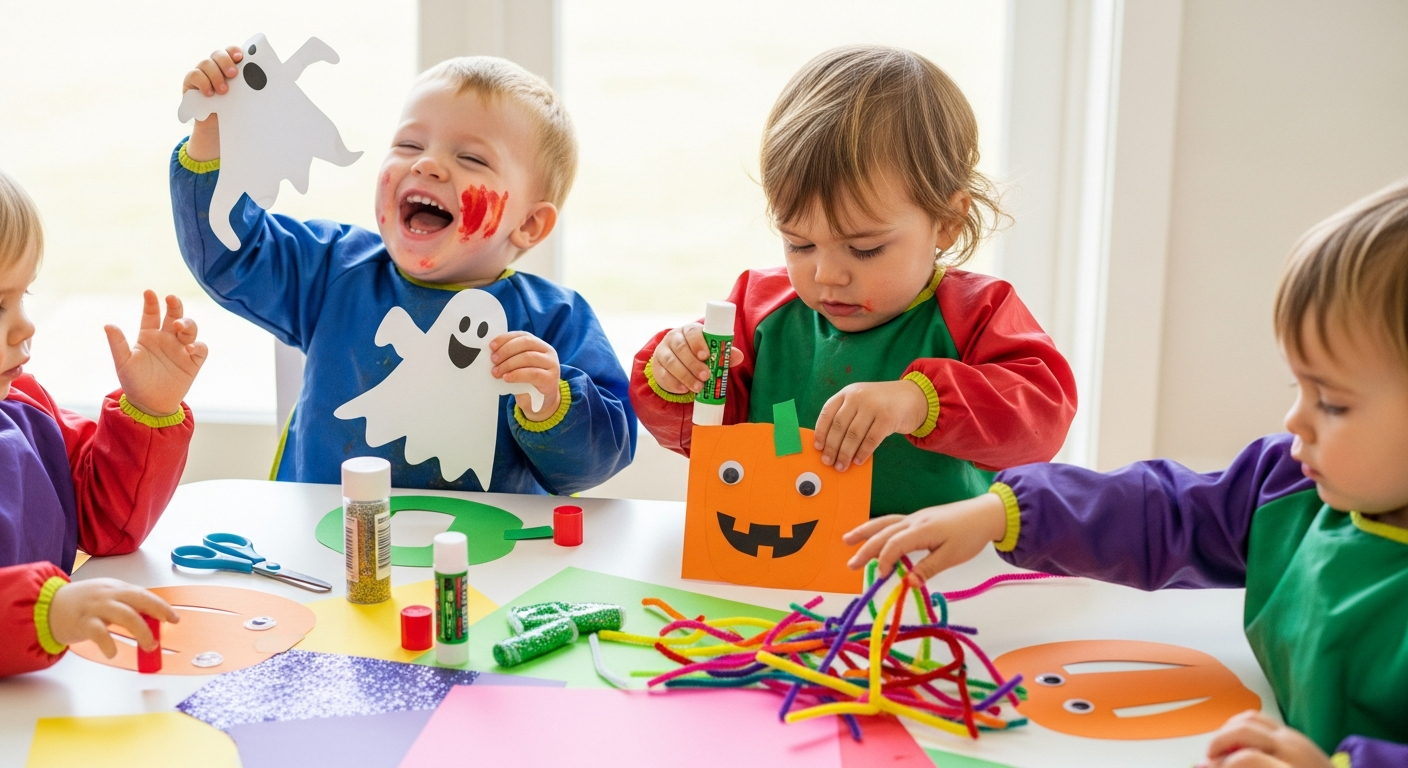
Table of Contents
- Introduction
- Why Crafting is a Secret Weapon for Speech Development
- 1. The Classic Paper Plate Pumpkin
- 2. Cotton Ball Puffy Ghosts
- 3. Dot Sticker Jack-O-Lanterns
- 4. Footprint "Smell My Feet" Ghosts
- 5. Paper Bag Monster Puppets
- 6. Masking Tape Mummies
- 7. Leaf Ghosts: A Nature Walk Craft
- 8. Spider Web Paper Plates
- 9. Fizzy Pumpkin Science Art
- 10. Shape Witches
- 11. Apple Stamped Pumpkins
- 12. Handprint Spiders
- 13. Yarn-Wrapped Pumpkins
- 14. Toilet Paper Roll Bats
- 15. The "Mystery" Watercolor Ghost
- Making the Most of Craft Time: Tips for Parents
- How Speech Blubs Supports Your Journey
- FAQ
- Conclusion
Introduction
Did you know that by the age of three, a child’s brain is twice as active as an adult’s? Every moment spent exploring a new texture, dipping a finger into orange paint, or peeling a sticker is a massive neurological event. At Speech Blubs, we believe that these playful moments are the foundation of communication. Halloween provides a magical, sensory-rich backdrop for this development, but for many parents, the "Pinterest-perfect" holiday can feel more overwhelming than a haunted house. Between the complex costumes and the sugar rushes, finding time for meaningful connection can be tough.
That is why we have curated this guide to simple toddler halloween crafts that prioritize the process over the final product. Our mission is to empower children to speak their minds and hearts, and often, that speech begins with a joyful "ooh!" at a sparkly ghost or a "pop!" of a bubble. Our founders, who navigated their own speech challenges as children, designed our tools to be the joyful support system they wished they had. We know that 1 in 4 children will need speech support at some point, and we are dedicated to providing "smart screen time" that acts as a bridge to real-world interaction.

In this post, we will explore 15 easy, engaging, and developmentally supportive crafts tailored for little hands. We will discuss how to turn a messy painting session into a speech-building opportunity and how our unique video modeling methodology can be mirrored in your living room. By the end of this guide, you will have a toolkit of activities that reduce frustration, build confidence, and create those precious family memories that last far longer than a bag of candy.
Why Crafting is a Secret Weapon for Speech Development
When a toddler reaches for a glue stick or tries to describe a "silly monster," they aren't just making art; they are practicing the complex building blocks of communication. Crafting requires fine motor skills, which are neurologically linked to the same areas of the brain responsible for speech. As we work with our little ones on simple toddler halloween crafts, we are providing them with a functional vocabulary. Words like "sticky," "wet," "orange," and "boo" become tangible concepts rather than just abstract sounds.
At Speech Blubs, we focus on the power of "video modeling." This is a scientifically backed method where children learn by watching and imitating their peers. You can bring this principle into your craft time by modeling the actions yourself. When you show your child how to stamp a pumpkin and narrate your actions—"I push down, then I lift up!"—you are using the same principles that make our app so effective. Our research shows that this type of imitation engages mirror neurons, making learning feel natural and fun rather than like a chore.
1. The Classic Paper Plate Pumpkin
The paper plate pumpkin is a staple for a reason: it is virtually impossible to mess up, and toddlers love the circular shape.
What you need:
- A white paper plate
- Orange washable paint
- Green construction paper (for the stem)
- A glue stick
The Speech Connection: While your child paints, focus on the "O" sound in "Orange." For a parent whose 3-year-old is a "late talker" and loves bright colors, this is a fantastic time to practice labeling. Ask them, "Should we use blue or orange?" Even if they only point, you are building the foundation for choice-making and verbalization. This activity is featured in many of our user testimonials as a gateway to learning color names.

2. Cotton Ball Puffy Ghosts
Toddlers are highly tactile learners. The soft, wispy texture of a cotton ball is a sensory delight that can keep them engaged for much longer than a standard drawing.
What you need:
- Black construction paper
- Cotton balls
- School glue
- Googly eyes
The How-To: Draw a simple ghost outline on the black paper. Let your toddler squeeze the glue (great for hand strength!) and press the cotton balls onto the shape. Finish with two big googly eyes.
The Speech Connection: Use this time to practice the "B" sound in "Boo!" or "Ball." Encourage them to feel the "soft" cotton and compare it to the "hard" table. This contrast helps children understand adjectives, which are essential for expanding their sentences.
3. Dot Sticker Jack-O-Lanterns
If you are looking for a mess-free option, dot stickers are your best friend. This is one of the most effective simple toddler halloween crafts for developing the "pincer grasp," which is crucial for later writing and self-feeding.
What you need:
- An orange paper cutout or a real mini pumpkin
- Black and yellow dot stickers
The How-To: Instead of carving, which is dangerous for toddlers, let them "carve" the face using stickers. They can make eyes, a nose, and a zig-zag mouth.
The Speech Connection: Narrate the placement. "Put it on the pumpkin. Now put it under the eye." These spatial prepositions are key developmental milestones. If you are unsure where your child stands with these milestones, you can take our quick 3-minute preliminary screener to get a simple assessment and a custom next-steps plan.
4. Footprint "Smell My Feet" Ghosts
This is a favorite for the baby book and a wonderful way to involve the whole family. It transforms a simple paint session into a keepsake.
What you need:
- White washable paint
- Black construction paper
- A wet wipe (for immediate cleanup!)
The How-To: Paint the bottom of your toddler's foot white and press it onto the black paper with the toes pointing down. Once dry, the heel becomes the ghost’s head, and the toes become the wispy bottom of the ghost.
The Speech Connection: Many toddlers are sensitive to the feeling of paint on their feet. Use this to practice "feeling" words. Is it cold? Is it ticklish? Modeling these words helps a child communicate their physical sensations, reducing the frustration that often comes from sensory overload.
5. Paper Bag Monster Puppets
Puppetry is a powerful tool for speech therapy. When a child speaks "through" a puppet, their self-consciousness often disappears, allowing them to practice sounds more freely.
What you need:
- Brown or white paper lunch bags
- Paint, markers, or scrap paper
- Yarn for hair
The How-To: Decorate the folded bottom of the bag as the monster's face. When your child puts their hand inside, the "mouth" opens and closes.
The Speech Connection: Encourage your monster to "eat" certain sounds. "The monster is hungry for the 'M' sound! Can you say Mmm-monster?" This type of play-based learning is exactly what we provide at Speech Blubs. It’s about turning the screen-free moments into extensions of the "smart screen time" they experience in the app.
6. Masking Tape Mummies
This craft is perfect for toddlers who are currently obsessed with "stickiness" and want to explore how things hold together.
What you need:
- Black cardstock cut into a gingerbread man shape
- White masking tape
- Googly eyes
The How-To: Let your toddler tear pieces of masking tape (with some help) and wrap them around the black shape. It doesn’t have to be neat—the more crisscrossed, the better the mummy looks!
The Speech Connection: Tearing tape makes a wonderful "R-r-rip!" sound. Encourage your child to repeat the sound every time they pull the tape. Onomatopoeias are excellent "bridge words" for late talkers because they are fun to say and easy to imitate.
7. Leaf Ghosts: A Nature Walk Craft
Combine a breath of fresh air with your crafting session. This encourages observation and connection with the changing seasons.
What you need:
- Large leaves found outside
- White acrylic or tempera paint
- A black marker
The How-To: Go on a "ghost hunt" in your backyard or a local park. Find the biggest, flattest leaves. Paint them white, let them dry, and then draw two black eyes on them.
The Speech Connection: During the walk, use your "detective" voice. "I see a big leaf! Do you see a little leaf?" Developing the concepts of "big" and "little" is a foundational language skill. If you want to see how these skills are taught through peers, Download Speech Blubs on the App Store to see children their own age modeling these concepts.
8. Spider Web Paper Plates
This craft is excellent for fine motor precision, which helps with the coordination needed for clearer speech production.
What you need:
- A paper plate with holes punched around the edges
- White yarn or string
- Plastic or sticker spiders
The How-To: Taping one end of the yarn to the back of the plate, show your toddler how to "sew" the yarn through the holes to create a web.
The Speech Connection: Use the words "in" and "out" as they thread the yarn. This rhythmic repetition helps embed the meaning of these directional words. If your child gets frustrated, model a "deep breath" and say, "It’s okay, let's try again." Building emotional resilience is just as important as building a vocabulary.
9. Fizzy Pumpkin Science Art
For the toddler who loves a "reaction," this craft combines art with a bit of "spooky" chemistry.
What you need:
- Cardstock cut into pumpkin shapes
- Orange paint mixed with baking soda
- A small spray bottle or dropper with vinegar
The How-To: Paint the pumpkins with the thick baking soda paint. Then, let your toddler drop vinegar onto the paint. It will fizz and bubble, creating a cool texture.
The Speech Connection: The "Sss" sound of the fizz is perfect for practicing sibilant sounds. Exclaim "Wow!" or "Look at that!" to encourage your child to use their own exclamations. Capturing their attention through wonder is the fastest way to encourage spontaneous speech.
10. Shape Witches
Halloween isn't just about spookiness; it's a great time to review basic geometry!
What you need:
- A large green triangle (face)
- A black triangle (hat)
- A black rectangle (hat brim)
- Yellow circles (eyes)
The How-To: Provide the pre-cut shapes and help your toddler glue them together to form a "Shape Witch."
The Speech Connection: Label each shape as you go. "Where is the triangle?" and "Let's find the circle." For more structured practice on shapes and colors, you can create your account and begin your 7-day free trial today to access our "Early Learning" sections, which use peer modeling to teach these very concepts.
11. Apple Stamped Pumpkins
Using fruit as a tool is a great way to repurpose items from your kitchen and show children that art can happen anywhere.
What you need:
- An apple cut in half vertically
- Orange paint
- Paper
The How-To: Dip the flat side of the apple in orange paint and stamp it onto the paper. The shape of the apple perfectly mimics a pumpkin! Add a green thumbprint at the top for a stem.
The Speech Connection: Practice the "P" sound in "Push" and "Pumpkin." This is a bilabial sound (using both lips), which is often one of the first sounds a child masters.
12. Handprint Spiders
Spiders don't have to be scary! These friendly handprint versions are great for teaching your child about their own body parts.
What you need:
- Black paint
- Paper
- Googly eyes
The How-To: Paint your child's palms and four fingers (excluding the thumb). Stamp one hand, then rotate the paper and stamp the other so the palms overlap. This creates an eight-legged spider!
The Speech Connection: Count the legs! "One, two, three..." Counting is a rhythmic speech activity that helps children understand the cadence of language.
13. Yarn-Wrapped Pumpkins
This activity is incredibly soothing and is great for children who might feel overwhelmed by the "scary" parts of Halloween.
What you need:
- Cardboard cutouts of pumpkins
- Orange yarn
The How-To: Cut small notches around the edge of the cardboard. Let your toddler wrap the yarn around and through the notches until the pumpkin is "dressed" in orange.
The Speech Connection: Talk about "around and around." This repetition of sounds helps with speech fluidity. If your child loves this kind of focused activity, they will likely enjoy the interactive "Smart Timer" features in our app, which encourage focused engagement without the overstimulation of traditional cartoons.
14. Toilet Paper Roll Bats
The ultimate eco-friendly craft! Everyone has an extra cardboard tube lying around.
What you need:
- Cardboard tubes
- Black paint or paper
- Black construction paper for wings
The How-To: Fold down the top edges of the tube to create "ears." Paint the tube black and glue on two wings.
The Speech Connection: Bats "fly" and "flap." Act out the bat’s movements with your child. Physical movement paired with vocalization (like saying "flap, flap, flap!") helps cement the word in a child’s long-term memory. You can Download Speech Blubs on Google Play to find the "Animal Kingdom" section, where they can see peers making animal sounds and movements.
15. The "Mystery" Watercolor Ghost
This is like a magic trick that will leave your toddler wide-eyed.
What you need:
- White crayon
- White paper
- Watercolors (darker colors like purple or blue work best)
The How-To: Draw a ghost with the white crayon on the white paper (it will be invisible!). Give your child the watercolors and let them paint over the whole page. The ghost will "magically" appear as the wax resists the water.
The Speech Connection: This is the perfect opportunity for "surprise" words. "Where is it? There it is!" and "I see you!" These social games are vital for developing "joint attention," a key precursor to complex communication.
Making the Most of Craft Time: Tips for Parents
As a child development expert, I often tell parents that the environment is just as important as the activity itself. Here is how to ensure your session with simple toddler halloween crafts is a success:
- Embrace the Mess: If you are worried about the rug, put down an old shower curtain or move the activity outside. When you aren't stressed about the cleanup, your child feels more free to explore and communicate.
- Follow Their Lead: If your toddler wants to paint the pumpkin blue instead of orange, let them! Validating their choices builds the confidence they need to start using their voice more frequently.
- Narrate, Don't Interrogate: Instead of asking, "What color is that?" every five seconds, try narrating their actions: "You are using the big brush to make a blue sky!" This provides a rich language model without the pressure of a "test."
- Keep it Short: A toddler’s attention span is typically 2-3 minutes per year of age. If they want to stop after five minutes, that is okay! Quality over quantity is the rule of thumb.
How Speech Blubs Supports Your Journey
While physical crafts are essential, we recognize that in our modern world, screen time is often a reality. At Speech Blubs, we’ve created a way to make that screen time "smart" and effective. Our app is designed to be a co-play tool—something you and your child do together, much like these crafts. We use peer video modeling because kids are naturally drawn to other kids. When they see a peer on the screen making a "ghost sound," they are far more likely to try it themselves.
We don't promise overnight miracles. Instead, we focus on fostering a love for communication and reducing the frustration that comes when a child can't express their needs. Whether you are using our app to prepare for professional therapy or simply to give your child a head start, we are here to provide a joyful, science-based solution.
Understanding Our Value and Pricing
We want to be transparent about how we support our mission. To provide the highest quality, ad-free experience with 24-hour support and constant updates, we offer two main plans:
- The Monthly Plan: At $14.99 per month, this is a great way to test the waters and see how your child responds to our video modeling method.
- The Yearly Plan: This is our best value at $59.99 per year, which breaks down to just $4.99 per month.
When you choose the Yearly Plan, you unlock a suite of exclusive benefits that aren't available on the monthly plan:
- A 7-day free trial to explore everything we offer with zero risk.
- Access to the Reading Blubs app, designed to help your child transition from speaking to reading.
- Early access to new updates and features.
- Priority 24-hour support response time from our dedicated team.
We believe that every child deserves the chance to "speak their minds and hearts," and our yearly plan is designed to be the most comprehensive tool to help them do just that.
FAQ
1. My toddler still puts everything in their mouth. Are these crafts safe? Safety is the top priority! Always use non-toxic, washable paints and glue. For the "edible" crowd, you can even make "paint" out of Greek yogurt and food coloring. Always supervise your child closely, especially with small items like googly eyes or stickers.
2. What if my child isn't interested in crafting at all? That is perfectly normal! Some children prefer gross motor play (like jumping into a pile of leaves) or sensory play (like squishing a pumpkin's "guts"). You can still build speech skills by narrating those activities. The goal is connection, not a finished craft.
3. How do these crafts help with a speech delay? Crafting provides a low-pressure environment to practice "functional language." By repeating sounds and words associated with the craft, you are helping your child build their vocabulary and improve their articulation in a way that feels like play rather than work.
4. Can I use Speech Blubs alongside these activities? Absolutely! In fact, we recommend it. You might use the app for 10-15 minutes to practice specific sounds, and then do a craft that reinforces those sounds. For example, after doing the "Animal Kingdom" section in the app, you could make a handprint spider.
Conclusion
Halloween is a season of wonder, and there is no better way to celebrate it than through the eyes of a toddler. These simple toddler halloween crafts are more than just a way to decorate your fridge; they are intentional opportunities to build the foundational skills your child needs to communicate with the world. By focusing on simple, process-oriented activities, you reduce the stress for yourself and create a safe space for your child to experiment with sounds and words.
Remember, your child’s development is a journey, not a race. Whether they are making a "messy" mummy or perfectly placing a sticker, they are learning. At Speech Blubs, we are honored to be a part of that journey, providing the tools and scientific methodology to help your child find their voice.
Ready to see your child's confidence grow? Download Speech Blubs on the App Store or Google Play to begin. For the best experience and the full suite of features—including our 7-day free trial and the Reading Blubs app—be sure to select our Yearly Plan. Let’s make this Halloween the most "talkative" one yet!
About the author