
Spooktacular Fun: Engaging Games for Kids to Play at a Halloween Party
 By Speech Blubs Team•Jan 28, 2026•23 min.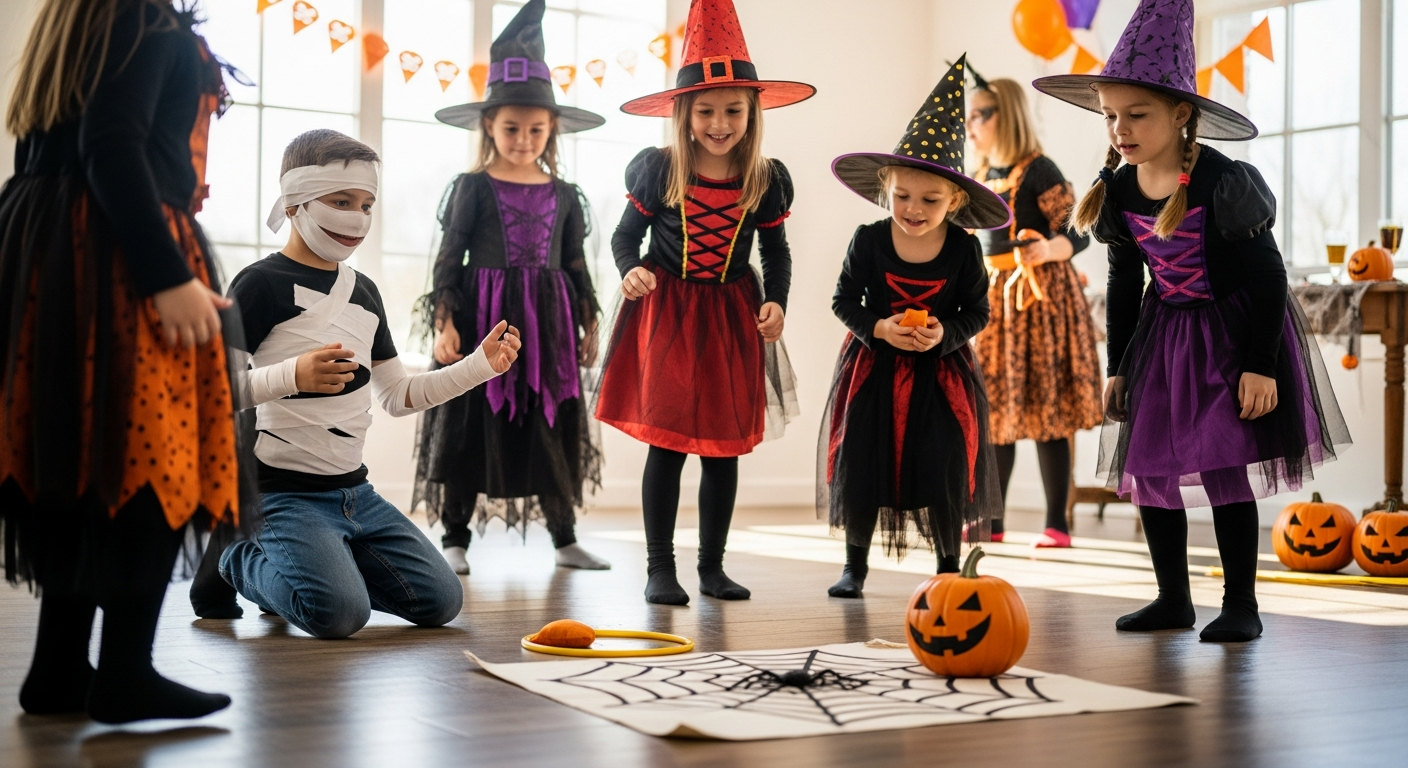
Table of Contents
- Why Halloween Parties Matter for Kids' Development
- Planning Your Spooktacular Bash: Key Considerations
- A Cauldron Full of Classic & Creative Halloween Games
- Fueling the Fun: Spooky Snacks & Treats
- Making Every Moment a Learning Opportunity (Speech Blubs Integration)
- Choosing the Right Speech Blubs Plan for Your Family
- Conclusion
- FAQ
As the leaves turn crisp and the air fills with anticipation, a special kind of magic descends, promising costumes, candy, and unforgettable thrills. For parents, Halloween isn't just about trick-or-treating; it's a golden opportunity to create cherished memories and foster essential skills through joyful celebration. Yet, planning a kids' Halloween party that’s both engaging and developmentally enriching can feel like navigating a haunted maze. How do you strike the perfect balance between spooky excitement and age-appropriate fun, all while ensuring every child feels included and entertained?
This post is your ultimate guide to conjuring up a truly magnificent Halloween bash. We'll explore a cauldron full of creative, classic, and communication-boosting games designed to delight children of all ages. From active adventures that get little bodies moving to imaginative activities that spark language and social growth, we’ll help you craft a party experience that goes beyond mere entertainment. Our aim is to equip you with practical ideas, easy-to-follow instructions, and insights into how these festive games can secretly be powerful tools for your child's holistic development, including their precious communication skills. Get ready to transform your home into a hub of happy haunts and spirited learning, creating a Halloween party that echoes with laughter and builds confident communicators.

Why Halloween Parties Matter for Kids' Development
Halloween parties are more than just an excuse for costumes and candy; they are rich environments for children to develop a wide range of essential skills. Think about it: a child at a party is constantly engaging. They are problem-solving when trying to win a game, developing fine and gross motor skills as they participate in activities, and practicing crucial social skills like sharing, taking turns, and understanding rules.
Beyond the obvious, Halloween parties are especially valuable for fostering communication. From excitedly describing their costume to asking questions during a game, children are immersed in a language-rich setting. They learn new vocabulary (ghost, pumpkin, witch, spooky), practice following multi-step directions, and engage in storytelling, whether it's recounting a scary tale or explaining how they won a game. These interactions build confidence in expressing themselves and help them understand social cues.
At Speech Blubs, we passionately believe that every child deserves to speak their minds and hearts. Our founders grew up with speech challenges themselves, which is why they created a tool they wished they had—one that blends scientific principles with play. We understand that joyful, natural interactions, like those found at a Halloween party, are fundamental to language development. When children are having fun, their brains are more receptive to learning and absorbing new information. These party games, when approached with a developmental mindset, become powerful, "smart screen time" alternatives to passive viewing, promoting interaction, engagement, and family connection.
Planning Your Spooktacular Bash: Key Considerations
Before you dive into the delightful details of ghost-themed décor and ghoulish treats, taking a moment to plan the foundational elements of your Halloween party will ensure a smoother, more enjoyable experience for everyone. A successful party starts with thoughtful preparation, especially when little ghouls and goblins are involved.

Age-Appropriateness: Tailoring the Fun
The first and most critical consideration is the age range of your guests. What thrills a school-aged child might terrify a toddler, and what engages a preschooler might bore a pre-teen.
- Toddlers (1-3 years): Focus on sensory experiences and simple, repetitive actions. Think soft textures, bright colors, easy matching games, and gentle musical activities. Keep monsters to a minimum and emphasize silly, friendly themes. Safety is paramount – avoid small items that could be choking hazards.
- Preschoolers (3-5 years): These children love imaginative play and are developing their social skills. Games involving simple rules, turn-taking, and active movement are ideal. They enjoy familiar themes like friendly ghosts, pumpkins, and animals dressed in costumes. Stories and sing-alongs are also big hits. This is a fantastic age to encourage descriptive language.
- School-Aged (6-10 years): These kids thrive on friendly competition, problem-solving, and more complex rules. They appreciate slightly spooky themes (but still not genuinely terrifying) and enjoy games that require teamwork or strategy. Scavenger hunts, charades, and relay races are perfect. They can also handle longer activity durations.
Space & Guest List: Setting the Scene
- Indoor vs. Outdoor:
- Indoors: Great for controlled environments, especially for younger kids. Ensure there's enough clear space for active games and that breakable items are put away. Consider how noise might carry.
- Outdoors: Offers more room for running and larger-scale games. Be prepared for weather changes and have a backup indoor plan. Ensure the area is safe and free of hazards.
- Guest List Size: The number of children will influence your game choices.
- Small Groups (2-5 children): More cooperative games, intimate storytelling, and activities that allow for individual attention work well.
- Medium Groups (6-12 children): Many classic party games are perfect for this size, encouraging teamwork and friendly competition.
- Large Groups (13+ children): You'll need games that can accommodate many players simultaneously, or consider dividing children into smaller teams. Rotating through activity stations can also be effective.
Theme & Ambiance: Creating the Mood
While "Halloween" is the overarching theme, you can refine it further to enhance the experience.
- Silly & Sweet: Friendly monsters, happy pumpkins, cute animals. Ideal for younger children.
- Slightly Spooky: Ghosts, bats, witches (friendly ones!), spiders. Great for school-aged kids who enjoy a gentle thrill.
- Monster Mash: Frankenstein, Dracula, mummies, werewolves. Encourages creativity and dramatic play.
Decorations, music, and even the food can amplify your chosen theme. Remember, the goal is fun, not fright, for most kids' parties.
Timing & Duration: Keeping Energy High
- When to Host: Afternoon parties often work best for younger children, respecting nap schedules. Evening parties can be magical for older kids, especially if trick-or-treating is involved.
- How Long:
- Toddlers: 1-1.5 hours is usually plenty.
- Preschoolers: 1.5-2 hours.
- School-Aged: 2-3 hours. Always factor in arrival/departure, snack time, and a few buffer moments. Ending before children are completely overstimulated or tired ensures they leave on a happy note.
Safety First: Prioritizing Well-being
- Choking Hazards: Be mindful of small candies, toys, or craft supplies, especially with toddlers.
- Allergies: Ask parents about any food allergies or sensitivities beforehand and clearly label food items.
- Supervision: Always have enough adult supervision for the number of children present, especially during active games.
- Clear Pathways: Ensure play areas are free of obstacles to prevent trips and falls.
By thinking through these practical details, you'll lay a solid foundation for a Halloween party that's not only loads of fun but also safe, engaging, and perfectly tailored to your young guests.
A Cauldron Full of Classic & Creative Halloween Games
Now for the main event: the games! We’ve brewed up a collection of fantastic games for kids to play at a Halloween party, ensuring a blend of classic favorites and fresh, exciting ideas. Each game is designed to be engaging, easy to set up, and offers fantastic opportunities for developmental growth.
Active & Energetic Games
These games are perfect for burning off all that pre-candy energy, promoting gross motor skills, coordination, and the ability to follow directions.
1. Mummy Wrap Relay
How to Play: Divide children into teams of 3-4. Each team chooses one "mummy." Provide each team with rolls of toilet paper or white streamers. On "Go!" the teammates race to wrap their mummy from head to toe (leaving face clear for safety!). The first team to completely mummify their chosen player wins.
Developmental Boost: This game encourages teamwork, rapid motor planning, and understanding sequential instructions. For communication, children will naturally use words like "wrap," "faster," "hold still," and "done." It’s also great for practicing turn-taking within a team.
2. Ghostly Sack Race
How to Play: Decorate plain pillowcases with ghost faces using permanent markers. Children step into their ghostly sacks, holding the top edges. Set up a start and finish line. On "Go!" they hop or jump in their sacks to the finish line. For more fun, make it a relay race with teams.
Developmental Boost: Enhances gross motor skills, balance, and coordination. Children practice listening to commands like "on your mark, get set, go!" and learn about fair play and sportsmanship. They might describe how they "jumped" or "fell."
3. Monster Mash Freeze Dance
How to Play: Play a playlist of spooky, kid-friendly Halloween music. Children dance like monsters, witches, or ghosts. When the music stops, everyone must "freeze" in a monster pose. Anyone who moves before the music starts again is out (or does a silly monster walk before rejoining).
Developmental Boost: Improves listening skills, impulse control, and motor planning. Children express creativity through movement and learn to regulate their bodies. Encourage them to describe their "frozen" monster pose ("I'm a grumpy zombie!"). For those children who benefit from practicing action words, Speech Blubs has many activities that reinforce verbs like "dance," "stop," and "freeze," making this game even more enriching. Ready to give your child a head start? Download Speech Blubs on the App Store or Google Play today!
4. Pumpkin Sweep or Bowling
How to Play:
- Sweep: Use small, lightweight pumpkins (real or craft foam) and child-sized brooms. Create a "race track" or obstacle course. Children use their brooms to sweep their pumpkins across the finish line.
- Bowling: Decorate empty plastic bottles as mummies or ghosts. Set them up like bowling pins. Children use a small pumpkin or a soft ball to "bowl" and knock them down.
Developmental Boost: Both variations enhance hand-eye coordination, fine motor control (gripping the broom/ball), and gross motor skills. Children practice counting, taking turns, and understanding cause and effect. They might count how many pins they "knocked down" or describe their "fast" pumpkin.
5. Costume Relay
How to Play: Gather a collection of oversized or silly Halloween costume accessories (hats, capes, glasses, big shoes, scarves). Divide children into teams. Each player races to a pile of accessories, puts on one item, runs back, tags the next player, who then adds another item to their own costume, and so on. The first team to have all players wear all items wins.
Developmental Boost: Promotes gross motor skills, speed, and teamwork. Children practice following sequences of actions and can describe the "silly" or "funny" costumes they create.
Sensory & Detective Games
These games engage children's senses and critical thinking skills, making them perfect games for kids to play at a Halloween party that encourages exploration and descriptive language.
1. Mystery Boxes (What's in the Cauldron?)
How to Play: Decorate several cardboard boxes or cauldrons with Halloween themes. Cut a hand-sized hole in the top of each. Inside, place different textured, non-scary, and safe items. Examples: peeled grapes ("eyeballs"), cold cooked spaghetti ("worms"), dried apricots ("ears"), a glove filled with flour ("dead man's hand"), cotton balls ("spider webs"), unpopped popcorn ("monster teeth"). Blindfolded children reach in and try to guess what they are touching.
Developmental Boost: A fantastic sensory integration activity that builds vocabulary and descriptive language. Children use words like "slimy," "bumpy," "soft," "cold," and "squishy" to describe what they feel. This can be directly linked to Speech Blubs' focus on building rich descriptive language and categorizing objects. Learn more about the science behind our approach and how it fosters communication skills on our Research page.
2. Eyeball or Spider Hunt
How to Play: Purchase bags of plastic eyeballs, spiders, or other small Halloween-themed trinkets. Hide them around a designated room or outdoor area. Children search for as many as they can find within a time limit. The child who finds the most wins a prize.
Developmental Boost: Boosts observation skills, problem-solving, and spatial awareness. Children practice counting, using positional words ("under," "behind," "on top"), and can describe what they "found" and "where" they found it.
3. Slimy Monster Snack Attack
How to Play: Make a large bowl of edible "slime" using green mint jelly, watered-down lime Jell-O, or even green pudding. Add a variety of safe, unwrapped edibles like gummy worms, orange slices, raisins, or candy corn. Children close their eyes and reach into the slime to grab a snack, trying to guess what it is before they see it. Ensure no choking hazards for young children.
Developmental Boost: A messy, fun sensory experience that encourages descriptive language, especially adjectives related to texture and taste. Children practice self-regulation by reaching into an unknown substance and build vocabulary by naming the items they retrieve.
Creative & Skill-Building Games
These games for kids to play at a Halloween party encourage imagination, fine motor skills, and cognitive processing, making learning fun and festive.
1. Pumpkin Decorating Station
How to Play: Instead of carving (which can be tricky for little hands), set up a decorating station. Provide mini pumpkins (real or craft foam), non-toxic paints, paintbrushes, glitter, googly eyes, pipe cleaners, stickers, and glue. Let children unleash their creativity to design their own spooky or silly pumpkins.
Developmental Boost: Excellent for fine motor skills, color recognition, and creative expression. Children can describe their artistic choices, explain their "plan" for the pumpkin, and use descriptive words for colors and shapes. It’s also a wonderful opportunity for imaginative play, as they might create characters for their pumpkins.
2. Pin the Tail on the Black Cat (or Nose on the Pumpkin)
How to Play: Print a large image of a black cat (without a tail) or a pumpkin (without a nose/stem). Cut out separate "tails" or "noses." Blindfold each child, spin them gently a few times, and have them try to pin or stick the missing piece in the correct spot. Mark where each child placed theirs. The closest wins!
Developmental Boost: Enhances spatial awareness, direction-following, and fine motor skills. Children use words like "left," "right," "up," "down," and can articulate their strategy for placing the item.
3. Halloween Charades
How to Play: Write down various Halloween-themed words or phrases on slips of paper (e.g., "ghost," "witch flying," "carving a pumpkin," "trick-or-treating," "zombie walking"). Children pick a slip and act out the phrase silently for their team or other guests to guess.
Developmental Boost: Builds non-verbal communication skills, creative thinking, and vocabulary. Children must think about how to convey an idea without words, and guessers practice inferential reasoning and identifying actions/objects. This is especially helpful for children learning expressive communication.
4. DIY Costume Challenge
How to Play: For older kids, or as a fun activity involving parents, provide a pile of miscellaneous craft supplies (fabric scraps, aluminum foil, pipe cleaners, empty boxes, tape, glue, markers). Challenge teams or individuals to create a new, silly Halloween costume for a volunteer (an adult or another child) within a time limit.
Developmental Boost: Fosters immense creativity, problem-solving, and collaborative teamwork. Children articulate their design ideas, negotiate materials, and practice giving and receiving instructions.
5. Halloween Bingo Scavenger Hunt
How to Play: Create bingo cards with pictures or descriptions of common Halloween decorations (e.g., "spiderweb," "jack-o'-lantern," "ghost hanging," "black cat," "witch's hat"). As children walk around the party area or even the neighborhood (if safe and supervised), they mark off the decorations they spot. First to get bingo wins! We love providing accessible, fun activities like this.
Developmental Boost: Enhances observation skills, visual discrimination, and vocabulary. Children practice matching, identifying objects, and following visual instructions. They can describe what they see and where they see it.
Targeting Younger Ghouls & Goblins
These games for kids to play at a Halloween party are gentle, fun, and perfectly suited for the youngest partygoers, ensuring their first Halloween parties are full of giggles, not frights.
1. Apple Bobbing (with a Twist)
How to Play: While traditional apple bobbing can be messy and sometimes challenging for little ones, a gentler version is to hang donuts from strings at various heights. Children try to eat the donut without using their hands. Alternatively, have a large bowl of water with plastic floating apples. Kids use tongs or a small net to "rescue" the apples.
Developmental Boost: Improves fine motor skills (grasping, picking up), hand-eye coordination, and patience. Children practice requesting (e.g., "more apple," "help me") and can describe the "wet" or "sweet" sensations.
2. Musical Cauldron
How to Play: Place a large cauldron in the center of the room, filled with kid-friendly Halloween hats, masks, and dress-up props (no full costumes needed). Play spooky music. Children dance around the cauldron. When the music stops, everyone grabs an item from the cauldron and puts it on. Music starts again, they dance, and when it stops, they swap their prop with someone else.
Developmental Boost: Encourages movement, listening skills, and imaginative play. Children learn new vocabulary related to costumes ("hat," "mask," "cape") and practice social interaction through swapping.
3. Zombie Footsteps
How to Play: This is a Halloween spin on "Grandma's Footsteps." One adult or older child stands at one end of the room with their back to the players, guarding a pile of "brain" candies or treats. The other children pretend to be zombies, trying to creep silently towards the treats. When the "guard" turns around, the zombies must freeze. Anyone caught moving goes back to the start. The first "zombie" to reach the treats wins.
Developmental Boost: Enhances impulse control, listening skills, and body awareness. Children practice quiet movement and learn to pause and restart actions based on a cue. They can describe their "sneaky" or "frozen" zombie movements.
4. Pass the Apple (Chin to Chin)
How to Play: Children line up in two teams. The first person in line places an apple under their chin. Without using their hands, they must pass the apple to the next person's chin, and so on down the line. If the apple drops, it goes back to the beginning of the line.
Developmental Boost: A fun cooperative game that develops balance, body control, and teamwork. Children learn patience and coordination, often using non-verbal communication to guide their teammates.
Fueling the Fun: Spooky Snacks & Treats
No Halloween party is complete without some deliciously dreadful delights! While games are the main attraction, a well-placed snack break keeps energy levels high and offers more opportunities for conversation and connection. Always be mindful of allergies and offer a mix of sweet and savory.
Here are a few easy, kid-friendly ideas:
- Satsuma Pumpkins: Simply draw jack-o'-lantern faces on satsumas or mandarins with a black marker. Easy, healthy, and adorable!
- Oreo Spiders: Take apart Oreo cookies, place four black licorice laces on one half as legs, then reassemble. Use icing to add edible googly eyes.
- Cheesy Broomsticks: Cut cheese slices into rectangles, fringe one end, then wrap around pretzel sticks. Secure with a chive. Quick, savory, and visually fun!
- Chocolate-Covered Strawberry Ghosts: Dip strawberries in melted white chocolate, let cool slightly, then add two mini chocolate chips for eyes before the chocolate fully sets.
- Jack-o'-Lantern Pizza: Use mini bagels or English muffins as bases. Spread with pizza sauce, then arrange shredded cheese and olive slices to create a spooky jack-o'-lantern face. A great way to get some veggies in!
These snacks aren't just tasty; they also provide excellent opportunities for language development. Encourage children to describe the "creepy" spiders, the "sweet" ghosts, or the "savory" broomsticks. Ask them about their favorite snack or how it tastes. This kind of descriptive interaction can greatly benefit their vocabulary and expressive language.
Making Every Moment a Learning Opportunity (Speech Blubs Integration)
Beyond the giggles and game-playing, every Halloween party game can be a stepping stone for your child's communication journey. Listening to instructions, describing actions, requesting turns, and interacting with peers are all fundamental building blocks for robust speech and language development.
Imagine a child playing "Mystery Boxes," excitedly describing a "slimy" texture. This isn't just a game; it's a practice session in using descriptive adjectives. Or picture a child taking their turn in "Monster Mash Freeze Dance," waiting patiently for the music to stop. This builds self-regulation and auditory processing skills crucial for following conversations.
At Speech Blubs, we are dedicated to providing immediate, effective, and joyful solutions for the 1 in 4 children who need speech support. Our innovative approach, born from the personal experiences of our founders, centers on "video modeling." Children learn by watching and imitating their peers on screen, a powerful method backed by science that engages mirror neurons and makes learning feel like play.
How Speech Blubs complements your Halloween party games:
- Vocabulary Expansion: Before a "Pumpkin Decorating" activity, children can use Speech Blubs to practice color names, action words like "paint" or "stick," and descriptive terms. Our themed sections, like "What's in the Box?" or "Animal Kingdom," introduce new words in a fun, interactive way.
- Social Language: For children who might find group dynamics challenging, Speech Blubs offers a safe space to practice expressive language and social cues. Activities that involve turn-taking or imitating expressions can build confidence that translates to party interactions.
- Following Directions: Many of our games require children to follow multi-step instructions, preparing them for the rules of party games like "Mummy Wrap" or "Halloween Charades."
Consider a scenario: a parent has a 3-year-old "late talker" who loves animals but struggles with imitating sounds. Before a "Costume Relay" where kids might dress as different creatures, the child could spend a few minutes on Speech Blubs' "Animal Kingdom" section, practicing "moo," "baa," and "roar." Then, at the party, when they put on a cow costume, they're more likely to confidently make the sound, boosting their self-esteem and encouraging more communication.
Another example: a child who tends to be quiet in groups might enjoy Speech Blubs' "Story Time" activities, where they can practice retelling stories or describing characters. This builds their narrative skills, which they can then apply to a "Halloween Charades" game, feeling more prepared to express themselves.
We believe in making speech development a joyous journey, not a chore. Our app offers a screen-free alternative to passive viewing, transforming screen time into "smart screen time" that fosters genuine connection and growth. Parents rave about the progress their children make. Just take a look at what other parents are saying about their child's success with Speech Blubs on our Testimonials page.
Choosing the Right Speech Blubs Plan for Your Family
We’re committed to making high-quality speech and language support accessible to every family. To best suit your needs, we offer flexible plans for the Speech Blubs app:
- Monthly Plan: For just $14.99 per month, you get access to our core features and a continuous stream of engaging activities.
- Yearly Plan: This is our most popular and value-packed option! For only $59.99 per year, which breaks down to an incredible $4.99 per month, you save 66% compared to the monthly plan.
The Yearly Plan isn't just about significant savings; it's about unlocking the full Speech Blubs experience and maximizing your child’s potential. With the Yearly Plan, you receive:
- A 7-day free trial to explore all the amazing features and see the magic of Speech Blubs firsthand.
- Access to the extra Reading Blubs app, helping your child build foundational literacy skills alongside their speech development.
- Early access to new updates and features, ensuring your child always has the latest and greatest content.
- 24-hour support response time, so you always have our team ready to assist you quickly.
Please note, the Monthly Plan does not include the 7-day free trial, the Reading Blubs app, early access to updates, or the 24-hour support response time.
For the best value and to experience everything Speech Blubs has to offer for your child's development, we strongly encourage you to choose the Yearly Plan. It's the ideal way to embark on a comprehensive and joyful learning adventure with your little one.
Conclusion
Creating a memorable Halloween party for kids doesn't have to be a daunting task. With a little planning and a sprinkle of creativity, you can transform your celebration into an exciting adventure filled with laughter, learning, and connection. From active games like the "Mummy Wrap Relay" to sensory explorations like "Mystery Boxes" and imaginative activities such as "Pumpkin Decorating," these games for kids to play at a Halloween party offer far more than just entertainment. They are rich opportunities for children to develop crucial social, cognitive, motor, and, most importantly, communication skills.
At Speech Blubs, we believe that every child deserves the chance to speak their mind and heart. We are passionate about providing tools that make learning joyful and effective, blending scientific principles with engaging play. Our video modeling approach empowers children to imitate their peers, fostering confident communication through "smart screen time" that truly makes a difference.
So, this Halloween, as your little ghouls and goblins gather for fun and games, remember that every interaction is a chance for growth. Encourage descriptive language, celebrate every attempt at communication, and immerse yourselves in the magic of joyful learning.
Ready to give your child the gift of confident communication? Don't wait! Start your free trial and discover how Speech Blubs can be a powerful partner in your child's speech journey. Choose our Yearly Plan to unlock the 7-day free trial and a full suite of features, including the Reading Blubs app and priority support, all while enjoying significant savings.
Create your account and begin your 7-day free trial today! Or, if you're ready to jump right in, download Speech Blubs on the App Store or Google Play and select the Yearly Plan to get the best value and the full experience!
FAQ
Q1: What kind of Halloween games are best for toddlers?
A1: For toddlers, focus on simple, sensory-rich games that don't involve complex rules or scary elements. Activities like "Musical Cauldron" (with dress-up props), gentle "Eyeball Hunts" (plastic eyeballs in a soft play area), or a modified "Apple Bobbing" using tongs or nets are perfect. Emphasize bright colors, fun textures, and opportunities for simple imitation and sound-making.
Q2: How can I make Halloween party games educational for my child?
A2: Integrate learning naturally! For instance, during "Pumpkin Decorating," ask about colors and shapes. In "Mystery Boxes," encourage descriptive words for textures. "Halloween Charades" boosts non-verbal communication and vocabulary. Counting points or items in a "Spider Hunt" strengthens math skills. At Speech Blubs, we make this integration seamless through our scientifically-backed video modeling, helping children learn new words and concepts through play, which then enriches their party interactions.
Q3: My child is shy at parties. How can games help them participate?
A3: Choose games that offer low-pressure participation or encourage small group interaction. Activities like "Halloween Bingo Scavenger Hunt" allow a child to participate at their own pace. Games that involve simple turn-taking, like "Pumpkin Sweep," can build confidence. Pairing a shy child with a more outgoing friend or an adult can also help. Additionally, practicing communication skills with Speech Blubs before the party can boost their confidence in expressing themselves and understanding social cues in a relaxed, engaging environment.
Q4: What's the best way to keep kids engaged during a long party with many games?
A4: Variety is key! Alternate between active and calmer games to manage energy levels. Offer clear, concise instructions for each game to avoid confusion. Incorporate snacks and drinks as natural breaks. Having prizes (even small, non-candy ones) or recognition for participation can also motivate children. Lastly, ensure you have enough adult supervision to help facilitate games and keep everyone involved, making every moment count.
About the author