
Spooktacular Fun: Halloween Games for Kids & Speech Growth
 By Speech Blubs Team•Jan 19, 2026•17 min.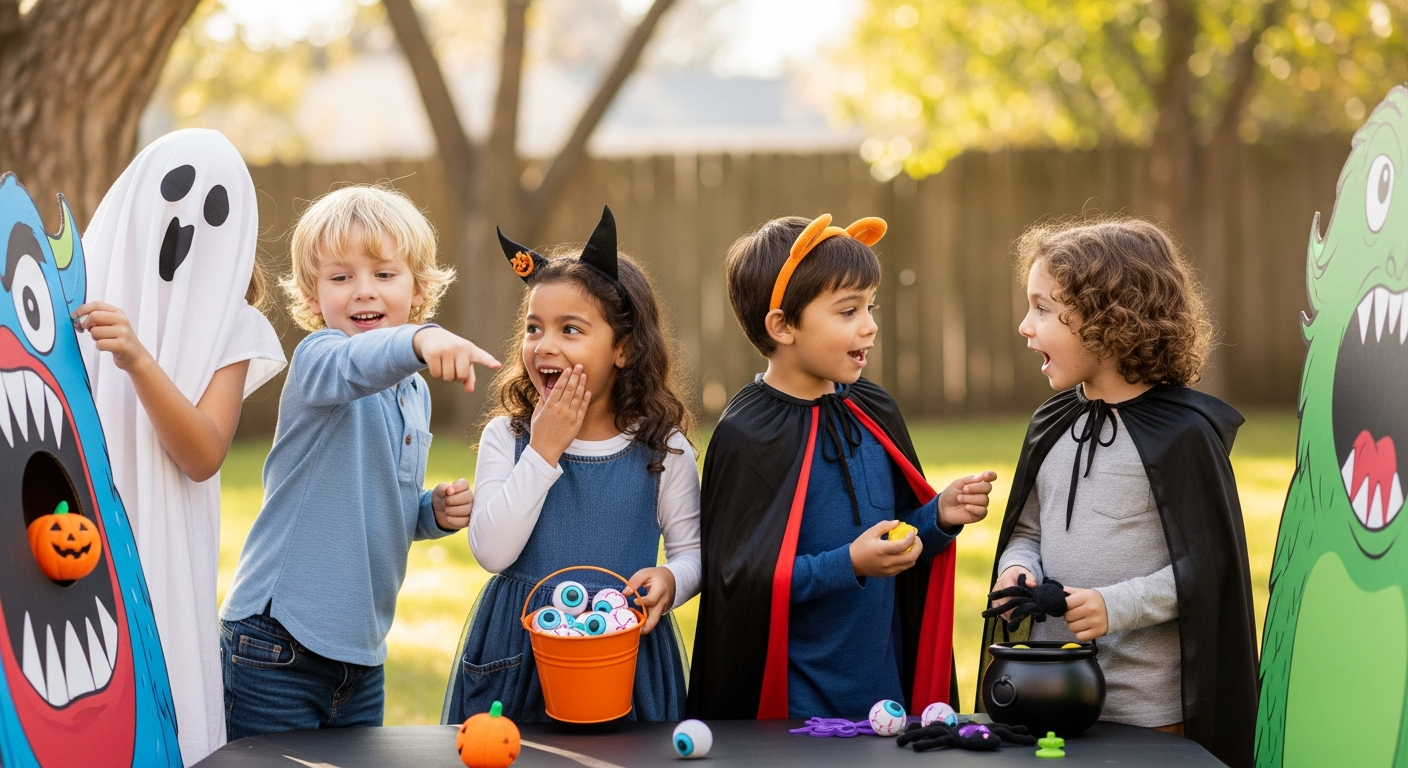
Table of Contents
- The Magic of Halloween for Growing Minds
- Beyond Candy: Why Games are Essential for Development
- Spooktacular Halloween Games for Language Development
- Making "Smart Screen Time" Part of the Fun with Speech Blubs
- Parental Involvement: Your Role as a Communication Coach
- Ready to Empower Your Child's Voice? Discover Speech Blubs Today!
- Frequently Asked Questions
The air grows crisp, the leaves turn vibrant shades of amber and crimson, and a certain kind of magic descends upon the world. For children, Halloween isn't just a holiday; it's an enchanting portal to a world of imagination, costumes, and delightful treats. It’s a time when ordinary rules are suspended, and the extraordinary takes center stage. But what if this annual celebration could offer more than just candy and costumes? What if it could also be a powerful, joyful catalyst for your child's communication development?
At Speech Blubs, we believe every child deserves to speak their minds and hearts, and we understand firsthand the journey of overcoming speech challenges. Our company was born from the personal experiences of our founders, all of whom grew up with speech problems and created the very tool they wished they had. This Halloween, we want to help you transform classic holiday traditions into incredible opportunities for language learning, fostering confidence and joy in every child. This comprehensive guide will explore a bewitching array of fun Halloween games for kids designed not only to entertain but also to subtly boost crucial speech and language skills. Get ready to discover how playtime can be powerful, meaningful, and incredibly fun.

The Magic of Halloween for Growing Minds
Halloween is a feast for the senses and a playground for the imagination. From the vibrant costumes to the spooky decorations and the thrill of trick-or-treating, every aspect of the holiday engages children on multiple levels. This engagement is a goldmine for developmental growth. Children are naturally curious and eager to explore, and Halloween provides a unique, motivating context for them to practice new skills without even realizing they're learning.
Think about it: deciding on a costume involves naming objects and describing characteristics. Navigating a decorated yard introduces new vocabulary and spatial concepts. Interacting with neighbors during trick-or-treating practices social scripts and polite requests. These are all foundational elements of communication. Our mission at Speech Blubs is to empower children to "speak their minds and hearts," and integrating this mission into everyday joy, like Halloween, is at the core of what we do. We're committed to providing an immediate, effective, and joyful solution for the 1 in 4 children who need speech support, blending scientific principles with play to create one-of-a-kind "smart screen time" experiences and powerful tools for family connection. This Halloween, let’s embrace the fun and use it as a springboard for development.
Beyond Candy: Why Games are Essential for Development
While the allure of candy is undeniable, the true magic of Halloween, especially for young children, lies in the shared experiences and playful interactions. Games, in particular, are not just time-fillers; they are vital engines for cognitive, social, and emotional development. For speech and language growth, games offer:
- Vocabulary Expansion: Introducing new words related to themes (e.g., "ghost," "pumpkin," "spooky," "cauldron," "web").
- Following Directions: Practicing understanding and executing single- and multi-step commands.
- Expressive Language: Encouraging children to describe, request, comment, and narrate.
- Receptive Language: Developing the ability to comprehend spoken language, questions, and concepts.
- Articulation Practice: Providing natural contexts to repeat words and sounds.
- Social Communication Skills: Fostering turn-taking, sharing, asking questions, responding appropriately, and negotiating.
- Problem-Solving: Encouraging critical thinking through clues and challenges.
- Emotional Expression: Helping children identify and articulate feelings (e.g., "scary," "excited," "silly").
For a parent whose 3-year-old "late talker" loves animals but struggles with expressive language, the thought of a social Halloween party can be daunting. Yet, games like a "Haunted Hunt" (looking for spider props) or "Monster Musical Chairs" offer structured opportunities to practice animal sounds, action verbs, and basic requests ("I want that!") in a playful, low-pressure environment. These positive interactions build confidence and reduce frustration, paving the way for more complex communication.

Our Approach to "Smart Screen Time"
At Speech Blubs, we believe in making screen time work for your child, not against them. That’s why we offer a screen-free alternative to passive viewing, like cartoons, transforming devices into powerful tools for interactive learning and family connection. Our unique "video modeling" methodology, where children learn by watching and imitating their peers, is scientifically backed and incredibly effective. Imagine your child watching other children confidently say "ghost" or "boo" and then trying it themselves. This active engagement is at the heart of our mission, fostering foundational skills that extend to real-world interactions. To learn more about how our method is backed by science, you can explore the research behind our effective methodology on our website.
Ready to see how Speech Blubs can make a difference? Download Speech Blubs on the App Store or Get Speech Blubs on Google Play to start your journey today.
Spooktacular Halloween Games for Language Development
Let's dive into some fantastic fun Halloween games for kids that promise big laughs and even bigger language gains!
Active & Collaborative Games
These games get kids moving and interacting, promoting both gross motor skills and social communication.
1. Mummy Wrap Race
- How to Play: Divide children into teams of 2-3. One child is the "mummy," and the others rapidly wrap them in toilet paper or streamers. The first team to fully mummify their player wins!
- Speech & Language Benefits:
- Following Directions: "Wrap fast!" "Go all the way around!"
- Action Verbs: "Wrap," "roll," "cover," "tear."
- Descriptive Words: "Tight," "loose," "fast," "slow," "covered."
- Team Communication: Encouraging peers, planning ("You do the legs, I'll do the top!").
- Adaptation: For younger children, keep teams small and focus on descriptive words. For older kids, add challenges like wrapping only with one hand.
2. Pin the Tail (or Eye) on the Monster/Cat
- How to Play: A classic party game with a Halloween twist. Print a large picture of a monster, black cat, or skeleton. Give each child a cut-out "tail," "eye," or "bone" with their name on it. Blindfold them, spin them gently, and have them try to pin the item in the correct spot.
- Speech & Language Benefits:
- Body Parts/Object Naming: "Eye," "tail," "arm," "bone."
- Positional Words: "Up," "down," "left," "right," "on," "next to."
- Prepositional Phrases: "Put it on the head," "move it to the left."
- Verbal Prompts/Directions: Others can give non-specific clues ("You're getting warmer!").
- Adaptation: For a group of children with developing spatial awareness, use fewer spins or a lighter blindfold.
3. Ghost in the Graveyard
- How to Play: A Halloween version of hide-and-seek. One child is the "ghost" and hides. Others count (e.g., "One o'clock, two o'clock... midnight!") then search. When someone finds the ghost, they yell, "Ghost in the graveyard!" and everyone races back to a designated "home base" before being tagged. The first tagged player becomes the next ghost.
- Speech & Language Benefits:
- Counting & Sequencing: Practicing numbers in order.
- Spatial Concepts: Describing hiding spots ("behind the bush," "under the table").
- Calling Out Phrases: "Ghost in the graveyard!"
- Verbalizing Rules: Explaining how the game works.
- Adaptation: Play in a smaller, safer area for younger children, and ensure the "ghost" doesn't hide too well!
4. Monster Mash Musical Freeze Dance / Musical Chairs
- How to Play: Play spooky Halloween music and encourage kids to dance like monsters, witches, or zombies. When the music stops, everyone must "freeze" in place. Anyone who wiggles is out (or does 10 "spooky" jumping jacks!). For musical chairs, use mats or glow-in-the-dark hula hoops on the ground instead of chairs for a twist.
- Speech & Language Benefits:
- Action Verbs: "Dance," "freeze," "stop," "wiggle," "jump."
- Imitation: Copying monster movements.
- Following Directions: "Freeze when the music stops!"
- Descriptive Words: "Fast," "slow," "loud," "quiet" (for music), "spooky."
- Adaptation: For children who struggle with impulse control, gently remind them before the music stops.
Creative & Sensory Games
These games engage creativity, fine motor skills, and sensory exploration, providing rich opportunities for descriptive language.
5. Pumpkin Decorating (No Carving Needed!)
- How to Play: Provide mini pumpkins or gourds along with an array of decorating supplies: non-toxic paint, googly eyes, stickers, pipe cleaners, glitter, glue. Kids can paint and accessorize their pumpkins to create their own unique spooky or silly characters.
- Speech & Language Benefits:
- Color & Shape Recognition: Naming colors, shapes (circles for eyes, triangles for noses).
- Descriptive Language: "My pumpkin is green and sparkly," "It has big, scary eyes."
- Action Verbs: "Paint," "glue," "stick," "draw."
- Sequential Language: Explaining the steps ("First, I painted it, then I added the eyes.").
- Emotional Vocabulary: Discussing if the pumpkin looks "happy," "sad," "scary," "silly."
- Relatable Scenario: For a child who loves to engage in parallel play but struggles with initiating conversation, pumpkin decorating offers a shared activity where they can observe others and be prompted to describe their own creation, "What color are you using?" or "Tell me about your pumpkin's face!"
- Adaptation: Offer stencils for younger kids or those who need a creative spark.
6. Mystery Box / Spooky Sensory Boxes
- How to Play: Decorate cardboard boxes with a hole large enough for a child's hand. Line the box with a plastic bag. Fill each box with a different "mystery" item: peeled grapes (eyeballs), cooked spaghetti (worms), dried apricots (witch's ears), flour-filled glove (dead man's hand). Children reach in without looking and describe what they feel.
- Speech & Language Benefits:
- Sensory Vocabulary: "Slimy," "squishy," "bumpy," "cold," "smooth," "rough."
- Descriptive Language: Using adjectives to explain textures and shapes.
- Guessing & Inferencing: "I think it's... worms!"
- Asking Questions: "Is it soft?" "Is it wet?"
- Categorization: Grouping items by texture or what they resemble.
- Adaptation: Ensure items are non-allergenic and safe for curious hands. For very young children, use less "gross" items.
7. Halloween Charades / Pictionary
- How to Play: Write down various Halloween-themed words or phrases (e.g., "ghost," "witch flying," "carving a pumpkin," "trick-or-treating") on slips of paper. Children pick a slip and act out or draw the word without speaking.
- Speech & Language Benefits:
- Vocabulary Recognition: Understanding the chosen word.
- Non-Verbal Communication: Using gestures and facial expressions.
- Inferencing & Guessing: "Is it a zombie?" "Are you flying?"
- Sentence Formulation: "You are acting like a ghost!"
- Expressing Actions/Emotions: Mimicking "scared," "spooky," "happy."
- Adaptation: For younger children, use pictures instead of words, or act out simple actions like "eating candy."
Storytelling & Imaginative Play Games
These games foster narrative skills, creativity, and deeper language use.
8. Spooky Story Starters
- How to Play: Start a spooky story with a sentence like, "One dark and stormy Halloween night, a little bat flew into a haunted house..." Each child then adds one sentence to continue the story.
- Speech & Language Benefits:
- Narrative Skills: Developing story structure (beginning, middle, end).
- Vocabulary Expansion: Introducing descriptive adjectives and verbs.
- Sequential Language: Using words like "then," "next," "after that."
- Imagination & Creativity: Thinking up new plot points.
- Turn-Taking in Conversation: Waiting for their turn to speak.
- Adaptation: Use visual cues or prompt questions for children who need help generating ideas.
9. Giants, Wizards, Trolls
- How to Play: Similar to Rock, Paper, Scissors, but with whole-body actions. Divide into two teams. Each round, teams decide to be Giants (arms up, defeat Trolls), Wizards (arms out, defeat Giants), or Trolls (crouch down, defeat Wizards). Teams face each other, shout "Giants, Wizards, Trolls!" and then their chosen creature's name and action. The losing team runs, and tagged players join the winning team.
- Speech & Language Benefits:
- Action Verbs: "Run," "crouch," "raise," "zap."
- Team Communication: Discussing strategy ("Let's be Giants!").
- Following Rules: Understanding and applying game mechanics.
- Problem-Solving: Deciding which creature to be.
- Adaptation: Simplify the rules for younger children, focusing on the actions and naming the creatures.
10. Haunted Hunt / Halloween Scavenger Hunt
- How to Play: Hide Halloween-themed items (plastic spiders, fake eyeballs, mini pumpkins, printed ghost pictures) around the house or yard. Provide children with a list (pictures for non-readers) of items to find. The first to find all items wins.
- Speech & Language Benefits:
- Object Identification: Naming each item found.
- Prepositional Concepts: Describing where items were found ("under the chair," "on the shelf," "behind the curtain").
- Following Directions: Understanding clues if you give verbal hints.
- Counting: Counting the items as they find them.
- Asking Questions: "Where should I look?"
- Adaptation: For younger children, make the hiding spots obvious or focus on finding a single color or type of item.
Making "Smart Screen Time" Part of the Fun with Speech Blubs
While active games are fantastic for development, "smart screen time" can be an equally valuable tool, especially for targeting specific speech sounds or vocabulary. Speech Blubs offers a dynamic and interactive experience that complements these real-world games perfectly.
Imagine a child who is excited about Halloween but struggles with articulating the /g/ sound for "ghost." Before or after playing "Ghost in the Graveyard," they can engage with Speech Blubs, which offers countless opportunities to practice words with that specific sound. Our "video modeling" method means they'll watch real children their age making the sounds and words, mimicking them in a fun, non-judgmental environment. This is not passive viewing; it's active learning.
- Relatable Scenario: For a parent whose child is shy about speaking in new group settings, using the "People" or "Actions" sections in Speech Blubs can help them practice making eye contact and imitating facial movements, boosting their confidence for interactions during a Halloween party. For instance, if your child is working on expressive vocabulary, they could practice naming different types of animals or costumes that might appear at a Halloween party in the app, preparing them for real-life conversations.
We’re proud to share that Speech Blubs provides a powerful tool for family connection, turning screen time into an opportunity for parents and children to learn and play together. Our scientific methodology and commitment to joyful learning have earned us a spot in the top tier of speech apps worldwide. When you choose Speech Blubs, you’re choosing a tool created by founders who understand the challenges and the triumphs of speech development firsthand. You can visit the Speech Blubs homepage to learn more about our mission and how we empower children.
Unsure if your child could benefit from speech support? Take our quick 3-minute preliminary screener. It involves 9 simple questions and provides an assessment and next-steps plan, offering immediate value and guidance.
Parental Involvement: Your Role as a Communication Coach
As parents and caregivers, you are your child's first and most important communication coach. Your active involvement in these Halloween games is crucial. Here's how you can maximize the speech and language benefits:
- Model Language: Narrate what you're doing, describe items, and use rich vocabulary. "Wow, look at this bumpy pumpkin!" or "I'm going to carefully wrap the mummy."
- Ask Open-Ended Questions: Instead of "Is that fun?" try "What do you like most about this game?" or "Tell me about your spooky drawing."
- Expand on Their Utterances: If your child says "Bat," you can say, "Yes, a black bat! It's flying."
- Encourage Turn-Taking: Remind them, "It's Sarah's turn now, then it's your turn."
- Praise Effort, Not Perfection: Celebrate their attempts to communicate, even if the words aren't perfectly clear. "Great job trying to tell me about the monster!"
- Create a Low-Pressure Environment: The goal is fun and connection, not perfect articulation.
These practices foster a love for communication, build confidence, and reduce frustration, developing key foundational skills and creating joyful family learning moments. We’re proud that our app supports this family connection, providing a tool for parents to engage actively in their child's speech development journey. See what other parents are saying about their child's success with Speech Blubs and how it’s transformed their family's learning experiences.
Ready to Empower Your Child's Voice? Discover Speech Blubs Today!
This Halloween, let the costumes, candy, and fun Halloween games for kids be more than just a fleeting celebration. Let them be a vibrant stage for your child's communication growth. By intentionally weaving in language-boosting techniques and embracing the interactive power of tools like Speech Blubs, you can help your child "speak their minds and hearts" with greater confidence and joy.
At Speech Blubs, we are dedicated to providing an immediate, effective, and joyful solution for the 1 in 4 children who need speech support. Our commitment to blending scientific principles with play ensures that our "smart screen time" experiences are truly one-of-a-kind. We want every child to have the communication tools they need to thrive.
Ready to get started and unlock your child's full communication potential? We offer flexible plans designed to fit your family's needs:
- Monthly Plan: For just $14.99 per month, you get access to our core features.
- Yearly Plan: This is our most popular and value-packed option! For only $59.99 per year, you save a significant 66% (breaking down to just $4.99/month). The Yearly plan includes:
- A generous 7-day free trial so you can experience the full benefits before committing.
- The exclusive extra Reading Blubs app to further support literacy skills.
- Early access to new updates and a rapid 24-hour support response time, ensuring you always have the best experience and assistance.
The Monthly plan does not include these fantastic benefits, making the Yearly plan the clear best choice for comprehensive support and maximum value.
Don't let this Halloween pass without giving your child the gift of confident communication. Start your free trial by creating an account on our website today and make sure to select the Yearly plan to get the free trial and the full suite of features! Or, you can directly Download Speech Blubs from your app store or Google Play. This Halloween, let’s build not just memories, but also bright futures, one word at a time.
Frequently Asked Questions
Q1: How can Halloween games really help with speech development?
A: Halloween games create a highly motivating and engaging environment for children to practice a wide range of speech and language skills. Through games like "Mystery Box" or "Pumpkin Decorating," children naturally expand their vocabulary (e.g., "slimy," "spooky," "orange"), practice following and giving directions, improve articulation by repeating themed words, and develop social communication through turn-taking and asking questions. The playful context reduces pressure, making learning feel organic and fun.
Q2: What is "video modeling" and how does Speech Blubs use it?
A: Video modeling is a scientifically-backed technique where children learn by observing and imitating a target behavior or skill demonstrated by a peer. In the Speech Blubs app, this means your child watches videos of other children demonstrating specific speech sounds, words, or actions. This method is incredibly effective because it leverages children's natural inclination to imitate their peers, making learning engaging and relatable. It's an active form of "smart screen time" that turns passive viewing into interactive language practice.
Q3: Is the Speech Blubs app suitable for children of all ages?
A: Speech Blubs is designed for children across various developmental stages, typically from toddlers through early elementary school, who are working on speech and language development. The app offers a wide range of activities targeting different sounds, words, and concepts, allowing parents and therapists to customize the experience to their child's specific needs and developmental level. Our focus is on foundational communication skills that benefit children as they grow.
Q4: How do I choose the best Speech Blubs plan for my family?
A: We offer both a Monthly plan at $14.99 and a Yearly plan at $59.99 (which saves you 66%, breaking down to $4.99/month). We highly recommend the Yearly plan as it provides the best value and includes exclusive benefits not available with the Monthly plan. With the Yearly plan, you receive a 7-day free trial, access to the additional Reading Blubs app, early access to new updates, and 24-hour support response time. Choosing the Yearly plan ensures you get the full suite of features and the best experience for your child's communication journey.
About the author