
Spooktacular Kids Halloween Party Games
 By Speech Blubs Team•Jan 28, 2026•22 min.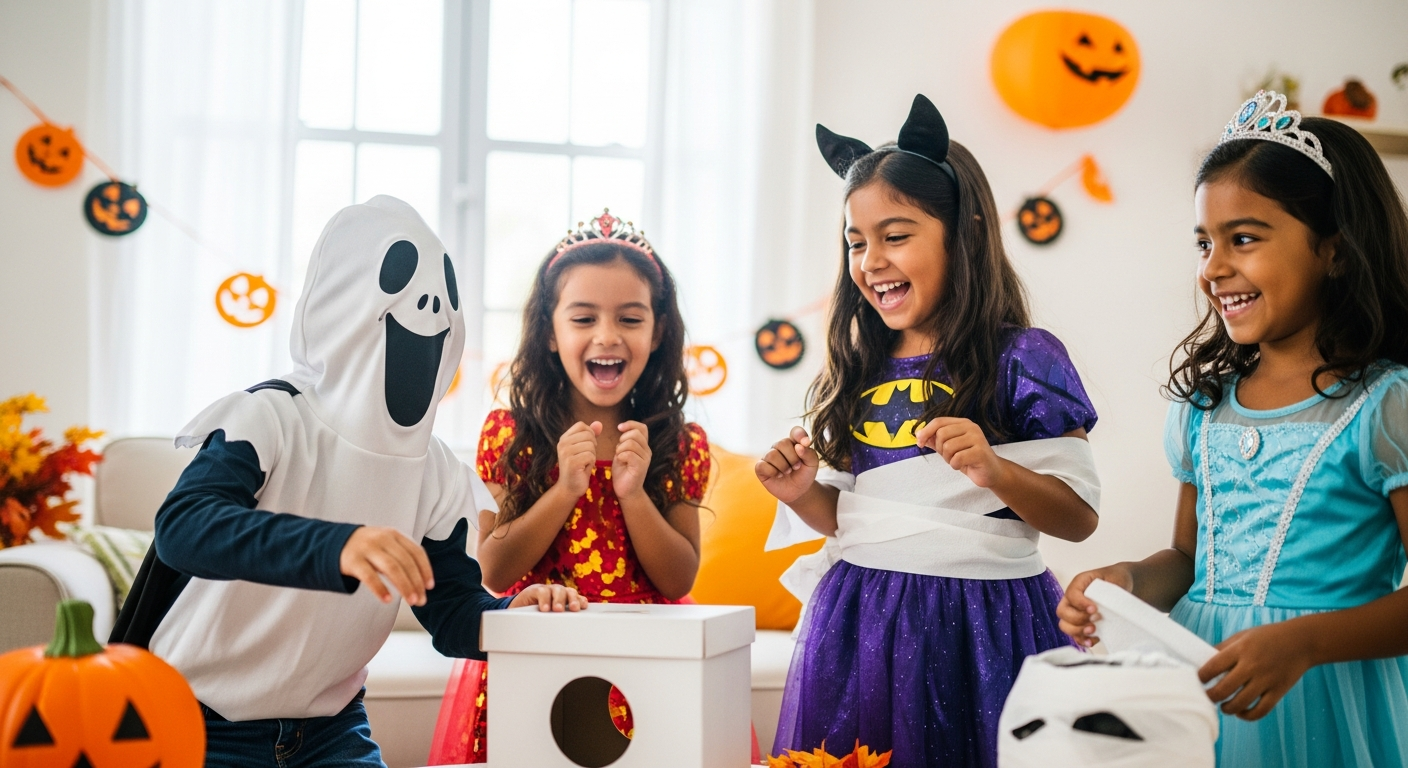
Table of Contents
- Introduction
- Why Halloween Parties Matter for Development
- Planning the Perfect Spooktacular Celebration
- Active & Energetic Halloween Games
- Creative & Skill-Building Halloween Games
- Quiet & Engaging Halloween Games
- Our Unique Approach: "Smart Screen Time" with Speech Blubs
- Spooky Treats and Eats
- Making the Most of Your Speech Blubs Experience
- Conclusion
- FAQ
The crisp autumn air, the vibrant cascade of changing leaves, and the thrilling promise of costumes and candy—Halloween is a magical time for children. Yet, beneath the surface of all the fun, it’s also a powerful opportunity for growth. Have you ever noticed how much language, social interaction, and problem-solving goes into deciding on a costume, trick-or-treating with friends, or simply trying to explain the "scariest" part of a spooky story? For many parents, guiding their children through these communication-rich experiences is a joy, but for others, it can highlight areas where a child might need a little extra support.
At Speech Blubs, we understand this deeply. Our mission is to empower children to speak their minds and hearts, and we believe every interaction, including playful Halloween parties, is a chance to build confidence and communication skills. Our founders all grew up with speech problems themselves, which is why they created the tool they wished they had: an immediate, effective, and joyful solution for the 1 in 4 children who need speech support. This blog post isn’t just about making your Halloween party a blast; it's about harnessing the festive spirit to foster essential developmental skills, making every laugh and game a step towards clearer, more confident communication. We’ll dive into a treasure trove of engaging Halloween party games for kids, offer tips for making them developmental powerhouses, and show you how Speech Blubs can be your ally in this journey, transforming passive screen time into a powerful tool for family connection and learning.

Introduction
Halloween. It's more than just a single night of trick-or-treating; it's a season of imaginative play, creative expression, and social interaction that can greatly contribute to a child's development. From planning the perfect costume to sharing spooky tales, children are constantly engaging their language, social, and cognitive skills. But for a child who might be a "late talker" or struggling with specific speech sounds, these moments can sometimes feel more challenging than fun. The purpose of this guide is to transform your annual Halloween party into an enriching experience, packed with games that are not only fantastically fun but also strategically designed to boost communication, social interaction, and fine motor skills. We'll explore a variety of games suitable for different age groups, offer ideas for spooky snacks, and show you how to weave in developmental benefits seamlessly. By the end of this post, you’ll be equipped to host a Halloween bash that’s both memorable and incredibly valuable for your child's growth, ensuring they have the confidence to express themselves fully, whether they're asking for candy or describing their ghost costume.
Why Halloween Parties Matter for Development
Halloween parties are sensory-rich environments that naturally encourage a wide range of developmental benefits, far beyond just sugar rushes. Think about it: children are constantly practicing crucial skills without even realizing it. They engage in storytelling as they explain their costumes, use descriptive language to talk about decorations, practice turn-taking in games, and navigate social cues while interacting with friends. These are all foundational elements for robust speech and language development.
For a parent whose 4-year-old struggles to articulate consonant blends or maintain eye contact during conversations, a Halloween party can be a gentle, low-pressure environment to practice. Imagine a game where your child needs to describe a "spooky spider" or imitate a "creepy crawly" movement. These seemingly simple acts become powerful speech therapy exercises in disguise. Our app, Speech Blubs, uses a unique video modeling methodology, where children learn by watching and imitating their peers. This approach is rooted in scientific principles, leveraging mirror neurons to make imitation-based learning incredibly effective and engaging, much like how children learn from each other during party games. For children who might be hesitant in new social settings, seeing other kids in the app making the sounds and movements can build confidence, preparing them to participate more readily in real-world interactions.

This holiday season, don't just plan a party; envision a developmental playground. Every game, every treat, every interaction can be a stepping stone towards building stronger communication skills and fostering a love for expressing oneself.
Planning the Perfect Spooktacular Celebration
Before diving into the games, a little strategic planning can elevate your Halloween party from good to ghoulishly great. Considering the age range of your guests is paramount. Toddlers and preschoolers will thrive with simpler, sensory-based games and activities that don't require complex rules, while older children can handle more intricate challenges and competitive fun.
Setting the Scene: Decorations and Atmosphere
Decorations aren't just for aesthetics; they provide fantastic visual cues and conversation starters. Think about involving your children in the decorating process. Creating a "haunted house" out of blankets and pillows, drawing friendly ghosts, or even just picking out orange and black balloons can spark descriptive language ("The ghost is floating high!" "This balloon is so big and round!"). For younger children, keep the decor more "friendly spooky" than genuinely frightening. Use plenty of pumpkins, friendly ghosts, and silly monsters. These visual aids can also be fantastic prompts for practicing vocabulary related to colors, shapes, and sizes.
Remember, the atmosphere should be fun and inviting. Play some upbeat, kid-friendly Halloween music to set the tone. This also ties into gross motor skills, as kids love to dance and move.
The Power of Play: Fostering Skills Through Fun
Every game we're about to explore offers opportunities to build specific skills. As you host, consider how each activity can encourage:
- Expressive Language: Describing, explaining rules, telling stories, making spooky sounds.
- Receptive Language: Following instructions, understanding game rules, listening to others.
- Social Skills: Turn-taking, sharing, teamwork, negotiating, showing empathy.
- Fine Motor Skills: Picking up small objects, decorating, manipulating game pieces.
- Gross Motor Skills: Running, jumping, balancing, dancing.
- Cognitive Skills: Problem-solving, memory, counting, pattern recognition.
By understanding these underlying benefits, you can gently guide the play to maximize its developmental impact, all while ensuring everyone has an absolutely fang-tastic time! If you're looking for more ways to incorporate play into your child's daily routine, you can explore the many interactive experiences on the Speech Blubs homepage.
Active & Energetic Halloween Games
These games are perfect for burning off some of that Halloween candy energy and getting those gross motor skills working overtime. They also naturally encourage verbal communication through cheering, strategizing, and following instructions.
Mummy Wrap Race
This classic is a perennial favorite for good reason!
- How to Play: Divide children into teams of 2-3. One child is the "mummy," and the others are the "wrappers." Give each team several rolls of toilet paper. On "Go!" the wrappers race to completely mummify their teammate. The first team to run out of toilet paper or successfully wrap their mummy wins. For extra giggles, have the mummies try to run to a finish line.
- Developmental Boost:
- Teamwork & Social Skills: Encourages collaboration and communication within the team.
- Directional Language: "Wrap around," "go up," "go down."
- Gross Motor Skills: Quick movements, coordination.
- Vocabulary: "Wrap," "unravel," "fast," "slow."
- Speech Blubs Connection: For a child who might struggle with understanding multi-step directions, practicing action verbs like "wrap," "run," and "stop" can be a great precursor. Our app's "Actions" section offers fun, interactive videos where children watch peers perform these actions, helping them to internalize the vocabulary and movements, so they're ready to jump into the Mummy Wrap with confidence!
Ghost in the Graveyard
A spooky twist on hide-and-seek, perfect for outdoor play as dusk falls.
- How to Play: Choose one child to be the "ghost" and designate a "home base" (a tree, a porch light). The other players stand at home base and close their eyes, counting "One o'clock, two o'clock..." up to "Midnight!" The ghost hides. At "Midnight!", players scatter to find the ghost. The first person to spot the ghost yells, "Ghost in the graveyard!" and everyone races back to home base while the ghost tries to tag them. The first person tagged or the last one back to base becomes the next ghost.
- Developmental Boost:
- Listening Skills: Paying attention to the count and the call.
- Spatial Concepts: "Behind," "under," "far," "near."
- Turn-Taking: Understanding roles and waiting for one's turn.
- Gross Motor Skills: Running, hiding.
Monster Mash Musical Freeze Dance
A Halloween take on musical statues, that encourages silly movement and listening.
- How to Play: Play upbeat Halloween music (like "Monster Mash"). Children dance like their favorite monsters (zombies, witches, ghosts). When the music stops, they must freeze in their monster pose. Anyone who moves before the music restarts is out. The last monster standing wins.
- Developmental Boost:
- Auditory Processing: Responding to musical cues.
- Body Awareness: Controlling body movements and holding poses.
- Imitation: Mimicking monster movements.
- Expressive Communication: Describing their monster pose or the monster they're pretending to be.
Ghostly Sack Race
Simple, hilarious, and great for coordination.
- How to Play: Use old pillowcases decorated with ghost faces (or plain ones). Children step into the pillowcases, holding the top edge. They race by jumping from a starting line to a finish line. This works well as a relay race with teams.
- Developmental Boost:
- Gross Motor Skills: Jumping, balancing, coordination.
- Following Instructions: Understanding the rules of the race.
- Vocabulary: "Jump," "race," "finish line," "start."
Broom and Pumpkin Race
A game that tests patience and fine motor control alongside gross motor skills.
- How to Play: Each child or team needs a small pumpkin and a toy broomstick. The goal is to push the pumpkin with the broomstick from a starting line to a finish line. For older kids, create a simple obstacle course.
- Developmental Boost:
- Fine and Gross Motor Coordination: Manipulating the broom to control the pumpkin.
- Patience & Focus: Keeping the pumpkin on track.
- Spatial Planning: Navigating the pumpkin through the course.
- Directional Vocabulary: "Left," "right," "straight," "around."
Candy Corn Relay Race
A fun, slightly challenging relay that requires steady hands.
- How to Play: Divide players into teams. Each team member must carry a candy corn on a spoon from a starting line to a designated spot, then transfer it to the next teammate's spoon without dropping it. The first team to successfully move all their candy corn wins. Make it harder by having them hold the spoon in their teeth!
- Developmental Boost:
- Fine Motor Skills: Hand-eye coordination, steady hands.
- Patience & Precision: Careful movement.
- Turn-Taking & Teamwork: Waiting for their turn, encouraging teammates.
- Vocabulary: "Careful," "steady," "drop," "pass."
These active games are fantastic for building confidence in physical expression, which often goes hand-in-hand with verbal expression. When a child feels comfortable moving their body, they often feel more comfortable using their voice. Ready to get your child moving and talking? Download Speech Blubs on the App Store or Google Play to explore activities that reinforce these action words and physical movements, making learning an integrated, joyful experience.
Creative & Skill-Building Halloween Games
Beyond burning energy, these games tap into children's imagination, problem-solving abilities, and offer fantastic opportunities for descriptive language and communication.
Pumpkin Decorating/Painting
A mess-friendly, creative outlet for all ages.
- How to Play: Instead of carving, provide mini pumpkins, non-toxic paints, glitter, googly eyes, stickers, and pipe cleaners. Let children decorate their pumpkins freely. You can turn it into a "friendly monster" or "silly pumpkin" contest for added fun.
- Developmental Boost:
- Fine Motor Skills: Holding brushes, peeling stickers, gluing small objects.
- Color & Shape Recognition: Identifying and choosing materials.
- Descriptive Language: "My pumpkin is green and glittery!" "I gave my monster big, googly eyes."
- Creativity & Imagination: Expressing unique ideas.
- Speech Blubs Connection: For a child who might have a limited vocabulary for colors, textures, or shapes, this activity is invaluable. The "Colors" and "Shapes" sections in Speech Blubs can provide engaging visual and auditory practice, helping children learn and use these descriptive words effectively. This prepares them to articulate their creative vision during pumpkin decorating or similar activities.
DIY Costume Designer Challenge
A fantastic game for imaginative play and descriptive language.
- How to Play: Gather a box of miscellaneous items: old scarves, hats, ribbons, fabric scraps, construction paper, pipe cleaners, safety scissors, and tape. Divide children into small teams or let them work individually. Challenge them to create a "spooky" or "silly" costume using only the provided materials within a time limit. Have them present their creations, explaining what they made. For an extra twist, have them design a costume for an adult!
- Developmental Boost:
- Creativity & Problem-Solving: Using limited resources to create something new.
- Expressive Language: Describing their costume, explaining their choices.
- Collaboration: Working together if in teams.
- Vocabulary Expansion: Learning names of materials and descriptive words.
Spooky Boxes (Mystery Feel Boxes)
A sensory adventure that encourages descriptive vocabulary.
- How to Play: Decorate several cardboard boxes to look spooky (e.g., a "witch's brew," "monster's brain"). Cut a hand-sized hole in each box. Inside, place items with interesting textures: peeled grapes (eyeballs), cooked spaghetti (worms), dried apricots (ears), corn kernels (monster teeth), a peeled banana (slimy goo), a fake spider, etc. Children reach in and describe what they feel without looking.
- Developmental Boost:
- Sensory Exploration: Engaging the sense of touch.
- Descriptive Vocabulary: Using words like "slimy," "bumpy," "squishy," "hard," "soft," "prickly."
- Inferencing & Guessing: Using tactile information to guess the object.
- Turn-Taking & Question-Asking: "What does it feel like?" "Is it squishy?"
- Speech Blubs Connection: This game directly targets descriptive vocabulary. If your child struggles to find the right words to describe what they're feeling, Speech Blubs offers categories like "Food" and "Body Parts" that can help them learn and identify new words, preparing them to articulate their sensory experiences. It’s a powerful tool for turning abstract sensations into concrete language.
Halloween Charades
A classic game that boosts non-verbal communication and expressive language.
- How to Play: Write down various Halloween-themed words or phrases on slips of paper (e.g., "ghost," "witch flying," "carving a pumpkin," "trick-or-treating," "black cat," "mummy unwrapping"). Divide into teams. One player acts out a phrase without speaking, and their team guesses. Set a timer for added excitement.
- Developmental Boost:
- Non-Verbal Communication: Using gestures, facial expressions, and body language.
- Expressive Language: Articulating guesses clearly.
- Imagination & Creativity: Thinking of ways to act out concepts.
- Social Observation: Paying attention to cues from others.
These creative and skill-building games are perfect for encouraging children to use their imagination and practice their expressive language in a fun, non-judgmental environment. For parents who are unsure if their child could benefit from speech support or would like an assessment of their communication skills, we offer a quick 3-minute preliminary screener. It involves just 9 simple questions and provides an assessment along with a next-steps plan.
Quiet & Engaging Halloween Games
Sometimes, a party needs a moment to slow down. These games offer engaging fun with less physical exertion, focusing instead on listening, memory, and cognitive skills.
Halloween Bingo
A visually engaging game for pattern recognition and vocabulary.
- How to Play: Create or print Halloween-themed bingo cards with images (ghosts, pumpkins, bats, witches, candy corn). Call out the names of the images. Children mark them off on their cards. The first to get five in a row yells "Bingo!" For younger children, just call out the image. For older kids, you can describe the image and have them guess before revealing it.
- Developmental Boost:
- Visual Recognition & Matching: Identifying images.
- Listening & Auditory Processing: Paying attention to the caller.
- Vocabulary: Learning and reinforcing Halloween words.
- Turn-Taking: Waiting for their turn to mark squares.
- Speech Blubs Connection: Our app offers categories like "Numbers" and "Colors" that can provide a fun, interactive way to reinforce these concepts, strengthening the foundational skills needed for games like Halloween Bingo. Practice matching and identification in Speech Blubs, and watch their confidence soar during the party game!
Candy Corn Guessing Game
A simple game that encourages counting, estimation, and descriptive language.
- How to Play: Fill a clear jar with candy corn (or other small Halloween candies like plastic spiders or googly eyes). Children guess how many items are in the jar. The closest guess without going over wins a prize (perhaps the jar of candy!). Encourage them to explain why they chose their number.
- Developmental Boost:
- Counting & Estimation: Practicing numerical skills.
- Comparative Language: "More than," "less than," "a lot," "a few."
- Problem-Solving: Developing a strategy for guessing.
- Expressive Language: Explaining their reasoning.
Pin the Tail/Eye on the Monster/Pumpkin
A classic with a spooky twist, great for spatial awareness.
- How to Play: Draw or print a large image of a monster, black cat, or pumpkin. Create "tails" or "eyes" to pin on it. Blindfold each child, spin them around a few times, and have them try to pin the item in the correct spot.
- Developmental Boost:
- Spatial Awareness: Understanding "up," "down," "left," "right."
- Body Awareness: Navigating space while blindfolded.
- Following Instructions: Listening to directions from others.
- Vocabulary: Using positional words.
Musical Pass the Pumpkin
A gentle game for listening skills and turn-taking.
- How to Play: Have children sit in a circle. Play Halloween music as they pass a small, soft pumpkin around the circle. When the music stops, the child holding the pumpkin is "out" (or gets to choose a fun challenge, like making a spooky sound, to stay in!). Continue until one winner remains.
- Developmental Boost:
- Auditory Processing: Responding to musical cues.
- Turn-Taking: Understanding when to pass and when to hold.
- Anticipation & Impulse Control: Waiting for the music to stop.
- Social Connection: Enjoying a shared activity.
These quiet games still offer rich opportunities for learning and interaction. They provide a change of pace and allow children to focus on auditory and cognitive skills in a relaxed setting. Remember, fostering a child's love for communication is a journey, not a race. It's about building confidence, reducing frustration, and developing foundational skills through enjoyable moments. If you’re ready to bring more joy and learning into your home, you can create your account and begin your 7-day free trial today.
Our Unique Approach: "Smart Screen Time" with Speech Blubs
In a world where screen time is often seen as passive and isolating, Speech Blubs offers a revolutionary alternative: "smart screen time." We firmly believe in harnessing technology to create meaningful learning experiences that actively engage children and connect families. Our app isn't just a collection of exercises; it's a carefully designed tool built on a foundation of scientific principles, primarily our unique video modeling methodology.
Imagine a child learning new words and sounds by watching and imitating their peers, rather than just adult voices. This is the core of Speech Blubs. This peer-to-peer interaction leverages the power of mirror neurons, making learning more natural, intuitive, and fun. It's a screen-free alternative to passive viewing like cartoons, transforming what could be solitary time into an interactive, educational adventure.
For a child who struggles with imitation or understanding social cues—skills vital for participating in party games like charades or musical freeze dance—our app provides a safe and engaging space to practice. They watch real children make sounds, movements, and facial expressions, then try to imitate them. This builds foundational social communication skills, boosts confidence, and reduces the frustration often associated with speech challenges. We are committed to providing an immediate, effective, and joyful solution for the 1 in 4 children who need speech support, blending scientific principles with play into one-of-a-kind "smart screen time" experiences that are also powerful tools for family connection. You don't have to take our word for it; see what other parents are saying about their child's success with Speech Blubs.
Spooky Treats and Eats
No Halloween party is complete without some deliciously spooky snacks! While we all love candy, offering a balance of fun and nutritious options ensures sustained energy for all those games.
Here are a few favorites that are easy to prepare and sure to delight:
- Satsuma Pumpkins: Simply draw jack-o'-lantern faces on peeled satsumas (or oranges) with a food-safe marker. Cute and healthy!
- Oreo Spiders: Twist apart Oreo cookies, place four black licorice laces on one side of the cream (8 legs!), then replace the top. Use icing to attach edible googly eyes.
- Cheesy Pretzel Broomsticks: Slice cheese singles into strips, fringe one end, then wrap them around pretzel sticks. Tie with a chive for a savory, adorable broom.
- Chocolate-Covered Strawberry Ghosts: Dip strawberries in melted white chocolate, let them set, then add mini chocolate chip "eyes."
- Jack-o'-Lantern Pizzas: Use English muffins or mini bagels as bases. Spread with sauce, then arrange sliced olives and bell peppers to create a jack-o'-lantern face before baking.
Remember to be mindful of any allergies your guests might have. These treats are not only delicious but also offer opportunities for children to describe ingredients, count items, and even help in the preparation, boosting their communication and fine motor skills in the kitchen!
Making the Most of Your Speech Blubs Experience
At Speech Blubs, we are dedicated to helping every child find their voice and empowering them to speak their minds and hearts. We believe that supporting a child's speech and language development should be accessible, effective, and most importantly, joyful. Our app provides an immediate solution for parents seeking to supplement their child's development or complement professional therapy, transforming passive screen time into an engaging, interactive learning experience based on scientific principles.
To ensure you get the very best out of Speech Blubs and our commitment to nurturing your child's communication journey, we offer flexible plans:
- Monthly Plan: Priced at $14.99 per month. This is a great option for short-term use, but it doesn't include some of our most valuable features.
- Yearly Plan: Our most popular and highly recommended option, priced at $59.99 per year. This breaks down to just $4.99 per month, representing a significant saving of 66% compared to the monthly plan!
The Yearly plan is truly the best value and unlocks the full suite of Speech Blubs benefits, including:
- A 7-day free trial: Experience the full potential of our app before committing.
- The extra Reading Blubs app: Enhance literacy skills alongside speech and language development.
- Early access to new updates: Be the first to enjoy new features and content.
- 24-hour support response time: Get prompt assistance whenever you need it.
The Monthly plan, unfortunately, does not include these exclusive benefits. We strongly encourage you to choose the Yearly plan to gain access to the free trial and the complete, rich experience that Speech Blubs offers. It's an investment in your child's future, providing a comprehensive tool to foster their confidence, reduce frustration, and develop key foundational communication skills, all while creating joyful family learning moments.
Conclusion
Hosting a Halloween party for kids is so much more than just costumes and candy; it's a fantastic opportunity to foster crucial developmental skills, from expressive language to social interaction, all wrapped up in a package of spooky fun. By intentionally selecting games that encourage communication, movement, creativity, and problem-solving, you’re not just throwing a party—you’re creating a valuable learning environment. Every "boo!" and every burst of laughter can be a step towards building your child's confidence and empowering them to speak their minds and hearts.
Remember, whether your child is giggling through a Mummy Wrap race, describing their decorated pumpkin, or guessing words in Halloween Charades, these interactions are vital. And for those moments when you want to provide targeted, engaging support, Speech Blubs is here. Our unique video modeling methodology provides "smart screen time" that truly works, blending scientific principles with play to help children develop their communication skills. We're committed to making speech therapy accessible, effective, and enjoyable for the 1 in 4 children who need it.
Don't let this Halloween season pass without embracing its full potential for fun and growth. Ready to give your child the tools to communicate confidently and joyfully? Download Speech Blubs on the App Store or Google Play today! Be sure to create your account and select the Yearly plan to unlock your 7-day free trial, the Reading Blubs app, and save 66% on your subscription. Give your child the gift of confident communication this Halloween and beyond!
FAQ
Q1: How can I make Halloween games inclusive for children with different developmental stages?
A1: Adapt games to suit various abilities. For example, in a "Mummy Wrap," a child who struggles with fine motor skills can still participate by being the "mummy" or by helping hold the toilet paper. For "Spooky Boxes," encourage tactile exploration even if verbal descriptions are limited, focusing on the sensory experience. Visual aids, clear rules, and patience are key.
Q2: What if my child is shy or hesitant to participate in party games?
A2: Don't force participation. Encourage by inviting them to observe first, or suggest they partner with you or a trusted friend. Offer a role that has less pressure, like being the scorekeeper or DJ. Often, seeing others have fun will eventually draw them in. Games that focus on individual turns rather than group competition can also be a good starting point.
Q3: How can I ensure these games support speech and language development specifically?
A3: Actively engage with your child during games. Ask open-ended questions ("What do you think is in the spooky box?"), encourage descriptive language ("Tell me about your pumpkin!"), and model new vocabulary. Reinforce turn-taking ("My turn, then your turn"). Use action verbs and prepositions frequently as you play. Our Speech Blubs app complements these efforts by providing structured, fun activities based on video modeling that children can practice before or after the party, reinforcing the very skills they use in these games.
Q4: Is Speech Blubs a replacement for professional speech therapy?
A4: Speech Blubs is a powerful, science-backed tool designed to supplement and enhance a child's speech and language development journey. While it provides immediate, effective, and joyful learning experiences, it is not intended to replace personalized professional speech therapy. We always recommend consulting with a certified speech-language pathologist for any specific concerns regarding your child's communication development. Speech Blubs can serve as an excellent resource for practice and reinforcement between therapy sessions or as an early intervention tool.
About the author