
Spooktacularly Easy Kids Halloween Crafts for School & Speech Fun
 By Speech Blubs Team•Jan 13, 2026•19 min.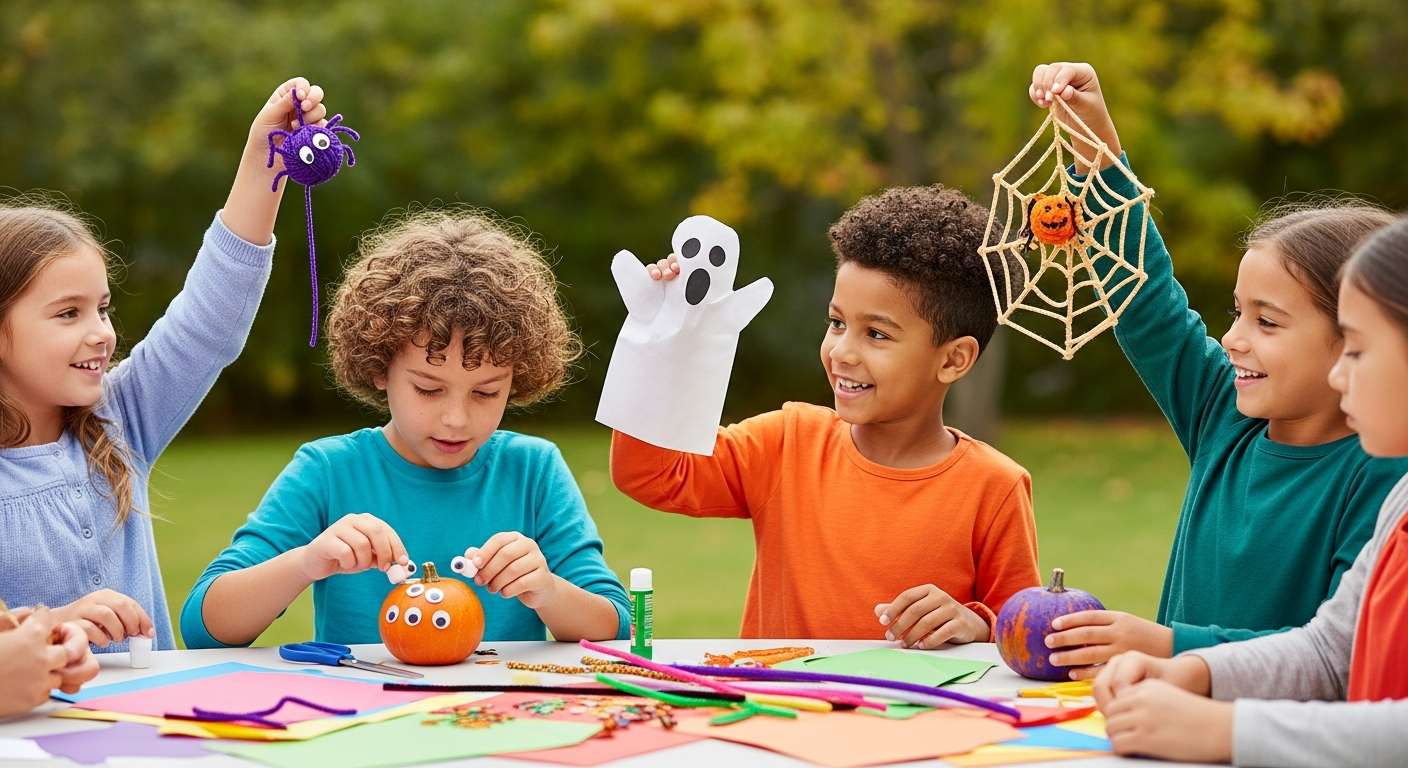
Table of Contents
- The Magic of Crafts: More Than Just Glitter and Glue
- Choosing the Perfect Craft: Considerations for School and Home
- Our Top Picks: Easy Kids Halloween Crafts for School & Home
- Maximizing the Speech Benefits with Speech Blubs
- Conclusion: Crafting Confidence, One Spooky Project at a Time
- Frequently Asked Questions
The crisp autumn air, the vibrant colors, and the promise of sweet treats—Halloween is undoubtedly one of the most exciting times of the year for children. But beyond the costumes and candy, this festive season offers a golden opportunity for creativity, learning, and, yes, even speech development. Have you ever considered how the simple act of crafting a spooky ghost or a grinning pumpkin can become a powerful tool for your child's communication skills?
This post isn't just about sharing a list of fun Halloween crafts; it's about transforming everyday activities into rich, interactive experiences that boost language, fine motor skills, and confidence. We'll explore why hands-on crafts are incredibly beneficial for developing minds and how you can maximize these moments for speech enrichment. From silly monsters to friendly witches, we'll dive into a variety of easy, school-friendly Halloween craft ideas perfect for children of all ages, ensuring that every glitter-covered handprint and yarn-wrapped mummy becomes a stepping stone toward clear and joyful communication. Our main message is simple: Halloween crafting can be a wonderfully messy, creative, and profoundly effective way to encourage your child to speak their minds and hearts.

The Magic of Crafts: More Than Just Glitter and Glue
Crafting is far more than just a way to pass the time; it’s a foundational activity for children's holistic development. When little hands cut, glue, paint, and manipulate materials, a symphony of learning happens. This is especially true when it comes to communication.
Why Crafts Are a Goldmine for Language Development
- Vocabulary Expansion: Every craft introduces new words. "What color is this paper?" "Is this glue sticky or runny?" "Let's make a fluffy ghost!" These seemingly small interactions introduce adjectives (spooky, shiny, rough), verbs (cut, paste, draw, squish), and nouns (pumpkin, bat, spiderweb).
- Following Instructions: Craft tutorials naturally require children to listen and follow sequential directions. "First, cut the circle. Next, glue the eyes." This practice is crucial for developing auditory processing skills and comprehension, laying the groundwork for more complex language structures.
- Descriptive Language: When children describe their creations—"My monster has three big, googly eyes and a long, green tongue!"—they're practicing using rich, detailed language. This encourages them to think about attributes, express ideas, and articulate their imaginative worlds.
- Storytelling and Narrative Skills: A finished craft isn't just an object; it's often the start of a story. A paper plate witch can fly to the moon, or a toilet paper roll monster can have an adventure. These imaginative scenarios are perfect for developing narrative skills, helping children organize their thoughts into coherent stories.
- Social Interaction: Crafting with peers or caregivers creates opportunities for conversation, sharing, asking for help, and expressing preferences. These social exchanges are vital for pragmatic language development—understanding how to use language in different social contexts.
At Speech Blubs, we believe in empowering children to "speak their minds and hearts." We know that every child deserves the chance to express themselves confidently. Our founders, all of whom experienced speech challenges as children, created Speech Blubs to be the tool they wished they had—a joyful, effective, and immediate solution for the 1 in 4 children who need speech support. We achieve this by blending scientific principles, like our unique "video modeling" methodology, with play. Children learn by watching and imitating their peers, providing a powerful "smart screen time" experience that’s a screen-free alternative to passive viewing and a wonderful tool for family connection.

The Role of Fine Motor Skills in Speech
You might wonder what fine motor skills have to do with speech. The connection is profound! The same neural pathways involved in precise hand movements—like cutting with scissors or holding a paintbrush—are closely linked to the muscles used for articulation in the mouth and tongue. Strengthening one often benefits the other. Activities that enhance dexterity and coordination in the hands can therefore contribute to better control over the intricate movements required for clear speech.
For a parent whose 3-year-old "late talker" loves animals, the "Animal Kingdom" section in Speech Blubs offers a fun, motivating way to practice 'moo' and 'baa' sounds through video modeling, mirroring the real-world connections made during crafts where they might glue fluffy cotton balls onto a sheep or make animal sounds for paper bag puppets. Ready to give your child the tools to thrive? Download Speech Blubs on the App Store or Google Play Store to get started!
Choosing the Perfect Craft: Considerations for School and Home
Before diving into our list of spooktacular ideas, let's consider a few factors to ensure your crafting experience is successful, whether it's in a busy classroom or a cozy home setting:
- Age Appropriateness: Toddlers need simple, large pieces and minimal steps. Preschoolers can handle more detailed cutting and gluing. Older children can engage with multi-step projects requiring finer dexterity.
- Mess Factor: Some crafts are wonderfully messy (shaving cream art!), while others are relatively clean (contact paper ghosts). Consider your environment and clean-up time.
- Time Commitment: Quick crafts are great for short attention spans or school party stations. Longer projects can be spread across multiple sessions.
- Materials Needed: Opt for crafts using common, inexpensive materials like paper plates, toilet paper rolls, construction paper, and cotton balls.
- Adult Involvement: Will children be able to complete this independently, or will they need significant adult help?
- Drying Time: Factor in time for paint or glue to dry if the craft needs to be transported or displayed immediately.
- Learning Opportunities: Think about how the craft can naturally encourage language, fine motor skills, and cognitive development.
Unsure if your child could benefit from extra speech support? Take our quick 3-minute preliminary screener to get a simple assessment and a free 7-day trial.
Our Top Picks: Easy Kids Halloween Crafts for School & Home
Here’s a collection of crafts designed to be fun, educational, and accessible, perfect for sparking imagination and communication.
1. Paper Plate Monsters & Witches
Materials: Paper plates, construction paper (various colors), googly eyes, markers, glue sticks, yarn, scissors. Process: Children decorate a paper plate to create a monster or witch face. They can cut out shapes for eyes, noses, and mouths, or draw directly on the plate. Add googly eyes for silliness, yarn for hair, or strips of construction paper for tentacles. Speech & Development Benefits:
- Shape Recognition: "Cut a circle for the eye," "a triangle for the nose."
- Color Naming: "Which color paper should be the monster's tongue?"
- Descriptive Language: "My monster is fuzzy and purple!" "The witch has a tall, pointy hat."
- Fine Motor: Cutting, gluing, coloring.
- Imagination: Encourage children to give their monsters names and personalities. "What does your monster like to eat?"
- Relatable Scenario: For a child who loves imaginative play but struggles to articulate their ideas, making a paper plate puppet can provide a tangible prop. As they move their witch puppet, they might be more inclined to make "whoosh" sounds or say simple phrases like "Fly, witch, fly!" The direct visual connection can ease the pressure of spontaneous speech, much like our app's video modeling.
2. Toilet Paper Roll Monsters & Ghosts
Materials: Empty toilet paper rolls, paint, markers, construction paper, googly eyes, pipe cleaners, glue. Process: Paint the toilet paper rolls in spooky colors. Once dry, add googly eyes, draw monster features, or glue on paper arms/legs. For ghosts, use white paint and add simple black marker faces. You can even cut fringe at the bottom for flowing ghost tails. Speech & Development Benefits:
- Action Verbs: "Roll," "paint," "glue," "draw," "cut."
- Creative Expression: Allowing children to design their own unique monster promotes self-expression.
- Storytelling: These make fantastic puppets! Encourage children to create a spooky show, making monster sounds ("Roar!") and using simple sentences.
- Fine Motor: Painting, gluing small pieces.
- Relatable Scenario: If a child is hesitant to speak in groups, creating a toilet paper roll monster allows them to voice the monster's character first. "My monster says 'Boo!'" can be a less intimidating way to participate.
3. Yarn-Wrapped Mummies & Spiderwebs
Materials: Cardboard cut-outs (mummy shape, spiderweb outline), white yarn, black yarn, glue. Process: For mummies, children wrap white yarn around a cardboard mummy shape, securing ends with glue. Add googly eyes once wrapped. For spiderwebs, cut a circular cardboard base and make radial lines with yarn, then weave yarn around the spokes. Add a plastic spider. Speech & Development Benefits:
- Patience & Focus: This activity requires sustained attention.
- Counting: "How many times have you wrapped the yarn?"
- Spatial Concepts: "Wrap over and under." "Go around the cardboard."
- Fine Motor: Wrapping, winding, and securing yarn strengthens small hand muscles.
- Descriptive Language: "The yarn feels fuzzy," "the spiderweb is sticky."
- Relatable Scenario: For children developing fine motor precision, yarn wrapping is excellent practice. As they wrap, you can narrate their actions, "You're wrapping the white yarn around the mummy, round and round!" This verbalization helps connect physical action with language. Our video modeling approach at Speech Blubs also builds these connections by showing actions and linking them to sounds and words, making learning intuitive and engaging.
4. Puffy Paint Pumpkins & Ghosts
Materials: Shaving cream, white glue, food coloring (orange, black, white), paper, paintbrushes/popsicle sticks. Process: Mix equal parts shaving cream and white glue. Add food coloring. Children use this "puffy paint" to create textured pumpkins, ghosts, or other Halloween shapes. Let it dry overnight for a wonderful 3D effect. Speech & Development Benefits:
- Sensory Exploration: Discuss textures: "It feels soft and squishy!" "It's so fluffy!"
- Color Mixing: If using primary colors, explore how they combine.
- Descriptive Language: "What a bumpy pumpkin!" "My ghost is so puffy!"
- Action Verbs: "Mix," "squeeze," "paint," "spread."
- Relatable Scenario: This sensory craft is perfect for children who are tactile learners. The unique texture can spark conversation. "What does it smell like?" "Does it feel cold?" These questions encourage sensory vocabulary and provide a natural scaffold for verbal responses.
5. Hidden Ghost Painting (Crayon Resist)
Materials: White paper, white crayon, watercolors, paintbrushes. Process: Children draw ghost shapes or other Halloween images on white paper with a white crayon. Then, they paint over the paper with watercolors. The crayon wax resists the paint, revealing the "hidden" drawing. Speech & Development Benefits:
- Predicting & Observing: "What do you think will happen when we paint?" "Look! The ghost appeared!"
- Cause and Effect: Understanding how the crayon creates the resist effect.
- Vocabulary: "Hidden," "reveal," "magical," "surprise."
- Fine Motor: Gripping the crayon and paintbrush.
- Relatable Scenario: The surprise element of this craft is highly motivating for children. A child who might usually be quiet can be prompted to exclaim, "Wow!" or "Ghost!" when the image appears, encouraging spontaneous vocalization and emotional expression.
6. Handprint & Footprint Art (Spooky Keepsakes)
Materials: Paper, non-toxic paint (orange, white, black, green), markers. Process: Paint your child's hand or foot and press it onto paper. Transform handprints into spiders (add legs with marker), bats (add wings), or monster faces. Footprints can become ghosts or even pumpkins. Speech & Development Benefits:
- Body Part Identification: "Where's your hand?" "Let's paint your foot!"
- Color Naming: "What color should we use for the spider?"
- Size Comparisons: "Your hand is getting so big!"
- Emotional Expression: "This spider looks happy/scary."
- Relatable Scenario: For very young children, this craft connects body awareness with language. Parents can tickle toes while painting, saying, "Tickle, tickle, foot!" creating a playful, language-rich interaction.
7. Shape Monsters
Materials: Construction paper in various colors, scissors, glue, googly eyes. Process: Cut out various geometric shapes (circles, squares, triangles, rectangles) from different colored construction paper. Children then arrange and glue these shapes onto another piece of paper to create unique monsters. Speech & Development Benefits:
- Shape & Color Recognition: Explicitly name the shapes and colors used.
- Size Concepts: "Can you find a big circle? Now a small triangle."
- Counting: Count the number of eyes, arms, or legs.
- Spatial Concepts: "Put the triangle on top of the square."
- Fine Motor: Cutting and arranging shapes.
- Relatable Scenario: This craft is fantastic for targeting specific vocabulary. For children working on "more" or "less," you can ask, "Do you want more green squares or less blue circles?" This direct questioning, paired with a visual task, reinforces learning.
8. Witch Hat Bookmarks
Materials: Black construction paper, markers, glitter, stickers, glue. Process: Cut out witch hat shapes from black construction paper. Children decorate their hats with colorful markers, glitter, and stickers. Speech & Development Benefits:
- Literacy Connection: Talk about books, reading, and characters. "Which book will your witch hat read?"
- Color & Item Naming: "What color sticker are you using?"
- Following Multi-Step Directions: "First cut, then decorate, then use it in a book!"
- Fine Motor: Decorating with small items.
- Relatable Scenario: This craft encourages a love for reading, which is directly linked to language development. After making the bookmark, have your child "read" a Halloween story, even if they're just looking at pictures and narrating what they see. This skill of connecting visuals to words is at the heart of our Reading Blubs app, which is included with our Yearly plan!
9. Stained Glass Pumpkins
Materials: Contact paper, tissue paper squares (orange, yellow, red), black construction paper, scissors. Process: Cut a pumpkin shape out of black construction paper. Cut out the middle of the pumpkin, leaving a border. Stick the black pumpkin frame onto a piece of contact paper (sticky side up). Children then fill the open pumpkin shape with colorful tissue paper squares. Cover with another piece of contact paper. Hang in a window! Speech & Development Benefits:
- Color & Shape Recognition: Naming the tissue paper colors and the pumpkin shape.
- Sensory Input: The sticky feel of the contact paper.
- Anticipation & Observation: "How will the light shine through?" Observing the colors when hung in a window.
- Fine Motor: Peeling backing from contact paper, placing small tissue squares.
- Relatable Scenario: The visual appeal of light shining through the "stained glass" can be mesmerizing. This moment provides a natural opportunity for descriptive language: "Look at the sunny orange light!" or "It's so bright!"
10. Jack-o'-Lantern Potato Stamping
Materials: Potatoes, knife (adult use only!), paint (orange, black, green), paper. Process: An adult cuts a potato in half. Then, carves a simple jack-o'-lantern face (eyes, nose, mouth) into the flat surface of one potato half. Children dip the potato stamp into orange paint and stamp pumpkins onto paper. Once dry, they can add faces with black paint or markers. Speech & Development Benefits:
- Patterning: Create a sequence of stamped pumpkins.
- Cause and Effect: "When I press down, a pumpkin appears!"
- Vocabulary: "Stamp," "press," "face," "seed."
- Creative Extension: Encourage drawing a pumpkin patch scene around the stamped pumpkins.
- Relatable Scenario: Stamping is a satisfying sensory experience. You can ask, "What kind of face will your pumpkin have?" or prompt them to make a happy/sad/silly face sound, linking emotion to their art.
11. Glow-in-the-Dark Ghosts
Materials: White tissue paper, glow-in-the-dark paint, black markers, string. Process: Cut ghost shapes from white tissue paper. Decorate with black marker faces. Paint the ghost with glow-in-the-dark paint. Once dry and "charged" in light, they'll glow in the dark! Speech & Development Benefits:
- Opposites: "Light" vs. "dark," "visible" vs. "hidden."
- Predicting: "What will happen when we turn off the lights?"
- Excitement & Surprise: Generating "oohs" and "aahs" when the ghosts glow.
- Fine Motor: Cutting tissue paper, drawing faces.
- Relatable Scenario: The magic of a glowing ghost can be a fantastic conversation starter. "Can you make a spooky ghost sound?" or "Where should our ghost hide in the dark?" These questions encourage both sound production and imaginative play.
12. Spooky Slime
Materials: Clear glue, liquid starch or contact lens solution + baking soda, food coloring (green, orange, purple), glitter, small plastic spiders or googly eyes. Process: Follow a simple slime recipe. Once the base is made, add spooky colors, glitter, and tiny Halloween trinkets. Speech & Development Benefits:
- Sensory Vocabulary: "Stretchy," "squishy," "gooey," "cold," "sticky."
- Action Verbs: "Mix," "stir," "stretch," "poke."
- Following Multi-Step Directions: Slime recipes are perfect for this.
- Problem-Solving: If the slime is too sticky, what can we add?
- Relatable Scenario: Slime is inherently engaging for children. Its unique texture invites descriptive language. As they play, ask, "How does it feel?" or "What can you make with it?" encouraging them to verbalize their sensory experience and imaginative ideas. Many parents find this kind of interactive, hands-on play incredibly valuable alongside the structured learning offered by apps like Speech Blubs.
Maximizing the Speech Benefits with Speech Blubs
While these crafts are powerful on their own, pairing them with the right tools can supercharge your child's communication journey. At Speech Blubs, we are committed to providing an immediate, effective, and joyful solution for children, bridging the gap between engaging play and targeted speech development.
After a fun crafting session, you might notice your child's growing curiosity and desire to communicate. This is where Speech Blubs shines as a partner in their journey. Our app uses "video modeling," where children watch and imitate their peers, engaging mirror neurons in their brains to learn new sounds and words. This approach, backed by scientific research (which you can explore on our research page), provides an interactive and less intimidating way for children to practice articulation and expand their vocabulary, echoing the natural imitation that happens during crafting.
Consider a scenario: your child just finished making a "shape monster." Now, open the Speech Blubs app and explore sections like "Things That Go" (if their monster is a vehicle hybrid) or "Animal Kingdom" (if it's a creature). This directly translates their creative, tangible experience into targeted speech practice. They can make the sounds of cars or animals, seeing other children doing the same, reinforcing the link between objects, sounds, and words. This isn't passive screen time; it's smart screen time that actively involves your child in their learning. See what other parents are saying about their child's success with Speech Blubs by visiting our testimonials page.
Unlock the Full Potential with Our Yearly Plan
We offer transparent pricing designed to provide the best value and support for your child's continuous development:
- Monthly Plan: $14.99 per month.
- Yearly Plan: $59.99 per year, which breaks down to just $4.99 per month.
The Yearly plan is clearly the best choice, offering 66% savings compared to the monthly option, alongside exclusive, high-value features:
- 7-day free trial: Experience the full Speech Blubs app before committing.
- Extra Reading Blubs app: Boost early literacy skills alongside speech development.
- Early access to new updates: Be the first to enjoy new features and content.
- 24-hour support response time: Get prompt assistance whenever you need it.
The Monthly plan does not include these significant benefits. We encourage you to choose the Yearly plan to get the free trial and the full suite of features, ensuring a comprehensive and sustained journey for your child's communication growth. Create your account and begin your 7-day free trial today by selecting the Yearly plan option!
Conclusion: Crafting Confidence, One Spooky Project at a Time
Halloween crafts offer a unique blend of creativity, festivity, and developmental benefits that extend far beyond simply decorating for the holiday. They provide invaluable opportunities for children to refine fine motor skills, expand their vocabulary, practice following instructions, and unleash their imaginations—all crucial elements for fostering strong communication abilities. By engaging in these simple, fun projects, you're not just making a mummy; you're building a foundation for confident self-expression.
Remember, every "ooh!" over a glowing ghost or "roar!" from a paper bag monster is a step forward in your child's speech journey. And when combined with the targeted, joyful learning experiences offered by Speech Blubs, these playful moments transform into powerful accelerators for communication growth. We're here to help every child speak their minds and hearts, and with tools like these crafts and our app, that goal is well within reach.
Ready to embark on this exciting journey with your child? Give them the gift of confident communication and joyful learning. Start your 7-day free trial today by downloading Speech Blubs and choosing our Yearly plan to unlock all the premium features and our bonus Reading Blubs app. It's the best value for sustained support in your child's development!
- Download Speech Blubs on the App Store
- Get Speech Blubs on the Google Play Store
- Create your account and begin your 7-day free trial today (Remember to select the Yearly plan for the best value and full features!)
Frequently Asked Questions
1. What age are these Halloween crafts suitable for?
Many of the crafts listed are adaptable for various age groups, from toddlers (with adult assistance) to elementary school children. For toddlers and preschoolers, focus on crafts with large pieces, simple steps, and sensory elements. Older children can engage with more detailed cutting, multi-step instructions, and creative embellishments, allowing them to express more complex ideas. We’ve included options that cater to a broad range of developmental stages.
2. How do crafts specifically help with speech development?
Crafts are fantastic for speech development because they naturally create opportunities for language. They introduce new vocabulary (colors, shapes, textures, action verbs), require children to follow verbal instructions (building listening comprehension), encourage descriptive language (describing their creations), and spark storytelling (giving characters to their crafts). The fine motor skills used in crafting also contribute to the dexterity needed for clear articulation.
3. What's the best way to incorporate Speech Blubs with these Halloween crafts?
You can seamlessly integrate Speech Blubs by connecting the craft theme to activities in the app. For example, after making animal-themed crafts, explore the "Animal Kingdom" section in Speech Blubs to practice animal sounds and names. If you make monster puppets, ask your child what sounds their monster makes, then look for similar sound production activities in the app. The app's video modeling reinforces the real-world learning from crafts, providing a structured yet playful environment for speech practice.
4. How do I get started with Speech Blubs and ensure I get the best value?
Getting started is easy! You can download Speech Blubs directly from the Apple App Store or the Google Play Store, or create an account on our website. To get the best value and unlock all premium features, including a 7-day free trial, the Reading Blubs app, and early access to new content, choose our Yearly plan for just $59.99 (which is $4.99/month), saving you 66% compared to the Monthly plan.
About the author