
Spooky Cute: The Best Toddler Ghost Footprint Craft
 By Speech Blubs Team•Feb 20, 2026•15 min.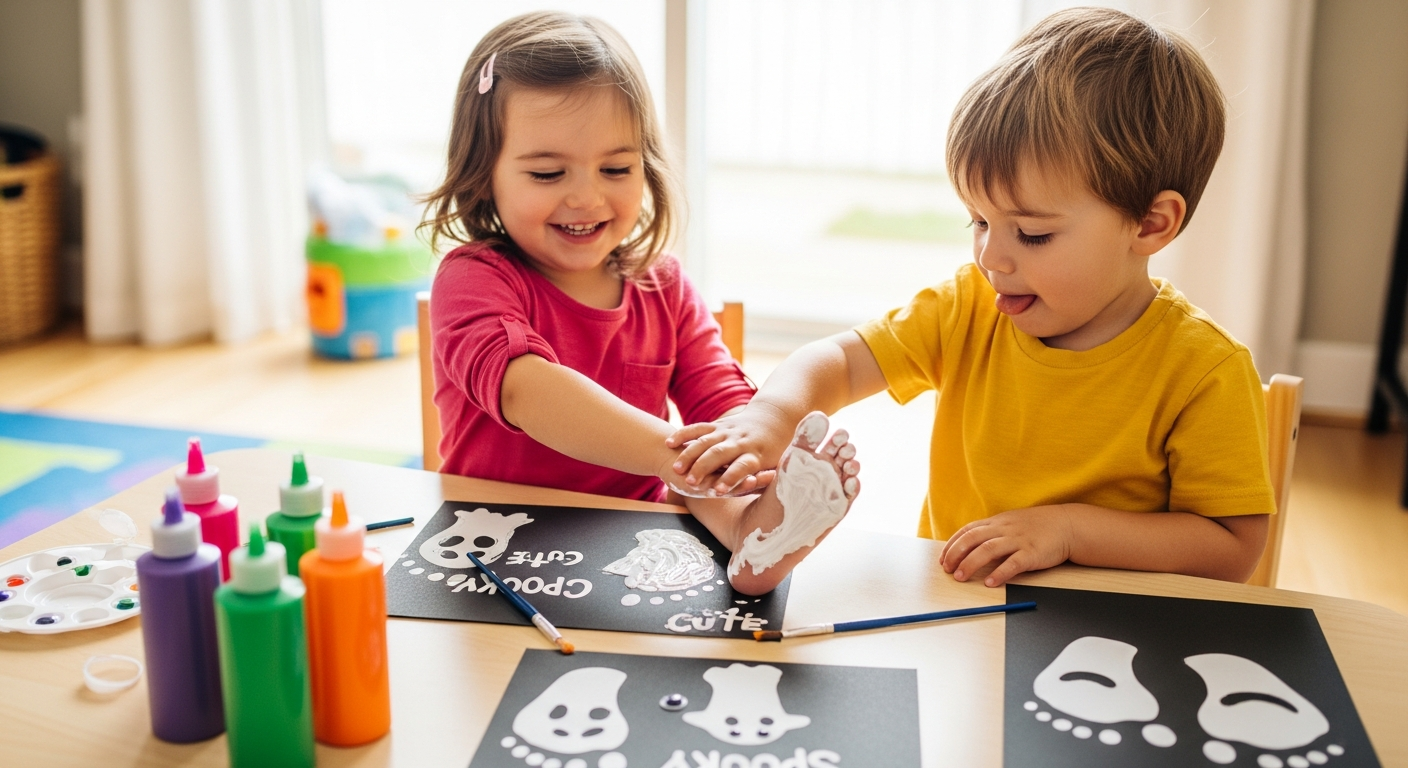
Table of Contents
- Introduction
- Why Sensory Crafts Matter for Toddlers
- Option 1: The Classic "Trick or Treat, Smell My Feet" Card
- Option 2: The Clay Footprint Ghost Ornament
- Option 3: The "Ghosts of the House" Canvas Masterpiece
- From Messy Play to Smart Screen Time
- Why Choose Speech Blubs?
- Finding the Best Value for Your Family
- Practical Scenario: The "Animal Kingdom" Connection
- Encouraging Success with Messy Art
- The Lasting Impact of Family Traditions
- Conclusion
- FAQ
Introduction
Have you ever looked at your child’s tiny shoes and felt a sudden, sharp pinch in your heart realizing how quickly those little feet are growing? It seems like only yesterday they were newborn booties, and now they are stomping through puddles and running toward every adventure. As the leaves turn amber and the crisp autumn air settles in, Halloween offers the perfect opportunity to freeze time, even if just for a moment. This season isn't just about candy and costumes; it’s about creating lasting memories and celebrating the incredible developmental leaps your little one is making every single day.
The purpose of this blog post is to guide you through the wonderful world of the toddler ghost footprint craft—a simple, sensory-rich activity that results in a precious keepsake you’ll treasure for decades. We will cover three different ways to create these "spook-tacular" prints, explore the developmental benefits of messy play, and show you how to transition from hands-on crafting to "smart screen time" that supports your child's communication skills.

At Speech Blubs, we believe that every "Boo!" and every giggle is a step toward a child learning to speak their mind and heart. Our mission is to empower families to find joy in communication, and sometimes, that journey starts with a little bit of white paint and a very ticklish foot. By the end of this article, you’ll have everything you need to host a successful crafting afternoon that fosters connection, builds confidence, and captures a snapshot of your child’s childhood.
Why Sensory Crafts Matter for Toddlers
Before we dive into the paint and paper, let’s talk about why we, as experts in child development, advocate so strongly for activities like the toddler ghost footprint craft. For a toddler, the world is a giant laboratory. Every texture, temperature, and movement is a data point helping them understand how their body works and how they fit into their environment.
The Power of Touch
When you paint the bottom of your toddler’s foot, you aren't just making art; you are providing a high-intensity sensory experience. The cold, wet sensation of the paint can be surprising, funny, or even a little bit strange for some children. This type of sensory play is crucial for developing the nervous system. It helps children learn to process different tactile inputs, which can actually help with transitions later in life—like getting used to the feeling of new clothes or different food textures.
Building Fine and Gross Motor Skills
While the footprint itself is the star of the show, the process of getting there involves significant motor work. Your child has to practice balance (gross motor) as they lift their foot to be painted or stand still while the print is made. Later, when they help add the ghost’s eyes or "Boo!" stickers, they are honing their fine motor skills and hand-eye coordination. These are the same foundational skills that will eventually help them hold a pencil or button their own coat.
Language Development Through Play
As we often emphasize at Speech Blubs, play is the "work" of childhood, and it is the primary vehicle for language acquisition. During this craft, you have a golden opportunity to narrate the experience. Using words like "cold," "sticky," "white," "press," and "tickle" helps build your child's vocabulary in a context that is meaningful to them.

For a parent whose 3-year-old "late talker" is working on initial consonant sounds, the toddler ghost footprint craft is a goldmine. You can practice the "B" sound in "Boo!" or the "G" sound in "Ghost" and "Go!" in a way that feels like a game rather than a lesson. This is very similar to how we use video modeling in our app, where children learn by watching and imitating their peers in a fun, low-pressure environment.
Option 1: The Classic "Trick or Treat, Smell My Feet" Card
This is perhaps the most popular version of the toddler ghost footprint craft because it is easy, inexpensive, and makes for a hilarious greeting card for grandparents.
Supplies Needed:
- Black cardstock or heavy construction paper
- White washable tempera paint (non-toxic is a must!)
- A foam brush or large paintbrush
- A black Sharpie or black paint for the eyes
- Baby wipes (keep these within arm's reach!)
Step-by-Step Instructions:
- Preparation is Key: Lay out your black paper on a flat surface. If your toddler is very young, it might be easier to place the paper on the floor while they sit in a high chair or on your lap.
- The Tickle Phase: Dip your foam brush into the white paint and coat the bottom of your child's foot. Expect some giggles! This is a great time to use descriptive language. "Look, it's white paint! Does it feel cold?"
- The Stamp: Firmly but gently press their foot onto the black paper. Make sure to press down on each tiny toe to get a clear print.
- The Quick Clean: Before they can take a step and leave "ghost" tracks across your carpet, use those baby wipes to clean the foot immediately.
- Adding the Personality: Once the white paint is completely dry, it’s time to turn that footprint into a ghost. Flip the paper so the heel is at the top (this will be the ghost's head) and the toes are at the bottom (the ghost's "sheet").
- The Face: Use your black Sharpie or black paint to add two oval eyes and a round "O" for a mouth on the heel area.
- The Punchline: At the bottom of the card, write "Trick or Treat, Smell My Feet!" Don't forget to add your child's name and the year on the back.
Expert Tip: If your child is hesitant about the paint on their feet, don't force it. You can try a "practice" run with just water on a chalkboard or dark construction paper first to show them it's okay!
Option 2: The Clay Footprint Ghost Ornament
If you want something a bit more permanent than paper, a clay keepsake is a wonderful choice. These make excellent ornaments for a "Halloween tree" or a special wall hanging.
Supplies Needed:
- Air-dry clay (like Crayola) or DIY salt dough
- A rolling pin
- White acrylic paint
- A straw (to make a hole for hanging)
- Ribbon or twine
Step-by-Step Instructions:
- Roll it Out: Roll your clay to about 1/2 inch thickness. You want it thick enough to hold the impression but not so heavy that it won't hang properly.
- The Impression: Press your toddler's foot firmly into the clay. You may need to help them balance to get a deep enough "ghost" shape.
- Trim the Edges: Use a butter knife (adults only!) to cut a ghostly shape around the footprint, leaving a little bit of a border.
- Make it Hangable: Use a straw to poke a hole at the top of the "head" (the heel).
- The Waiting Game: Let the clay dry according to the package instructions. This usually takes 24-48 hours.
- Paint and Decorate: Once dry, paint the entire piece white. After that coat dries, add the black eyes and mouth.
- Finish it Off: Thread your ribbon through the hole, and you have a beautiful, 3D toddler ghost footprint craft that will last for years.
Option 3: The "Ghosts of the House" Canvas Masterpiece
For families with multiple children, creating a "Ghosts of the House" canvas is a sweet way to show the different sizes of everyone’s feet.
Supplies Needed:
- One large pre-stretched canvas
- Black acrylic paint (for the background)
- White paint (for the feet)
- Glow-in-the-dark paint (optional but highly recommended!)
Step-by-Step Instructions:
- Set the Stage: Paint your entire canvas black and let it dry completely.
- Line Up the Spooks: Start with the oldest child (the biggest foot) on one side and work your way down to the baby.
- The Footprint Process: Follow the same painting and stamping process as the paper version, but on the canvas.
- Make it Glow: Once the white footprints are dry, go over them with a layer of glow-in-the-dark paint. This adds an extra layer of "magic" for the kids when you turn the lights off!
- Labeling: Write each child's name under their footprint ghost. This becomes a beautiful piece of seasonal decor you can bring out every October.
From Messy Play to Smart Screen Time
After a busy afternoon of painting and crafting, both you and your toddler might need a little downtime. This is where we often see parents turn to the TV for a "cartoon break." While there is a time and place for passive viewing, we advocate for smart screen time—experiences that are interactive, educational, and designed to foster real-world connection.
Our app was born from the personal experiences of our founders, who all grew up with speech problems. They created the tool they wished they had: an immediate, effective, and joyful solution for the 1 in 4 children who need speech support. We use video modeling, a scientifically proven method where children watch other children perform speech exercises. This peer-to-peer connection is incredibly powerful. When a toddler sees another child making a "Boo!" sound or a "Ghost" face, they are much more likely to imitate it themselves.
If you are unsure where your child stands with their communication milestones, we offer a quick 3-minute preliminary screener. It consists of 9 simple questions and provides you with a personalized assessment and a next-steps plan. It’s a great way to gain peace of mind or identify areas where your child might need a little extra boost.
Why Choose Speech Blubs?
We know there are many resources out there, but we take pride in our unique approach. We don't just want kids to look at a screen; we want them to use the screen as a springboard to talk to you. Our app is designed for "co-play," meaning it's best used when you are right there alongside your child, cheering them on.
Our methodology is backed by science, focusing on mirror neurons—the parts of the brain that fire when we watch someone else perform an action. By watching their peers, children build the confidence to try new sounds and words. You can read testimonials from other parents who have seen their children's frustration melt away as their ability to communicate grows.
Realistic Expectations
It’s important to remember that every child’s journey is different. We don't promise that your child will be reciting Shakespeare in a month. Instead, we focus on fostering a love for communication, reducing the frustration that comes from not being understood, and creating joyful family learning moments—much like the joy you feel when looking at a toddler ghost footprint craft.
Finding the Best Value for Your Family
We want to be completely transparent about our pricing so you can make the best choice for your family. We offer two main plans:
- Monthly Subscription: $14.99 per month. This is a great way to test the waters.
- Yearly Subscription: $59.99 per year.
The Yearly Plan is our most popular option for a reason. Not only does it save you 66% compared to the monthly rate (bringing the cost down to just $4.99/month), but it also includes several exclusive features:
- A 7-Day Free Trial: You can explore everything we have to offer before committing.
- Reading Blubs: Access to our companion app designed to help with early literacy skills.
- Priority Support: You’ll get 24-hour support response times and early access to all new updates.
To get started with the full suite of features and your free trial, we recommend choosing the Yearly plan. You can download Speech Blubs on the App Store or find us on the Google Play Store. If you prefer to set up your account on a computer first, you can visit our Web Sign-Up Page.
Practical Scenario: The "Animal Kingdom" Connection
Imagine you are doing the toddler ghost footprint craft with your 2-year-old. They are having a blast, but they aren't saying much. After the craft, you open Speech Blubs and go to the "Animal Kingdom" section. Your child sees a peer making a "moo" sound. Because they are already in a playful, creative headspace from the painting activity, they feel empowered to try the sound themselves. You celebrate that "moo" just as much as you celebrated the footprint. This is how we bridge the gap between physical play and digital learning.
By combining the tactile experience of a craft with the modeling found in our app, you are providing a multi-sensory environment where language can truly flourish.
Encouraging Success with Messy Art
If the thought of paint and toddlers makes you a little nervous, here are a few expert tips to ensure your toddler ghost footprint craft goes smoothly:
- Choose Your Time Wisely: Don't try this right before naptime or when your child is hungry. Choose a time when they are well-rested and alert.
- Dress for Success: Or rather, dress for a mess. Put your toddler in an old t-shirt or just a diaper. You should wear something you don't mind getting a smudge on, too!
- Contain the Chaos: Use a drop cloth, old newspapers, or even an old shower curtain liner under your workspace.
- Have a "Clean Team" Ready: Have a bowl of warm soapy water or a pack of wipes immediately available. The shorter the time between the footprint and the cleanup, the less chance of paint ending up on your sofa.
The Lasting Impact of Family Traditions
Creating a toddler ghost footprint craft is about more than just a piece of paper. It’s about building a tradition. Every year, as you pull out these crafts to decorate your home, you’ll be reminded of that specific age and stage. You’ll remember the way they giggled when the brush touched their heel, or the look of pride on their face when they saw their "ghost" for the first time.
These moments of connection are the heartbeat of childhood. They build a sense of security and belonging in your child. When a child feels seen, heard, and celebrated, they are much more likely to have the confidence to speak their mind and heart.
Conclusion
The toddler ghost footprint craft is a quintessential Halloween activity that perfectly balances sensory exploration, motor skill development, and emotional bonding. Whether you choose to make a simple card, a clay ornament, or a large canvas, the result is a priceless snapshot of your child’s growth.
Remember that these activities are just one part of your child's developmental journey. Supporting their communication skills can happen during messy play, during quiet reading time, and even during carefully selected "smart screen time."
At Speech Blubs, we are honored to be a part of your family's story. We invite you to join our community of parents who are finding joy in watching their children find their voices. Ready to take the next step? Download Speech Blubs on the App Store or Google Play to begin your journey. For the best value, including the 7-day free trial, the Reading Blubs app, and early updates, be sure to select our Yearly Plan. Let’s make this Halloween a season of growth, laughter, and lots of "Boo-tiful" new words!
FAQ
1. What is the best type of paint to use for a toddler ghost footprint craft?
For any craft involving a child's skin, you must use non-toxic, washable tempera paint. Acrylic paint is great for canvases or adult crafts, but it can be harder to wash off skin and may cause irritation for some toddlers. Always check the label to ensure it is safe for children and easy to clean with soap and water.
2. My toddler hates the feeling of paint on their feet. Can I still do this craft?
Absolutely! Not every child enjoys the sensory experience of wet paint. You can try a "dry" version by tracing their foot on white paper, cutting it out, and then decorating it. Alternatively, you can put the paint inside a gallon-sized Ziploc bag, place their foot on top of the bag to "squish" the paint around, and then take the print. This provides the visual without the direct tactile sensation.
3. How can I use this craft to help my child's speech delay?
Use the craft as a "communication temptation." You can hold the white paint and wait for your child to make a sound or use a gesture before you "paint" their foot. Use simple, repetitive words like "Up, up, up!" as you lift their foot and "Down!" as you press it. The goal is to make the sounds fun and associated with a positive, exciting activity.
4. Is the Yearly plan for Speech Blubs really better than the Monthly one?
Yes, we designed the Yearly plan to provide the most comprehensive support for families. While the Monthly plan gives you access to the main app, the Yearly plan includes a 7-day free trial to start, the additional Reading Blubs app for literacy, priority 24-hour support, and early access to new content. Plus, at $59.99 a year, it is a 66% savings over paying monthly!
About the author