
Spooky Fun: Best Halloween Kid Games for Party
 By Speech Blubs Team•Jan 28, 2026•22 min.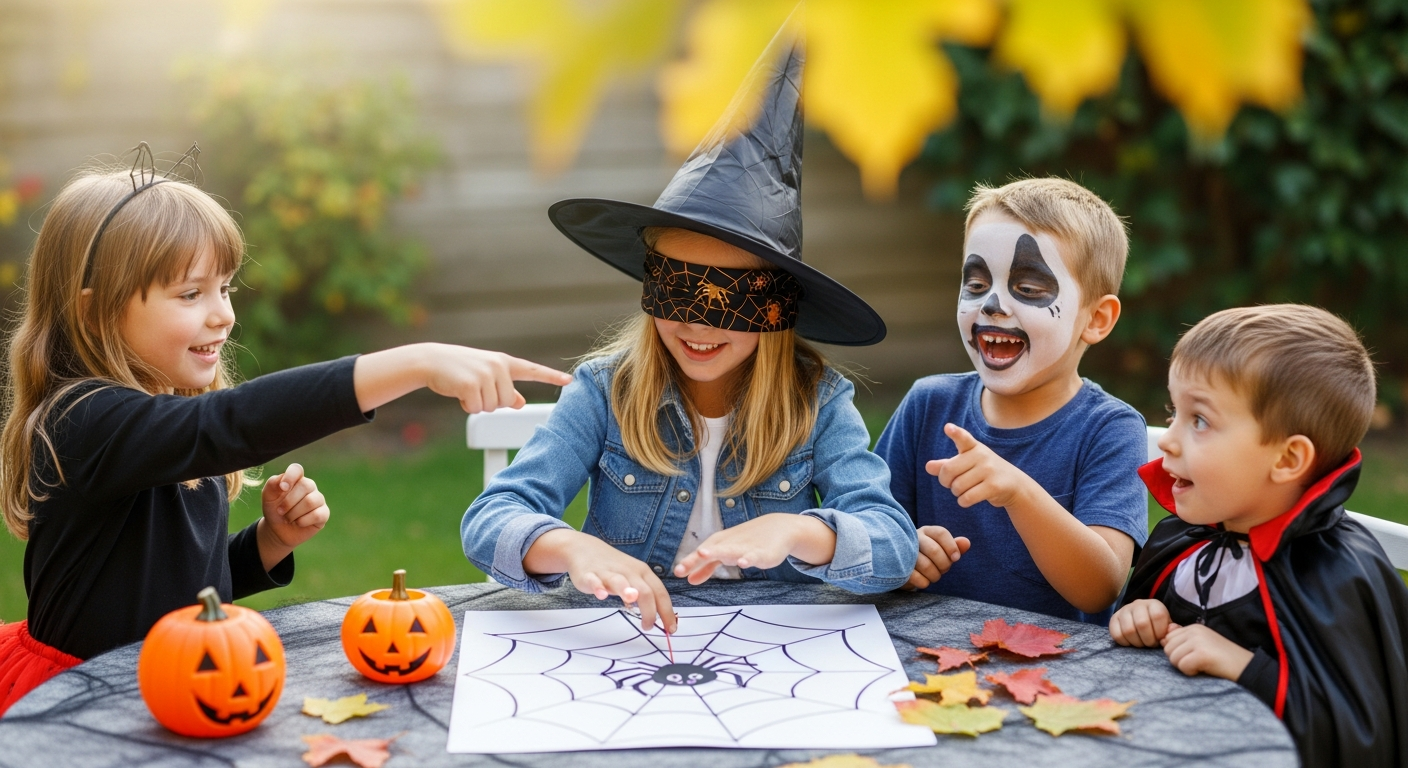
Table of Contents
- Why Halloween Parties Are More Than Just Candy
- Planning Your Spooktacular Celebration: Age-Appropriate Fun
- Classic Halloween Games with a Developmental Twist
- Active & Energetic Halloween Games
- Creative & Calmer Halloween Activities
- Boosting Communication with Speech Blubs: Smart Screen Time for Happy Little Talkers
- Spooky Snacks & Treats
- Making the Most of Your Speech Blubs Journey
- Conclusion
- FAQ
Halloween is more than just costumes and candy; it's a magical time brimming with opportunities for imagination, social connection, and delightful learning. As parents, we often look for ways to channel that boundless energy into meaningful experiences, and a Halloween party is the perfect canvas. But how do you throw a bash that's not only loads of fun but also subtly nurtures your child's developing communication and social skills?
This post is your ultimate guide to hosting an unforgettable Halloween party filled with games and activities that do just that. We'll dive into classic spooky challenges, active adventures, and creative crafts, all designed to engage children of various ages while secretly boosting their language, motor, and social-emotional growth. From the moment your little ghost or goblin arrives, to the last "trick-or-treat," we’ll explore how every game can be a step forward in their communication journey. Get ready to transform your home into a hub of "smart screen time" experiences and joyful learning, creating memories that last long after the last candy wrapper is gone.

Why Halloween Parties Are More Than Just Candy
While the allure of candy is undeniable, Halloween parties offer a rich tapestry of developmental benefits for children. Beyond the sugar rush, these gatherings are vibrant social settings where kids learn crucial life skills. Think about the simple act of choosing a game: it involves negotiation, understanding rules, and expressing preferences. Participating in a group activity requires turn-taking, sharing, and empathetic responses, whether cheering on a friend or comforting someone who didn’t win.
The imaginative play inherent in costumes and spooky themes sparks creativity and narrative skills. Children might invent backstories for their characters or describe their costume to others, expanding their vocabulary and descriptive language. The structured chaos of party games also helps with impulse control and following instructions, which are foundational for effective communication and learning in any setting.
At Speech Blubs, we passionately believe in the power of play as a gateway to communication. Our mission is to empower children to speak their minds and hearts, and we know that early, engaging experiences are key. These parties are real-world laboratories for practicing the very skills our app nurtures, blending scientific principles with joyful, interactive moments. We provide a screen-free alternative to passive viewing experiences and a powerful tool for family connection, ensuring that every interaction, whether digital or in-person, contributes positively to a child's overall development.
Planning Your Spooktacular Celebration: Age-Appropriate Fun
The key to a successful Halloween party lies in tailoring activities to your guests' age range. What thrills a five-year-old might bore a ten-year-old, and what's "spooky" for a toddler might be genuinely terrifying. By considering the developmental stage of the children, you can ensure everyone has a blast and benefits from the experience.
Younger Ghouls (Toddlers & Preschoolers, 2-4 years)
For the littlest monsters, focus on sensory experiences, simple rules, and lots of repetition. Their attention spans are short, so have many quick, low-pressure activities. Emphasize gross motor skills, color recognition, and basic vocabulary. Keep the "scary" elements mild and playful.

- Goals: Basic vocabulary (colors, shapes, animals, actions), following simple one-step instructions, turn-taking, sensory exploration, gross motor development.
- Examples: Gentle "Monster Mash" dancing, simple "Pin the Tail on the Pumpkin," "Spooky Box" with soft, non-intimidating textures, decorating mini pumpkins with stickers, or a mini "Haunted Hunt" for large, easily identifiable Halloween objects.
Elementary Enthusiasts (5-8 years)
This age group thrives on imagination, friendly competition, and a bit more challenge. They can understand multi-step instructions and enjoy games with clear winners and losers, though sportsmanship should always be encouraged. They're developing social problem-solving skills and love expressing themselves.
- Goals: Expanding vocabulary, descriptive language, storytelling, understanding complex rules, strategic thinking, cooperation, fine motor skills, social negotiation.
- Examples: "Mummy Wrap Race," "Apple Bobbing," "Haunted Scavenger Hunt" with riddles, "Halloween Bingo," "Frankenstein Bowling," or "Marshmallow Toss."
Older Tricksters (9+ years)
Older children appreciate more complex games, strategic thinking, and collaborative challenges. They enjoy being creative, taking on leadership roles, and often have a dry wit that can be incorporated into "spooky" themes.
- Goals: Advanced vocabulary, abstract thinking, critical problem-solving, team building, sustained attention, deductive reasoning, persuasive language (e.g., during charades).
- Examples: "Giants, Wizards, Trolls" (like rock, paper, scissors but active), "Wink Murder," elaborate "Costume Relay" with funny props, or "Halloween Charades" with more complex phrases.
Remember, regardless of age, adult involvement is key. Play with the children, model good communication, and celebrate effort over perfection. These parties are fantastic opportunities for family connection, where you can join in the fun and reinforce the joy of communicating.
Classic Halloween Games with a Developmental Twist
Let's dive into some timeless Halloween games that aren't just fun, but also subtly nurture key developmental skills. We’ll look at how these familiar favorites can become tools for boosting communication, motor skills, and social interaction.
Mummy Wrap Race
- How to Play: Divide children into teams of two or three. One child is the "mummy," and the others use toilet paper or streamers to wrap them from head to toe (leaving face clear for safety and breathing!) as quickly as possible. The first team to completely mummify their teammate wins.
- Developmental Benefits:
- Fine Motor Skills: Ripping toilet paper, wrapping, and securing.
- Cooperation & Teamwork: Children must work together, communicate roles ("You hold this end!" "Wrap tighter!"), and coordinate their movements.
- Following Instructions: Understanding the goal (wrap the mummy) and the constraints (don't cover the face).
- Expressive Language: Encourages children to give and receive simple instructions and comment on the process ("Look!").
- Social Interaction: Promotes positive peer interaction and shared laughter.
Apple Bobbing (or "Doughnut Eating Race")
- How to Play:
- Apple Bobbing: Fill a large tub or bucket with water and float apples. Children try to grab an apple using only their mouths, no hands. For a less messy alternative, or with younger children, attach doughnuts to a string and hang them from a line. Children try to eat the doughnut without using their hands.
- Doughnut Eating Race: Hang donuts from a string at eye level. Children race to eat their donut without using their hands.
- Developmental Benefits:
- Oral Motor Skills: The movements required to bite and chew the apple or doughnut without hands are excellent for strengthening jaw muscles and promoting oral awareness, crucial for speech sound development.
- Sensory Exploration: The cold water, the texture of the apple, the sweet stickiness of the doughnut – these engage multiple senses.
- Patience & Impulse Control: Waiting for a turn, trying repeatedly, and resisting the urge to use hands.
- Turn-Taking: A fundamental social skill reinforced in a fun, competitive setting.
Haunted Scavenger Hunt / Ghost Hunters
- How to Play: Hide Halloween-themed items (plastic spiders, fake eyeballs, mini pumpkins, glow sticks) around the party area. Provide clues (pictures for younger kids, riddles for older kids) and a "cauldron" or bag for collecting treasures.
- Ghost Hunters Variation: Hide a specific "ghost" figurine or picture. The child who finds it gets a small prize and then becomes the hider.
- Developmental Benefits:
- Vocabulary Expansion: Introducing and reinforcing words like "spider," "ghost," "bone," "creepy," "hidden."
- Problem-Solving: Deciphering clues and logically searching areas.
- Descriptive Language: Encouraging children to describe what they found, where they found it, and how it looks or feels. ("I found a sparkly spider under the big chair!")
- Spatial Concepts: Using prepositions like "under," "over," "behind," "next to."
- Listening Comprehension: Following instructions and understanding clues.
Pin the Tail on the Monster/Pumpkin
- How to Play: Draw or print a large image of a monster or pumpkin. Create "tails," "eyes," "noses," or "stems" for it. Blindfold each child in turn, spin them gently, and have them try to pin the missing part in the correct spot.
- Developmental Benefits:
- Body Part Recognition: Naming the parts being pinned (eye, nose, mouth).
- Spatial Awareness: Estimating direction and distance while blindfolded.
- Turn-Taking & Waiting: Essential social skills practiced while anticipating one's turn.
- Directional Language: Using words like "up," "down," "left," "right" when guiding friends.
- Humor & Social Connection: The silliness of misplaced features generates laughter and bonding.
These classic games, with a little intentional framing, become powerful platforms for skill development. They create natural opportunities for children to use language in context, practice motor skills, and navigate social dynamics. These are the foundational building blocks that apps like Speech Blubs then build upon, offering focused and engaging practice in a supportive environment. For instance, for a parent whose 3-year-old "late talker" loves animals, the "Animal Kingdom" section of Speech Blubs offers a fun, motivating way to practice "moo" and "baa" sounds, reinforcing those early animal names they might encounter in a Halloween scavenger hunt. Download Speech Blubs on the App Store or Google Play to explore these exciting activities!
Active & Energetic Halloween Games
When you've got a house full of little monsters, you need games that help them burn off some energy! These active games are perfect for getting bodies moving, promoting coordination, and developing listening skills.
Monster Mash Musical Chairs/Mats
- How to Play: Arrange chairs in a circle (one less than the number of players) or place "monster mats" (large paper cutouts or fabric squares) on the floor. Play spooky Halloween music, and children dance around the chairs/mats. When the music stops, everyone scrambles to sit on a chair or stand on a mat. One chair/mat is removed each round until a winner is declared.
- Developmental Benefits:
- Listening & Auditory Processing: Children must listen intently for the music to stop.
- Gross Motor Skills: Dancing, running, stopping quickly, and maneuvering around others.
- Social Rules & Fairness: Understanding and adhering to the game's rules, dealing with winning and losing gracefully.
- Impulse Control: Learning to stop on cue rather than continuing to move.
- Body Awareness: Controlling movements in a crowded space.
Zombie Footsteps / Grandma's Footsteps
- How to Play: One person stands with their back to the group, acting as the "zombie." The other children (the "survivors") creep forward, trying to reach the zombie. When the zombie turns around, everyone must freeze. Anyone caught moving is out or sent back to the start. The last survivor to reach the zombie wins.
- Developmental Benefits:
- Impulse Control: Crucial for waiting and thinking before speaking or acting.
- Body Awareness & Control: Practicing stillness and subtle movements.
- Auditory Attention: Listening for the signal to freeze.
- Sequencing: Understanding the order of events in the game.
Limbo (Witch's Broom Limbo)
- How to Play: Use a witch's broomstick or a pole. Two adults hold the broomstick horizontally, gradually lowering it. Children take turns bending backward to pass under the broomstick without touching it or the floor with their hands/knees.
- Developmental Benefits:
- Gross Motor Skills & Flexibility: Enhances balance, coordination, and body control.
- Problem-Solving: Children experiment with different ways to get under the bar.
- Following Instructions: Understanding the rules of not touching the bar or falling.
- Encourages Movement: A fun way to get everyone stretching and moving.
Sack Races (Ghostly Sack Race)
- How to Play: Provide pillowcases or burlap sacks (decorated to look like ghosts, perhaps). Children step into the sacks, hold them up around their waists, and race by jumping from a starting line to a finish line. This can be played individually or as a relay.
- Developmental Benefits:
- Coordination & Balance: Jumping in a sack requires significant coordination.
- Gross Motor Skills: Builds leg strength and stamina.
- Friendly Competition: Learning to compete in a playful, supportive environment.
- Persistence: Encouraging children to keep trying even if they stumble.
These active games are fantastic for building overall physical readiness, which indirectly supports language development. A child who has good body control and can listen to and follow instructions in a physical game is often better equipped for focused learning, including speech practice. It fosters their attention and ability to regulate their bodies, which are vital precursors to concentrating on sounds and words.
Creative & Calmer Halloween Activities
Not all party games need to be high-energy. Sometimes, a calmer, more creative activity is just what a group of kids needs to wind down, express themselves, and engage in deeper language play. These activities are perfect for fostering fine motor skills, imagination, and descriptive language.
Pumpkin Decorating (Painting/Stickers)
- How to Play: Provide mini pumpkins, washable paints, brushes, glitter, googly eyes, and Halloween-themed stickers. Let children decorate their pumpkins freely. For a cleaner option, focus solely on stickers, markers, and glue-on embellishments.
- Developmental Benefits:
- Fine Motor Skills: Holding brushes, peeling stickers, gluing small items requires precision and strengthens hand muscles essential for writing.
- Color & Shape Vocabulary: Naming colors, describing shapes (round pumpkin, triangular eyes).
- Expressing Ideas: Children can describe their pumpkin creations, articulating their choices and the "story" behind their design.
- Following Multi-Step Instructions: "First, choose your paint, then carefully brush it on."
- Sensory Exploration: The feel of paint, the texture of a pumpkin.
Spooky Boxes (Mystery Feel Boxes)
- How to Play: Decorate several cardboard boxes with Halloween themes. Cut a hand-sized hole in each. Inside, place different textured items that feel "creepy" or "gross." Examples include peeled grapes (eyeballs), cooked spaghetti (worms), dried apricots (ears), or a glove filled with corn kernels (a dead man's hand). Children reach in without looking and describe what they feel.
- Developmental Benefits:
- Sensory Vocabulary: Using descriptive words like "slimy," "squishy," "bumpy," "cold," "rough," "smooth."
- Descriptive Language: Encourages children to articulate their tactile experiences and guesses.
- Imagination & Storytelling: Imagining what the "gross" items could be, and perhaps creating a short spooky story about them.
- Turn-Taking & Active Listening: Listening to others' descriptions and waiting for one's turn.
- Problem-Solving: Using sensory input to deduce what an object might be.
Halloween Bingo / Charades
- How to Play:
- Bingo: Create or print Halloween-themed Bingo cards with pictures or words (ghost, witch, pumpkin, bat). Call out items, and children mark them on their cards. The first to get Bingo wins.
- Charades: Write various Halloween-related words or phrases on slips of paper (e.g., "haunted house," "cackling witch," "trick-or-treat," "flying bat"). Children act them out without speaking, and others guess.
- Developmental Benefits:
- Vocabulary & Picture Recognition (Bingo): Reinforces object and concept names.
- Listening Comprehension (Bingo): Attending to spoken words and matching them to visuals.
- Expressive Language (Charades): Developing non-verbal communication, using body language to convey meaning.
- Inferential Thinking (Charades): Drawing conclusions from visual cues.
- Social Interaction: Group guessing, cheering, and shared enjoyment.
DIY Treat Bag / Cookie Decorating Station
- How to Play: Set up a table with plain paper treat bags or pre-baked sugar cookies. Provide markers, stickers, glitter, small Halloween stamps, icing, and sprinkles. Let children decorate their own treat bags or cookies.
- Developmental Benefits:
- Following Instructions: Especially for cookie decorating, "First the icing, then the sprinkles!"
- Fine Motor Skills: Precise movements for drawing, decorating, and manipulating small items.
- Social Interaction: Sharing materials, complimenting others' creations.
- Expressive Language: Talking about their designs, what they are making, and what they plan to put in their treat bags.
- Creativity: Unleashing artistic expression with a fun, festive theme.
These calmer activities provide a wonderful balance to the more boisterous games. They create opportunities for focused attention and detailed conversation. Our unique approach at Speech Blubs, using video modeling, works on a similar principle: children learn complex communication skills by watching and imitating their peers. Just as these activities encourage creative expression and detailed observation, our app leverages the power of mirror neurons to make learning new words, sounds, and social cues incredibly engaging and effective. It's a fantastic way to extend the learning and fun from your party into everyday "smart screen time" that truly makes a difference.
Boosting Communication with Speech Blubs: Smart Screen Time for Happy Little Talkers
We understand that as parents, you're constantly seeking effective and engaging ways to support your child's development. This is precisely why Speech Blubs was created. Our mission is deeply personal: our founders, who themselves grew up with speech problems, created the tool they wished they had – an immediate, effective, and joyful solution for the 1 in 4 children who need speech support. We are committed to empowering children to speak their minds and hearts, fostering a love for communication that lasts a lifetime.
At the heart of Speech Blubs is our unique "video modeling" methodology. Instead of passive viewing, children learn by watching and imitating their peers. This active engagement taps into mirror neurons, making the learning process incredibly intuitive and effective. It's truly "smart screen time" – a screen-free alternative to passive viewing experiences like cartoons, transforming tablet time into a powerful tool for family connection and developmental progress. Imagine the joy of watching your child actively mimicking sounds, words, and even facial expressions alongside their digital friends.
Speech Blubs in Action: A Practical Scenario
Let's consider a practical example. For a parent whose 3-year-old "late talker" loves animals, the "Animal Kingdom" section of Speech Blubs offers a fun, motivating way to practice "moo" and "baa" sounds. Imagine your child at a Halloween party, excited to identify a "cow" or a "sheep" costume. The repetition and visual cues in the app can reinforce those early animal names they might encounter, helping them to confidently label what they see.
It's not just about isolated sounds. Our app covers a wide range of skills, from early sounds and words to more complex concepts like numbers, colors, and social stories. These activities are designed for co-play; adult guidance is implicitly part of the experience, turning screen time into a shared learning adventure. We have been rated in the top tier of speech apps worldwide with a high MARS scale rating, and our scientific methodology is detailed on our research page. You can also read countless stories from parents just like you on our testimonials page who have seen incredible progress with their children.
Realistic Expectations and Lasting Benefits
While Speech Blubs is a powerful tool, it's essential to set realistic expectations. We don't promise that your child will be giving public speeches in a month. Instead, our focus is on the profound benefits of the process:
- Fostering a love for communication: Making learning fun and engaging encourages children to want to communicate more.
- Building confidence: Success within the app translates to confidence in real-world interactions.
- Reducing frustration: Providing a clear, supported path for skill acquisition can significantly lessen the frustration often associated with speech challenges.
- Developing key foundational skills: From articulation to social cues, we cover the building blocks of effective communication.
- Creating joyful family learning moments: The app is designed for parents and children to engage together, strengthening bonds and making learning a shared positive experience.
Speech Blubs is a powerful supplement to a child's overall development plan and, when applicable, professional speech therapy. It provides consistent, joyful practice that complements the work being done at home, school, or with a therapist. Ready to see the difference Speech Blubs can make? Create your account and begin your 7-day free trial today!
Spooky Snacks & Treats
No Halloween party is complete without some themed snacks! While we celebrate the importance of nourishing foods, these festive treats also offer wonderful opportunities for descriptive language and conversation.
- Satsuma Pumpkins: Get a black marker and draw jack-o'-lantern faces on satsumas or mandarins.
- Language Focus: "Round," "orange," "sweet," "peel," "funny face."
- Oreo Spiders: Twist apart Oreo cookies, place four black licorice laces on the cream filling (for eight legs), and reassemble. Use icing to attach edible googly eyes.
- Language Focus: "Crunchy," "creamy," "black," "spidery," "wiggly."
- Cheesy Broomsticks: Cut cheese slices into rectangles, then fringe one end to look like bristles. Wrap around pretzel sticks and secure with a chive.
- Language Focus: "Salty," "crispy," "yellow," "green," "stick."
- Chocolate-Covered Strawberry Ghosts: Dip strawberries in melted white chocolate and add two mini chocolate chips or edible googly eyes before the chocolate sets.
- Language Focus: "Sweet," "ghostly," "red," "white," "melting," "chilly."
As you prepare and serve these snacks, encourage your child to describe them. What do they look like? How do they smell? What do they taste like? These simple questions foster descriptive language and expand their food vocabulary, turning snack time into another fun learning opportunity.
Making the Most of Your Speech Blubs Journey
We believe in transparency and providing the best value to our families. When you decide to join the Speech Blubs family, we offer two main subscription plans:
- Monthly Plan: For $14.99 per month. This plan provides access to the core Speech Blubs app.
- Yearly Plan: For just $59.99 per year. This plan breaks down to an incredible value of just $4.99 per month!
The Yearly Plan is by far the superior choice and offers substantial advantages. Not only do you save 66% compared to paying monthly, but it also unlocks a suite of exclusive, high-value features designed to accelerate your child's communication journey:
- 7-Day Free Trial: Experience the full power of Speech Blubs before committing. The Monthly plan does not include this trial.
- The Extra Reading Blubs App: Get access to our supplementary Reading Blubs app, further enhancing early literacy skills alongside speech development.
- Early Access to New Updates: Be among the first to explore exciting new features and content.
- 24-Hour Support Response Time: Get quick assistance whenever you need it, ensuring a smooth and uninterrupted learning experience.
The Monthly plan, while flexible, does not include these additional benefits, nor does it offer a free trial. We highly recommend starting with the Yearly Plan to maximize your child's learning potential and enjoy all the premium features. It's a commitment to your child's development that pays off both in progress and in value.
Ready to embark on a joyful communication journey with your child? Download Speech Blubs on the App Store or Google Play Store today! Choose the Yearly plan to get your 7-day free trial and unlock the full suite of benefits, including the Reading Blubs app and priority support. Begin your journey to empowering your child's voice now!
Conclusion
Halloween parties are so much more than just a reason to dress up and eat candy. They are vibrant, sensory-rich environments that foster imagination, social interaction, and critical developmental skills. By thoughtfully choosing age-appropriate games and activities, we can transform a fun celebration into a powerful opportunity for growth, especially in the realm of communication. From the giggles during a Mummy Wrap Race to the descriptive language used in a Spooky Box, every moment can be a learning moment.
These real-world interactions lay crucial groundwork for confident communication, and at Speech Blubs, we are dedicated to building upon that foundation. Our app offers "smart screen time" that actively engages children through video modeling, making speech and language practice a joyful, effective, and peer-led experience. We are here to support every child's journey to speak their minds and hearts, reducing frustration and building confidence one fun activity at a time.
Don't let this Halloween pass by without unlocking its full potential for your child's development. Combine the magic of your party games with the proven methodology of Speech Blubs for a comprehensive approach to communication growth.
Ready to see the incredible progress your child can make? Start your 7-day free trial today by downloading Speech Blubs! Download on the App Store or Google Play, or sign up on our website. Remember to choose the Yearly Plan to receive your free trial, the bonus Reading Blubs app, and exclusive features for the best value and most comprehensive support!
FAQ
Q1: How can Halloween games help my child's speech development?
Halloween games are fantastic for speech development because they create natural, engaging contexts for communication. Activities like a "Haunted Scavenger Hunt" boost vocabulary and descriptive language, while "Mummy Wrap Race" encourages cooperation and following instructions. Games like "Spooky Boxes" develop sensory vocabulary, and "Halloween Charades" fosters non-verbal communication and inferential thinking. The fun and excitement motivate children to speak, listen, and interact more, strengthening foundational communication skills.
Q2: Is Speech Blubs suitable for all children, or just those with diagnosed speech delays?
Speech Blubs is designed to benefit a wide range of children! While it's a powerful tool for children with speech delays and disorders (our founders created it for this very reason), it's also excellent for typically developing children who want to expand their vocabulary, improve articulation, or practice social language skills. Our "video modeling" method and engaging activities make learning fun and accessible for everyone, turning screen time into "smart screen time" for any child aged 1-8. Unsure if your child could benefit? Take our quick 3-minute preliminary screener to get a simple assessment and a free 7-day trial.
Q3: What makes Speech Blubs different from other speech therapy apps?
Speech Blubs stands out due to its unique "video modeling" methodology, where children learn by actively imitating their peers in engaging video clips, rather than passively watching cartoons or static images. This approach taps into mirror neurons, making learning intuitive and effective. We focus on providing "smart screen time" that promotes active learning and family connection, backed by scientific principles and positive parent testimonials. Plus, our founders' personal experiences with speech challenges fuel our mission to provide a truly empathetic and effective solution.
Q4: How do I get started with Speech Blubs and what plan should I choose?
Getting started is easy! You can download Speech Blubs from the Apple App Store or the Google Play Store, or create an account directly on our website. We highly recommend choosing the Yearly Plan for the best value and benefits. At $59.99 per year (just $4.99/month, saving you 66%), it includes a 7-day free trial, access to the Reading Blubs app, early updates, and 24-hour support response time. The Monthly plan ($14.99/month) does not include these valuable extras or a free trial.
About the author