
Spooky Fun: Easy Construction Paper Halloween Crafts for Kids
 By Speech Blubs Team•Jan 13, 2026•23 min.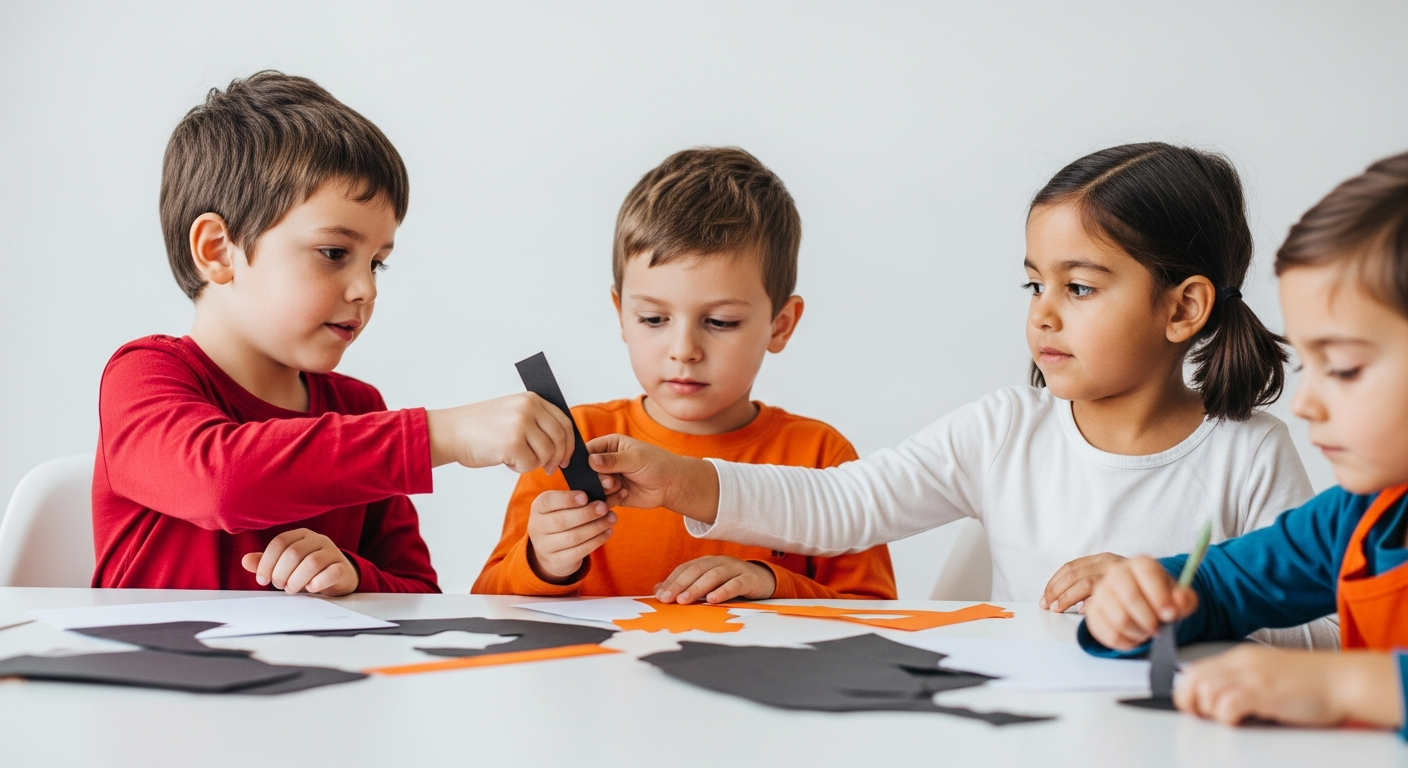
Table of Contents
- The Magic of Halloween Crafting for Child Development
- Your Essential Crafting Toolkit: Simple Supplies, Endless Fun
- Our Top Picks for Easy Construction Paper Halloween Crafts
- Maximizing Learning & Fun: Crafting Tips for Parents
- Beyond the Craft Table: Integrating "Smart Screen Time" with Speech Blubs
- Unlock Your Child's Full Potential: Choosing Your Speech Blubs Plan
- Conclusion
- Frequently Asked Questions About Halloween Crafts and Speech Development
The air is getting crisp, leaves are changing color, and a certain magical excitement is building in children everywhere. Halloween is nearly here, and with it comes a wonderful opportunity to channel that festive energy into creative, hands-on activities! Forget endless screen time; instead, imagine gathering around the kitchen table, armed with colorful construction paper, child-safe scissors, and glue sticks, ready to craft memories that will last long after the last piece of candy is gone. This guide is your go-to resource for a treasure trove of easy construction paper Halloween crafts for kids that are not only fun to make but also incredibly beneficial for their development. We’ll dive into simple yet engaging projects that spark imagination, hone fine motor skills, and, most importantly, open doors to rich communication.

The Magic of Halloween Crafting for Child Development
Crafting is far more than just a way to pass the time; it’s a powerful engine for a child's holistic development. When little hands tear, cut, fold, and glue paper, they are refining their fine motor skills—the small, precise movements essential for tasks like writing and self-care. But the benefits extend well beyond dexterity.
Engaging in crafts stimulates cognitive development as children learn to follow instructions, sequence steps, and solve simple problems. It's a fantastic way to introduce concepts like shapes, colors, textures, and spatial awareness. Moreover, crafting is a vibrant outlet for creativity and emotional expression, allowing children to bring their unique ideas to life and take pride in their accomplishments.
Perhaps most importantly, crafting offers rich opportunities for language and communication development. As children work on a project, they are constantly absorbing and processing information. They're hearing new words, describing their actions, asking questions, and articulating their ideas. This natural, play-based interaction is precisely what we champion at Speech Blubs. Our mission is to empower children to "speak their minds and hearts," and we believe that fostering communication in everyday activities like crafting is foundational to this goal. Just as our founders, who all grew up with speech problems, created the tool they wished they had, we are committed to providing immediate, effective, and joyful solutions that blend scientific principles with play. Crafting together is a perfect example of this philosophy in action, creating precious moments for family connection and learning. For a deeper dive into our approach, explore the Speech Blubs homepage.
Your Essential Crafting Toolkit: Simple Supplies, Endless Fun
One of the best things about construction paper crafts is how accessible and affordable the materials are. You likely have most of what you need already! Here’s a quick list to get you started:

- Construction Paper: A rainbow of colors, with an emphasis on Halloween hues like orange, black, green, purple, white, and yellow.
- Safety Scissors: Designed for little hands, these are crucial for developing cutting skills.
- Glue Sticks or White School Glue: For sticking pieces together. Glue sticks are often less messy for younger children.
- Tape: A quick alternative for securing pieces, especially for larger structures.
- Markers, Crayons, or Colored Pencils: For drawing faces, details, or adding personal touches.
- Googly Eyes: An optional but highly recommended addition for bringing characters to life with extra silliness!
- Paper Plates and Paper Bags: Versatile bases for many different Halloween creatures and decorations.
That’s it! With these basic supplies, your creative possibilities are virtually limitless.
Our Top Picks for Easy Construction Paper Halloween Crafts
Each craft activity we're about to explore offers unique learning and language opportunities. Remember to encourage your child to talk about what they're doing, describing colors, shapes, and actions. This engagement turns simple crafting into powerful communication practice.
Festive Countdown Chains: Building Anticipation and Learning Numbers
What better way to build excitement for Halloween than with a classic countdown chain? This craft is deceptively simple but packed with developmental benefits.
How to Make It:
- Cut Strips: Help your child cut long strips of construction paper, alternating colors like orange and black. You can decide how many days to count down – 5, 10, or all 31!
- Form Loops: Guide them in forming the first strip into a loop and securing it with glue or tape.
- Chain Them Up: Thread the next strip through the first loop, form another loop, and secure. Continue until all strips are chained together.
- Hang and Snip: Hang your chain in a visible spot. Each day, your child can snip off one loop, eagerly watching Halloween get closer!
Developmental Benefits & Language Prompts:
- Fine Motor Skills: Cutting strips, forming loops, and gluing/taping are excellent for finger dexterity.
- Counting & Sequencing: This craft is a natural way to practice counting down and understanding the sequence of days.
- Color Recognition: "Can you find an orange strip? What color comes after black?"
- Verbalizing Actions: "We're gluing the paper. Now we're making a loop."
Pumpkin Name Puzzles: Spelling Fun and Fine Motor Mastery
This clever craft helps children learn to spell their name in a fun, interactive way, while also honing their cutting and assembly skills.
How to Make It:
- Pumpkin Base: Cut a simple pumpkin shape out of orange construction paper.
- Write the Name: Write your child's name across the pumpkin, with a distinct "ridge" or wavy line between each letter.
- Cut the Puzzle: Your child can then cut along each ridge to create individual puzzle pieces, each containing a letter of their name.
- Assemble and Display: Encourage them to reassemble their name puzzle. You can even glue the completed puzzle onto another piece of paper to proudly display their work.
Developmental Benefits & Language Prompts:
- Letter Recognition & Spelling: A direct, hands-on way to learn and recognize the letters in their own name.
- Fine Motor & Pre-Writing Skills: Cutting along the lines requires precision and control.
- Problem-Solving: Figuring out how the pieces fit back together.
- Speech Connection: "What sound does this letter make?", "My name starts with the 'M' sound!" As your child pieces together their name, they're not just learning letters, but associating sounds. Speech Blubs’ early literacy activities can further reinforce these connections, making learning to speak and read a cohesive journey.
Silly Monsters: Unleashing Creativity and Descriptive Language
Halloween is the perfect time for friendly monsters! This craft encourages imaginative play and the use of descriptive words.
How to Make It:
- Pre-Cut Shapes: Prepare a variety of simple shapes from different colored construction paper: circles for eyes, zig-zags for mouths, rectangles for arms, ovals for legs, triangles for horns.
- Monster Assembly: Let your child choose their shapes and glue them onto a piece of paper to create a unique monster. There are no rules – the sillier, the better!
- "Monster Instructions" Game: For an added challenge, give your child instructions: "Your monster needs three eyes, a green mouth, and two long arms." This helps with listening and counting skills.
Developmental Benefits & Language Prompts:
- Creativity & Imagination: Designing their own one-of-a-kind creature.
- Body Parts & Counting: Identifying and counting eyes, arms, legs.
- Following Instructions: Especially with the "Monster Instructions" game.
- Descriptive Language: "Tell me about your silly monster. Is he grumpy? Does he have big, blue eyes?" For a child who loves monsters, Speech Blubs' "Crazy Animals" or similar categories provide engaging video models for animal sounds and descriptive words, bridging the gap between imaginative play and targeted speech practice.
Torn Paper Pumpkins: Sensory Exploration and Simple Art
This super easy craft is great for even the youngest crafters, offering wonderful sensory input and a cute result.
How to Make It:
- Tear Paper: Give your child strips of orange construction paper and encourage them to tear them into smaller pieces.
- Pumpkin Shape: Draw a simple pumpkin outline on a piece of white paper.
- Glue & Fill: Have your child glue the torn orange paper pieces inside the pumpkin outline, overlapping them to fill the shape.
- Add Features: Cut out black construction paper shapes for eyes, nose, and a mouth. Add a green stem at the top.
Developmental Benefits & Language Prompts:
- Fine Motor Skills: Tearing paper strengthens finger muscles and hand-eye coordination.
- Sensory Exploration: The tactile experience of tearing paper.
- Shape Recognition: Gluing within the pumpkin outline.
- Action Words: "Tear, glue, press, stick." "Can you tear a small piece? A big piece?"
(Not So) Spooky Spiders: Accordion Legs and Imaginative Play
These spiders are more cute than creepy, and the accordion legs are a fantastic fine motor challenge.
How to Make It:
- Spider Body: Cut a circle from black construction paper for the spider's body.
- Accordion Legs: Cut eight thin strips of black construction paper. Show your child how to fold each strip back and forth, accordion-style, to create springy legs.
- Assemble: Glue or tape the accordion legs to the back of the spider's body.
- Add a Face: Use googly eyes (if you have them) and cut out a mouth from white paper, or simply draw a friendly (or spooky!) face with markers.
Developmental Benefits & Language Prompts:
- Fine Motor Skills: Folding the accordion legs is excellent for dexterity and hand strength.
- Counting: Reinforce the concept of "eight legs" for a spider.
- Following Instructions: A multi-step craft that requires focus.
- Action Words & Sounds: "Crawl, wiggle, creepy-crawly." "How many legs does our spider have?" After crafting, extend the learning! For children working on sounds like 's' in 'spider' or 'spooky,' Speech Blubs offers playful exercises. Imagine making your spider crawl while practicing the 's' sound, inspired by our engaging video models of peers.
Ghost Lollipops: Sweet Treats and Easy Decor
A classic, simple craft that combines a sweet treat with spooky fun.
How to Make It:
- Gather Materials: You'll need lollipops, white coffee filters or round tissue paper, string or black ribbon, and a black marker.
- Wrap the Ghost: Place a lollipop in the center of two coffee filters or a single piece of tissue paper.
- Secure & Shape: Gently pull the edges down around the candy, creating a ghost shape. Tie a ribbon or string around the "neck" of the ghost to secure it.
- Draw a Face: Use a black marker to draw two eyes and a spooky (or friendly!) mouth on the ghost's "head."
Developmental Benefits & Language Prompts:
- Fine Motor Skills: Wrapping, tying, and drawing small details.
- Body Parts: Identifying and drawing eyes and a mouth.
- Descriptive Words: "Spooky, sweet, round, white." "Is your ghost happy or scared?"
Paper Plate Jack-O'-Lanterns: Classic Crafting Fun
Paper plates are a versatile crafting material, perfect for creating grinning jack-o'-lanterns.
How to Make It:
- Paint the Pumpkin: Have your child paint the bottom (concave) side of a paper plate orange. Let it dry completely.
- Draw the Face: Once dry, use a black marker or construction paper cut-outs to create eyes, a nose, and a toothy grin.
- Add a Stem: Cut a small rectangle from green or brown construction paper for the stem and glue it to the top back of the plate.
- Hang It Up: Punch a hole in the stem and thread a piece of string through it to hang your jack-o'-lantern.
Developmental Benefits & Language Prompts:
- Painting & Color Recognition: Learning about colors and how they cover a surface.
- Shape Recognition: Identifying triangles for eyes, circles for noses, etc.
- Emotional Expression: "Is your pumpkin happy, sad, or spooky?"
- Following Instructions: A multi-step process from painting to decorating.
Hanging Bats: Spooky Decor and Shape Tracing
Bats are an iconic Halloween symbol, and these hanging crafts are simple to make and display.
How to Make It:
- Bat Template: Find a simple bat template online or draw one freehand.
- Trace & Cut: Have your child trace the bat shape onto black construction paper and then carefully cut it out.
- Decorate: Glue on googly eyes or draw them with a red marker. You can add a white marker for fangs.
- Hang Upside Down: Tape or glue a loop of string to the back of the bat's feet so it hangs upside down.
Developmental Benefits & Language Prompts:
- Tracing & Cutting: Excellent for refining fine motor control.
- Shape Recognition: Identifying the bat's wings, body, and ears.
- Opposites: "This bat is hanging upside down!"
- Sounds: When discussing bats, we can explore sounds like 'b' for 'bat' or 'f' for 'fly.' Speech Blubs’ unique "video modeling" approach allows children to observe and imitate peers making these sounds, transforming simple crafts into powerful speech learning opportunities. You can learn more about the science behind our method on our Research page.
Spider Handprints: Personal Touch and Body Awareness
A personal and memorable craft, using your child's own handprints to create spider legs!
How to Make It:
- Trace Hands: Trace your child's hands four times on black construction paper (each spider needs eight legs, so four handprints will provide eight 'fingers').
- Cut & Body: Cut out the handprint shapes. Cut a large circle for the spider's body from black paper.
- Assemble: Glue the handprint "legs" to the back of the black circle body, spreading them out.
- Add Eyes: Affix two (or more!) googly eyes to the front of the spider's body.
Developmental Benefits & Language Prompts:
- Body Awareness: Recognizing their own hand shapes.
- Tracing & Cutting: Improves precision and control.
- Counting: Counting the fingers, then counting the total legs.
- Sensory: The feeling of glue and paper. "My hands are sticky! What does the spider feel like?"
Paper Bag Monsters: Puppet Play and Imagination
Turn a simple lunch bag into a monstrous puppet for endless storytelling fun.
How to Make It:
- Paint the Bag: Let your child paint a plain paper lunch bag with any color they like. Allow it to dry.
- Cut Features: From various colored construction papers, cut out an assortment of eyes, mouths, fangs, horns, and ears.
- Monster Face: With the folded bottom flap of the paper bag facing you (this will be the monster's mouth), glue on the chosen features. The bottom flap creates a movable mouth.
- Puppet Show: Once dry, your child can put their hand inside the bag and make their monster talk and move!
Developmental Benefits & Language Prompts:
- Painting & Gluing: Develops basic art skills and fine motor control.
- Shape & Color Recognition: Choosing and identifying the different features.
- Imaginative Play & Storytelling: Encourages narrative skills and character development.
- Voice Modulation: Practicing different voices for their monster puppet.
Frankenstein's Friends: Shape Recognition and Construction
Build a friendly monster using basic geometric shapes, a great way to reinforce early math concepts.
How to Make It:
- Head & Hair: Cut a large green rectangle for Frankenstein's head and a smaller black rectangle for his hair.
- Eyes & Bolts: Cut two white circles for eyes (add smaller black circles for pupils), and two small gray rectangles for the neck bolts.
- Mouth & Scars: Cut a zig-zag line from black paper for a mouth and some small black lines for scars.
- Assemble: Guide your child in gluing the pieces onto a piece of contrasting background paper to create their Frankenstein monster.
Developmental Benefits & Language Prompts:
- Shape Recognition: Identifying and naming rectangles, circles, and lines.
- Spatial Reasoning: Deciding where each piece goes on the face.
- Sequencing: Following the steps to build the monster.
- Descriptive Words: "Green head, black hair, scary eyes."
Witches' Brew Cauldrons: Potions and Pretend Play
Stir up some magical fun with a bubbling cauldron craft, perfect for imaginative play.
How to Make It:
- Cauldron Shape: Cut a large black cauldron shape from construction paper.
- Colorful Bubbles: Cut out many small circles from various bright construction paper colors (green, purple, orange, yellow). These are the "bubbles."
- Overflowing Brew: Glue the colorful circles around the top edge of the cauldron, making it look like a potion is bubbling and overflowing.
- Add Details: Draw some magical swirls or sparkles coming from the brew with a marker.
Developmental Benefits & Language Prompts:
- Fine Motor Skills: Cutting multiple small circles, gluing them precisely.
- Color Recognition & Matching: Identifying and arranging the "bubbles."
- Counting: Counting how many bubbles are in the brew.
- Imaginative Play: "What kind of potion is this?", "What happens when we stir it?"
Mummy Masks: Creative Self-Expression
A simple mask project that allows for lots of tearing and wrapping fun.
How to Make It:
- Mask Base: Cut a simple mask shape from white construction paper, large enough to cover your child's face, with two eyeholes cut out.
- Tear Strips: Provide plenty of white construction paper strips and encourage your child to tear them into varying lengths and widths.
- Wrap the Mummy: Have your child glue the torn white strips onto the mask base, overlapping them to create a mummy-wrapped effect.
- Elastic/String: Punch holes on the sides and tie elastic string so your child can wear their mask.
Developmental Benefits & Language Prompts:
- Fine Motor Skills: Tearing paper, manipulating glue, fitting pieces.
- Sensory Exploration: The tactile feel of torn paper.
- Facial Features: Identifying where the eyes go.
- Pretend Play: "Who are you?", "Boo! I'm a mummy!"
Candy Corn Collages: Color Patterns and Texture
This craft focuses on the iconic Halloween treat, candy corn, and its distinct colors.
How to Make It:
- Candy Corn Outline: Draw a large candy corn shape on a piece of white or black construction paper.
- Tear & Glue: Provide strips of white, orange, and yellow construction paper. Have your child tear the paper into small pieces.
- Layer the Colors: Guide them to glue the white pieces at the top of the candy corn shape, orange in the middle, and yellow at the bottom, creating a collage effect.
- Outline: Once dry, you can outline the candy corn with a black marker for extra definition.
Developmental Benefits & Language Prompts:
- Color Recognition & Patterning: Reinforcing the classic candy corn color pattern.
- Fine Motor Skills: Tearing and gluing small pieces.
- Shape Recognition: Filling in the candy corn shape.
- Descriptive Words: "Sweet, sticky, colorful." "Which color comes next?"
Haunted House Silhouettes: Storytelling and Scene Creation
This craft is perfect for older children who enjoy cutting and creating a spooky scene.
How to Make It:
- Background: Choose a dark colored piece of construction paper (purple, dark blue, or orange) for the sky.
- Cut Silhouettes: From black construction paper, cut out various shapes: a haunted house, spooky trees, bats, a crescent moon, or even a witch flying. Encourage your child to draw their own elements.
- Arrange & Glue: Have your child arrange the black silhouettes on the colored background to create a spooky scene. Once they are happy with the arrangement, glue them down.
- Starry Details: Use a white crayon or marker to add stars or faint outlines.
Developmental Benefits & Language Prompts:
- Cutting & Spatial Arrangement: Planning how to fit all the elements into the scene.
- Creativity & Storytelling: "Who lives in this haunted house?", "What sounds do you hear at night?", "Tell me a spooky story about your picture."
- Pre-writing Skills: Holding scissors and cutting intricate shapes.
Maximizing Learning & Fun: Crafting Tips for Parents
To truly make these crafting sessions shine for your child's development, especially their communication skills, consider these tips:
- Embrace the Process, Not Just the Product: The most valuable part of crafting is the shared experience and the learning that happens along the way, not just the perfectly executed final product. Let go of perfection!
- Narrate and Describe: Talk constantly about what you and your child are doing. "I'm cutting the red paper with the sharp scissors." "You're gluing the round eye onto the green monster." This immerses them in language.
- Ask Open-Ended Questions: Instead of "Is this fun?", try "What do you like most about making this?", or "What should we add next?" This encourages longer, more complex responses.
- Follow Your Child's Lead: If they want to make a monster with five eyes and a blue nose, let them! Their imagination is a powerful learning tool.
- Incorporate Repetition: Repeating new words, sounds, or instructions is fantastic for speech practice. "Let's glue, glue, glue the legs on!"
- Connect to Real-World Objects: Talk about how the craft relates to real Halloween decorations, costumes, or stories. "Our paper pumpkin looks just like the one outside!"
Beyond the Craft Table: Integrating "Smart Screen Time" with Speech Blubs
We understand that modern parenting often involves a balance between hands-on activities and screen time. At Speech Blubs, we believe in making every moment count. That's why we advocate for "smart screen time" – engaging, active learning experiences that transform passive viewing into interactive growth.
Our app, Speech Blubs, is designed to complement your child's development in every way, including alongside creative play like crafting. Our unique methodology, "video modeling," allows children to learn by watching and imitating their peers on screen. This taps into mirror neurons, making learning speech sounds and new words incredibly intuitive and fun. Imagine your child proudly showing off their "spooky spider" craft, then practicing the 's' sound or describing the spider's movements with the help of engaging video models in Speech Blubs. This makes the connection between real-world objects and targeted speech practice.
Speech Blubs was born from the personal experiences of our founders, all of whom grew up with speech problems. They created the tool they wished they had – an immediate, effective, and joyful solution for the 1 in 4 children who need speech support. We provide a screen-free alternative to passive viewing (like cartoons) and a powerful tool for family connection, just like crafting.
If you're ever unsure whether your child could benefit from a little extra speech support, we've created a helpful tool. Take our quick 3-minute preliminary screener to get a simple assessment and a personalized next-steps plan. It's a great first step toward understanding your child's communication journey.
Our method is backed by science and has earned top ratings, placing us in the top tier of speech apps worldwide. You can explore our research and scientific methodology here. But don't just take our word for it; see what other parents are saying about their child's success with Speech Blubs by reading our testimonials.
Speech Blubs helps children:
- Build Confidence: Empowering them to express themselves.
- Reduce Frustration: Providing tools when words are hard to find.
- Develop Foundational Skills: Targeting pronunciation, vocabulary, and early literacy.
- Create Joyful Learning Moments: Turning speech practice into a game.
Unlock Your Child's Full Potential: Choosing Your Speech Blubs Plan
We believe in transparency and providing options that best suit your family's needs. To get started with Speech Blubs, we offer two main subscription plans:
- Monthly Plan: Priced at $14.99 per month. This plan offers flexibility and full access to the core Speech Blubs app features.
- Yearly Plan: Our most popular and highly recommended option, priced at $59.99 per year. This breaks down to an incredible value of just $4.99 per month, allowing you to save 66% compared to the monthly plan!
The Yearly Plan isn't just about significant savings; it's packed with exclusive, high-value features designed to give your child the best possible experience:
- A 7-day free trial: Test out all the amazing features before committing.
- The extra Reading Blubs app: An entire additional app focused on early literacy, phonics, and reading skills.
- Early access to new updates: Be the first to enjoy new activities and improvements.
- 24-hour support response time: Get prompt assistance whenever you need it.
The Monthly plan does not include these additional benefits. For the most comprehensive support for your child's communication journey and the best value, we strongly encourage you to choose the Yearly plan. It’s the smartest way to unlock the full suite of Speech Blubs features and embark on a rewarding learning adventure.
Conclusion
Halloween crafting with construction paper is a delightful and enriching activity that offers so much more than just festive decorations. It's a powerful tool for developing fine motor skills, sparking creativity, boosting cognitive abilities, and, most importantly, fostering crucial communication skills. By engaging in these simple, joyful activities, you're not just making a craft; you're building memories and laying the groundwork for your child to speak their minds and hearts.
We at Speech Blubs are here to support every step of that journey, turning everyday moments into powerful learning opportunities. Our app complements your hands-on efforts, making learning to communicate an active, engaging, and joyful experience for your entire family.
Ready to empower your child to speak their mind and heart? Download Speech Blubs today and discover a world where learning to communicate is a joyful adventure. Start your 7-day free trial by choosing our best-value Yearly plan on the Apple App Store or Google Play Store. Alternatively, you can create your account and begin your 7-day free trial directly on our website. Don't miss out on the incredible value and comprehensive features the Yearly plan offers!
Frequently Asked Questions About Halloween Crafts and Speech Development
Q1: What age group are these crafts suitable for?
These construction paper Halloween crafts are generally suitable for children aged 2-7, with varying levels of adult assistance. Younger children (2-3) will benefit from tearing paper, gluing, and drawing, with an adult handling most of the cutting. Older preschoolers (4-5) can practice cutting with safety scissors and follow more complex instructions. School-aged children (6-7) can often complete many steps independently, allowing for more creative freedom and intricate designs. Always prioritize safety scissors and adult supervision.
Q2: How can I make crafting more beneficial for my child's speech?
The key is active engagement and narration. Talk constantly about colors, shapes, actions ("I'm cutting the red paper," "You're gluing the round eyes"). Ask open-ended questions like "What do you think will happen next?" or "Tell me about your monster." Encourage them to describe their choices and actions. Incorporate repetition of target sounds or words. After crafting, extend the play by using the crafts as props for storytelling or puppet shows, further encouraging verbal expression. Speech Blubs, with its video modeling, can then reinforce these learned words and sounds in an interactive digital environment.
Q3: What if my child isn't interested in crafting?
It's okay! Every child has different interests. Start small with very simple crafts that have immediate results, like tearing paper or gluing pre-cut shapes. Don't force it; instead, offer crafting as one of many play options. Focus on the process rather than the product, emphasizing the fun of experimenting. You can also try connecting crafts to their existing interests – if they love animals, make an animal-themed monster. Remember, verbal interaction can happen in many forms of play, not just crafting.
Q4: How does Speech Blubs really complement hands-on activities like crafting?
Speech Blubs offers "smart screen time" that actively reinforces the language and communication skills learned through hands-on activities. For instance, after making a spider craft, your child can use Speech Blubs to practice the 's' sound or learn new descriptive words for insects by imitating peers in our "Crazy Animals" section. The app's engaging video modeling helps solidify pronunciation and vocabulary in a joyful, interactive way, bridging the gap between imaginative play and targeted speech development. It ensures that communication skills are practiced and reinforced in diverse, engaging contexts, making learning more effective and fun.
About the author