
Spooky Fun & Skill Building: Easy Halloween Crafts Kids Love
 By Speech Blubs Team•Jan 13, 2026•22 min.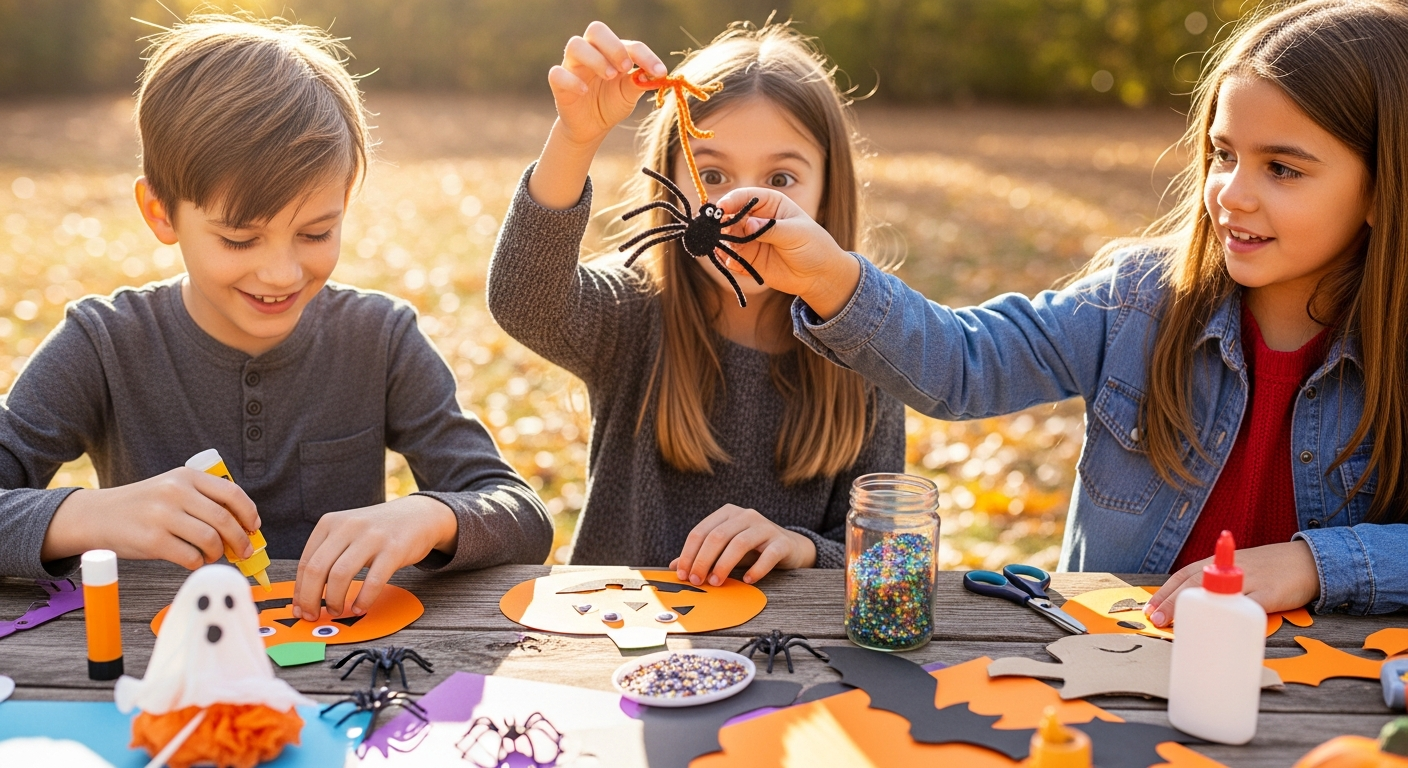
Table of Contents
- Introduction
- Why Crafting is More Than Just Fun: Developmental Benefits
- Crafting for Every Age: Tailoring Activities for Little Hands
- Spook-tacularly Simple Crafts: Our Top Picks for Kids
- Bringing Language to Life with Halloween Crafts
- Making the Most of Your Crafting Time: Tips for Parents
- Empowering Communication with Speech Blubs
- Conclusion
- Frequently Asked Questions (FAQ)
The air gets a little crisper, the leaves start to turn, and suddenly, the whispers of "Halloween!" fill every child's imagination. It's a season of enchanting costumes, sweet treats, and wonderfully spooky decorations. For parents, this time of year offers a golden opportunity to do more than just plan trick-or-treating routes; it’s a chance to dive into creative projects that not only celebrate the holiday but also nurture vital developmental skills. Far from being just a fun pastime, engaging in easy Halloween crafts with your child can unlock a world of learning, from fine motor coordination to crucial language development, all while creating cherished family memories. In this post, we'll explore a treasure trove of simple, engaging Halloween crafts suitable for various age groups, demonstrating how these activities naturally foster growth and confidence. We'll also delve into how these hands-on experiences beautifully complement tools like Speech Blubs, empowering children to speak their minds and hearts through play and interaction.

Introduction
Do you remember the sheer delight of creating something with your own hands as a child? The sticky fingers, the mismatched colors, the pride in holding up your masterpiece? Halloween crafts bring that magic back, offering a unique blend of creative expression and developmental nourishment. It’s not just about making a spooky spider or a grinning pumpkin; it’s about the journey of creation, the conversations sparked, and the skills honed along the way. Many parents wonder how to turn everyday activities into meaningful learning opportunities, especially for children who are developing their communication skills. The good news is, Halloween crafting provides a natural, low-pressure environment perfect for this. We believe that joyful play is the most powerful catalyst for learning, and that's precisely what these crafts offer. So, let's grab our glue sticks and googly eyes, and prepare to unleash some festive creativity that benefits both mind and spirit.
Why Crafting is More Than Just Fun: Developmental Benefits
Before we dive into the crafts themselves, let's explore why these seemingly simple activities hold such immense value for your child’s development. The benefits extend far beyond the finished product, touching upon various crucial areas of growth.
Fine Motor Skills and Hand-Eye Coordination
Almost every craft involves actions that are fundamental for developing fine motor skills. Think about the precision required to snip with scissors, the control needed to squeeze glue, or the delicate touch to place a small sticker or cotton ball. These seemingly minor movements are vital for tasks like writing, buttoning clothes, and self-feeding.
- Cutting: Learning to hold scissors correctly and cut along a line strengthens hand muscles and improves bilateral coordination.
- Gluing: Applying glue, whether liquid or stick, teaches control and judgment of quantity.
- Manipulating Small Objects: Picking up googly eyes, threading yarn, or pressing down small paper shapes hones pincer grasp and dexterity.
Cognitive Development: Problem-Solving and Creativity
Crafting is a fantastic workout for the brain. Children learn to follow multi-step instructions, think creatively to solve minor challenges (like "how do I make this stick?"), and make independent artistic choices.

- Following Instructions: Listening to or interpreting visual steps helps develop comprehension and sequential thinking.
- Creativity and Imagination: There's no single "right" way to make a monster. Children learn to express themselves, experiment with colors and textures, and bring their unique visions to life.
- Shape and Color Recognition: Identifying and naming different shapes and colors used in crafts (e.g., "pass me the orange triangle for the pumpkin's nose") reinforces early learning concepts.
Language and Communication Skills
This is where crafting truly shines as a powerful tool for speech development. The shared experience creates a natural, low-pressure environment for conversation, description, and storytelling.
- Expanding Vocabulary: Parents can introduce new words related to colors (scarlet, crimson), shapes (octagon, oval), textures (bumpy, smooth, gooey), actions (squeeze, snip, dab, twist, wrap), and Halloween-specific items (ghost, goblin, bat, cauldron). For instance, as you make a Puffy Paint Pumpkin, you can talk about how the paint feels "fluffy" and "squishy," or describe the "vibrant orange" color.
- Following Verbal Instructions: Simple commands like "First, get the paper, then get the glue" reinforce auditory processing and the ability to follow directions – a foundational skill for communication.
- Describing and Comparing: Encourage your child to describe their creation ("My monster has three eyes and green fur!") or compare it to yours ("Your ghost is taller than mine!"). This builds descriptive language and comparative concepts.
- Storytelling and Pretend Play: Once a craft is finished, it can become a puppet or a character in an imaginative story. A Toilet Paper Roll Monster isn't just a decoration; it's a character waiting for an adventure, prompting your child to use narrative skills.
- Asking and Answering Questions: Parents can ask open-ended questions like "What do you think we should add next?" or "Why did you choose that color?" to encourage longer responses and critical thinking.
At Speech Blubs, we are deeply committed to empowering children to speak their minds and hearts, and we know that real-world interaction is key. Our unique methodology of "video modeling," where children learn by watching and imitating their peers, complements these crafting sessions perfectly. Imagine a child making a scary monster craft; they might imitate the "roar!" sound they learned in the app or describe the monster's "big, sharp teeth" with newfound confidence. We provide a screen-free alternative to passive viewing, making screen time "smart screen time" that truly engages and educates. Our founders, who grew up with speech problems, created the tool they wished they had – a joyful, immediate, and effective solution that blends scientific principles with play.
Emotional and Social Skills
Crafting together also builds crucial emotional and social resilience.
- Patience and Perseverance: Some crafts take time, teaching children to work towards a goal and not give up when something doesn't look "perfect."
- Pride in Accomplishment: Completing a craft fosters a sense of achievement and boosts self-esteem. Displaying their artwork validates their efforts.
- Family Bonding: Sharing a creative activity strengthens connections, creates shared memories, and offers dedicated one-on-one time free from distractions.
Crafting for Every Age: Tailoring Activities for Little Hands
To ensure the best experience, it's helpful to choose crafts appropriate for your child's developmental stage. Remember, the goal is enjoyment and participation, not perfection!
Toddlers (Ages 1-3): Sensory Exploration and Big Movements
For our littlest crafters, focus on activities that involve sensory exploration, large motor movements, and simple concepts. Direct glue application, tearing paper, and broad strokes with paint are ideal.
- Fabric Candy Corn Craft: Instead of intricate cutting, toddlers can tear fabric scraps into pieces and glue them onto a pre-drawn candy corn shape. This offers tactile exploration and color matching.
- Fingerprint Bat Craft: Simple finger painting to create a bat body, then adding pre-cut wings and googly eyes. It’s quick, satisfying, and sensory.
- Sensory Ghosts: Using contact paper instead of glue makes this mess-free and allows toddlers to press fabric, tissue paper, or cotton balls onto a sticky surface to create ghost shapes. This is great for practicing word associations like "sticky" and "soft."
Preschoolers (Ages 3-5): Emerging Fine Motor and Simple Instructions
Preschoolers are often ready for more structured activities that involve cutting, more precise gluing, and following a few sequential steps. They thrive on themed projects and enjoy telling stories about their creations.
- Toilet Paper Roll Monsters: A classic! Paint toilet paper rolls, then add googly eyes, pipe cleaner arms, and construction paper details. This is excellent for imaginative play and practicing color names. When making these, talk about the monster's "big grin" or "wobbly eyes."
- Shape Monsters: Provide pre-cut geometric shapes (circles, squares, triangles) and let your child combine them to create unique monsters on paper. This naturally leads to discussions about "round eyes" or a "pointy hat."
- Jack-o'-Lantern Potato Stamping: Cut simple jack-o'-lantern faces into potato halves. Preschoolers can dip them in paint and stamp onto paper, creating a pumpkin patch. This reinforces pattern recognition and fine motor control.
- Puffy Ghosts: Gluing cotton balls onto a ghost outline is a wonderful way to work on fine motor skills and tactile exploration. You can talk about how the cotton feels "fluffy" and "white."
School-Aged Children (Ages 5+): Independence and Detailed Projects
Older children can handle more complex instructions, use scissors with greater precision, and enjoy crafts that result in functional items or detailed decorations. They often take pride in working independently on multi-step projects.
- Yarn-Wrapped Mummy: Wrapping yarn around a cardboard cutout figure strengthens fine motor skills and spatial awareness.
- Balancing Bat: This craft involves cutting, folding, and a touch of physics. Kids love experimenting with where the bat can balance. Following the instructions for the printable template helps with sequential thinking.
- Popsicle Stick and Yarn Spider Web: Weaving yarn around popsicle sticks to create a spider web pattern is excellent for fine motor precision and visual-spatial reasoning.
- Halloween String Art Cards: Punching holes and weaving embroidery floss to create designs on cardstock offers a unique texture and a fun challenge.
Spook-tacularly Simple Crafts: Our Top Picks for Kids
Let's explore some specific craft ideas that are easy to set up and offer fantastic developmental benefits.
Ghosts & Ghouls
- Puffy Ghosts (Cotton Ball Ghosts): Draw a simple ghost outline on black or colored paper. Have your child glue cotton balls onto the outline, creating a soft, three-dimensional ghost. Add googly eyes for personality! This is a fantastic sensory experience.
- Language Tip: Describe the ghost as "fluffy," "soft," "white," and talk about its "big eyes" or "silly smile."
- Sockingly Spooky Ghosts: Stuff an old white sock with cotton balls or crumpled paper to form a head, then tie a ribbon to secure it. Let the rest of the sock hang freely. Draw a face with a marker. These are great for imaginative play as puppets!
- Language Tip: Discuss the ghost's "wobbly head," "long body," and the "spooky sounds" it might make.
- Hidden Ghost Painting (Crayon Resist): On white paper, draw ghost shapes with a white crayon (press firmly!). Then, have your child paint over the paper with watercolors. The ghosts magically "resist" the paint and appear!
- Language Tip: Talk about the "magic" of the revealing ghost, the "wet" paint, and the "surprise" of the hidden image.
- Straw Blown Ghost Art: Drop a small blob of white liquid paint on paper. Provide a straw and have your child blow through it to spread the paint, creating unique ghost shapes. Once dry, add eyes and mouths.
- Language Tip: Emphasize action words like "blow," "spread," "swirl." Discuss the different "shapes" the paint makes.
Monsters & Creepy Crawlies
- Toilet Paper Roll Monsters: Gather empty toilet paper rolls. Let your child paint them in vibrant monster colors. Once dry, glue on googly eyes, pipe cleaner antennae, construction paper horns, or yarn hair.
- Relatable Scenario: For a child who loves making silly noises, creating a Toilet Paper Roll Monster provides the perfect prop. "What sound does your monster make? Does it say 'rawr' or 'boo'?" These playful interactions, much like the engaging "video modeling" found in Speech Blubs, encourage vocalization and confident expression. You can find more engaging ideas for imaginative play and language building when you download Speech Blubs from the App Store or Google Play.
- Shape Monsters: Cut out a variety of colorful geometric shapes from construction paper (circles, squares, triangles, rectangles). Let your child arrange and glue them onto a piece of paper to create their own unique monster.
- Language Tip: Practice naming shapes and colors ("Give me a blue square for the monster's body," "The monster has a red triangle nose").
- Popsicle Stick and Yarn Spider Web: Glue four popsicle sticks together in a star shape. Have your child weave yarn around the sticks, creating a spider web effect. Add a plastic spider!
- Language Tip: Focus on directional words like "around," "over," "under." Count the "eight legs" of the spider.
- Handprint Spiders/Monsters: Paint your child's hand (black for a spider, any color for a monster). Press it onto paper. Once dry, add googly eyes and draw extra legs/details.
- Language Tip: Talk about body parts ("This is your hand, now it's a monster's hand!"), and describe the spider's "long legs" or the monster's "furry arms."
Pumpkins & Jack-o'-Lanterns (No Carve!)
- Yarn Pumpkins: Inflate small balloons. Dip yarn in a mixture of glue and water, then wrap the yarn around the balloons. Let dry completely, then pop the balloon for a hollow yarn pumpkin.
- Language Tip: Discuss the "round" shape of the balloon, the "sticky" yarn, and the "hollow" pumpkin.
- Puffy Paint Pumpkins: Mix equal parts shaving cream and white glue, then add orange food coloring. Let your child "paint" pumpkins onto paper with this puffy mixture. It's a wonderful tactile experience!
- Relatable Scenario: For a child developing descriptive language, the sensory experience of Puffy Paint Pumpkins offers rich vocabulary practice. "Feel how soft and squishy this paint is! What color orange did we make? Is it bright or pale?" Engaging with sensory words helps children build a richer mental dictionary, a skill we actively support through our app. Our research-backed methodology helps children link words to experiences, which is why Speech Blubs consistently ranks highly on the MARS scale, placing us in the top tier of speech apps worldwide. You can explore more about our scientific approach here.
- Potato Stamping Jack-o'-Lanterns: Cut a potato in half and carve simple jack-o'-lantern face shapes into the cut side. Dip the potato stamp into orange paint and stamp onto paper.
- Language Tip: Practice identifying different facial features ("This one has triangle eyes," "This one has a happy mouth").
- No-Carve Pumpkin Monsters: Purchase small craft pumpkins. Provide paints, googly eyes, pipe cleaners, stickers, and other embellishments. Let your child decorate their pumpkin without the need for carving.
- Language Tip: Discuss the "smooth" pumpkin, the "bumpy" pipe cleaners, and the various "silly" or "scary" faces they create.
Witches, Bats, & More Enchanting Creatures
- Wooden Spoon Witches: Decorate wooden spoons with yarn hair, construction paper hats, and fabric scraps for clothes. Use markers to draw faces. These make great story props!
- Language Tip: Encourage storytelling: "What kind of potion is your witch stirring?" Discuss colors and textures of the decorations.
- Balancing Bat: Print out a template for a balancing bat (many free ones are available online). Children cut out and decorate the bat, then attach weights (like pennies) to the wings to make it balance on a finger or pencil.
- Language Tip: Talk about "balancing," "heavy," and "light." Discuss the bat's "wings" and "ears."
- Paper Plate Witch: Cut a paper plate in half for the witch's face. Decorate with paint or crayons, add yarn hair, and a construction paper witch hat.
- Language Tip: Discuss the witch's "pointy hat," "green face," and what she might "cackle" about.
- Finger-paint Bat Craft: Allow your child to finger paint a black oval for the bat's body. Once dry, add pre-cut black wings, googly eyes, and fangs.
- Language Tip: Talk about the bat "flying" and the "dark" colors.
Eco-Friendly & Upcycled Crafts
- Upcycled Can Ghosts: Clean and dry aluminum cans. Paint them white. Once dry, use a black Sharpie to draw ghost faces. Tie a white sparkly ribbon around the top.
- Language Tip: Discuss "recycling," "smooth," and "cold" cans, and the "wobbly ribbon."
- Egg Carton Halloween Craft: Cut apart egg carton cups. Paint them orange for pumpkins, green for Frankenstein, or white for ghosts. Add features with markers, googly eyes, or pipe cleaners.
- Language Tip: Talk about the "bumpy" texture of the egg carton, the "tiny" pumpkins, and the various characters they represent.
Bringing Language to Life with Halloween Crafts
Every snip, glue, and dab in crafting is a potential moment for language growth. By actively engaging with your child during these activities, you transform playtime into powerful learning sessions.
Expanding Vocabulary
As you craft, continuously introduce new words. Instead of just "black," say "inky black" or "midnight black." Describe the "bubbly" texture of the paint, the "sharp" edge of the paper, or the "shimmering" glitter. Point to objects and name them: "This is a cauldron," "That's a broomstick." This constant exposure to rich vocabulary, in a meaningful context, helps cement new words in your child's memory.
Following Instructions
Crafting provides a perfect, practical setting for practicing following directions. Start with simple one-step commands ("Get the glue"), then progress to two-step ("First, get the glue, then open it") and multi-step instructions ("First, cut the shape, then glue it onto the paper, and finally add the eyes"). This skill is crucial for classroom learning and everyday communication.
Describing & Comparing
Encourage your child to describe what they are doing, seeing, and feeling. "How does the cotton ball feel? Is it soft or hard?" "What color is that monster? How many eyes does it have?" Compare your crafts: "My bat is flying high, but yours is flying low." This helps build a rich descriptive language and analytical skills.
Storytelling & Pretend Play
Once the crafts are complete, the real fun begins! Use your creations as puppets or characters for impromptu storytelling. "Once upon a time, there was a silly monster who lived in a toilet paper roll..." Ask open-ended questions to prompt narrative: "What happens next?" "Where does the ghost fly?" This fosters imagination and narrative structure, both essential for complex communication.
Asking & Answering Questions
Ask a variety of questions:
- "What" questions: "What are you making?" "What color should we use?"
- "Where" questions: "Where should the eyes go?" "Where is the glue?"
- "Why" questions: "Why do you think the bat balances?" (for older kids) "Why did you choose that hat for your witch?"
- "How" questions: "How do we make the paint puffy?"
The consistent back-and-forth communication during crafting closely mirrors the interactive learning environment we foster at Speech Blubs. Our app, built on scientific principles and the personal experiences of our founders, creates an engaging space where children can practice words and sounds by imitating their peers. Just as in crafting, our "video modeling" method offers a "smart screen time" alternative to passive viewing, promoting active participation and confidence in communication. We are dedicated to providing an immediate, effective, and joyful solution for the 1 in 4 children who need speech support, blending play with proven techniques. To see the transformative power of Speech Blubs, read our parent testimonials here.
Making the Most of Your Crafting Time: Tips for Parents
To ensure these crafting sessions are truly beneficial and enjoyable for everyone, keep these tips in mind:
- Preparation is Key: Gather all materials beforehand. A little pre-planning can prevent interruptions and frustration, keeping the creative flow going.
- Focus on the Process, Not the Product: The goal isn't to create a perfect, Pinterest-worthy masterpiece. It's about the experience, the learning, and the time spent together. Celebrate effort and creativity, not just flawless execution.
- Be Present and Engage: Put away your phone and fully participate. Talk, ask questions, make suggestions, and laugh together. Your presence is the most valuable tool.
- Embrace the Mess: Crafts can be messy, and that's often part of the fun! Lay down a mat or old newspaper, and have wipes or a damp cloth ready for easy cleanup.
- Celebrate Their Efforts: Display your child's finished crafts prominently. This boosts their confidence and shows them you value their work. Take photos to remember their creations year after year.
Empowering Communication with Speech Blubs
Just as these easy Halloween crafts help children develop crucial skills and confidence through playful engagement, Speech Blubs is designed to empower children to speak their minds and hearts by turning screen time into an active, educational experience. Our mission, born from the personal experiences of our founders who faced speech challenges themselves, is to provide the tool they wished they had: an immediate, effective, and joyful solution for the 1 in 4 children who need speech support.
We achieve this through our unique "video modeling" methodology, where children learn by watching and imitating their peers. This natural, engaging approach taps into mirror neurons, making learning intuitive and fun. It's "smart screen time" that offers a screen-free alternative to passive viewing like cartoons, becoming a powerful tool for family connection and interaction, much like crafting together.
Getting Started with Speech Blubs: Value and Pricing
We believe in making high-quality speech and language support accessible. We offer two main plans for Speech Blubs, and we want to be transparent about the value they provide:
- Monthly Plan: Priced at $14.99 per month.
- Yearly Plan: Our most popular and highly recommended option, priced at just $59.99 per year. This breaks down to an incredible value of only $4.99 per month, allowing you to save 66% compared to the monthly plan!
The Yearly Plan isn't just about saving money; it unlocks the full Speech Blubs experience with exclusive, high-value features designed to maximize your child's learning journey:
- 7-Day Free Trial: Explore all the features and see the magic of Speech Blubs for yourself, completely risk-free.
- The Extra Reading Blubs App: Gain full access to our complementary Reading Blubs app, which provides early literacy support, phonics, and reading skills, working hand-in-hand with speech development.
- Early Access to New Updates: Be among the first to experience exciting new activities, features, and content as we continuously evolve and improve the app.
- 24-Hour Support Response Time: Enjoy priority customer support, ensuring any questions or concerns are addressed promptly.
The Monthly plan, while flexible, does not include these additional benefits. For the best value, the most features, and the chance to try it out with a free trial, the Yearly plan is the clear choice.
Ready to see how Speech Blubs can complement your child's development, turning fun into foundational skills? We encourage you to choose the Yearly plan to get your free trial and unlock the full suite of features designed to help your child speak their minds and hearts. You can create your account and begin your 7-day free trial today or download Speech Blubs on the App Store or Google Play. If you're unsure where to start, take our quick 3-minute preliminary screener for a simple assessment and a personalized next-steps plan, along with a free 7-day trial.
Conclusion
Halloween crafts offer a truly enchanting way to bond with your children, spark their creativity, and nurture a wide array of developmental skills. From strengthening tiny fingers with scissors to expanding vocabularies with descriptive words, these easy, "spook-tacular" activities are much more than just holiday fun. They are opportunities for connection, learning, and building confidence in a joyful, low-pressure environment.
As parents, we strive to provide our children with every tool they need to thrive, especially when it comes to expressing themselves. Combining the hands-on magic of Halloween crafting with the engaging, scientifically backed methodology of Speech Blubs creates a powerful synergy for communication development. Both approaches champion active participation, joyful learning, and the confidence to speak one's mind.
Don't let this Halloween season pass without embracing the simple joy of crafting. And as you watch your child's confidence and communication grow, remember that Speech Blubs is here to support them every step of the way. Ready to unlock your child's full communication potential? Start your 7-day free trial today by choosing our Yearly plan for the best value and access to all our exclusive features, including the Reading Blubs app!
Frequently Asked Questions (FAQ)
Q1: What are the best age groups for these easy Halloween crafts?
A1: We've curated crafts suitable for toddlers (1-3 years), preschoolers (3-5 years), and school-aged children (5+). For toddlers, focus on sensory play, large movements, and simple tearing or pressing activities. Preschoolers can engage in more structured gluing and simple cutting, while school-aged children can handle multi-step projects and more detailed work, often independently. Always supervise younger children, especially with scissors or small parts.
Q2: How exactly can crafts help with my child's speech development?
A2: Crafts create a natural, engaging environment for language. They provide opportunities to expand vocabulary (naming colors, shapes, textures, actions), practice following multi-step instructions, describe objects and processes, tell stories using their creations, and ask/answer questions. This active verbal interaction in a fun setting makes language learning organic and meaningful, reinforcing concepts in a practical way.
Q3: What if my child gets frustrated with a craft or doesn't want to participate?
A3: It's important to keep crafting sessions fun and low-pressure. If your child gets frustrated, offer help, simplify the task, or suggest a different craft. Remember, the process is more important than the perfect outcome. If they're not interested, don't force it; simply offering the opportunity is enough. You can also try making the craft yourself while narrating your actions, which might pique their interest.
Q4: How does Speech Blubs fit into our child's learning journey alongside these crafts?
A4: Speech Blubs complements hands-on activities like crafting by providing a structured, engaging "smart screen time" experience. While crafting offers real-world interaction, Speech Blubs uses "video modeling" – children learn by imitating peers in the app – to build a strong foundation in sounds, words, and sentences. Both foster confidence, reduce frustration, and develop communication skills through playful learning, ensuring a well-rounded approach to helping your child speak their minds and hearts. You can explore our main website to learn more about our mission and impact at Speech Blubs Homepage.
About the author