
Super Easy Crafts for Kids: Creative Fun at Home!
 By Speech Blubs Team•Jan 13, 2026•18 min.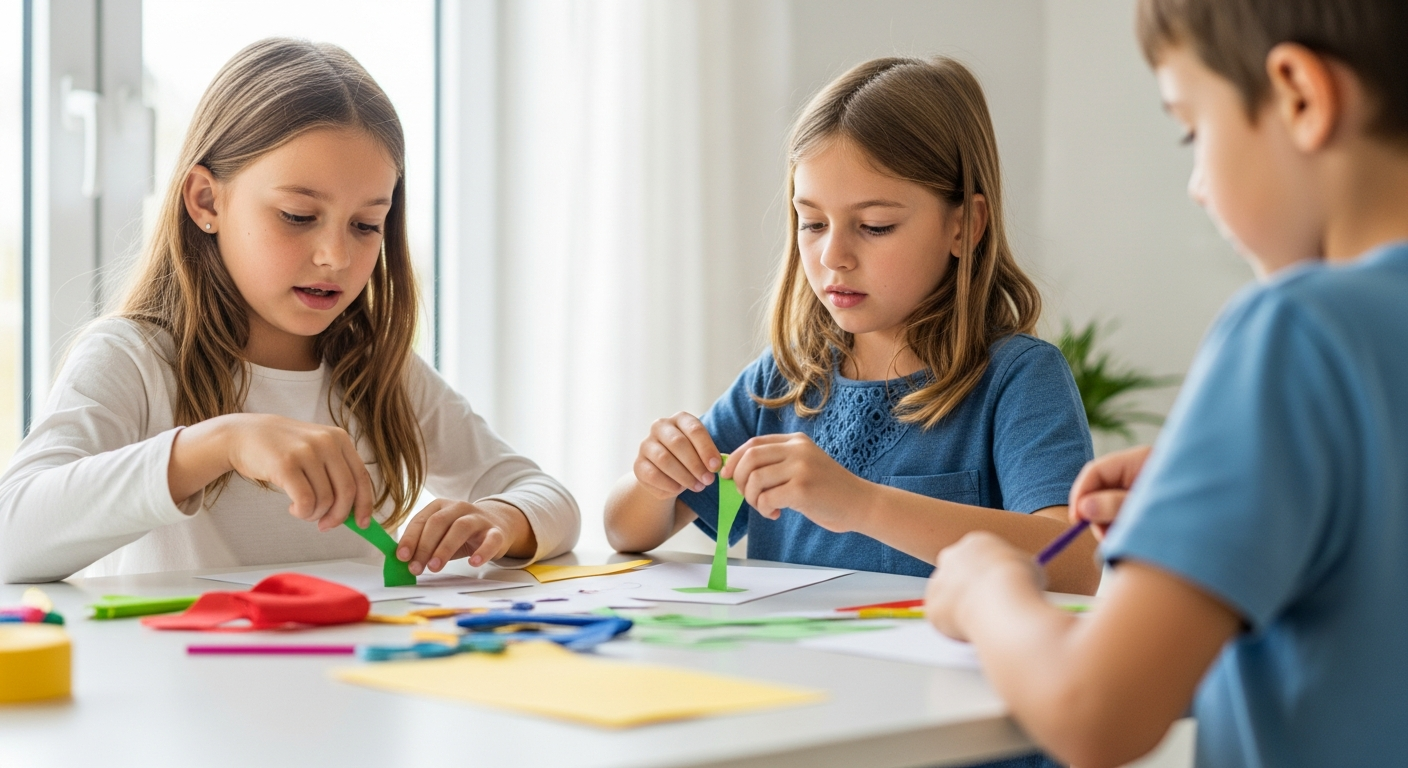
Table of Contents
- The Magic of Making: Why Easy Crafts Are Essential for Growing Minds
- The "Super Easy" Blueprint: Crafting Without the Stress
- Dive In: Super Easy Craft Ideas for Every Child
- Speech Blubs: Your Partner in Joyful Communication Development
- Creating a Communication-Rich Craft Environment
- Conclusion: Embrace the Joy of Easy Crafts and Empowered Communication
- Frequently Asked Questions
Does the thought of "craft time" conjure images of glitter explosions, elaborate setups, and a mountain of specialized supplies? For many parents, the desire to engage their children in creative activities is strong, but the reality of busy schedules and limited resources often makes it feel like an insurmountable challenge. Yet, fostering creativity and hands-on exploration is not just about making pretty things; it's a powerful pathway to developing essential skills, from fine motor coordination to problem-solving, and crucially, language and communication. This post aims to demystify "craft time," proving that engaging, enriching, and super easy crafts for kids can be a joyful, mess-minimal, and budget-friendly part of your daily routine. We’ll explore a treasure trove of simple projects using everyday items, highlighting how these activities naturally boost your child’s expressive abilities, and how resources like Speech Blubs can seamlessly complement this journey, empowering your little one to truly speak their mind and heart.

The Magic of Making: Why Easy Crafts Are Essential for Growing Minds
Before we dive into the delightful world of simple crafting, let's understand why these hands-on activities are so profoundly beneficial, particularly for a child's overall development, including their communication skills. When a child engages with crafts, they're not just creating; they're learning, exploring, and building foundational abilities that will serve them throughout their lives.
Beyond the Fun: Developmental Milestones Through Crafting
Crafts are often seen as purely recreational, but they are, in fact, incredibly potent developmental tools.
- Fine Motor Skill Development: Perhaps the most obvious benefit, crafts like cutting, gluing, drawing, and manipulating small items (like buttons or pom-poms) are excellent exercises for tiny hands. These activities strengthen hand muscles, improve dexterity, and refine the pincer grasp, all of which are crucial for tasks like writing, dressing, and self-feeding. When a child learns to confidently wield scissors or hold a crayon, they're building the physical prerequisites for more complex actions.
- Cognitive Growth and Problem-Solving: Every craft project, no matter how simple, presents a series of mini-challenges. "How do I make this stick?" "What color should I use here?" "How do I make the paper bend that way?" Children learn to follow instructions, sequence steps, experiment with materials, and adapt when something doesn't go as planned. This process encourages critical thinking and resilience.
- Language and Communication Enhancement: This is where easy crafts truly shine as powerful allies in your child's speech journey. Craft time provides a natural, low-pressure environment for language acquisition and practice.
- Vocabulary Expansion: Naming colors, shapes, textures (rough, smooth, sticky), actions (cut, glue, fold, draw), and objects involved in the craft or the finished product.
- Following Directions: Listening to and understanding multi-step instructions ("First, cut the paper; then, glue it to the plate").
- Descriptive Language: Encouraging your child to talk about their creation – "My lion has a big, fluffy mane!" or "I used blue and green for the ocean."
- Storytelling and Imagination: Crafting often inspires imaginative play. A paper plate mask becomes a character, a toilet paper roll rocket goes on a space adventure. This sparks narratives and encourages children to express themselves verbally.
- Emotional Expression: Crafts offer a safe outlet for children to express feelings, whether through color choices, themes, or simply the joy of creation. Discussing their feelings about their artwork can open up valuable conversations.
- Emotional Regulation and Patience: Completing a craft requires focus and perseverance. Children learn to manage frustration when a step is difficult and experience the satisfaction of seeing a project through to completion. This builds self-esteem and a sense of accomplishment.
- Family Bonding and Connection: Crafting together is a wonderful way to spend quality time. It fosters shared experiences, laughter, and conversations, strengthening the parent-child bond. These are the moments when children truly feel empowered to share their thoughts and hearts.
At Speech Blubs, we deeply understand this connection between play, development, and communication. Our mission, born from the personal experiences of our founders who faced speech challenges themselves, is to empower children to "speak their minds and hearts." We believe that an immediate, effective, and joyful solution for the 1 in 4 children who need speech support is essential. Just as easy crafts provide a screen-free alternative to passive viewing like cartoons, our app offers "smart screen time," blending scientific principles with play to create one-of-a-kind learning experiences. To see how Speech Blubs integrates research-backed methods with engaging activities, you can learn more about our scientific methodology here.

The "Super Easy" Blueprint: Crafting Without the Stress
The key to successful, stress-free crafting lies in simplicity. You don't need a dedicated craft room or an endless budget. The best "super easy crafts for kids" rely on readily available materials and straightforward steps.
Your Minimalist Craft Supply Stash: What You Really Need
Forget elaborate shopping trips. Most of what you need for fantastic easy crafts is likely already in your home.
The Absolute Must-Haves:
- Paper, Paper, and More Paper:
- White printer/copy paper: The ultimate blank canvas for drawing, cutting, and folding.
- Colored construction paper: Instantly adds vibrancy and fun.
- Paper plates: Incredibly versatile for masks, animals, and imaginative scenes.
- Cutting & Sticking Essentials:
- Kid-safe scissors: Essential for developing fine motor skills and hand-eye coordination.
- Glue sticks: Less mess, quick drying, perfect for paper projects.
- Liquid school glue: For stronger bonds or when you need a bit more adhesion.
- Tape (masking or clear): Quick fixes and alternative joining methods.
- Coloring Tools:
- Crayons: Classic, easy to use, and mess-minimal.
- Washable markers: Bright colors, smooth application.
- Kid-safe paint (tempera or watercolor): A bit more mess but offers a different sensory experience.
Budget-Friendly Boosters (Optional, but Fun!):
- Recycled Items:
- Toilet paper/paper towel rolls: Transform into characters, vehicles, or animals.
- Cardboard (cereal boxes, delivery boxes): Sturdy base for sculptures, masks, or large art.
- Old magazines/newspapers: For collages, tearing practice, or paper mache.
- Bottle caps: Wheels for cars, eyes for creatures.
- Simple Embellishments:
- Googly eyes: Instantly brings any creation to life! (Or just draw eyes on!)
- Assorted pom-poms: Great for adding texture and color.
- Pipe cleaners: Bendy, colorful, perfect for antennae, arms, or decorating.
- Popsicle sticks: Structures, characters, or even bookmarks.
- Tissue paper squares: For mosaic effects, creating flowers, or "sprinkles."
With just these basic supplies, you'll be amazed at the endless creative possibilities awaiting you and your child.
Dive In: Super Easy Craft Ideas for Every Child
Now, let’s explore some fantastic, super easy crafts for kids that require minimal effort but deliver maximum fun and developmental benefits. We'll group them by common materials, making it easy to grab what you have and get started!
1. Paper Plate Play: Rounding Up Creative Fun
Paper plates are the unsung heroes of easy crafting. Their round shape is perfect for transforming into a myriad of characters and objects.
- Paper Plate Animals: Turn a plain paper plate into a roaring lion, a flapping fish, or a cute bunny. Kids can paint the plate, add construction paper ears, eyes (drawn or googly!), and cotton ball tails. For a parent whose 3-year-old "late talker" loves animals but struggles with imitating sounds, making a colorful paper plate fish can be a fantastic opportunity to practice words like "shiny," "blue," "big fins," and "swimming," while imitating the "blub-blub" sound a fish makes. Our Speech Blubs app offers a vibrant "Animal Kingdom" section where children learn these sounds and words by watching their peers in video modeling, making it a perfect complement to this craft!
- Paper Plate Masks: Cut eyeholes, decorate with paint, markers, or construction paper shapes, and attach an elastic string. Suddenly, your child is a superhero, a friendly monster, or their favorite animal! This encourages imaginative role-play and character voices.
- Paper Plate Food: From a cheerful donut with colorful construction paper "sprinkles" to a cheesy pizza with red and yellow paper "pepperoni," food crafts are always a hit. This is great for practicing food vocabulary and categorizing.
- Paper Plate Sun and Rainbow: Paint half a plate yellow for the sun, and glue strips of colored construction paper around the edge for rainbow rays. This allows for discussions about weather, colors, and feelings.
2. Construction Paper Creations: Simple Snips and Sticks
Construction paper offers a rainbow of possibilities with just scissors and glue.
- Construction Paper Rainbows: Tear or cut strips of colored paper and glue them onto a white sheet in rainbow order. This tactile activity is excellent for fine motor development and learning color names.
- Paper Flowers: Cut circles for centers and petals of various shapes and sizes. Glue them together to create a blooming garden. For a child who is learning sequencing and descriptive words, discussing "first the green stem, then the red petals, then the yellow middle" can be incredibly beneficial.
- Jellyfish Fun: Cut a large dome shape for the jellyfish body and then strips of paper for tentacles. Curl the tentacles around a pencil for extra flair. Add googly eyes and talk about the ocean and how jellyfish "swim."
- Paper Chain Wall Art: Cut strips of paper, form them into loops, and link them together. This is a classic, easy craft that helps with counting, patterning, and color recognition. It's also fantastic for decorating a room or for a birthday party.
3. Recycled Wonders: From Trash to Treasure
Look no further than your recycling bin for some of the easiest and most creative craft supplies.
- Toilet Paper Roll Animals & Characters: These cardboard tubes are incredibly versatile. Turn them into cute bunnies with paper ears, friendly ladybugs, or even a whole train by connecting several rolls. For a child learning to identify body parts or emotions, creating different characters can be very helpful. "This bunny is happy! This train is fast!"
- Cardboard Art & Sculptures: Cereal boxes and delivery boxes can be cut, folded, and glued into houses, robots, or even a playable basketball hoop. This encourages spatial reasoning and large-scale creativity. For example, making a cardboard nature tree combines recycling with an appreciation for the outdoors, giving you plenty to talk about. If your child loves imaginative play but struggles with stringing words together, crafting a toilet paper roll train can spark conversations about journeys, passengers, and "chug-chug" sounds, building vocabulary organically. Our app's "Vehicles" section offers similar engaging content to reinforce these new words.
- Recycled Dinosaurs: Cut dinosaur shapes from cardboard and use bottle caps for sturdy feet or decorative scales. This is a great craft for dinosaur enthusiasts, prompting discussions about different types of dinosaurs and their characteristics.
4. Nature's Palette: Bringing the Outdoors In
Connect with nature using elements found right outside your door.
- Nature Boards/Collages: Take a walk with your child and collect leaves, small twigs, flowers, and interesting pebbles. Back home, glue them onto a piece of cardboard or paper to create a nature-inspired masterpiece. This is perfect for sensory exploration and talking about textures ("smooth leaf," "bumpy stick") and colors.
- Painted Rocks: Collect smooth rocks and wash them. Then, use paint (acrylic or tempera) to turn them into ladybugs, cars, or simply colorful abstract art. These can be hidden around your neighborhood for others to find, fostering a sense of community and shared joy.
5. Sensory & Process Art: Focus on the Experience
Sometimes, the process of creating is more important than the final product. These crafts are all about exploration and sensory input.
- Painting with Marbles or Cars: Put a piece of paper inside a box, add a few drops of paint, and then roll a marble or a toy car through the paint. The resulting patterns are always unique and exciting! This introduces concepts of movement, cause and effect, and color mixing.
- Bubble Painting: Mix dish soap, water, and food coloring. Use a straw to blow bubbles (carefully, away from mouth!) onto a piece of paper. As the bubbles pop, they leave colorful, delicate prints. This is a fantastic sensory activity, encouraging "blow," "pop," and color names.
- Cotton Ball Sheep: Draw a sheep outline on paper, spread glue, and have your child stick cotton balls onto the body. Add paper legs and a face. This tactile craft is wonderful for talking about textures ("soft," "fluffy") and farm animals.
6. Popsicle Stick & Pipe Cleaner Adventures: Little Tools, Big Fun
These inexpensive items can be transformed into endless creations.
- Popsicle Stick Animals & Characters: Glue sticks together to form a base, then add paper details or paint to create almost any character imaginable – bunnies, kitties, or even little people.
- Popsicle Stick Rainbows: Paint individual popsicle sticks in rainbow colors and then glue them side-by-side onto a piece of paper. This reinforces color sequencing and fine motor skills.
- DIY Bubble Wands: Bend pipe cleaners into fun shapes (stars, hearts, circles) and attach them to another pipe cleaner handle. Dip into bubble solution and blow! This encourages gross motor skills and practicing sounds like "buh-buh-bubble!"
- Pipe Cleaner Butterfly Rings: Twist pipe cleaners into simple rings with butterfly wings. This is quick, satisfying, and great for fine motor control.
Remember, the goal with super easy crafts for kids is not perfection, but participation and exploration. Encourage your child to experiment, make messes (within reason!), and most importantly, talk about what they are doing and creating.
Speech Blubs: Your Partner in Joyful Communication Development
While hands-on crafts are invaluable for fostering communication, we understand that modern parenting also involves navigating screen time. That’s why at Speech Blubs, we've carefully engineered our app to transform screen time into "smart screen time" – a powerful, engaging, and scientifically-backed tool that complements your child’s learning journey, including the language skills honed through crafts.
Our company was born from the personal experiences of our founders, who all grew up with speech problems and created the tool they wished they had. We are committed to providing an immediate, effective, and joyful solution for the 1 in 4 children who need speech support. This commitment is reflected in our unique approach:
- Video Modeling Methodology: Unlike passive cartoons, Speech Blubs uses "video modeling," where children learn by watching and imitating their peers. This taps into mirror neurons in the brain, making learning natural and highly effective. Imagine your child watching a peer say "blue" while painting a blue craft, then trying it themselves – that’s the power of imitation, both in crafts and in our app!
- Engaging, Interactive Content: Our app is packed with thousands of activities designed to make learning fun and interactive. From naming animals and vehicles to exploring emotions and sounds, each section is crafted to encourage active participation, not just passive viewing. These activities reinforce the vocabulary and concepts your child encounters during craft time.
- A Tool for Family Connection: Speech Blubs is designed for co-play. It's a fantastic opportunity for you to sit with your child, engage in the activities together, and use what they learn in the app to spark further conversations and play, whether it’s during a craft session or imaginative playtime.
We know that parents are always looking for the best value and resources for their children's development. That’s why we offer transparent and flexible plans for Speech Blubs:
- Monthly Plan: Priced at $14.99 per month. This plan is great if you want to try it out for a shorter period.
- Yearly Plan: Our most popular and highly recommended option, available for $59.99 per year. This breaks down to just $4.99 per month, which means you save 66% compared to the monthly plan!
The Yearly Plan isn't just about saving money; it unlocks the full Speech Blubs experience with exclusive, high-value features:
- 7-Day Free Trial: Start your journey risk-free and explore everything Speech Blubs has to offer.
- The Extra Reading Blubs App: Get access to our companion app, designed to further support literacy and language development.
- Early Access to New Updates: Be among the first to experience our latest features and content.
- 24-Hour Support Response Time: Get quick and dedicated assistance whenever you need it.
The Monthly plan does not include these incredible benefits, making the Yearly plan the clear best choice for sustained progress and comprehensive support.
Ready to see the difference Speech Blubs can make in fostering your child’s communication skills and confidence? Take our quick 3-minute preliminary screener to get a simple assessment and begin your free 7-day trial.
Creating a Communication-Rich Craft Environment
Making the most of super easy crafts for kids for language development involves a few simple strategies:
- Narrate as You Go: Describe your actions and your child's actions. "I am cutting the blue paper." "You are gluing the eyes."
- Ask Open-Ended Questions: Instead of "What color is this?" try "Tell me about the colors you chose!" or "What do you think your lion is doing?"
- Use Descriptive Words: Focus on adjectives and adverbs. "Look at the bumpy texture of the rock!" "The paint feels squishy."
- Encourage Imitation: If your child struggles to produce a sound or word, model it for them during the craft, just as our app's video modeling helps children learn by watching their peers. "Say 'glue stick'!" or "Can you say 'snip snip'?"
- Follow Their Lead: While guidance is good, allow your child to explore and deviate from the "plan." Their imaginative detours often lead to the richest language opportunities.
- Celebrate Efforts, Not Perfection: Praise their creativity and persistence, rather than focusing on whether the craft looks exactly as intended. This builds confidence and a love for communication.
Remember, every snip, every glob of glue, and every colorful stroke is an opportunity for your child to explore, learn, and grow their communication skills. And with Speech Blubs, you have a trusted partner to support them every step of the way, making learning joyful and effective. You can read testimonials from other parents who have seen amazing progress with their children using our app.
Conclusion: Embrace the Joy of Easy Crafts and Empowered Communication
The journey of helping your child develop their communication skills doesn't have to be complicated or intimidating. With super easy crafts for kids, you have a delightful, accessible, and incredibly effective tool right at your fingertips. These simple activities provide rich opportunities for fine motor development, cognitive growth, and, most importantly, a natural, joyful environment for language acquisition and expression. By focusing on process over perfection, using everyday materials, and engaging in supportive co-play, you can foster a love for communication that builds confidence and reduces frustration.
At Speech Blubs, we are dedicated to complementing these invaluable hands-on experiences with our innovative "smart screen time" solution. Our app, built on scientific principles and the personal mission of our founders, offers a unique video modeling methodology that empowers children to speak their minds and hearts. Together, easy crafts and Speech Blubs create a holistic, engaging, and effective pathway to communication success.
Ready to embark on this exciting journey of joyful learning and communication? Don't let another day pass without giving your child the tools they need to thrive.
Download Speech Blubs today on the App Store or Google Play to start your 7-day free trial. For the best value and access to all premium features, remember to choose the Yearly plan. Or, if you prefer to sign up from your desktop, you can create your account and start your free trial on our website. Empower your child to find their voice and make every moment a learning moment!
Frequently Asked Questions
Q1: How do "super easy crafts" specifically help with speech development?
A1: Super easy crafts are fantastic for speech development because they create natural, low-pressure opportunities for communication. Children learn new vocabulary (colors, shapes, actions, textures), practice following multi-step directions, develop descriptive language as they talk about their creations, and engage in imaginative play which fosters storytelling. The physical act of crafting also enhances fine motor skills crucial for articulation.
Q2: What if my child isn't interested in crafting?
A2: It's common for interests to vary! Start small with very simple, low-pressure activities. Offer choices, let them lead, and focus on the process rather than the outcome. Sometimes, linking crafts to their current fascinations (like a favorite animal or cartoon character) or making it a quick, spontaneous activity can spark interest. Remember that even just a few minutes of engaged crafting can be beneficial.
Q3: How can Speech Blubs complement the language learning from crafts?
A3: Speech Blubs seamlessly complements craft-based learning by reinforcing vocabulary and concepts in a fun, interactive digital environment. For example, if your child makes a paper plate animal, they can then practice the animal's name and sound in the app's "Animal Kingdom" section using our video modeling method. The app provides structured practice for words and sounds learned organically through crafting, turning screen time into a powerful developmental tool.
Q4: Are there specific crafts that are better for very young children (toddlers)?
A4: Absolutely! For toddlers, focus on crafts that involve simple actions and lots of sensory input. Tearing paper, sticking large items like cotton balls, finger painting, or gluing pre-cut shapes are excellent choices. These activities prioritize exploration and fine motor development, laying the groundwork for more complex crafts later. Always supervise closely and ensure all materials are child-safe.
About the author