
Supporting Early Talkers: How to Prevent Speech Delay
 By Speech Blubs Team•Mar 9, 2026•15 min.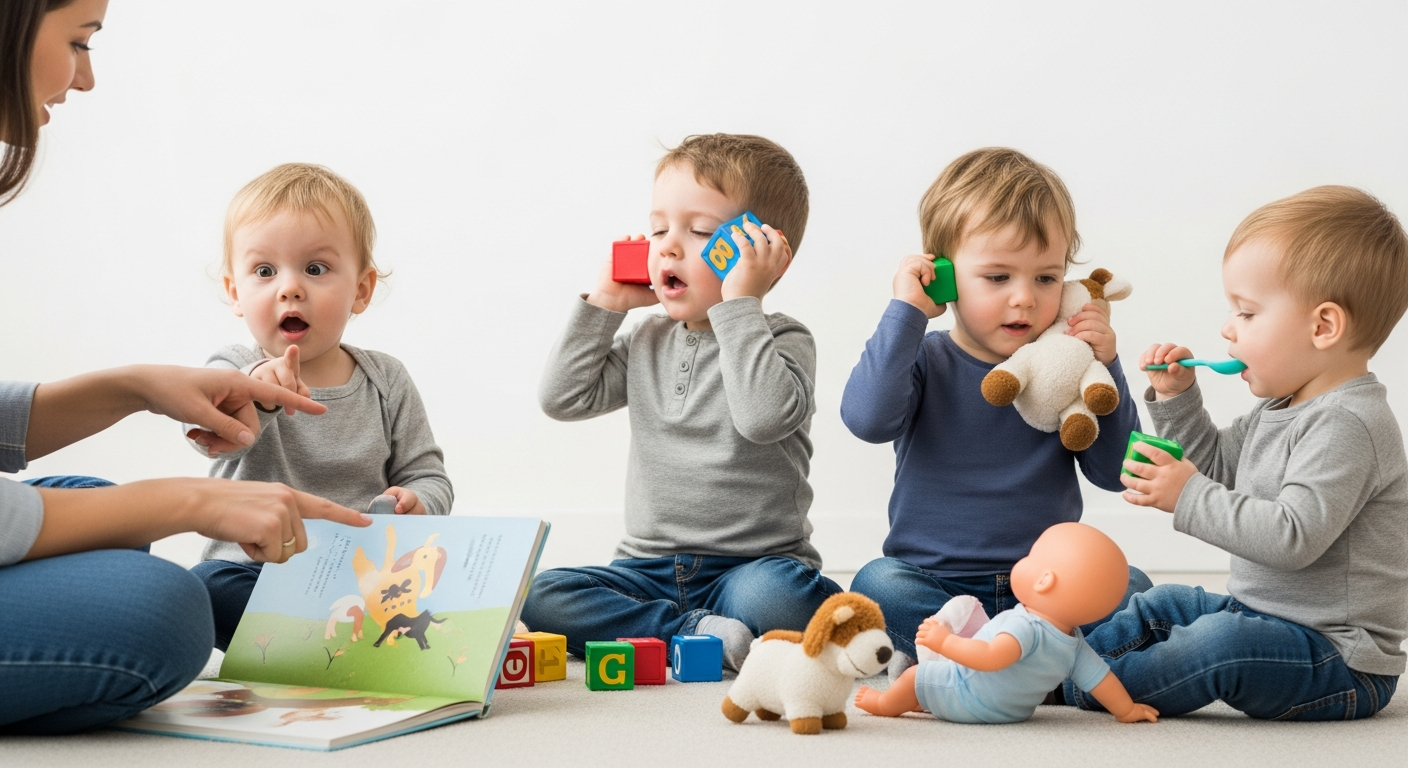
Table of Contents
- Introduction
- Understanding the Difference: Speech vs. Language
- Why Proactive Prevention Matters
- Essential Milestones: What to Watch For
- Practical Strategies for Preventing Speech Delay at Home
- Addressing Physical Habits and Oral Motor Skills
- The Speech Blubs Approach: Science Meets Play
- Making the Most of Your Tools: Value and Features
- When to Seek Professional Help
- The Role of Play in Speech Development
- Summary of Key Takeaways
- FAQ
- Conclusion
Introduction
Did you know that approximately one in four children will face some form of speech or language challenge during their early developmental years? For many parents, the moment they realize their toddler isn't chatting as much as the child next door can be filled with a mix of anxiety and uncertainty. We often wait with bated breath for those magical first words—the "mamas," "dadas," and the sweet babbles that signal a growing mind. But when those milestones seem to be drifting further away, the natural question every caregiver asks is: "Is there anything I can do to help?"
The purpose of this guide is to provide you with a comprehensive roadmap on how to prevent speech delay through proactive environmental changes, engaging activities, and the right developmental tools. We will explore the vital differences between speech and language, identify the milestones you should be watching for, and offer practical, science-backed strategies you can implement at home today. At Speech Blubs, our mission is to empower every child to speak their minds and hearts, and we believe that by fostering a joyful, communication-rich environment, we can help your little one find their voice.

While some delays are rooted in biological or medical factors that require professional intervention, many children benefit immensely from a "communication-first" lifestyle. This blog will show you how to blend traditional parenting wisdom with modern "smart screen time" to create a foundation for lifelong communication success.
Understanding the Difference: Speech vs. Language
Before we dive into prevention strategies, it is essential to understand exactly what we are looking at. Many people use the terms "speech" and "language" interchangeably, but in the world of child development, they represent two very different skills.
What is Speech?
Speech refers to the actual physical act of producing sounds. It involves the coordination of the breath, the vocal cords, the tongue, the lips, and the jaw. When we talk about a "speech delay," we are often referring to difficulties with articulation (forming sounds correctly) or fluency (the flow of speech). For example, if a child says "wabbit" instead of "rabbit," they are working on their speech sounds.
What is Language?
Language is much broader. it is the entire system of giving and receiving information. It involves understanding what others say (receptive language) and being able to share thoughts and ideas (expressive language). A child might have perfect speech sounds but still have a language delay if they cannot follow simple instructions or put words together to form a request.
At Speech Blubs, we focus on both. Our unique scientific methodology is designed to stimulate the brain's natural desire to communicate, helping children bridge the gap between making a sound and understanding its power in the real world.
Why Proactive Prevention Matters
The early years of a child’s life are a period of incredible brain plasticity. During this window, the brain is primed to soak up language like a sponge. While we cannot always "prevent" a delay that is caused by a medical condition like a hearing impairment or a structural issue, we can certainly optimize the environment to ensure that every child reaches their maximum potential.

By focusing on how to prevent speech delay through early stimulation, we reduce the frustration that often leads to behavioral outbursts. When a child can’t express their needs, they often turn to crying or hitting. By giving them the tools to communicate early on, we aren't just teaching words; we are fostering emotional regulation and confidence.
If you are ever unsure about where your child stands, we recommend taking our quick 3-minute preliminary screener. It involves nine simple questions and provides you with a personalized assessment and a next-steps plan to support your child’s unique journey.
Essential Milestones: What to Watch For
Monitoring milestones is not about comparison; it is about awareness. Every child develops at their own pace, but there are general windows that help us identify when a little extra support might be needed.
The First Year: The Foundation
By 12 months, most babies should be:
- Responding to their name.
- Using gestures like waving "bye-bye" or pointing at things they want.
- Babbling with different tones and sounds (proto-sentences).
- Saying at least one or two simple words like "mama" or "dada."
18 Months: The Vocabulary Spark
By this age, toddlers are typically:
- Following simple, one-step commands (e.g., "Give me the ball").
- Pointing to body parts when asked.
- Using a handful of single words spontaneously, not just imitating.
2 Years: The Sentence Builder
By the second birthday, most children can:
- Use about 50 to 100 words.
- Combine two words together, such as "more juice" or "mommy go."
- Be understood by familiar caregivers about 50% of the time.
3 Years: The Storyteller
By age three, your child should be:
- Using three-word sentences.
- Following two or three-step directions.
- Being understood by strangers about 75% of the time.
Key Takeaway: If your child is missing several of these milestones, it is always better to act early rather than "wait and see." Early intervention is the most effective way to help a child catch up to their peers.
Practical Strategies for Preventing Speech Delay at Home
The good news is that the most powerful tools for preventing speech delay are already in your home. You don't need expensive equipment; you just need intentionality and a bit of playfulness.
1. Narrate Your World
Think of yourself as a sports commentator for your child’s life. Talk through everything you are doing. "Now I am putting the blue socks on your feet. One blue sock, two blue socks! Now we are putting on your shoes." This constant stream of narrated language helps your child associate words with actions and objects in real-time.
2. The Power of Reading
Start reading from day one. For infants, choose high-contrast or textured "touch and feel" books. For toddlers, look for repetitive books with rhymes. Don't just read the words on the page; point to the pictures. For a parent whose child is obsessed with animals, our "Animal Kingdom" section in the app offers a fantastic digital extension of this. You can read a book about a cow, then download Speech Blubs on the App Store to let your child watch a peer make the "moo" sound, reinforcing the connection through multiple senses.
3. Face-to-Face Interaction
When you talk to your child, get down on their level. Physical proximity and eye contact are crucial. Children learn to speak by watching how your mouth moves. If you are standing six feet away while talking, they miss the visual cues of how to form a "P" or a "B" sound.
4. Limit the Use of "Passive" Screens
Not all screen time is created equal. Passive viewing, like watching fast-paced cartoons, can actually be overstimulating and doesn't require a child to "give" anything back. In contrast, "smart screen time" encourages interaction. Our app is designed as a screen-free alternative to passive consumption; it is an active tool that requires the child to listen, watch, and then respond.
5. Sing Songs and Nursery Rhymes
Music is a "cheat code" for language development. The rhythm and melody of songs like "The Itsy Bitsy Spider" or "Wheels on the Bus" make it easier for the brain to categorize and remember words. Pause during the song to let your child "fill in the blank." For example, "The wheels on the bus go round and ____." This encourages spontaneous speech.
Addressing Physical Habits and Oral Motor Skills
Sometimes, how to prevent speech delay involves looking at the physical habits that might be impeding oral motor development.
The Role of Pacifiers and Bottles
While pacifiers are a lifesaver for soothing, prolonged use—especially after age one—can affect how the tongue rests in the mouth and how the jaw develops. This can lead to lisping or difficulty with certain speech sounds. Similarly, transitioning from a bottle to an open cup or a straw cup by the first birthday helps strengthen the muscles in the mouth needed for clear articulation.
Sippy Cups vs. Straw Cups
Many parents reach for hard-spout sippy cups because they don't spill. However, these often encourage a "sucking" motion similar to a bottle. Speech therapists generally recommend straw cups or "360 cups" because they require the child to use their tongue and lip muscles in a way that mimics the movements used in speech.
Monitoring Ear Health
Chronic ear infections are a common, yet often overlooked, cause of speech delay. If a child has fluid behind their ears, it’s like they are living underwater. Sounds become muffled, making it nearly impossible for them to learn how to imitate speech correctly. If your child is prone to ear infections, keep a close eye on their hearing responses and consult with your pediatrician.
The Speech Blubs Approach: Science Meets Play
At Speech Blubs, we don't just create an app; we create a "joyful solution." Our company was founded by individuals who personally experienced speech challenges as children. They created the tool they wished they had—one that turns therapy into a game.
Video Modeling: The "Peer Effect"
Our methodology is rooted in the concept of video modeling. Research shows that children are far more likely to imitate other children than they are to imitate adults. In our app, your child watches "Blubs"—real kids—making sounds, words, and sentences. This triggers "mirror neurons" in the brain, which are responsible for learning through imitation. It is a powerful way to foster a love for communication without the pressure of a formal "lesson."
Creating Joyful Family Learning Moments
We believe the best learning happens when parents and children play together. We encourage "co-play," where you sit with your child while they use the app. For example, if your child is using the "Big Powers" section to learn about emotions, you can mimic the faces together, turning a digital activity into a bonding moment.
To see how this has worked for thousands of other families, you can read our parent testimonials and success stories. You will find stories of "late talkers" who found their first words after just a few weeks of consistent, playful practice.
Making the Most of Your Tools: Value and Features
We want to be transparent about how you can best utilize our resources. To support your child's long-term development, we offer two primary ways to access our full suite of tools.
The Yearly Plan: The Best Value for Growth
For parents committed to seeing consistent progress, the Yearly Plan is $59.99 per year. This breaks down to just $4.99 per month, which is a 66% savings compared to our monthly option.
When you choose the Yearly Plan, you receive:
- A 7-day free trial to explore everything risk-free.
- Access to Reading Blubs, our companion app designed to bridge the gap between speaking and reading.
- Early access to all new updates and content releases.
- 24-hour support response time from our dedicated team.
The Monthly Plan
For those who prefer a shorter commitment, we offer a Monthly Plan at $14.99 per month. Please note that the monthly plan does not include the free trial, the Reading Blubs app, or early access to updates.
We highly recommend the Yearly Plan because speech development is a marathon, not a sprint. Having consistent access to our library of over 1,500 activities ensures that as your child grows, the app grows with them. You can create your account and begin your 7-day free trial today to see the difference for yourself.
When to Seek Professional Help
While knowing how to prevent speech delay through home strategies is powerful, it is equally important to know when to call in the experts. A Speech-Language Pathologist (SLP) is a trained professional who can identify specific disorders that might not be visible to the naked eye.
You should consult a professional if your child:
- Shows a regression in skills (losing words they once had).
- Does not respond to social cues or make eye contact.
- Has extreme difficulty being understood by age three.
- Shows significant frustration or behavioral issues related to communication.
Our app is a "smart screen time" experience and a powerful supplement to professional therapy, but it is not a replacement for a clinical diagnosis. If you are concerned, we encourage you to use our preliminary screener as a first step to gather data for your doctor or SLP.
The Role of Play in Speech Development
Play is the "work" of childhood. When a child is playing, they are experimenting with sounds, social roles, and problem-solving. To prevent speech delay, we must protect and encourage unstructured playtime.
Sensory Play
Activities like playing with water, sand, or playdough can actually stimulate speech. When a child experiences a new sensation, they are naturally inclined to comment on it. "Cold!" "Squishy!" "Wet!" These are the building blocks of descriptive language.
Symbolic Play
Around 18 to 24 months, children begin to use objects to represent other things (e.g., using a block as a phone). This is a massive cognitive leap. It shows that the child understands that one thing can stand for another—the very essence of how words (sounds) stand for objects (things). Encourage this by playing "restaurant" or "doctor" with your child.
Social Play
Even if your child isn't talking yet, playing alongside other children (parallel play) is vital. They observe how their peers use language to get what they want. This social motivation is one of the strongest drivers for speech development. This is why our video modeling approach is so effective—it brings that "peer motivation" directly into your home.
Summary of Key Takeaways
Preventing speech delay is about creating an environment where communication is easy, fun, and rewarding. Here is a quick summary of the steps you can take:
- Be a Narrator: Talk about your day, name objects, and explain your actions.
- Read and Sing: Make books and music a daily ritual from birth.
- Focus on the Face: Get down on your child's level so they can see your mouth.
- Watch Physical Habits: Transition away from pacifiers and bottles by the first birthday.
- Choose Smart Screens: Replace passive cartoons with interactive, peer-led tools like Speech Blubs.
- Act Early: Use tools like our 3-minute screener if you have any doubts.
FAQ
1. Can you truly prevent all speech delays?
While you can't prevent delays caused by genetic factors, hearing loss, or neurological conditions, you can significantly reduce the risk of "environmental" delays. By providing a rich language environment and using tools that encourage imitation, you give your child the best possible chance to reach their milestones on time.
2. Is all screen time bad for speech development?
No. There is a huge difference between "passive" screen time (watching a show) and "active" screen time (interacting with a peer-led app). Interactive apps like Speech Blubs are designed to encourage verbalization and imitation, making them a "smart" alternative to traditional cartoons.
3. Does a bilingual home cause speech delay?
It is a common myth that learning two languages causes delay. While a bilingual child might start speaking slightly later or mix their languages initially, they typically reach the same total vocabulary milestones as monolingual children and eventually gain a cognitive advantage.
4. When should I stop using a pacifier to help my child's speech?
Most experts recommend weaning from a pacifier between 6 and 12 months. By age one, the focus should be on developing the complex mouth movements needed for speech, which can be hindered by having a pacifier in the mouth for most of the day.
Conclusion
Every child’s journey to finding their voice is unique, filled with its own set of triumphs and challenges. As parents, the best thing we can do is provide a supportive, joyful, and language-rich environment. By narrating your world, reading together, and choosing tools that prioritize active learning over passive consumption, you are giving your child a head start in "speaking their minds and hearts."
We invite you to join the Speech Blubs family and see how our scientifically-backed, peer-led approach can turn screen time into a powerful developmental tool. Whether you are looking to prevent a delay or support a "late talker," we are here to help you create those joyful learning moments.
Ready to take the next step? Download Speech Blubs on the App Store or get it on Google Play to begin your journey. For the best value and access to all our exclusive features—including the Reading Blubs app and our 7-day free trial—be sure to select the Yearly Plan. Let’s start talking!
About the author