
Supporting Your 15-Month-Old with a Speech Delay
 By Speech Blubs Team•Mar 23, 2026•16 min.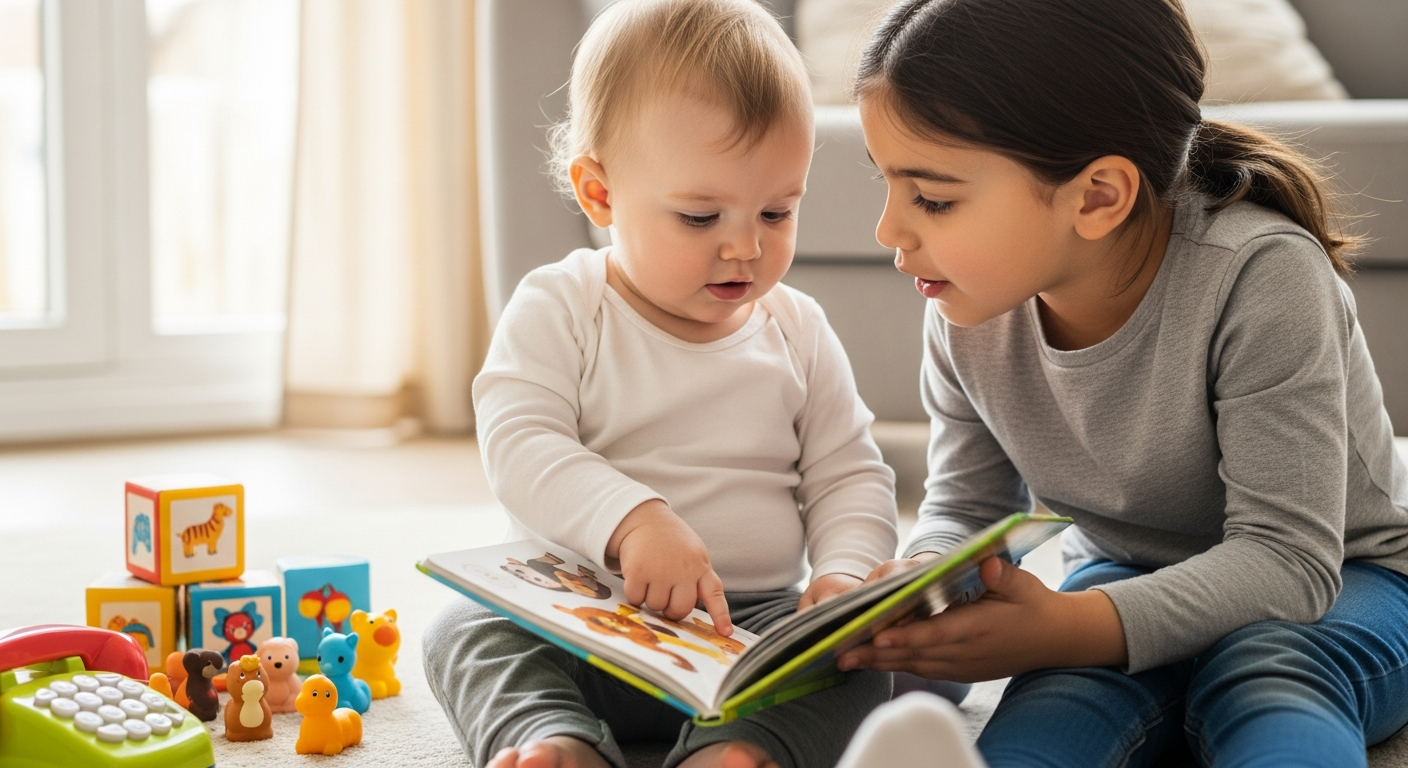
Table of Contents
- Introduction
- Understanding Speech and Language: What’s the Difference?
- Milestones: What Should a 15-Month-Old Be Doing?
- Red Flags for Speech Delay in 15-Month-Olds
- Common Causes of Speech Delays
- The Speech Blubs Approach: Why Peer Modeling Works
- Practical Activities to Do at Home
- When to Seek Professional Help
- Making the Most of Speech Blubs: Pricing and Plans
- Building Confidence and Reducing Frustration
- Frequently Asked Questions (FAQs)
- Conclusion
Introduction
Have you ever found yourself in a playgroup, watching other toddlers babble incessantly or point at "doggies" and "trucks," while your own 15-month-old remains relatively quiet? That heavy feeling in your chest—the one where you start comparing milestones and wondering if your child is "falling behind"—is something many of us at Speech Blubs have experienced firsthand. Our founders grew up with speech challenges themselves, and they created this platform because they knew exactly how it felt to have so much to say but not quite the words to say it yet.
At 15 months, the world is a whirlwind of discovery. Your toddler is likely walking, climbing, and exploring every nook and cranny of your home. But communication is a complex puzzle, and for about one in four children, those first few pieces take a little longer to snap into place. This blog post is designed to be your companion through this journey. We will dive deep into what constitutes a speech delay in a 15-month-old, explore the difference between speech and language, identify the red flags you should look for, and provide practical, joyful ways to encourage communication at home.

Our mission is to empower children to speak their minds and hearts by turning "screen time" into "smart time." By the end of this article, you will have a clear understanding of how to support your child's development, when to seek professional help, and how to create a home environment that celebrates every small victory in communication. The journey of a late talker is not a race, but with the right tools and a lot of love, every child can find their voice.
Understanding Speech and Language: What’s the Difference?
Before we look specifically at the 15-month mark, it is helpful to clarify two terms that are often used interchangeably but mean very different things: speech and language.
What is Speech?
Speech refers to the physical act of producing sounds. It involves the coordination of the breath, the vocal cords, the tongue, the lips, and the jaw. When we talk about a "speech delay," we are often referring to how a child forms words. Are the sounds clear? Are they able to physically make the "p" or "b" sound? If a child has a speech delay, they might understand everything you say and have a vast vocabulary in their head, but they struggle to physically articulate those thoughts so others can understand them.
What is Language?
Language is much broader. it is the entire system of giving and receiving information. It includes "receptive language" (what a child understands) and "expressive language" (how a child shares their thoughts). A child with a language delay might be able to pronounce words perfectly but only have a handful of words in their repertoire. They might struggle to follow simple directions or point to a picture of a cat when you ask, "Where is the kitty?"
At 15 months, we are looking at both. We want to see that your child is trying to make sounds (speech) and that they are starting to use those sounds or gestures to get their point across (language).
Milestones: What Should a 15-Month-Old Be Doing?
Every child is an individual, and the "range of normal" is wider than many parents realize. However, pediatricians and speech-language pathologists (SLPs) look for specific markers at the 15-month mark to ensure development is on track.

Expressive Milestones (What they say)
By 15 months, most toddlers have moved beyond just "mama" and "dada." They should typically:
- Use at least 1 to 3 words consistently and with meaning (this could include names of pets, "no," or "up").
- Attempt to imitate sounds or words they hear you say.
- Use "jargon"—this is that adorable "alien language" where they speak in long strings of sounds that have the tone and inflection of real sentences, even if the words aren't clear yet.
- Combine gestures with vocalizations. For example, they might point at a juice cup while saying "ju."
Receptive Milestones (What they understand)
Understanding often precedes speaking. At 15 months, your child should:
- Look at a familiar object or person when you name them.
- Follow simple, one-step instructions, especially when paired with a gesture (e.g., "Give me the ball" while you hold out your hand).
- Recognize the names of common body parts like "nose" or "toes."
- Respond to their own name consistently.
If your child is hitting the receptive milestones but lagging on the expressive ones, they might be what professionals call a "late talker." While many late talkers catch up on their own, we believe in a proactive approach. Rather than "waiting and seeing," we prefer to "act and see." Taking our preliminary screener is a great first step. It takes about three minutes and consists of nine simple questions that can help you understand where your child stands and what the next steps should be.
Red Flags for Speech Delay in 15-Month-Olds
While we always want to maintain a tone of encouragement, it is important to be aware of certain "red flags" that suggest a child might need a little extra support. If you notice the following, it is a good idea to schedule a chat with your pediatrician or an SLP:
- Lack of Gestures: By 12 months, children should be waving "bye-bye" or pointing at things they want. If your 15-month-old isn't using any gestures to communicate, this is a significant marker.
- No Attempt at Words: If your child is 15 months old and hasn't yet said "mama," "dada," or any other meaningful word, it’s worth investigating.
- Limited Sound Variety: A toddler should be "playing" with sounds—consonants like p, b, m, d, and n. If your child’s vocalizations are mostly just vowel sounds (ah, oh, ee), they may need help with oral-motor coordination.
- No Response to Name: If your child consistently fails to look at you when you call their name, it could indicate a hearing issue or a social-communication delay.
- Preference for Gestures Over Sounds: While gestures are great, if your child only uses gestures and avoids making sounds altogether to get their point back, they might be struggling with the transition to verbal language.
If these red flags feel familiar, please don't panic. Identifying these early is the best thing you can do for your child. Our method is backed by research, and we have seen thousands of children make incredible strides when given the right stimulation.
Common Causes of Speech Delays
When a parent hears the term "speech delay," their mind often jumps to the most complex scenarios. In reality, speech delays can stem from a variety of sources, many of which are very treatable.
1. Oral-Motor Issues
Some children have difficulty coordinating the muscles in their mouth. Conditions like apraxia occur when the brain struggles to send the correct signals to the muscles to form words. Other children might have dysarthria, which is a weakness in the muscles themselves. You might notice this if your child has trouble with certain textures of food or drools excessively.
2. Hearing Loss
This is often the first thing a doctor will check. Even a slight hearing loss can make it difficult for a child to hear the nuances of speech, such as the difference between "bat" and "pat." Chronic ear infections can cause fluid buildup behind the eardrum, which makes the world sound like it’s underwater. If a child can't hear the sounds clearly, they can't imitate them accurately.
3. Developmental and Learning Differences
Speech delays are sometimes a component of a broader developmental picture, such as Autism Spectrum Disorder (ASD) or an intellectual disability. In these cases, the delay is often paired with challenges in social interaction or repetitive behaviors.
4. Environment and Stimulation
Sometimes, a child just needs a more language-rich environment. This isn't a reflection of "bad parenting"—life is busy! However, children who are frequently placed in front of passive screens (like cartoons) without interactive engagement may miss out on the back-and-forth "serve and return" communication necessary for brain development. This is why we advocate for "smart screen time" that requires the child to participate, imitate, and interact.
The Speech Blubs Approach: Why Peer Modeling Works
At Speech Blubs, we don't just want to give your child something to watch; we want to give them someone to copy. Our app is built on the scientific principle of video modeling.
Think about how your child learns. They don't learn to clap because you explained the mechanics of hand-hitting; they learn because they saw you do it. Research shows that children are particularly motivated to imitate other children. In our app, your 15-month-old will see "peers"—real children—making sounds, saying words, and performing fun actions.
When a child sees another child on the screen making a "b-b-b" sound while wearing a digital bee mask, it triggers "mirror neurons" in their brain. These neurons fire both when a person acts and when they observe the same action performed by another. This makes the act of speaking feel like a fun, social game rather than a chore.
For a parent whose 15-month-old is just starting to experiment with sounds, our "Early Sounds" section is a perfect place to start. It focuses on simple, foundational noises that build the confidence a child needs to eventually tackle full words. You can see the impact this has had on families by reading our parent testimonials.
Practical Activities to Do at Home
While apps can be a powerful tool, you are your child's first and most important teacher. Here are some simple, science-backed ways to encourage speech in your 15-month-old every day:
1. Narrate Your Life
Become a "sportscaster" for your child’s day. Instead of doing chores in silence, talk through them. "I am picking up the red sock. Now I am putting it in the basket. Look, the basket is full!" This constant exposure to language helps your child map words to objects and actions.
2. Use "Wait Time"
This is a hard one for parents! When we want our kids to talk, we often bombard them with questions. Instead, try giving them a "pregnant pause." If they want their milk, hold the cup and say, "You want..." and then wait 5 to 10 seconds. Look at them expectantly. This gives their brain time to process the request and attempt a sound or word.
3. Read Interactively
At 15 months, your child might not have the attention span for a full story. That’s okay! Use board books with simple pictures. Point to a cow and say, "Moo! The cow says moo. Can you say moo?" Follow their lead—if they want to flip the pages rapidly, just label one thing on each page.
4. Mirror Play
Sit in front of a mirror with your toddler. Make funny faces, stick out your tongue, and blow raspberries. These "silly" actions are actually exercises for the mouth muscles (oral-motor skills) that are necessary for speech.
5. Animal Sounds and Environmental Noises
Sometimes, a "word" is too big for a 15-month-old. Start with animal sounds (moo, baa, meow) or environmental sounds (vroom, beep, choo-choo). These are often easier to produce and give the child the immediate satisfaction of being understood. In the Speech Blubs app, the "Animal Kingdom" section is a fan favorite for this very reason. It turns sound-making into a joyful, hilarious experience.
When to Seek Professional Help
If you are concerned about a speech delay in your 15-month-old, the best person to consult is a Speech-Language Pathologist (SLP). An SLP will conduct a formal evaluation to look at your child's receptive and expressive language, as well as their oral-motor skills.
Many parents worry that seeking therapy means something is "wrong" with their child. We prefer to look at it as giving your child a "boost." Think of it like a tutor for a subject they find difficult. Early intervention (before age 3) is incredibly effective because the brain is at its most "plastic" or adaptable during these years.
Professional therapy often involves play-based sessions where the therapist uses specific techniques to elicit sounds. You can use Speech Blubs as a powerful supplement to these sessions, providing your child with opportunities to practice at home in a way that feels like play, not work. To get started, you can download Speech Blubs on the App Store or Google Play.
Making the Most of Speech Blubs: Pricing and Plans
We are committed to being a transparent and accessible resource for families. We know that raising a toddler is expensive, so we offer flexible options to fit your family's needs while providing the highest quality "smart screen time" available.
We offer two main ways to join our community:
- Monthly Plan: For $14.99 per month, you get full access to the Speech Blubs app and its vast library of activities, peer-led videos, and progress-tracking tools.
- Yearly Plan (Best Value): Our Yearly plan is the clear choice for families committed to supporting their child's long-term development. It costs $59.99 per year, which breaks down to just $4.99 per month—a massive savings of 66% compared to the monthly rate.
When you choose the Yearly plan, you don't just save money; you also get exclusive high-value features that aren't available on the monthly plan:
- A 7-Day Free Trial: You can explore everything we have to offer for a full week before you are charged.
- Reading Blubs App: You get full access to our companion app, Reading Blubs, which helps toddlers transition from sounds to literacy.
- Priority Support: You’ll receive 24-hour support response times and early access to all our new updates and features.
If you are ready to give your child the tool our founders wish they had, you can create your account and begin your 7-day free trial today.
Building Confidence and Reducing Frustration
One of the most overlooked aspects of a speech delay in a 15-month-old is the emotional toll it takes on both the child and the parent. Imagine being 15 months old, knowing exactly what you want (that blue truck on the high shelf), but being unable to say the words. It’s frustrating! This frustration often leads to tantrums, biting, or withdrawal.
By focusing on communication—even if it isn't "perfect" speech—you reduce that frustration. When your child points and makes a grunt, and you respond with, "Oh, you want the blue truck! Here is the truck," you are validating their effort. You are showing them that communication works.
Our goal at Speech Blubs is to foster a love for communication. We want children to feel confident enough to try new sounds without fear of failure. Our "smart screen time" is designed to be a joyful family learning moment. We encourage parents to sit with their children, imitate the kids on the screen together, and celebrate every "vroom" and "mama."
Frequently Asked Questions (FAQs)
1. Is it normal for a 15-month-old to not be talking yet?
While many 15-month-olds say at least 1-3 words, it is not uncommon for some children to take a bit longer. However, "normal" is a range. If your child is not talking, we look for other signs of communication, such as pointing, waving, and following simple directions. If those are also missing, it is best to consult a professional. You can start by taking our 3-minute preliminary screener for a quick assessment.
2. Can screen time cause a speech delay?
Passive screen time—where a child sits and watches cartoons without interacting—has been linked to slower language development if used excessively. However, "smart screen time," like Speech Blubs, is different. Because it uses video modeling and encourages the child to actively imitate and speak, it acts as a tool for development rather than a distraction. We recommend co-playing with your child to maximize the benefits.
3. Should I be worried if my child has frequent ear infections?
Frequent ear infections can cause temporary hearing loss due to fluid in the middle ear. If a child cannot hear clearly during critical windows of language development, their speech may be delayed. If your 15-month-old has a history of ear infections and isn't talking, it is a good idea to have an audiologist check their hearing.
4. What is the difference between the Monthly and Yearly plans for Speech Blubs?
The Monthly plan costs $14.99 and provides basic app access. The Yearly plan is $59.99 (only $4.99/month) and is the much better value. It includes a 7-day free trial, access to the Reading Blubs app, 24-hour support response times, and early access to all new features. It’s designed for parents who want a comprehensive, long-term tool for their child’s speech journey.
Conclusion
Seeing your child struggle to find their words can be a source of anxiety, but it is also an opportunity for deep connection and growth. Whether your 15-month-old is a "late talker" who just needs a little nudge or requires more structured support, remember that your involvement is the most critical factor in their success. By narrating your day, reading together, and using tools like video modeling, you are building a foundation for a lifetime of communication.
At Speech Blubs, we are here to support you every step of the way. Our app was born from a place of personal experience and is rooted in the scientific principle that children learn best from their peers through play. We want to help your child "speak their mind and heart" and turn every moment of screen time into an opportunity for joy and learning.
Don't wait to give your child the support they deserve. Download Speech Blubs on Google Play or the App Store today. We highly recommend choosing our Yearly plan to take advantage of the 7-day free trial, the bonus Reading Blubs app, and the best overall value for your family. Let’s start this journey together and celebrate the moment your little one finally finds their voice.
About the author