
Supporting Your Child Through Developmental Delay Speech Therapy
 By Speech Blubs Team•Mar 12, 2026•14 min.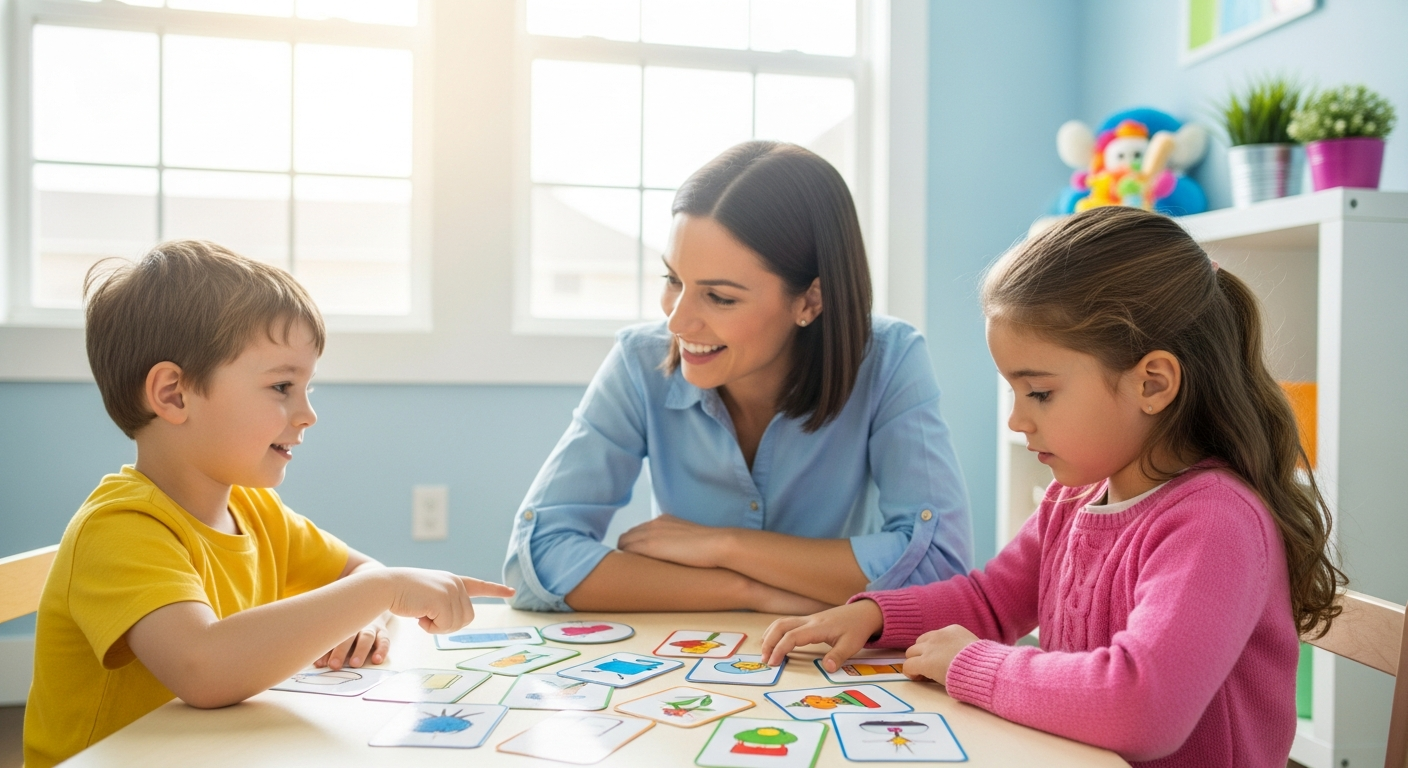
Table of Contents
- Introduction
- Understanding Speech and Language: What Is the Difference?
- Recognizing the Signs of a Speech or Language Delay
- What Causes Developmental Speech and Language Delays?
- The Role of Professional Developmental Delay Speech Therapy
- How Speech Blubs Supports the Therapy Journey
- Practical Strategies for Encouraging Speech at Home
- Smart Screen Time vs. Passive Viewing
- The Speech Blubs Story: Why We Do What We Do
- Choosing the Right Path for Your Family
- Conclusion: Empowering Your Child’s Voice
- Frequently Asked Questions
Introduction
Did you know that approximately 1 in 4 children will experience a speech or language challenge during their early development? For a parent, noticing that your child isn’t hitting communication milestones at the same rate as their peers can be an overwhelming experience filled with questions. You might wonder if they are simply a "late talker" or if there is something more significant happening. This journey, while sometimes stressful, is also an opportunity to deeply connect with your child and provide the specific support they need to thrive.
In this post, we will explore the world of developmental delay speech therapy. We will break down the differences between speech and language, identify the red flags to watch for at various ages, and discuss the biological and environmental factors that can influence a child’s progress. Most importantly, we will share how we at Speech Blubs support this journey through our unique, scientifically backed approach to "smart screen time." Our goal is to empower you with the knowledge and tools necessary to help your child find their voice. At Speech Blubs, we believe every child deserves the chance to speak their minds and hearts, and we are here to walk this path with you.

Understanding Speech and Language: What Is the Difference?
Before diving into the specifics of developmental delay speech therapy, it is helpful to clarify what we mean by "speech" and "language." Although we often use these terms interchangeably, they refer to two distinct but overlapping skill sets.
What is Speech?
Speech is the physical act of producing sounds. it involves coordination between the breath, the vocal cords, and the "articulators"—the tongue, lips, teeth, and jaw. When we talk about speech, we are focusing on:
- Articulation: How sounds are formed (e.g., making the "r" sound or the "th" sound).
- Voice: The use of the vocal folds and breath to produce sound (e.g., volume or pitch).
- Fluency: The rhythm of talking (e.g., whether there are hesitations or repetitions).
What is Language?
Language is a much broader concept. It is the system we use to share and receive information. It includes:
- Receptive Language: This is about understanding. Does your child follow a simple command like "get your shoes"? Do they understand the names of objects?
- Expressive Language: This is about output. How does your child share their thoughts? This can be through words, but also through gestures, signs, and facial expressions.
- Pragmatic Language: These are the social rules of communication, such as taking turns in a conversation or staying on topic.
A child might have a delay in one area but not the other. For instance, a toddler might understand everything you say (strong receptive language) but struggle to form the actual words (speech delay). Understanding these nuances is the first step in effective developmental delay speech therapy. If you are unsure where your child stands, you can take our quick 3-minute preliminary screener, which involves 9 simple questions to provide a basic assessment and a next-steps plan.
Recognizing the Signs of a Speech or Language Delay
Every child develops at their own pace, and there is a wide range of "normal." However, researchers and clinicians have identified specific milestones that serve as helpful markers. Recognizing these signs early allows for the most effective intervention.

Milestones by Age
- By 12 Months: Your child should be using gestures, such as pointing at a dog in the park or waving "bye-bye" to Grandma. They should respond to their name and understand simple words like "no."
- By 18 Months: At this stage, most children use at least 5 to 20 words. A significant sign of a delay is if a child prefers using gestures over vocalizations to communicate their needs or has extreme difficulty imitating sounds.
- By 2 Years: This is a major milestone year. A 2-year-old should be able to follow simple two-step directions (e.g., "Pick up the ball and put it in the box"). They should have a vocabulary of roughly 50 words and begin putting two words together, like "more juice" or "mama go."
- By 3 Years: Your child’s speech should be about 75% intelligible to strangers. They should be using three-word sentences and asking "who, what, and where" questions.
When to Seek Professional Advice
It is always better to be proactive. If your child seems to have an unusual tone of voice (raspy or nasal), if they only imitate speech rather than producing it spontaneously, or if they seem frustrated by their inability to be understood, it is time to consult a pediatrician. They may refer you to a Speech-Language Pathologist (SLP) for a formal evaluation. Early referral can mitigate long-term communication disorders and prevent adverse effects on a child’s social and academic development.
What Causes Developmental Speech and Language Delays?
Understanding the "why" behind a delay can help steer the course of developmental delay speech therapy. There is rarely a single cause; rather, it is often a combination of factors.
Oral-Motor and Physical Issues
Sometimes, the delay is purely physical. An oral impairment, such as a cleft palate or a short frenulum (the fold beneath the tongue), can limit movement and make certain sounds impossible to produce. In other cases, there may be oral-motor problems where the brain has difficulty coordinating the lips, tongue, and jaw. These children might also experience challenges with feeding or swallowing.
Hearing Impairments
Hearing is the foundation of speech. If a child cannot hear sounds clearly, they cannot learn to imitate them. Chronic ear infections can lead to temporary hearing loss, which, if left unaddressed during critical development windows, can set a child back. This is why an audiologist's evaluation is almost always a part of the diagnostic process for speech concerns.
Processing and Neurodevelopmental Factors
Conditions like Autism Spectrum Disorder (ASD) or Global Developmental Delay often include speech and language challenges. In these cases, the delay is part of a broader developmental pattern involving social interaction and cognitive processing. However, it is important to remember that many children have "isolated" speech delays, meaning they are developing typically in every other way but just need a little extra help with communication.
The Role of Professional Developmental Delay Speech Therapy
If your child is diagnosed with a delay, a Speech-Language Pathologist (SLP) will become a key partner in your child’s growth. In a professional setting, developmental delay speech therapy is highly personalized.
The SLP will conduct standardized tests to measure receptive and expressive skills. They will also observe how your child’s mouth and tongue move during play. Therapy sessions often look like play because, for children, play is work. The therapist might use bubbles to encourage lip rounding, or specific games to elicit certain consonant sounds.
One of the most important roles of the SLP is to train you. Research shows that children make the most progress when their parents are actively involved in the process. The therapist will provide you with strategies to use during dinner, bath time, and storytime, turning everyday moments into learning opportunities.
How Speech Blubs Supports the Therapy Journey
At Speech Blubs, our mission is to provide an immediate, effective, and joyful solution for the 1 in 4 children who need speech support. We aren't just an app; we are a "smart screen time" experience designed to be a powerful supplement to professional therapy and overall child development.
The Power of Video Modeling
Our methodology is rooted in the scientific principle of video modeling. Children naturally learn by watching and imitating their peers. Unlike traditional cartoons, which are passive and often over-stimulating, our videos feature real children—our "Blubers"—performing speech exercises.
When your child sees another child making a "moo" sound or sticking out their tongue, it triggers "mirror neurons" in their brain. This makes them much more likely to try the sound themselves. It builds confidence and reduces the frustration that often comes with a developmental delay. Our approach is backed by research, placing us in the top tier of speech apps worldwide with a high MARS scale rating for quality and engagement.
Realistic Expectations and Joyful Learning
We want to be clear: we do not promise that your child will be giving public speeches in a month. Every child’s journey is unique. Instead, we focus on fostering a love for communication and building foundational skills. We aim to create joyful family learning moments. We encourage parents to sit with their children while using the app, turning a digital experience into a co-playing opportunity.
For a parent whose 3-year-old "late talker" loves animals, the "Animal Kingdom" section of our app offers a fun, motivating way to practice "moo" and "baa" sounds. Seeing a peer make the sound on screen makes the task feel like a game rather than a chore. You can read testimonials from thousands of parents who have seen their children’s confidence soar through this method.
Practical Strategies for Encouraging Speech at Home
While professional developmental delay speech therapy and tools like Speech Blubs are vital, the work you do at home is the most influential. Here are some simple, effective ways to build a language-rich environment:
1. Narrate Your Day
Think of yourself as a sports commentator for your child's life. Explain what you are doing as you do it: "I am washing the red apple. Now I am cutting the apple. Crunch, crunch!" This helps your child associate words with actions and objects in real-time. Keep your language simple, but avoid "baby talk" that mispronounces words.
2. Follow Their Lead
If your child is interested in a plastic dinosaur, talk about the dinosaur. Don't try to pivot them to a book if their attention is elsewhere. Communication happens best when the child is genuinely engaged. If they point at the dinosaur, you can say, "Big dinosaur! Roar!"
3. Read and Sing Every Day
Books are incredible tools for elicitations. Use picture books and ask your child to point to different items. "Where is the blue bird?" or "What does the cow say?" Singing is equally powerful because the rhythm and melody make it easier for children to remember and predict words.
4. Create a "Need" to Communicate
It is tempting to anticipate your child's every need, but sometimes, giving them everything before they ask for it can actually hinder speech development. Try putting a favorite toy slightly out of reach or offering two snack choices and waiting for them to point or attempt a word. This "wait time" is crucial—it gives their brain the space it needs to formulate a response.
5. Use Visual and Gestural Cues
If your child is struggling with a word, use your hands to help. If you want them to say "up," raise your hands as you say the word. These visual anchors provide extra support for children with processing delays.
Smart Screen Time vs. Passive Viewing
Many parents worry about screen time, and for a good reason. Passive viewing—like letting a child watch hours of fast-paced cartoons—has been linked to developmental delays because it lacks the social-interaction component that babies need to learn.
However, Speech Blubs is different. We provide a screen-free alternative to that passive consumption. Our app requires the child to be an active participant. They watch, they listen, and then they are prompted to act. This is why we call it "smart screen time." It is a tool for family connection, not a digital babysitter. By using the app together, you can turn a tablet or phone into a collaborative learning device.
The Speech Blubs Story: Why We Do What We Do
Speech Blubs wasn't created in a corporate boardroom. It was born from the personal experiences of our founders. All of them grew up with speech problems and realized that the traditional tools available to them as children were often boring or clinical. They created the tool they wished they had—one that blends scientific principles with the pure joy of play.
Our mission is to empower children to "speak their minds and hearts." We know the frustration of being a child who can't express their needs, and we know the anxiety of being a parent who wants to help but doesn't know how. This empathy drives everything we do, from the way we design our interface to the way we support our community.
Choosing the Right Path for Your Family
When it comes to developmental delay speech therapy, consistency is key. Whether you are working with an SLP twice a week or using Speech Blubs for 15 minutes a day, the goal is to keep the momentum going.
To help families get started, we offer a 7-day free trial so you can experience the benefits of video modeling firsthand. We are transparent about our pricing because we want to build long-term trust with our community.
Our Subscription Plans
We offer two main ways to access our full library of over 1,500 activities:
- Monthly Plan: $14.99 per month. This is a great way to test the waters.
- Yearly Plan: $59.99 per year. This is the clear best choice for most families, as it breaks down to just $4.99 per month—a 66% savings compared to the monthly rate.
Why the Yearly Plan is Superior
The Yearly plan isn't just about saving money; it’s about providing the most comprehensive support for your child’s development. The Yearly plan includes:
- A 7-day free trial to ensure it's the right fit for your child.
- The Reading Blubs app: An extra tool designed to transition speech skills into early literacy.
- Early access to new updates: You’ll be the first to receive our latest content and features.
- Priority Support: A 24-hour support response time to ensure your journey is smooth.
The Monthly plan does not include these additional benefits, making the Yearly plan the most high-value option for parents committed to long-term progress.
Conclusion: Empowering Your Child’s Voice
Developmental delay speech therapy is not a sprint; it is a marathon. It requires patience, empathy, and the right set of tools. By recognizing the early signs, seeking professional guidance when needed, and creating a supportive environment at home, you are giving your child the best possible foundation for the future.
Remember that you are your child's first and most important teacher. Your encouragement, your playfulness, and your dedication are what will truly move the needle. At Speech Blubs, we are honored to be a part of that journey, providing a joyful, peer-led experience that turns speech practice into the highlight of the day.
Ready to see your child's confidence grow? Download Speech Blubs on the Apple App Store or Google Play today. We highly recommend selecting our Yearly plan to take advantage of the 7-day free trial and the full suite of features, including Reading Blubs. Let's work together to help your child speak their mind and heart.
Frequently Asked Questions
1. What is the difference between a speech delay and a language delay?
A speech delay refers specifically to the physical production of sounds and words (articulation, voice, and fluency). A language delay refers to the broader ability to understand others (receptive language) and share thoughts or ideas (expressive language). A child can have a delay in one or both areas.
2. Can "screen time" actually help a child with a speech delay?
Yes, if it is "smart screen time." While passive viewing of cartoons can be unhelpful, active, educational tools like Speech Blubs use video modeling to encourage children to participate and imitate. This turns the screen into an interactive tool for learning rather than a passive distraction.
3. How do I know if my child needs professional speech therapy?
If your child is not hitting major milestones—such as using 50 words by age 2 or being understood by strangers by age 3—you should consult your pediatrician. Other red flags include a lack of gestures by 12 months or a loss of previously learned skills. A Speech-Language Pathologist (SLP) can provide a definitive assessment.
4. Why does Speech Blubs use other children in its videos?
This is based on the scientific method of video modeling. Children are naturally more motivated to imitate their peers than adults. Watching other children successfully make sounds and perform exercises builds confidence and triggers mirror neurons, making it easier for your child to learn.
About the author