
Supporting Your Child with Baby Delayed Speech
 By Speech Blubs Team•Mar 5, 2026•15 min.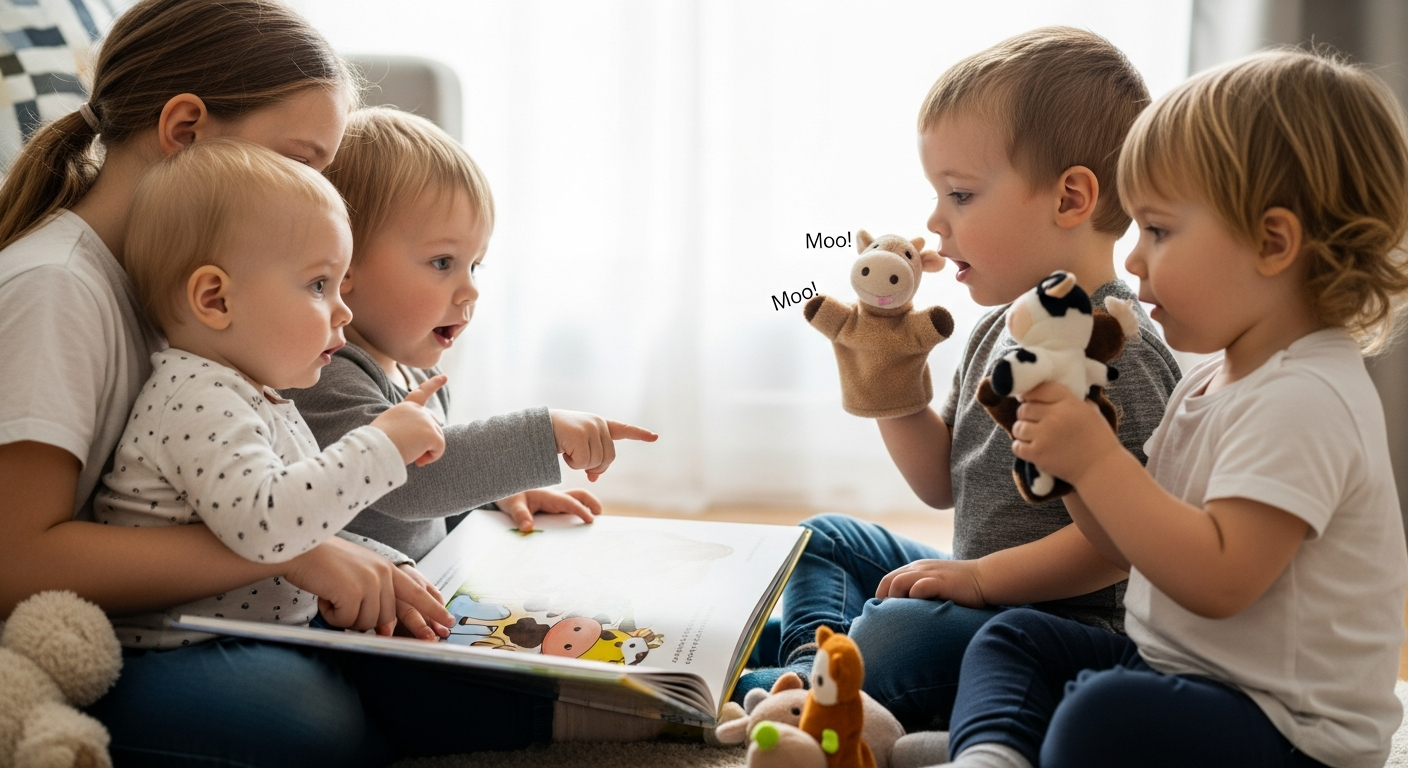
Table of Contents
- Introduction
- Understanding the Difference: Speech vs. Language
- Typical Milestones: What to Expect and When
- Red Flags: When to Seek Professional Support
- Common Causes of Speech and Language Delays
- The Concept of "Late Talkers"
- How Speech Blubs Supports Development
- Practical Strategies for Home Support
- Navigating Professional Help: The SLP and Beyond
- Why Choose the Speech Blubs Yearly Plan?
- Creating Joyful Learning Moments
- Conclusion
- FAQs
Introduction
As a parent, you likely spent the first few months of your child’s life hanging onto every gurgle, sigh, and coo. You might have even found yourself engaged in deep "conversations" with your three-month-old, interpreting their babbles as stories about their day. But as the months tick by toward that first birthday and beyond, that initial excitement can sometimes turn into a quiet, nagging worry. What if the words aren’t coming? What if your little one is still pointing and grunting while their peer at the playground is already naming every dog they see?
If you find yourself searching for answers about baby delayed speech, you are certainly not alone. In fact, approximately one in four children will face some form of speech or language challenge during their early development. At Speech Blubs, we understand this journey intimately because our founders grew up with speech struggles themselves. We’ve dedicated our mission to helping children "speak their minds and hearts" by turning a potentially stressful period into one of joyful, smart screen time.

In this comprehensive guide, we will explore the difference between speech and language, outline the milestones you should look for, identify the red flags that warrant a conversation with a professional, and provide you with actionable strategies to support your child's communication at home. Our goal is to empower you with knowledge and tools so that you can foster a love for communication and build your child's confidence, one sound at a time.
Understanding the Difference: Speech vs. Language
Before diving into the specifics of a delay, it is helpful to clarify what we mean when we talk about communication. Many people use "speech" and "language" interchangeably, but in the world of child development, they represent two different sets of skills.
What is Speech?
Speech refers to the physical act of producing sounds. It involves the coordination of the breath, the vocal cords, the tongue, the lips, and the jaw. When we talk about speech, we are looking at:
- Articulation: How specific sounds are formed (e.g., making the "p" sound versus the "b" sound).
- Voice: The use of the vocal folds and breath to produce sound (considering pitch, volume, and quality).
- Fluency: The rhythm and flow of talking (stuttering or cluttering fall into this category).
What is Language?
Language is much broader. It is the entire system of giving and receiving information. It’s about understanding and being understood.
- Receptive Language: This is what your child understands. Can they follow a simple instruction like "Find your shoes"? Do they understand the names of objects even if they can't say them?
- Expressive Language: This is how your child communicates their needs, thoughts, and feelings. This can be through words, gestures, facial expressions, or even writing later in life.
A child with baby delayed speech might have great language skills—they understand everything you say and can point to exactly what they want—but they struggle with the physical coordination to say the words. Conversely, another child might speak clearly but struggle to put words together in a way that makes sense, which points to a language delay.

Typical Milestones: What to Expect and When
While every child develops at their own unique pace, there are general benchmarks that experts use to track healthy progress. If you are ever unsure where your child stands, we recommend taking our quick 3-minute preliminary screener. It consists of nine simple questions and provides you with a personalized assessment and a next-steps plan.
Birth to 6 Months
During the first half-year, communication is all about sound and reaction. Your baby should start to:
- React to loud sounds.
- Turn their head toward the source of a voice.
- Make "cooing" sounds (mostly vowels like "oo" and "ah").
- Use different cries for different needs (hunger, tiredness, discomfort).
6 to 12 Months
This is the stage of vocal experimentation. You will notice:
- Babbling: Strings of consonant-vowel sounds like "ba-ba-ba" or "da-da-da."
- Gestures: Waving "bye-bye" or pointing at things they want.
- Recognition: Responding to their own name and understanding simple words like "no" or "bottle."
- First Words: Most babies say their first intentional word (like "Mama" or "Dada" used specifically for the parent) around their first birthday.
18 to 24 Months
This is often the period when baby delayed speech becomes more apparent to parents. By age two, most toddlers:
- Have a vocabulary of at least 50 to 100 words.
- Begin to join two words together, such as "more juice" or "Mommy go."
- Can point to several body parts when named.
- Should be understood by primary caregivers about 50% of the time.
3 Years and Beyond
By the time a child turns three, their communication explodes. They should:
- Use three-word sentences.
- Be understood by strangers about 75% of the time.
- Understand spatial concepts like "on," "under," or "in."
- Engage in simple "pretend play."
Red Flags: When to Seek Professional Support
It is perfectly normal for a child to be a few weeks or even a month "behind" a specific milestone. However, certain "red flags" suggest that a child may benefit from early intervention. Research shows that addressing delays early can significantly improve long-term outcomes for literacy and social success. You can read more about the scientific research that informs our approach to these developmental stages.
Contact your pediatrician or a speech-language pathologist (SLP) if your child:
- By 12 months: Does not point to objects or use gestures like waving.
- By 15 months: Does not look at an object when you point to it (lack of joint attention).
- By 18 months: Prefers gestures over vocalizations or has significant trouble imitating sounds.
- By 24 months: Can only imitate speech but doesn't produce words or phrases spontaneously.
- At any age: Shows a sudden regression in skills (stops saying words they used to know) or consistently fails to respond to their name.
If you are noticing these signs, download Speech Blubs on the App Store or Google Play to begin exploring activities that encourage imitation and sound production in a stress-free environment.
Common Causes of Speech and Language Delays
Understanding the "why" behind a delay can help you find the right "how" for support. There is rarely one single cause, but common factors include:
1. Oral-Motor Issues
Some children have difficulty coordinating the muscles of the mouth. This can be due to "Childhood Apraxia of Speech" (CAS), where the brain struggles to plan the movements required for speech. Physical impairments like a cleft palate or a very short frenulum (tongue-tie) can also impact articulation, though many children with tongue-ties speak perfectly fine.
2. Hearing Loss
Even a temporary hearing loss—often caused by chronic ear infections or fluid behind the eardrum—can cause a significant delay. If a child cannot hear the nuances of language, they cannot imitate them. It is standard practice for an SLP to recommend a hearing test as the first step in any speech evaluation.
3. Developmental Disorders
Baby delayed speech can sometimes be a secondary symptom of a broader developmental condition, such as Autism Spectrum Disorder (ASD) or a global developmental delay. In these cases, the child might also struggle with social interaction, eye contact, or repetitive behaviors.
4. Environmental Factors
While less common, a lack of verbal stimulation can slow a child's progress. Children learn to speak by being spoken to. In our digital age, it is easy to fall into the trap of passive screen time (like watching cartoons), which doesn't require a child to respond. This is why we created Speech Blubs as a "smart screen time" alternative—it is interactive, requires vocal participation, and is designed to be used alongside a parent.
The Concept of "Late Talkers"
Not every child with a slow start has a "disorder." Some children are simply "late talkers." These children typically have good receptive language—they understand everything—but they are slow to build their expressive vocabulary.
Studies show that late talkers are at a higher risk for frustration-based tantrums. Imagine being two years old and knowing exactly what you want, but having no way to tell your parents. It's frustrating! Providing these children with tools to communicate can drastically reduce household stress and boost the child's self-esteem.
For a parent whose 3-year-old "late talker" loves animals, the "Animal Kingdom" section of our app offers a fun, motivating way to practice "moo" and "baa" sounds through imitation. By seeing other children make these sounds, your child feels encouraged to join in the "game" rather than feeling pressured to "perform."
How Speech Blubs Supports Development
At Speech Blubs, we believe that play is the highest form of research. Our app is built on the methodology of video modeling. This is a scientifically proven technique where children learn new behaviors by watching their peers.
Peer-to-Peer Learning
Unlike most educational apps that use animated characters, Speech Blubs features real children. When your baby sees another child making a "b-b-b" sound or sticking out their tongue, their "mirror neurons" fire. This creates a natural urge to imitate. It turns "speech therapy" into a playdate.
Smart Screen Time
We provide a powerful tool for family connection. We encourage parents to sit with their children, use the fun face filters within the app, and laugh together. This transforms the screen from a "babysitter" into a bridge for communication. Our goal isn't just to get your child talking to a device; it’s to give them the skills they need to talk to you.
Confidence Building
For a child struggling with baby delayed speech, the world can feel overwhelming. By breaking down complex sounds into fun, achievable "mini-goals," we help children build the confidence they need to try new words in their everyday lives. You can read testimonials from other parents who have seen their children’s confidence soar after using our tools.
Practical Strategies for Home Support
While professional therapy is invaluable, the most important work happens in the hours between sessions. You are your child’s first and best teacher. Here are several ways to encourage speech development during your daily routine:
1. Narrate Your Day
Act like a sports commentator for your life. As you are folding laundry, say, "I am folding the blue shirt. Now I am folding the red socks." When you’re at the grocery store, point to the fruit: "Look at the yellow bananas! Should we put the bananas in the cart?" This constant exposure to language helps your child build their internal dictionary.
2. The Power of "Wait Time"
As parents, we are often so tuned in to our children's needs that we anticipate them before the child even speaks. If your child points to the milk, don't just give it to them immediately. Hold the milk, make eye contact, and wait for five seconds. Give them the space to attempt a sound or a word. If they don't, you can say, "Milk? You want milk!" and then give it to them.
3. Read and Sing Daily
Books with repetitive text or rhymes are excellent for speech development. When reading a familiar book, stop before a key word and see if your child fills it in. Singing is also powerful because the rhythm and melody of songs make words easier to remember and produce.
4. Use "Self-Talk" and "Parallel Talk"
- Self-Talk: Describe what you are doing ("I am washing the big apple").
- Parallel Talk: Describe what your child is doing ("You are pushing the car! Vroom, vroom!").
Navigating Professional Help: The SLP and Beyond
If you decide to seek a professional evaluation, you will likely work with a Speech-Language Pathologist (SLP). During an initial assessment, the SLP will look at:
- Receptive Language: How well the child understands instructions.
- Expressive Language: The variety of sounds or words the child uses.
- Oral-Motor Function: The strength and coordination of the mouth muscles.
- Social Skills: How the child interacts with others.
In the United States, children under the age of three are often eligible for "Early Intervention" programs, which are frequently provided at little or no cost to the family. After age three, these services are typically handled through the local school district. Using an app like Speech Blubs is a powerful supplement to these professional services, providing a way to keep the momentum going at home between therapy appointments.
Why Choose the Speech Blubs Yearly Plan?
We want to make speech support accessible and effective for every family. While we offer a monthly subscription, our Yearly Plan is designed to provide the most comprehensive support for your child's long-term growth.
Transparent Pricing and Superior Value
- Monthly Plan: $14.99 per month.
- Yearly Plan: $59.99 per year.
When you choose the Yearly Plan, the cost breaks down to just $4.99 per month—a 66% savings compared to the monthly option. But the value goes beyond just the price tag.
Exclusive Features of the Yearly Plan:
- 7-Day Free Trial: You can explore the entire app with your child risk-free for a full week to ensure it’s the right fit for your family.
- Reading Blubs App: Access to our companion app designed to help toddlers transition from speaking to early literacy skills.
- Priority Support: Enjoy a 24-hour response time from our support team and early access to all new content updates.
The Monthly plan does not include the free trial, the Reading Blubs app, or the priority support features. To give your child the full suite of tools they need to succeed, we highly recommend the Yearly Plan. Ready to get started? Create your account and begin your 7-day free trial today.
Creating Joyful Learning Moments
The journey of addressing baby delayed speech is a marathon, not a sprint. It is filled with small victories—the first time they imitate a "pop" sound, the first time they point to a dog and say "doggie," or the first time they use a word to tell you they are hungry instead of crying.
At Speech Blubs, we are here to celebrate those victories with you. We aren't promising that your child will be giving public speeches in a month. What we are offering is a scientifically-backed, joyful way to reduce frustration and build the foundational skills your child needs to communicate with the world. By blending play with purpose, we help you turn screen time into "connection time."
"Communication is the heartbeat of human connection. When we help a child find their voice, we aren't just teaching them to talk; we are giving them the keys to the world."
Conclusion
Navigating the world of baby delayed speech can feel overwhelming, but remember that you are your child’s greatest advocate. By staying informed about milestones, watching for red flags, and incorporating language-rich activities into your daily life, you are laying a vital foundation for your child's future. Whether your child is a "late talker" who just needs a little nudge or requires more structured support, there is a wealth of resources available to help them thrive.
We invite you to join our community of over 4 million parents who have turned to Speech Blubs to support their child's communication journey. Our unique video modeling approach, created by experts and inspired by personal experience, is designed to make learning to speak an adventure rather than a chore.
Take the first step today. Download Speech Blubs on the App Store or Google Play to start your journey. For the best value and access to all our premium features—including the 7-day free trial and the Reading Blubs app—be sure to select our Yearly plan. Let's work together to help your child speak their mind and heart.
FAQs
1. Is it true that boys talk later than girls?
While statistics do show that boys are slightly more likely to be "late talkers" than girls, the developmental milestones remain the same regardless of gender. You should not ignore a delay simply because your child is a boy. If he is not meeting the age-appropriate benchmarks, it is always best to consult with a professional or take a preliminary assessment.
2. Can using a pacifier cause a speech delay?
Extended pacifier use (especially after age two) can sometimes interfere with the development of the muscles in the mouth or lead to dental issues that affect articulation. It can also reduce the number of opportunities a child has to practice babbling or speaking. However, a pacifier itself is rarely the sole cause of a significant language delay.
3. Does being raised in a bilingual home cause speech delays?
This is a very common myth. Research shows that children raised in bilingual homes reach their language milestones (like saying their first word) at the same time as children in monolingual homes. They may occasionally mix the two languages (code-switching), but this is a sign of cognitive flexibility, not a delay. If a bilingual child has a delay, it will typically show up in both languages.
4. How much screen time is okay for a child with a speech delay?
The quality of screen time matters more than the quantity. Passive viewing—where a child sits and watches cartoons without interacting—is generally not recommended for children under two. However, "smart screen time" that encourages interaction, vocalization, and co-play with a parent (like Speech Blubs) can be a powerful educational tool. The American Academy of Pediatrics suggests that for children ages 18 to 24 months, parents should choose high-quality programming and watch it with their children to help them understand what they are seeing.
About the author