
Supporting Your Delayed Speech 3 Year Old Today
 By Speech Blubs Team•Mar 9, 2026•15 min.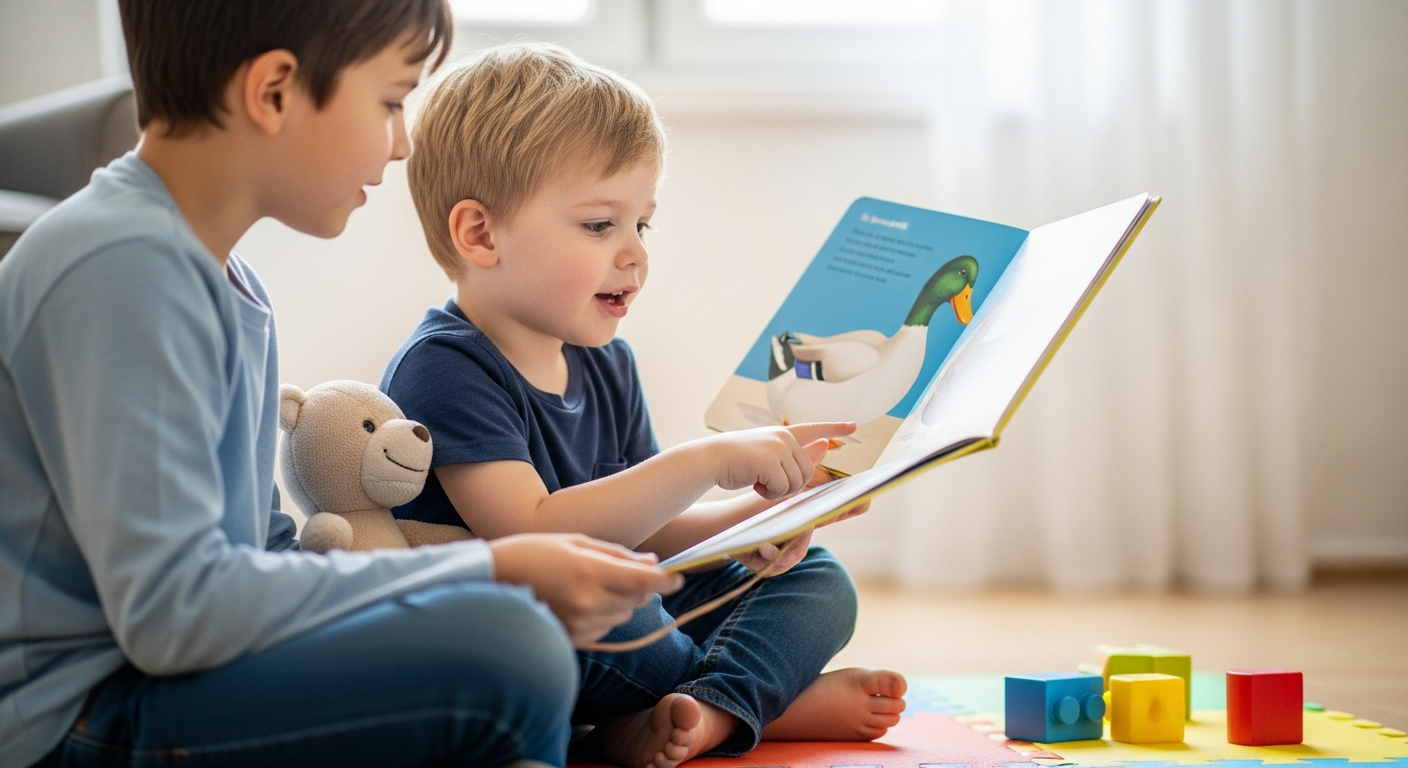
Table of Contents
- Introduction
- Understanding Speech and Language at Age Three
- Why Does My 3-Year-Old Have a Speech Delay?
- The Speech Blubs Approach: Science Meets Play
- Practical Strategies for Home Support
- Setting Realistic Expectations
- Making the Best Choice for Your Family
- When to Consult a Professional
- Creating a Positive Communication Environment
- The Role of Play in Speech Development
- Final Thoughts on Supporting Your Child
- FAQ
- Conclusion
Introduction
Have you ever watched your child play at the park and noticed that while other three-year-olds are chatting away about their "blue truck" or "big slide," your little one is mostly pointing, grunting, or using single words? If you’ve felt that pang of worry or wondered if you’ve done something wrong, we want you to take a deep breath: you are not alone, and you are doing a great job. Communication is a journey, not a race, and every child follows their own unique map. At Speech Blubs, our mission is to empower children to speak their minds and hearts, and we are here to help you navigate this specific stage with confidence and joy.
Statistics suggest that about one in four children may need some form of speech support during their early years. Whether your child is a "late talker" who understands everything but says very little, or someone who struggles to be understood by strangers, there are many proactive steps you can take. This article will explore what defines a delayed speech 3 year old, look at the common causes behind these delays, and provide practical, science-backed strategies to encourage communication. We’ll also discuss how to differentiate between speech and language delays and how our unique "smart screen time" approach can complement your child's development.

Our goal is to move past the frustration and focus on the connection. By the end of this post, you will have a better understanding of developmental milestones, a toolkit of home activities, and a clear path forward for supporting your child’s voice.
Understanding Speech and Language at Age Three
When we talk about a "speech delay," it’s helpful to understand exactly what that means. Often, parents use the terms "speech" and "language" interchangeably, but in the world of child development, they represent two different parts of the communication puzzle.
The Difference Between Speech and Language
Speech is the physical act of producing sounds and words. It involves the coordination of the breath, vocal cords, tongue, lips, and jaw. If a three-year-old has a speech delay, they might know exactly what they want to say but have trouble forming the actual sounds, making their words difficult to understand.
Language, on the other hand, is about the "what" and "how" of communication. It is a system of sharing information.
- Receptive Language: What your child understands (following directions, identifying colors).
- Expressive Language: How your child uses words to express needs, feelings, and ideas (putting words into sentences).
A child with a language delay might be able to pronounce words perfectly but only use one or two at a time, or they might struggle to follow simple instructions like "Put your shoes in the basket." If you are curious about where your child currently stands, taking a quick 3-minute preliminary screener can provide a simple assessment and a next-steps plan to help you identify specific areas for growth.
Milestones for a Three-Year-Old
While every child develops at their own pace, the American Academy of Pediatrics (AAP) and other developmental experts provide general guidelines for what is typical at age three. By this age, most children:
- Use about 1,000 words.
- Speak in sentences of 3 to 4 words (e.g., "I want juice now").
- Are understood by family members most of the time (about 75% of the time).
- Can call themselves and others by name.
- Ask "who," "what," and "where" questions.
- Can follow two-step directions (e.g., "Get your hat and come to the door").
If your child is missing several of these milestones, it doesn’t mean they won't catch up, but it is a signal that they might benefit from a little extra support.

Why Does My 3-Year-Old Have a Speech Delay?
Finding out the "why" can often take some of the weight off a parent’s shoulders. It’s important to remember that a delay is rarely caused by something a parent did or didn’t do. Instead, delays are usually rooted in physical or developmental factors.
Oral-Motor Challenges
Some children have difficulty coordinating the muscles in their mouth. Conditions like Childhood Apraxia of Speech occur when the brain struggles to plan the movements necessary for speech. The child knows what they want to say, but the "message" from the brain to the mouth gets muddled. Other physical issues, such as a "tongue-tie" (ankyloglossia), where the fold beneath the tongue is too short, can also limit movement and affect sound production.
Hearing Limitations
If a child can't hear clearly, they can't imitate sounds correctly. Even temporary hearing loss caused by chronic ear infections can set back speech development. Because children are so resilient, they often find ways to compensate (like being very good at reading gestures), which can make hearing loss hard to spot. This is why we always recommend a professional hearing test as a first step.
Developmental Differences and Autism
In some cases, a speech delay is a piece of a larger developmental picture. Children with Autism Spectrum Disorder (ASD) often experience challenges with both verbal and non-verbal communication. They might repeat phrases (echolalia) instead of creating their own sentences or struggle with social cues like eye contact. If your child is also showing repetitive behaviors or seems "in their own world," it’s worth discussing these observations with a pediatrician.
Environmental Factors
While less common as a primary cause, the environment plays a role. Children need a "language-rich" environment to thrive. This doesn't mean you need to be a teacher 24/7; it just means children benefit from face-to-face interaction, being read to, and having opportunities to practice speaking. Too much passive screen time (like watching hours of cartoons) can sometimes reduce the time spent in active, back-and-forth communication.
The Speech Blubs Approach: Science Meets Play
At Speech Blubs, we don't just see ourselves as an app; we see ourselves as a bridge to communication. Our company was born from the personal experiences of our founders, who all grew up with speech problems themselves. They created the tool they wished they had—one that blends scientific principles with the pure joy of play.
The Power of Video Modeling
Our methodology is rooted in video modeling. Have you ever noticed how your child tries to do exactly what their older cousin or a peer at preschool does? That’s because children are biologically wired to learn from other children.
Our app features thousands of videos of real children—not cartoons—performing speech exercises. This triggers "mirror neurons" in your child's brain. When your child sees a peer making a "B" sound or saying "Elephant," their brain reacts as if they are making the sound themselves. This peer-to-peer connection builds confidence and reduces the pressure that sometimes comes from practicing with adults.
"Our method is backed by science, placing us in the top tier of speech apps worldwide." — Explore our scientific research to see how we use these principles to foster a love for communication.
Smart Screen Time vs. Passive Viewing
We understand the "screen time guilt" that many parents feel. However, there is a massive difference between a child sitting passively in front of a cartoon and "smart screen time." Speech Blubs is designed to be an interactive experience. It encourages your child to make sounds, imitate facial expressions, and engage with the content. It’s a tool for family connection, meant to be used with a parent nearby to cheer on every new sound and word.
Practical Strategies for Home Support
If your delayed speech 3 year old is struggling, your daily routine is your greatest classroom. You don't need expensive equipment; you just need a little intentionality.
1. Narrate Your Life
Think of yourself as a sports commentator for your child's day. When you are making lunch, say, "I am cutting the red apple. Crunch, crunch! Now I put it on the blue plate." This constant exposure to vocabulary in context helps build their receptive language. For a child who loves animals, you might focus on the "Animal Kingdom" section of our app to practice "moo" and "baa" sounds while you play with toy farm animals.
2. The Power of Choice
Frustration often stems from a lack of agency. If your child can't tell you they want the orange juice, they might scream. Instead, give them two visual choices: "Do you want the milk or the juice?" Hold both up. This encourages them to either point or attempt the word, giving them a sense of control over their world.
3. Read and Re-Read
Reading the same book five times in a row might be boring for you, but it’s magic for a toddler. Repetition is how they map sounds to meaning.
- Pause before the end of a familiar sentence to see if they fill in the blank.
- Point to pictures and ask, "What is the dog doing?"
- Use silly voices to keep them engaged.
4. Use Interactive Tools
When you need a structured but fun way to practice, digital tools can be a powerful supplement. You can download Speech Blubs on the App Store or Google Play to begin a guided journey of sound and word discovery.
Setting Realistic Expectations
It is important to remember that progress isn't always a straight line. Some weeks, your child might sprout ten new words; other weeks, they might seem to plateau. This is a normal part of development.
Our goal is not to turn your child into a public speaker overnight. Instead, we focus on:
- Fostering a genuine love for communication.
- Building the confidence to try new sounds.
- Reducing the frustration of not being understood.
- Creating joyful learning moments for the whole family.
If you are working with a professional speech-language pathologist (SLP), our app serves as a powerful supplement to their therapy plan. Many SLPs actually recommend Speech Blubs to parents as a way to keep the momentum going between sessions. You can read testimonials from parents and experts who have seen the benefits of this consistent, joyful practice.
Making the Best Choice for Your Family
We believe that every child deserves the best tools available, regardless of their starting point. That’s why we’ve worked hard to make Speech Blubs both effective and accessible. When you’re ready to dive in, we offer two main paths:
- Monthly Plan: At $14.99 per month, this is a great way to test the waters.
- Yearly Plan: At $59.99 per year, this is the clear best choice for families committed to their child's progress.
Why choose the Yearly plan? It breaks down to just $4.99 per month—a 66% saving compared to the monthly option. But the value goes beyond the price. The Yearly plan includes:
- A 7-day free trial so you can explore the app risk-free.
- The extra Reading Blubs app, which helps transition speech skills into early literacy.
- Early access to new updates and 24-hour support response time.
The monthly plan does not include the free trial or the Reading Blubs app, so for the most comprehensive experience, we highly recommend the yearly option. You can create your account and begin your 7-day free trial today to see the difference for yourself.
When to Consult a Professional
While home activities and "smart screen time" are incredibly beneficial, they are not a replacement for professional medical advice. If your 3-year-old displays any of the following "red flags," please reach out to your pediatrician or a speech-language pathologist:
- They use fewer than 200 words.
- They cannot follow simple, two-step instructions.
- They seem to have lost skills they previously had (regression).
- Their speech is very difficult for even you to understand.
- They show no interest in interacting with other children or caregivers.
Early intervention is one of the most effective ways to ensure your child reaches their full potential. The earlier you address a delay, the easier it is for your child to catch up to their peers before they head off to school.
Creating a Positive Communication Environment
Beyond the exercises and the apps, the most important thing you can give your delayed speech 3 year old is a safe space to fail. When your child tries to say a word and gets it wrong, don't correct them with a "No, that's wrong." Instead, model the correct version.
If they say, "Look, a goggy!" you can respond with, "Yes! I see the doggy. The doggy is wagging his tail." This provides the correct model without making the child feel discouraged or self-conscious about their attempt.
We also encourage you to look for the "small wins." Maybe they didn't say a full sentence today, but they made eye contact and pointed to exactly what they wanted. Maybe they imitated a silly sound during a Speech Blubs session. These are the building blocks of communication, and they deserve to be celebrated.
The Role of Play in Speech Development
For a three-year-old, play is work. It is the primary way they learn about the world. When you are playing with your child, try to follow their lead. If they are interested in blocks, talk about the blocks. If they want to pretend to be a dinosaur, roar with them.
Incorporating Speech Blubs into this playtime can feel like a natural extension of their curiosity. In the "Toy Box" section of the app, children can see other kids playing with familiar items, which gives them the vocabulary they need to engage in "symbolic play" (pretend play). This type of play is a massive milestone in cognitive development and is closely linked to language growth.
Final Thoughts on Supporting Your Child
The journey of supporting a delayed speech 3 year old requires patience, consistency, and a whole lot of love. It’s easy to get caught up in the milestones and the "should-haves," but try to focus on the child right in front of you. Every "ba" sound, every giggle at a peer on a screen, and every moment of shared reading is a step toward them being able to speak their mind and heart.
We are honored to be a part of your family's story. Our founders built Speech Blubs because they knew what it felt like to be a child who couldn't quite find the words. Today, we are proud to provide a joyful, effective, and science-based solution for the millions of children who need that extra boost.
FAQ
1. Is it normal for a 3-year-old to still be babbling?
While some babbling can still occur during play, a 3-year-old should primarily be using words and short sentences to communicate. If your child is babbling more than they are talking, it is a good idea to seek a speech evaluation to see if they are struggling with sound production or expressive language.
2. Can too much TV cause a speech delay?
Passive screen time, where a child just watches without interacting, does not provide the back-and-forth communication necessary for language development. While it might not "cause" a delay in a healthy child, it can take away valuable time that could be spent interacting. This is why we focus on "smart screen time" that requires active participation.
3. How long does it take to see progress with speech therapy or apps?
Every child is different. Some show changes within weeks, while others take months. The key is consistency and creating a low-pressure environment. Focus on building confidence and the love of communication rather than focusing on a specific deadline for a certain number of words.
4. What is the best way to start using Speech Blubs?
We recommend starting with the preliminary screener to see where your child's strengths are. From there, download the app and start with just 5-10 minutes a day of co-play, where you and your child watch the videos and practice the sounds together.
Conclusion
Supporting a delayed speech 3 year old is a commitment to your child's future confidence and social success. By understanding the milestones, ruling out physical issues like hearing loss, and incorporating fun, peer-led learning tools, you are giving your child the best possible start. Remember that you are your child's best teacher and most important advocate.
Are you ready to turn screen time into "smart screen time" and watch your child's confidence grow? Download Speech Blubs on the App Store or get it on Google Play today. To get the best value and access to all our premium features—including the Reading Blubs app and a 7-day free trial—be sure to select the Yearly plan. Let’s start this journey together and help your little one finally speak their mind and heart.
About the author