
Sweet & Simple Valentine's Day Fun for Kids
 By Speech Blubs Team•Jan 13, 2026•19 min.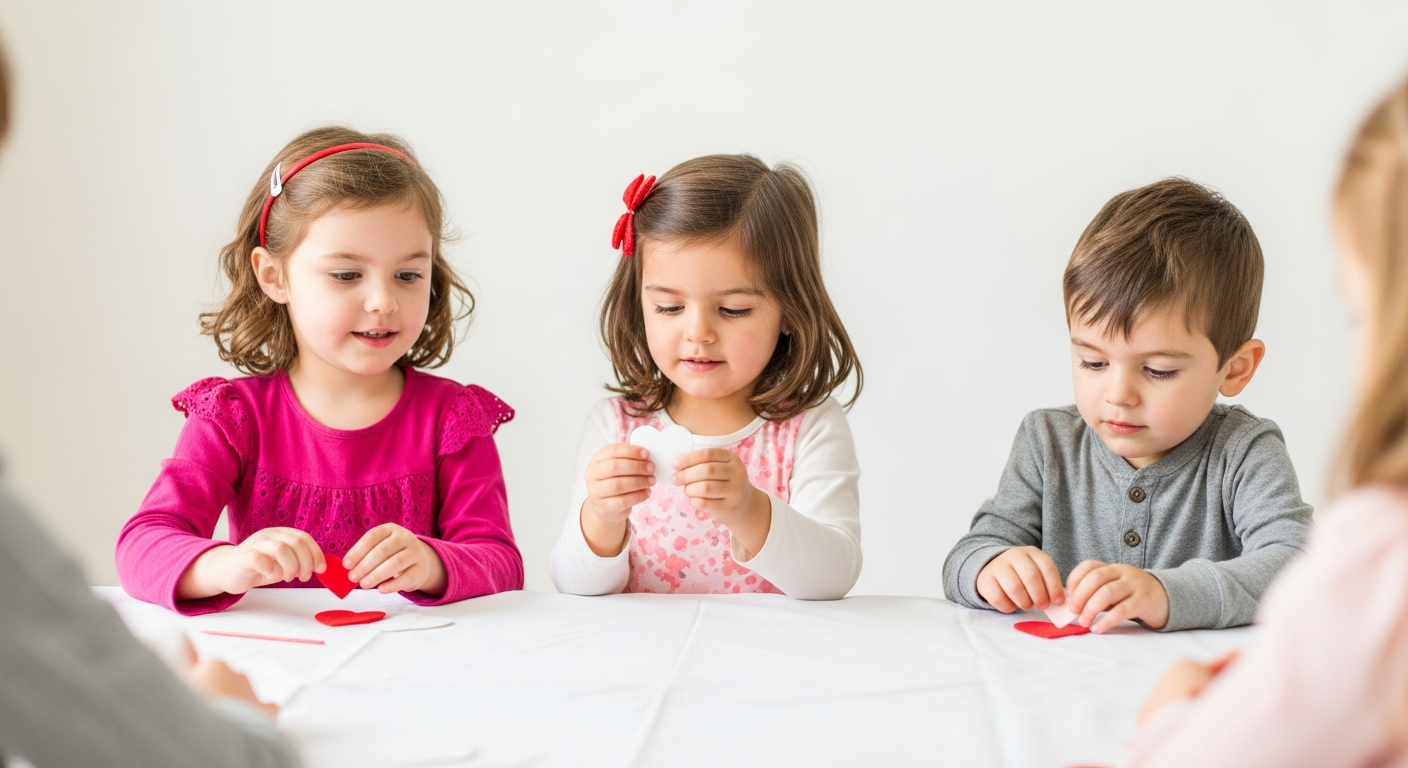
Table of Contents
- The Heart of the Matter: Why Valentine's Day Activities Go Beyond Chocolate
- Crafting Connections: Creative Valentine's Day Activities for Speech & Language Growth
- Spreading Kindness and Conversation: Activities for Social-Emotional Growth
- Smart Screen Time with Speech Blubs: A Powerful Partner in Play
- Choosing the Best Plan for Your Family: Unlocking Full Potential
- Conclusion
- FAQ
The air is already buzzing with whispers of red and pink, the scent of chocolate, and the promise of heartfelt connections. Valentine's Day, often seen as a holiday primarily for adults, is in fact a golden opportunity for families to create lasting memories, express affection, and, perhaps most importantly, foster crucial developmental skills in children. But how do we shift the focus from store-bought gifts to meaningful experiences that genuinely enrich our children's lives? How do we make this celebration of love a catalyst for growth, particularly in areas like communication and social-emotional development?
This blog post will delve into a treasure trove of fun Valentine's Day activities designed not just to entertain, but to subtly yet powerfully boost your child's speech, language, and social skills. We'll explore creative crafts, engaging sensory play, delicious culinary adventures, and heartwarming acts of kindness – all while showing you how to infuse these moments with opportunities for developmental progress. Our goal is to empower you to transform Valentine's Day into a vibrant, educational, and deeply connected family experience. Get ready to discover how celebrating love can also mean celebrating your child's blossoming communication abilities, with a little help from tools like Speech Blubs, which are designed to support every child's journey to speak their minds and hearts.

The Heart of the Matter: Why Valentine's Day Activities Go Beyond Chocolate
Valentine's Day, at its core, is about expressing love and appreciation. For children, this translates into a unique opportunity to explore a range of emotions, understand social cues, and practice crucial communication skills. Far from being just a commercial holiday, it's a chance to build strong emotional foundations and ignite cognitive growth.
Emotional Development Through Affectionate Expression
When children participate in Valentine's activities, they learn to identify and express emotions like love, happiness, and gratitude. Crafting a card for a grandparent, for instance, allows them to think about what makes that person special and articulate those feelings. This practice is vital for emotional intelligence, helping them understand their own feelings and empathize with others. It teaches them that love isn't just a feeling, but also an action.
Boosting Social Skills with Sharing and Kindness
Many Valentine's activities naturally encourage social interaction. From collaborating on a craft project to delivering handmade cards to friends and family, children learn about turn-taking, sharing, and understanding others' perspectives. These activities provide a safe environment to practice social etiquette, such as saying "please" and "thank you," offering compliments, and understanding reciprocal relationships. Our mission at Speech Blubs is to help children "speak their minds and hearts," and fostering these social skills is a huge part of that journey.
Igniting Cognitive Growth Through Play and Problem-Solving
From following a recipe to constructing a complex craft, Valentine's activities engage children's cognitive abilities. They practice problem-solving, sequencing, and critical thinking. Counting craft supplies, identifying colors, or figuring out how to make a heart shape all contribute to a child's cognitive development in fun, engaging ways.
A Focus on Language and Communication Development
Perhaps the most significant benefit for us at Speech Blubs is how these activities inherently support language and communication. Every step, from planning an activity to discussing the finished product, is a chance for vocabulary expansion, sentence structure practice, and conversational turn-taking.

- Vocabulary Expansion: Introducing new words like "affection," "kindness," "decorate," "glue," "sparkle," "dough," "knead," "sweet," "salty."
- Descriptive Language: Encouraging children to describe what they see, feel, smell, and taste using adjectives ("red," "soft," "sweet," "sticky").
- Following Directions: Practicing multi-step commands during crafts or baking.
- Expressive Language: Giving children a reason and a context to verbalize their thoughts, feelings, and intentions. This is particularly valuable for children who may be late talkers or have difficulty articulating their ideas. Our founders, who themselves grew up with speech problems, created Speech Blubs because they understood the profound need for a tool that empowers children to find their voice.
By engaging in these activities, parents are not just celebrating a holiday; they are actively investing in their child's holistic development.
Crafting Connections: Creative Valentine's Day Activities for Speech & Language Growth
Creative arts and crafts are more than just fun; they are powerful platforms for speech and language development. Children learn by doing, and when their hands are busy creating something beautiful, their minds are often more open to new words and concepts.
Handmade Cards & Gifts: Expressing Love Through Words and Art
Making cards and gifts offers a fantastic opportunity for children to practice expressive language and fine motor skills, which are foundational for writing and clear speech.
- "Love Note" Craftivity: Encourage your child to create special "love notes" for family members. Instead of just "I love you," prompt them with sentence starters like, "I love you because you are..." or "You make me happy when you..." This pushes them to use descriptive language and form more complex sentences.
- Speech & Language Benefit: Expands vocabulary related to emotions and personal qualities, practices sentence construction, and provides a clear purpose for verbal expression. For a child who might struggle with articulating affection, this activity gives a structured way to practice those words and phrases.
- Sensory Art Cards: Provide various materials like textured paper, cotton balls, glitter, feathers, and fabric scraps. As your child glues and creates, ask them to describe the textures: "Is it smooth or bumpy?" "How does the glitter feel?" "What sound does the paper make?"
- Speech & Language Benefit: Builds a rich vocabulary of adjectives and sensory words. Encourages direct questioning and descriptive responses, enhancing comprehension and expressive skills.
- DIY Valentine's Mailbox: Decorate a shoebox or craft a simple paper bag into a mailbox. Then, write or draw small "valentines" to each other throughout the day or week. This can involve simple phrases like "You are sweet" or "Thank you for sharing."
- Speech & Language Benefit: Promotes role-playing, turn-taking in conversation, and understanding social greetings and gratitude. It's excellent for practicing repetitive phrases and recognizing names, which are early literacy skills. For a parent whose 3-year-old 'late talker' loves animals, the 'Animal Kingdom' section within Speech Blubs offers a fun, motivating way to practice 'moo' and 'baa' sounds, which are simple, clear sounds that can build confidence before moving onto more complex phrases for their Valentine's notes.
Our unique "video modeling" methodology at Speech Blubs is a powerful tool for these activities. When children learn by watching and imitating their peers, they gain confidence in pronouncing new words or expressing ideas. You can encourage your child to practice saying loving phrases or descriptive words they might use on their cards by watching our "Early Sounds" or "People" sections. Discover the science behind our effective video modeling methodology!
Sensory Play with a Sweet Twist: Engaging All the Senses
Sensory play is a fantastic way to engage multiple senses, which in turn stimulates language development by providing tangible experiences to describe.
- Valentine's Sensory Bin: Fill a bin with red and pink dyed rice, dried beans, pom-poms, heart-shaped cookie cutters, scoops, and small plastic hearts. Encourage scooping, pouring, and sifting. Ask open-ended questions: "What does the rice feel like?" "How many hearts can you scoop?" "What are you making?"
- Speech & Language Benefit: Boosts vocabulary related to textures ("grainy," "soft"), colors, quantities ("more," "less," "full"), and action verbs ("scoop," "pour," "mix"). It also encourages imaginative play and narrative building as they "tell a story" with the items.
- Edible Sensory Play (e.g., Pink Playdough): Make homemade playdough and add red food coloring or a few drops of vanilla extract for a "sweet" smell. Let your child knead, roll, and cut out heart shapes. Talk about the texture, smell, and the actions they are performing.
- Speech & Language Benefit: Excellent for descriptive language ("squishy," "smooth," "sweet-smelling") and action verbs ("roll," "press," "cut," "knead"). This tactile experience helps cement new vocabulary.
- Heart-Shaped Ice Cube Fun: Freeze water with a few drops of red food coloring in heart-shaped molds. Once frozen, let your child play with them in a shallow tray of water. Discuss "cold," "melt," "slippery," "dissolve," and the change from solid to liquid.
- Speech & Language Benefit: Introduces scientific vocabulary in a simple way, encourages observation and descriptive language about temperature and states of matter.
These activities are fantastic for pre-verbal children or those working on early sounds. The sheer joy and engagement can lower communication barriers. For parents seeking to reinforce these concepts and words in a structured, fun way, Speech Blubs provides a screen-free alternative to passive viewing like cartoons, fostering a powerful tool for family connection. Download Speech Blubs on the App Store or Google Play to explore activities that complement sensory play.
Culinary Creations: Baking and Decorating with Love
Cooking together is a multi-sensory experience rich in opportunities for language development, sequencing skills, and mathematical concepts.
- Heart-Shaped Cookies: Involve your child in every step: reading the recipe (or having it read to them), measuring ingredients, mixing, rolling dough, and cutting out heart shapes. Talk about each ingredient and action. "First, we add the flour, then the sugar. What comes next?"
- Speech & Language Benefit: Reinforces sequencing and understanding of multi-step instructions. Expands vocabulary related to food items, cooking verbs ("stir," "pour," "bake"), and descriptive adjectives ("sweet," "sticky"). It also fosters executive function skills.
- Fruit Skewers with Heart Cutouts: Use a small heart cookie cutter to make heart shapes from slices of watermelon, strawberries, and other soft fruits. Thread them onto skewers. Discuss colors, tastes ("sweet," "tart"), and healthy eating.
- Speech & Language Benefit: Excellent for practicing color identification, categorizing foods, and requesting specific items ("Can I have a red heart?"). It's a great way to encourage choices and preference expression.
- "Love Potion" Drink Station: Set up a station with various red and pink juices, sparkling water, and fruit slices. Let your child mix their own "love potion." Encourage them to describe their concoction: "What does it taste like?" "What ingredients did you use?"
- Speech & Language Benefit: Promotes creative expression, descriptive language about taste and smell, and the ability to explain a process.
Scenario: A child who struggles with understanding action verbs might find baking frustrating. By using Speech Blubs' "Action Verbs" section, they can visually and audibly learn words like "mix," "pour," and "cut" from their peers, then immediately apply them in the kitchen, making the real-world activity more accessible and enjoyable. This blend of scientific principles with play creates one-of-a-kind "smart screen time" experiences that are truly effective. Ready to empower your child to speak their mind and heart? Create your account and begin your 7-day free trial today!
Spreading Kindness and Conversation: Activities for Social-Emotional Growth
Valentine's Day is a perfect time to teach children about empathy, generosity, and the joy of making others feel loved. These activities naturally lead to rich conversations and significant social-emotional growth.
Acts of Kindness: Learning Empathy and Expressive Language
Helping others and performing acts of kindness are foundational to developing empathy and strong social connections.
- Kindness Challenge Jar: Throughout February, encourage your family to write down acts of kindness they've done or witnessed and put them in a jar. At the end of the month, read them aloud. Discuss how these actions made people feel.
- Speech & Language Benefit: Encourages narrative skills as children recount events. Expands vocabulary related to emotions ("happy," "grateful") and moral concepts ("generous," "helpful"). Promotes active listening during discussions.
- "Thank You" Delivery: Create simple thank-you cards for community helpers (e.g., mail carrier, librarian, trash collector). Go together to deliver them, prompting your child to say "thank you" directly.
- Speech & Language Benefit: Practices social greetings, expressive gratitude, and direct communication in real-world contexts. It builds confidence in initiating and sustaining short conversations.
- Blessing Strangers: Cut out small paper hearts and write simple messages like "You are loved!" or "Have a sweet day!" Leave them in public places for strangers to find, or discreetly attach them to items in a grocery cart. Talk about the surprise and happiness someone might feel.
- Speech & Language Benefit: Fosters empathy and the ability to imagine others' feelings. Provides a context for discussing abstract concepts like kindness and generosity.
For children who might find expressing kindness verbally challenging, Speech Blubs can be a valuable supplement. Our "Social Skills" section can help them practice phrases for greeting, thanking, and offering help, building the confidence they need for real-life interactions. We are committed to providing an immediate, effective, and joyful solution for the 1 in 4 children who need speech support.
Story Time & Scavenger Hunts: Literacy and Listening Skills
These activities are wonderful for building foundational literacy skills, comprehension, and the ability to follow directions – all critical for language development.
- Valentine's Themed Read-Alouds: Visit your local library or choose from your home collection books about love, friendship, and kindness. After reading, discuss the story: "What was your favorite part?" "How did the character feel?" "What do you think will happen next?"
- Speech & Language Benefit: Enhances listening comprehension, narrative skills, and predictive reasoning. Promotes critical thinking and discussion about characters, plot, and emotions.
- "Cupid's Arrows" Scavenger Hunt: Hide heart-shaped clues around your home, each leading to the next, with a small treat or a new book at the end. Make the clues simple riddles or descriptive sentences. "Find something red and soft where we sleep!" (a pillow).
- Speech & Language Benefit: Excellent for practicing listening skills, following multi-step directions, and spatial vocabulary ("under," "next to," "behind"). Children also practice asking clarifying questions when they need help.
- "Map of My Heart" Drawing: Provide a large paper heart and ask your child to draw or glue pictures of all the people, pets, and things they love inside it. As they add each item, encourage them to talk about why they love it.
- Speech & Language Benefit: Encourages expressive language about personal connections and affections. It’s a great way to elicit detailed descriptions and foster a sense of gratitude.
Our Reading Blubs app (included with our Yearly plan!) perfectly complements these activities by providing interactive stories and early literacy exercises. This supports the development of phonological awareness and early reading skills, which are deeply interconnected with spoken language.
Smart Screen Time with Speech Blubs: A Powerful Partner in Play
While these hands-on activities are incredibly beneficial, we understand that modern parents often look for complementary tools that can reinforce learning in engaging ways. This is where Speech Blubs comes in, offering a unique approach to "smart screen time" that supports and enhances your child's communication journey.
At Speech Blubs, our mission is to empower children to "speak their minds and hearts." We believe every child deserves the chance to communicate effectively, build confidence, and connect with the world around them. Our company was born from the personal experiences of our founders, who all grew up with speech problems and created the tool they wished they had. We are committed to providing an immediate, effective, and joyful solution for the 1 in 4 children who need speech support, blending scientific principles with play.
Our Unique Approach: Video Modeling
Our app stands out because of its unique "video modeling" methodology. Children learn by watching and imitating their peers, not animated characters. This approach taps into mirror neurons in the brain, making learning natural and highly effective. It’s a screen-free alternative to passive viewing (like cartoons), turning screen time into an active, engaging, and powerful tool for development and family connection.
How Speech Blubs Complements Valentine's Day Activities:
- Pre-Activity Warm-up: Before starting a Valentine's craft, you can use Speech Blubs to practice target sounds or words. For example, if you're making heart cards, practice words like "heart," "love," "red," and "friend" in the app's various sections.
- Post-Activity Reinforcement: After baking heart-shaped cookies, use the app's "Food" section to name ingredients or actions you just performed. This reinforces new vocabulary in a different, engaging context.
- Building Confidence: For a child shy about expressing affection, the app can be a safe space to practice saying "I love you" or "You are kind" by imitating a peer model. This builds confidence before they use these phrases in real-life interactions.
- Expanding Vocabulary & Articulation: Many of the words and concepts introduced in Valentine's activities (colors, emotions, actions, people) are directly addressed in Speech Blubs' themed sections.
- Fostering a Love for Communication: Our goal is to foster a love for communication, build confidence, reduce frustration, develop key foundational skills, and create joyful family learning moments. Speech Blubs is a powerful supplement to your child's overall development plan and, when applicable, professional therapy, making the journey to clear speech a playful adventure.
Unsure if your child could benefit? Take our quick 3-minute preliminary screener to get a simple assessment and a free 7-day trial. It involves just 9 simple questions and provides an assessment and next-steps plan.
Choosing the Best Plan for Your Family: Unlocking Full Potential
We believe in transparency and want to ensure you get the most value from your Speech Blubs experience. We offer flexible subscription plans designed to fit your family's needs:
- Monthly Plan: Priced at $14.99 per month.
- Yearly Plan: Our best value, at just $59.99 per year. This breaks down to an incredible $4.99 per month, allowing you to save 66% compared to the monthly plan!
The Yearly Plan is truly the superior choice, offering significant savings and a host of exclusive, high-value features designed to give your child the fullest support:
- 7-Day Free Trial: Only the Yearly Plan includes a full 7-day free trial, allowing you and your child to explore all the amazing features before committing. The Monthly Plan does not offer a free trial.
- Extra Reading Blubs App: Gain full access to our companion Reading Blubs app, which further supports early literacy development. This app is not included with the Monthly Plan.
- Early Access to New Updates: Be among the first to experience new features and content.
- 24-Hour Support Response Time: Get priority assistance from our dedicated support team whenever you need it.
We encourage you to choose the Yearly Plan to get the free trial and unlock the complete suite of features and benefits that will truly empower your child's communication journey. It's an investment in your child's future that offers incredible value and comprehensive support. See what other parents are saying about their child's success with Speech Blubs by visiting our testimonials page.
Conclusion
This Valentine's Day, let's go beyond the commercial clichés and embrace the opportunity to create truly meaningful experiences for our children. By engaging in fun, hands-on activities like crafting, sensory play, baking, and acts of kindness, you're not just celebrating a holiday; you're actively nurturing your child's emotional intelligence, social skills, cognitive abilities, and most importantly, their speech and language development. Every laugh shared, every word spoken, and every act of love demonstrated becomes a building block for their future communication success.
Remember, Speech Blubs is here to be your partner on this journey, transforming everyday moments and special holidays into powerful learning opportunities. Our unique video modeling, rooted in scientific principles, provides engaging "smart screen time" that complements your family's play and learning. We’re dedicated to helping children gain the confidence to speak their minds and hearts.
Don't let this Valentine's season pass by without harnessing its potential for growth and connection. Empower your child with the gift of confident communication. Ready to embark on this joyful journey? We invite you to experience the full potential of Speech Blubs. Start your journey with Speech Blubs today! Download the app and begin your 7-day free trial by selecting our Yearly plan, which unlocks the Reading Blubs app, early updates, and dedicated support for the best value.
FAQ
Q1: How can I encourage my shy child to participate in Valentine's Day activities that involve speaking? A1: Start with low-pressure activities like drawing pictures or making silent sensory bins where verbalization is optional but can be gently encouraged. For instance, while making a card, you can prompt with choices ("Do you want red or pink glue?") rather than open-ended questions. Speech Blubs can also help by providing a safe space for your child to imitate peer models, building confidence in a playful, private setting before they engage in verbal exchanges with others.
Q2: My child has articulation difficulties. How can Valentine's Day activities help them? A2: Focus on activities rich in words containing the sounds your child is working on. For example, if they struggle with the /h/ sound, make "heart" crafts and say "happy heart" frequently. If it's /l/, bake "lovely cookies." Use Speech Blubs' targeted sound sections to practice these words beforehand, then integrate them into the physical activity. This repetition in different contexts can be very effective.
Q3: Are these activities suitable for children of all ages? A3: Absolutely! The beauty of these activities is their adaptability. For toddlers, focus on sensory play, simple naming, and gross motor skills. For preschoolers, introduce more descriptive language, following 2-3 step directions, and emotional expression. For older children, incorporate more complex instructions, narrative building, and abstract concepts like empathy and gratitude. The key is to tailor your expectations and involvement to your child's developmental stage.
Q4: How does Speech Blubs differ from other educational apps for kids? A4: Speech Blubs is unique because it employs a "video modeling" approach, where children learn by watching and imitating real kids, not just cartoons or animated characters. This method is backed by scientific principles and shown to be highly effective for speech and language development. Our app also emphasizes active participation, making screen time productive and engaging rather than passive. Moreover, it was created by founders who personally experienced speech challenges, so it's built with genuine empathy and a deep understanding of what children and parents need.
About the author