
Sweet Success: Fun Baking Activities for Kids
 By Speech Blubs Team•Jan 13, 2026•23 min.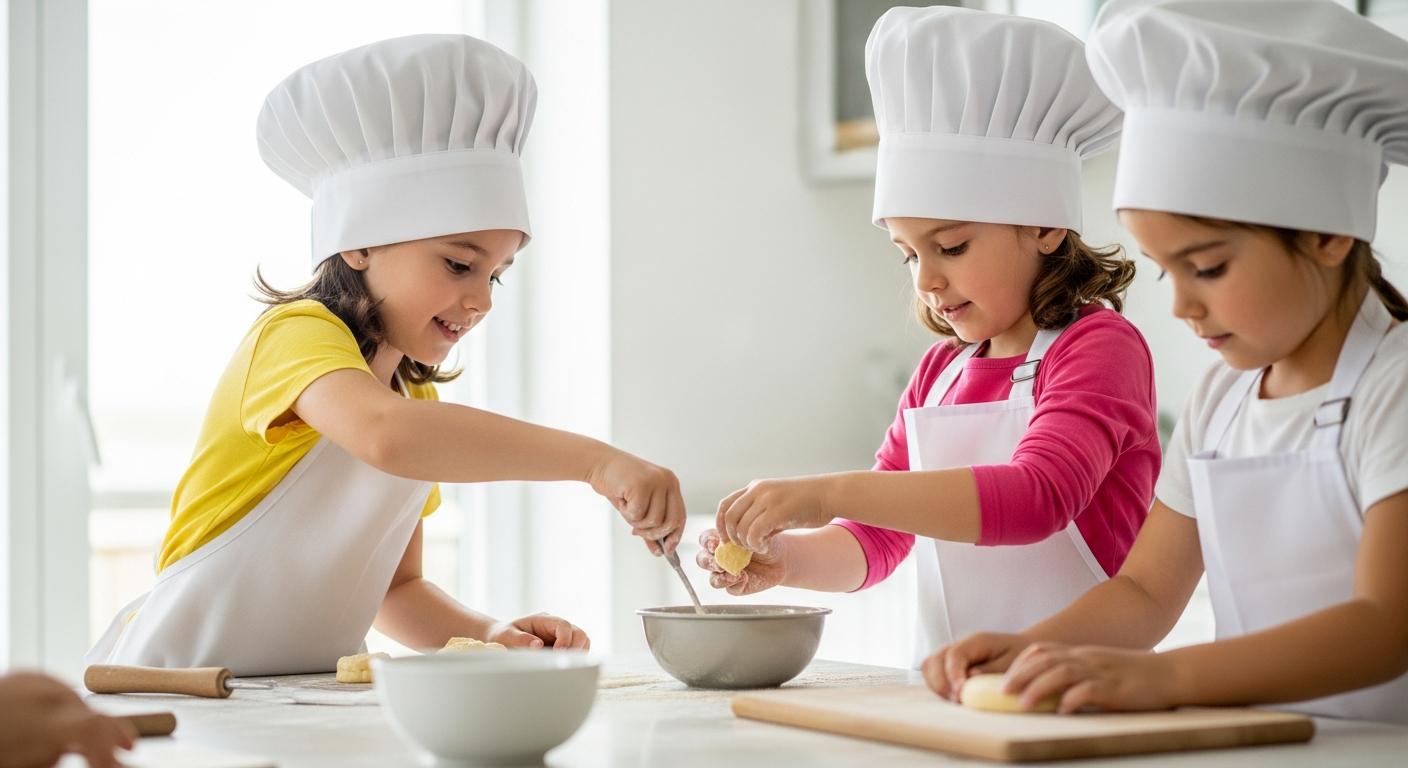
Table of Contents
- Introduction
- Why Baking is More Than Just Baking: A Delicious Learning Lab
- Getting Started: Setting Up for Sweet Success
- A World of Fun Baking Activities for Kids
- Making it a Family Affair: Bonding Over Batter
- Beyond the Recipe: Extending the Learning and Fun
- Empowering Every Child to Speak: How Speech Blubs Supports Development
- Conclusion
- Frequently Asked Questions About Fun Baking Activities for Kids
Ever noticed how quickly little hands gravitate towards a mixing bowl, eager to stir, pour, and create? There's a magnetic pull to the kitchen, especially when delicious treats are involved. Baking with kids isn't just about whipping up a batch of cookies; it's a vibrant, multi-sensory journey that transforms everyday ingredients into tangible lessons and cherished memories. It's a chance to step away from screens, engage all five senses, and truly connect as a family.
Introduction
In a world brimming with digital distractions, finding truly enriching, hands-on activities for children can feel like a quest. Yet, the answer often lies right in our own kitchens. Baking offers a unique blend of fun and profound learning, making it one of the most rewarding experiences you can share with your child. This post will delve deep into why baking is an indispensable tool for child development, exploring how simple kitchen moments become powerful lessons in science, math, art, and even emotional intelligence. We’ll uncover practical tips for making baking sessions enjoyable and educational, provide a wealth of fun baking activities for kids, and highlight how these delicious adventures foster creativity, critical thinking, and unforgettable family bonds. Get ready to tie on your aprons and discover the magic that happens when curiosity meets flour and sugar!

Why Baking is More Than Just Baking: A Delicious Learning Lab
Baking might seem like a simple culinary pursuit, but for children, it's a dynamic, hands-on learning laboratory. At Speech Blubs, we believe in empowering children to speak their minds and hearts, and engaging activities like baking lay a fantastic foundation for developing essential communication and cognitive skills. Just as our mission drives us to provide immediate, effective, and joyful solutions for children needing speech support, the kitchen offers a playful environment for holistic growth, blending scientific principles with imagination into one-of-a-kind "smart screen time" experiences when paired with our app.
Let's break down the incredible educational benefits that unfold with every stirring, measuring, and baking session:
The Science of Sweet Success: STEM in the Kitchen
Baking is, at its heart, applied science. Every ingredient, every temperature change, every mixing technique involves chemical and physical reactions.
- Chemistry in Action: What happens when baking soda meets an acidic ingredient like buttermilk or vinegar? A bubbling, rising reaction! This is a perfect demonstration of chemical reactions, where new substances are formed. For instance, creating chocolate lava cakes allows children to observe how heat transforms a liquid batter into a solid cake with a molten center. They learn about leavening agents, emulsification, and phase changes without even realizing they're doing chemistry! For children developing their vocabulary, activities like naming ingredients ("flour," "sugar," "egg") during baking provide rich context for language acquisition.
- Physics of Food: From the way heat transfers through an oven to how different ingredients interact to form a stable dough or batter, physics is everywhere. Understanding why butter melts or why egg whites whip into stiff peaks introduces concepts like states of matter, density, and aeration. Shaping dough for pretzels or biscuits teaches them about elasticity and how force changes form.
- Biology and Beyond: If you venture into bread making, kids will encounter yeast – a living organism! Watching yeast activate and make dough rise is a captivating lesson in microbiology and fermentation. It teaches patience and observation as they witness the dough transform from a dense ball into a fluffy, airy creation.
- Engineering Edibles: Building a gingerbread house (even a simple one from crackers and frosting) or layering a rainbow cake involves structural engineering. Kids learn about balance, stability, and design as they assemble their edible creations. They discover why some foundations are stronger than others and how different components fit together. Decorating allows for fine motor skill development, crucial for early writing and speech articulation.
Mastering Math and Measurement
The kitchen is a fantastic place to make abstract math concepts concrete and engaging.

- Fractions and Ratios: "We need half a cup of flour" or "Let's double this recipe!" instantly introduces fractions, multiplication, and division. Kids learn what a quarter cup looks like, how many tablespoons are in a cup, and the importance of precise measurements for successful outcomes. For example, when making mini M&M cookies, they practice counting each mini candy going into the dough.
- Counting and Quantity: Counting scoops, eggs, or sprinkles reinforces basic numeracy. Understanding concepts like "more" and "less" becomes intuitive as they measure ingredients. Assigning jobs like "count out six scoops of flour" or "add three eggs" directly practices these skills.
- Time Management: Following a recipe involves understanding time – baking times, cooling times, and the sequence of steps. This helps develop a sense of time and planning. "We need to wait 10 minutes for the cookies to bake" or "The dough needs to rise for an hour" introduces patience and sequencing.
- Geometry and Shapes: Using cookie cutters to create stars, circles, or squares, or cutting a cake into slices, provides hands-on experience with geometric shapes and spatial reasoning. Even rolling dough into a circle for a pizza or cutting out biscuits practices these spatial concepts.
The Art of Edible Expression
Baking isn't just about following instructions; it's a canvas for creativity and artistic expression.
- Color Theory: Mixing food coloring to achieve desired shades for frosting or dough teaches basic color theory. Making rainbow cakes or pink cupcakes involves understanding how colors combine and contrast.
- Design and Decoration: Decorating cookies, cupcakes, or cakes allows children to express their individuality and develop fine motor skills. From piping frosting to arranging sprinkles for confetti cake batter cookies, it’s an opportunity for imaginative play and self-expression.
- Texture and Form: Experimenting with different textures – crunchy sprinkles, smooth frosting, soft cake – engages their tactile senses and expands their vocabulary for describing food. Describing what they feel and see while baking can significantly boost their descriptive language skills, an area Speech Blubs actively supports through engaging exercises.
Building Essential Life Skills and Confidence
Beyond academics, baking nurtures a host of crucial life skills and personal attributes.
- Following Instructions: Recipes are step-by-step guides. Learning to read and follow them carefully is a fundamental skill that translates to countless other areas of life, from schoolwork to daily routines.
- Problem-Solving: What if you run out of an ingredient? What if the dough is too sticky? Baking often presents small challenges that encourage children to think critically and find solutions, with your guidance. This could be as simple as finding a substitute or adjusting liquid amounts.
- Patience and Perseverance: Waiting for dough to rise, cookies to bake, or frosting to set teaches patience. Not every bake will be perfect, and learning to persist and try again is a valuable lesson in resilience.
- Fine Motor Skills: Stirring, pouring, kneading, decorating – all these actions refine hand-eye coordination and strengthen fine motor skills, which are foundational for many developmental milestones, including speech and self-care.
- Responsibility and Teamwork: Assigning tasks like washing hands, gathering ingredients, or helping with cleanup fosters a sense of responsibility and teaches the value of working together towards a common goal.
- Confidence and Pride: The immense pride a child feels when they present something they’ve made from scratch is immeasurable. It builds self-esteem and encourages a "can-do" attitude, essential for trying new things, including new words and sounds.
Baking truly is a holistic learning experience, blending cognitive, physical, and emotional development into one delightful package. For an immediate, effective, and joyful solution that complements these hands-on activities, consider exploring Speech Blubs.
Getting Started: Setting Up for Sweet Success
Embarking on a baking adventure with kids doesn't have to be daunting. With a little preparation and the right mindset, you can create a joyful and productive environment. Remember, the goal isn't perfection; it's participation, learning, and making memories.
Safety First, Always!
Before you even pull out the flour, a quick safety chat is essential.
- Handwashing: The golden rule of the kitchen! Make it a fun routine.
- Oven and Stove Safety: Teach children that ovens and stovetops are hot and should only be handled by adults or with direct, close supervision for older children. Establish clear boundaries and explain why. For younger kids, keep them a safe distance from hot surfaces.
- Sharp Tools: Knives and graters are for adult use only, or for older children with direct, close supervision and proper instruction. Talk about safe handling.
- Electric Mixers: Show them how to use mixers safely, keeping fingers clear of moving parts. Always unplug before cleaning.
- Cross-Contamination: Explain the importance of keeping raw ingredients (especially eggs or flour before baking) separate from ready-to-eat foods.
The Right Tools for Little Hands
Having kid-friendly tools can make a huge difference in engagement and success.
- Small Spatulas and Whisks: Easier for little hands to grip and control.
- Measuring Cups and Spoons with Clear Markings: Helps with accuracy and understanding.
- Large Mixing Bowls: Reduces spills when enthusiastic stirring happens. Embrace the mess, but also set yourself up for less stress!
- Aprons: Not just for cleanliness, but they also make kids feel like real chefs!
- Sturdy Step Stool: Ensures they can safely reach the counter and participate comfortably.
- Baking Mats or Parchment Paper: Makes cleanup easier and prevents sticking.
Preparing Your Baking Battlefield
A little prep goes a long way in minimizing stress and maximizing fun.
- Gather All Ingredients: "Mise en place" (everything in its place) is a professional chef's secret, and it's perfect for kids. Have all ingredients measured out or easily accessible before you start. This prevents frantic searches mid-recipe and keeps the flow smooth. For children who are still learning to articulate words, having ingredients pre-portioned allows them to focus on the action words like "pour," "stir," and "mix."
- Clear the Counters: Make sure you have ample workspace. Remove anything fragile or unnecessary.
- Set Realistic Expectations: Not every batch will look like it came from a bakery. Emphasize the process and the fun, not just the final product. Acknowledge that mistakes happen and are part of learning. Remember, the goal is connection, not culinary perfection.
- Dress for Success (and Mess!): Wear clothes that can get a little flour or frosting on them. An apron helps, but accidents happen. A relaxed attitude about minor messes makes the experience more enjoyable for everyone.
A World of Fun Baking Activities for Kids
Now for the delicious part! Here’s a selection of fun baking activities, categorized by type and skill level, ensuring there's something for every aspiring young chef. Many of these activities offer fantastic opportunities for language development, such as naming ingredients, describing actions, and following multi-step directions.
1. Muffin Magic & Quick Bakes: Perfect for Little Starters
Muffins are often a top choice for baking with young ones because they're quick to make, quick to bake, and individually portioned, offering instant gratification.
- Ultimate Muffin Recipe (1 Batter + Flavors): Start with a versatile base recipe and let kids choose their favorite add-ins like chocolate chips, blueberries, or even a swirl of cinnamon sugar. This teaches them about variations and preferences.
- Skill focus: Measuring, stirring, portioning, choice-making.
- Banana Muffins: A classic that utilizes ripe bananas, teaching about using what's on hand. Kids can help mash the bananas, a great sensory experience.
- Skill focus: Mashing, measuring, identifying ingredients.
- Baked Oatmeal Cups: A healthier option that's still fun to make. Kids can mix in fruit or spices.
- Skill focus: Healthy eating habits, simple mixing.
- Mini Pumpkin Muffins: Smaller sizes are perfect for little hands to handle and enjoy. These are great for practicing counting the number of mini muffins made.
- Skill focus: Counting, fine motor skills (picking up mini muffins).
2. Cookie Creativity & Decorating Delights: Where Art Meets Edibles
Cookies offer endless opportunities for shaping, decorating, and imaginative play, excellent for developing fine motor skills and creativity.
- Cutout Cookies (Sugar, Chocolate, Lemon Butter): The sheer joy of rolling dough and cutting out shapes is unparalleled. Provide a variety of cookie cutters (animals, stars, hearts) and let their imagination soar. This activity is fantastic for practicing naming shapes and discussing spatial concepts like "inside," "outside," "big," and "small."
- Skill focus: Rolling dough, using cookie cutters, shape recognition, dexterity.
- M&M Cookies or Jelly Bean Cookies: Adding colorful candies to cookie dough or pressing them on top before baking is simple and visually appealing. Kids can sort colors or count their additions.
- Skill focus: Counting, color recognition, fine motor placement.
- Peanut Butter Blossom Cookies: Pressing a chocolate kiss into a warm cookie is a satisfying step that requires gentle touch.
- Skill focus: Gentle handling, precision, cause-and-effect (warm cookie + chocolate = melt).
- Pinwheel Pops: Swirling two colors of dough together before baking creates a beautiful pattern.
- Skill focus: Rolling, twisting, visual pattern recognition.
- Decorating Station: Once cookies (or cupcakes) are baked, set up a decorating station with different colored icings, sprinkles, chocolate chips, and mini candies. This is where communication truly flourishes as kids describe their creations! For children working on descriptive language, ask questions like, "What color sprinkles did you choose?" or "How does the icing feel?"
- Skill focus: Fine motor control (piping, sprinkling), color and shape identification, descriptive language.
3. Salty & Savory Surprises: Expanding the Palate
Baking isn't just for sweet treats. Exploring savory options introduces new tastes and textures, and often involves more hands-on dough work like kneading and shaping.
- Soft Pretzel Bites or Easy Homemade Soft Pretzels: The process of kneading dough, rolling it into ropes, and shaping pretzels is incredibly tactile and engaging. The pretzel shape itself is a fun challenge!
- Skill focus: Kneading, rolling, shaping, following sequential steps.
- Homemade Cheese Crackers: Kids can help mix the dough, roll it out, and use small cookie cutters to create their own cheesy snacks.
- Skill focus: Mixing, rolling, using small cutters.
- Homemade Pizza Dough: Making pizza from scratch is a family favorite. Kids can help mix the dough (or simply pat it out if you've made it ahead), then top their own mini pizzas with their favorite ingredients. This encourages independence and choice.
- Skill focus: Dough handling, ingredient identification, choice-making, spatial arrangement.
- Homemade Ham & Cheese Pockets: Using pizza dough, kids can fill and seal their own savory pockets.
- Skill focus: Filling, folding, sealing, understanding savory ingredients.
4. No-Bake Wonders & Assembly Fun: Instant Gratification
For younger children or days when you need a quicker activity with less heat, no-bake options are perfect.
- Chocolate Peanut Butter No-Bake Cookies: Simple mixing and dropping spoonfuls onto parchment paper.
- Skill focus: Stirring, spooning, following simple instructions.
- Puppy Chow (Muddy Buddies): Mixing cereal with melted chocolate and powdered sugar is a fun, messy, and highly rewarding activity.
- Skill focus: Shaking, coating, sensory play.
- Dirt Pudding: Layers of crushed cookies, pudding, and gummy worms. Kids love assembling this whimsical dessert.
- Skill focus: Layering, crushing, imaginative play.
- White Chocolate Lucky Charms Treats: Melting marshmallows and mixing in cereal is simple and creates gooey, magical bars.
- Skill focus: Melting (adult supervision), mixing, pressing into a pan.
- Candy Corn Pretzel Hugs: Placing candies on pretzels and melting chocolate is a quick, festive, and satisfying assembly task.
- Skill focus: Arranging, simple melting (adult supervision), observation.
5. Showstopping Cakes & Pizzas: Teamwork and Patience
These projects might take a bit longer but offer immense satisfaction and are fantastic for teamwork.
- Rainbow Cake with Clouds: Layering different colored cake batters creates a stunning visual, then decorating with "cloud" frosting. This is a great exercise in patience and sequencing.
- Skill focus: Layering, color coordination, careful pouring, decorating.
- Jelly Donut Cake: A fun twist on a Bundt cake, where kids can help spoon jelly into the batter.
- Skill focus: Spooning, precision, understanding different textures.
- Brownie Fruit Pizza: Baking a large brownie base, then letting kids decorate it with whipped topping and fresh fruit. This is a fantastic "edible art" project.
- Skill focus: Spreading, arranging, fruit identification, creativity.
- Miniature Castle Cakes: Using small cakes and various candies to construct an edible castle. This combines baking with imaginative play and structural thinking.
- Skill focus: Assembly, decorative skills, imaginative construction.
Making it a Family Affair: Bonding Over Batter
Baking together is more than just a task; it's a powerful opportunity for family connection and creating lasting memories. In the rhythmic dance of mixing and measuring, conversations naturally flow, laughter echoes, and bonds strengthen.
- Shared Experience: When you bake with your child, you're not just making cookies; you're creating a shared experience that fosters a sense of togetherness. This dedicated, screen-free time sends a clear message: "You are important, and spending time with you is valuable." These moments are crucial for building secure attachments and strengthening family relationships.
- Communication Rich Environment: The kitchen is a hub for rich language development. From asking "What's next?" to describing the smell of vanilla or the stickiness of the dough, children are constantly engaging with language. You can narrate actions ("Now we're adding the flour"), ask open-ended questions ("What do you think will happen when we bake this?"), and encourage them to describe what they see, hear, smell, and feel. This natural, conversational practice significantly boosts vocabulary, comprehension, and expressive language skills.
- Emotional Development: Baking can be a wonderful way to teach children about handling emotions. There might be spilled flour, a lopsided cake, or a cookie that burns slightly. These are opportunities to model patience, problem-solving, and resilience. Celebrating successes, big or small, builds confidence and a sense of accomplishment. Learning to share the finished products also teaches generosity and gratitude.
- Traditions: Baking together can become a cherished family tradition, passed down through generations. Imagine your child one day baking their favorite "Grandma's Chocolate Chip Cookies" with their own children, recalling the happy moments spent with you in the kitchen. These traditions weave a strong family tapestry, full of warmth and love.
These moments of genuine connection and communication are at the heart of what we value at Speech Blubs. We believe that empowering families to connect over meaningful activities fosters an environment where children thrive and feel confident to express themselves.
Beyond the Recipe: Extending the Learning and Fun
The fun doesn't have to end when the oven timer dings. Baking can be a springboard for even more learning, play, and practical life skills.
- The Big Cleanup: Make cleanup a team effort! Assign age-appropriate tasks like wiping down counters, putting away ingredients, or loading dishes. This teaches responsibility and the full cycle of a project. Turn it into a game: "Let's see who can put away their tools the fastest!"
- Sensory Play with Leftovers: If you have extra dough, flour, or even colorful frosting, turn it into a sensory bin or playdough activity. Unbaked dough can become a tactile experience for squishing, rolling, and shaping without the pressure of a specific recipe. This enhances fine motor skills and sensory exploration.
- Creative Storytelling: Encourage your child to tell a story about the baking adventure. Who was the star chef? What magical ingredients did they use? What happened in the kitchen? This boosts narrative skills and imagination. You can even use the finished treats as props for a puppet show!
- "Restaurant" Role-Play: Once your treats are ready, set up a pretend restaurant or bakery. Children can take orders, serve their creations, and even "ring up" sales. This encourages imaginative play, social skills, and practical math.
- Gift Giving: Teach generosity by packaging some of your baked goods as gifts for neighbors, friends, or family. This adds another layer of purpose to their efforts and teaches the joy of giving.
- Document the Journey: Take photos or draw pictures of the baking process. Create a simple "family recipe book" where your child can illustrate the recipes you've made together. This builds literacy skills and creates a beautiful keepsake.
Empowering Every Child to Speak: How Speech Blubs Supports Development
Just as baking ignites a child's curiosity and builds foundational skills, at Speech Blubs, we are dedicated to empowering children to speak their minds and hearts. Our company was born from the personal experiences of our founders, who all grew up with speech problems and created the tool they wished they had. We are committed to providing an immediate, effective, and joyful solution for the 1 in 4 children who need speech support, blending scientific principles with play into one-of-a-kind "smart screen time" experiences.
While baking offers invaluable hands-on learning, we recognize that digital tools can also be incredibly powerful when used correctly. We provide a screen-free alternative to passive viewing (like cartoons) and a powerful tool for family connection, much like baking does. Our unique approach of teaching complex communication skills is through our "video modeling" methodology, where children learn by watching and imitating their peers. This natural, engaging method is backed by extensive research, placing us in the top tier of speech apps worldwide for efficacy and engagement, as shown on our Research page.
For example, a child who loves naming the ingredients while baking can use Speech Blubs to reinforce those words with clear pronunciation models and interactive exercises. If they're practicing descriptive words like "sticky," "sweet," or "hot" in the kitchen, our app provides a playful environment to expand that vocabulary and build confidence in using it. Our app is a powerful supplement to a child's overall development plan and, when applicable, professional therapy, fostering a love for communication, building confidence, and reducing frustration. You can see real stories of success from other parents on our Testimonials page.
Unsure if your child could benefit? Take our quick 3-minute preliminary screener to get a simple assessment and a free 7-day trial.
Ready to help your child develop their speech and communication skills?
We offer two convenient plans:
- Monthly Plan: Priced at $14.99 per month.
- Yearly Plan: Our most popular and highly recommended option, priced at just $59.99 per year. This breaks down to an incredible value of just $4.99 per month – saving you 66% compared to the monthly plan!
The Yearly plan isn't just about significant savings; it's also packed with exclusive, high-value features designed to give your child the best possible experience:
- A 7-day free trial: Experience the full power of Speech Blubs before committing.
- The extra Reading Blubs app: Double the fun and learning with our companion reading app.
- Early access to new updates: Be the first to enjoy new features and content.
- 24-hour support response time: Get quick assistance whenever you need it.
The Monthly plan does not include these additional benefits. For the ultimate value and comprehensive support for your child's communication journey, we highly recommend choosing the Yearly plan.
Conclusion
Baking with kids is a truly magical experience, transforming ordinary kitchen moments into extraordinary opportunities for learning, growth, and connection. From the science of rising dough to the artistry of decorating, every step is a chance to build essential skills, foster creativity, and create cherished memories that last a lifetime. It’s a powerful, screen-free way to engage children and nurture their overall development.
And just as baking empowers children in a joyful, hands-on way, Speech Blubs is here to support their communication journey. Our app complements these rich real-world experiences by providing scientifically-backed, engaging "smart screen time" that encourages children to imitate and articulate, building their confidence to speak their minds and hearts.
So, gather your aprons, choose a fun recipe, and get ready for some sweet success in the kitchen. And when you're ready to provide additional, targeted support for your child's speech and language development, we invite you to explore Speech Blubs. Ready to get started? Empower your child's voice today! Download Speech Blubs on the App Store or Google Play. For the best value, remember to select the Yearly plan to unlock a 7-day free trial and a full suite of premium features, including the Reading Blubs app! You can also create your account and begin your 7-day free trial today.
Frequently Asked Questions About Fun Baking Activities for Kids
Q1: What are the best baking activities for very young children (toddlers)?
A1: For toddlers, focus on simple, messy, and sensory-rich activities. Muffins are fantastic because they involve lots of stirring, pouring pre-measured ingredients, and scooping batter. No-bake activities like making "puppy chow" (muddy buddies) or dirt pudding are also great for mixing, shaking, and assembling. Activities where they can add sprinkles or press chocolate chips into cookies are always a hit, focusing on fine motor skills and tactile engagement. Always prioritize safety and adult supervision.
Q2: How can I make baking educational for my child?
A2: Baking is inherently educational! You can enhance learning by:
- Talking through every step: Narrate actions, describe ingredients, and ask questions.
- Focusing on math: Have them help measure ingredients (fractions!), count items (eggs, cookies), and understand baking times.
- Exploring science: Discuss why ingredients react (baking soda bubbling), how heat changes food, or how yeast makes dough rise.
- Encouraging language: Use descriptive words (sticky, sweet, crunchy), practice action verbs (stir, pour, mix), and have them follow verbal instructions.
- Fostering creativity: Let them choose decorations, colors, or shapes.
Q3: What if my child makes a huge mess while baking?
A3: Embrace the mess! It's a natural part of hands-on learning and sensory exploration for children. To minimize stress, prepare your space by clearing counters, using large mixing bowls to contain spills, and laying down a baking mat or newspaper. Dress your child in an apron or old clothes. Remember, the goal is participation and fun, not perfection. Involve them in the cleanup process afterward, teaching responsibility and the full cycle of an activity.
Q4: My child has speech delays. Can baking help with their communication skills?
A4: Absolutely! Baking provides a rich, natural environment for language development. It offers countless opportunities for:
- Vocabulary expansion: Naming ingredients, tools, and actions.
- Following directions: Essential for comprehension and multi-step commands.
- Descriptive language: Discussing textures (sticky, smooth), tastes (sweet, salty), smells, and colors.
- Sequencing: Understanding "first, next, last" in a recipe.
- Social communication: Asking questions, making choices, and discussing the process. To further support your child, consider how Speech Blubs complements these activities. Our app uses video modeling to help children imitate and practice words and sounds in an engaging, effective way, providing a "smart screen time" solution that reinforces the communication skills learned in hands-on activities like baking.
About the author