
Sweet Valentine Fun: Best Kids' Party Games
 By Speech Blubs Team•Jan 28, 2026•16 min.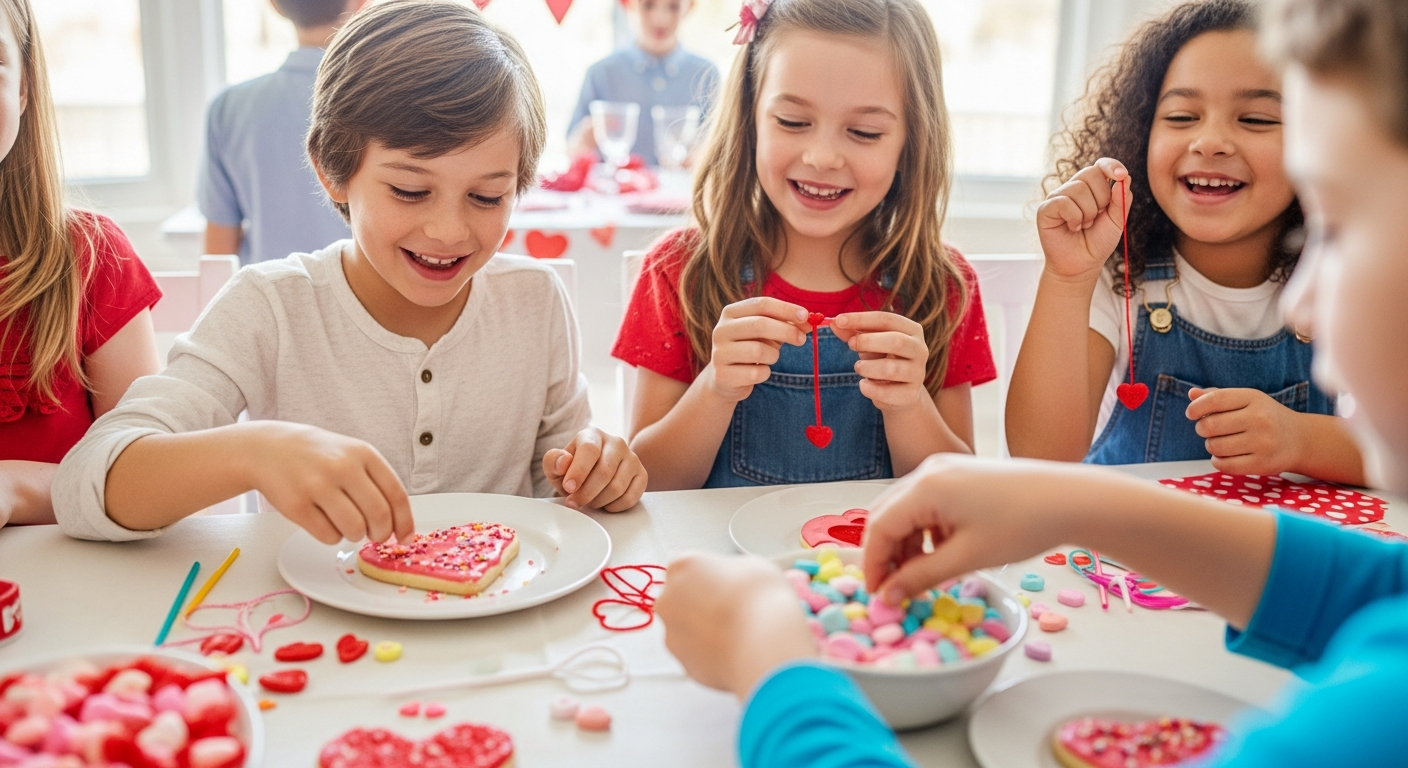
Table of Contents
- Introduction
- The Power of Play: More Than Just Fun
- Engaging Valentine's Kids' Party Games for All Ages
- Integrating Speech Blubs for Enhanced Learning and Fun
- Practical Tips for Hosting a Memorable Party
- Unlock More Fun and Learning with Speech Blubs: Our Value and Pricing
- Conclusion
- Frequently Asked Questions (FAQ)
Does the thought of hosting a kids' Valentine's party fill you with both excitement and a tiny bit of dread? You dream of joyful laughter and heartfelt connections, but the reality of keeping a group of energetic children engaged can seem like a monumental task. The good news is, creating a memorable and meaningful Valentine's Day celebration doesn't have to be overwhelming. With a little planning and a sprinkle of creativity, you can transform your gathering into an unforgettable experience where every child feels loved, included, and, most importantly, has a blast!
This comprehensive guide will walk you through a delightful array of Valentine's kids' party games, from lively group activities to quiet, creative endeavors. We'll explore how these games not only provide entertainment but also foster essential developmental skills, including communication, social interaction, and problem-solving. We'll also share how tools like Speech Blubs can seamlessly integrate into your celebration, offering "smart screen time" that encourages active participation and language development, making every interaction count. Get ready to embrace the spirit of love and connection with games designed to empower your child to speak their mind and heart.

Introduction
Valentine's Day, often associated with romantic gestures, is also a beautiful opportunity to celebrate love in all its forms, especially the heartwarming connections we share with our children and their friends. But let's be honest, organizing a party for kids can sometimes feel like trying to catch confetti in a windstorm! The key to a successful celebration isn't just about decorations and treats; it's about crafting an atmosphere where play thrives, and every child feels seen and heard. This post is your ultimate resource for fantastic Valentine's kids' party games that go beyond mere entertainment, offering opportunities for connection, communication, and learning. We believe in the power of play to unlock a child's potential, and through these games, we aim to show you how to create a genuinely engaging and developmentally rich Valentine's experience.
The Power of Play: More Than Just Fun
Before we dive into the games, let's take a moment to appreciate why play, especially structured group play, is so vital for children. Play is how children explore the world, learn social cues, develop problem-solving skills, and, crucially, practice communication. When children engage in games, they're not just having fun; they're learning to:
- Communicate effectively: Explaining rules, negotiating turns, expressing excitement or frustration, and using descriptive language.
- Develop social skills: Sharing, taking turns, compromising, understanding different perspectives, and building empathy.
- Enhance cognitive abilities: Following instructions, remembering rules, strategic thinking, and creative problem-solving.
- Boost confidence: Mastering new skills, contributing to a team, and receiving positive reinforcement.
These are the very foundational skills that empower children to "speak their minds and hearts," a mission that resonates deeply with us at Speech Blubs. Our approach is rooted in understanding that every child's voice is unique and deserves to be heard.
Fostering Communication Through Play
Consider a child who is typically quiet in group settings, perhaps a late talker or one who struggles with articulation. A party game offers a low-pressure environment to practice vocalization and interaction. For instance, in a "Guess the Feeling" game, a child might be encouraged to make a happy sound or a sad face, prompting verbal expressions of emotions. Or, during a "Valentine's Scavenger Hunt," they might excitedly point to a hidden heart and say "found it!"

This is where the principles behind Speech Blubs truly shine. Our app uses a unique "video modeling" methodology, where children learn by watching and imitating their peers. This peer-to-peer interaction, even through a screen, taps into mirror neurons, making learning feel natural and engaging. Imagine a child practicing words like "heart," "love," or "friend" within the app's engaging activities before a party, building their confidence to use those words in a real social setting. For a parent whose child is a 'late talker' and loves animals, practicing the sounds and names of favorite creatures in our "Animal Kingdom" section can build foundational speech skills that they can then use in a "Who do you love?" Valentine's game. This kind of preparation can transform potential shyness into joyful participation, reducing frustration and fostering a love for communication.
Engaging Valentine's Kids' Party Games for All Ages
Let's explore a variety of games perfectly suited for a Valentine's Day party, categorized for ease of planning. Remember, the goal is interaction, laughter, and connection!
Lively & Energetic Games
These games are perfect for burning off some energy and encouraging gross motor skills.
1. Musical Hearts
- How to Play: Similar to musical chairs, but with paper hearts! Cut out large paper hearts and scatter them on the floor. Play some upbeat music. When the music stops, every child must stand on a heart. Remove one heart each round until only one child remains.
- Communication Focus: Following instructions, listening, expressing excitement.
- Speech Blubs Connection: Before the game, practice words like "stop," "go," "run," "jump," and "heart" within the Speech Blubs app. Our interactive videos provide clear models for these action words, preparing your child to verbally participate in the game.
2. Cupid's Arrow Toss
- How to Play: Create targets using buckets or cardboard boxes decorated with hearts and assign points to each. Give children "arrows" (Q-tips or bean bags) and have them take turns tossing them at the targets.
- Communication Focus: Counting points, requesting turns, exclaiming "bullseye!" or "missed!", developing descriptive language for aiming.
- Relatable Scenario: For a child working on counting or sequencing, practicing "one, two, three" during the score tally reinforces these concepts. If a child struggles with saying "arrow" or "target," the visual and interactive nature of Speech Blubs, with its clear pronunciation models, can help them master these sounds before the game.
3. Heart Hopscotch
- How to Play: Draw a hopscotch grid with chalk (indoors with tape) and fill each square with a heart. Children hop through the grid, perhaps calling out "love" or a friend's name in each square.
- Communication Focus: Saying names, counting, following patterns, expressing joy.
4. Valentine Minute-to-Win-It Challenges
These quick, hilarious games are fantastic for groups and can easily be adapted.
- Love Sucks: Players use a straw to transfer heart-shaped candies from one bowl to another in one minute.
- Candy Sort: Provide a pile of multi-colored heart candies and have players sort them by color onto different plates within a minute.
- Blow Me a Kiss: Players use a blown-up balloon to blow Hershey's Kisses off a table, one by one.
- Communication Focus: Encourages rapid-fire descriptive words ("fast," "quick," "slow"), counting, expressing excitement, and cheering for others. The competitive but fun nature encourages spontaneous vocalizations.
Quiet & Creative Games
These activities offer a calming contrast and allow for artistic expression and focused attention.
1. Valentine's Day Bingo
- How to Play: Provide printable bingo cards with Valentine's themed images (hearts, cupids, flowers, chocolate). Call out images, and players mark them off with conversation hearts or small tokens. The first to get bingo wins!
- Communication Focus: Recognizing and naming objects, listening skills, turn-taking, calling out "Bingo!"
- Speech Blubs Connection: This is an excellent opportunity for pre-teaching vocabulary. Our app features categories that cover many of these themes, helping children learn to articulate "flower," "chocolate," or "cupid" clearly.
2. Love Connection Puzzles
- How to Play: Print out large hearts and cut them in half with unique jagged edges. Mix up the halves and have children race to find the matching "love connections."
- Communication Focus: Asking for help, describing shapes and colors, expressing triumph when a match is found.
3. Valentine's Day Scavenger Hunt
- How to Play: Hide small paper hearts or Valentine's treats around the party area. Provide clues (pictures for younger children, simple rhymes for older ones) leading to the hidden items.
- Communication Focus: Following directions, asking questions, using positional words (under, over, behind), describing what they find.
- Relatable Scenario: For a child who is shy about speaking in groups, a scavenger hunt allows them to participate actively and practice descriptive language ("It's under the table!") in a less intimidating way, building confidence word by word.
4. Valentine's Day Matching Game
- How to Play: Create pairs of Valentine's themed pictures on cards. Lay them face down and have children take turns flipping two cards to find a match.
- Communication Focus: Memory recall, naming objects, turn-taking, describing similarities and differences.
- Speech Blubs Connection: Our "Guess the Word" or "My Face" sections provide similar visual recognition and naming practice, making this game a natural extension of their learning within the app.
5. "Would You Rather" Valentine's Edition
- How to Play: Ask funny, Valentine-themed "Would You Rather" questions (e.g., "Would you rather have candy hearts for teeth or Hershey's Kisses for a nose?"). Kids can vote by moving to one side of the room or simply state their choice.
- Communication Focus: Expressing preferences, explaining choices, listening to others' opinions, expanding vocabulary related to likes/dislikes.
Integrating Speech Blubs for Enhanced Learning and Fun
At Speech Blubs, we are deeply committed to empowering children to communicate confidently. Our company was born from the personal experiences of our founders, who all grew up with speech problems and created the tool they wished they had. We believe in providing an immediate, effective, and joyful solution for the 1 in 4 children who need speech support, blending scientific principles with play into one-of-a-kind "smart screen time" experiences. We provide a screen-free alternative to passive viewing (like cartoons) and a powerful tool for family connection.
How can Speech Blubs enhance your Valentine's Day party experience, or even just daily life?
Preparing for Social Interaction
For children who might feel overwhelmed by group settings or who are working on specific sounds, Speech Blubs offers a safe space to practice. For example, a child can:
- Practice Theme Vocabulary: Before a Valentine's party, spend some "smart screen time" with Speech Blubs practicing words like "heart," "love," "friend," "red," and "pink." Our video modeling technique helps them see and hear how to form these words correctly.
- Boost Confidence: Seeing peers successfully articulate words in the app can be incredibly motivating. This confidence can then translate into more willing participation in party games, helping them articulate their thoughts and feelings.
- Improve Expressive Language: The app encourages children to respond, imitate, and interact, fostering expressive language skills crucial for conversations during party games. For a 3-year-old 'late talker' who loves interactive play, the "Animal Kingdom" section offers a fun way to practice sounds like 'moo' and 'baa,' building foundational phonetic skills that they can then use to describe their favorite animals during a party game.
A Powerful Tool for Family Connection
While parties are for groups, Speech Blubs is also designed as a powerful tool for family connection. When you play Speech Blubs with your child, it becomes a shared activity, encouraging dialogue, imitation, and joyful learning moments. It's about turning screen time into an active, engaging experience rather than passive viewing. We know that our method is backed by science; it is rated as one of the top speech apps worldwide, validating our unique video modeling approach. Curious to learn more about the research behind our method? Visit our research page.
When to Consider Speech Support
Sometimes, preparing for a party might highlight areas where your child could benefit from a little extra support with their speech and language development. If you've noticed your child struggling with specific sounds, forming sentences, or communicating their needs effectively, it's always a good idea to consider next steps.
Unsure if your child could benefit from some speech support? Take our quick 3-minute preliminary screener. It involves 9 simple questions and provides an assessment along with a personalized next-steps plan. It's a great way to gain clarity and can even lead to a free 7-day trial of Speech Blubs, so you can see the benefits firsthand.
Practical Tips for Hosting a Memorable Party
Beyond the games, a few practical considerations can make your Valentine's kids' party a smashing success:
- Keep it Age-Appropriate: Choose games that match the developmental stage of your guests. Modify rules to simplify or challenge as needed.
- Inclusivity is Key: Ensure games can accommodate different abilities and temperaments. Some children thrive in active games, while others prefer quieter, more creative tasks. Offer a mix!
- Simple Setup & Cleanup: Opt for games that don't require elaborate preparations or lengthy cleanup.
- Prizes & Favors: Small, non-candy favors (stickers, pencils, small craft items) or fun 'prize ribbons' can add to the excitement without focusing solely on sugar. For Valentine's, think heart-shaped goodies.
- Snacks & Drinks: Simple, themed snacks like heart-shaped cookies or fruit skewers add a festive touch.
- Adult Participation: Remember, these activities work best with adult co-play and support. Your enthusiasm is contagious!
Unlock More Fun and Learning with Speech Blubs: Our Value and Pricing
We are dedicated to providing accessible and effective tools for children's speech and language development. We offer two convenient subscription plans for the Speech Blubs app:
- Monthly Plan: For $14.99 per month.
- Yearly Plan: For just $59.99 per year. This breaks down to an incredible value of only $4.99 per month, allowing you to save 66% compared to the monthly subscription!
The Yearly Plan isn't just about saving money; it's about unlocking the full potential of Speech Blubs and gaining access to a comprehensive suite of benefits designed to accelerate your child's progress:
- 7-Day Free Trial: Only with the Yearly Plan can you enjoy a full 7-day free trial to explore all the amazing features and see the incredible impact Speech Blubs can have.
- The Extra Reading Blubs App: Get access to our supplementary Reading Blubs app, further supporting your child's early literacy journey.
- Early Access to New Updates: Be among the first to experience exciting new activities, categories, and features.
- 24-Hour Support Response Time: Receive priority support whenever you need assistance.
The Monthly Plan, while flexible, does not include these exclusive, high-value features. We encourage you to choose the Yearly Plan to truly maximize your child's learning and get the best value, starting with a risk-free 7-day trial. Ready to join thousands of happy families? See what other parents are saying about their child's success with Speech Blubs.
Conclusion
Valentine's Day offers a wonderful opportunity to celebrate love, friendship, and the joy of connection. By incorporating engaging and thoughtful games into your kids' party, you're not just providing entertainment; you're creating a nurturing environment where children can practice vital communication skills, build confidence, and forge lasting memories. From lively rounds of Musical Hearts to quiet, focused moments with Valentine's Bingo, each activity provides a chance for your child to speak their mind and heart.
Remember, every giggle, every shared word, and every triumphant shout is a step forward in your child's developmental journey. And with innovative tools like Speech Blubs, you have a powerful ally in fostering their communication skills, making screen time a valuable part of their learning adventure.
Don't let another moment pass by! Empower your child to find their voice and connect with the world around them. Take the first step towards a brighter, more communicative future. We invite you to experience the transformative power of Speech Blubs today. Choose the Yearly Plan to unlock a 7-day free trial, gain access to the Reading Blubs app, and enjoy exclusive features designed to support your child's growth.
Download Speech Blubs on the App Store or Get it on Google Play to start your free trial. Alternatively, you can create your account and begin your 7-day free trial today via our website. Embrace the joy of communication and make every day a celebration of your child's voice!
Frequently Asked Questions (FAQ)
Q1: How do I choose the best Valentine's games for different age groups at my party?
A1: Consider the average age of the children attending. For toddlers and preschoolers, focus on simple, sensory-rich games with clear instructions and lots of movement, like "Musical Hearts" or a simple "Heart Scavenger Hunt." For elementary-aged children, you can introduce more complex rules, team challenges, and cognitive games like "Valentine's Day Bingo" or "Minute-to-Win-It" challenges. Always have a mix of active and quieter options to cater to different energy levels and preferences.
Q2: My child is a late talker. How can these games encourage them to speak more?
A2: Create a low-pressure environment where verbal participation is encouraged but not forced. Use open-ended questions (e.g., "What color heart did you find?"), model language (e.g., "I found a red heart!"), and celebrate all attempts at communication, whether it's a sound, a gesture, or a word. Games like "Love Connection Puzzles" or "Valentine's Day Matching" allow for one-on-one interaction, which can be less intimidating. Supplementing with tools like Speech Blubs can help your child practice specific sounds and words in a fun, safe space, building their confidence for party interactions.
Q3: What kind of prizes should I offer for Valentine's party games?
A3: Small, non-candy items are often appreciated. Consider heart-themed stickers, pencils, erasers, small craft kits, temporary tattoos, or mini notebooks. You can also offer "experience" prizes like extra play time, choosing the next game, or having the first pick of snacks. The focus should be on the fun of participation and celebration, not just winning. Homemade ribbons or certificates for "Best Team Player" or "Most Creative" can also be a hit.
Q4: How can Speech Blubs integrate into a Valentine's-themed day beyond just party games?
A4: Speech Blubs can be a fantastic tool for themed learning throughout the day. You can use it to:
- Introduce Valentine's Vocabulary: Explore categories in the app that feature colors (red, pink), emotions (happy, loving), or objects (flowers, gifts) to teach and practice related words.
- Practice Expressing Affection: Role-play saying "I love you" or "You're my friend" using the app's video modeling to encourage clear articulation.
- Quiet Time Engagement: If the party gets too overwhelming, a few minutes of "smart screen time" with Speech Blubs can provide a calming, focused activity that continues language development.
- Story Time: Use the Reading Blubs app (included with the Yearly plan) to read Valentine's themed books, enhancing early literacy skills alongside speech development.
About the author