
Talking & Creating: Best Christmas Craft Ideas for Kids
 By Speech Blubs Team•Dec 22, 2025•27 min.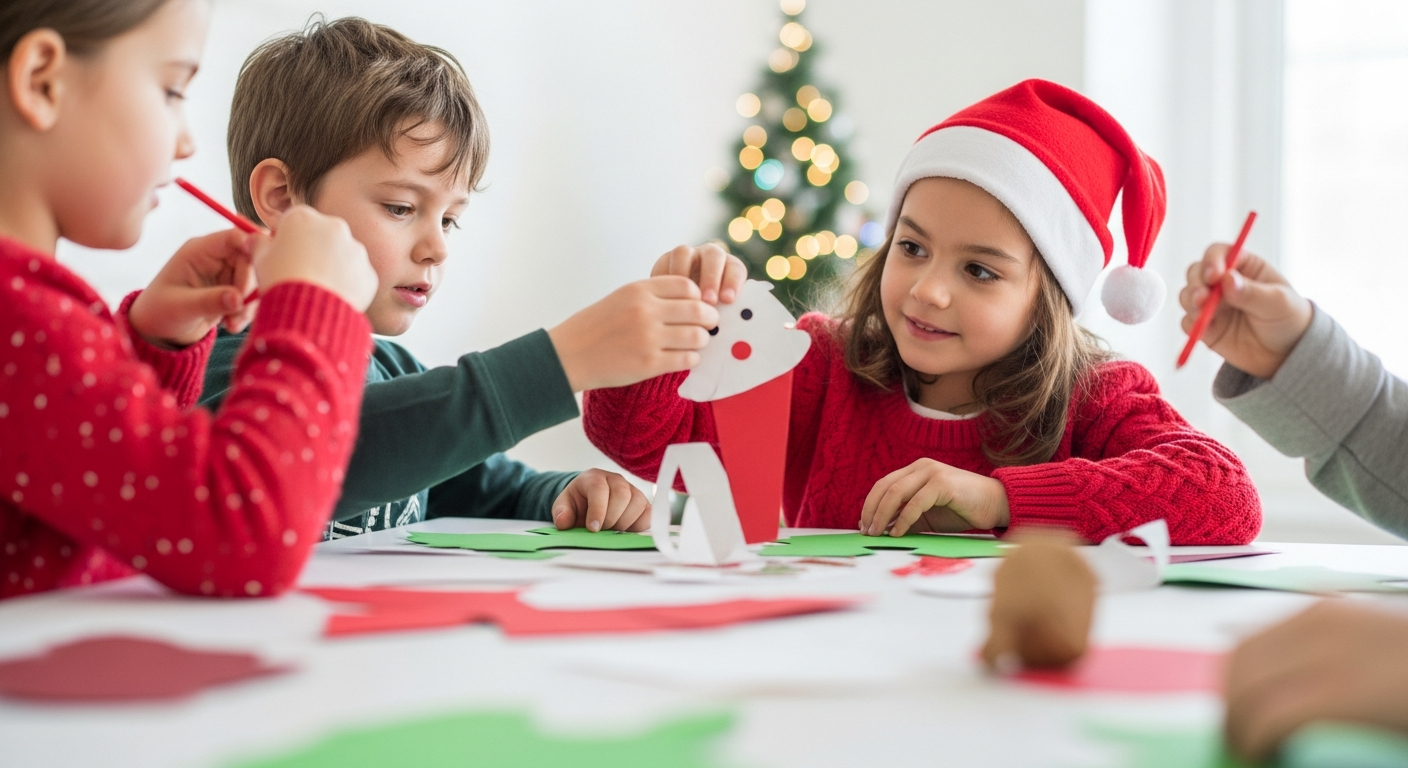
Table of Contents
- Why Christmas Crafts are More Than Just Fun
- Our Top Christmas Craft Ideas for Kids (with a Speech Blubs Twist!)
- Maximizing the Language Learning in Every Craft
- When to Consider Extra Support for Speech Development
- Speech Blubs: Your Partner in Joyful Communication
- Experience the Speech Blubs Difference – Start Your Free Trial Today!
- Conclusion
- FAQ
The air sparkles with anticipation, homes glow with twinkling lights, and the scent of gingerbread promises festive fun. Christmas is a magical time, filled with wonder and joy, especially for our little ones. But beyond the glitter and gifts, this season offers an incredible, often overlooked, opportunity: a chance to boost your child's communication skills through creative play. Imagine transforming a simple craft session into a vibrant language lesson, a moment where conversations flow as freely as glitter glue. That's the magic we're talking about!
This holiday season, let's look beyond just pretty decorations and see each craft as a stepping stone for language development. We'll explore a sleigh-load of delightful Christmas craft ideas perfect for kids, from toddlers to preschoolers and early elementary age. More than just providing step-by-step guides, we'll dive into how each activity can become a rich environment for vocabulary growth, narrative building, fine motor skill enhancement, and confidence-boosting verbal practice. Get ready to sprinkle some speech development fairy dust on your holiday crafting this year, creating cherished memories and fostering invaluable communication skills!

Why Christmas Crafts are More Than Just Fun
Christmas crafts are an age-old tradition, bringing families together to create beautiful keepsakes and festive décor. But their benefits extend far beyond mere decoration. For children, engaging in arts and crafts during the holiday season offers a unique blend of developmental advantages, laying crucial groundwork for cognitive growth, emotional expression, and, most importantly, language acquisition.
Firstly, crafts are a fantastic way to develop fine motor skills. Cutting with child-safe scissors, gluing small pieces, drawing lines, or manipulating pipe cleaners all strengthen the small muscles in the hands and fingers. These are the same muscles essential for holding a pencil, buttoning a shirt, and even forming the precise movements required for clear speech articulation. The dexterity gained from crafting directly supports the control needed for mouth and tongue movements.
Secondly, they ignite creativity and problem-solving abilities. Children learn to think outside the box, experimenting with colors, textures, and shapes. They might face a challenge, like how to make a reindeer stand up, and come up with their own ingenious solutions. This fosters imaginative thinking, which is a key component of storytelling and abstract language use.
Thirdly, crafts offer an incredible platform for sensory exploration. The feel of sticky glue, the smell of cinnamon sticks, the sight of vibrant glitter, the sound of paper crinkling – these multi-sensory experiences enrich a child's understanding of the world. Sensory input is deeply linked to memory formation and vocabulary development, as children associate words with concrete experiences.
And finally, but perhaps most profoundly, Christmas crafts are a catalyst for language development. When children engage in a creative activity with a parent or caregiver, a natural conversation unfolds. They describe what they're doing, ask questions, follow instructions, express preferences, and narrate their creative process. This organic back-and-forth is precisely how children build vocabulary, practice sentence structure, learn sequencing, and develop crucial social communication skills. It’s an interactive, joyful way to encourage children to speak their minds and hearts.

The Speech & Craft Connection: How Making Helps Talking
The link between hands-on activities like crafting and speech development is more profound than you might imagine. When a child is actively engaged in making something, their brain is firing on all cylinders, creating a perfect storm for language learning. Here’s how:
- Vocabulary Expansion: Every craft introduces new words. "Glitter," "tinsel," "pinecone," "ornament," "decorate," "attach," "fold," "smooth," "rough," "sparkly" – the list is endless. Parents can explicitly name materials, actions, and descriptive words, enriching a child's lexicon in a meaningful context.
- Following Multi-Step Instructions: Crafts naturally involve a sequence of steps. "First, get the paper, then cut it, then glue it." This helps children practice understanding and remembering multi-step commands, a vital skill for both academic success and daily communication.
- Narrative Skills & Sequencing: As children create, they are often telling a story, either verbally or internally. "I'm making a snowman. First, he needs a big round body, then I'll give him carrot nose." Encouraging them to describe their process helps them develop narrative skills, understanding cause and effect, and temporal concepts (before, after, next).
- Descriptive Language: "Tell me about your shiny, red ornament! Is it bumpy or smooth?" Asking open-ended questions prompts children to use adjectives, adverbs, and more complex sentence structures to describe their creations.
- Sound Practice & Articulation: For children working on specific sounds, crafts offer a low-pressure environment to practice. If your child is working on the "s" sound, you might emphasize "scissors," "sparkle," "sticky." If it's "r," focus on "red," "reindeer," "ribbon." This playful repetition helps refine articulation.
- Social Communication: Crafting together provides opportunities for turn-taking (sharing materials), asking for help, expressing frustration appropriately, and negotiating. These are all essential social pragmatic skills.
- Imitation and Modeling: Children learn by watching and imitating. When you model specific actions and verbally describe them, your child imitates both the action and the accompanying language. This "video modeling" approach is a cornerstone of effective speech development, much like how Speech Blubs uses real peer models to encourage imitation and speech. Children naturally mimic their peers and adults, and crafting provides countless moments for this powerful learning.
By thoughtfully engaging with your child during craft time, you’re not just making a pretty decoration; you’re building a strong foundation for a lifetime of confident communication.
Getting Started: Crafting Safely and Smartly
Before diving into the festive fun, a little preparation goes a long way. Creating a safe and engaging environment ensures that your crafting experience is positive for both you and your child.
- Age-Appropriateness is Key: Not all crafts are suitable for all ages. For toddlers, focus on large, chunky materials that are easy to manipulate and safe if put in the mouth. As children get older, you can introduce more intricate tasks like cutting and detailed gluing. Always tailor the complexity to your child's developmental stage.
- Gather Your Materials: Nothing breaks the creative flow like hunting for a glue stick mid-craft. Have all your materials laid out and ready before you start. Consider setting up a "craft station" with bowls for small items and a protected surface.
- Prioritize Safety First:
- Supervision: Always supervise young children, especially when using scissors, small beads, or anything that could be a choking hazard.
- Non-Toxic Materials: Ensure all glues, paints, markers, and other supplies are labeled "non-toxic."
- Allergies: Be mindful of any allergies (e.g., to specific craft materials or food items like peanuts if using them in crafts).
- Prepare Your Workspace: Cover your table with old newspapers, a plastic tablecloth, or a craft mat. Have wet wipes or a damp cloth nearby for quick clean-ups. Dress your child in clothes that can get a little messy – creativity often involves a bit of glorious chaos!
- Set Realistic Expectations: The goal isn't a museum-worthy masterpiece; it's the process, the interaction, and the joy of creating together. Your child's craft might look abstract, but it's perfect because they made it. Focus on praising effort and engagement, not just the final product.
- Embrace the Process: Allow your child to lead where appropriate. If they want to glue the eyes on the reindeer's tummy instead of its head, that's okay! It’s their creation, and the process of decision-making and expression is invaluable.
By keeping these tips in mind, you'll create a welcoming and productive crafting environment that encourages both creativity and communication.
Our Top Christmas Craft Ideas for Kids (with a Speech Blubs Twist!)
Here are some wonderful Christmas craft ideas, specifically designed to spark joy and language development. For each, we'll highlight the speech and language focus, offering suggestions on how to maximize communication during the activity.
1. Reindeer Handprint Ornaments
A timeless classic, these personalized ornaments are adorable keepsakes and fantastic for early language skills.
- Materials: Brown construction paper or cardstock, red pom-poms, googly eyes, glue, child-safe scissors, string or ribbon.
- Instructions:
- Trace your child's hand on brown paper and cut it out (you might need to help with cutting, or older kids can do it themselves). The fingers become the antlers, and the thumb becomes the reindeer's nose/face area.
- Glue a red pom-pom onto the thumb for Rudolph's nose.
- Stick on two googly eyes.
- Draw a mouth.
- Punch a hole at the top and thread a ribbon through to hang.
- Speech & Language Focus:
- Body Parts: "Where is your hand? Let's make a reindeer handprint!" "Which finger is the thumb?"
- Action Words: "Trace," "cut," "glue," "stick," "hang."
- Colors & Shapes: "Brown paper," "red nose," "round eyes."
- Animal Sounds & Names: "What sound does a reindeer make?" (Even if it's imaginative!) "This is Rudolph!"
- Imitation: Encourage your child to imitate your actions and words. If your child is working on early sounds, make "moo" sounds like a reindeer might, or a "ho-ho-ho" like Santa. This simple imitation is the basis of our video modeling approach at Speech Blubs, where children learn by watching and mimicking their peers.
2. Paper Plate Santa Masks
Encourage imaginative play and emotional expression with these jolly Santa masks.
- Materials: Paper plates, cotton balls, red construction paper, glue, child-safe scissors, elastic string or popsicle stick.
- Instructions:
- Cut the paper plate in half. This will be the base for Santa's face.
- Cut a large red triangle from construction paper for Santa's hat and glue it to the top of the plate.
- Stretch out cotton balls and glue them along the bottom edge of the plate for Santa's beard, and around the edge of the hat for the fluffy trim.
- Draw or glue on eyes and a nose.
- Attach elastic string to wear it, or a popsicle stick to hold it up.
- Speech & Language Focus:
- Imaginative Play: "Who are you?" "I am Santa Claus!" "What does Santa say?" "Ho, ho, ho!"
- Emotional Vocabulary: "Santa looks happy!" "Can you make a happy face like Santa?"
- Descriptive Words: "Soft cotton," "fluffy beard," "red hat."
- Question Answering: "What does Santa bring?" "Where does Santa live?"
- Storytelling: Encourage your child to tell a short story while wearing their mask.
3. Cotton Ball Snowman
This tactile craft is great for sensory exploration and descriptive language.
- Materials: Blue or black construction paper, cotton balls, glue, small orange paper triangle for nose, small black circles for eyes/mouth/buttons, glitter (optional).
- Instructions:
- Draw three circles (large, medium, small) on the construction paper to outline the snowman's body.
- Help your child glue cotton balls inside the circles, covering the entire snowman.
- Glue on the orange nose and black circles for eyes, mouth, and buttons.
- Add arms with twigs or drawn-on stick figures.
- Sprinkle with glitter for a sparkly snow effect.
- Speech & Language Focus:
- Descriptive Words: "Soft," "white," "fluffy," "sticky" (glue), "sparkly."
- Action Verbs: "Glue," "stick," "pat," "sprinkle."
- Counting: "How many buttons does your snowman have?" "Let's count the cotton balls."
- Size Concepts: "Big circle," "medium circle," "small circle."
- Opposites: "Is the cotton soft or hard?"
4. DIY Christmas Tree Decorations (Popsicle Sticks/Pipe Cleaners)
Simple materials can make beautiful and varied ornaments.
- Materials: Popsicle sticks, pipe cleaners, pom-poms, beads, glitter, glue, string.
- Instructions (Popsicle Stick Tree):
- Glue three popsicle sticks into a triangle shape for the tree.
- Decorate with small pom-poms (ornaments), beads, or glitter.
- Attach a small piece of string to the top for hanging.
- Instructions (Pipe Cleaner Stars/Candy Canes):
- Bend pipe cleaners into festive shapes like stars, candy canes, or spirals.
- Add beads or small pom-poms by threading them onto the pipe cleaners.
- Speech & Language Focus:
- Colors & Shapes: "What color is this pom-pom?" "Can you make a star shape?"
- Spatial Concepts: "Put the red bead on the pipe cleaner." "Glue the star at the top of the tree."
- Sequencing: "First we make the tree, then we decorate it."
- Quantity: "How many beads do you want?" "Let's put many ornaments."
- Fine Motor & Articulation: The manipulation of small objects and the precise movements required for articulation are linked. As children practice fine motor skills, they are also strengthening the neural pathways used for speech.
5. Gingerbread Man Decorating
A delicious and sensory craft that engages taste and smell!
- Materials: Pre-baked gingerbread man cookies, icing (various colors), small candies, sprinkles, edible glitter.
- Instructions:
- Provide each child with a gingerbread man cookie.
- Let them use icing to draw faces, buttons, and clothing.
- Offer small candies and sprinkles for extra decoration.
- (The best part!) Enjoy eating their creations.
- Speech & Language Focus:
- Sensory Words: "Sweet," "spicy" (gingerbread smell), "sticky" (icing), "crunchy" (candies).
- Descriptive Words: "Red icing," "colorful sprinkles," "small button."
- Action Verbs: "Spread," "decorate," "eat," "taste."
- Food Vocabulary: "Cookie," "icing," "candy," "sprinkles."
- Preferences: "Do you like the gingerbread man? Is it yummy?"
6. Salt Dough Ornaments
Salt dough is wonderfully versatile and provides a great tactile experience.
- Materials: 1 cup flour, 1/2 cup salt, 1/2 cup water, cookie cutters (Christmas shapes), straw (for hole), paint, glitter, string.
- Instructions:
- Mix flour, salt, and water to form a dough. Knead until smooth.
- Roll out the dough.
- Use cookie cutters to make shapes.
- Use a straw to make a hole at the top of each ornament for hanging.
- Bake at 250°F (120°C) for 2-3 hours or until hard. Let cool completely.
- Once cool, children can paint and decorate them.
- Thread with string for hanging.
- Speech & Language Focus:
- Action Verbs: "Mix," "knead," "roll," "cut," "bake," "paint."
- Texture & Temperature: "Soft dough," "hard ornament," "warm oven," "cool ornament."
- Problem-Solving: "Oh, the dough is too sticky, what should we do?" (Add a little more flour).
- Sequencing: "First we mix, then we roll, then we cut."
- Requesting: "Can I have the star cutter?" "More paint, please!"
7. Cardboard Tube Elves/Angels
Recycled materials turn into delightful characters for imaginative play.
- Materials: Cardboard toilet paper or paper towel tubes, construction paper, glue, markers, googly eyes, cotton balls, fabric scraps.
- Instructions:
- Cover the cardboard tube with colored paper (red/green for elves, white for angels).
- Cut out and glue on clothing details like hats, collars, wings.
- Add googly eyes and draw a face with markers.
- Use cotton balls for hair or beard on elves, or a halo on angels.
- Let imaginations run wild creating different expressions and details.
- Speech & Language Focus:
- Character Development: "What is your elf's name?" "What does he do at the North Pole?"
- Storytelling: Encourage children to make up stories about their characters. "The elf went to the toy shop..."
- Emotional Vocabulary: "Is your elf happy or surprised?"
- Descriptive Words: "Tall hat," "sparkly wings," "tiny eyes."
- Role-Playing: Use the finished characters for interactive play, practicing dialogue and social scripts.
8. Jingle Bell Bracelets
A fun, noisy craft that combines fine motor skills with auditory feedback.
- Materials: Pipe cleaners, jingle bells (various sizes), beads.
- Instructions:
- Have your child thread jingle bells and beads onto a pipe cleaner.
- Once they have enough to go around their wrist, twist the ends together to form a bracelet.
- Shake and enjoy the festive sounds!
- Speech & Language Focus:
- Sounds: "Listen! Jingle, jingle, jingle!" "What sound does the bell make?"
- Counting: "How many bells did you put on?" "Let's count them!"
- Size Concepts: "Big bell," "small bell."
- Action Verbs: "Thread," "shake," "wear."
- Requesting: "Can I have a red bead?" "More bells, please!"
9. Pinecone Animals (Festive Critters)
Bring nature indoors and create woodland creatures with a holiday twist.
- Materials: Pinecones, googly eyes, small felt pieces, pipe cleaners, pom-poms, glue.
- Instructions:
- Gather pinecones of various sizes.
- Glue googly eyes onto the pinecone to create a face.
- Use felt for ears (bunnies, bears) or wings (owls), and glue them on.
- Bend pipe cleaners for legs or antlers (reindeer).
- Add a small pom-pom for a nose.
- Decorate with a tiny Santa hat or scarf made from felt.
- Speech & Language Focus:
- Nature Vocabulary: "Pinecone," "twig," "forest," "woodland."
- Animal Names & Sounds: "What animal is this?" "What sound does a bear make?"
- Descriptive Language: "Bumpy pinecone," "soft felt," "spiky," "brown."
- Prepositions: "Glue the eyes on the pinecone." "Put the hat on top."
- Categorization: "These are forest animals."
10. "Stained Glass" Tissue Paper Snowflakes
A beautiful craft that practices cutting and color recognition.
- Materials: Black construction paper, various colors of tissue paper, clear contact paper or laminating pouches, child-safe scissors, glue.
- Instructions:
- Cut out a snowflake shape from black construction paper, leaving a border but removing the inside shapes. (Parents may need to do this step, or draw lines for older kids to cut.)
- Cut tissue paper into small squares or strips.
- Place one sheet of clear contact paper sticky-side up.
- Arrange the black snowflake frame onto the sticky paper.
- Have your child fill the open spaces of the snowflake with colorful tissue paper pieces, pressing them onto the sticky paper.
- Once filled, place another sheet of contact paper over the top, sealing it.
- Trim the edges and hang in a window!
- Speech & Language Focus:
- Colors: "What color tissue paper are you using?" "Red, green, blue!"
- Shapes: "We are making a snowflake shape." "Can you cut a square?"
- Action Verbs: "Cut," "stick," "press," "cover."
- Size: "Small pieces," "big snowflake."
- Following Instructions: "First cut the paper, then stick it." This skill is vital for language comprehension and everyday tasks.
11. Yarn Wrapped Ornaments
This craft is excellent for developing fine motor skills and exploring textures.
- Materials: Cardboard shapes (stars, circles, trees), yarn in various colors, glue.
- Instructions:
- Cut shapes out of cardboard.
- Apply a thin layer of glue to the cardboard shape.
- Have your child wrap yarn tightly around the cardboard, covering it completely. They can change colors or patterns as they go.
- Secure the end with a dab of glue.
- Add a loop of yarn for hanging.
- Speech & Language Focus:
- Textures: "Soft yarn," "rough cardboard," "sticky glue."
- Colors & Patterns: "Are you using red yarn or green yarn?" "Let's make a pattern: red, white, red, white."
- Action Verbs: "Wrap," "glue," "pull," "cut."
- Spatial Concepts: "Wrap it around the shape." "Start at the top."
- Patience & Persistence: Discuss how sometimes it takes time to cover the whole shape, reinforcing the language of effort.
12. Christmas Story Stones/Cubes
Encourage imaginative storytelling and narrative development.
- Materials: Smooth rocks or wooden cubes, paint/markers, clear sealant.
- Instructions:
- Help your child paint or draw simple Christmas-themed images on the rocks/cubes (e.g., Santa, reindeer, tree, present, snow, elf, star, snowman).
- Once dry, apply a clear sealant to protect the images.
- To play: Take turns picking stones and creating a story that links the images together. "Once upon a time, Santa (pick Santa stone) was flying in his sleigh (pick sleigh stone) when he saw a big snowy mountain (pick snow stone)..."
- Speech & Language Focus:
- Narrative Skills: "Tell me a story with these pictures." "What happens next?"
- Sequencing: "What happened first? What happened after that?"
- Vocabulary: Naming the objects, actions, and feelings in the story.
- Imagination: Encouraging creative thinking and expanding on simple prompts.
- Sentence Structure: Practicing longer, more complex sentences as they weave their tales. This is a fantastic activity for fostering the kind of rich, expressive language that Speech Blubs aims to build, helping children speak their minds and hearts.
13. Crayon Melt Ornaments
A colorful, slightly scientific craft that yields beautiful results.
- Materials: Clear plastic ornament balls (the kind that split in half), old crayon pieces (paper removed), hairdryer.
- Instructions:
- Break crayons into small pieces.
- Place a few crayon pieces inside one half of a clear plastic ornament.
- Use a hairdryer on a warm setting to melt the crayons, swirling the ornament to coat the inside. (Adult supervision required for hairdryer.)
- Repeat with different colors.
- Once cooled, snap the ornament halves back together.
- Speech & Language Focus:
- Colors: "What color crayon are you putting in?" "Look at the red and green mix!"
- Science Vocabulary: "Melt," "warm," "cool," "swirl," "liquid," "solid."
- Descriptive Words: "Shiny," "colorful," "swirly."
- Observation: "What happens when the crayon gets warm?"
- Cause and Effect: "If we make it hot, the crayon will melt."
14. Q-Tip Painting Christmas Scenes
A fine motor precision craft that allows for detailed creation.
- Materials: White or colored paper, washable paint, Q-tips.
- Instructions:
- Draw or lightly sketch simple Christmas shapes or scenes (e.g., Christmas tree, presents, stars, snow).
- Have your child use Q-tips dipped in paint to fill in the shapes with dots, creating a pointillism effect. This requires control and focus.
- Speech & Language Focus:
- Fine Motor & Articulation: The controlled movement of the Q-tip strengthens hand muscles, which correlates with the oral motor control needed for speech.
- Colors: "What color paint are you using for the tree?"
- Object Identification: "What are you painting now? A star!"
- Spatial Concepts: "Put the dots inside the tree." "Put dots around the star."
- Descriptive Language: "Tiny dots," "bright colors."
15. DIY Holiday Garland (Popcorn & Cranberry/Paper Chains)
Classic garland crafts are fantastic for sequencing, patterns, and fine motor skills.
- Materials (Popcorn & Cranberry): Popped popcorn (unsalted, unbuttered), fresh cranberries, needle with large eye, sturdy thread or fishing line. (Adult supervision crucial with needle.)
- Materials (Paper Chains): Strips of colored construction paper (red, green, white), glue or stapler.
- Instructions (Popcorn & Cranberry):
- Carefully thread popcorn and cranberries alternately onto the string.
- Discuss the pattern and count items as you go.
- Instructions (Paper Chains):
- Form a loop with one paper strip and secure with glue or a staple.
- Thread another strip through the first loop, then secure its ends to form a second loop, continuing to create a chain.
- Speech & Language Focus:
- Sequencing: "First popcorn, then cranberry, then popcorn!" "First loop, then second loop."
- Patterns: "What comes next in our pattern?"
- Counting: "How many pieces of popcorn?" "How many loops?"
- Fine Motor: Threading and stapling are excellent for dexterity.
- Descriptive Language: "Bumpy cranberry," "fluffy popcorn," "long chain."
Maximizing the Language Learning in Every Craft
To truly turn these craft sessions into powerful language-learning opportunities, here are some key strategies for parents and caregivers:
- Narrate Everything: Talk about what you're doing, what your child is doing, and what's happening. "I'm cutting the paper. Now you're gluing the pom-pom." This models language and connects words to actions.
- Ask Open-Ended Questions: Instead of "Is this red?" ask "What color is this?" or "Tell me about your snowman." This encourages more than a yes/no answer, prompting descriptive language and longer sentences.
- Model Language: If your child says "cut," you can expand it to "Yes, you are cutting the paper with the scissors." Repeat back what they say, adding a little more detail or correct grammar.
- Follow Your Child's Lead: If your child is particularly interested in the "sparkly" glitter, lean into that! Talk about all things sparkly, finding other sparkly objects. When children are engaged in their own interests, they are more receptive to learning.
- Use Repetition: Repeat new words and phrases multiple times in different contexts during the activity. Repetition helps words stick.
- Sing Songs & Read Books: Integrate Christmas songs (e.g., "Rudolph the Red-Nosed Reindeer" while making the ornament) and holiday-themed books before or after crafting. This reinforces vocabulary and narrative structures.
- Focus on the "Why": Encourage your child to explain why they chose certain colors, materials, or designs. "Why did you pick the blue glitter?" This fosters reasoning and expressive language.
By incorporating these simple yet effective techniques, you'll transform ordinary craft time into extraordinary moments of connection and language growth, building confidence and reducing frustration as your child develops key foundational skills.
When to Consider Extra Support for Speech Development
While engaging in interactive activities like Christmas crafts is incredibly beneficial for all children, sometimes a child might need a little extra support with their communication skills. It's natural for parents to wonder if their child is developing on track, and early intervention can make a significant difference.
If you observe any of the following, it might be a good time to explore additional resources:
- Limited vocabulary: A child not using a variety of words for their age.
- Difficulty following instructions: Struggling with simple commands even when paying attention.
- Frustration with communication: Getting visibly upset when trying to express themselves.
- Unclear speech: Others often struggle to understand what your child is saying.
- Lack of interest in social interaction: Preferring to play alone rather than engaging with others.
If you have any concerns about your child's speech development, we're here to help. You can start by taking our quick 3-minute preliminary screener. It involves 9 simple questions and provides an immediate assessment and next-steps plan. Take our quick 3-minute preliminary screener to gain clarity and a path forward.
Speech Blubs: Your Partner in Joyful Communication
At Speech Blubs, we understand that every child deserves to speak their minds and hearts. Our company was born from the personal experiences of our founders, who all grew up with speech problems and wished they had a tool like Speech Blubs. We are committed to providing an immediate, effective, and joyful solution for the 1 in 4 children who need speech support, blending scientific principles with play into one-of-a-kind "smart screen time" experiences.
Our unique approach centers around video modeling, a scientifically proven method where children learn by watching and imitating their peers. This natural way of learning, similar to how children learn during interactive crafting, is highly engaging and incredibly effective. Unlike passive viewing like cartoons, Speech Blubs provides a screen-free alternative in its engagement, encouraging active participation and interaction. It’s a powerful tool for family connection, offering structured, fun activities that you can do together.
We are proud of the positive impact we’ve had on countless families. You can read inspiring testimonials from other parents who have seen their children's confidence and communication skills blossom with Speech Blubs. Our methodology is backed by solid research, placing us in the top tier of speech apps worldwide. Curious about the science? Explore the research behind our methods.
Speech Blubs is designed to be a powerful supplement to your child's overall development plan and, when applicable, professional therapy. It fosters a love for communication, builds confidence, reduces frustration, develops key foundational skills, and creates joyful family learning moments – just like our festive Christmas crafts!
Experience the Speech Blubs Difference – Start Your Free Trial Today!
Ready to empower your child's communication journey this holiday season and beyond? Getting started with Speech Blubs is easy and provides immediate access to hundreds of engaging, therapist-approved activities.
We offer two convenient subscription plans:
- Monthly Plan: For just $14.99 per month.
- Yearly Plan: Our best value at $59.99 per year, which breaks down to an incredible just $4.99 per month! This means you save 66% compared to the monthly plan.
Choosing the Yearly Plan isn't just about saving money; it unlocks a whole suite of exclusive, high-value features designed to give your child the best possible experience:
- A 7-day free trial: Experience the full power of Speech Blubs before committing.
- The extra Reading Blubs app: Double the fun and learning with our companion reading app.
- Early access to new updates: Be among the first to explore new features and content.
- 24-hour support response time: Get prompt assistance whenever you need it.
The Monthly plan does not include these valuable benefits, making the Yearly plan the clear best choice for comprehensive support and savings.
Don't let another holiday season pass without giving your child the gift of clear, confident communication. Download Speech Blubs on the App Store or Get Speech Blubs on Google Play to begin your journey. Or, if you prefer to sign up from your computer, you can start your 7-day free trial today! Remember to select the Yearly plan to get your free trial and access to all the amazing features.
Conclusion
This holiday season, let's embrace the joyous spirit of Christmas by transforming simple crafts into powerful opportunities for connection, creativity, and communication. From crafting sparkly reindeer ornaments to storytelling with festive stones, each activity is a chance to build vocabulary, practice sequencing, develop fine motor skills, and foster a lifelong love for speaking and listening. These moments of shared creation are invaluable, strengthening bonds and paving the way for confident self-expression.
Remember, the true magic of Christmas crafts lies not just in the beautiful objects created, but in the conversations sparked, the laughter shared, and the developmental leaps made along the way. And for those times when you're looking for an immediate, effective, and joyful solution to support your child's communication journey, Speech Blubs is here. With our unique video modeling approach, we provide engaging "smart screen time" that complements your hands-on activities, empowering your child to speak their minds and hearts.
Don't wait to give your child the gift of confident communication. Create your Speech Blubs account here and start your 7-day free trial today by choosing our best-value Yearly plan. Let's make this Christmas a season of talking, creating, and blossoming for your little one!
FAQ
Q1: How can I make Christmas crafts more engaging for a child who is reluctant to talk?
A1: Start by following your child's lead. Let them choose the craft, colors, or materials. Narrate your actions in simple sentences, modeling language without pressure. Use silly voices for characters or sing songs related to the craft. Focus on asking open-ended questions that don't require verbal answers initially, like "Show me what you want to do next?" or "Point to the red glitter." As they engage, more spontaneous language may emerge. Our app, Speech Blubs, uses interactive video modeling with real kids, which can be highly motivating for reluctant talkers, encouraging imitation through play.
Q2: What if my child is making a mess? How do I balance creativity with keeping things tidy?
A2: Mess is often a sign of active engagement and exploration! Prepare your workspace beforehand by covering tables with newspapers or old plastic tablecloths. Have wet wipes or paper towels ready for quick clean-ups. Dress your child in old clothes or an apron. You can also define "mess zones" – for example, glitter only goes in a shallow tray. By setting up the environment for success and accepting a certain level of mess, you free your child to explore without constant parental intervention, fostering independence and creativity.
Q3: Are there specific Christmas craft ideas that are better for very young toddlers (1-2 years old)?
A3: Absolutely! For very young toddlers, focus on crafts that involve large, safe, chunky materials and simple actions. Great options include:
- Sticker Art: Provide large Christmas-themed stickers and paper. Peeling and sticking develops fine motor skills.
- Sensory Bins: Fill a bin with safe Christmas items like large jingle bells, soft tinsel (supervised), plastic ornaments, and let them explore textures.
- Crayon Scribbling: Large, washable crayons on big sheets of paper.
- Mess-Free Painting: Put blobs of paint in a Ziploc bag, seal it, and tape it to the table for squishing.
- Cotton Ball Snowman: Gluing cotton balls is soft and easy. Always ensure materials are non-toxic and not choking hazards, and supervise closely.
Q4: How does Speech Blubs fit into enhancing communication during craft time?
A4: Speech Blubs acts as a wonderful complement to hands-on activities like crafting. While crafting focuses on interaction and tangible creation, Speech Blubs provides structured, engaging "smart screen time" that reinforces key communication skills. For example, if your child enjoyed making animal-themed crafts, they might love the "Animal Kingdom" section in Speech Blubs, practicing animal sounds and names through video modeling. The repetition of words, the focus on imitation, and the interactive nature of Speech Blubs help transfer and solidify the language skills learned during your shared craft time, creating a holistic and joyful approach to speech development. Visit our Speech Blubs homepage to learn more!
About the author