
The Best App for Speech Delay: Helping Your Child Thrive
 By Speech Blubs Team•Mar 23, 2026•13 min.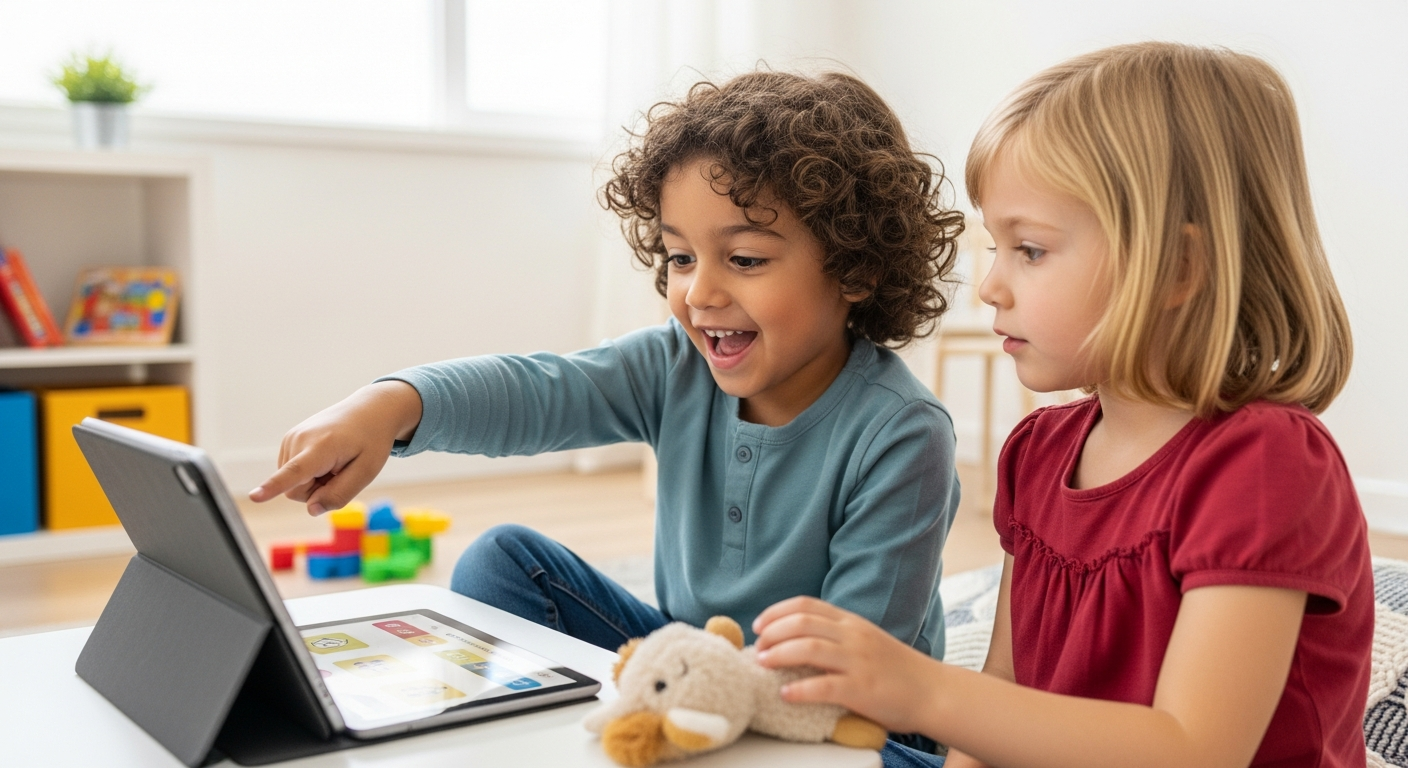
Table of Contents
- Introduction
- Why Finding the Best App for Speech Delay Matters
- Our Story: Built by Those Who Understand
- The Science of Peer-to-Peer Learning
- Real-Life Scenarios: Turning Interests into Words
- Comprehensive Features for Every Stage
- The Role of Parents and "Co-Play"
- Transparent Pricing: Investing in Your Child’s Future
- Setting Realistic Expectations
- Beyond Speech: The Addition of Reading Blubs
- Practical Tips for Getting Started
- Community and Support
- Conclusion
- Frequently Asked Questions
Introduction
Have you ever looked into your child’s eyes, waiting for that first word or a simple request, only to be met with a frustrated tug on your sleeve or a silent point toward the kitchen? If you are a parent of a child who isn't meeting their speech milestones, you are certainly not alone. Statistics suggest that roughly 1 in 4 children will face some form of speech or language challenge during their early development. This realization can feel overwhelming, but it is also the beginning of a beautiful journey toward finding your child’s unique voice.
The purpose of this blog post is to guide you through the digital landscape of speech support. We will explore what makes an effective tool for language development, dive into the science of how children actually learn to communicate, and explain why choosing the right resources can transform "passive" screen time into a powerful developmental bridge. We’ll also share how our own experiences at Speech Blubs shaped the way we approach speech therapy.

Our mission is simple: we want to empower every child to speak their minds and hearts. By the end of this article, you will understand how peer-led video modeling, playful engagement, and consistent family support work together to build the confidence your child needs to start talking.
Why Finding the Best App for Speech Delay Matters
For many families, the journey toward better communication begins when they notice their little one is a "late talker." While every child develops at their own pace, early intervention is widely recognized by professionals as the most effective way to support long-term success. However, professional speech-language therapy can sometimes involve long waiting lists or high costs, leaving parents searching for ways to help at home in the meantime.
This is where technology can step in as a vital supplement. When used correctly, a high-quality app can serve as a "digital tutor" that encourages a child to practice sounds and words in a low-pressure environment. The key, however, is moving away from passive viewing. We believe that not all screen time is created equal. While many children spend hours watching cartoons, this is often a one-way street where the child is just a spectator. The best app for speech delay should be interactive, requiring the child to participate, imitate, and engage.
Our Story: Built by Those Who Understand
At Speech Blubs, our approach isn’t just clinical; it’s personal. Our company was born from the direct experiences of our founders, all of whom grew up with speech problems themselves. They knew firsthand the frustration of having so much to say but lacking the tools to say it. They created the tool they wished they had as children—a solution that feels like a game but is rooted in proven speech therapy principles.
We don't view our app as a replacement for a Speech-Language Pathologist (SLP). Instead, we see it as a joyful, "smart screen time" experience that families can use together to reinforce the work being done in therapy or to provide a head start for children waiting for services. Our goal is to make speech practice the highlight of your child’s day, rather than a chore.

The Science of Peer-to-Peer Learning
One of the most frequent questions we receive is: "How does a child learn to speak by looking at a screen?" The answer lies in a fascinating biological mechanism called mirror neurons.
What are Mirror Neurons?
Mirror neurons are specialized brain cells that fire both when an individual performs an action and when they observe someone else performing that same action. In the context of speech, when a child watches someone produce a specific sound or word, their brain is actually "rehearsing" that movement.
The Power of Video Modeling
We utilize a methodology called video modeling. Unlike many apps that use cartoons or digital avatars, we use videos of real children. Research, including a notable UCLA study published by the American Speech-Language-Hearing Association, has shown that children are significantly more likely to imitate their peers than adults or animations.
When your child sees another child on the screen successfully making a "B" sound or saying "Mama," it creates a "if they can do it, I can do it" moment of connection. You can learn more about the deep research behind our peer-led approach and how it helps children with speech delays and autism.
Real-Life Scenarios: Turning Interests into Words
To understand how a dedicated speech app helps, it’s best to look at how it fits into a child's daily life. We focus on "smart play"—using a child's natural interests to spark communication.
The Animal Enthusiast
Imagine a 3-year-old named Leo who loves everything about the farm but hasn't yet started naming the animals. In our "Animal Kingdom" section, Leo isn't just watching a cow; he’s watching another child his age make the "Mooo" sound. Because he identifies with the peer on the screen, he’s motivated to try it himself. When he makes a sound, the app rewards him with fun face filters—suddenly, Leo sees himself with cow ears on the screen! This positive reinforcement makes the difficult task of sound production feel like a fun dress-up game.
The Car and Truck Fanatic
For a child like Maya, who is obsessed with anything that has wheels, the "Ride Your Wheels" section provides the perfect hook. Instead of just pushing a toy car in silence, Maya watches a peer make the "Brrrrum" and "Beep Beep" sounds. These foundational "early sounds" are the building blocks of language. By imitating these environmental noises first, Maya builds the muscle memory and confidence needed to move on to more complex words later.
Strengthening the "Mouth Gym"
Some children struggle with the physical coordination required for speech. For a parent whose child seems to have "heavy" or uncoordinated oral movements, the "Mouth Gym" section offers a series of fun exercises. By watching peers stick out their tongues, blow bubbles, or pucker their lips, children learn the motor skills necessary for clear articulation in an environment that feels like a silly game rather than a medical exercise.
Comprehensive Features for Every Stage
We have designed our platform to be a long-term companion for your child’s development. With over 1,500 activities, there is always something new to explore.
- Early Sounds: Focusing on the building blocks of language, like vowel sounds and animal noises.
- Daily Routines: Helping children learn the words for things they see every day, such as "Yummy Time" (food) and "This Is My Body."
- Sing-Alongs: Using the rhythm and melody of music to encourage vocalization and memory.
- Face Filters: Dozens of 3D masks and filters that turn the child into the character they are learning about, providing instant, joyful feedback.
Unsure where to start? We recommend taking our quick 3-minute preliminary screener. It consists of 9 simple questions about your child's current communication level and provides you with a personalized assessment and a next-steps plan.
The Role of Parents and "Co-Play"
While we take pride in being the best app for speech delay, we are the first to say that the real magic happens when you join in. We advocate for "co-play"—the practice of sitting with your child while they use the app.
When you use the app together, you can model the sounds yourself, celebrate their attempts, and bring the digital lessons into the physical world. If you spent time in the "Get into Shapes" section, you can later point out a circular plate at dinner. This connection between the screen and the real world is where true functional communication flourishes.
To support you on this journey, we’ve created the Parents’ Academy. This is an ever-growing library of over 350 articles and video tips written by more than 20 speech and teaching professionals. We want to ensure you feel as empowered as your child. You can read testimonials from other parents who have transformed their home environment into a hub for language growth.
Transparent Pricing: Investing in Your Child’s Future
We believe in being transparent and providing the best possible value for families. Our pricing is designed to be accessible while providing a wealth of features that grow with your child.
Monthly Plan
- Price: $14.49 per month.
- This plan is great for those who want to try the app on a short-term basis. However, it does not include some of our most valuable premium features.
Yearly Plan (The Best Value)
- Price: $59.99 per year.
- This breaks down to just $4.99 per month, a 66% saving compared to the monthly rate.
- 7-Day Free Trial: The Yearly plan begins with a full week of free access so you can ensure it’s a perfect fit for your family.
- Reading Blubs Included: Yearly subscribers get full access to our Reading Blubs app, designed by over 200 literacy experts to help your child transition from speaking to reading.
- Priority Support: Enjoy a 24-hour support response time and early access to all new feature updates.
Choosing the yearly option ensures that your child has the consistent, long-term practice required to make real progress, all while giving you the best price and the most tools. Ready to start? You can create your account and start your free trial on our website today.
Setting Realistic Expectations
It is important to remember that every child’s path to communication is unique. We don't promise overnight miracles or public speaking skills in a month. What we do provide is a scientifically-backed environment that fosters a love for communication.
Our goal is to reduce the frustration that comes with being unable to communicate, build the foundational skills of sound production, and create moments of joy for your family. Whether your child has a mild delay, is on the autism spectrum, or simply needs a little extra encouragement, we are here to support that process.
Beyond Speech: The Addition of Reading Blubs
Language is a spectrum that moves from listening to speaking, and eventually to reading and writing. Because we want to support your child’s entire developmental arc, our yearly plan includes Reading Blubs.
Created alongside literacy experts, Reading Blubs uses the same engaging principles to help children recognize letters, understand phonics, and eventually start reading their first stories. By integrating these two apps, we provide a comprehensive toolkit for your child’s linguistic journey, ensuring they have the support they need from their first "ba-ba" to their first "I love you" and beyond.
Practical Tips for Getting Started
If you’ve decided to take the next step, here are a few tips to make your first week with the app a success:
- Keep it Short: For young children, 10 to 15 minutes of focused play is better than an hour of distracted screen time.
- Use the Mirror: Many of our activities work best when the child can see themselves. Use the app in a well-lit room so the face filters can track their movements accurately.
- Celebrate Effort, Not Just Accuracy: If your child tries to make a sound but doesn't get it quite right, cheer anyway! Building confidence is just as important as building vocabulary.
- Stay Consistent: Try to make "Blubs time" a part of your daily routine—perhaps after breakfast or before nap time. Consistency helps the brain build those new neural pathways.
Community and Support
When you join Speech Blubs, you are joining a community of over 10 million parents who have trusted us to help their children. We are constantly updating our content based on the latest research and feedback from our users.
Our app is 100% kid-safe and ad-free, providing a sanctuary of learning without the distractions of the modern web. We take your child's safety and your peace of mind seriously, which is why we’ve earned awards like the Mom’s Choice Award and the "Safe for Children" certificate.
Conclusion
Navigating a speech delay can be a journey filled with questions, but you don't have to walk it alone. By choosing a tool that prioritizes peer-led video modeling, scientific methodology, and joyful interaction, you are giving your child a significant advantage. The best app for speech delay is one that turns every "smart screen time" session into an opportunity for connection and growth.
At Speech Blubs, we are committed to helping your child "speak their minds and hearts." We invite you to experience the difference for yourself. Whether you are looking for a way to support professional therapy or a fun way to encourage your late talker, our platform is designed to make language learning a delight.
Ready to help your child find their voice? Download Speech Blubs on the App Store or Google Play to begin your journey. For the best value, including the Reading Blubs app and a 7-day free trial, be sure to select our Yearly Plan. Let’s start talking!
Frequently Asked Questions
1. Is Speech Blubs suitable for children with Autism?
Yes! Many children on the autism spectrum find our peer-led video modeling particularly helpful. Because real children are used in the videos, it helps with social imitation and facial recognition. Many parents of neurodivergent children report that the app’s predictable structure and positive rewards help reduce communication-related frustration.
2. Can I use the app on multiple devices?
Absolutely. We support multiple child profiles and platform synchronization. This means that with one subscription, your child can practice on your phone, a partner's tablet, or even a grandparent's device. All their progress and stickers will be saved across all platforms.
3. How often should my child use the app to see progress?
While every child is different, we generally recommend "smart screen time" sessions of 10-20 minutes per day, 3-5 times a week. Consistency is the most important factor. The app is designed to be a supplement to your child's daily interactions, so using it as part of a routine—and pairing it with active parent co-play—is the best way to foster foundational skills.
4. What is the difference between the Monthly and Yearly plans?
The Monthly plan costs $14.49 and offers basic access. The Yearly Plan is our premium offering at $59.99 (which is only $4.99/month). The Yearly plan is the only one that includes a 7-day free trial, full access to the Reading Blubs app, early access to new content updates, and 24-hour support response times. It offers the most comprehensive set of tools for your child’s development at a 66% discount.
About the author