
The Best Games to Play at a Kids Party for Unforgettable Fun
 By Speech Blubs Team•Jan 28, 2026•21 min.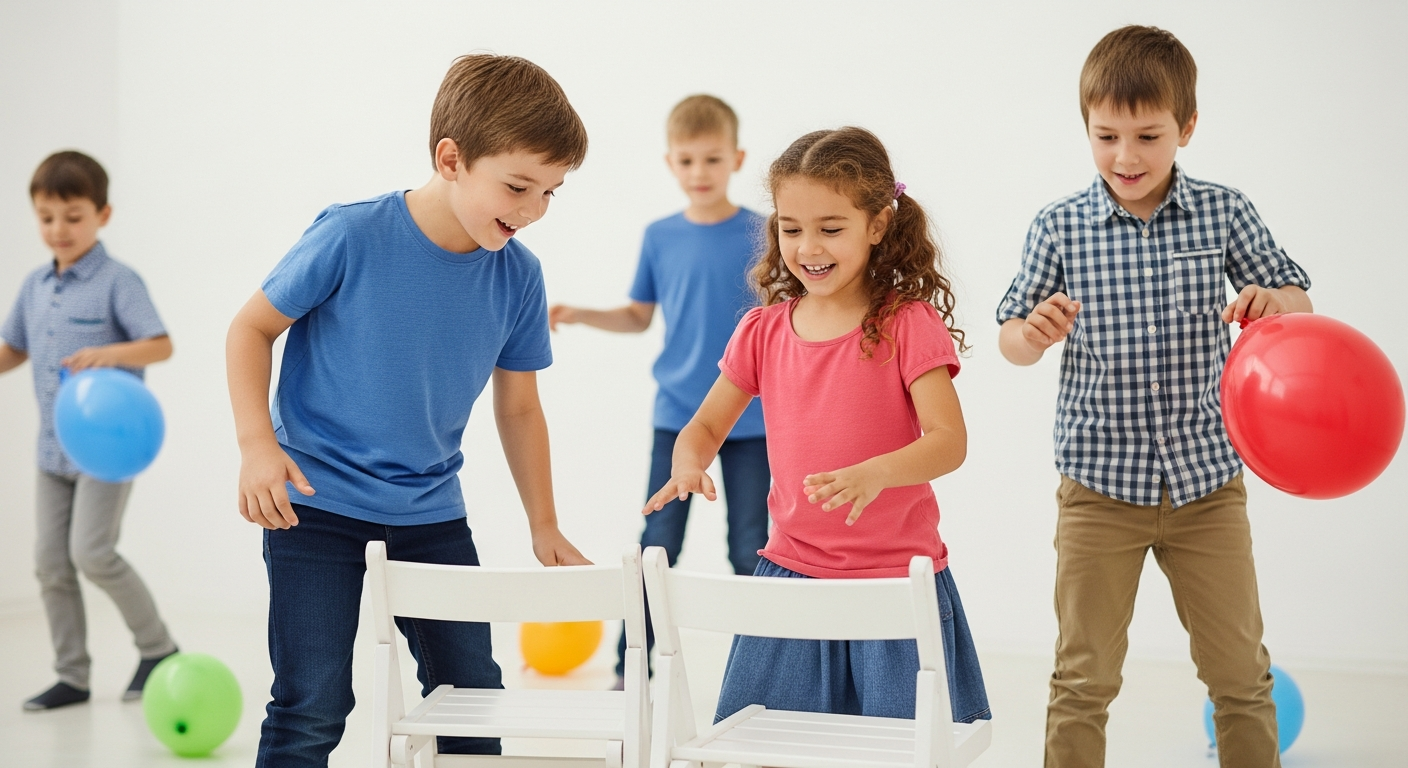
Table of Contents
- Introduction
- The Magic of Party Games: More Than Just Fun
- Planning Your Epic Party: Setting the Stage for Success
- Classic Indoor Party Games That Never Get Old
- Dynamic Outdoor Games for High Energy Kids
- Creative & Unique Party Game Ideas
- Enhancing Communication & Development Through Play
- Beyond the Games: Tips for a Smooth Party
- Ready to Boost Your Child's Communication Journey?
- Conclusion
- FAQ
Introduction
Ever found yourself staring at a room full of energetic children, wondering how to channel their boundless enthusiasm into structured fun? A child’s birthday party, while a joyous celebration, can sometimes feel like a high-stakes balancing act for parents. We dream of laughter and joyful memories, but the reality can quickly descend into chaos without a plan. Whether you're hosting at home with a tight space or embracing the great outdoors, a well-chosen roster of games can transform a good party into an unforgettable one. These aren't just time-fillfillers; they're opportunities for connection, skill-building, and pure, unadulterated fun. This comprehensive guide will explore a vibrant array of games to play at a kids party, offering practical tips for every age and setting, ensuring your next celebration is a resounding success filled with smiles, giggles, and cherished moments.

The Magic of Party Games: More Than Just Fun
Party games are far more than mere entertainment; they are powerful catalysts for child development. When children engage in group play, they are unknowingly honing a myriad of essential skills – social, emotional, cognitive, and, crucially, communication. For us at Speech Blubs, we understand deeply that play is a child’s first language, and structured games provide a rich environment for language to flourish.
Consider the simple act of playing "Simon Says." This game isn't just about following instructions; it's about active listening, impulse control, and understanding directives. For a child who might be a "late talker" or struggling with auditory processing, this seemingly simple game offers invaluable practice in receptive language. They learn to process phrases like "Simon says touch your nose" and respond appropriately, building a foundation for more complex communication. Similarly, games like "Charades" encourage expressive language in a different way, as children must think about how to convey an idea without words, often resorting to gestures and facial expressions that are precursors to verbal communication.
These activities foster a love for communication by making it engaging and rewarding. When a child successfully guesses a charade or correctly follows a "Simon Says" command, they experience a surge of confidence. This feeling is paramount, especially for children who may face speech challenges. Building confidence in a low-pressure, playful setting can significantly reduce communication frustration and encourage them to "speak their minds and hearts," which is at the very core of our mission at Speech Blubs.
Moreover, party games naturally encourage turn-taking, sharing, negotiation, and empathy – vital social skills. They learn to celebrate others' successes, cope with losing, and work together towards a common goal. These interactions are foundational for healthy social development and provide countless opportunities for natural language use, from cheering on a friend to explaining a rule.

Our unique "video modeling" methodology, which you can explore more about on our research page, works on similar principles: children learn best by watching and imitating their peers in engaging contexts. Party games offer a real-world, dynamic extension of this concept, where children observe, imitate, and interact in real-time, boosting their communicative repertoire and social fluency.
Planning Your Epic Party: Setting the Stage for Success
Before diving into specific games, thoughtful planning is key. A successful party isn't just about the games themselves, but how they fit into the overall flow and atmosphere.
Considerations for a Seamless Party Experience
- Age Range of Guests: This is perhaps the most critical factor. Toddlers thrive on simple, sensory games, while school-aged children enjoy more complex rules and competitive elements. Teenagers might prefer strategy-based or team-oriented challenges. Tailor your selection to the youngest attendees to ensure everyone can participate and feel included.
- Group Size: A small group of 5-8 children can handle intricate games, while a larger group of 15+ needs games with minimal waiting time and clear instructions. Games like "Red Light, Green Light" or a "Scavenger Hunt" can accommodate many players easily.
- Indoor vs. Outdoor Space: Your venue dictates the possibilities. Outdoor spaces are perfect for high-energy running games, water activities, and louder fun. Indoors, you'll need to consider space constraints, noise levels, and potential breakables. Adapt games like "Obstacle Course" to fit your environment.
- Party Theme: If you have a theme (superheroes, princesses, jungle adventure), weave it into your games! A "Superhero Training Academy" obstacle course or a "Princess Scavenger Hunt" for a lost tiara can elevate the fun and make games feel more cohesive.
- Duration and Flow: Don't schedule back-to-back high-energy games. Alternate between active and calmer activities to prevent overstimulation and meltdowns. A good rhythm might be: arrival/free play, active game, calmer game, food, magician/entertainment, another active game, cake, departure.
- Prizes and Participation: While competition can be fun, emphasizing participation and effort often leads to a more inclusive and positive experience, especially for younger children. Small, inexpensive prizes for everyone (stickers, bubbles) or "lucky dip" bags can work wonders.
Balancing Structured Play with Free Exploration
While structure is helpful, remember that children also need time for free play. Don't overschedule every minute. A little unstructured time at the beginning or end allows children to warm up, socialize informally, and explore. This balance is crucial for a joyful atmosphere.
Classic Indoor Party Games That Never Get Old
When the weather isn't cooperating or you simply prefer an indoor celebration, these tried-and-true games are fantastic for keeping everyone engaged and laughing.
1. Simon Says
A quintessential game that’s brilliant for listening skills and following instructions.
- How to Play: One person is "Simon" and gives commands, starting each with "Simon Says." Players only follow commands preceded by "Simon Says." If a command isn't prefaced by "Simon Says" and a player follows it, they're out. The last player remaining wins.
- Why it's Great: This game is fantastic for auditory processing, attention, and impulse control. For a parent whose child struggles with focusing on verbal instructions, practicing "Simon Says" can be a fun way to build these crucial listening skills. These foundational skills are directly supported by our "smart screen time" experiences at Speech Blubs, where children learn to attend to and imitate speech models.
- Speech Blubs Connection: Games like Simon Says encourage a child to listen and respond, much like our app encourages children to watch and imitate. The repetition and clear instructions lay groundwork for language acquisition.
2. Red Light, Green Light
A high-energy game perfect for larger indoor spaces or a living room cleared for action.
- How to Play: One person stands at one end, facing away, and calls "Green Light!" Players run towards them. When the person calls "Red Light!" and turns around, players must freeze. Anyone caught moving is out or sent back to the start. The first to touch the caller wins.
- Why it's Great: Promotes listening, gross motor skills, and inhibitory control. It’s also incredibly fun and gets kids moving!
3. Charades
A fantastic way to encourage non-verbal communication and creative expression.
- How to Play: Write down various words or phrases (animals, actions, movies) on slips of paper. Players pick one and act it out without speaking, while others guess. The first to guess correctly gets to act next.
- Why it's Great: Boosts imagination, non-verbal communication skills, and vocabulary (as they think about how to represent words). For a child working on expressive language, this can be a fun, low-pressure way to communicate ideas.
4. Musical Hats (or Musical Chairs)
A classic for a reason, guaranteeing giggles and anticipation.
- How to Play: Instead of chairs, use hats (one less hat than players) placed in a circle. While music plays, players walk around the hats. When the music stops, everyone grabs a hat. The player left without a hat is out. Remove one hat each round.
- Why it's Great: Encourages quick reflexes, listening skills, and managing disappointment gracefully.
5. Saran Wrap Ball Game
A unique and exciting game where everyone gets a turn.
- How to Play: Wrap small prizes (candy, small toys) in layers of saran wrap to form a large ball, with one "grand prize" in the center. Players sit in a circle. One player starts unwrapping the ball while the player next to them rolls a pair of dice, trying to get doubles. When doubles are rolled, the ball passes to the next player. Whatever prizes a player unwraps during their turn, they keep!
- Why it's Great: Builds anticipation, encourages turn-taking, and the element of surprise keeps everyone engaged.
6. Pin the Tail on the Donkey (and Variations)
A timeless party game that's easy to set up and always gets laughs.
- How to Play: A large picture of an animal (or character) without a specific feature (tail, hat, mustache) is taped to a wall. Players are blindfolded, spun around gently, and then try to pin their missing feature in the correct spot.
- Why it's Great: Enhances spatial awareness, fine motor skills, and provides lots of silly moments. Customize it to your theme – "Pin the Crown on the Princess" or "Pin the Eye on the Monster."
7. Minute to Win It Games
These quick, challenging, and often hilarious games are perfect for keeping a high energy level.
- How to Play: A series of challenges (like "Face the Cookie" – moving a cookie from forehead to mouth using only facial muscles) that players try to complete within one minute.
- Why it's Great: Short, engaging, and often requires creative problem-solving and fine motor skills. These games are fantastic for practicing following multi-step instructions and can be adapted for various ages. For children who are developing their executive functions and ability to follow sequenced commands, the quick-fire nature of these games provides excellent practice.
- Speech Blubs Connection: Just like in our app, where children follow short, clear video instructions to produce sounds and words, Minute to Win It games offer a similar structure of observation, comprehension, and action, building cognitive and motor planning skills essential for speech. If you're looking for more ways to engage your child's communication skills, consider exploring our app. Download Speech Blubs on the App Store or get it on Google Play today!
8. Kim's Game (Memory Game)
A quieter game that sharpens observation and memory.
- How to Play: Place 10-15 small, distinct items on a tray. Give children one minute to observe them closely. Then, cover the tray. Give them a few minutes to write down or verbally list as many items as they can remember.
- Why it's Great: Boosts visual memory, attention to detail, and vocabulary (as they recall item names). This game can also be a wonderful way to encourage descriptive language as children recall the items.
Dynamic Outdoor Games for High Energy Kids
When you have access to a backyard, park, or open space, these games are perfect for letting kids run, jump, and burn off energy.
1. Capture the Flag
A classic team game that encourages strategy, teamwork, and physical activity.
- How to Play: Divide players into two teams. Each team has a "flag" (a bandana, scarf, or even a toy) hidden in their territory. The goal is to capture the opposing team's flag and bring it back to your base without being tagged. Tagged players might go to "jail" until freed by a teammate.
- Why it's Great: Develops strategic thinking, teamwork, physical endurance, and negotiation skills.
2. Scavenger Hunts
A thrilling adventure that combines problem-solving with exploration.
- How to Play: Prepare a list of clues or items for teams to find. Clues can be riddles, pictures, or simple descriptions. The first team to find all items or solve all clues wins.
- Why it's Great: Encourages teamwork, reading comprehension (for older kids), observation skills, and problem-solving. A "Photo Scavenger Hunt" where kids take pictures of items on a list can also be a hit, fostering descriptive language as they identify objects.
3. Tug-of-War
A simple yet exciting test of strength and teamwork.
- How to Play: Two teams stand at opposite ends of a sturdy rope, with a marker in the middle. The goal is to pull the opposing team past the center marker.
- Why it's Great: Promotes teamwork, physical coordination, and friendly competition.
4. Obstacle Course
Transform your backyard into an adventurous challenge.
- How to Play: Set up a series of obstacles using everyday items: crawl under blankets, jump over pool noodles, weave through cones, step on stepping stones, hula hoop. Time each child or team to see who completes it fastest.
- Why it's Great: Enhances gross motor skills, balance, coordination, and following multi-step directions. It's easily adaptable to different age groups and skill levels.
5. Water Games (Water Balloon Toss, Sprinkler Tag)
Perfect for hot days and guaranteed to bring refreshing fun.
- How to Play (Water Balloon Toss): Partners stand across from each other and toss a water balloon, taking a step back after each successful catch. The last pair with an intact balloon wins.
- How to Play (Sprinkler Tag): Turn on the sprinkler, and players try to run through without getting wet (or getting tagged by a "sprinkler monster").
- Why it's Great: Offers sensory play, cools kids down, and encourages hand-eye coordination (toss) or quick reflexes (tag).
6. NERF Wars
A safe and exhilarating battle for competitive spirits.
- How to Play: Provide NERF blasters and darts, and set up a "battlefield" with obstacles (cardboard boxes, outdoor furniture). Divide into teams with clear rules for "getting out" (e.g., hit once, you're out for 10 seconds).
- Why it's Great: Promotes strategic thinking, teamwork, and active movement.
Creative & Unique Party Game Ideas
Looking for something a little different to spark joy and challenge young minds? These ideas bring a fresh twist to party fun.
1. Riddle Balloon Game
Combines the excitement of popping balloons with a brain-teasing challenge.
- How to Play: Before inflating, place small slips of paper inside balloons – half with riddles, half with their answers. Give each child two balloons. They pop them, then work together to match the riddles to their answers.
- Why it's Great: Encourages problem-solving, reading (for older kids), and collaborative communication. For children developing vocabulary and comprehension, riddles are excellent for fostering critical thinking and word association.
2. Donut on a String
A deliciously messy and hilarious challenge.
- How to Play: Tie donuts to strings and hang them from a clothesline or tree branch at a height accessible to the children. Kids must eat their donut without using their hands.
- Why it's Great: Provides loads of laughter, fine motor control (trying to bite the swinging donut!), and a memorable, silly experience.
3. Glow in the Dark Balloon Stomp
A dazzling twist on a classic game, perfect for evening parties.
- How to Play: Crack small glow sticks and insert one into each balloon before inflating. Tie an inflated balloon to each player's ankle. When the lights go down (or it gets dark outside), players try to stomp on and pop others' balloons while protecting their own.
- Why it's Great: Adds an exciting visual element, promotes agility, and encourages strategic movement.
4. Photo Scavenger Hunt
A modern take on the scavenger hunt, perfect for older kids with phones or tablets.
- How to Play: Provide teams with a list of specific items, scenes, or poses they need to photograph. For example: "a red flower," "someone making a silly face," "the entire team balancing on one leg." The first team to return with all photos wins.
- Why it's Great: Encourages teamwork, observation, creativity, and visual communication. It's a fantastic way for children to practice descriptive language as they discuss what they need to find or how to pose. This type of interactive activity aligns perfectly with our philosophy at Speech Blubs: creating engaging, active learning experiences that go beyond passive screen time.
5. "I Spy" with Descriptive Details
Elevating the classic "I Spy" to build richer vocabulary.
- How to Play: One person spies an object and says, "I spy with my little eye something..." instead of just stating a color, they add descriptive adjectives or categories: "...something soft and cuddly," "...something you use for writing," "...something that smells sweet."
- Why it's Great: Excellent for building vocabulary, teaching categorization, and developing descriptive language skills. It challenges children to think beyond basic attributes and encourages more complex linguistic processing. For children who are expanding their vocabulary and learning to use adjectives, this game provides fun, repetitive practice in a natural context.
Enhancing Communication & Development Through Play
At Speech Blubs, we believe that every interaction is an opportunity for growth. Party games, in their inherent design, are perfect microcosms for developing communication and social skills. They provide natural, motivating contexts for children to:
- Practice Listening Skills: Games like "Simon Says" or "Red Light, Green Light" are direct exercises in auditory processing and following instructions. They teach children to pay attention to verbal cues and respond appropriately.
- Develop Expressive Language: Whether it's describing an item in "I Spy," explaining a strategy in "Capture the Flag," or making sounds to represent an animal in "Charades," children are constantly using and expanding their vocabulary and sentence structures.
- Learn Social Cues: Turn-taking, negotiating, sharing, waiting, and expressing emotions (winning, losing) are all vital social skills practiced during games. These interactions help children understand the unwritten rules of social engagement.
- Build Confidence: Successfully participating in a game, guessing a riddle, or being part of a winning team provides a huge boost to a child's self-esteem. This confidence often spills over into other areas of their lives, including their willingness to communicate.
For example, consider a parent whose 3-year-old "late talker" loves animals. While playing a game like "Animal Charades," the child might be motivated to make animal sounds or simple words like "moo" or "baa." This playful, non-pressured environment can be incredibly effective. Afterward, the parent can reinforce these sounds and words using the "Animal Kingdom" section of the Speech Blubs app, which uses our unique "video modeling" method where children learn by watching and imitating their peers. This blend of real-world play and targeted app practice creates a powerful, integrated learning experience.
Our mission is to empower children to "speak their minds and hearts," and we're committed to providing immediate, effective, and joyful solutions. By blending scientific principles with play, we create one-of-a-kind "smart screen time" experiences that are an active alternative to passive viewing. We believe in the power of play to connect families and foster growth, and party games are a testament to this belief.
Beyond the Games: Tips for a Smooth Party
Even with the best games, a few additional strategies can ensure your party runs smoothly and joyfully.
Managing Expectations (Yours and Theirs)
- Embrace Imperfection: Not every game will be a hit with every child. Some might get bored, others might have a meltdown. That's okay! Be flexible and ready to pivot.
- Focus on the Experience: The goal isn't perfect execution, but creating happy memories. Prioritize laughter and connection over strict adherence to rules.
- Prizes for All: While competition can be fun, having small treats or "participation prizes" for everyone ensures that no one leaves feeling left out. This is especially important for younger age groups.
Dealing with Disengagement or Meltdowns
- Offer Alternatives: If a child isn't enjoying a game, gently suggest they observe, help you, or move to a quieter activity. Don't force participation.
- Take a Break: Sometimes a short break for water or a quiet chat with a trusted adult is all a child needs to rejoin the fun.
- Positive Reinforcement: Praise effort, good sportsmanship, and participation, not just winning.
Adult Involvement and Role Modeling
- Be an Active Participant: Don't just facilitate; join in the fun! Your enthusiasm is contagious and sets the tone for the party.
- Model Good Behavior: Show good sportsmanship, encourage others, and demonstrate how to handle challenges. Children learn best by example.
- Have Fun Yourself! Your genuine enjoyment will be the biggest factor in creating a positive atmosphere.
Ready to Boost Your Child's Communication Journey?
While party games are fantastic for fostering communication in social settings, consistent support for speech and language development can make a significant difference. At Speech Blubs, we've created a unique tool born from the personal experiences of our founders, all of whom grew up with speech problems. We created the tool we wished we had: an immediate, effective, and joyful solution for the 1 in 4 children who need speech support.
Our app provides a screen-free alternative to passive viewing like cartoons, offering "smart screen time" where children actively engage and learn. Our core method, "video modeling," allows children to learn complex communication skills by watching and imitating their peers, building confidence and accelerating progress. You can read more about how our app is backed by science on our research page.
We invite you to experience the Speech Blubs difference with a 7-day free trial. This trial is exclusively available when you choose our Yearly plan, which offers the best value and access to our full suite of features.
Our pricing is designed to be transparent and accessible:
- Monthly Plan: $14.99 per month
- Yearly Plan: $59.99 per year (which breaks down to just $4.99/month!)
The Yearly Plan is the clear best choice, allowing you to save 66% compared to the monthly subscription. Beyond the significant savings, the Yearly plan includes exclusive, high-value features that aren't available with the Monthly plan:
- A 7-day free trial to explore everything Speech Blubs has to offer.
- The amazing Reading Blubs app at no extra cost, designed to complement your child's literacy development.
- Early access to new updates and a dedicated 24-hour support response time for any questions you may have.
These added benefits ensure your child gets the most comprehensive and supported learning experience possible.
Ready to provide your child with a powerful tool for developing their speech and language skills? Download Speech Blubs on the App Store or get it on Google Play today! To unlock the free trial and all the premium features, be sure to select the Yearly plan during your sign-up process. See what other parents are saying about their child's success with Speech Blubs by visiting our testimonials page.
Conclusion
Planning a kids' party doesn't have to be daunting. By incorporating a variety of engaging games to play at a kids party, you're not just providing entertainment; you're nurturing essential developmental skills, building confidence, and creating an atmosphere of joyful learning. From the classic simplicity of "Simon Says" to the strategic fun of "Capture the Flag," each game offers a unique opportunity for children to connect, communicate, and grow. Remember to tailor your game choices to the age and interests of your guests, balance active and calmer activities, and most importantly, join in the fun!
At Speech Blubs, we are dedicated to supporting children on their communication journey, blending expert-backed methods with playful engagement. We know that every spoken word, every shared laugh, and every moment of connection builds a stronger, more confident child.
Take the first step towards empowering your child's communication today. Start your 7-day free trial by choosing the Yearly plan, and discover how our app can supplement their development, fostering a love for communication and building foundational skills for life. Download Speech Blubs now and unlock a world of smart screen time that helps children speak their minds and hearts!
FAQ
Q1: How do I choose the best games for my child's party?
A1: Consider the age range of your guests, the size of your group, and whether you'll be indoors or outdoors. For younger children, focus on simple, inclusive games with clear rules. For older kids, you can introduce more complex, team-based, or competitive games. Always have a mix of active and calmer activities to keep energy levels balanced.
Q2: What if a child doesn't want to participate in a game?
A2: It's common for some children to be shy or prefer observing. Never force participation. Instead, offer them the option to watch, help you as a "co-host," or move to a quiet activity if available. Often, seeing others have fun will encourage them to join in later.
Q3: How do I manage prizes without causing sibling rivalry or disappointment?
A3: For younger groups, focus on participation prizes, where every child receives a small token for playing. For older children, you can have winners receive a slightly larger prize, but ensure there are still small treats or goodie bag items for everyone to prevent anyone from feeling left out. Emphasize good sportsmanship over winning.
Q4: How can Speech Blubs help my child's communication skills beyond party games?
A4: Speech Blubs offers a structured yet playful environment for speech and language development. Our unique "video modeling" method encourages children to learn by imitating their peers, fostering crucial communication skills like articulation, vocabulary, and sentence formation. It's a "smart screen time" alternative to passive viewing, making learning active and engaging, complementing the social and communication skills learned through party games. Try our 7-day free trial with the Yearly plan to see the benefits firsthand!
About the author