
The Best Toddler Arts and Crafts for Creative Play
 By Speech Blubs Team•Feb 20, 2026•12 min.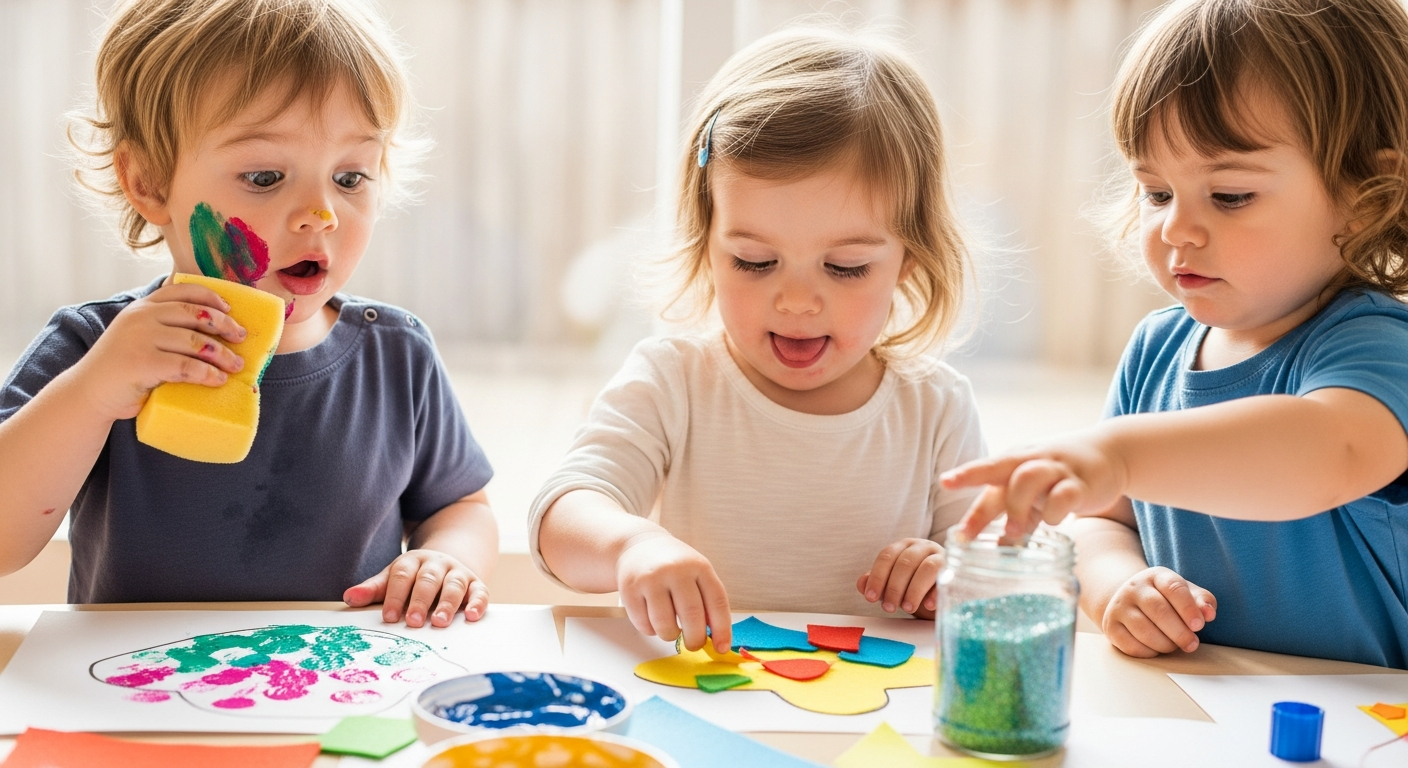
Table of Contents
- Introduction
- Why Creative Play is Essential for Language Development
- The Best Toddler Arts and Crafts Supplies for Drawing and Painting
- Must-Have Craft Supplies for Creating and Building
- Seasonal Craft Ideas to Keep Things Fresh
- Managing the Mess: Tips for Sanity
- Integrating Speech Blubs into Your Art Routine
- Understanding the Value of Your Investment
- Practical Scenario: The "Late Talker" and the Art Table
- Creating a Dedicated Art Space
- Conclusion
- Frequently Asked Questions
Introduction
Did you know that the neural pathways used for fine motor movements—like grasping a crayon or peeling a sticker—are closely linked to the areas of the brain responsible for speech and language? When your toddler is focused on squishing playdough or carefully placing a dot marker on paper, they aren't just making a mess; they are building the foundational architecture for communication. At Speech Blubs, we believe that every child deserves the chance to "speak their minds and hearts," and often, that journey begins with the stroke of a paintbrush or the crinkle of tissue paper.
The world of the best toddler arts and crafts can feel overwhelming, especially when you are staring at a floor covered in glitter or wondering if that "washable" marker truly lives up to its name. Our mission is to transform these moments of creative exploration into opportunities for "smart screen time" and joyful family connection. Born from the personal experiences of our founders who faced their own speech challenges, we’ve designed a path that blends scientific principles with pure, unadulterated play. In this post, we will explore the essential supplies you need, seasonal craft ideas that spark conversation, and how to manage the inevitable mess while fostering your child's developmental milestones. By the end of this guide, you’ll have a toolkit of activities designed to reduce frustration and build the confidence your little one needs to express themselves.

Why Creative Play is Essential for Language Development
Before we dive into the bin of googly eyes and pipe cleaners, it’s important to understand the "why" behind the craft. At Speech Blubs, our methodology is rooted in the science of mirror neurons. When children watch their peers perform an action—whether it’s making a "moo" sound in our app or watching you draw a circle—their brains react as if they are doing it themselves. This "video modeling" is a cornerstone of how we teach complex communication skills.
Art and craft projects provide a physical manifestation of this learning. When a toddler engages in the best toddler arts and crafts, they are practicing:
- Fine Motor Skills: Strengthening the small muscles in the hands is a precursor to the oral motor control needed for clear speech.
- Requesting and Labeling: "I want the red marker," or "Look, a blue bird!" These activities naturally encourage a child to use their words.
- Following Directions: Simple two-step instructions like "Pick up the glue, then stick the paper," are vital for cognitive development.
- Joint Attention: Sharing a creative task with a caregiver builds the social-emotional bond that serves as the bedrock for all communication.
If you’re wondering where your child stands in their development, you can take our quick 3-minute preliminary screener. It involves just 9 simple questions and provides an assessment and next-steps plan to help you support your little artist's growth.
The Best Toddler Arts and Crafts Supplies for Drawing and Painting
To get started, you don't need a dedicated studio. You just need the right tools that balance vibrant results with "parent-friendly" cleanup. Here are the top supplies we recommend for any toddler art trolley.
1. Dot Markers (Bingo Daubers)
Dot markers are essentially the "magic wand" of toddler art. They provide the vibrant, saturated color of paint without the dripping mess of a brush and water cup. For a child who might be easily frustrated by the precision required for traditional coloring, dot markers offer immediate success. They are perfect for practicing "stop and go" commands—an essential concept in early language.

2. Tempera Paint Sticks
Imagine a crayon that glides like silk and leaves behind a thick layer of paint that dries in seconds. Paint sticks are a game-changer. Because they are held like a thick marker, they are easier for small hands to grip. You can use these to draw large shapes and then encourage your child to identify the colors. This is a great time to download Speech Blubs on the App Store or Google Play and explore the "Colors" section to reinforce what they are seeing on the page.
3. Watercolors Palette
While it requires a bit more supervision, a watercolor palette is an incredible tool for teaching patience and the concept of "more."
- Pro Tip: Teach your child to count to ten while swirling their brush in the paint. This ensures they get enough pigment and provides a natural opportunity to practice counting out loud together.
4. Washable Markers and Oil Pastels
Always opt for "ultra-washable" varieties. Oil pastels are a wonderful alternative to crayons because they require less pressure to produce a bold line. For a toddler, being able to see their mark clearly on the page is a huge confidence booster.
Must-Have Craft Supplies for Creating and Building
Moving beyond the page, crafting involves three-dimensional thinking and tactile exploration. These supplies are staples for the best toddler arts and crafts experience.
Dot Stickers and Washi Tape
Peeling stickers is one of the best ways to develop the "pincer grasp." Washi tape is equally magical because it’s easy to tear and doesn’t leave a sticky residue on your furniture. You can create "tape-resist" art by placing tape in a pattern, letting your child paint over it, and then peeling the tape away to reveal the white space underneath.
Child-Safe Scissors and Glue
Yes, giving a two-year-old scissors can be nerve-wracking! However, using child-safe plastic scissors helps them understand cause and effect. Combine this with a purple glue stick (which goes on purple but dries clear) so they can see exactly where they’ve applied the "sticky."
Playdough and Sensory Bases
Playdough isn't just for building; it's a sensory powerhouse. It allows children to "act out" verbs like squish, roll, cut, and patter. You can even integrate Speech Blubs by looking at the "Animal Kingdom" section and trying to mold a snake or a snail together. This type of co-play is what makes "smart screen time" so effective.
Seasonal Craft Ideas to Keep Things Fresh
To keep your toddler engaged, it helps to rotate activities based on the world around them. Here are some of our favorite seasonal ideas for the best toddler arts and crafts.
Spring: Textured Bunnies and Paper Cup Flowers
In the spring, everything is about growth.
- The Activity: Use cotton balls and glue to create a "puffy" bunny.
- Language Connection: Discuss textures like "soft," "fluffy," and "bumpy."
Summer: Fly Swatter Painting and Nature Collages
Take the art outside!
- The Activity: Dip a clean fly swatter into a tray of washable paint and let your toddler "swat" a large piece of butcher paper on the grass.
- Language Connection: This is high-energy play that encourages "power words" like bang, splat, and wow!
Fall: Leaf Sticking and Shaving Cream Pumpkins
- The Activity: Collect leaves on a walk and use contact paper to make a suncatcher.
- Language Connection: Use our app to look at different trees and colors, then find them in real life. Our scientific methodology emphasizes the connection between digital learning and real-world application.
Winter: Snow Coloring and Paper Plate Ornaments
- The Activity: If you have snow, fill spray bottles with water and a drop of food coloring. Let them "paint" the yard.
- Language Connection: Talk about "cold" vs. "warm" and "white" vs. "colorful."
Managing the Mess: Tips for Sanity
We know that the fear of a stained rug often prevents parents from starting art projects. Here is how we manage the "artistic chaos" at Speech Blubs:
- The "Art Tray": Use a rimmed baking sheet or a plastic tray to contain the paint and glitter.
- The Wet Rag Rule: Keep a damp cloth nearby for immediate "oops" moments.
- The Butcher Paper Runner: Cover your entire kitchen table in a roll of white butcher paper. When the session is done, simply roll it up and toss it (or save the best parts!).
- Embrace the Bath: Sometimes, the best art ends with a mid-day bubble bath. It’s all part of the joyful learning process.
Integrating Speech Blubs into Your Art Routine
At Speech Blubs, we don't just want to be another app on your phone; we want to be a tool in your parenting utility belt. Our approach uses peer-led video modeling, which is highly effective for the 1 in 4 children who may need extra speech support.
Imagine your child is painting a lion. You can open the Speech Blubs app to the "Animal Kingdom" section. Your child sees a peer making a "Roar!" sound. Because they are already engaged in a tactile activity (painting the lion), they are more likely to imitate the sound and the facial expressions of the child on the screen. This is the heart of our mission: providing a screen-free alternative to passive viewing like cartoons, and replacing it with interactive, "smart" engagement.
Don't just take our word for it—read testimonials from thousands of parents who have seen their children’s confidence soar through this combination of play and technology.
Understanding the Value of Your Investment
We believe in transparency and providing the best possible value for families. While we offer a monthly plan, our yearly subscription is designed for long-term developmental success.
- Monthly Plan: At $14.99 per month, this is a great way to test the waters.
- Yearly Plan: At $59.99 per year, the cost breaks down to just $4.99 per month. This is a 66% savings compared to the monthly rate.
The Yearly Plan is the clear choice for families because it includes:
- A 7-day free trial to explore everything we offer.
- The Reading Blubs app, which helps transition your child from speaking to early literacy.
- Early access to all new updates and features.
- Priority 24-hour support response time from our team.
Ready to start this journey? Create your account and begin your 7-day free trial today.
Practical Scenario: The "Late Talker" and the Art Table
Let’s look at a relatable situation. Imagine a parent of a 3-year-old named Leo. Leo is a "late talker" who often gets frustrated when he can't communicate his needs. However, Leo loves trucks.
Instead of forcing a drill-style speech lesson, his mom sets up a "Construction Site" art tray. They use brown playdough as "dirt" and small toy trucks to make tracks. While they play, Mom opens Speech Blubs to the "Things That Go" section. Leo watches a child on the screen say "Beep beep!" and "Vroom!"
Because Leo is relaxed and having fun with the best toddler arts and crafts, his "filter" is down. He isn't worried about being "wrong." He starts to mimic the "Vroom!" sound. This isn't just play; it's a foundational building block for his future public speeches, his first "I love you," and his ability to "speak his mind and heart."
Creating a Dedicated Art Space
You don't need a spare room to encourage creativity. A small corner of the laundry room, a kitchen nook, or even a specific bin under the bed can serve as your "Art HQ." The key is accessibility. When a child knows where their tools are, they feel empowered to initiate play.
"Art is not what you see, but what you make others see." — While the result might look like a scribble to an outsider, to your toddler, it is a story, a feeling, and a triumph of motor control.
Conclusion
The best toddler arts and crafts are those that invite your child to explore, mess up, and try again. Whether you are using dot markers to create a rainbow or squishing kinetic sand through a funnel, you are providing your child with the sensory input they crave and the language opportunities they need.
At Speech Blubs, we are honored to be part of your child's developmental journey. We don't promise overnight miracles, but we do promise a joyful, scientifically-backed supplement to your child's growth. By focusing on the process rather than the final product, you reduce frustration for both yourself and your little one.
Take the next step in empowering your child’s voice: Choose the Yearly plan to get the best value, including the 7-day free trial and the Reading Blubs app. Download Speech Blubs on Google Play or the App Store and turn your next art session into a powerful learning moment. Together, let’s help your child speak their heart.
Frequently Asked Questions
1. My toddler still puts everything in their mouth. Is it safe to start arts and crafts?
Absolutely! For "mouthers," we recommend edible-safe options. You can use yogurt with a drop of food coloring as "paint," or make your own playdough using flour, water, and salt. Always supervise your child closely, and stick to chunky supplies like jumbo crayons that are harder to swallow.
2. How can arts and crafts help with a speech delay?
Crafts encourage "functional language." Instead of abstract words, your child learns words they can use immediately, like open, more, sticky, blue, and help. These activities also build the fine motor skills and attention span necessary for traditional speech therapy.
3. I’m not "crafty" myself. Can I still do these activities?
You don't need to be an artist! In fact, your child will love seeing you "mess up" and try again. The goal isn't a museum-quality painting; it’s the conversation you have while creating. Keep it simple with stickers and paper, and let your child lead the way.
4. Is the Speech Blubs app a replacement for speech therapy?
Speech Blubs is a powerful supplement to professional therapy and overall development. While many parents see significant progress in confidence and vocabulary, we always recommend consulting with a professional if you have concerns about your child's milestones. Our app provides the "smart screen time" that reinforces what therapists teach in their sessions.
About the author