
The Best Toddler Arts and Crafts Table for Creative Play
 By Speech Blubs Team•Feb 20, 2026•16 min.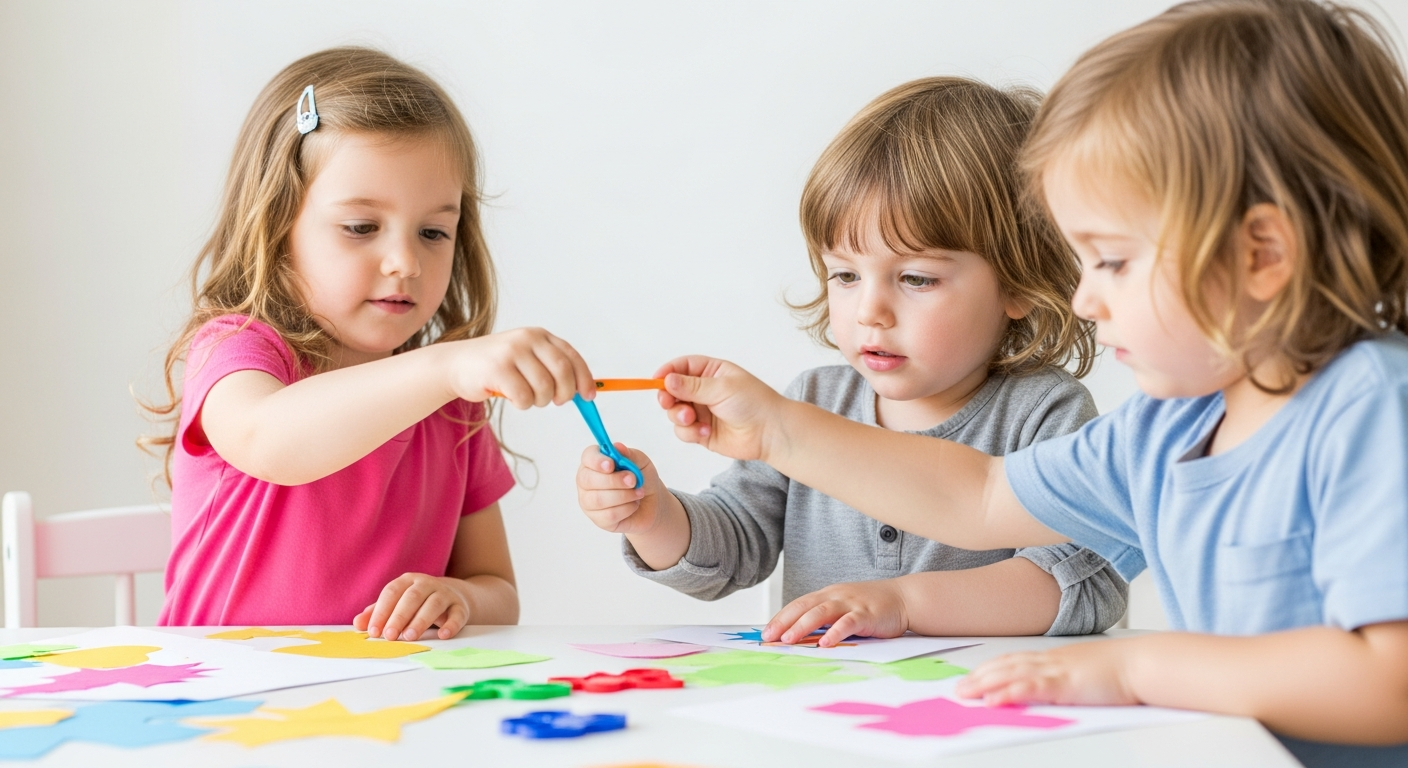
Table of Contents
- Introduction
- Why a Dedicated Workspace Matters for Toddlers
- Choosing the Right Toddler Arts and Crafts Table
- Connecting Art to Language Development
- Integrating "Smart Screen Time" into Creative Play
- Building Confidence and Reducing Frustration
- Setting Realistic Expectations
- Value and Pricing: Making the Best Choice for Your Family
- Tips for Maintaining Your Art Corner
- Creative Activities for Your Toddler Table
- The Speech Blubs Difference
- Final Thoughts on the Toddler Arts and Crafts Table
- Summary and Call to Action
- FAQ
Introduction
Did you know that by the time a child reaches age three, their brain is twice as active as an adult’s brain? This period of rapid neurological growth is a golden window for developing communication, creativity, and motor skills. As parents, we often focus on the "big" milestones—first steps and first words—but many of those milestones are actually built on a foundation of play. One of the most underrated tools in your parenting toolkit is a simple, dedicated space: the toddler arts and crafts table.
When a child has a space that belongs to them, sized perfectly for their small stature, they are no longer struggling to reach a kitchen table that hits them at chin height. Instead, they are empowered to explore. At Speech Blubs, our mission is to empower children to "speak their minds and hearts." We believe that communication doesn’t just happen through speech; it happens through every crayon stroke, every pinch of playdough, and every moment of shared discovery.

In this guide, we will explore why a dedicated workspace is essential for your child’s development, how to choose the right toddler arts and crafts table for your home, and how you can use this space to foster language skills. We’ll also look at how "smart screen time" can be seamlessly integrated into these creative sessions to help your little one reach their full potential. Our goal is to provide you with the tools to create a joyful, language-rich environment where your child can flourish.
Why a Dedicated Workspace Matters for Toddlers
The environment in which a child plays significantly influences the quality of their learning. A toddler arts and crafts table isn't just a piece of furniture; it is a laboratory for experimentation. When a child has a consistent place to create, they develop a sense of ownership over their work and their learning process.
Fostering Independence and Agency
For a toddler, the world is mostly built for giants. Doorknobs are too high, chairs are too heavy, and tables are out of reach. When you introduce a toddler-sized table, you are telling your child, "This space is for you." This fosters independence. They can sit down and stand up without help, choose their own materials from integrated storage, and begin a project without waiting for an adult to lift them into a high chair. This sense of agency is a critical component of building confidence, which is the cornerstone of effective communication.
Developing Fine Motor Skills
Artistic activities like coloring, painting, and sculpting are essentially "gymnastics for the fingers." Holding a crayon helps develop the tripod grasp, while using safety scissors builds hand-strength and coordination. These fine motor skills are surprisingly linked to speech. The areas of the brain responsible for complex hand movements are situated very close to the areas responsible for speech production. By engaging in tactile play at their toddler arts and crafts table, your child is stimulating the very neural pathways they need for clear articulation and language.

Creating a Routine for Focused Play
Toddlers are famously high-energy, but a dedicated art table provides a "landing pad" for focus. By establishing a routine where your child spends time at their table each day, you are helping them develop the ability to sustain attention. This focus is necessary for language acquisition. If you’re unsure about your child’s current development or focus levels, we recommend taking our quick 3-minute preliminary screener. It involves 9 simple questions and provides an assessment and a next-steps plan to help you understand your child’s unique needs.
Choosing the Right Toddler Arts and Crafts Table
Not all tables are created equal. When selecting the right one for your home, you need to balance durability, functionality, and safety. Here are the key features to look for:
1. Durability and Ease of Cleaning
Toddlerhood is a messy business. Whether it’s spilled juice, stray marker lines, or clumps of dried glue, your table needs to withstand it all. Look for materials that are non-porous and easy to wipe down. High-quality plastics or sealed hardwoods are usually the best choices. Avoid tables with too many "nooks and crannies" where playdough can hide and harden.
2. Integrated Storage
A toddler arts and crafts table with built-in storage is a game-changer. Features like art caddies, paint cup holders, and under-table bins help keep the workspace organized. More importantly, they teach your child about organization and responsibility. When everything has a "home," the cleanup process becomes part of the play, rather than a chore for the parent.
3. Ergonomics and Size
The table should be low enough that your child’s feet can rest flat on the floor when sitting in the accompanying chairs. This stability allows them to use their upper body strength for drawing and crafting rather than struggling to balance on a chair that is too tall. Many modern tables are designed to grow with the child, featuring adjustable legs that can be raised as your toddler becomes a preschooler.
4. Special Features: Paper Rolls and Easels
Some of the most popular toddler arts and crafts table designs include a built-in paper roll. This allows for a continuous canvas, which is perfect for collaborative play. If you have multiple children, look for a "collaborative" style table that allows them to work side-by-side. For smaller spaces, a "desk-to-easel" hybrid can provide the benefits of a flat workspace and a vertical drawing surface without taking up too much floor space.
Connecting Art to Language Development
At Speech Blubs, we are deeply committed to providing an immediate, effective, and joyful solution for the 1 in 4 children who need speech support. We know that language doesn't happen in a vacuum—it happens through interaction. Your child’s art table is the perfect stage for these interactions.
The Power of Narration
As your child creates, you can use "parallel talk." This means you describe what they are doing in simple terms. If they are painting with blue, you might say, "You are making a big, blue circle!" This connects the physical action to the linguistic label. It’s a low-pressure way to build vocabulary.
Practical Scenario: The "Animal Kingdom" at the Art Table
Imagine your 3-year-old "late talker" loves animals. You can set up a small sensory bin or a drawing station on their toddler arts and crafts table with animal figurines. As they play, you can introduce the Speech Blubs app. The "Animal Kingdom" section of our app is incredibly motivating. By using our unique "video modeling" methodology—where children learn by watching and imitating their peers—your child can watch a real child on the screen make a "moo" or "baa" sound.
You can then "bring the screen to life" at the table. After watching the video, you and your child can draw a cow together on the table’s paper roll. This turns "screen time" into "active time," creating a joyful family learning moment that bridges the gap between digital learning and physical play. To see how this method has helped thousands of families, you can read our parent testimonials.
Integrating "Smart Screen Time" into Creative Play
Many parents feel guilty about screen time, often viewing it as a "digital babysitter" that leads to passive viewing. We want to change that narrative. At Speech Blubs, we provide a screen-free alternative to passive viewing (like mindless cartoons) by creating "smart screen time" experiences.
Why Video Modeling Works
Our approach is rooted in science. When children see other children performing a task—like saying a new word or making a funny face—it activates "mirror neurons" in their brains. This makes them much more likely to try the sound themselves. This peer-to-peer learning is at the heart of everything we do. Our method is backed by extensive research, placing us in the top tier of speech apps worldwide.
Using Speech Blubs at the Craft Table
The toddler arts and crafts table is the ideal place for these "smart" sessions. Instead of your child sitting slumped on a sofa watching a show, they are sitting upright at their table, ready to engage. You can place your tablet or phone on a stand on the table. Spend 10 to 15 minutes in the Speech Blubs app, practicing sounds and words, and then immediately transition into a craft activity that reinforces those words.
If the app session was about "colors," use the paints on the table to mix red and yellow to make orange. If the session was about "body parts," use playdough to make a face with "eyes," a "nose," and a "mouth." This integration ensures that the digital learning is grounded in a physical, sensory experience.
Building Confidence and Reducing Frustration
One of the most significant barriers to language development is frustration. When a child can't express what they want or feel, they may act out. A toddler arts and crafts table provides a non-verbal outlet for these emotions.
Art as a Bridge to Expression
Before a child has the words for "sad" or "excited," they can show those feelings through the pressure of a crayon or the choice of a color. By providing this outlet, you are helping your child develop emotional regulation. As their confidence grows in their ability to "create," that confidence often spills over into their willingness to "speak."
At Speech Blubs, our founders grew up with speech problems themselves. They created the tool they wished they had—one that removes the "clinical" feeling of therapy and replaces it with play. We don't promise that your child will be giving public speeches in a month; instead, we focus on the beauty of the process. We want to help your child find the joy in communication, one small step at a time.
Setting Realistic Expectations
It’s important to remember that every child develops at their own pace. A toddler arts and crafts table is a wonderful tool, but it isn't a magic wand. Similarly, Speech Blubs is a powerful supplement to a child’s overall development plan and, when applicable, professional speech therapy.
Our goal is to foster a love for communication and build key foundational skills. Whether your child is a "late talker," has a diagnosed speech delay, or is simply a chatterbox who loves to learn, the combination of physical creative play and scientifically-backed digital tools can make a world of difference. To begin this journey, you can download Speech Blubs on the App Store or Google Play today.
Value and Pricing: Making the Best Choice for Your Family
We believe that every child deserves access to high-quality developmental tools. To build trust with our community, we are transparent about our pricing and the value we provide. We offer two main plans to fit your family's needs:
- Monthly Plan: $14.99 per month. This is a great way to test the waters and see how your child responds to our video modeling method.
- Yearly Plan: $59.99 per year.
The Yearly plan is the clear best choice for families committed to their child's long-term development. It breaks down to just $4.99 per month, which is a 66% saving compared to the monthly plan.
Beyond the cost savings, the Yearly plan includes exclusive, high-value features that the Monthly plan does not:
- 7-Day Free Trial: You can explore the full range of activities risk-free.
- Reading Blubs App: Access to our additional app designed to jumpstart literacy and reading skills.
- Early Access & Priority Support: Be the first to receive new updates and enjoy a 24-hour support response time.
We encourage you to create your account and begin your 7-day free trial by choosing the Yearly plan to ensure you get the full suite of features designed to support your child’s speech journey.
Tips for Maintaining Your Art Corner
Once you have your toddler arts and crafts table set up, a few simple strategies can keep the space inviting and productive:
- Rotate Materials: Don’t put every crayon, sticker, and paint bottle out at once. Too many choices can be overwhelming. Rotate a few "featured" items every week to keep the excitement alive.
- Display the Art: Use a string and clothespins to hang your child’s masterpieces nearby. This validates their hard work and provides more opportunities for language ("Tell me about this red bird you painted!").
- Adult Co-Play: The most important "feature" of any art table is you. Sitting with your child—not to direct their art, but to play alongside them—creates the connection they need to feel safe to try new words.
- Safe Supplies: Always ensure markers and paints are non-toxic and washable. For toddlers, "chunkier" crayons are easier to grip and less likely to snap.
Creative Activities for Your Toddler Table
If you’re looking for ways to jumpstart the fun at your new toddler arts and crafts table, try these language-boosting activities:
1. The "Sound" Collage
Gather magazines or old catalogs. Choose a sound your child is working on (like the "B" sound). Look through the pages together to find pictures of things that start with that sound—"ball," "baby," "banana." Glue them onto a large piece of paper. As you glue each one, practice the sound together.
2. Finger Painting Emotions
Put a few globs of washable paint on the table (or a large sheet of paper). Ask your child to paint how they feel. Use simple words like "happy," "sad," or "big." This tactile experience is a great way to associate abstract feelings with physical expression.
3. Playdough "Hidden Treasures"
Hide small plastic objects (like those found in the Speech Blubs "Toy Box" section) inside balls of playdough. Have your child "rescue" the objects. As they find each one, name the object and describe it—"You found a yellow duck! Quack quack!"
The Speech Blubs Difference
What sets us apart is our origin story. We aren't just a software company; we are a group of friends who knew first-hand the frustration of struggling to speak. We combined that personal empathy with the expertise of speech-language pathologists to create something unique.
When you use Speech Blubs at your toddler arts and crafts table, you aren't just using an app. You are participating in a global movement of parents who are choosing "smart screen time" to supplement their child’s growth. We believe in the power of "joyful learning"—if a child is laughing and playing, they are learning.
Whether you are using our Google Play Store link or the Apple version, you are joining a community dedicated to helping children speak their minds and hearts.
Final Thoughts on the Toddler Arts and Crafts Table
Investing in a toddler arts and crafts table is an investment in your child’s future. It provides the physical space they need to develop fine motor skills, independence, and focus. But more importantly, it provides a sanctuary for creativity and a hub for communication.
By pairing this physical workspace with the scientific methodology of Speech Blubs, you are giving your child a head start. You are moving away from passive screen time and toward an interactive, language-rich lifestyle. Remember, the goal isn't to create a perfect piece of art; the goal is to create a confident child who feels empowered to share their world with you.
Summary and Call to Action
A dedicated toddler arts and crafts table is more than just a place for messy play—it is a vital tool for fostering independence, developing fine motor skills, and building the confidence necessary for language development. By creating a space that is "theirs," you are giving your child the freedom to explore, create, and communicate.
We’ve seen how integrating creative play with our scientifically-backed "video modeling" can transform a child's speech journey. Ready to see the difference for yourself? Start your journey toward joyful communication today.
Take the next step for your child’s development:
- Download Speech Blubs on the App Store or Google Play.
- Begin your 7-day free trial by signing up on our web account page.
- Pro Tip: Choose the Yearly plan ($59.99/year) to save 66% and unlock the Reading Blubs app, early updates, and 24-hour support!
Give your child the gift of a voice. Let’s start creating and communicating together!
FAQ
1. What is the best age to get a toddler arts and crafts table?
Most children can begin using a toddler-sized table as soon as they are walking confidently and can sit in a chair independently, typically around 18 to 24 months. Having a table at this age encourages early independence and provides a safe space for sensory exploration and early scribbling.
2. How do I choose between a wooden or plastic table?
Wooden tables are often more aesthetic and durable for long-term use, but they may require more care to prevent staining. Plastic tables are typically lighter, more affordable, and very easy to spray down and sanitize, making them ideal for heavy "messy play" like painting or water activities.
3. Can an art table really help with my child's speech delay?
While a table itself is furniture, the activities done at the table are crucial for speech. A dedicated space allows for focused interaction, joint attention between parent and child, and the development of fine motor skills—all of which are foundational for language. Using tools like Speech Blubs at the table further enhances this by providing targeted speech practice.
4. How much space do I need for a toddler craft station?
You don't need a whole playroom! Many toddler arts and crafts tables are designed with a compact footprint. A 3x3 foot area in a corner of your living room or kitchen is usually enough to fit a small table and two chairs, especially if the table includes integrated storage to keep supplies tucked away when not in use.
About the author