
Toddler Creative Art Activities for Early Communication
 By Speech Blubs Team•Feb 23, 2026•13 min.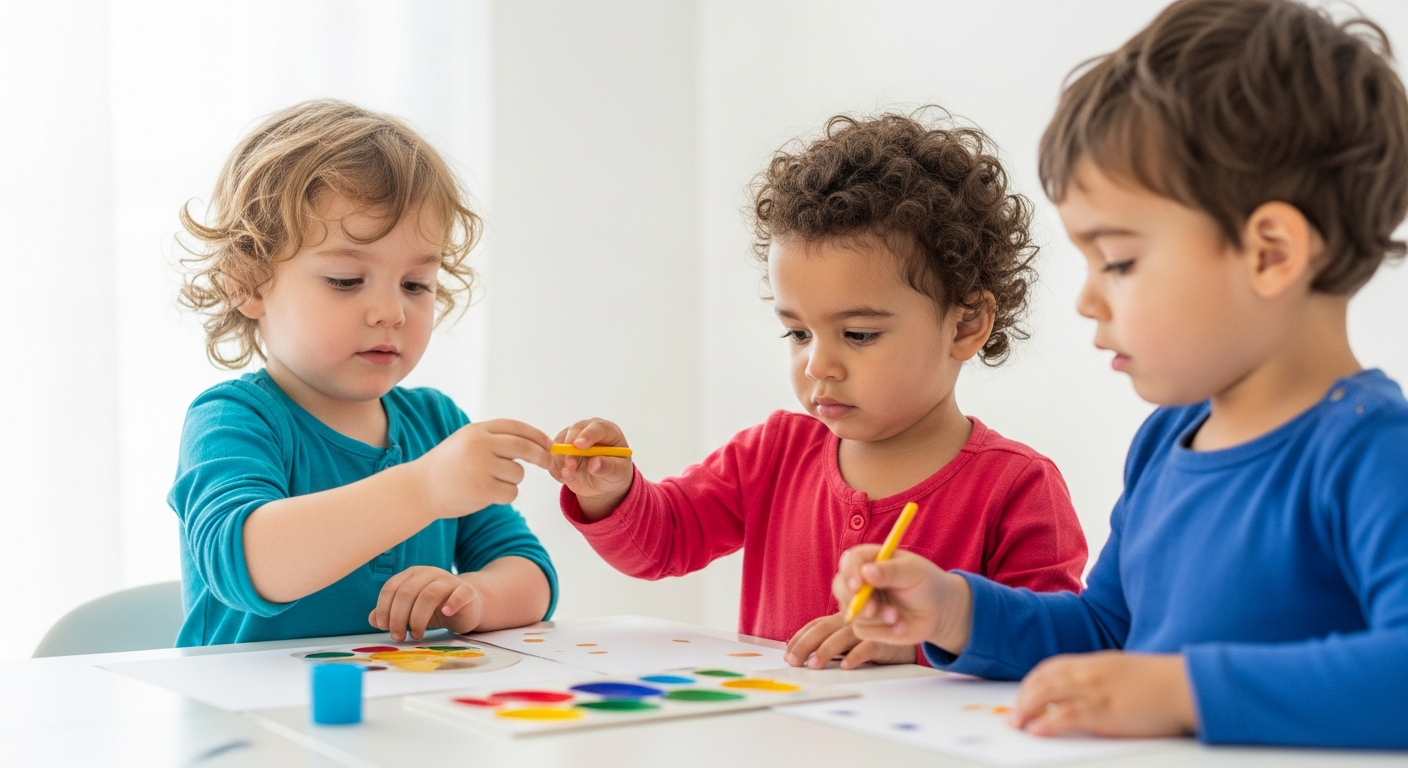
Table of Contents
- Introduction
- The Power of Process Art for Language Development
- The Speech Blubs Approach: Science and Play
- Sensory-Rich Toddler Creative Art Activities
- Low-Mess Toddler Art for Busy Days
- Integrating Speech Blubs into Your Creative Routine
- Why Smart Screen Time Matters
- Tips for Encouraging a "Late Talker" Through Art
- The Role of Family Connection
- Navigating the Preschool Transition
- Final Thoughts on Creative Play
- Summary of Key Takeaways
- FAQ
Introduction
Have you ever watched your toddler stare at a blob of bright blue paint as if it were a portal to another dimension? Or perhaps you’ve seen the pure, unadulterated joy on their face when they realize that pressing a crayon against paper leaves a mark behind? For a toddler, art isn’t about creating a masterpiece to hang in a gallery; it is a sensory-rich exploration of the world around them. It is an opportunity to touch, squish, see, and—most importantly—communicate.
At Speech Blubs, we believe that every moment of play is a chance for a child to find their voice. We know that the journey to clear communication is paved with exploration, and toddler creative art activities are one of the most effective ways to foster that development. Whether your child is a "late talker" or simply a curious explorer, engaging in creative play helps bridge the gap between thought and expression. In this blog, we will dive deep into why art is a cornerstone of child development, provide a wealth of practical activities for every energy level, and show you how to blend these experiences with our scientifically-backed tools to help your child "speak their minds and hearts."

Our mission is born from personal experience; our founders grew up with speech challenges and created the very tool they wished they had as children. Today, we support the 1 in 4 children who need speech assistance by turning "passive" screen time into "smart screen time." By the end of this guide, you will have a toolkit of activities that reduce frustration, build confidence, and create joyful family learning moments.
The Power of Process Art for Language Development
When we talk about toddler creative art activities, we often focus on "process art." Unlike craft projects that have a specific end goal (like making a paper plate ladybug that looks exactly like the sample), process art focuses on the doing. This is where the magic happens for language development.
Building Vocabulary Through Sensation
When a child dips their fingers into foamy paint or feels the tackiness of contact paper, they are experiencing new concepts. As a parent, you provide the labels for these experiences. "Oh, that feels sticky!" or "Look at the bright yellow!" This organic labeling helps toddlers attach words to physical sensations, making the vocabulary much more likely to stick.
Strengthening Fine Motor Skills
Communication is a physical act. The same fine motor control required to hold a crayon or pinch a small bead is foundational for the muscle control needed for speech. By strengthening the hands and fingers through art, we are indirectly supporting the complex coordination required for articulation.
Reducing Frustration
Many speech delays lead to "toddler tantrums" because the child has big ideas but lacks the words to share them. Art provides an alternative outlet. It allows a child to express their internal world through color and shape, reducing the pressure to perform verbally while building the confidence they need to eventually try new sounds.
If you are curious about where your child stands in their development, you can take our quick 3-minute preliminary screener to get a simple assessment and a free 7-day trial of our platform.

The Speech Blubs Approach: Science and Play
We don’t just create apps; we create environments for growth. Our methodology is rooted in "video modeling," a scientifically-proven technique where children learn by watching and imitating their peers. This is exactly how toddlers learn art, too! They watch you, they watch other children, and they mirror those actions.
By integrating Speech Blubs research into your daily routine, you are providing your child with a "smart screen time" experience. Unlike passive cartoons, our app encourages active participation. For example, if your child is working on a "Nature Art" project, you might open the "Animal Kingdom" section of the app to practice the sounds of the birds they are painting. This synergy between digital learning and physical play is what makes our approach unique.
Sensory-Rich Toddler Creative Art Activities
Ready to get messy (or stay clean)? Here are several activities curated to engage your toddler’s senses and spark conversation.
1. Foamy "Cloud" Painting
This activity is a favorite for children who love tactile feedback. It’s thick, bubbly, and smells great.
- The Recipe: Mix 1/4 cup of water, 2 tablespoons of washable paint, 1 tablespoon of dish soap, and 1 tablespoon of cornstarch in a blender. Blend on high for 30 seconds until a stiff foam forms.
- The Activity: Pour the foam onto a tray and let your toddler "paint" on watercolor paper.
- Language Connection: Use words like bubbly, soft, cold, and squish. If your child loves the "Animal Kingdom" section of Speech Blubs, they can pretend the foam is sheep's wool and practice saying "Baa!"
2. The Sticky Wall Collage
If you are mess-averse, this is the activity for you. It’s entirely dry but incredibly engaging.
- The Setup: Tape a large piece of clear contact paper to a wall or window, sticky side out.
- The Activity: Provide a basket of "treasures"—scraps of construction paper, feathers, bits of ribbon, or leaves from the backyard. Let your toddler press the items onto the wall.
- Language Connection: This is perfect for practicing prepositions. "Put the leaf on the paper." "Take the ribbon off."
3. Body Tracing Masterpieces
This activity helps with self-awareness and learning body parts, which are crucial early vocabulary words.
- The Setup: Use a large roll of butcher paper or the back of some wrapping paper. Have your child lie down and trace their outline with a marker.
- The Activity: Once they stand up, let them color in their "twin."
- Language Connection: Label body parts as you color. "Let's give you blue eyes!" "Where are your toes?" You can find similar labeling exercises in our app to reinforce these concepts.
4. Bubble Wrap Stomp Painting
For the high-energy toddler, art needs to be a full-body experience.
- The Setup: Tape a large piece of paper to the floor. Tape a piece of bubble wrap over it (or wrap your child's feet in bubble wrap—with supervision!).
- The Activity: Put small dollops of paint on the paper and let your child stomp, jump, and dance.
- Language Connection: Focus on verbs and sounds. Pop, bang, jump, stomp!
To see how these activities have helped other families, feel free to read our parent testimonials.
Low-Mess Toddler Art for Busy Days
We understand that you don't always have the time or energy to clean up a "paint-pocalypse." That shouldn't mean the creativity has to stop. Here are a few low-mess toddler creative art activities that still offer high developmental value.
Tempera Paint Sticks
If you haven't discovered paint sticks yet, they are a game-changer. They look like large glue sticks but are filled with vibrant, fast-drying tempera paint. They provide the bold color of liquid paint without the spills or the need for water cups.
Water "Painting" on the Sidewalk
On a warm day, give your child a cup of water and a large house-painting brush. Let them "paint" the sidewalk or the side of the house. The water darkens the surface, allowing them to see their marks, but it evaporates away within minutes. No cleanup required!
Magnetic Drawing Boards
These are classic for a reason. They allow for endless "scribble and erase" cycles. You can use these to play "I Spy." You draw a simple shape or animal and ask your child to name it, then they do the same for you.
Integrating Speech Blubs into Your Creative Routine
At Speech Blubs, we view our app as a powerful supplement to your child's overall development plan. We are not a replacement for professional therapy, but we are a joyful, effective tool that families can use together. Our "video modeling" approach is particularly effective when paired with physical art.
Imagine this scenario: Your child is using the app and sees a peer making a "fish face" and saying "Blub blub." You can then move to the art table and use blue paint and cupcake liners to create a "Fishy Collage." By connecting the digital peer's action to a physical activity, you are reinforcing the learning and making it more likely that your child will attempt the sound themselves.
To get started with this integrated approach, download Speech Blubs on the App Store or get it on Google Play.
Why Smart Screen Time Matters
In a world filled with passive entertainment, it is important to distinguish between "watching" and "interacting." Passive screen time, like watching a cartoon, often leads to a "glazed-over" look where the child is absorbing information but not processing or responding to it.
"Smart screen time," the kind we provide at Speech Blubs, is designed to be a dialogue. We want your child to talk back to the screen, to mimic the faces they see, and to feel the triumph of completing a challenge. This builds the foundational skills of turn-taking and imitation that are required for all human communication.
When you choose a Speech Blubs yearly subscription, you aren't just getting an app. You are getting:
- A 7-day free trial to explore all features.
- Access to our Reading Blubs app, which helps transition speech skills into early literacy.
- Early access to new updates and a 24-hour support response time.
- The best value at just $59.99 per year (which is only $4.99/month compared to the $14.99 monthly plan).
Tips for Encouraging a "Late Talker" Through Art
If your child is currently experiencing a speech delay, art can be a low-pressure environment to encourage vocalization. Here is how you can "scaffold" their learning during these toddler creative art activities:
- Narrate Everything: Instead of asking "What are you drawing?" (which can feel like a test), simply describe what you see. "You are using the red crayon. It's going round and round."
- Offer Choices: "Do you want the blue paint or the green paint?" Wait for a few seconds to give them a chance to respond, even if it's just by pointing or making a small sound.
- Use Target Sounds: If your therapist has suggested working on "P" sounds, choose activities like "Popping" bubbles or using "Purple" "Paper."
- Embrace the Silence: Sometimes, the best way to get a child to talk is to stop talking yourself. Sit with them, color together, and let them be the one to initiate the interaction.
- Focus on Confidence: Every time your child successfully communicates a need or shares a creation, celebrate it! Confidence is the fuel that drives speech development.
The Role of Family Connection
One of the most frequent pieces of feedback we receive from parents is that Speech Blubs became a way for the whole family to connect. We designed our tools to be used with an adult. Whether you are sitting on the floor doing "Body Tracing" or sitting on the couch exploring a new section of the app, that proximity and shared attention are vital.
Children thrive when they feel their parents are invested in their world. When you participate in toddler creative art activities, you are sending a clear message: "What you create and what you say matters to me." This emotional security is the bedrock of all successful communication.
Navigating the Preschool Transition
As toddlers transition into the preschool years, their art becomes more intentional. They may begin to draw recognizable shapes or tell stories about their pictures. This is an excellent time to introduce more complex communication tasks.
DIY Puzzles
Have your child draw a picture, then help them cut it into 3 or 4 large pieces. As they put it back together, they can describe what each piece is. "This is the cat's tail!" This helps with spatial reasoning and narrative skills.
Response Art
Read a story together and then ask your child to draw their favorite part. This "response art" helps with reading comprehension and allows them to practice retelling a sequence of events—a high-level communication skill.
To see the science behind how these developmental steps work, you can visit the Speech Blubs homepage to learn more about our methodology.
Final Thoughts on Creative Play
The journey of speech development is not a race. Every child moves at their own pace, and while it can be stressful to wonder if your child is "on track," remember that you are their best advocate and their most important teacher. By providing a mix of toddler creative art activities and "smart screen time," you are giving them a diverse set of tools to explore their world.
Our founders knew the frustration of not being understood. That’s why we are so passionate about giving your child the chance to speak their mind and heart. Whether it's through a messy finger-painting session or a joyful session on the Speech Blubs app, every effort you make is building a bridge to their future.
Summary of Key Takeaways
- Process over Product: Focus on the experience of making art, not the final result.
- Sensory Input: Use textures, colors, and smells to build a richer vocabulary.
- Smart Screen Time: Use tools like Speech Blubs to provide active, peer-led learning.
- Family First: Co-play is the most effective way to support your child’s growth.
- Choose Value: The Yearly Speech Blubs plan offers the most features, including Reading Blubs and a free trial.
Are you ready to transform your child's communication journey? Create your account and begin your 7-day free trial today. We highly recommend choosing the Yearly Plan for $59.99 to unlock all our exclusive features and give your child the full "smart screen time" experience they deserve.
FAQ
1. How does art help a toddler with a speech delay?
Art helps by providing a low-pressure way to express thoughts and emotions without relying solely on words. It also builds fine motor skills needed for speech and provides a sensory context for learning new vocabulary words through "narration" from the parent.
2. What is "smart screen time" exactly?
Unlike passive viewing, smart screen time involves interactive, educational content that requires the child to respond, mimic, or solve problems. Speech Blubs uses video modeling to encourage toddlers to imitate their peers, making the screen time an active learning session.
3. My toddler puts everything in their mouth. Can we still do these activities?
Absolutely! Many of the activities mentioned, like water painting or contact paper collages, are safe. You can also make "edible" paint using yogurt and food coloring for a completely safe sensory experience. Always supervise your child during any art activity.
4. Why is the Yearly plan better than the Monthly plan?
The Yearly plan at $59.99 ($4.99/mo) is significantly more cost-effective than the $14.99 monthly plan, saving you 66% over the year. Additionally, only the Yearly plan includes a 7-day free trial, the Reading Blubs app, and 24-hour support response times.
About the author